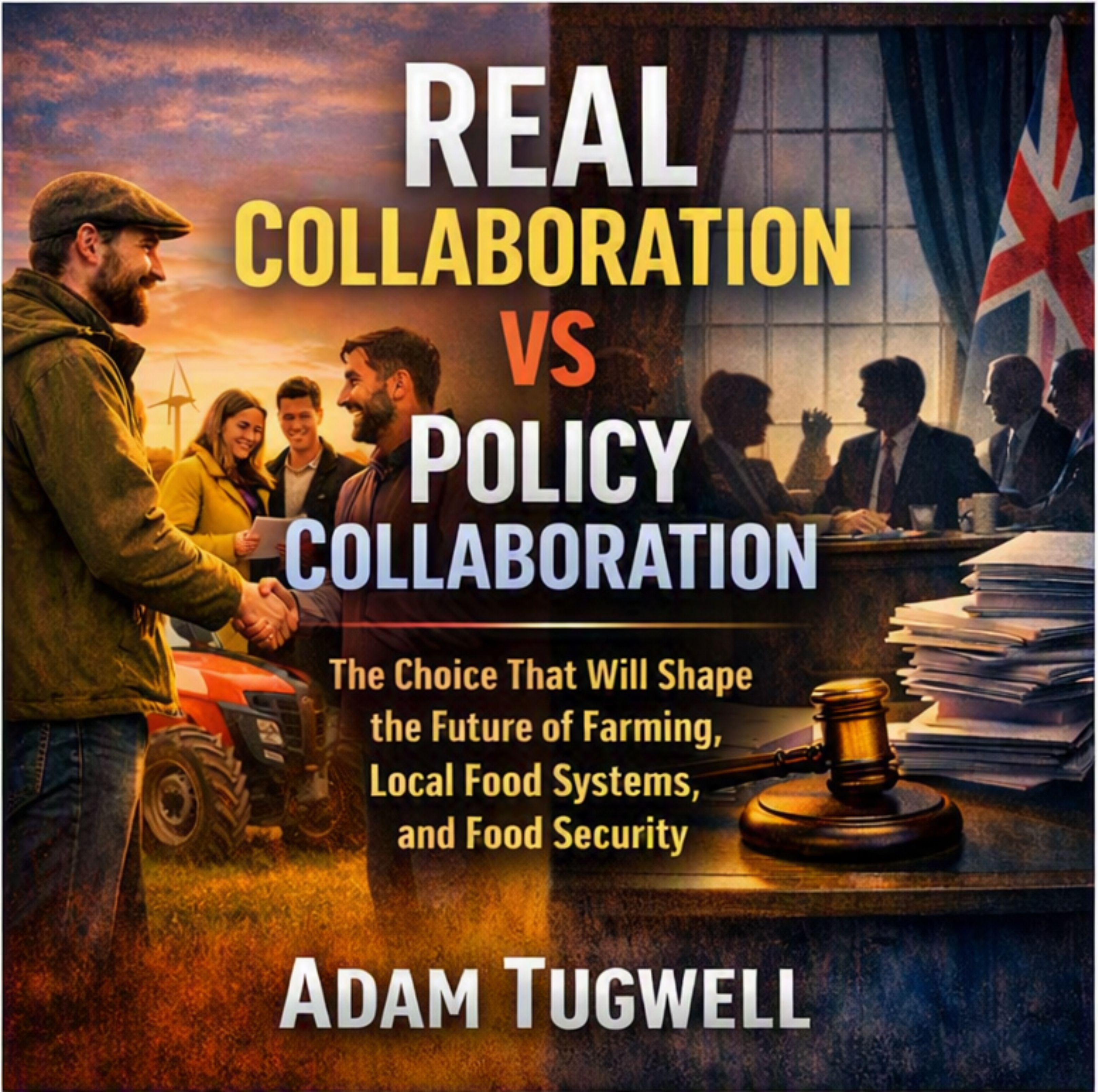
Food security is often discussed as if it were a policy ambition, something that can be declared, framed, or measured from a distance. But the reality is simpler and far more demanding. Food security is a capability – a function of the systems we build, maintain, and protect close to home. When those systems weaken, the country becomes dependent on structures it cannot control.
For decades, collaboration in the UK has been shaped by policy rather than practice. It has produced meetings, frameworks, and strategies, but it has not rebuilt the infrastructure that farmers and communities actually rely on. Real collaboration looks different. It strengthens local capacity, restores lost capability, and gives people the means to act rather than the permission to talk.
The consequences of ignoring this distinction are becoming harder to overlook. As local infrastructure disappears, so does local control. Farmers are left with responsibility but without agency. Communities are left with expectations but without the systems that once supported them. And the nation is left with a growing vulnerability that cannot be solved by policy language alone.
If we lose the ability to feed ourselves, everything else becomes negotiation. That is the dividing line between resilience and dependency – and it is the choice that will shape the future of farming, local food systems, and national security in the years ahead.
