The Two‑Edged Sword of Social Mobility: Why Our System Elevates Narratives, Not Capability
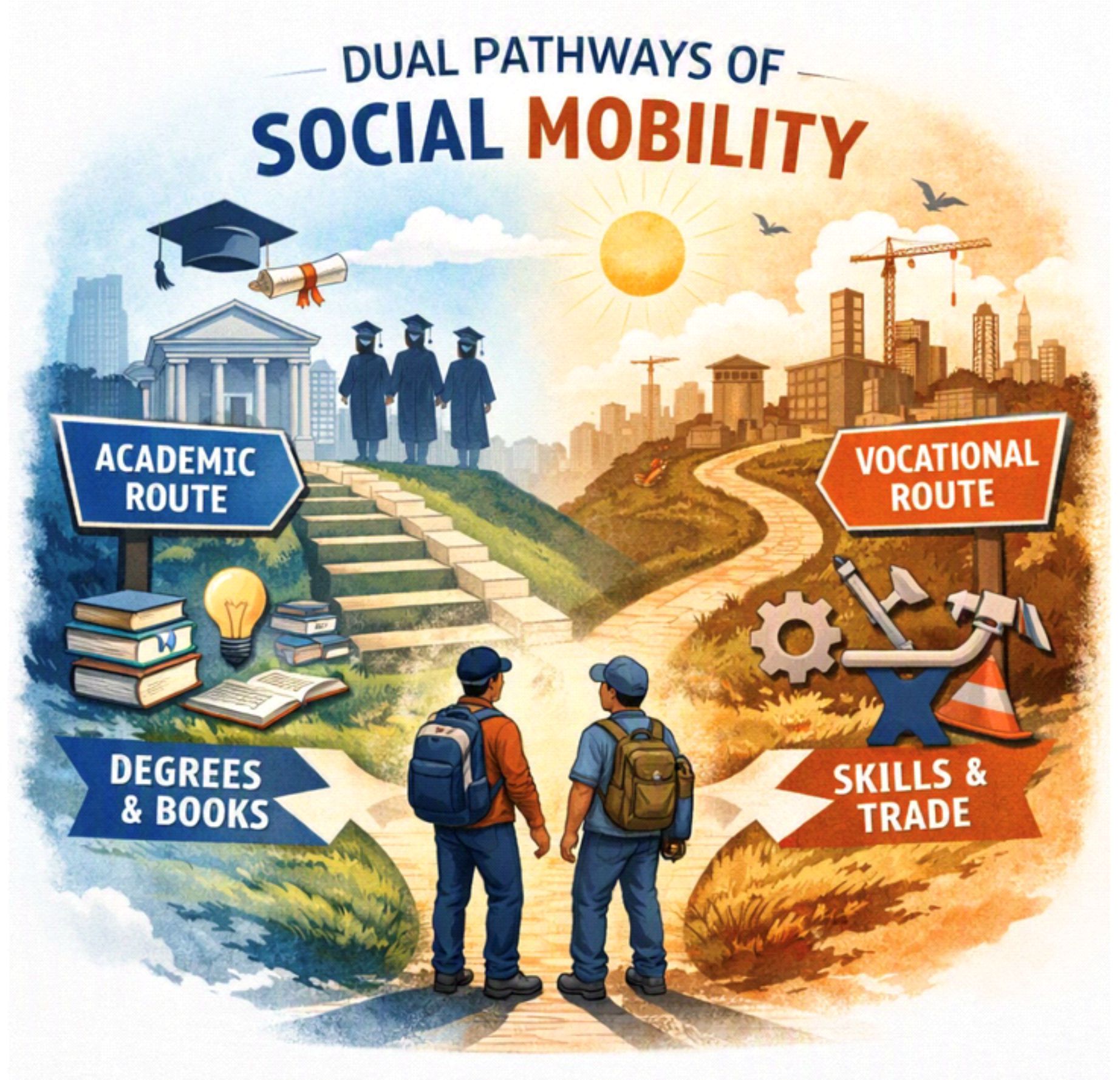
Social mobility is often framed as a simple moral mission – remove barriers, widen opportunity, and help people rise. But the way we currently pursue it contains a structural flaw that quietly undermines the very idea of fairness.
We have blurred the line between help and a hand‑up. Help empowers people to grow their capability; a hand‑up elevates individuals for their narrative value rather than their merit. In a system obsessed with hero stories and academic credentials, institutions risk rewarding trauma over talent and narrative over genuine ability.
This creates predictable damage: capable young people are overlooked because their adversity isn’t dramatic enough, while others are pushed into roles they aren’t prepared for. At the same time, an education model fixated on academic pathways sidelines practical, vocational, and experiential intelligence – leaving thousands of young people labelled as failures simply because they learn differently.
True social mobility isn’t about optics or symbolic heroes. It’s about recognising the full spectrum of human capability and building systems that empower people rather than perform progress.
