Balancing news input has become an unwitting challenge for many, simply because of how polarised and partisan the mainstream media has become. Whether it is leaning one way, another, or amplifying the more forceful cultural narratives of the moment, there is very little that genuinely captures the full picture or sits comfortably in the middle.
The environment created by a world of echo chambers wouldn’t be quite as problematic for societal problem‑solving or the legacy it leaves behind if it weren’t for the seemingly widespread absence of critical thinking skills today. The troubling truth is that we are navigating a phase of our history where real‑life problems are elevated or dismissed depending on where the story was broken and the assumption that the readership will be voting one way or another based on who is involved.
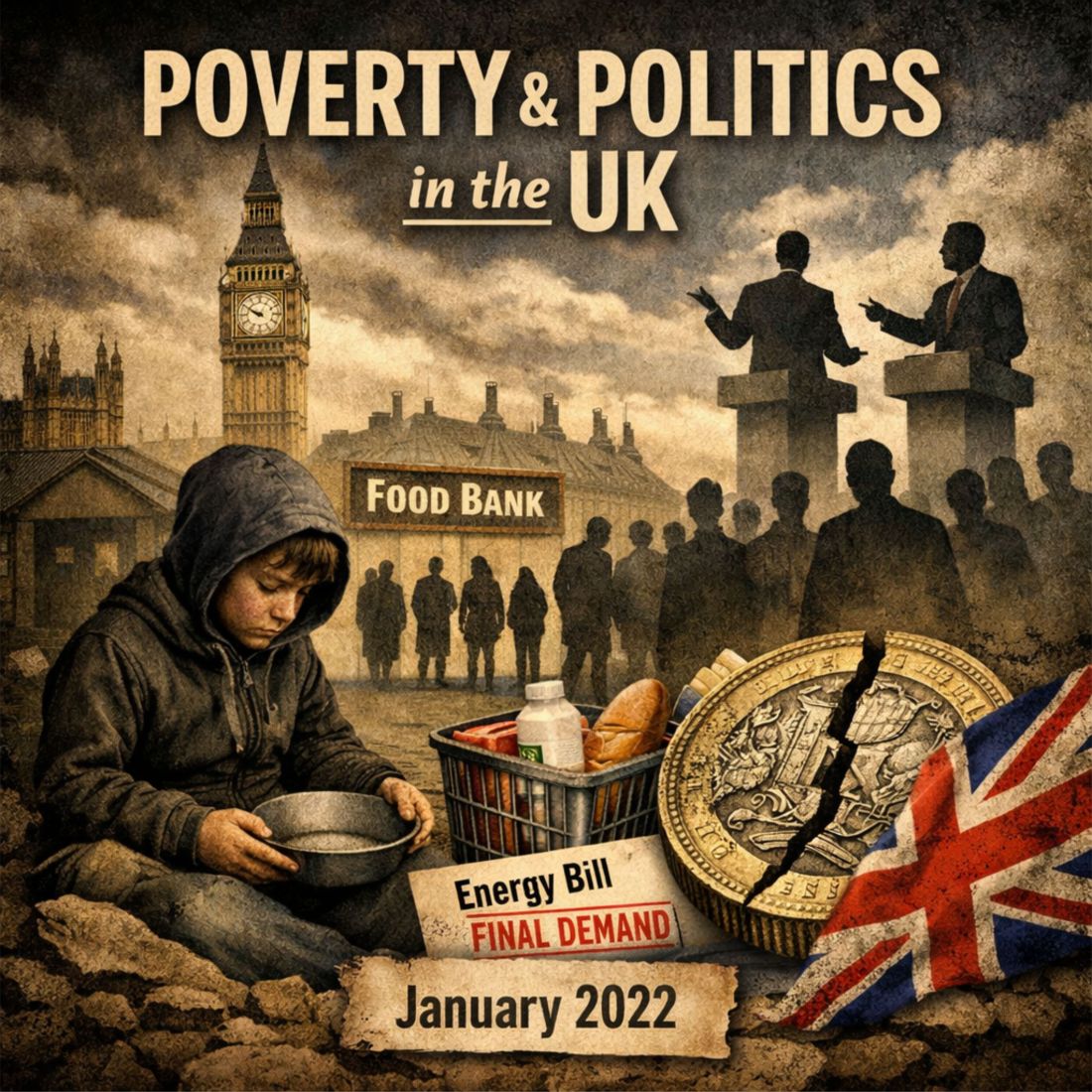
Over the weekend, I read the article written by Jack Monroe in The Observer / The Guardian, ‘We’re pricing the poor out of food’ (which I cannot link at the time of writing as it appears to have disappeared). Beyond the timeline and list of things Jack has arguably achieved by drawing attention to the realities of what it costs to eat when you are temporarily or long‑term poor, it was striking just how clear it is that, for the past decade, a failure to gain real traction in the fight against food poverty in the UK is in no small part because it has been treated as an issue championed mainly by one side of the political spectrum.
That recent governments have often appeared out of touch with the uncomfortable realities people across the UK face is difficult to dispute. Not because policymakers are consciously uncaring, but because many of those shaping policy – who are unlikely to have experienced free school meals, hand‑me‑down clothes or the joys of playing outside on a housing‑estate street – genuinely believe that poverty and unemployment are effectively the same thing. And those who follow them too readily often lack the integrity to question what they are told.
This reality is borne out in the news even now. Senior public figures regularly highlight the number of new jobs created and the number of people back at work, while overlooking that many of these roles pay the bare minimum. That the ‘work’ is often part‑time or similar. Worst of all, that in many cases securing a ‘job’ creates a minefield for those encouraged into self‑employment, only to discover that seemingly reasonable pay must also cover all of their expenses – leaving a real hourly rate far below what anyone can reasonably live on.
It’s a brutal reality that many of those leading the country appear to be in a state of denial about the circumstances and experiences of the poor. Their lack of appreciation is bolstered by the self‑assurance they give themselves as their heads hit the pillow each night, hiding behind measures such as the minimum or living wage, believing this is as far as legislative responsibility needs to extend to make life affordable for all.
At this point, it might be easy to read this blog as leaning left. Parties across the political left talk a good story about poverty, hunger and the unfolding cost‑of‑living crisis too. But their words – and actions – when they have had the opportunity to govern, also leave behind a record that is far from flawless.
The solutions often offered, based on spending and redistribution, don’t actually solve or even begin to address many of the wider issues that impractical or overly ideological approaches to policymaking have created. And this issue has never been more relevant as we collectively stare into an abyss of what could become a genuine financial crisis, where throwing money at these problems will not be something that even a future government could realistically afford to do.
The problems that leave people unable to afford the food to feed their children – even if they go without themselves – are massively complex in nature.
The cold, hard reality is that giving people more benefits or directing more money to charities such as the Trussell Trust – which really shouldn’t have to exist in 21st‑century UK – is no better than creating schemes and headlines that suggest everything is fine if you are ‘officially’ classified as having a job.
Wilful blindness across the political class has contributed to a situation where politics is no longer the means to solve societal problems. Politics has become the end in itself.
The evidence that any good politician needs as the basis to start building the questions, arguments and recognition of how many areas of public policy are involved – just to begin addressing these problems – is there for all to see.
Hiding in plain sight is the truth that few with a public voice speak, and few with the public gaze upon them dare to acknowledge.
We need politicians to be dealing with the questions that arise when people earning the basic wage that has been championed can only afford to live if the public purse continues to subsidise them.
How did this happen.
Why is it continuing.
Who is responsible.
How much do people need to earn to support themselves without help.
When production is arguably more efficient than ever, why is any food on a supermarket shelf a luxury that someone earning a full‑time wage cannot afford.
The truth is that many politicians would not like the answers to even these few questions, let alone the many more that follow. That’s why they don’t listen. It’s why they don’t look. It’s why they reach for quick fixes and disingenuous soundbites designed to mislead and to convince the very people they should be helping that the problem is somehow their own fault.
Yet the reality is that the people who should and could be dealing with these problems are not.
These are problems we have elected people to deal with. People who have taken our votes and our trust, with the expectation that they will fulfil their responsibilities to us and put them before their own.
They are there to find and deliver solutions to the difficulties in life that we cannot resolve ourselves – such as ensuring that we all have the basics we need.
Instead, we have politicians who are in politics for politics’ sake. And because many are unsuited to what they do, we have a situation where those already comfortable become richer and richer, while everyone else has less and less – even having their status devalued as those in power play games with what it means to be poor.
Originally published 24 January 2022. Lightly updated on 6 May 2026 for clarity and flow.