
Choosing the best of a bad bunch isn’t the same as choosing something good…
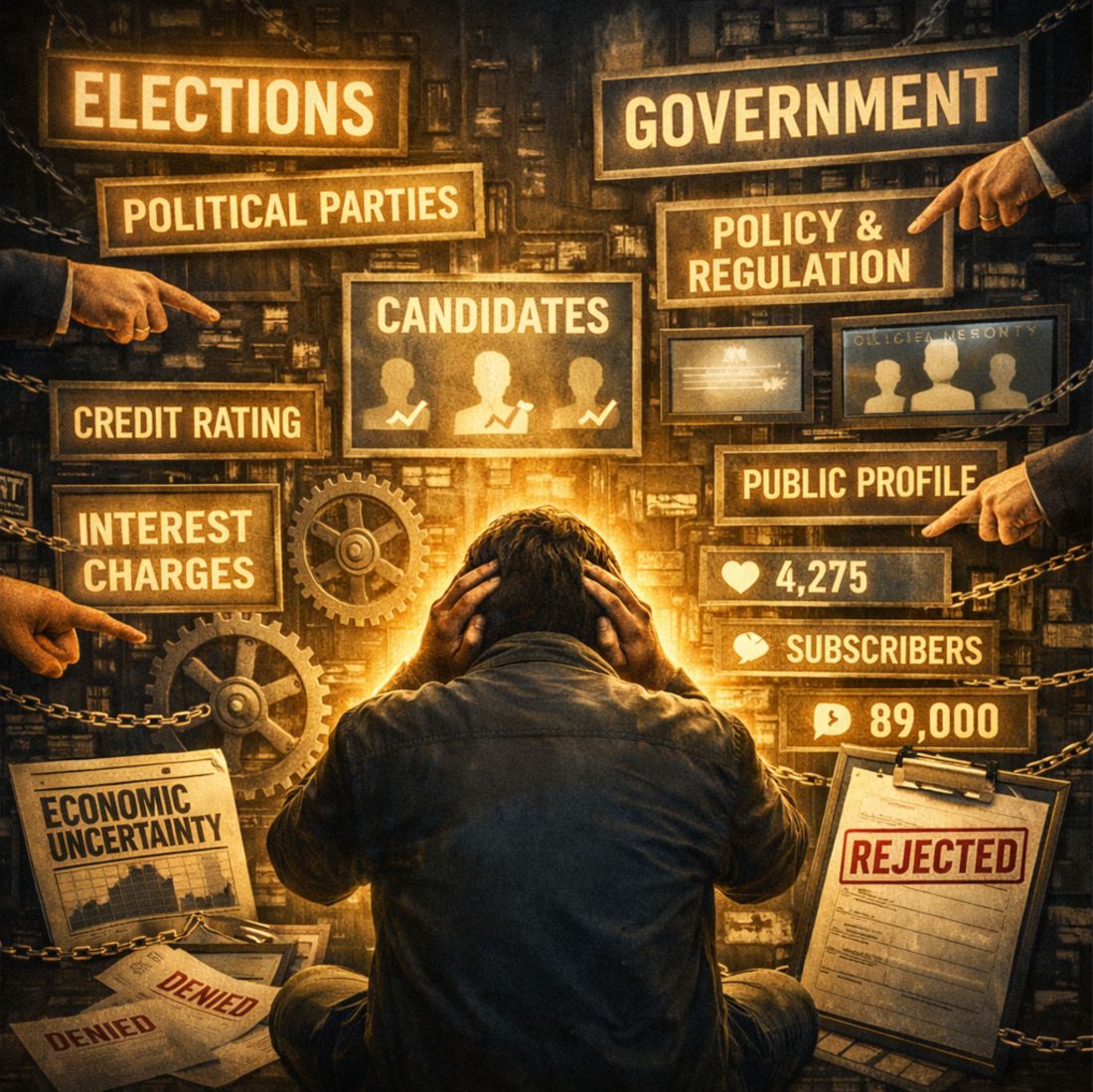
People talk about change constantly. They want it, they hope for it, they vote for it, and they argue about it. But beneath all that noise sits a quieter truth: most people aren’t looking for real change at all. Not because they don’t care, but because they’ve been conditioned to believe that real choice comes from outside themselves.
For generations, people have been taught – subtly, consistently, and often invisibly – that the only choices that matter are the ones handed to them. And when you’re only ever offered a narrow set of options, you eventually stop imagining that anything else could exist.
The Illusion of Choice
When people step into a polling booth, they see a list of names and assume those names represent the full range of possible futures.
But the options on that paper were shaped long before the voter arrived. Candidates were selected, narratives were set, and boundaries were drawn by processes the public never sees.
So people choose – but they choose from a list they didn’t write.
And here’s the trap:
Choosing the best of a bad bunch isn’t the same as choosing something good.
Yet people have been conditioned to believe it is.
They’ve been taught that if they pick the “least-worst” option, they’ve made a meaningful choice.
But the least-worst option is still part of the same system that produced the worst ones.
This leads to the unavoidable truth:
You cannot make a good choice if you’re not given any good options.
People aren’t choosing badly.
They’re choosing from what exists – and what exists is often inadequate by design.
How People Learn to Stop Looking
This pattern doesn’t just appear in elections. It runs through almost every part of modern life.
Most of the “choices” people make – what they buy, how they work, what opportunities they can pursue – are shaped by structures they didn’t design.
Over time, people learn to navigate within those boundaries rather than question them. They learn to adapt rather than imagine alternatives. They learn to accept rather than explore.
Eventually, people stop looking for real choice because they no longer believe real choice comes from them.
They’ve been taught that power lives “out there” – in institutions, parties, systems, markets – and that their role is simply to pick from whatever those systems provide.
The Real Question of Power
This is where the deeper issue lies.
Real choice – the kind that leads to real change – always comes from within.
It comes from people recognising their own agency, their own imagination, their own ability to shape what comes next.
But the system we live in depends on people forgetting that.
Everything is handed to us:
- the candidates
- the narratives
- the acceptable opinions
- the “realistic” options
- the boundaries of debate
- the structure of daily life
Most people don’t even see it happening.
Those who do often feel powerless to challenge it, because the problem isn’t individual – it’s systemic.
A system built on external control cannot easily accommodate internal agency.
Why People Feel Powerless
The frustration so many people feel today – the sense that nothing ever really changes – doesn’t come from apathy. It comes from a deeper disconnection between what people want and what they believe is possible.
People feel powerless not because they lack power, but because they’ve been encouraged to forget they have any.
They’ve been taught that:
- the system defines the options
- the options define the outcome
- and their role is simply to choose between them
When that’s all you’ve ever known, you stop looking for anything else.
Real Change Begins Before the Options Exist
The most important shift isn’t political – it’s psychological.
Real change begins when people remember that choices don’t have to come pre‑packaged. That alternatives don’t have to be offered by institutions to be real. That agency doesn’t begin and end with a vote.
A genuine choice is one that:
- isn’t manufactured
- isn’t constrained by fear
- isn’t limited to what already exists
- and isn’t defined by someone else’s imagination
Most people have never been encouraged to think in those terms. Many don’t realise they can.
The Cycle Will Continue – Until People Look Beyond the Given Options
New parties may appear. Old ones may rebrand. Movements may rise and fall. But unless people start looking beyond the options placed in front of them, the outcomes will remain the same.
People will hope for change.
They will vote for change.
And they will be disappointed again.
Not because they chose wrongly, but because they were never offered a real choice in the first place – and never encouraged to create one.
The First Step Toward Change
If people genuinely want something different, the first step isn’t to wait for better options.
It’s to recognise that good choices require good options – and those options can be created, not just received.
People want change.
Deeply.
Sincerely.
But until they start looking for it within themselves – rather than in the limited menu the system hands them – they will keep finding only what the system already provides.


