

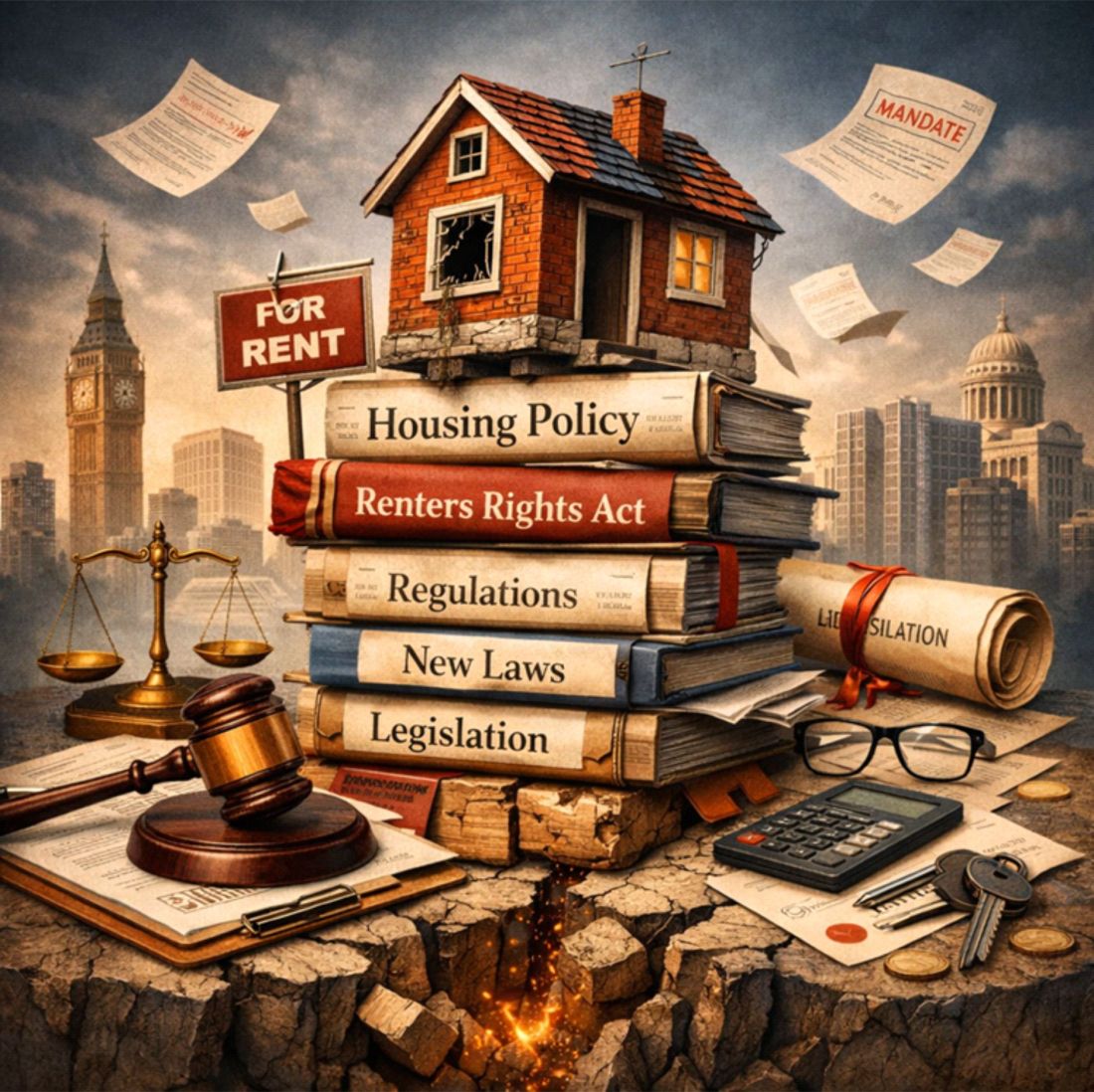
The Renters Rights Act comes into force this week, and it is already generating criticism, concern and confusion among private landlords.
Many feel that the legislative balance has suddenly tipped against them, and that the rules of the game have been rewritten without any regard for the realities they face.
This reaction mirrors a wider pattern in recent years, where attempts to strengthen rights for one group – whether renters, employees or consumers – are framed as inherently virtuous, while the people on the other side of the equation are treated as if they can do no right.
It is a paradox at the heart of many progressive policy approaches: the assumption that giving more rights automatically creates fairness.
But the world we live in today simply doesn’t work that way.
Rights Without Responsibility Don’t Work in a System Already Under Strain
People – whether renters, employees or anyone else – are being conditioned by government, business and the digital environment to believe that their individual rights are absolute. In practice, this has contributed to a culture where respect for others, their property, their time and even their basic boundaries is eroding.
When rights are expanded in a system that is already dysfunctional, they are not always used responsibly. Some people will inevitably abuse them. And when that happens in the private rental sector, the consequences fall not only on landlords but also on the growing number of people who depend on renting to live.
The early signs are already visible. The Act introduces new financial, legal and management burdens that many landlords neither want nor can afford to absorb.
For some, the risk will simply outweigh the reward. For others, the administrative load will be too much.
The result is predictable: fewer rental properties, higher costs, and more pressure on a system that is already stretched.
This Isn’t About Siding With Landlords – It’s About the System They Operate In
It’s worth stressing that the point here isn’t to take the side of landlords, but to highlight the flaws in the system that shapes everyone’s behaviour.
Housing is a basic human need. In a people-centric world, that alone would rule out the idea of property being used for profit – whether by large‑scale landlords with vast portfolios or by individuals who treat buy‑to‑let as an investment strategy. Both contribute to the same outcome: higher living costs and reduced access to secure housing.
But we do not live in that people centric world. We live in a system that is fundamentally money‑centric and profit‑driven at every level.
For decades, policy, business and culture have been shaped around extraction – taking value from the many to concentrate wealth among the few.
As this dynamic has intensified, those at the bottom of the wealth pyramid have become increasingly dependent on the very structures that make life more expensive.
Within such a system, any attempt to “fix” one part of the problem in isolation inevitably creates new problems elsewhere. The Renters Rights Act is simply the latest example.
Short-Term Politics Cannot Solve Long-Term Structural Problems
Politicians today face societal problems so deep and interconnected that they cannot meaningfully address them without challenging the system that created them. But that system is the very one that keeps them in power. So instead, they resort to short-term, surface-level policy changes – measures that sound compassionate, fair or decisive, but which do little to address the underlying issues.
Housing is a perfect illustration of this contradiction. The commodification of homes – and treating them as assets rather than essential shelter – has become normalised.
The rise of second homes for those who can afford them, despite nobody needing more than one home to meet their basic needs, is a symptom of the same problem. It contributes directly to the housing crisis, yet it is rarely confronted honestly.
Every part of the crisis ultimately traces back to the same root cause: a system built on perpetual growth, profit extraction and the prioritisation of financial value over human need.
The Real Problem Isn’t Landlords or Renters – It’s the System Itself
The Renters Rights Act may have been introduced with good intentions. But in a system as structurally flawed as ours, well‑intentioned fixes often create more harm than good. When the foundations are broken, adjusting the furniture doesn’t make the house safer.
Until we confront the deeper economic and cultural forces that shape housing – and everything else – we will continue to see policies that shift problems around rather than solve them. And each shift will leave more people struggling, more frustrated, and more convinced that someone else is to blame.
The truth is simpler, and harder: the system is the problem. And until that changes, every attempt to fix it will only expose how entrenched the problems have become.

