Dear Cheltenham, a Petition to stop the Borough’s ridiculous changes at Boots Corner is a great start. But if you really want to make the Council think again, start HERE

img_1555

For me, one of the most challenging and frustrating experiences of being a Local Councillor, was talking to people I represented who had genuine grievances and reasons for stopping a poor policy from going ahead, who couldn’t understand why the Council wasn’t listening and basically didn’t care either.

Please believe me when I say that the only way to really have any chance of understanding what is wrong with Government and the Public Sector, is to experience it from within.

Even then, it is essential not be taken in by anyone who tells you that ‘this is just the way that things work’. It isn’t.

But most people who enter as Officers or newly elected Councillors with high ideals and aspirations for doing something good, simply accept everything that they are told and quickly become part of the problem too.

Over the Summer, talking to people whose lives have Cheltenham at their very centre, I again saw one of those massive issues coming into view. A completely unnecessary ‘created’ problem that makes sense to nobody who exists in the ‘real world’ outside of our own version of the Local Government system.

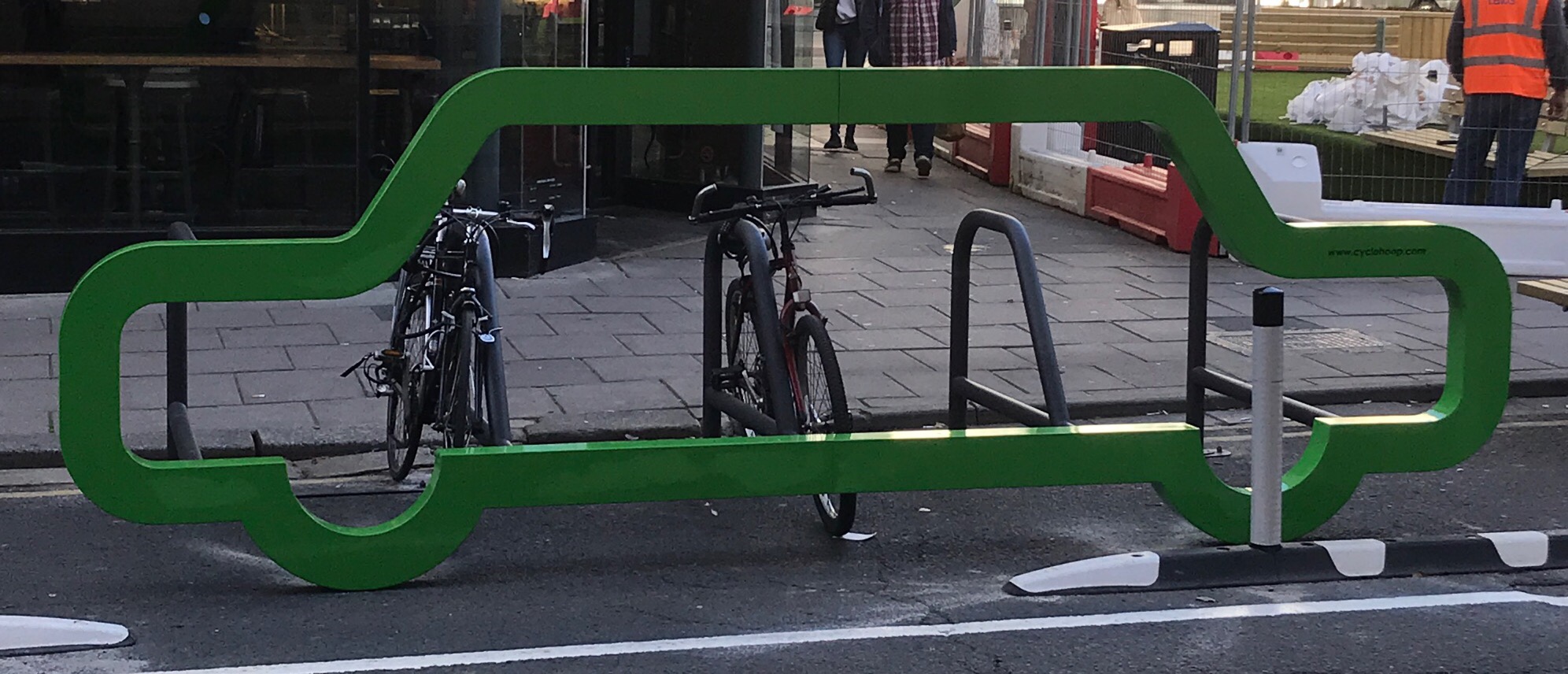
I’ve experienced the Boots Corner travesty first hand. I have had to make the same detours as you probably have done yourself and know that this whole project is benefiting nobody or nothing other than the ego’s of the people who dreamed this foolishness up.

I’ve already given my view on the whole thing here a couple of weeks ago. And whilst it is great to see Cheltenham’s MP Alex Chalk talking openly about how unwanted the Scheme is and a Change.org Petition now in place, we should all be under no illusion about how entrenched the mentality of those responsible for the Boots Corner fiasco is now likely to be.

If you want the Boots Corner plan overturned, the road reopened to all traffic and no more ridiculous schemes like this one to simply arrive without genuine consultation, there is only one thing that you can now really do.

You have to work to change the whole Council and replace them with people who have the same interest in what’s truly beneficial for the people in Cheltenham. That’s getting people elected as Councillors,  who put Cheltenham before themselves and any Political Party they might represent. People who have the same real-world view as you.

If one person is prepared to stand in the next Local Elections within each Cheltenham Borough Council Ward, take Party Politics out of the equation and then start working as a representative for something better for the People and Businesses of Cheltenham, we might all be surprised just how quickly the Campaign to overturn this stupidity will start to gain results.

Don’t be fooled by thinking that the Elections don’t matter in Cheltenham because they are a long way off. It doesn’t matter because it’s the cumulative effect of the work and effort talking to people, knocking on doors and getting real people engaged that will grow the very best fruit.

It is important that you or anyone prepared to do the work necessary to represent a Ward as a Councillor are committed enough to be ‘in it to win it’.

You must also be prepared to do everything that it will take to see this Campaign through until Boots Corner is fully reopened, normal traffic is flowing and the target result is achieved.

Being told that the Borough Council is prepared to change its mind will not be enough. Like politicians generally, Councils have a habit of quietly changing their mind as soon as any noise goes quiet.

To be sure of success, Boots Corner must be fully open before you can think about whether you then want to stop campaigning for what’s best for Cheltenham.

Being a Councillor or even taking on the responsibility of working to get elected as a Local Councillor isn’t for everyone. There’s a lot to think about before anyone can decide.

If you want to run a successful Campaign and then be a good Councillor too, it is essential that you know, understand and are fully committed to what you are getting yourself into.

I’m not making the suggestion lightly. I’ve been an Officer within a Local Authority, a Councillor and Senior Member of another.

I’m putting this on the table for people who live and run Businesses within the Boundary of Cheltenham Borough itself. Local people who are eligible to become a Candidate and are motivated to represent the real views of the people and businesses of this great Town.

What I can do to help you is offer you the benefit of my experience, through advice and suggestions.

I can provide you with direction and a guide to what you need to think about. An outline of the reality of what it takes to get elected and everything that you will find when you are successful – which you can be if you are ready to do all that it will take.

How to get Elected is available to read FREE on a guide-to-area Website, and a page-list-based Blogsite which is also FREE for you to use.

If you want to read How to get Elected on your Kindle, it is available from Amazon too.
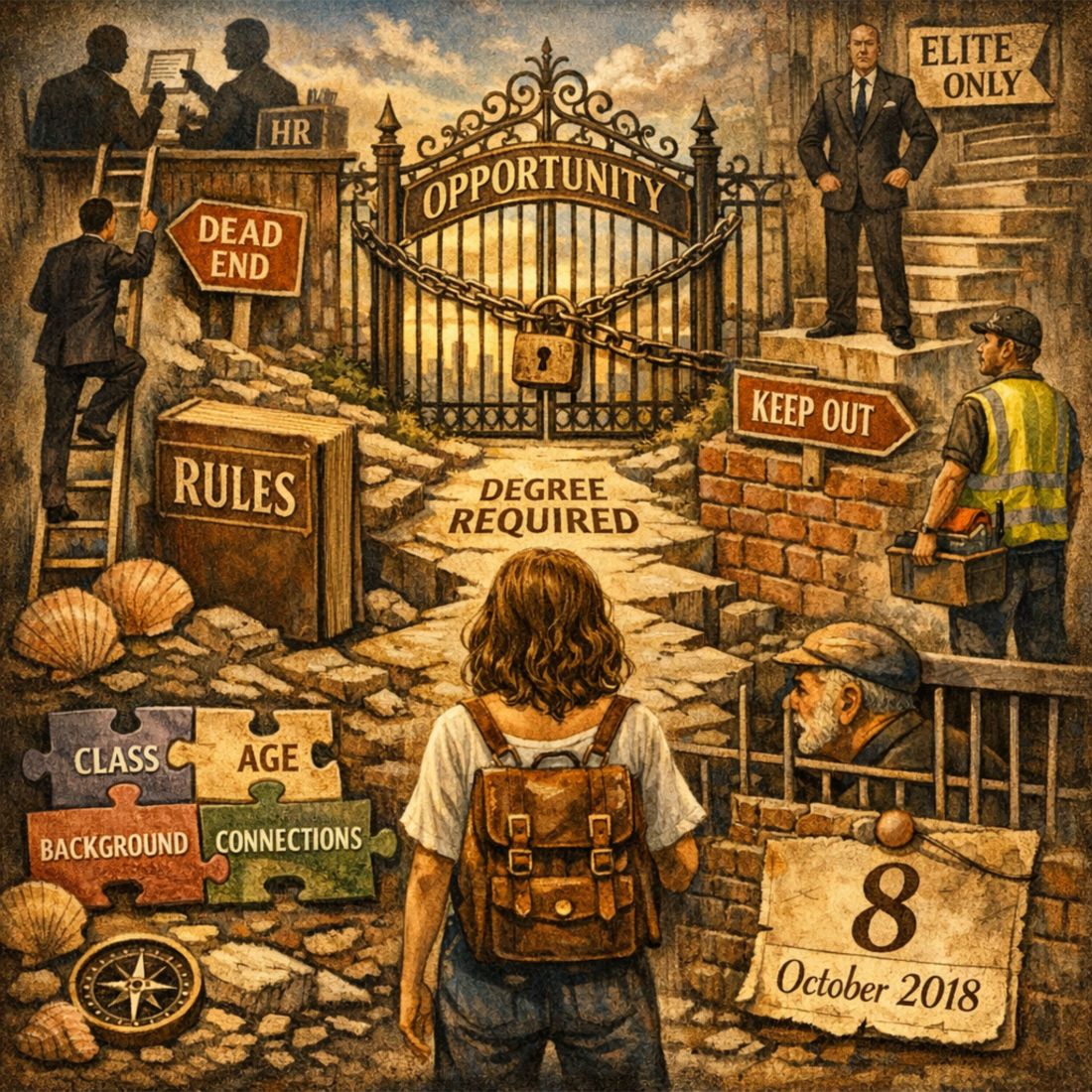
Improving Social Mobility is about addressing the way decision makers think, not about academic education alone

The three key misunderstandings and fallacious barriers to Social Mobility are:

  • That Social Mobility issues only affect young people who are in their career development years
  • That the only way to improve Social Mobility is through ensuring that everyone achieves a ‘full’ academic education and that the attainment of degrees is key
  • That Social Mobility issues relate to the achievement, progress or outlook of the individual and nobody else

With one evolution of the Social Mobility Commission having resigned because of lack of Government support and another now appointed in the image of all the same Establishment ideas, the key issues underpinning lack of progress in tackling the barriers to Social Mobility are still being overlooked and this travesty is set to continue further still.

As is often the case when a cause is given a label, the Social Mobility problem is an issue which has become closely aligned with just one interpretation of its cause. This closes down debate and dialogue about the much wider range of issues which attribute to reducing opportunities. It also excludes consideration of a wider malaise and certainly overlooks the real impact on not only the individuals affected themselves, but also upon the wider community as a whole.

Yes, many young people are overlooked because of the start they had in life. The place in which they lived. The schools which they did and did not attend. The qualifications which they did or didn’t gain.

But the reality is that it is a very long list of factors which prevent any one person from progressing.

The interpretation of someone’s validity on the road to progress and passing these barriers is not simply restricted to that of employers, educators or any of the external gatekeepers of opportunity.

No. The perception of not being good enough to overcome any barrier to Social Mobility can be that of the individual all on their own.

The obstruction to unhindered Social Mobility, is the many prejudices which are not and cannot be managed by regulation or by the methods of review and reform which have become the cultural norm in this Country.

In a society which has learned to make effect synonymous with cause, we overlook the real causes of societal problems and as such have no way to address the consequential effects.

The social justice warriors, the politically correct, the rights lobby and liberal left all congratulate themselves on the strangle hold of regulation which decades of manipulation and social engineering have helped them impose.

Yet the rules which govern Equality of Opportunity in their purest sense have actually made prejudices easier to employ.

Only now, beyond the scope of the processes which assure us that prejudices have been all but removed, they are less likely to be evidenced and hide in plain sight.

Yes, we have regulation against gender and sex discrimination. Race discrimination. Disabilities discrimination, Religion, Age and sexual orientation too.

But in creating these frameworks or safety notes, the idealistic engineers of this ill-considered social plan have provided the perfect opportunity for people to surrender ethical responsibility to being seen to adhere to the set of rules which now exist. They have been given a set of pillars that once worshipped, allow them to do whatever they want to by behaving in ways which legitimately go around these rules or sit somewhere in the spaces in between.

We now not only have a situation where decision makers can quietly be racist, sexist, or are allowed to quietly indulge any other prejudice we might not collectively like. They can continue to do so unimpeded.

The consequences of this ‘big vision’ engineering project create many other problems too. Problems which include disadvantaging the already disadvantaged and building barriers to progress which the very same people will now never cross.

And guess what. Yes. We find again that achievements exist only for the same few to easily win all over again.

Take for example the assault on the education system that the Blair Government undertook, with the overt aim of giving everyone the opportunity to gain a degree.

The result has been the commercialisation of the further and higher education system, leading to the prioritisation of winning fees, rather than focusing on the quality and commercial durability of the education provided. Running education as a business has almost certainly put its future in serious doubt.

It is a process which has already led hundreds and thousands of hopeful young people to begin professional life in serious debt and with academic qualifications which are to many businesses completely worthless.

Yet the debt-laden graduates only find out too late that these quack qualifications don’t mean much at all to the world around them once they have left the supposed safety of the academic universe behind.

The world of big business and its new world of ‘created roles and specialisms’ has responded to the glorifying of academic qualification over the benefit of time-served experience by recognising degrees as a standard for anybody worth looking at. Not as a way to recognise specialism in itself. But as a like-for-like replacement in recent years for what would previously have been well illustrated by the attainment of 3 A ‘Levels, and only a few years before that just 5 GCSE’s.

Not everyone is cut out to be a CEO, Director or even a manager and non-academic people bring value to business which only when added to the contribution of real academics can it add up to a formula which is so much more.

The dangerous mix created by this non-stop meddling has fuelled the entitlement culture. Qualification has become more valuable than experience and experience is not of value to those who have qualifications.

Letters on a CV are seen as more important than attitude, motivation, or the many other life skills which business used to intrinsically value, which they now overlook. The system now unwittingly leads them to place applications from people who could and should be the next generation of commercial superstars straight in the bin.

It doesn’t stop there, and within a tick box, risk-averse culture where Recruiters and HR Officers – that’s people who have and never will do these jobs themselves – have overwhelming power over recruitment processes, there is an untamed focus on identifying reasons to not even shortlist candidates – usually because they don’t have a degree.

Good people are now denied jobs where they can thrive and the employers and companies themselves never gain access to the wider pool of candidates where the real benefits of selecting people with the right experience rather than just a paper qualification lies.

The consequences of this social meddling are already far reaching indeed and because the UK could never afford to provide education to 21 years as a standard – which in itself was never needed, it was inevitable that a new form of educational discrimination would introduce itself. And it’s the worst one of all. The preclusion from opportunity for even more young people based simply on cost.

Just in this one example of social meddling focusing on education alone, where impractical idealists have tried to impose a system of restrictions based upon no experience that they have or have in no way never known, we can see how far reaching the impact on consequences of quixotic thinking can be.

This is a pattern which is unfolding itself over and over again within all the areas of our lives where lack of consideration has been applied to the consequences of imposing the ‘consideration’ of rights and ‘positive’ discrimination on a society which will always have its own mind and not the one which political busy-bodies wish to create for it.

The barriers to Social Mobility are all about the way that we think.

But the change needed and the tools which will enable us to break down those barriers and make that change will only come when decision makers with the power and therefore the ability to oversee that change go through a voluntary process of accepting that they themselves need to think differently.

That change will come about as a direct result.

That change cannot and never will be imposed.


The Principle of Charity is all but forgotten when we hear others, yet we would all prefer to be given the benefit of the doubt ourselves

Context is always at risk of misinterpretation, unless you are one person who knows exactly what you mean.

What we say, what we write or what we do in our interactions with others can always be viewed in at least three ways.

Until very recently, it was usually the third party to any experience or event which would be the best bet on introducing forgiveness and understanding when something was misunderstood or taken badly by either key party, whatever the circumstances happened to be in between.

Not only seeing, but respecting the reality of a bigger picture is something that in conversation, experiences and life in general, older generations once took for granted.

Young people, or ‘millennials’, as our unforgiving media as now branded them, are unlikely to recall the time when there was an alternative, yet unspoken rule. An acceptance that hanging reality upon just a word or a sentence wasn’t an appropriate call.

Communication was a sum game. Understanding something was all about the way that the words are said. Where and when they had been used. The backdrop which stood behind them and a whole picture made up of many different things, which together added up to something different.

The truth is often much greater than the sum of all parts and usually much much more.

Today we experience and endure something completely different. A selective form of deliberate, yet increasingly conditioned non-understanding. A way to make anyone or anything we disagree with well and truly wrong, in an attempt to unwittingly mislead others and influence the way that other people will think.

Culturally we are now attuned to look for anything that’s wrong with any point of a message, no matter how isolated it might be. We do so, rather than hearing and making a conclusion upon the content of all of that message, where determining our interpretation of the outlook or principle, and whether the direction of travel might provide a meaningful level of insight.

This is not even the preserve of the amateur, uneducated or unskilled.

Even writers, journalists and opinionators, the professional wordsmiths are now closed in their reasoning when it comes to studying the words, social media interactions, and interviews of the people that the truly objective would know better than to despise.

They do so not for the measure of the content, but for the mix of words which can be used to wrong the speaker, who will often have blundered into this trap unwittingly, no knowing they have fallen into an elephant trap built with malevolence which will soon revisit them in the form of a very dark surprise.

This habit has already destroyed careers. It has been used to change discourse. To eliminate realities which would benefit us all. It has become little more than a lesson in how to become professionally mean.

The opposite of this behaviour was once known freely as the Principle of Charity. And we would all do well to refresh ourselves with what the Principle of Charity actually means.

For when the time comes that we find ourselves on the receiving end of this cultural malaise which builds its own truth in a place where the genuine story has never been, we may wish that we ourselves could be in receipt of the benefit of the doubt from others. To be understood for what we have offered the world as a whole and honest picture. Rather being the target of someone’s else’s reason for being and becoming the focus which they need to apportion their own blame.

Change has the appearance of being hard, where once the first step is taken it becomes easy. Instead of looking for change to come from others, we have to accept that genuine change comes from within.

We can begin by treating each other, as we would wish to be treated ourselves.

It may require a little more thinking, but it soon feels good and we quickly remember that the opportunities are available in every situation where everyone can walk away, having bagged a genuine win.