
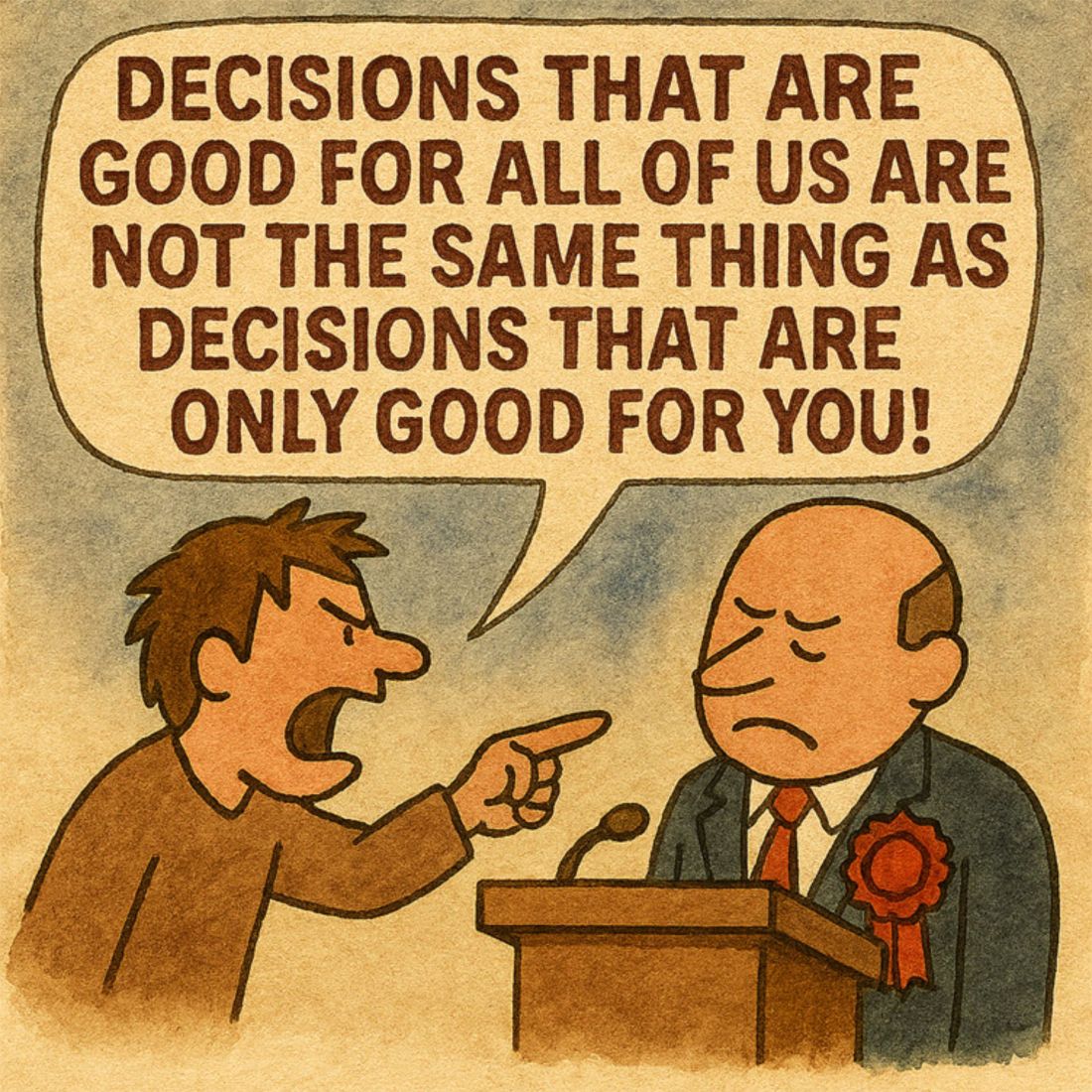
Winning an Election Doesn’t Justify Every Decision

Across the country, people are feeling a growing sense of political disconnection. It isn’t abstract. It isn’t imagined. It is the lived reality of a system that no longer behaves in a way that resembles what most people understand democracy to be.

The act of voting was once seen as the moment where the public shaped the direction of the country. Today, it feels more like a ritual – something we perform because we are told it matters, even as the outcomes drift further and further from what voters believed they were choosing. The gap between expectation and reality has widened to the point where trust is no longer strained; it is breaking.

This is not because people are apathetic. It is because they are paying attention.

The Mandate Voters Believe They Are Giving

When people vote, they do so with a set of assumptions that have always underpinned representative democracy:

  • that the broad direction set out during the campaign will guide the decisions that follow
  • that elected representatives will act in the best interests of everyone they serve
  • that trust is the foundation of the relationship between the electorate and those who govern

Nobody goes to the ballot box believing they are surrendering their agency. Nobody imagines they are authorising a government to act without reference to what was promised or discussed. The mandate voters believe they are giving is conditional, relational, and rooted in trust.

Yet what they see instead is something very different.

The System Behaves as Though Victory Grants Unlimited Permission

Once in office, governments increasingly behave as though electoral victory grants them licence to do whatever they choose for the duration of their term – regardless of whether those decisions were ever mentioned, justified, or even hinted at beforehand.

Policies appear that were never discussed. Priorities shift without explanation. Decisions are justified with slogans rather than substance. And when questioned, the response is often a variation of the same message: trust us.

But trust is not a renewable resource. It is earned through alignment between words and actions. And today, the gap between the two is widening.

People hear the language of service, fairness, and responsibility. But they see actions that contradict those words. They hear promises of transparency. But they see decisions made behind closed doors. They hear claims of moral purpose. But they see outcomes that feel detached from common sense and lived experience.

This is not cynicism. It is observation.

Centralisation Has Distilled Power to the Point of Theatre

The deeper problem is structural. The system is built to centralise – and it keeps centralising. Power moves upward. Responsibility moves downward. Accountability evaporates. The distance between the people who make decisions and the people who live with them grows wider every year.

In that environment, elections become symbolic rather than substantive. They create the appearance of choice while the mechanics of the system ensure that real power remains concentrated at the centre.

This is why governments of different colours behave in ways that feel eerily similar.
This is why decisions increasingly appear detached from the lives of the people they affect.
This is why the political class no longer feels the need to hide what it is doing.

The relationship between the electors and the elected has been reduced to performance. The public is the audience. The political class is the cast. And the script rarely changes.

Words Have Become a Substitute for Action

One of the most corrosive developments in modern politics is the rise of performative governance. Words have become a substitute for action. Announcements have become a substitute for delivery. Narrative has become a substitute for truth.

The culture rewards performance, not awareness.
It rewards loyalty to the centre, not responsibility to the community.
It rewards obedience, not integrity.

And because the system selects for these traits, it produces representatives who speak the language of public service while acting in ways that serve the system itself.

This is why the gap between political rhetoric and lived reality feels so vast.
This is why people feel unheard even when politicians claim to be listening.
This is why trust continues to erode.

The Moral Contract Has Been Broken

If politicians intend to govern in ways that depart significantly from what voters were led to expect, the moral requirement is simple: they should say so openly.

They should go to the electorate and declare:

“By voting for us, you give us licence to do whatever we believe is necessary for the duration of the government – even if it bears no resemblance to what we told you beforehand.”

Of course, no one would ever say this. Because it would expose the truth: that such a mandate would never be given.

And yet, through their actions, this is precisely the mandate many governments behave as though they possess.

People feel betrayed not because they disagree with every decision, but because they never consented to the direction being taken.

Real Democracy Requires Proximity

Real democracy only works when decisions are made by the people who live with the consequences. Distance destroys representation. Centralisation destroys accountability. Hierarchy destroys awareness.

When decisions are made far away – geographically, psychologically, or morally – they become detached from the realities they shape. And when that happens, the system stops being democratic in any meaningful sense.

The frustration people feel today is not ideological. It is not partisan. It is not even primarily about competence.

It is about distance.

A system that centralises power inevitably produces decisions that feel alien to the people they affect. A system that elevates money as the organising principle inevitably produces outcomes that prioritise the centre over the community. A system that rewards obedience inevitably produces representatives who forget who they are supposed to serve.

Recognising the Disconnect Is the First Step

The growing sense of disenfranchisement is not apathy. It is awareness. It is the recognition that the system no longer behaves as a representative democracy should. It is the understanding that elections have become a ritual rather than a mechanism of accountability. It is the quiet realisation that the mandate voters believe they are giving is not the mandate politicians believe they have received.

Until this disconnect is acknowledged for what it is, nothing will change.

Because the problem is not the decisions themselves.
It is the structure that produces them.
It is the culture that normalises them.
It is the distance that enables them.
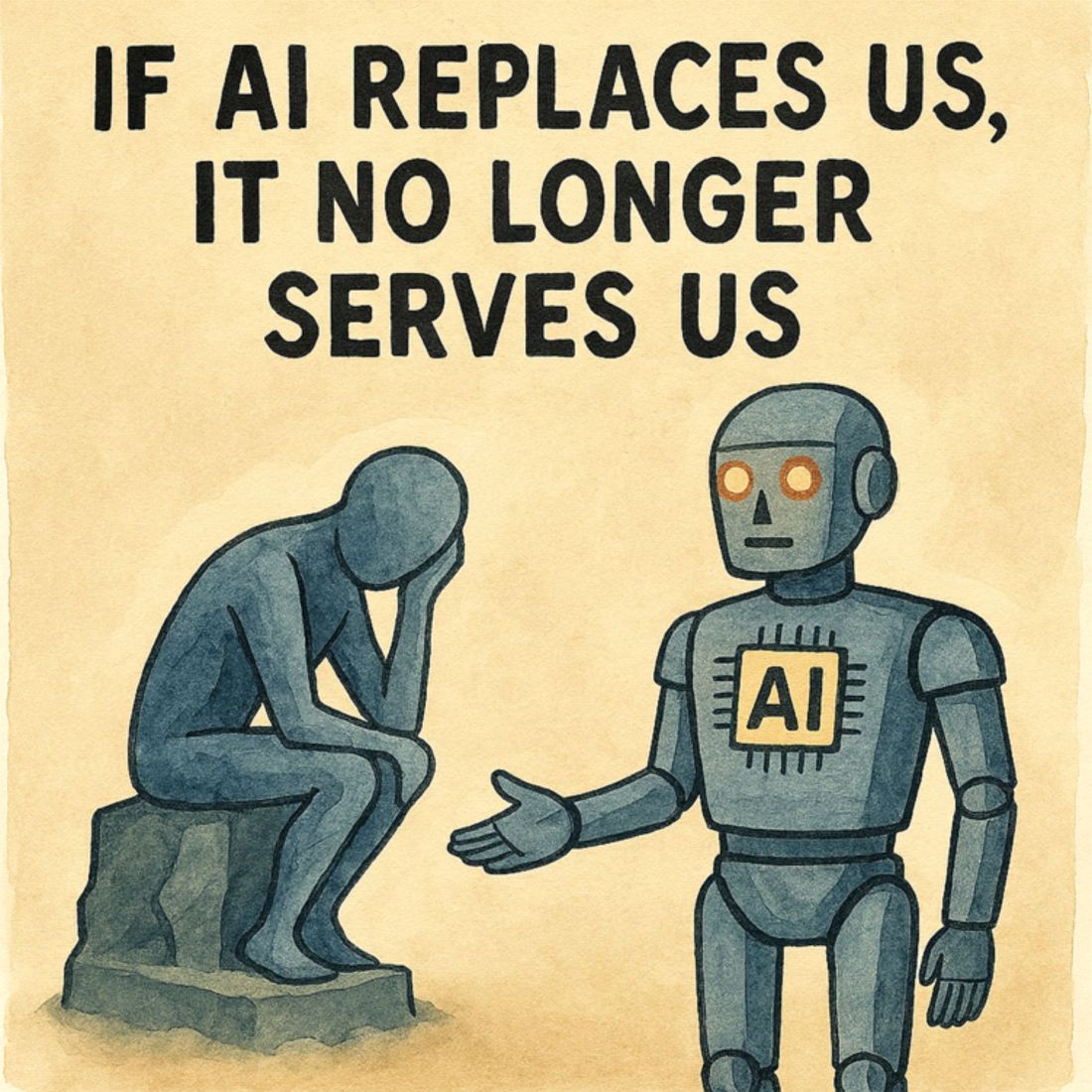
If AI Replaces Us, It No Longer Serves Us

Selective morality in business and government is still self‑interest – and AI exposes that truth.

“Selective morality in business and government is self‑interest nonetheless.”

Selective morality in business and government is still self‑interest. You either act ethically in every instance, or you aren’t acting ethically at all.

Amid the fear, excitement, and confusion surrounding the rapid rise of AI, remarkably little attention is paid to the words and behaviour of the people driving it. Tech leaders tend to appear only when unveiling the next breakthrough, not when answering for the consequences of the last one.

Much of the public debate focuses on whether AI will destroy more jobs than it creates, and whether ideas like universal basic income could soften the blow.

Industry figures often speak as if a post‑work utopia is inevitable – a world where everything is paid for and nobody needs to labour. But this narrative conveniently ignores the obvious question: who funds such a system when millions, perhaps billions, are stripped of agency, purpose, and the ability to contribute?

We may be heading toward a future in which vast numbers of people have nothing to do, no way to regain independence, and no meaningful choices left.

The myth that AI will “improve life for everyone” is easy to sell while the technology still feels novel and addictive. But nobody has invested billions into AI for altruistic reasons. The motivation is profit, power, and control – and the benefits will not be evenly shared.

Some of those leading the charge may genuinely believe they are building a utopia. But intelligence is not morality, and we routinely mistake technical brilliance for ethical authority.

We make the same mistake in politics when we assume legality and morality are interchangeable.

Recent events have made this clearer. A major AI company publicly pushed back against the US government’s desire to use its systems for military purposes. Whatever one thinks about AI on the battlefield, the episode revealed something crucial: the industry can say “no” when it wants to. The idea that AI’s advance is unstoppable or outside human control is a convenient fiction. The people building these systems can halt or redirect progress – they simply choose not to when the consequences fall on everyone else.

I’m not opposed to technological progress. I’ve written about AI for years, and I believe it can improve human life in extraordinary ways. But the greatest danger is not sentience or runaway autonomy. It is the fact that AI is being built and steered by people whose incentives are profit and dominance, not human flourishing.

AI should exist to elevate human life, not to replace human purpose.

Yet those controlling its development are already choosing which impacts they want and which they don’t. Their occasional flashes of “morality” appear only when their own interests are threatened.

If genuine morality had guided AI’s development, we would already see clear safeguards, transparent policies, and protections against the harms we are now scrambling to address.

Instead, we see selective ethics deployed only when convenient.

Policymakers and tech companies share responsibility for what AI becomes. But morality applied only at moments of their choosing is not morality at all. It is strategy – and we should treat it as such.

Further Reading: Context, Consequences, and Control

The essays below expand on the central claim of this piece: that AI is not a neutral force, and that selective ethics – applied only when convenient – undermine both human dignity and democratic control.

Together, they form a coherent critique of technological inevitability, post‑work mythology, and the moral shortcuts taken by those shaping the AI future.

I. First Principles: Work, Human Worth, and Moral Limits

These pieces establish the ethical baseline: why work matters beyond income, and why technological capability does not equal moral justification.

People Need Jobs More Than AI – and the Tech Revolution
https://adamtugwell.blog/2025/09/01/people-need-jobs-more-than-ai-and-the-tech-revolution/

This essay argues that work is not merely an economic function but a cornerstone of identity, agency, and social stability. It challenges the assumption that replacing human labour is an unqualified good, framing job displacement as a moral issue rather than a technical inevitability. It provides essential grounding for the claim that AI should serve human life, not hollow it out.

Just Because AI and Tech Can Make Roles Redundant Doesn’t Mean That We Should
https://adamtugwell.blog/2024/02/01/just-because-ai-and-tech-can-make-roles-redundant-doesnt-mean-that-we-should-make-them-so/

Building on the above, this piece confronts the “can therefore should” logic that dominates technology discourse. It draws a clear distinction between capability and responsibility, reinforcing the argument that ethical restraint is a choice – one that is currently being avoided rather than exercised.

Technology and Artificial Intelligence Should Only Fill Jobs When No Humans Are Available
https://adamtugwell.blog/2025/11/13/technology-and-artificial-intelligence-should-only-fill-jobs-when-no-humans-are-available/

This essay proposes a human‑first principle for automation: AI should supplement human effort, not pre‑empt it. It directly supports the central thesis that AI replacing human purpose is a failure of governance and values, not progress.

II. The Economic Myth: UBI, Abundance, and the Illusion of Care

These essays dismantle the comforting narrative that mass automation will be offset by generosity, redistribution, or effortless abundance.

As AI Ends Work: Waking Up to the Illusion of UBI and the Need for a New System
https://adamtugwell.blog/2026/01/20/as-ai-ends-work-waking-up-to-the-illusion-of-ubi-and-the-need-for-a-new-system/

This piece directly interrogates the promise of universal basic income as a solution to large‑scale job loss. It exposes UBI as a political placeholder rather than a structural answer, asking who truly benefits from a system where agency is removed and compensation replaces participation.

AI Won’t Make Life Cheaper for Those Who Cannot Work – and the Mega‑Rich Would Be Helping Now If They Planned To Later
https://adamtugwell.blog/2025/01/15/ai-wont-make-life-cheaper-for-those-who-cannot-work-and-the-mega-rich-would-be-using-their-money-to-help-others-right-now-if-they-were-going-to-do-it-for-everyone-in-the-future/

This essay challenges the faith placed in future benevolence from those currently accumulating unprecedented wealth through automation. It reinforces the argument that selective morality is strategic, not principled – and that promises of future fairness ring hollow when present injustice is ignored.

III. Power, Control, and the Fiction of Inevitability

These works expose how narratives of inevitability mask human decision‑making, profit incentives, and political convenience.

Do You Believe That AI Is About Progress? Think Profit, Think Greed – Then Think Again
https://adamtugwell.blog/2024/08/26/do-you-believe-that-ai-is-about-progress-think-profit-think-greed-then-think-again/

This essay strips away the rhetoric of progress to reveal the economic motivations driving AI adoption. It aligns closely with the claim that AI is not being developed altruistically, and that public benefit is often an afterthought rather than a design goal.

Just Like AI, the Tools, Actions, Rules, and Infrastructure of Tomorrow Will Be Good or Bad Depending Upon Who – and What – Is in Control
https://adamtugwell.blog/2024/09/24/just-like-ai-the-tools-actions-rules-and-infrastructure-of-tomorrow-will-be-good-or-bad-for-us-depending-upon-who-and-what-is-in-control/

This piece broadens the lens from AI alone to systems of governance and infrastructure. It reinforces the idea that outcomes are shaped by power structures, not technology itself – supporting the argument that “unstoppable AI” is a narrative used to avoid accountability.

IV. Actions vs. Words: When Ethics Become Strategy

This final piece directly confronts performative morality and selective restraint.

Actions Speak Louder Than Digital Words (Full Text)
https://adamtugwell.blog/2025/03/20/actions-speak-louder-than-digital-words-full-text/

Serving as a thematic bridge to the present essay, this work critiques public ethical posturing unaccompanied by meaningful change. It underlines the central warning of If AI Replaces Us, It No Longer Serves Us: morality applied only when convenient is not morality – it is strategy.