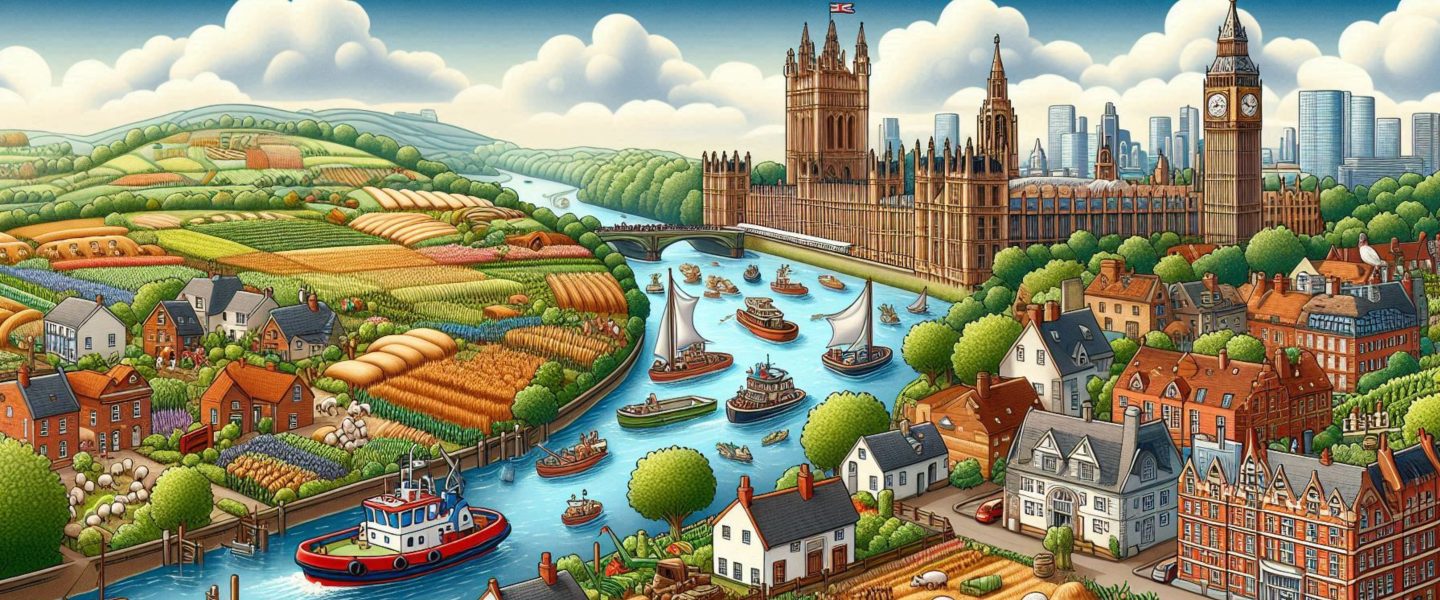
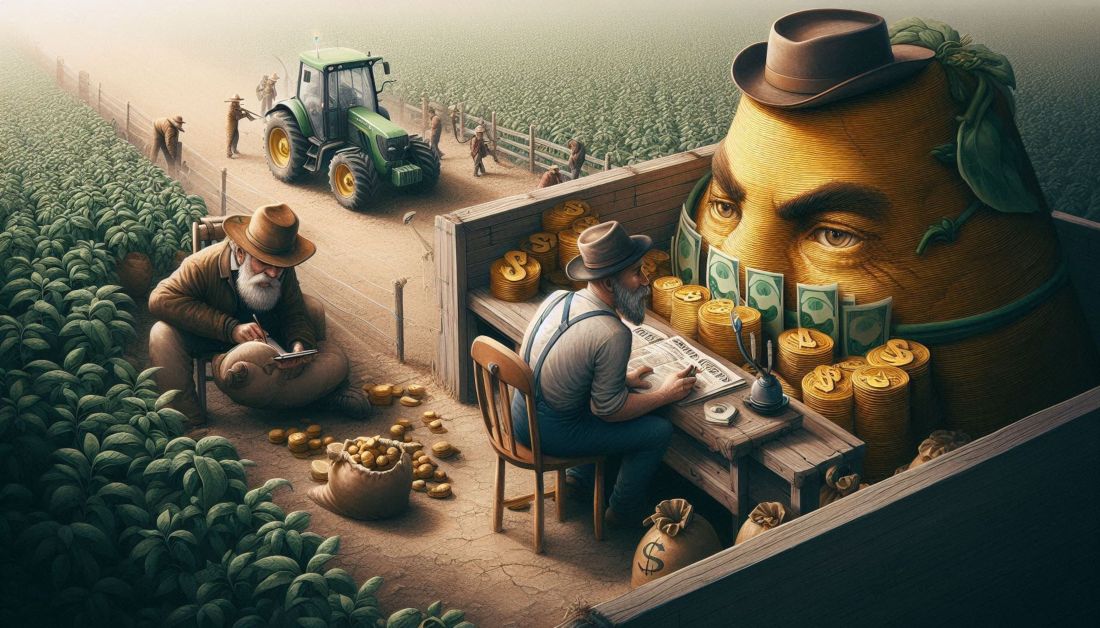
My focus on Agri politics and the mass of issues that surround UK Food Security, Sustainable Agriculture and the growing problem of Food Poverty in the UK has made the past few months and my time at the Royal Agricultural University highly beneficial. Especially as I have began to look further and further outside my own social and professional circles to see if the troubling patterns that I already recognised, were evident in the same way elsewhere.
I have to be blunt and say that nothing I have experienced has given me any comfort. In all honesty, everything that I have seen has made me realise that the UKs Food Security and self-sustainability issues are significantly worse than I’d already concluded, and they are getting worse the whole time.
As you will have already read, Sustainability and Sustainable Agriculture are issues that are important to what I wish to share. However, the English language, the way that we multipurpose words and the obsession with subtext that most of us have, make communicating difficult issues that need to easily be grasped very difficult. Especially when alternative terms and their meanings can be used as a barrier that allow emotional ties to get in the way of progress and constructive dialogue.
There are very important distinctions to be made about Sustainable Farming in the context of what sustainability really is. Given that terms such as Regenerative Agriculture, Conservation Agriculture and Rewilding have been pushing their way into the Rural, Green, Environmental and Agricultural lexicon. As despite what should be very distinctive threads of commonality running throughout all of them, the differences between them and more importantly what everyone believes to be the most important priorities of each of them, are endlessly getting in the way.
Misunderstanding, misinterpreting and misrepresenting key benefits and issues is preventing everyone coming together to build upon shared commonality to identify and implement ways of working for the future that are meaningful and beneficial for everyone involved.
To add to the complication of addressing these issues, there is also a need to focus on methods and thinking that are likely to seem counterintuitive in a way that requires many of the most logical and business minded people that we could meet, to think about a future that looks very different to how it does today. A comfort zone we are resistant to leaving where every system, policy and story we encounter tell us all that the basics of everything that we accept without thinking, are always set to remain the same.
So, this is a statement that will need some more thought. Surely it’s the case that every business is run to make money, isn’t it?
On the face of it, the argument that all businesses exist to make a profit is very sound. However, it is only sound because of the way that the world currently works and how we think, placing money at the heart of everything. Instead of prioritising the real reasons that any business exists, which are the products or the services that they provide to customers (or end users).
We can take this thought further. The real reason for providing those goods or services are to help, support or enable people to live, in whatever way that product or service will help those people to do so.
At risk of stating what should be obvious to everyone but actually isn’t, UK Agriculture, Food Production and UK Farms are about or should be about providing the UK population with a secure, accessible, ongoing supply of healthy, nutritional basic or essential foods. And they should do this collectively on the basis of providing the UK Population with the widest variety that is available to us from being grown, ideally as local to the end user as possible, but at the very least, from somewhere from within the geography of the nation state that we all share.
I don’t know a farmer who isn’t passionate about what they do.
Farming isn’t just a business. Farming is a vocation and lifestyle choice for all those who are genuinely committed to the industry, in what I will suggest is a healthy way.
However, as we have moved further and further away from subsistence farming the scale of risk has grown at the same pace as the commitment to production growth.
It has naturally followed that the power that Farmers and Food Producers in the UK once had, has progressively been surrendered to whoever will guarantee the greatest longevity of income. Even though it has now been arguably many years since such guarantees have also offered anything like what we would likely agree to be viable prices.
One of the reasons that Clarkson’s Farm on Amazon Prime has been such a good champion for UK Farmers is that it has lifted the lid on just how precarious Farming in the UK has now become. Yet few Farmers have the opportunity to do TV work or lean on the marketing power of celebrity to make a new farm shop or a brewery buy-in an instant hit.
The reality is that for many Farmers, it has been the culture of payments and subsidies that have taken over everything in Agriculture, alongside the ‘deals with the devil’ that have been made with traders and supermarkets, that are the only reason that what should be ridiculously successful food producing businesses stay afloat.
It is impossible for Farmers to stand still at a static or subsistence level as it once was, as ‘growth’ and therefore growing ‘turnover’ is the only way that earnings can be kept static.
The alternative for many being either to sell up or go broke.
Farmers, Food Producers and the entire UK Agricultural Industry are vulnerable to whatever the supermarkets, retailers, traders and the establishment demands of them next. Because they have surrendered their power to money, and forgotten how to do what they really do best.
Current thinking and every message that we hear tells us that big and bigger are the only way that things can now go. That ‘growth’ equals progress. Yet none of this is in any way true.
The future of Farming is the return to being a predominantly local, community-focused industry with emphasis on the production of foods and goods that local people need. Not what some want and only they can afford.
I realise that the immediate argument that will come back from many farmers who are thinking about the situation that they are really now in, will be that the infrastructure, support networks and governance (laws, rules and regulations) simply don’t exist to make anything like this work without financial support, and that just this factor alone, before anything like the economies of scale are considered, make any such move one that would be impossible to work.
It certainly looks that way. But without UK Farmers, Food Producers and Agriculturally aligned industries taking back their own power by taking those risks necessary for themselves now, the reality is that within perhaps only a few years, Farming as we recognise it in the UK today, will simply no longer exist.
Amazing solutions to the problems that people are experiencing today have been suggested and put on the table by some equally amazing minds.
However, the reason that none of the solutions that would make life better for people are working, they work only temporarily or on a very limited scale, is because the solutions being given are about people when the world, system or paradigm that we live, and experience today doesn’t work that way.
Everything in life today either revolves around or is focused upon the value of money. So, money is and only ever will be the solution to any problem, even when as far as the people in that equation are concerned, the money-based solution will never work.
To solve all the problems that society and the World has, we have no choice but to refocus and reprioritise all the things that are important in life.
These are the values, relationships, community, our environment and everything that exists locally to us, rather than being orientated around material wealth and the things that we could have.
Let’s quickly recap on where we are, and where we need to be:
The Money-Centric Paradigm =
Money, Profit, Material Wealth or Possessions and the Influence and Power that we believe it brings.
The People-Centric Paradigm =
Values, Humanity, Value of the Person, Rejection of Difference, Happiness just to be.
Ideally, enough people needed to create a critical mass will adopt the change voluntarily that will enable The Paradigm Switch.
However, because of the hold that the Money-Centric-Paradigm has on almost everyone, the chances are that it is only seismic change in the form of an event that changes everything, that would in itself precipitate The Paradigm Shift that is necessary to make this level of change possible, where The System will then work for us all.
The Pivot Point Rule
All well and good you might think. Or you might question ‘What does this have to do with changing the way the world works when we know it’s the politicians that we have, or how expensive everything is, or because of someone else’s prejudices?’, and so on.
The point is that one of the biggest problems that we have within the Money Centric Paradigm today and the way that we experience the world around us, is because somebody somewhere has already or is in the process of trying to create a law or regulation of some kind that basically removes the freedom for people in life and within the jobs they do, to think for themselves.
What the well-meaning fearful control freaks that create add law to laws for laws-sake don’t appreciate or value, is nobody alive today could possibly possess the understanding of every circumstance or situation that everyone else could experience. Because they would have had to share exactly the same experiences, feelings and emotions as that person, throughout their entire life (and every second of it) to be able to understand the though processes and reactions that make them think and then react in a certain way.
And if anyone did have this level of understanding, you can be sure that they would be comfortable enough in themselves not to feel the need to let anyone else know they were that enlightened, let alone feel the need to legislate and therefore take control of the decision-making processes for others, in any way at all.
The most important, yet challenging factor or requirement in the creation, implementation and maintenance of a New or People-Centric Paradigm, is trusting people to be able to make as many decisions about life as they can for themselves, with only a genuine, minimum-touch, but nonetheless powerful pivot rule or anchor for morality and ethics as a guide.
It would be a pivot or anchor rule, as by using it as the unbroachable guide to life and everything that people, businesses and organisations do, the decisions, rules and where necessary laws that then follow, would in turn fall in to place to ensure that People-Centric thinking and therefore living, would become the priority for and within all that everyone does.
The Domino Effect of the Pivot Point Rule
The simple way to visualise how The Pivot Point Rule will work is to think of it as being like a domino representing every conceivable law, rule or regulation being already stood up in a giant interlinking pattern with every other public-policy-representing domino.
The first domino will be the one that sets off the tumbling effect that brings contact between all and is therefore the most important.
This excerpt is taken from One Rule Changes Everything, published on Amazon for Kindle on 23rd December 2023.
As we begin 2024, ‘Problems, Problems, everywhere’, might be the opening line for some mythical superhero sent to save us all by using their political superpowers.
The challenge for us, is that the multitude of problems we are facing across the UK are not only real, but the list is also growing too.
One thing we can all feel pretty sure about is that in terms of public representation, legislators or the people we could elect or re-elect to be our politicians, there certainly aren’t any superheroes amongst them.
In fact, none of our politicians understand what the responsibilities of their elected roles as public representatives are and what the power, they have been entrusted with is for. That much we can be certain of, simply because of the way that things already are.
To be fair to anyone who has knocked on doors and entered politics with best intentions when they first stepped forward, very few of them – whether in Parliament of within any of our local councils – have the ability or the time necessary to observe, consider and understand how government and the public sector in the UK actually works. That is, before they are either corrupted and become part of it, or the issues they raise that would genuinely help us just as quickly see them spat back out.
This part of how the British Political System works is important to understand. Because no matter what the problems are that we are personally experiencing with the world around us, or what the problems are that the people in our lives are experiencing with the wider world too, the reality is that it is, or was at some point, the result of what a politician did or didn’t do, when they had the opportunity to behave differently, that has ended up with every problem that we are now experiencing across society.
How government and governance work
The laws, regulations and the governance we have to control everything in life outside of ourselves or our homes, is ultimately the responsibility of the people (That’s us!).
In the democratic system that we currently have, that means that the decisions taken that have created all the problems the UK has are down to the choices made on our behalf by the people we have elected to represented us and in whom we have collectively placed our trust.
It doesn’t matter whether the politicians and decision makers were aware of the consequences of their actions or not.
No person should ever stand for election to a public office, if they lack the ability to take decisions on behalf of the constituency that they were elected to represent. Rather than putting their political party or themselves, first.
Regrettably, we are where we are today. And because the growing mess that we are being pulled into right now has been created over a period of decades in time, the reality is that the problems that poor, misguided and incorrect governance of the UK has created are now too embedded to be easily fixed – No matter what any of the politicians that are currently lining up with the aim of getting elected in the next General Election have said already or are going to tell us as that time gets nearer.
We can no longer continue as spectators in our own story
The UK and the World itself enters the mid 2020’s in crisis. Whilst some of us may feel happy and contented with the lives that we have and might even feel insulated from the World outside of our daily lives or what some would call our ‘bubble’, very few of us can fail to acknowledge the problems facing people, communities, society and our country as a whole.
Whilst we all have the ability to look outwards and say quietly to ourselves, ‘none of this is my problem’, or ‘someone else will sort that out’, the truth we all have to face is that responsibility for the things that have happened, the things that will happen and the things that still need to happen, rests a lot closer to home.
Those of us who are able, must now enter into the process of looking at all of the problems that we have, and what we do to try and address them, in a very different, and very alternative way.
Surprising as it may sound, it is the complexity of the problems and the interconnected nature of all those problems that the UK has that sit in the areas of law, rules and governance that have not only allowed the creation of all those problems, but has also made finding a solution to them difficult to the degree that many believe the solutions that are now necessary, are impossible to implement, in no small part because we don’t believe that we have any control or relationship with them.
Even harder to fathom for anyone genuinely seeking solutions, is that despite the almost encyclopaedic spread of those problems, that we will later discuss in terms of degrees of separation, both the problem(s) and the solution(s) can be identified and recognised for the power and the reach that they have, in what are very simple terms.
It is the simple way of looking at solving the UKs problems that is most difficult to accept. Because the masses of problems and the complexity of all of them surely means that there must be masses of solutions that are themselves very complex by their nature, after all.
What I can tell you, with the life, education, commercial, volunteer, entrepreneurial, charity, government, not for profit, political and thinking experience that I have, is that we all have the same power, as individuals and as members of our communities, to play our part and to change things. And that change all comes down to the way that each and every one of us think.
Regrettably, we must genuinely want to change our minds before we will be prepared to change them. The resistance to that change is where the root to the solution to every problem genuinely lies.
The System or Paradigm that we experience and are living in now
Because life is so detailed, and we are continually drawn into that detail, it is very easy to miss the bigger picture that is at work around us. Not just within one or a few additional layers, but for some of us what might be described as being a multilayered or multifaceted way.
If you were to stand back and be able to look at, review, consider and think about the way that everything in the world beyond your own day to day experience and what you see every day in the world around you works, no matter how detached, how far away or how irrelevant it might feel, that entire picture, the moving parts, the people, the businesses, the communities, the countries and everything else are what is called a system or what some might refer to as The System.
The Solution isn’t in the detail. It’s about The System itself. If we change the way the system works, the details will take care of themselves
The way that The System works or the processes, patterns and behaviours that make The System work the way that it does is called a Paradigm.
Whilst the many solutions to society’s problems being suggested may have been very well thought out, they are usually idealistic and fail in some way, simply because they overlook the practical reality of the way that The System or the existing Paradigm works and affects everything.
The Paradigm that needs to be changed, or shifted, is based on, focused and is developing even now around Money and how everyone thinks about it.
The shift to a new Paradigm and the process that will bring solutions to all the problems that we have will require us to be values orientated and therefore People-Centric instead.
The question we all face, and that our future, the future of our communities, our country and probably the world too rests upon is ‘What will it actually take for enough of us to change our minds?’
Stepping back from the small stuff to embrace the bigger picture
The switch from subjectivity to objective thinking may sound easy when framed that way. But the reality is that if the ability to see everything objectively were as straightforward or automatic as looking at everything subjectively, the World would already function very differently and be a much happier and healthy place.
Chances are that you will have heard and understand the phrase ‘Can’t see the wood for the trees’.
This is a simple way to consider the relationship between detail (being in the trees) and the overview (the view of the whole wood) that is a key part of the journey that now follows in this book.
Although One Rule Changes Everything is about working with the bigger picture, to give the process and solution the meaning required to be both viable and for its longevity to be assured, it is necessary to appreciate how The System we live in today really works by having an understanding and appreciation of what the detail means or what it collectively adds up to first.
If you are ready, it’s time to begin:
This Introduction is taken from One Rule Changes Everything, published on Amazon on 23rd December 2023. To download your copy, please follow the link below:
As I write in December 2023, there is much talk in the news of the UK’s Conservative Prime Minister Rishi Sunak being replaced by his Political Party, and of the next General Election which is generally considered most likely to be called for the early Summer or Autumn of 2024.
Politics in the UK today is regrettably very tribal. But within these tribes, two different ideologies dominate, even though for some people, they will not be recognised by name.
They are Socialism and Neoliberalism (Or what most believe to be Capitalism with a more modernised name).
Whilst Socialism and Capitalism (which has really been Neoliberalism since the removal of the Gold Standard in 1971) were clearly very different political ideas historically and were previously easily defined through analysis of the public policies that they espoused and implemented; such clear definition no longer exists.
The only discernible difference between the Political Parties that exist in the UK today is the language that they use to frame and promote the Neoliberalism that now drives and is common to them all.
Neoliberalism is a control-level obsession with money, overtly displayed as a fixation with the idea that the markets are much better stewards of everything than government could ever be.
The true purpose of Neoliberalism is also its greatest danger to Humanity.
To be successful, Neoliberalism requires constant growth of the volume of money in circulation. This in turn means that whilst newly created money is funneled towards those who are already rich, the value of everything owned by everyone else is constantly becoming less and this now means that the wealth divide is growing exponentially – which is why so many of us are now getting hurt.
The wealth divide is now so wide, that what we are now demonstrating to be the meaningless ideologies that the different Political Parties in the UK play around with can only dictate or influence the speed with which the lived experience of the masses continues to degenerate and get progressively worse.
Both Socialism and Neoliberalism are presented to the public as being the champions or causes of freedom. Socialism through the freedom to be equal with all things, where that equality is inevitably designed or defined by someone else, so is never really about equality at all. Neoliberalism, where freedom is presented as being the removal of the state or government from every part of life and the public sector with the inherent suggestion that market freedom can only benefit everyone. Whereas what that freedom really becomes is freedom for big money from law and restrictions, meaning that those with lots of money can increasingly control everything and everyone using civil law and the courts as if they have become the government itself.
The Neoliberalism pursued by politicians is nothing more than a dictatorship by private proxy that just creates misery, harm and poverty for the masses. It facilitates a System that doesn’t either represent or resemble anything like freedom at all.
If you can understand and accept that this is how the reality of the narrative really works, the only suggestion that I will add is that it will serve neither your own nor anyone else’s interests to feel angry about what the people we have elected have really been doing all the way along.
Politicians, public servants and people in the public eye are human too. It is simply amazing just how many of them don’t really see how they have also been played and as such, they have no real understanding of the damage that they genuinely do.
This excerpt is taken from One Rule Changes Everything, Published on Amazon for Kindle, 23rd December 2023.