
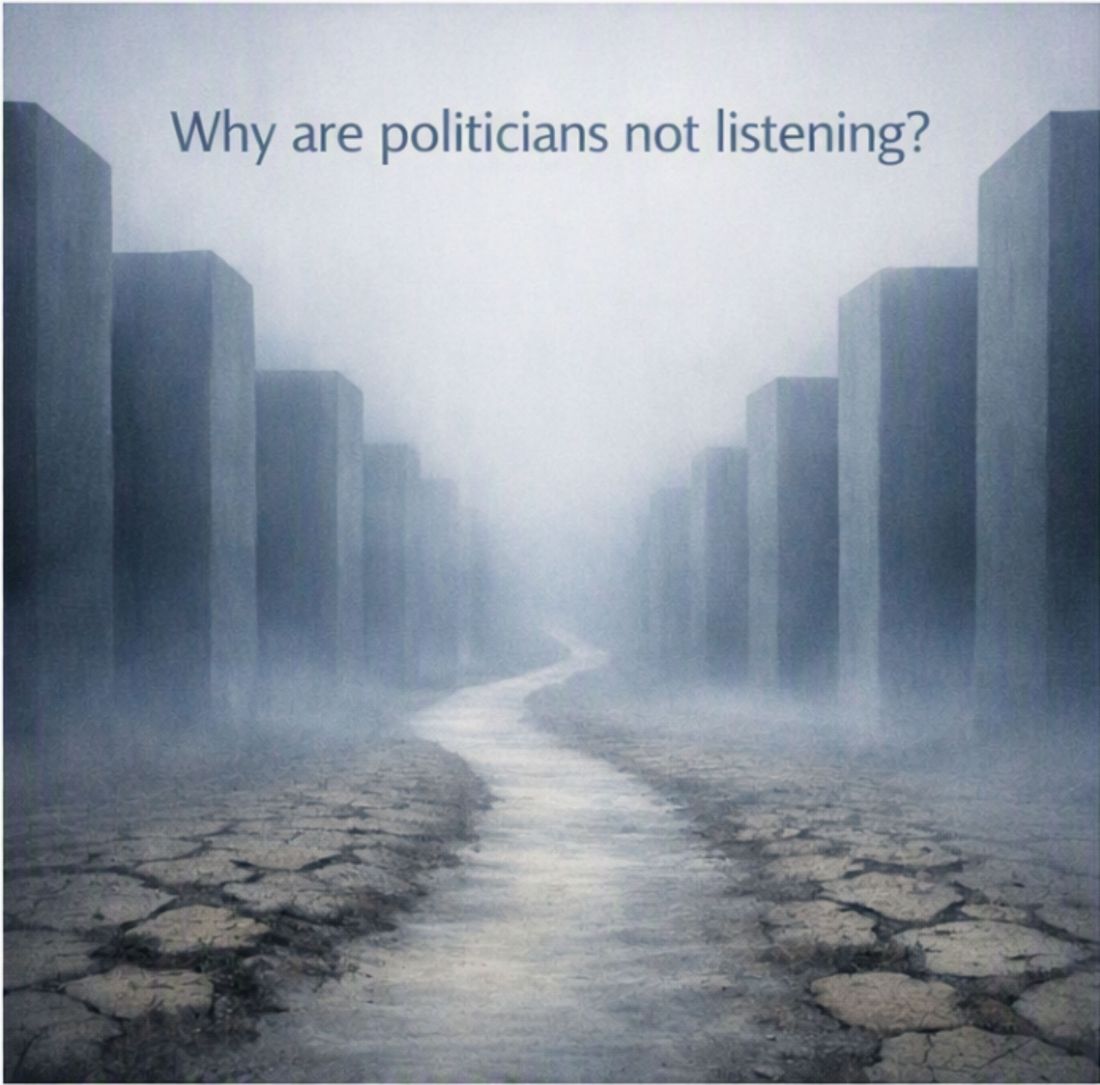
People feel ignored, dismissed, patronised, unheard. This is the collapse of trust.
And no – you’re not imagining it. It feels like politicians aren’t listening because they aren’t. Or at least, they’re listening to the noise, but they’re not hearing what people are actually telling them.
We’re living through very difficult times, and politics is always a tricky subject because who we support is tied closely to what we believe and the values we hold. That’s why people get so worked up – sometimes even angry – when the parties or politicians they follow are criticised, or when they’re told that their side might be wrong.
Understanding why politics polarises people is just as important as asking why politicians aren’t listening. Because no matter which party or politician any of us support, almost everyone is feeling the same things. We’re all experiencing the same problems. We’re all living with the same instability. And the ideas, motives, and thinking behind political decisions are basically the same across the board – even if the colours, slogans, and messages look different.
Once you strip away the names, the branding, and the promises, you start to see that the political system is working from one shared worldview. That worldview shapes everything – governance, money, values, priorities – and it’s the same worldview that has led us to where we are now.
This is why politics feels stuck. This is why politicians feel disconnected. This is why nothing seems to change.
It’s not because nobody cares. It’s because the system they’re working within is no longer capable of delivering the outcomes people need.
The reality is that while we’ve been taught to believe that the politicians we see on TV, online, or on the radio can make big decisions that will fix the problems we’re worried about, their hands are tied from the moment anyone walks into Number 10. The way the system works – especially the way money works – limits what they can do long before they ever get the chance to try.
To be fair, the realities of government are hard for any of us to understand today. What we believe happens and how things are supposed to work are very different from what we’re experiencing. What makes it even harder is that politicians often sound like they’re talking about the right things. They say they’re going to act. They promise change. And then everything stays the same.
This isn’t because they’re all being dishonest. It’s because they’re performing – quite literally acting out for the media – in the belief that this is the best way to keep everything running. The public sector is doing much the same. Not because people don’t care, but because there is no longer any real sense of a workable alternative.
There’s a lot to think about. And you might not feel it yet, but what you think, what you say, and the contribution you can make are not only important – they’re vital to where all of this goes next.
You’ll hear more and more voices offering “new approaches” or “different ideas.” Some of them sound credible. Some of them have big followings. But most of them still rely on the same belief: “Things would be different if I – or my group – were in charge.”
That belief is one of the biggest problems we face.
Because the truth is this: The only way things can now be different is if we make them different – by thinking differently, acting differently, and working together differently.
Right now, everything is centralised. People we will never meet are making decisions about places they will never visit. That centralisation is one of the biggest reasons everything feels wrong.
I’ll provide links you can explore if you want to understand how politics and governance reached this point. But moving forward isn’t about blaming any party or politician. It’s about looking ahead and taking the steps that will create the best possible future for everyone – instead of obsessing over what has gone wrong in the past.

