

It is a regrettable truth of our age that we have drifted into a way of living where the default setting for life is no longer internal but external – where our sense of worth, direction, and even identity is increasingly determined by validation from sources far removed from our own lived experience.
The digital age has accelerated this shift dramatically. The more connected we appear to be, the more distant we become from our own sovereign power to choose, to interpret, and to understand the world on our own terms.
The consequences of this surrender are profound. By handing over our decision‑making power to systems and individuals we will never meet – people who operate at a distance so great that they cannot possibly understand the realities of our lives – we entangle ourselves in a money‑centric structure that not only encourages but demands this dependency.
Together, these forces shape a culture in which almost every problem we face can be traced back to the same root: we have allowed external systems to define the context of our lives.
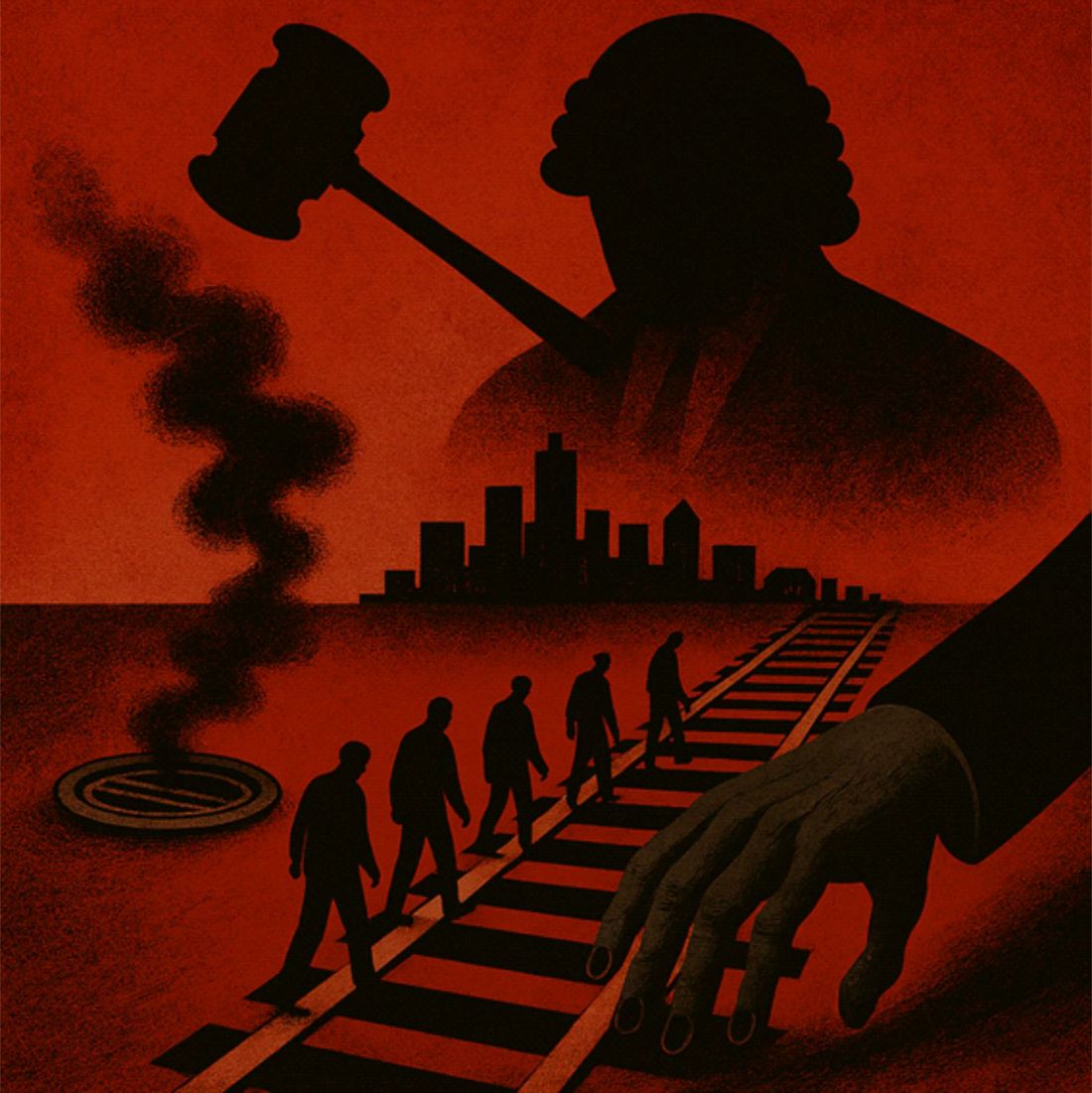
The cleverest trick of these systems is the illusion they maintain – the persistent suggestion that we are the ones in control. We move through life believing we are making independent choices, when in reality the options available to us have already been pre‑selected, pre‑framed, and pre‑approved by the very structures we assume we are navigating freely.
We roll forward, unaware that our supposed autonomy is often nothing more than a curated pathway. We feel successful only when we meet criteria defined by others, and we feel like failures when we fall short of expectations we never set.
Worse still, the system punishes us for failing to conform to standards it created – standards that often set us up to fail from the outset. It is the system, and only the system, that defines what is considered “wrong”.
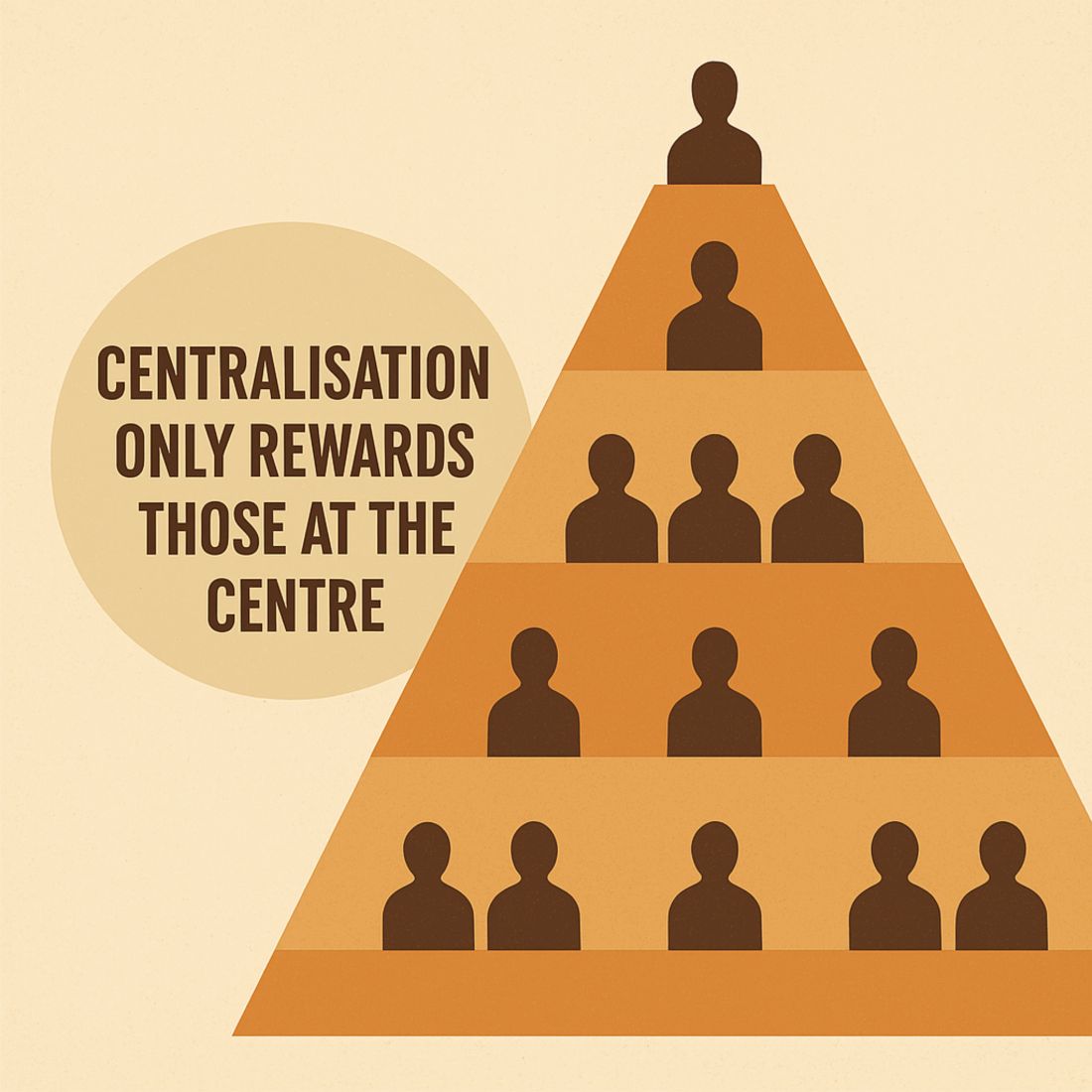
In this arrangement, context itself becomes centralised. The frame through which we are expected to understand life is set by someone – not a specific individual we can see or challenge, but a faceless centre of power that dictates norms, values, and truths.
Because conformity is rewarded and deviation is punished, everyone else becomes an enforcer. We are encouraged to look down on those who fall behind, to participate in the scorn that has become the default punishment for anyone who fails to keep up.
This is how centralised systems maintain control: not only through authority, but through the social pressure they cultivate among the people themselves.
Most people do not realise that in a centralised system, it is only those at the centre who get to decide what is acceptable, what is right, and what is true – even when their decisions are inherently wrong.
Their power is maintained only for as long as they can dictate the truth and prevent the real truth from being exposed: that they are fallible, that they are distant, and that they are often wrong precisely because they are so far removed from the realities they claim to govern. Yet they guard this power jealously, because their position depends on the illusion that their perspective is universal.
But context – real context – should never be defined from afar. Context should always be the immediate situation, the lived circumstances, and the human experiences of the people who are actually there. It should be grounded in the reality of those directly involved, not imposed by those who observe from a distance.
Yes, one could argue that if the centre makes the decisions, then that becomes the context for everyone else. But who in their right mind believes that the lives of millions, perhaps billions, should be shaped by the worldview, preferences, or limited understanding of a tiny number of people who cannot possibly grasp the complexity of every local reality?
The truth is simple: the only people who truly understand any situation are the people who are present within it.
That is what real context means. That is how life should be understood. Context is, and can only ever be, local.
Those who look in from the outside – whether they are policymakers, commentators, or strangers on social media – do not understand the context. They make judgements based on what they see, what they assume, or what they have been told. And because our culture has drifted so far from local understanding, these judgements often carry more weight than the lived experiences of the people directly involved.
This is where the principle of charity becomes essential. Once a foundational ethic in journalism and public discourse, it required us to interpret others’ words and actions in the most reasonable, humane, and generous way possible. It asked us to assume good faith unless proven otherwise. It encouraged us to listen before judging, to understand before condemning. But in the age of social media – an age defined by speed, outrage, and performative correctness – the principle of charity has all but disappeared.
Today, fewer people have the breadth of experience or the patience to give others the benefit of the doubt. Instead, we have entered a cultural moment where it is considered not only acceptable but virtuous to search for fault, to highlight error, and to amplify anything that can be framed as wrong.
We listen less to the human experiences of others and more to the narratives that reward judgement. We prioritise the appearance of correctness over the pursuit of understanding.
And so we find ourselves in a world where context is distorted, where judgement is detached from reality, and where the voices of those who are actually living the experience are drowned out by those who merely comment on it from afar.
If we are to rebuild a society that functions, we must reclaim context from the centre and return it to the people who live it. We must restore the principle of charity so that understanding can replace condemnation. And we must recognise that real truth – the kind that leads to wisdom rather than control – cannot be dictated from a distance.
Real context is local. Real understanding is human. And real agency begins only when we reclaim both.