
A Quick Note from Adam
Over recent months I have been migrating key works across from my Foods We Can Trust site, to share here on my main Blogsite.
The Importance of Foods We Can Trust Awareness is now joining the other FWCT and wider farming and food related works that I have published at www.adamtugwell.blog in July 2026, but was originally published on 28 April 2025.
As such some of the language and terms used may reflect that time rather than the time of republication.
Introduction
In recent days, I had a conversation about what Foods We Can Trust can actually mean to different people.
It’s important to recognise that what Foods We Can Trust are, is a subject that can mean different things everyone at first glance.
It does so, because we all think about Food in ways that can be very divisive. Depending on what role Food already plays for us, in our lives.
However, Food really shouldn’t ever be divisive. Because whatever may or may not be important to us when we think about the types of food we Eat and why we do or do not Eat them, we should all be able to make the choice of what We Eat at every mealtime from Foods We Can Trust.
Once we’ve got through all of the questions, objections and every other form of barrier that stop people from being able to choose every meal from Foods We Can Trust today, there are very good reasons why each of us should be thinking a lot more carefully and consciously about the Food we consume and why.
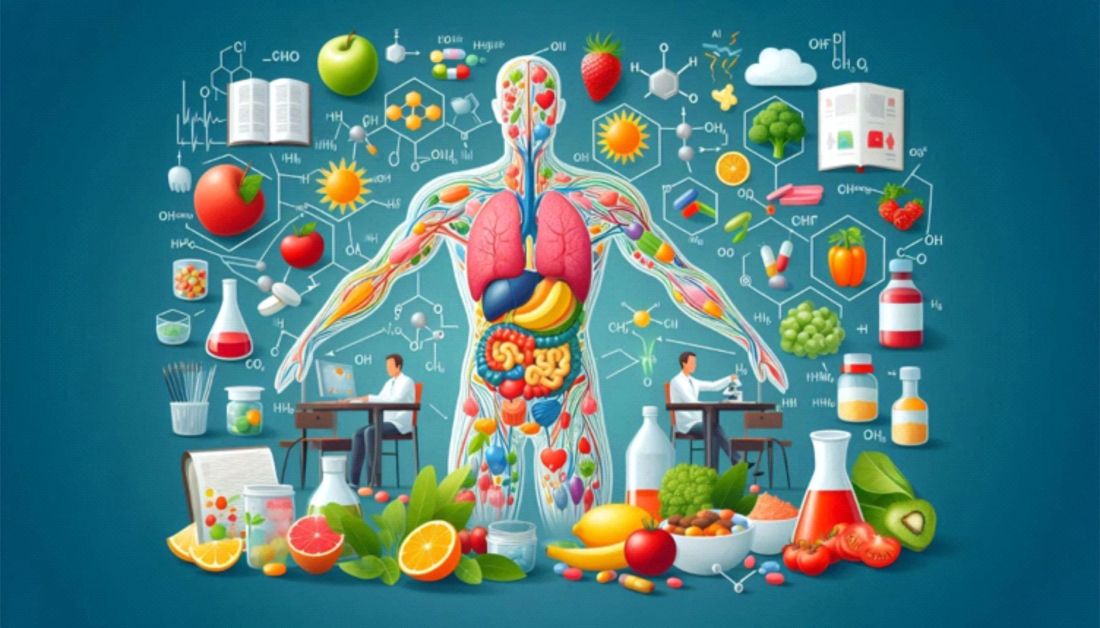
The Human Body is a brilliant, natural machine that can only work at its very best when we consume the right fuels and lubricants
Changing the way that we think about Food is the biggest question to answer, as we consider the Foods We Can Trust.
We take Food for granted in just about every conceivable way.
But perhaps the worst and potentially most harmful way we overlook what we are Eating, for us personally and as far as our bodies are concerned, is our failure to always consider the nutritional value and what the Food we consume contains, at the point that it enters our bodies.
Please don’t be under any illusion. We all do it – Because that’s how life currently works. And that’s a real problem for us all!
We don’t need to be doctors, scientists, nutritionists or dieticians to understand the basic principle or equation that tells us what we put into our bodies will have a direct effect on what we get out.
The Food we consume impacts us all in terms of our physical health, mental health, energy levels, wellbeing, hormonal balances, how we feel at any particular time and yes, the list goes on.
But most of us also take this for granted too. And most worryingly, we don’t really think about any of it until whatever we are eating too much or not enough of, shows up by affecting us personally, in some uncomfortable way.
Sadly, even then we may not feel able to do anything about it because of the relationship we have with Food.
Put enough Goodness in and a lot more Goodness usually Shines out
The Human Body is a miraculous biological machine.
It has all sorts of weird and wonderful mechanisms, chemical processes and even physical filtering systems, that can deal with small amounts of things which aren’t actually all that good for us.
However, small really does mean small, in terms of anything that the Human body needs and really doesn’t need to consume.
The amounts of anything within what we Eat that can make a difference, either positively or negatively can be ridiculously small. Even in terms of the amount of the good things that we require each day for our bodies to function at their very best.
So small amounts of anything that we consume regularly that isn’t good for us can soon start to become a problem over time, because the body cannot keep removing the things we don’t need and so it can build up, causing a cumulative effect.
The difficult thing for us to get our heads around is that consuming small amounts of the wrong things doesn’t appear to have any direct relationship with what we Eat. Because we rarely have immediate reactions to bad things at the same moment that we eat it, and we would all typically spit it out or would soon be sick when we do.
This indirect relationship means that we easily overlook foods and ingredients that aren’t good for us at the moment we eat them. Especially when there is some reason that makes those foods very appealing to eat – and perhaps addictive or habit forming when we put them in our mouths. Such as the way that they taste.
Masking
The appeal of the Foods that we typically eat today isn’t as simple as all it might seem. Because the companies that make massive profits out of ‘making’ or manufacturing foods that can do us harm when we repeatedly Eat them over a period of time, are only really able to do what they do by using and abusing the knowledge of how our bodies work.
Many of the Foods we eat today are actually designed and then manufactured to fool our bodies into believing that we are only eating things that are actually good for us.
So, when it comes to the taste of the Food we eat, ‘good’ is no guarantee that what we are eating is good for us and can actually mean that its very bad!
Masking is a process where Food or ingredients that are artificial, have been modified or processed in ways that will often mean they will become harmful to our bodies when we keep consuming them over a period of time, are hidden by adding other ingredients that quite literally confuse our bodies and ‘mask’ our taste receptors, so our bodies natural responses are confused and unable to respond to whatever the food we are eating really is.
If we eat more of anything than we need or try to eat anything that isn’t going to be good for us that is naturally produced, a healthy body will usually tell us that we should stop eating.
Narratives, Technology and Medicine
Regrettably, because we are living through and experiencing an age where so much is available to us at the press of a button, whilst we are at the receiving end of a constant flow of information suggesting there isn’t much that technology cannot fix, it is very easy to think about happiness and pleasure being all about the moment and the now
Many of us don’t believe there is any downside to what we eat and that the consequences – if any really exist – are something we can deal with whenever and if ever we have to, if and when that day comes. (And let’s face it – few of us see anything ‘bad’ hiding between the adverts, narratives and marketing we constantly receive…)
We also fall into the rather large trap of accepting that anything that comes to us through digital devices, through TV, Radio, adverts, sponsorship, influencers, big brands and public figures of any kind can automatically be trusted – whatever it might be.
The phrase ‘Beware of distant elephants’ is very appropriate when it comes to our relationship with Food and what we actually eat. Because when the problems do arrive – which for many they certainly will, those problems will arrive all at once and we will feel like we are being trampled by an elephant when we do.
The role of opposing beliefs in remembering the shared Importance of Food
Let’s get one controversial bit out of the way in terms of how we think about our ‘bodies’. Because the real distant elephant in the ‘what we are eating room’, is this:
What our bodies are, and what the systems of the Human Body can do, is very much at odds with what most of the Food that is accessible and affordable to everyone today already suggests and would make anyone think.
The Human Body isn’t designed or built to work well using the fuel that the Food Chain typically brings to us.
Modern Food Production processes cannot emulate, replace or meet the completely natural set of nutritional requirements that the Human Body has. No matter how good manufacturing processes and the addition of different artificial ingredients can make unhealthy Food taste.
Our bodies have not, will not and cannot evolve to run effectively as they should and thrive when we constantly consume the Foods that the Food Chain and those benefitting from every part of it today would like us to. No matter what the narratives and even the politicians might say.
Facing up to Bodily Realities
In terms of where the Human Body came from or how our bodies ‘evolved’, most of us believe in one of two ‘histories’.
The Human Body was either:
- Divinely created, or
- Evolved ‘naturally’
If our bodies were divinely created, we can be reasonably sure that whoever or whatever created them intended that we fuel them with the foods that are readily available to us. Whether they are grown, harvested or caught.
If our bodies evolved in a way that theories such as Darwinism would indicate could only have only taken place over a period of many thousands if not millions of years in time, we can be just as sure that the Human Body cannot and will not adapt to any kinds of Foods or ingredients that they haven’t been exposed to for pretty much the same period of time.
For anyone who sits outside of these two possible pathways of human history and believes that we are either in a hologram or something that our dreams have made, either or both of the above will almost certainly be just as true. Because they don’t need to be mutually exclusive, and either way, this life as we know it is the experience that we are living, and these two models are basically the software options that we have to choose from!
Wishful Thinking that gambles with our lives
No matter how much we might love the lifestyle and ‘opportunities’ we have today and can overlook everything that is going on around us in so many different ways, the body is the centre of everyone’s private universe.
If we don’t look after our body and give it the right fuels and lubricants, we will soon be required to focus on the reality that it’s the only one that we have got.
However, it’s just as important to recognise that eating well and eating simply – without all the processes and processing where all the money is there to be made, doesn’t sit well with the way that our culture and economies currently work.
Words can and are being used to convince us of anything we can be led to believe. If the stories and narratives they form will lead to profit, influence and control for the people who run everything.
Food is a key essential for daily life that we all need to have brought to us in the world as we know it, today.
So, controlling the processes and the ingredients that govern and support the Food Chain, so that they appear unavoidably difficult and uncontrollably expensive, is how people who need to eat regularly are increasingly being controlled and massive profits can also be made.
The Foods We Need
The Foods that our bodies need are not expensive. Or rather they wouldn’t be, IF we were growing them ourselves. Or they were being grown, harvested, produced and traditionally processed locally by small businesses and limited-sized supply chains, run and managed by people we know, who have very similar if not the same needs and ourselves.
Sadly, we have been conditioned to believe that the Foods We Need are too expensive and therefore are increasingly impractical.
We have also been carefully guided or conditioned to believe that we need a much greater variety of Foods to choose from than we do.
To top all of that, we are also being led to believe that the creation and manufacturing of Food is something that normal people and small independent businesses such as farms, growers, bakers, butchers, fishers and fishmongers, and dairies can no longer efficiently do properly, or that any of us can do so in the quantities that the world now needs.
The fight over our Food and what we eat is therefore a fight over control. Because as long as we have control over what we eat and how we produce it, we also have control over our own lives.
Regrettably, if we do not refocus and place our shared need for Foods We Can Trust, right back at the centre of our lives, we will soon lose that control.
With it will go the ability to create the Foods that our bodies need to be healthy and to ensure that happy, healthy and good lives can be experienced and maintained.
Progress is not always linear
Before we finish discussing our own personal needs and requirements for Foods We Can Trust, it is important to begin the task of addressing the many reasons that will be given that suggest we can no longer expect to have open access to the Foods We Can Trust in the way that we always should have.
If you follow current affairs closely and have been watching the impact that the new Trump Presidency has had through Trade Tariffs, you may also be able to see that there is a much bigger problem beginning to surface with the way that the Global Economy works.
The funny thing is that the Global Economy and the way that economics affects everything – not least of all Food, has always been flawed.
But the problems that it has steadily been creating for decades have been hidden by the way that everything has worked.
The problem with addressing the real problem – and this is especially the case when it comes to how we grow and produce our Food, is that those with real influence over the Food Chain as we know it, don’t prioritise Food, and therefore all of us in the way that they should be doing.
Ask them for their opinion or view, and the only thing that you will get back is the suggestion that technological advances in production and efficiencies can only go forward. With the inherent suggestion that everything that we do with Food Production today or that we have already done is archaic and therefore should be treated as if it is already in the past.
Most sovereign states around the world were themselves Agricultural Economies for what were sometimes substantial epochs of Human History.
The Agricultural Age was no accident. Because Food and the need for Food was historically and rightly considered to be the centre of whatever we would now recognise as the equivalent of the economy therefore had Food Production right at its very heart.
There is nothing good about the way we are being taken in respect of our relationships with Food, simply because of the way that money, economics and finance are worshipped and revered by the ruling classes above all things. Not least of all because of the impact that the deference to money, influence and control is already having on our Food Security and Food Supply – even BEFORE we give any thought to the Foods We Can Trust.
Food Production and Farming are already heading in the wrong direction
Right now, the way that our Farming Industry produces Food isn’t generally good for us.
Many Farmers are reliant on chemicals, maintaining levels of production that are impossible to maintain, and the farming methods that the Food Chain requires inflicts a cost on soil and the environment which is genuinely real, but instead of being helpful to Foods We Can Trust, is absurdly playing into the hands and narratives of those who wish to end traditional farming in every sense.
Moving towards factory farming and Foods that are heavily synthesized and contain many processed and manufactured ingredients – not least of all so they seem tasty enough to eat, is not progress.
Becoming reliant upon heavily processed and artificially constructed Foods that contain a majority of ingredients that we wouldn’t choose to eat is the route to a very bad outcome for us all that is itself littered with health and degenerating living standards, where many people will suffer and fall along the way.
Genuine progress in Food Production, from where Food Production is today, will be to return to traditional forms of Farming and the localised economics that thrive around it.
This is how everything should and would be now, if there wasn’t any self-interest, greed or an obsession with money around.
Moving back towards more simplified methods of Food Production, where technology is used to improve, rather than take over what we do, isn’t going backwards for anyone. Unless you are one of those worried about losing control or how your future profits are going to be made.
On the basis of what we know and what anyone can see about Food Production, the Food Chain and the many things that stand in the way of universal access to Foods We Can Trust today, backwards is most definitely the new forwards.
For humanity and for all of us, this focus on Food Production is how real progress into our future will be made.