
If you’ve ever heard someone you think of being a nerd, going on about saving or storing seeds, this is probably the moment when you will begin to make some sense of why.
Pretty much every vegetable, fruit or cereal that we eat can only be grown because someone has had the good sense to harvest, store and then distribute their seeds.
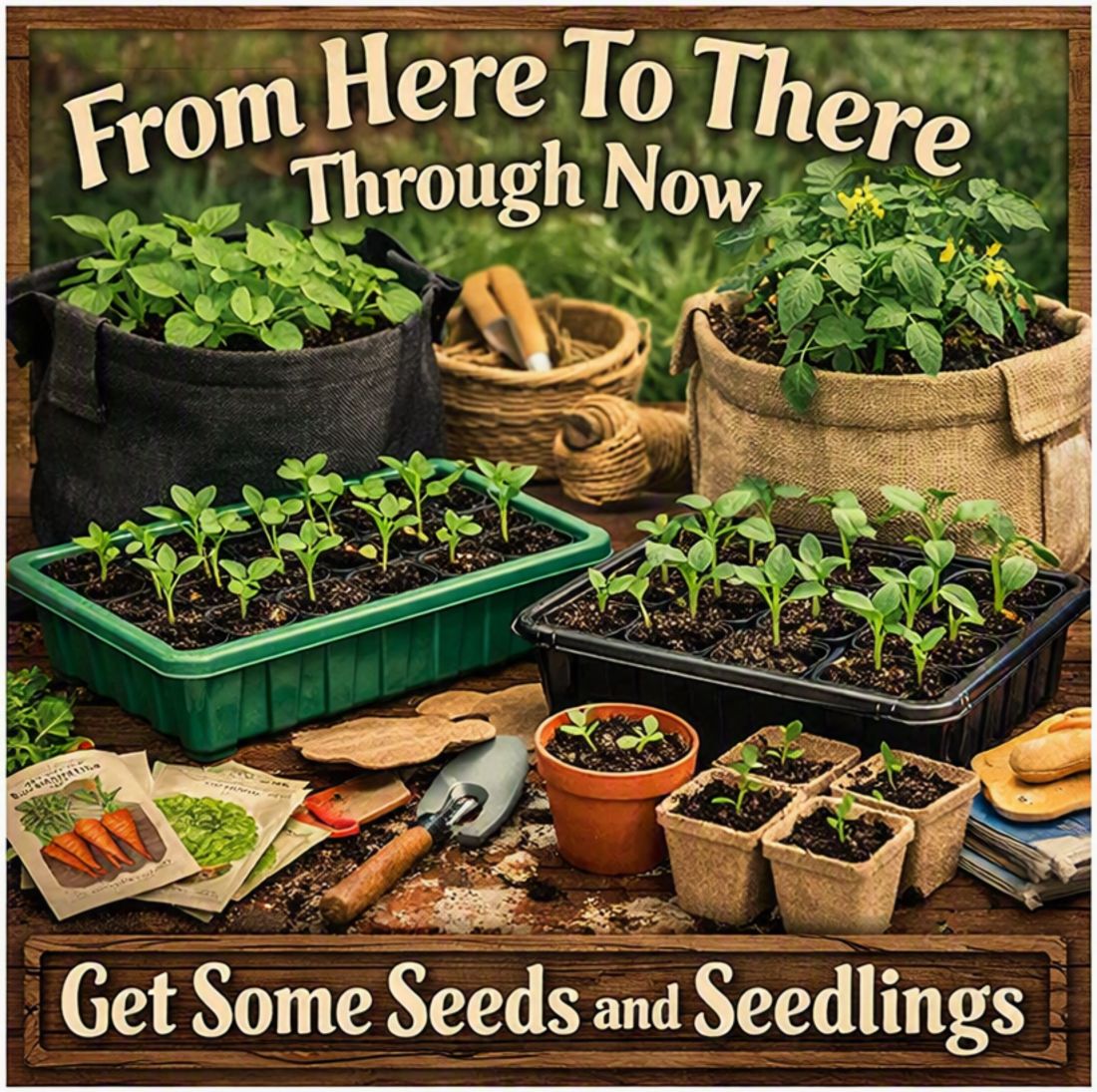
You will need seeds to grow whatever vegetables or fruits that you might choose.
Seeds are available online and even in some supermarkets, depending on the time of year. I picked up number of sachets a few days ago in Sainsburys (That’s well-known chain of supermarkets in the UK) and you are likely to find them near the flowers or any gardening things.
Again, its worth having a read up to check what you will be able to grow. Very little that you can grow in the garden will provide a crop year-round, if at all. So the next question will be what, where and how you can grow (or store) so you have something available year-round.
If you are lucky – and especially so at this time of year (spring/early summer), you might happen across seedlings that are vegetable or fruit plants already beginning to grow, on sale by the side of the road, at a garden centre or even in the plants section at your local supermarket. Grab a few if you can, as this is a great way to get a head start – and encourage yourself to get the growing bug – which can be very rewarding once you do!
Afterword – 23 September 2026
Thank you for visiting this piece, which was first published in May 2022 as part of my later book From Here to There Through Now.
With Grow Your Own and the wider question of Food Security becoming ever more important, my work since has led to the publication of a broad range of articles, books, and resources exploring these subjects.
If you have a moment, you will find links to some of those works that are currently available to read on this site below.
Thank you for your interest and support.
Further Reading
If you’ve reached this point and are thinking more seriously about growing your own, food security, or how we can all prepare better for the changes already underway, the following pieces will help you take the next steps. They build on the ideas first explored in this article and expand into what we can grow, how we can plan, and how communities can work together to make sure everyone has access to the food they need.
These resources are listed in the most helpful order – starting with the basics, moving through what’s possible locally, and ending with wider planning and the full portfolio of work available.
Grow Your Own or Home Growing
A practical and encouraging look at why home growing matters and how anyone can get started. If you’re new to all this or just need a nudge to begin, this is the best place to start.
🔗 https://adamtugwell.blog/2025/07/31/grow-your-own-or-home-growing/
Foods We Can Farm, Catch, Harvest and Grow Locally in and Around the UK
Once you’ve got the basics, the next question is what you can realistically grow or source locally. This guide explores the full range of foods that can be produced in and around the UK – essential reading for anyone planning ahead.
Foods We Can Trust: A Blueprint for Food Security and Community Resilience in the UK
This piece takes the conversation further, exploring how communities can build trustworthy, resilient food systems that work for everyone. It’s a blueprint for what secure, localised food networks can look like.
Local Planning for Food Shortages: A Guide to Local Support and Preparedness
A practical guide for individuals, groups and communities who want to be ready for food shortages. It covers local planning, support networks and the steps anyone can take to prepare meaningfully.
Adam’s Food and Farming Portfolio: A Guide to Books, Blogs and Solutions
For readers who want to explore the wider body of work on food, farming, resilience and community solutions, this portfolio brings everything together in one place.

