Online Anonymity and protection for those who genuinely need it, whilst ending the damaging free-for-all for trolls is not only possible, it should have been done before

We are regrettably navigating our way through times where emotions and the fear that drives them are having a disproportionate level of influence on what government and society collectively does.

Knee jerk reactions and decision making are the order of the day. Rather than reasoned, well thought out and methodical thinking that brings its rewards. Not through the extinguishing of immediate baseless worries, but by achieving the results that are right but unlikely to be clear at that precise moment in time.

There is no way to describe the murder of an MP in the middle of his local constituency clinic held in a church in any way other than being absolutely horrific. But there is also a significant danger that the emotional and fear driven responses to this dreadful event we are now witnessing may push immediate changes to public policy that could prove to be highly damaging to our society.

Those with a public voice within the discussion and debate taking place haven’t paused to consider just how raw emotions now are – including their own.

Taking a deep breath and counting to ten before thinking through the wider dynamics and consequences of the decisions they are now pushing would be a much better and more productive approach for us all.

Of the issues remerging between tackling Islamic extremism and the security of public representatives, both physically and online, it is the topic of online anonymity which seems to be shining through as the one where the crowd has focused its finger of blame.

As yet, and as may never be proven to be the case, there is no clear or overwhelming evidence yet that online anonymity even played a part in radicalising the individual who allegedly committed this crime, if as suggested, extremism was the motivating cause.

To hear or read the way the issue is being addressed by the public court of opinion, you could easily conclude that this is not the case. That the series of events and the way they unfolded are already unequivocally known by all, and that it is as such fair to conclude that online anonymity must be ended for all.

However, as with most situations, the question of whether having to identify yourself and who you are must be a requirement to have any kind of voice on an online public platform is a long way from being black or white or cut and dried.

The Trolls

There is a real problem with online trolling, abuse, woke activism and ‘piling-in’ from social media accounts that do nothing to identify the source or who is involved.

As things stand, setting up one or multiple anonymous social media accounts is very easy. There are no real systems or procedures in place to stop anyone who knows how the online platform sign-up processes work from using a range of user identities. They can do so simply to attack or criticise others, to publicise fake news or propaganda, or to build up very successful campaigns that could radicalise, promote conspiracies or built upon nothing but a tissue of lies.

Whilst the Police or Security Services can of course trace sources using IP addresses and other methods too, the reliance upon this system of reverse-engineering the process to find people who have broken existing laws or need to be warned puts an unnecessary burden on already stretched resources. That is of course if the alleged offence is considered troubling enough to be pursued.

Social Media account holders effectively have a free-for-all if they so desire.

So, if you are angry, frustrated and have it all underpinned by idealistic views and a sense of entitlement that the way social media account anonymity does nothing to counteract, you really can go to work on social media causing problems for others and saying whatever you want, pretty much without fear of consequence, unless you choose to use language that very few would see as a risk-free choice.

Whistle-blowers and Truth-tellers

Many of the comments ripping their way around the social media channels at the moment focus on a demand to legislate to end online anonymity. What they don’t do is address the argument that supports the need for anonymity for those with legitimate reasons, whilst excluding only those who have a malevolent purpose or simply get a kick out of being a troll.

With cancel culture and the explosion of woke or idealistic thinking based on lack of life experience and experience of others and a lack of tolerance for the views of others too, there exists a significant number of people who have knowledge and understanding that we all need to experience. These are people who can help everyone, but who are too afraid to speak out and put their name to what they say for fear of the consequences. Attacks and abuse that most people would agree are built upon nothing more than unreasoned and unacceptable hate.

The truth is only painful to those who need to hear it or wont accept it.  And in an age like the one we are now in, we have never needed the truth to be shared about everything with everyone in the way that we do right now.

With the protectionist and self-serving cultures that exist across high-level business and the public sector, we also need to protect those who want to bring light to the realities that underpin all the ills that society currently faces, without fear of professional repercussion or unnecessary overt risk.

Beyond those with a legitimate need for the protection of online anonymity, there are those of us who have simply not yet found the confidence to put a name to their voice. And if these individuals want to speak and do so without any intent to cause others any kind or any level of harm, why should they be discouraged from doing so?

Afterall, the very step of removing that online anonymity may be the one factor that halts their journey from one kind of life to another. Just another barrier to social mobility where lack of consideration of others could easily take away yet another individuals choice.

Social Media Platforms as online policeman

In an ideal world, we should be able to expect the owners and operators of the social media channels to already be dealing with these problems by tackling them before they even begin.

But the social media platforms aren’t doing anywhere near enough to tackle the problems that exist within the social media sphere.

Controversy, bad news and negative information are the catnip for posts going viral and as such the source of massive revenue generating clicks, they have little incentive to deal with or implement an effective way to police this behaviour when their master is profit and commercialism, rather than the wellbeing of the public that they tell us they are there to serve.

Online Anonymity for those who need it and a paper trail for all

Online anonymity is a privilege. Not a right.

Simply ending online anonymity will be a massive attack on freedom of expression and freedom of speech. Yet there must be a system that removes the voice and influence of those who wish harm upon others, simply because they disagree with them or want to impose an alternative view or truth.

The social media platforms could create a forward process of verification that would amount to the same thing as an application to gain a username, which could allow users to post anonymously, simply because their verified details are stored and therefore known.

However, you can bet that if the media platforms thought that there was a profitable or beneficial reason for them doing so, they would have already implemented such a system voluntarily by choice.

Such a lack of attention to this need and the existence of verification systems like that on Twitter which are seen by users as a badge to impress followers with rather than one which should give confidence in the legitimacy of their voice, realistically mean that these commercially-driven enterprises cannot be relied upon to develop and administrate a system that basically puts the needs of the public good first.

It necessarily follows that the best way to administer such a system would be to place it within impartial, third-party hands, where personal data is reliability kept safe, but where the level of legitimacy exists that will give confidence to all the parties involved.

The way to do this would be to do something like expand the scope of the services provided by the Information Commissioners Office (ICO), and require all users of public online (social media) platforms to register with them for a small fee, where their details will be logged and in return they can be given a unique identification number that the user can then register with online platforms to gain (or renew) their username, with the platform then continuing to allow them to exercise anonymity if it is the users choice.

Being given what is in effect a license to participate in public forums where privacy or protection cannot be assured as there is an absence of other appropriate regulations or rules would mean that all users immediately have skin in the game, as this method of access is something that could itself be withdrawn.

Yes, the system would be reliant upon having a robust system of governance in place which meant that it could not itself be abused or used to restrict access for anyone just because of who they are.

But at a time when the social media platforms are themselves restricting the publication of political material and the content of posts from people they don’t approve of or like, the fact is that an impartial qualification for users of this kind, might well have hidden benefits that could bring balance back to a heavily skewed system and help us to get things right.

Net Zero is not only possible, we MUST aim for it too. However, it is an objective that requires inspiration and true statesmanship to deliver and it’s foolish to believe it can simply be imposed

Probably one of the most unhelpful arguments being conducted, then pushed by the media is the question over climate change, global warming and who or what is to blame or at fault.

It’s a dead cat debate, doing considerably more harm than good, simply because it is preventing reasoned discussion and action being taken to alleviate the impact on us all from the changes to the weather that are already evident and plain for us to see.

I cannot disagree with the concerns and arguments about the approach of big business and the consequences for the environment and serious risk to our quality of life from industrialisation, mechanisation, globalisation and the driving forces of greed and the motivation for achieving profit whatever the true cost.

But before we can even begin to tackle that problem in a way that will prove to be meaningful for all, there has to be an epiphany in governments right across the world. With it the recognition that public policy and the responsibility of government sits at the heart of the entire environmental debate, and that there are few areas of public policy which do not touch or fail to be influenced by the green question and environmental issues in some way.

The UK itself is already facing a range of problems from the climate changes taking place. A very good example of how different policy areas overlink in ways that are very serious, whilst being overlooked by our MPs and politicians would be the increasing problems that we are experiencing with flooding. Here, a rather large blind eye is also being covered over too, simply because housebuilding has become the obvious answer to a housing crisis that our politicians will not deal with in more appropriate ways. In so doing. Our political class are condemning existing homes, the villages, communities and towns around them to what might soon be very serious flooding problems, when taking responsibility and doing things differently could make this in many cases much easier to avoid.

Building green policy on what looks good in the media, what wins votes and what is easy to do is no way to tackle a worldwide crisis. One that will reach an inescapable point where its impacts are going to become very serious for us all.

Government cannot avoid the way the world works and why people and businesses are invested so heavily in things remaining as they are.

Ironically, the behavioural science that has been so heavily relied upon to coerce people into doing what the government wanted them to do as part of the political response to the Covid Pandemic, could be put to much better and constructive use. It could be applied to providing ‘nudges’ that govern the way people are thinking about their own impact on the environment and what they can independently do to help us all to go green.

However, using policies to force people to change does not consider the practical realities such as affordability, accessibility and what other policies green policy itself will impact – bearing in mind that you can be certain that with each step taken, there will be practical and in many cases hard-hitting consequences for us all.

To hear the Government, the media, the activists and academics preach, you could easily conclude that the UK is one of the worst sinners of the World. But it is not.

Whilst Government may feel galvanised in its ability to ‘impose’ green solutions on us all by the ‘success’ it has ‘achieved’ in forcing the UK to indulge all the unnecessary and costly responses to the Covid Pandemic it has imposed, taking this stupidity even further into the imposition of green technologies will end up in a disaster for this Country. One that will arrive much quicker and be far more consequential for all of us than the alternative of starting to deal with climate change the hard way and the right way. Currently, they are taking the easy route, as control freaks inevitably always do, concluding that giving this date or that date and a reliance on technology that doesn’t even exist, that future change is safe to impose upon us all.

In terms of the environment and the wider green issues that are involved, it is important to remember that the idealist’s viewpoint is that the problem will be solved with unilateral solutions that only affect people and businesses based in the UK. Yet isolated action will only hurt us, whilst doing nothing to address a problem that is the worlds, not just the UKs to own.

The reality is that we will not influence anyone or any other Country in a way that will be helpful to anyone, if our politicians just force through legislation such as heat pumps for homes, that are wholly impractical and consider none of the impacts on anything other than the environment itself – just as the Johnson Government has been doing by undertaking all policy decisions in isolation where Covid has been involved.

One of the biggest obstacles to progress on environmental issues worldwide, is the sordid fact that money is always and inevitably involved.

Money motivates people deeply in an emotionally entrenched way. And people who have lots of it and want more of it will not let issues that don’t agree with their own narrative get in their way.

Corporate interests are a massive part of the climate change problem. They will continue to be so until those responsible can be convinced that the same or more profit can be achieved for them, by conducting their business in a very different and environmentally friendly way.

Sadly, like most things historically, the biggest profits and margins are to be made when whatever you are doing means that you are in a position to exploit.

Morality and ethics are at a rare premium in business these days. It is the same people who are accumulating this wealth who already possess the deep pockets that our politicians suck up to and treat as if they are sacred cows.

There is as such a dangerous inevitability about the level of damage that is going to be done, before that moment of reason land collectively, and everyone starts working together voluntarily to address the issues and work better – because they have come to the decision as an informed and unselfish choice.

The saving grace to all this – strange as it may sound, may turn out to be the Covid Pandemic itself and the decisions that poor politicians have made in response.

Covid has literally seen governments around the world take decision after decision that has exponentially speeded up every problem that poor leadership has created over decades.

It means that a point is approaching where going greener will simply become the way that we all start to do things, rather than us having to wait on people who are so far choosing not to make the green choice.

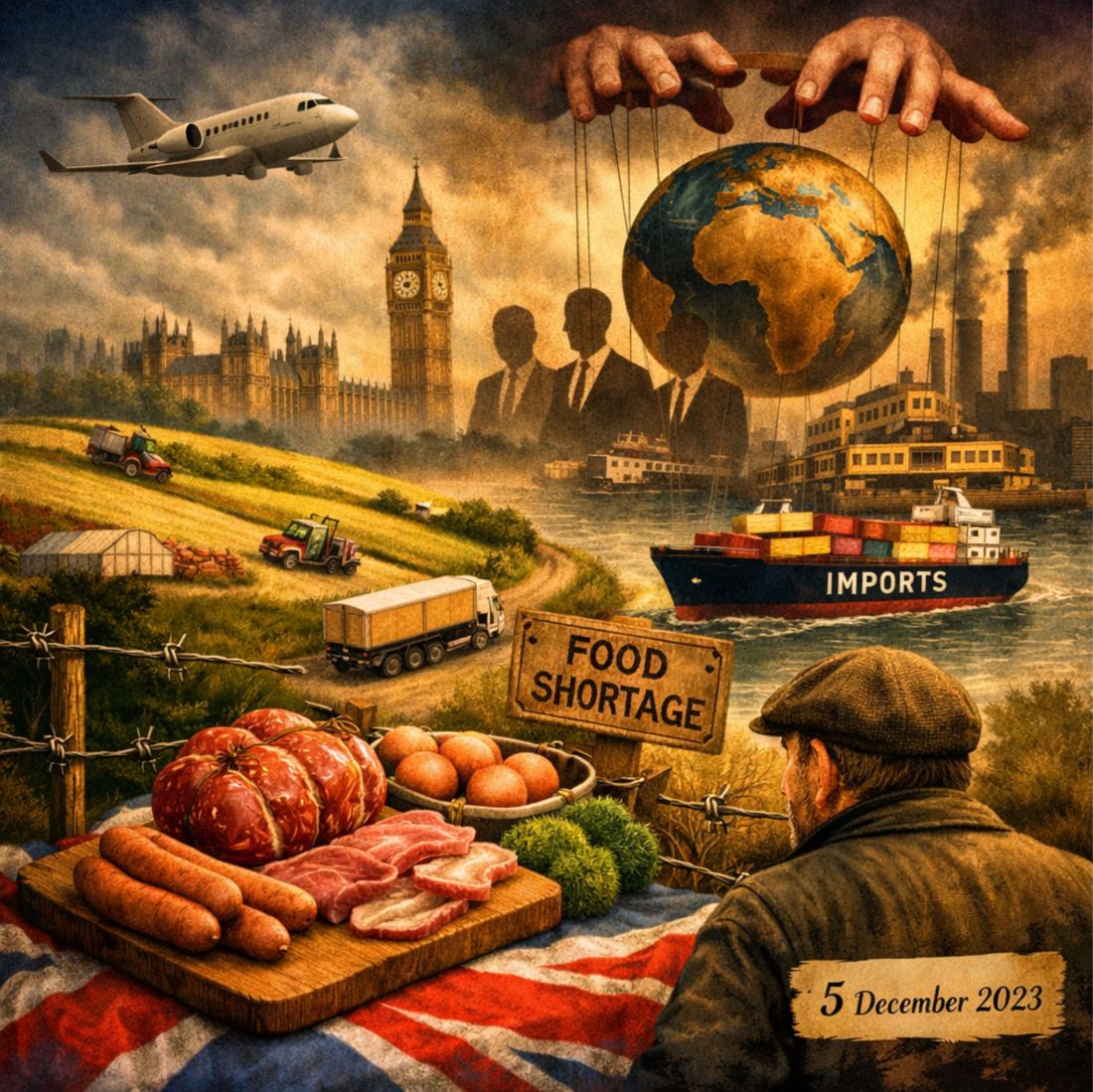
Globalisation is over and done with in the way that we have known it before. The media are making very little of what is happening with shipping, supply chains and the provision of goods from around the world. But goods are not going to be available as they were before, and as the coming financial crisis beds in for the long haul, the realities of genuine localism, food and the supply of essential daily items from within a very local area, if not the immediate community itself, is going to become prevalent once again.

However, to make the very best of the opportunities that will come from a very serious crisis, it is vital that we have the right people influencing and making all of the key decisions that will need to be made.

Whatever happens next, it is essential that the decisions being made are not aimed purely at an electoral echo chamber as they have been now for decades.

Every decision being taken from now onwards will have very serious consequences for us all.

UK self-sufficiency and localisation of food supply chains from British Farms should now be the Government priority. Not vanity-led trade deals that undermine them

Globalisation as we knew it before the age of Lockdowns is over. We may not feel it, understand it or in most cases even see it. But the World has been changed by the chain reaction that was set in motion by the COVID Pandemic.

Daylight is now beginning to shine upon all the hidden, self-serving and myopic powers that influence our way of life. They are coming together in a concert of chaos with COVID conducting the orchestra – right at the fore.

It may sound dramatic. But the subjectivity and focus we have on everything beyond our own lives and the bubbles we unwittingly live in make it easy for us to ignore how things really are at the objective level. We are and have been living through significant National and World events that have consequences neither we, but even more importantly our politicians, can or now will avoid.

Loss of the realism that a genuine overview provides leaves us out of touch with the reality of what is happening. We take for granted that daily life will always go on as it has and that everything continues in the same way.

Yet the assumption that an encyclopaedic range of foods and products will always meet us when we walk through the supermarket doors or click online is a storybook waiting for a bad ending. And that ending is now almost certain to emerge.

Whilst the Government, media and the establishment they serve tell us that everything will return to the pre-COVID ‘normal’, concocted narratives cannot change nor head off the impact and consequences of the decisions they made, the money they created then spent, and the stories they have told to control people during a pandemic.  

The change is already underway. We can already see it in the questions over home working and many revaluating where they wish to live. Change will touch everything, and this will include even the most basic parts of life, including the clothes we wear and the food that we eat.

We simply don’t need all the things that we buy, eat or drink, and many of us already know and understand this. Whilst it may sound moralistic to say so, it is certainly no coincidence that as a population we are becoming so unhealthy when we are happy sleepwalking through life in the way that we do.

The good, wholesome, locally and ethically produced foods that we genuinely need to live and feed ourselves would not be expensive if we prioritised production using the most localised supply chains possible. It could mean the ingredients of the meals we eat have not travelled outside of our own County boundaries or been carried much further on their journey from farm to fork.

Some may snort at the mere suggestion of returning to a world where butchers, bakers and every kind of traditional village shop or business sell you the produce and goods that have come to them for preparation from local farms and producers.

But this is the way that the world we know will go if it is again to begin making any kind of sense, and we do not need the Government or ambitious Ministers attempting to open up trade flow to Countries that will undercut our own farmers and producers. Indeed, the Countries that Trade Ministers are now talking to should be actively and demonstratively encouraged to develop their own enhanced forms of productivity as we all work towards the level of national and localised self-sufficiency that the post-COVID World and the collapse of global Supply chains will soon demand.

In the simplest terms, the rise and threat of what has been called the ‘Indian variant’ of COVID demonstrates some of the starkest lessons of how this virus works. The ZERO COVID solution that this Government has tied itself to will at some point have to be flipped to become one that we learn to live with it and treat it the same as we do the Flu.

Whether we continue going forward under the premise that COVID control is the only priority or change and accept that there are other ways to live, we can no longer allow or encourage the mass movement of people or encourage unnecessary international supply chains just for the sake of making profit in any way.

Borders will literally have to become borders once again. No matter how much we might we deserve that foreign holiday, we are no longer living in a world where there will continue to be one rule for ‘wealthy’ countries and another for all those that the ignorant and greedy thumb their noses at and call poor.

Viruses and the impacts of ill-considered human behaviour do not recognise boundaries. They have consequences for us all.

For better or worse, COVID is a virus that is here to stay. Global eradication is not possible with the political mindset that the world currently has, and we will soon have no option but to learn and act upon the realities that the spread of a respiratory disease through an interconnected version of the World presents.

Meanwhile, the decision making and behaviours of politicians, banks ad big business as they have struggled to maintain control during the Covid Pandemic has led them to supercharge the growth of the many problems that greed and profiteering have created.

Going local, real localism and putting our communities at the forefront of everything we build our lives around will now become key to addressing the change that events will create and to become happy and content in ways that we have culturally long since forgot.

Farmers, producers and those who run and maintain very local services and cottage industry businesses are going to be key. Allowing any foreign country to undercut local production of any kind – no matter our historic ties – will quickly become one of the greatest acts of economic self-harm in the post-COVID world.

This is not about having a downer on Australia, New Zealand, Canada, the USA or any Country with which we might have once found it desirable to extend trade with. All Countries across the World are going to have to face up to the realities of the step away from globalisation to closed borders and what this really means for prioritising local production too.

Self-sufficiency for food and essential goods must become both a National and Government priority for the UK. Within this, we must look to promote and encourage everyone to shop and focus what they do and the lives they live locally in pretty much the complete opposite way that globalisation and the greed that underpins it has done.

Government must guide and support the development of truly local cooperatives. Legislators must embrace and utilise the freedom we have following our unshackling from the EU to legislate in ways that mean it is both practical and cost effective for every service that businesses require to produce and manufacture locally will not only exist but will thrive in such ways that lead to local products and services being made available to everyone at prices even the poorest in society can afford.

Local Enterprise Partnerships or alternative bodies like them should be used to join up the dots and encourage this growth locally.

Instead of encouraging agriculture and food production to become ever more focused on ‘cost effective’ production that means they increasingly only become viable with the economies of scale and size, our legislators must look at regulating and restricting all of the malign influences that take money out of the supply chain, thereby increasing end-user cost. They are currently adding no value, as part of an equation that increasingly leaves heathy food being a luxury that only the financially wealthy can afford.

Farm shops, farmers markets and the systems of local production that can and must feed into them must be the direction of travel. We must reject the reliance upon retail giants and a system where shareholders and financial speculators make ridiculous sums of money after the companies they ‘own’ can appear to move goods around the planet more cheaply than our own producers can make them. The practice where supermarket buyers crush any farmers ability to both supply them and remain profitable must come to its end.

British Farmers are some of the most innovative and entrepreneurial members of society that we have. There is little doubt that if we both embrace and support the role that they can and will willingly then take within a new and diversified platform for UK food growing and production, the true value to us all of the wider rural and agricultural sector and the community that underpins it will come into its own and be good for us all.

Bitcoin Crash: Currencies are nothing more than a medium of exchange and crashes are inevitable for as long as they are valued as anything else

Money and how it is used to calculate the value of wealth and even the worth of the people we interact with makes it one of the most destructive and dangerous components of contemporary life.

Without realising they are doing it many people look upon every facet of life and consider it in terms of its financial value, what it might cost, or what it would cost to have it themselves.

Very few od us follow the financial markets or observe the way that the economic system works – whether that be the ‘financial economy’ or the ‘real economy’ itself. But what may be one of the great mysteries of the world is the process that has led money and the possession of it to become the most important factor governing the way that we conduct our lives.

Just as many great ideas have the power to help and improve lives, the creation of money as a unit or medium of exchange passed its point of best use and was evolved or developed to become something that it should never have or was never intended to be.

Money was quite literally a practical way of making the exchange of goods or services work effectively when those engaged in that exchange didn’t necessarily want either the goods or the products or the services that the person they were exchanging with could immediately offer them in exchange for their own.

Money was literally a way of giving a universal value to anything that any person could provide so that they could exchange it for what they wanted from anyone else, and also became a way to transfer value or to exchange over great geographical distances.

Had the development of money stopped there or somewhere very similar, the World would now be and would behave very differently from the way that it does today. 

Money itself has never changed. But the way that money is perceived by people has.

Money is now treated as and believed by people to be a thing in its own right.

Yet nothing has changed. Money is still nothing other than the medium of a system to provide universal exchange for services and goods.

Yes, there will be plenty who read this blog who possess lots of money or the means to accumulate it who will read this and quickly conclude that what I’m saying is absolute rubbish.

Money is not real. But the belief that it is make the consequences and the impact of that belief real for all.

Decades of money creation and the use of economic theories and practises such as the FIAT system and the neoliberal push for ‘free markets’ that never look after the interests of others as they theoretically should, have led to the creation and development of the financial economy.

The financial economy is a theoretical system that has been made real by the belief placed in it. Because of the benefits that can be gained by those who ‘play’ it and propagate it, the financial economy has been prioritised and championed above the real economy. Whereas the real economy represents the real world of business and the exchange of labour and goods. The real economy is the basis upon which everything money or financially orientated should work.

Whilst an economist could easily draw up and describe the models of how the monetary, economic or financial system works so that it looks like and can be presented as being very real, money is literally being created out of thin air.

The anger with a self-serving system of this kind that is directly responsible for much of the inequality that exists around the World is palpable amongst all of those who understand and care about what is going on.

The anger against the system has led very intelligent people who are disenfranchised from the system, to search for, develop and launch what they present to us as alternative monetary systems that work fairly because the work in a different way,

Cryptocurrencies – of which bitcoin is probably the best known – are the result of this process.

The intrinsic problem that all cryptocurrencies currently have is that in the process of their creation, they have adopted the most fundamental flaw that all units of currency are currently built on: They are valued as something or a thing to be possessed that itself has value, when cryptocurrencies or currencies of any kind never have been and never will have genuine value of their own.

Yes, you can become financially rich by buying and then selling Bitcoin or any cryptocurrency that has been listed on an exchange. But the process that leads to gains or losses in cryptocurrency value are little more than luck. Buying and selling cryptocurrencies is not a science and any gains you make through a crypto transaction simply means it was just your time to experience a win. Much like spread betting or investing through hedge funds, investing in cryptocurrency is at best nothing more than making a bet. This is no way to run or influence a system that will affect everyone in the World.

The value of Bitcoin and all forms of currency is the belief that underpins them. Their value is directly related to the confidence that investors have to buy them. Nothing more. So, the moment that something shakes that belief, like Elon Musk floating a comment on social media about how Bitcoin mining isn’t very green – the value of this ‘currency’ begins a downward journey towards the floor. It is only then that you can really begin to recognise the true value of what currencies are worth in themselves. Currencies are worth nothing and no more.

Strange as it may sound, this blog is not an argument against the use of cryptocurrencies. There is no question that money and currency use and the legal and ethical value set that underpins their use must be improved as we head deeper into the 21st century and increasingly use the technology that we have available.

A problem for us all is that the entire monetary system is itself flawed but is being deliberately manipulated by people who understand the system well and continue to engage in dangerous practises without any consideration for the consequences and impact upon others. We need comprehensive change.

Because it is legal or the law allows those employed in financial services and in the banking sector to engage in the practices they have been for many years if not decades before, it does not necessarily make what they do morally or ethically right.

For anyone who has spent time studying law or the way that government works, they will soon realise and understand that the law has a habit of being very late to the party. On its route to get there it is often distracted by self interest or the interest of those with influence.

This manipulation of the deck is something that we can no longer afford if we are to all live in a world which is fair and driven to ensure that the poorest members of society can sustain themselves and that a basic self-sufficient life is something that everyone can easily and comfortably afford.

A 10-point plan to begin SAVING CLEEVE HILL GOLF COURSE

Hello again. I wrote a blog a few days ago on Saving Cleeve Common Golf Course and covered the essential points that I wanted to share with you all, given my background as a former Tewkesbury Borough Councillor and Licensing Chair, and with the connection with Cleeve Common that both I and my family have, given that my Father Chris was Warden of the Common for the last 15 years of his life.

As a lot of you have taken the time to read what I have said, I felt it only fair that I follow up and provide an overview of my immediate thoughts on how I would approach saving Cleeve Common Golf Course and the Golf Club, and what I would suggest that you all need to think about to get started if that’s what you are resolved to do.

This overview is not comprehensive, and neither is it intended to be. In fact, I’ll bet that you will start to think of things yourself as you read through it. This is how you can all begin to put together a plan that will work!

Before I say anything else, what I am sure of from reading the comments and the views that I have by following the Facebook Group Save Cleeve Hill Golf Course, is there is both the will and passion necessary to do all that needs to be done, providing that everyone involved can approach this project with an open mind and remains committed to seeing it through – even when those lined up against you sound convincing when they say that it cannot be done.

The next thing is probably the most difficult thing for many to read, absorb and accept:

This is not just about saving the Golf Course and keeping Golf on Cleeve Common. This is about saving a community resource that must have the same meaning for everyone, whatever the Club represents to them. So, every perspective needs to be accommodated in your plans for the future as if it is your own personal No1 choice.

Representatives of different community Groups with an interest in the Common, The Golf Club or Cleeve Hill have been commenting and saying they are doing this or they are doing that – with the inference intended or otherwise, that others need to fall in line behind their efforts, because what they are already doing is somehow more important and more credible in some way.

The reality is that none of you will succeed if you attempt to develop a plan for the Course and the Club that focuses primarily on your own use and aims for these facilities.

YOU MUST give equal weight and value to those uses, priorities and opportunities that are not only your own.

Golf is no longer sustainable in its own right on Cleeve Common.

The suggestion has been made a number of times that the Clubhouse could be pulled down and replaced with temporary buildings as a simple golf club and that the Council would be happy with that.

Please, please, please think this through again.

I have seen nothing to suggest that there isn’t a longer-term plan for the Clubhouse and Car Park site in mind that will have a return for Tewkesbury Borough Council.

Without a formal repudiation of this possibility and guarantee that the site will be used as a car park and nothing else in perpetuity from Tewkesbury Borough Council (if the closure goes ahead), I would suggest that all bets would be on a sale or development plan for the site coming into public view as soon as the facilities are fully closed, the Course has been returned to ‘common’ and there is a perception that the matter has been forgotten.

Your job now, is to come up with a plan that means more to the Council and how it is perceived by Taxpayers than what they might believe to be simple economic sense.

Saving the Golf Course and the Clubhouse have to be seen as one and the same. As the future of both as a community resource lies in them being saved, preserved and taken forward together.

Neither the Golf Course nor the Clubhouse will survive on their own.

Whilst the Clubhouse is ‘old’ and in ‘desperate’ need of renewal and refurbishment, I have no reason to doubt that retaining the existing ‘iconic’ building and actually making it the centrepieces of this project is the best thing to do.

Reports for local authorities and government organisations are notorious for having the conclusions spoon-fed to consultants as part of their brief. So it would take a lot to convince me that the structure of the Clubhouse is so far gone that in the hands of someone who wants to save it and is prepared to use creativity to do that, it cannot therefore be saved.

Finally, it is also vital to understand and accept that this isn’t just a Cleeve Hill thing.

It’s a Bishops Cleeve thing.

It’s a Winchcombe thing

It’s a Woodmancote thing.

It’s a Cheltenham thing.

It’s a Tewkesbury thing.

It’s a Cotswold thing.

And if you start to think about it in those terms, you will begin to see the wide range of possibilities for co-working, partnerships and the stakeholder engagement opportunities that are involved that are there to be seized. The ideas turned into action that can and will make this project work.

It is vital that you recognise that you have the power to achieve the goal of saving the Golf Course and the Clubhouse. But every time you pass on or ‘surrender’ that decision or choice to Politicians, to Groups, to the Council, to the Media or to anyone else who isn’t amongst those who feel and believe the same, part of the momentum and with it part of the sum of the chances that together will lead to success will be lost.

If it is your decision to save Cleeve Hill Golf Course and Clubhouse, Do it.

Don’t let anyone else convince you that the future of the ‘Club’ is anyone else’s to ‘own’ or dictate.

And bear in mind, action speak louder than words.

So, to the steps:

1.) Set up ‘Silver Linings’ – The management group and operating company

To be successful, you need to create a management group that will become the board of the operating company. Let’s call it ‘Silver Linings Leisure’. (You get it?!)

Getting the membership of this board right is important. The decisions they make on behalf of everyone will influence whether this project succeeds or fails, and what particular events or actions happen that will push it either way.

You ideally need 6-12 people who are not only committed to saving the Golf Course and Clubhouse. They must also be committed enough and be able to offer the time and energy over at least the next 6-12 months to take this idea and lead the process to make it happen – against all the odds.

Of the board, all of the key user groups should be represented and have voting rights.

Members of the board who are representatives of other community groups MUST have the delegated responsibility to make representative decisions there and then at meetings of the board – as there will not be the time to go back and forth to consult.

Don’t include politicians or anyone else who is an activist looking to gain, grow or enhance their public profile locally. Also don’t include representatives of the staff – or at least don’t let them vote on decisions if you really feel that you must do so.

PLEASE BE AWARE: ALL of you will be volunteers.

You WILL NOT be paid for what you are doing unless you become employed by the operating company in the future.

As a volunteer it is important to remember that everyone else is volunteering too and that you cannot treat others like they are doing a job or like they are employed.

Volunteers take on voluntary roles because they will get something from helping that may not be apparent to anyone else involved. If you make demands on them as if they don’t have a choice, they will very quickly walk.

Expect nothing. Appreciate everything that everyone else does!

2.) Identify your key officers and their responsibilities, agree a basic constitution and become a legal entity

Whilst this really will be a community effort, it is still essential that people take on the key roles and become identifiable as the ‘people to go to’ for those outside of ‘Silver Linings’ so that this specific project will work.

My suggestion is the key roles go to people who have experience of running and developing businesses or organisations, of working with a range of different people and probably have project management skills in the broader sense (Whole business unit rather than just a piece of work or delivering a specific project). They will know who they are, and I would encourage them to make themselves known to the group quickly – IF they feel they can commit the energy and time.

As a start you will probably need:

  • chairman/spokesperson,
  • finance officer/treasurer
  • secretary/public point of contact
  • social media manager
  • media officer
  • project officer
  • purchasing officer
  • an acceptance that the requirements of this project may need responsibilities to flow between  

All of your new Officers must be happy having a public profile and be sure that there will be no conflict with their day jobs or any other roles that they have in the local community. (Conflict means anything that could influence them to change decisions or make decisions that they wouldn’t if they had not become involved. It’s the possibility that counts. Not whether they would or wouldn’t do it)

Write and agree your basic constitution:

You must become a legal entity to be taken seriously by the Council, the Board of Conservators and any other organisation (like funders and sponsors) with whom ‘Silver Linings’ wishes to become involved.

The constitution doesn’t need to be complicated. It just needs to cover the basic reasons for ‘Silver Linings’ being ‘constituted’ in the first place – and the key reason is widely known!

This document is also how where you divide up responsibilities and put together some basic protocols for governance and how decisions are made and where responsibility falls.

Register as a charity and/or limited company

Once you have your Officers and your Constitution, you can set up ‘Silver Linings’ as a legal entity.

 In the first instance, setting up as a charity and registering a limited company would probably be wise. This is after all a community venture with a commercial drive, or what some people recognise as a ‘social enterprise’.

There will very probably be an accountant, solicitor and/or barrister based locally who would be supportive of the project and be prepared to help get this part of the process tied up so that the members of the board are protected right from the start. Find the right one and they may even take on one of your key board roles!

Set up a bank account

Coronavirus and the Lockdown has slowed down the process of getting business bank accounts open. So as soon as the Constitution is agreed, you have the names of your Board (and account signatories) agreed and you have ‘Silver Linings’ legally set up, you should get the process underway.

Ideally there should be a number of different signatories on the account and any payment should only be able to be authorised by a minimum of two.

3.) Arrange meetings with the Key Stakeholders

Meet with Tewkesbury Borough Council.

You MUST engage with Tewkesbury Council as quickly as possible.

Ideally you should meet with the relevant Portfolio Holder (Who I understand to be Cllr. Rob Vines), The CEO (Mike Dawson), whoever the delegated officer dealing with the matter day to day will be, and the Ward Councillor(s) representing Cleeve Hill should really be at the first meeting too.

The local Councillors should be included so that they can fulfil their role as local elected representatives. This IS NOT the same thing as representing your case directly to the Council and I would advise strongly against entrusting them to communicate with either the Council or with Council Officers on your behalf, as there is simply too much to lose.

Your primary aim at the meeting should be to identify what Tewkesbury Borough Council would be seeking in the first instance from ‘Silver Linings’ to take on the Lease on 1st April 2021.

This will include things like:

  • Lease fees (rent)
  • Deposit
  • Guarantees
  • liabilities (who fixes what etc)
  • duration of the Lease etc.

What the Council will want now may be different to what they will accept once a full proposal has been put together which is credible and demonstrates how the project will benefit the community (and the Council) both economically AND in other ways.

It is essential that you DO NOT approach the Council expecting them to give you anything less than the terms of what you know the existing Lease to be in the first instance.

This is The Council’s opportunity to set out its stall. I would be inclined to take what they say they will or won’t do very seriously, as this is the stepping off point and the basis upon which the ‘Silver Linings’ project can be built.

Record the meeting if they will allow you to. Do not do so without permission.

Take notes either way and write the minutes whilst the meeting is fresh in your mind. Run them past whoever was there from the board to check that nothing was missed or nothing was misheard.

Meet with the Board of Conservators:

Gauge how they feel about things and see what they can do to support ‘Silver Linings’.

Is there a way that you could support what they are doing and build it into the ‘plan’?

Please be aware that Tewkesbury Borough Council is represented by a Borough Councillor on the Board of Conservators

4.) Publicise ALL progress and be transparent

Publish the minutes of all meetings ASAP.

Send copies to ALL other parties so that they have the opportunity to challenge any conclusions from your notes or ask for changes and/or reviews.

Make sure that EVERYONE with an interest gets a copy sent directly to their Inbox and a copy is made publicly available on the website.

If you have someone who is good at writing and has time, think about starting a blog diary of events and everything that is being done. This will be a fantastic way to engage the local community and gain support as you go along!

5.) Set up a Crowdfunder

Saving Cleeve Hill Golf Course is enough in itself to get a Go Fund Me page (or similar) going right now.

Money will be needed for basic things like a website and basic expenses to begin with and its not a good habit for anyone to simply cover the cost of anything they do directly out of their own pocket without it being recorded.

Information like this helps with the business plan and could potentially be used in future funding bids if you ever apply for ‘match funding’ where a funder effectively offers to match what you are putting in from other sources – which could include direct ‘donations’.

Be patient about pushing a more substantial funding campaign. You will only be able to start putting the more substantive capital and revenue costs together as you go down this list and know what it will take financially to get the new ‘Silver Linings’ Clubhouse open and supported financially for an appropriate period until it breaks even, can sustain itself and then even pay back loans or better still, reinvest in the development of the ‘business’!

.Once the full project has been costed, that will be the right time to consider whether issuing shares in the new operating company would work. You will need to answer questions like:

  • How much would they need to be?
  • Will we be able to offer any dividends?
  • If we don’t offer dividends, what will our ‘shareholders’ get in return

6.) Write your Business Plan

I’m not sure anyone who has ever launched a business likes writing their own business plans. It’s too easy to get carried away and think you already know everything that needs to be done, but it’s that same enthusiasm that can really catch you out.

Even if you didn’t need a credible business plan to show to Stakeholders, investors and anyone you might be seeking support from, it’s a really good idea to put the most comprehensive business plan that you can together and work out the costings down to a detailed level, making sure that you build in as much scope to cover unforeseen or unanticipated events and risks as possible.

Writing a plan can be tricky with a seasonal business like this one will be. The good news is you already know your handover date or rather the date that ‘Silver Linings’ will move in and takeover Cleeve Hill Golf Course and the Clubhouse if this project is a success!

You have a timeline and so you know when everything needs to be done.

The Council and The Board of Conservators will want to see a credible plan built around this timeline that demonstrates you have thought everything through and how the process of turning the business around will be worked through, when ‘milestones’ or key events in the timetable will be reached and basically, when everything that needs to be done will get done.

The key question:

The biggest part of the project will be refurbishing the Clubhouse.

I would suggest that the best way to do this will be to utilise all of the local tradesmen talent who already use the Club and aim to do something like DIY SOS where everyone mucks in over a period of a week or a fortnight to upgrade, install and refurbish the Clubhouse from top to bottom so that the new ‘Club’ and the services that it offers as a ‘Hub’ can all be offered immediately in a late April or May Bank Holiday ‘relaunch’.

Detail is important, so this isn’t just rewiring, repanelling, repainting.

  • Can internal walls be moved?
  • Can the bar be changed?
  • How can the toilets be better planned?
  • What facilities MUST we have?
  • What needs to be changed to meet current legislation and rules?

You will need to agree on what the ‘Clubhouse’ experience will be. How it is now is how it has been for a long time and it’s going to need to be decorated and designed in a way that it maximises the strengths that it has.

If I was looking at this project on my own, I’d probably be asking questions along the lines of would it be possible to decorate the whole thing like an alpine or Rocky Mountain chalet with a centrepiece wood burner with Cotswold stone and reclaimed wood panels or something like that. It would fit with the whole thing.

Detail is really important to and as part of the revamp, I’d be considering the machinery area, the car park and the walls around the site too. NOT only what you think other people will see.

Also, could a neighbouring field be rented in the summer months to provide car parking perhaps?

Where is the added value for people going to be that is not obvious to see?

So how will ‘Silver Linings’ pay?

The USP or unique selling point of the Clubhouse and the Golf Course is the location.

The questions that need to be answered and thought through include:

  • What services can be offered from the site that we can provide?
  • What services can be offered from the site that a partner commercial organisation could and would want to provide?
  • What local organisations would benefit from the facilities?
  • What can the site offer tourists to the area?
  • What services could you offer if you paired up with local stables, local hotels, local B&Bs, Local breweries, local distilleries, Local Schools, local community organisations and treated the Clubhouse as a local ‘Hub’?

What is important to bear in mind is that people easily forget that things they haven’t experienced themselves are there.

  • How will you get new people in?
  • How will you get them coming back again?
  • How will you ensure that the customer/user experience is always as good as you yourself would want it to be?

Having a facility like this lends itself to year-round, all-day activities and sales opportunities if everything is thought through and is used as it should.

You will need a management in team that has the vison to see this and the wherewithal to implement it too.

But as I said in my last blog, the biggest responsibility for keeping people coming through the doors will be down to you.

7.) Get commitments from ‘contractors’

You will need an architect and/or surveyor to check out everything that can, cannot and must be done to the clubhouse.

Once you have a style and format agreed, you can then look at dividing up the different tasks to the different contractors and tradespeople that I mentioned above.

By this stage, you will have fixed dates in mind and you will be able to tell everyone who is able to volunteer when you will require their time.

8.) Think about getting sponsorship

The list of local companies likely to want to support a ‘feel good’ local community project might not be as long right now as it would at other times, but the opportunities for relationships that are mutually beneficial may have never been so good – particularly if you can sell a company’s products for them!

People have mentioned Julian Dunkerton from Superdry. Well he owns a Dunkerton’s Cider too and whilst the Clubhouse might not be on the Lucky Onion’s hitlist, a commitment to sell his Cider for a short time might get you a discount on the purchase price and be all it takes to get some help and expertise to redevelop the bar and kitchen area to see how it can be made to work best. They may well be happy to promote ‘Silver Linings’ too!

Cotswold Distillery, Hook Norton Brewery, Goff’s, Donnington Brewery to name but a few may all have an interest in you promoting their products. There are bakers, butchers, ice cream makers and all sorts of other great local producers too. So, pick up the phone and ask what they would be prepared to do!

9.) Think about starting funding applications

Once you’ve covered the bases above, you’ll be starting to get a much clearer picture of what ‘Silver Linings’ is going to look like and what its going to cost going forward.

But there are other questions to be asked such as:

  • What investment will the Golf Course need to attract the players, membership and recognition that it needs?
  • What resources does the Clubhouse need to become more attractive to other users – for instance would a minibus and a service down to Cleeve and Winchcombe be the help that it needs?

For a social enterprise that is aiming high to help the community, there will be funding options that can be considered for the long term. But they may not be available in the time that you would like and that’s where the cycle of funding and going back to crowdfunding and then issuing share options begins.

10.) Handover in April 2021

Never lose sight of this date. This is what you are working to. If you can’t be ready to take over the running of Cleeve Hill Golf Course and the Clubhouse on this date – it cannot be done!

OK. So this was a little longer than I thought it would be, but its really only a guide and a guide to what needs to be done as a start at that.

If I can answer questions about any of the above, please post them as comments on this blog below. I will aim to help wherever I can.

Best wishes and good luck to you all!

Adam