
10 Years on from the 2007 Gloucestershire Floods: Some things are different, but out of sight is still very much out of mind for the politicians and this is what must really change

Floods 2007 1
Unloading water at the Wheatpieces Community Centre, Walton Cardiff, near Tewkesbury, following the July 2007 Floods

With 10 years now passed since the Gloucestershire floods of 2007 we cast our minds back to the magnitude of those events that affected significant numbers of people and communities across the County and surrounding areas in the middle of July that year.

Only a matter of weeks into my first term as an elected councillor at Tewkesbury Borough, I remember well that the significance of what felt like a tropical rainstorm parked overhead for most of that Friday would go way beyond a vast extension of what sadly remains a regular local event.

So much water trying to find its way to a natural watercourse created rivers and lakes in the most unexpected locations and seeing upended cars by the roadside and in ditches the following day, like some scene from War of the Worlds left a picture in my mind which was at the very least quite surreal.

But it was on the Sunday, when word really began to spread that there had been a problem at the Mythe Water Treatment Plant as a result of the Flooding which meant tap water was about to run out, that the real consequences of what we were afterwards told was a 1 in 100 year event really began to unfold.

After an unexpected phone call from a constituent that afternoon, asking where they could get water I found myself spending over two weeks delivering water and coordinating drinking water supplies around my Council Ward, increasingly conscious of how very thin the veil of individual social responsibility, commonly known as civil order actually is, when it was pricked in so many other areas by people fighting over water, steeling it and even urinating in bowsers where communities had been supplied. We can only begin to imagine what would have happened if the emergency services had not won their battle against the rising floodwaters of the River Severn when just centimetres from flooding the Walham Electricity Substation just outside Gloucester.

From my own perspective, the contact with members of the community I then represented that getting so directly involved gave me was of incalculable benefit. Not only did I see the impact of the breakdown of our utility service supply at first hand, I also gained real-time understanding of flooding and also what can be the very localised nature and requirements of our arbitrary Planning system, which continues to fail local people, and the communities in which they live every day.

The news channels have today made use of the good-news stories which followed the 2007 Floods, such as the permanent flood protection and defences that have been erected in places such as Upton on Severn, just a few miles upstream from Tewkesbury. Yet the bigger story beyond remains the lack of understanding or failure to acknowledge the real impact of building not only near or on flood plains themselves, but also on ground which in extreme weather events, would or has historically become the natural channels where a rainfall overload will find its way to our local main rivers via the floodplains in between.

Sadly, consideration of the issues which sit behind those which are most obvious is not something that Government at National or Local level beyond is happy to embrace, particularly at a time when the politically expedient route to solving our housing supply problems is to simply focus on everything that encourages people and businesses to build.

Events like the 2007 Gloucestershire Floods are not rare events. This fact has been only too well illustrated by the many different experiences that Towns, Villages and in some cases even Cities have been continuing to experience ever since, and yet we still have a Planning system, environmental policies and public sector approach which is in real terms not even fully reactive in nature.

The pain, loss and suffering which people suffer, often much longer than during the time of these flooding events themselves should have by now resulted in a proactive approach to flood prevention. But 10 years now gone – a period in which even the very slow wheels of Government could have delivered the creative and fully considered policy changes and developments which might at least have future-proofed existing properties from what might be avoidable disaster – Politicians are still failing to adapt to dealing with the biggest issues which are facing communities, albeit the ones that are far from being obvious.


Degree level entry for all Police Officers is a retrograde step which will push a common sense approach to policing even further away down the bureaucratic queue

police-training

With everything happening across the political and public sector world feeling so very uncertain already, it will have come as a surprise to many that the Government has allowed the College of Policing to announce that candidates wishing to become Police Officers will be required to have Degrees from 2020.

The reasoning cited behind this move is the increasing level of activity within the role including the research which Police Officers are required to undertake online. But is this itself really justification enough to raise the bar to an occupation and public service which in recent years has been a key target to become a lighthouse of diversity?

Information Technology and ‘web fluency’ levels are arguably highest within the generation now reaching the workplace at 16 and above – irrespective of the level of formal education they have attained, simply because use of smartphones and PCs to access the web has now reached a point of social permeation where children are culturally conditioned in their use. To suggest otherwise would arguably demonstrate just how seriously out of touch our policy makers have now become.

Cyber-crime has become increasingly prevalent. But it has not in any way superseded the need for real-world policing, which has itself become painfully absent in recent years as a mix of bureaucracy and the public sector funding crisis have hit the Police Service very hard indeed. The widespread perception exists that the physical presence of our Police forces have now dwindled to a point where it would logical for us to ask if our communities are really safe.

The concept that more can be delivered using less is one that is now followed in every sector. In some cases there are significant efficiencies that can be made within organisations of all descriptions, particularly when new technology can reduce the workload or requirement of staff numbers. However, this is not without consequence as the current raft of strikes in the UK have arguably displayed. There is also a significant question to be addressed regarding these economies being made when the financial benefit has become the priority over the experience of the customer or members of the public.

Like many, I grew up with a respect for the Police which is increasingly hard to justify, given the level and type of interaction which Police Officers and Police Community Support Officers now have within the community. The focus on a system of delivery where you once felt that a Police Constable really did have autonomy as they enforced and represented the Law appears to have long since left the building. It appears to have been replaced with a bureaucratic nightmare where Officers now have to look over their shoulders before they decide either to engage or to act.

It may seem romantic, but an age where a Police Officer didn’t have to resort to making arrests or presenting Court Summons to achieve a real-life result with ‘petty crime’ was not so long in the past. Yes, these Officers of the Law did not have to chase their quarry online, but they also engaged with would-be criminals in a much more meaningful way. One which was adapted to the specific circumstances they were addressing and did not result in so many young people being tarred by acts of stupidity which with the arrival of the net itself, have become far too accessible to the people looking for controversy who need no degree to go searching for any mud that can easily be used to stick.

Most of those less senior Officers had very little formal education. But what they did have was life experience and common sense by the bag load; the essential ingredient for constructive interaction with people of all levels and of all kinds.

Being ‘streetwise’ isn’t something that can be taught from a text book. One of the simple facts that the College of Policing may be seriously overlooking, is that degree level students want to earn their money straight away. University leavers will not have the world view or wherewithal that the public should be able to expect any Police Officer to have, whilst waiting for the graduates who would make ideal police officers to gain experience in other occupations first may prove to be a fruitless exercise given that they will probably stay in other safer, more lucrative and perhaps even more rewarding careers if they have by then already found them.

Police Officers in the UK already undergo extensive training to support them in their roles, and extra modules to support non-specialist officers to fit their IT skills to the purposes of our Law enforcement regime would be no quantum leap for those who have qualified for entry by today’s terms.

Sadly, this move towards elitism within the Police Service has all the hallmarks of taking one very large step in the progress of bureaucracy too far and risks disenfranchising communities from those in power beyond that too.


image thanks to http://www.telegraph.co.uk

An Oath of Allegiance to a broken system will legitimise the punishment of scapegoats whilst the real problems within public services will remain unresolved

It was perhaps inevitable that with the publication of messages which were supposed to result in a public-wide swift and audible intake of air, Dame Louise Casey’s report on social cohesion would provoke the Government into making a knee-jerk but nonetheless media-hyped response.

Reviews and Reports of the kind which are commissioned by a government are of course expected to make recommendations. But can we really have confidence that the implications of adopting any policy which logically represents a very narrow and isolated point of view have been considered in the widest context just a couple of weeks after its publication?

Comments from The Casey Review did indeed resonate with many more people than the Government may realise, purely because it was stating in many ways what many already know to be clearly true. But that doesn’t in anyway mean that Dame Louise has the answers to those questions.

We all want to see decisive government action of the kind that we can be sure Sajid Javid intends this policy to be. But it is not in anyone’s interests and least of all his own, for the social injustices which we are now experiencing throughout society, to be compounded by legislation which will legitimise witch hunting and provide a focus for irresponsible leaders to publicly point the finger of blame.

After all, when we make an oath, the mere act of breaking it becomes a verdict of unquestionable guilt. One that for others makes an easy target upon which to attribute much more negative association besides as they draw attention away from their own roles and [lack of] responsibility.

The whole public sector is in a mess, and it desperately needs top to bottom reform initiated in the form that only the Government can provide. However, making anyone associated with delivery itself liable for actions which personally, professionally, culturally and in some cases contrary to social acceptability are outside of their control, is surely a giant step upon a very slippery slope to a dark place indeed.

I am not arguing against taking action in any way. But the suggestion being made by Mr Javid is no better than the discussion initiated by David Cameron following the child abuse scandal in Rotherham in which he suggested that public servants who overlook their safeguarding responsibilities should simply receive jail terms. I wrote about the issues facing the Sector then, and nothing has been improved by the politicians with the real ability to do so in any way since.

If public services operated as effectively as they could, and were underpinned by processes and localised standards of governance which really worked to ensure the very best deal possible for each and every end-user, yes, an Oath by all employed or elected to represent us within would be a fair and appropriate benchmark.

However, they don’t work effectively and they are certainly not underpinned with the continuity and levels of service to make it possible for only one person to be branded as being at fault when so many more are always, if not inadvertently involved.


Jail terms for public servants who overlook their safeguarding responsibilities sounds tough. But if the cause of the problem is actually government wide, should David Cameron be volunteering himself for 5 years in prison rather than another jolly in No. 10?

Rotherham has already reached such levels of notoriety in local government that the place name has itself become synonymous with the darkest aspects of our society and the lack of responsibility taken by those who we all somehow know simply should have done much better.

At first account, David Cameron’s announcement that any public official – whether an officer or politician – who is shown to have overlooked child safety issues may soon face a jail term, sounds exactly like the kind of tough-minded policy making that we all really want to have coming out of Westminster.

Many of us will agree with the sentiment.

But then, what if those responsible didn’t actually see a problem? What if they didn’t ask questions, because they didn’t see it as their job to do so? What if those individuals were more sure of difficult consequences as a result of speaking out than they were of being any help to others by doing so?

Kangaroo-Court-e1379633717575

We do not know the specific circumstances and chronology of all the events and actions that contributed to Rotherham. But neither are we likely to do so, given that inquiries will reflect the often-accepted perception that all decisions are black and white in nature, and that the evidence will speak for itself.

On one level it will, and particularly so when there is a kneejerk response from Central Government to the idea that an individual can always be blamed.

However, the thought processes we all have are still thankfully just our own. Very few of us would willingly provide a word-by-word account of what we have ever at any one time thought – even if we could remember the exact detail for long enough to do so.

Regrettably, in terms of getting tough on those who neglect their responsibilities to the public is concerned, the PM’s plan is a measure which neither accounts for the inadequacies of the government system as it exists today, nor the people who are and who have been in the position to actually do something about it – even now.

Let us be in no doubt, child abuse is horrific however you consider it. Public officials failing to protect, safeguard and prevent the abuse of vulnerable people of any age within our communities is an inexcusable act in every sense.

But it has happened, and it is probably happening in places where we wouldn’t dream it to be even remotely possible, right now. And it may well have been missed because public servants were doing exactly what they understand their job requires them to do.

Whilst this one emotive subject has captured the public imagination and the vote-seeking cynicism of one political party as it thinks of the General Election in May, lack of responsibility on the part of public servants extends way beyond the realms of what government currently calls ‘safeguarding’.

There is an institutional failure at work, which permeates every part of the political, executive and administrative tiers of government, NGO’s and public services.

Decisions effecting the lives of you and I are in no way guaranteed to be made in our best interests by the very people we have elected and who have been employed to serve us.

Just as children have and may still be being abused when someone might have been able to stop it from happening, other people may actually be dying because people with responsibility for others at many different levels are not considering the real impacts of their decisions on the people in their care, when we all objectively know that they should.

Outrageous as this all may sound, tackling this problem, whether it is the way that a medical product is purchased within the NHS, a planning decision is made within a district council, or the action taken within social services means that a child is left exposed to the influence of someone who is considered as the member of an ethnic minority first and a peadophile second, may in no way be as simple as it may look.

Solving these many problems facing our public services is not as straightforward as punishing individuals for overlooking, or deliberately ignoring information or experiences that that public servants have had in their roles.

Before anything else, we have to understand at least some of the basic rules of the protectionist and ineffectual culture, which exists throughout our Public Services.

Only then might we begin to find solutions without automatically attacking those, whose actions would perhaps look very like many of our own, were we to find ourselves working and considering where our own responsibilities would stop in the very same circumstances.

Government is not a happy place. It stands to reason that if the people who are sat at the top of the tree behave in a certain way, the same kind of behaviour will soon begin to manifest itself throughout the branches and departments of the organisation below, often with consequences that could never have been foreseen.

My own experience comes directly from working within a local authority, with a national charity, as a politician, and anecdotally through third hand contact throughout. Its real, its tested and I have experienced first hand how the whole system is failing us all, because it is fundamentally, institutionally and culturally sick.

What follows is an overview or perspective of Local Government alone. However, many of the points raised will be applicable to any government body or what we would call a public service.

Whilst I have attempted to focus my thoughts on specific areas, the reality is that there is significant overlap, and the behaviors, processes and methods discussed are very much interdependent, effecting and effected by many different factors and the input of Officers, Politicians and Central – or Westminster-based Government alike.

  • Managers are increasingly becoming qualification rich and experience poor, as part of a ‘textbook technocracy’. The system rewards those who dedicate themselves to playing the progression game, much as it does the politicians. Those climbing the career ladder are usually specialists in one area, rather than having had a grounding in a variety of operational areas where they will have gained a broader understanding not only of the technical aspects of other service areas, but of the life issues and behavior of the wide variety of people from different backgrounds that the staff they will soon manage are interacting with daily. This is not a problem that is exclusively attributable to the most senior levels of management. With an increasing push to share services and responsibilities both within and with other authorities, lower tier managers are now finding themselves with roles where frontline experience of service provision can be critical across many disciplines. The results are plain to see, and as experience is lost through natural wastage, redundancies and attractive jobs with private business, good management is increasingly becoming reliant upon luck, rather than good judgment. When you have deficient management, you then become reliant upon political leadership and that is often as inadequate, if not more so than the relevant officers within the executive itself.
  • Many people are unaware of how desperate the financial circumstances facing the Public Sector actually are. In local government, funding for services is not solely raised by Council Tax alone, and what we pay each month is itself shared out between our local parish, district, county and police authorities. Central government provides an annual settlement or grant to our councils which is being continually lowered and this process has been speeded up throughout the period of Austerity. Some of this is being given back in the form of incentives, such as the New Homes Bonus, which relates to the number of new homes built in the area of the Authority during the year. Unfortunately, payments like this are a two-edged sword and are effectively a way of coercing local authorities to implement government policy and keep doing so, simply to maintain income which is otherwise irreplaceable without cuts.
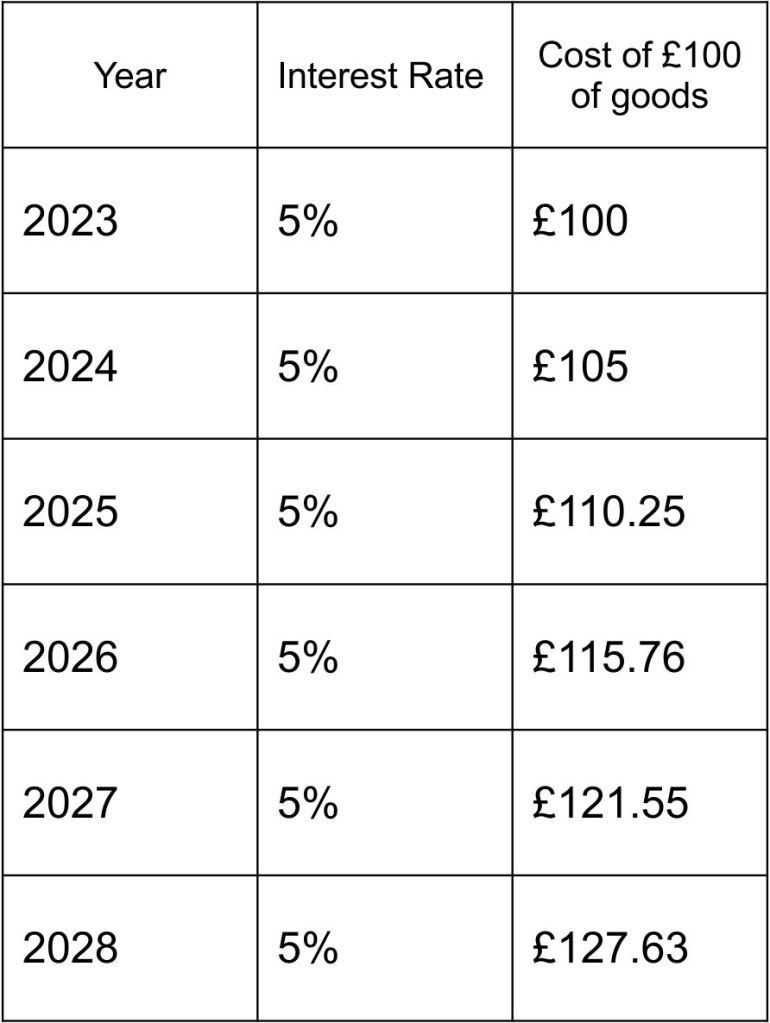
  • Current Government Policy is not normally to allow rises in Council Tax above 5% annually. But even with this, there is a tendency for many ruling Political Groups to keep this figure as near to zero% as possible, simply as voters are likely to respond to this form of taxation and the way it has been decided than any other. The downward side to this ‘crowd pleasing’ approach is that Council Tax income is often not increasing in line with normal price rises (inflation), whilst other forms of funding are also being cut. This means that authorities aren’t even financially ‘standing still’, and have no option but to cut services, reduce staff or share services with other authorities, which is a process which ultimately takes power further away from the people. Money is tight and decisions are being made that are effecting lives, based upon funding alone. It’s not necessarily because the person on the other end of the phone doesn’t care, but because they have to decide who gets the fixed amount of money (the budget) that they have available.
  • Politically speaking, ‘can do’ is actually ‘can’t, don’t’. As is the case nationally, local government is experiencing a critical shortage of politicians who are ‘in it for the right reasons’. Of those who are – or get first elected on the basis that they are, many are simply not equipped with the experience or leadership-related–confidence that ALL politicians, at every level of government need to effectively represent the people who elected them – within what is actually a leadership role. This functional naivety leaves party dinosaurs unchallenged from within their own ranks, and officers increasingly able to guide policy on the basis of what works most safely for them, or for the furtherance of their CV’s. The situation is growing progressively worse and is only becoming enhanced further by the policy coercion which comes either from Government, or from the National Party HQ’s.
  • Despite the perception that local government makes decisions, much of its responsibility lies in the form of interpreting law and legislation which has been created by MP’s and civil servants in Westminster. Central Government retains the right to overturn local decision making that doesn’t meet the rules that it has set. The reality of this is that decisions are increasingly made on the basis of strictly adhering to central legislation, rather than what local need may actually require. The most obvious manifestation of this can be seen within the Planning and Licensing functions, where decisions are made that are openly transparent within a process with which members of the public or business community interact. When even our local policies are made very much on the basis of frameworks which have been set in London, politicians and officers alike are becoming more and more inclined to defer reasoned judgment on real life decisions they are facing on behalf of the public, to a subservience to a ‘greater power’. The financial, cultural and institutional aspects of the problem play heavily into this process also, but the greatest irony of the controlling way in which Central Government runs every part of the government, is that the structure already exists which would allow power to be well and truly devolved to local people – were it able to work as it could. The legislative problem is reflected in the attitudes of politicians and officers alike and is becoming ever more obvious to observers. Policy making has become a truly questionable process, the machinations of which were once only thought of, or perhaps spoken about behind closed doors. It is now openly discussed in public in a way that simply beggars belief.
  • The bureaucratic structure within Government is continually tightening, despite the messages we hear in the media to the contrary. Common sense; being allowed to think on your feet; taking into consideration all that factors which are specific to each and every case. These are all no more than ideas in a heavily proscribed environment, which leaves officers and increasingly elected members also having to adopt a highly arbitrary approach to decision making. The Influence of the rights culture has come significantly in to play and the creation of increasingly detailed and instructive processes are removing the human touch from interaction between councils and their customers, all to ensure that risk is limited to the remotest degree. Put simply, decision-making has become increasingly black and white when real life is a very grey area. Managers report upwards through respective line management to their CEO, who in turn reports to the political leadership of the council. Less senior politicians have very limited means to address performance issues relating to officers, which have to be passed to department heads, or to a council’s delegated committee which deals with employee issues – one which is often assembled politically. When both the political and executive leadership are incompetent, there is no robust system in place which will enable anyone to do anything about it. For a complainant, speaking out to the media is a highly risky approach to take, and one which is seriously frowned upon, when you are effectively bringing in to question the actions of the Authority of which you are yourself a part.
  • Officers operate within a protectionist system where responsibility is the equivalent of risk and where risk is to be avoided at all costs. Staff are closed down to wider issues affecting the organisations they work for and operate often with a kind of tunnel vision which effectively thrives on passing the buck, or more often than not, simply assuming that someone else will pick the issue up departmentally or organisationally – either because the person who raised it will just assume they need to go elsewhere, or because they just don’t have to deal with anything that sits outside of their job description. The way that we see this manifested most clearly is by the way that consultants are often employed – at great cost – to write reports, giving conclusions or recommendations which departments and whole organisations already understand and will normally have had skilled staff employed to know very well before. The views of a third party are somehow and mistakenly perceived to give a level of legitimacy that nobody employed to actually do the job could provide. Decisions often become assignments for ‘contractors’ by being passed from one level of management to the next. Nobody wants to rock the boat and put at risk what has historically been one of the safest occupations to have, with gold-plated consequences at the end of a highly uneventful career, doing all that it takes to keep your nose clean.
  • Managers have a clear distrust, and in many cases open contempt for the members of the authorities that they work for. This is a situation which has been exacerbated by the lack of interest that many politicians actually show in the areas of responsibility that they have – if they understand them in the first place. Managers often forget that they are employed by the council itself – which is the body made up of the elected members. Indeed, even a CEO is technically the clerk to the council, a point which is well illustrated by the role and position they often take up in council meetings.
  • The business of government today is more autocratic in nature than it is democratic and could easily be compared with the feudal system. Democracy leaves the building almost as soon as the votes have been counted in elections and then decisions are nearly always made under the guidance of those politicians upon whom power has been centralised. Genuine debate is stifled by restrictive procedures and processes which effectively enable officers and politicians to duck drawn out examination processes which would allow real answers to be produced within public forums.
  • Scrutiny processes are generally very weak, ineffective and are failing to serve the public interest in any way. Scrutiny is often treated with distain by controlling political groups who believe that their elected majority gives them and specifically their leadership a level of legitimacy that should not be questioned. Scrutiny cannot be relied upon by opposition groups who are unlikely to successfully influence the decision of a majority using what is currently an arguably worthless ‘checks and balance’ process, unless there is a problem so clearly obvious with a policy, that it almost certainly wouldn’t have been adopted anyway.
  • The political system does not currently encourage strong leadership – usually based upon experience, which is often perceived as divisive in a system where it is normal for politicians to be working to an agenda of some kind. Ineffectual or ‘all things to all people’ styles of leadership are however in practice very weak, opening the door to poor guidance from officers which in such circumstances could be viewed as almost being coercive. When that executive leadership is itself weak, inadequately experienced or just as self-serving as many of the politicians, the results will speak for themselves.

The issues are different for each and every public service organisation, and will almost certainly cover areas that go way beyond what has been described here.

There are also many exceptions. There are some truly exceptional officers and politicians in local government who are doing what they can to ‘get it right’.

There are many more officers and politicians who could be just as exceptional. But the system simply doesn’t encourage them to give the public service that they are capable of giving, and that we, as taxpayers should reasonably be able to expect.

If you consider all of the points that have been made; allow for them to be adjusted, moved or even considered in a different place, you might begin to be able to visualise just how complex the institutional crisis facing all government or public sector organisations actually is, and how critical it has now become that meaningful reform be enacted throughout, for the best interests of all.

The required process of change can only begin from the top. The legislative levers that must be moved to instigate change, are more than ready to be pulled.

The change needed has to be undertaken with the level of understanding, impartiality and diligence that will be essential in ensuring that all forms of self-interest are not only removed, but no longer tolerated within an extremely complex system that exists and should only ever exist to serve the public.

Decisions are being made right now on the basis of ‘what if’ and ‘what will be the consequences for me’ throughout the system.

Officers and politicians are not working within a culture which equips, enables or encourages them to empathise with the people they are supposed to help, or to look beyond and consider the consequences of their decisions and actions for others in any sense.

This is itself highly reflective of the processes which successive Governments have inadvertently nurtured, maintained and developed, and there would be great difficulty in criticising officers within any authority operating at any level for taking this approach, when the example that they continue to be set by Westminster is simply telling them that this is an acceptable way to carry on.

Public servants who fail the people they are employed or elected to protect should be expected to take full responsibility for their actions.

But when the institutional culture of government and public services tells them to do everything but make reasoned decisions alone, it must logically follow that those responsible for the system itself must take responsibility for the faults that lie within it.

So before doling out 5-year jail terms for the people who may just be scapegoats and the easiest to blame, should David Cameron perhaps be volunteering for 5 years in Prison rather than another jolly in No. 10?

image thanks to unknown

Bankrupt Britain: Is the death of Local Public Service provision avoidable and will it lead communities to provide their own not-for-profit services?

Whilst it may not be generating the media frenzy or sensationalist prose that usually grabs everyone’s attention, recent days have seen a number of different stories emerge that confirm much about the state of Local Government and the services we contribute towards with our Council Tax.

The common theme is of course money – or rather the lack of it.

Those of us taking the collapse of local public services seriously may already be well aware of the perilous state of funding and how bleak the outlook actually is.

However, despite the many cuts and reductions in services that people have witnessed across the UK already, it is the continuing reliance that today’s politicians have placed in using yesterday’s methods to solve tomorrows problems should perhaps give us even greater cause for concern.

This week alone, one Police & Crime Commissioner covering a Conservative area has suggested that he will seek a referendum on raising the local Police Precept element of Council Tax by no less than 25%, whilst the Leader of Newcastle City Council is now on the record as suggesting that the reduction of funding may soon lead to social unrest, with an expectation that an incoming Labour Government will simply change the ‘settlement’ – and thereby solve the problem after May.

Whilst both of these Politicians are in unenviable positions, neither plan would work in the best interests of the electorate, even if they were to be seen to solve the problems in the immediate term. And by immediate term, we are probably talking just 12 months before the very same problem is there to be solved all over again.

Adding yet more to the Tax burden of individuals and households may be an easy decision for politicians, but isn’t sustainable for the people who are paying.

Meanwhile, more money coming from central Government when the Country is already effectively bankrupt spells disaster of another kind, as the accumulation of National Debt simply cannot continue with each successive Government that comes along attempting to shelve today’s problems for tomorrow by printing money like it was all some kind of game without any real cost.

The system of local public service delivery is broken not just because of a lack of funding today, but because of decades of mismanagement focused on targets, working conditions and the development of the protectionist culture which serves everyone’s interests but those of the very people who the services were initially created to serve.

These cultural and institutional problems have not been created locally, but they are certainly propagated locally.

One of the most serious ‘injustices’ served upon every Council Tax Payer, is the seismic amount of our contributions that actually go into the Local Government Pension Scheme. It has increasingly done so since the then Labour Chancellor Gordon Brown raided Pension Funds in 1997 and left the general public to pick up the tab for the subsequent deficit which would otherwise have surely obliterated gold-plated Local Government Pensions.

It would certainly be advisable to have a look at your Local Council’s Annual Budget and see just how much of your money goes into this Scheme. A good guess would be that rather than being anywhere near the red, your local services would be well and truly in the black if you weren’t funding someone else’s retirement plan, just because of the last Labour Government’s fiscal free-for-all, which removed many of the regulations that actually helped a great many of the very people who supported them.

Solving the problem of how to afford what local public services cost us without losing services, reducing services or there being a need to dispose of assets which basically belong to us all, may have already reached a stage where it will seem impossible to do so without the measures already discussed.

But with such options not being real choices, we will all soon have to accept that the way local public services are delivered is going to change; and that the change that comes may not be in anyway better.

Service sharing between Authorities and even Police Forces is now well under way and is likely to accelerate significantly as the reality of the UK’s financial predicament continues to bite hard.

However, the distinct irony of this pathway is that sharing services does indeed take the management and handling of public services further away from the people themselves. And the point should not be lost on anyone that the real cause of much of today’s political disquiet – i.e. taking decisions further away from people will only be made worse by what is yet to come as a result of this.

The political and government infrastructure that could have solved problems like those raised by the Scottish Independence question has already existed for at least two generations in the forms of Parish & Town Councils, District Level Councils and County Councils.

The problem is that Westminster based politicians do not want to empower local representatives at any cost.

Whilst continually paying lip service through concepts such as ‘Localism’ – which has been such a big sound bite of the Coalition era, the reality has been that all changes within Local Government have simply been pushing more and more power back to London, rather than devolving local decisions to local people as any Government focused upon what is really best for the electorate surely would.

This reality may well give the lie to the ‘vow’ which we all awoke to on the morning after the Scottish Referendum. It almost certainly paints a picture which doesn’t look good for us all locally. But when local politics is itself arguably just as rotten and as focused on itself as Westminster is, what can we really expect?

The reality of what lies ahead should hit us hard, because much of what we today take for granted in terms of services supporting both communities and individuals may soon be simply unaffordable – even though we seem to be paying through the nose for it.

With Government Organisations and structures maintained by a culture which nobody is willing to reform, Local Authorities are likely to lean ever more heavily in the future upon contractors and trading companies.

This is a considerable leap in the direction of privatisation and one which could very quickly lead to the token ability of Local Council’s to affect change and decision making on the part of the communities that they represent to be seen for what it really is.

It is a very real prospect that the only services that many people perceive as being what they receive for their money will be handled by private contractors. Companies who are delivering services to the public whilst making a profit at a lower price than what it would cost the public to deliver itself.

With even fortnightly bin collections now at risk, it is not in any way hard to imagine paying for your rubbish to be collected by a company you pay directly – as you would do with electricity, gas or your phone. Indeed it may be little accident that ‘utility’ companies already run such services on behalf of Councils and many of us will quickly wonder what we are paying Council Tax for if we don’t see any Police on the streets and have our rubbish collected by someone else.

Without immediate and meaningful reform, it is a good guess that social enterprise will be the only way that we will be able to have local public services delivered, which are seen to be free at point of delivery or kept at a cost which is both affordable for users and sustainable for the organisations delivering them.

This is unlikely to be restricted to just local service delivery, and whilst utilities, transport and communications are currently little more than the cash cows of the City and its Pension Funds, keeping it real dictates that sooner or later the political classes will have to accept that allowing our society to function at its most basic level requires nothing less than that all services provided for the benefit of the wider community and the individuals within it must be provided on a not-for-profit basis and with best value to the end user firmly in mind.

Regrettably, with much of the infrastructure already disposed of which will facilitate this at National Level, and the same process now progressively happening through the back door at local level, it is communities themselves that may well have to raise the funds to create the new trading companies that will do this.

With crowd funding a good example of the options now available, it is certainly possible to do so.

But as we also wonder why we are paying more tax on everything but receive even less for what we give…won’t we all be asking the question why?


image: dailymail.co.uk