As someone who set up a successful distribution business by winning a contract with a large newspaper company and setting it up overnight, I’m well aware of how to make a delivery operation flow right for staff and customers in a time sensitive environment.
Of course, as a commercial provider to a business customer, my key considerations were very different to that of a supermarket supplying a weekly shop to a retail customer. Or rather they would have been in normal times.
One of the greatest inefficiencies of the way that supermarkets have been working, has been to give customers the freedom to choose their delivery time and fit the delivery of their online order around that specific requirement.
This in effect means that even with deliveries grouped as much as possible across the number of vans that any store has, they will be zigzagging across a district or suburban area most of the time, adding time and running costs to the journey which limit or short-change the extent of what the driver and vehicle can do.
With the landscape changing and the idea that the customer is always right having been exchanged for one where we will get what the supermarkets can give us at the location and time it is available, the retailers we use for food and essential goods have options to cover more ground in less time and extend their online delivery services during the Coronavirus Crisis in ways that at other times they never could.
It all boils down to just one thing. Telling customers when they will get their delivery rather than giving them options to choose in the way that they currently do.
People are working from home and not going far.
If customers want food and the goods that supermarkets can provide them they will be grateful to have them delivered during the crisis and won’t worry about what time.
By being able to group deliveries into the closest distances between a set of addresses in blocks over a few days, efficiency is certain to increase. Even one more customer per van per shift would help more people than the system currently is.
If the supermarkets start delivering around the clock on a 24hr basis – prioritising more social hours for the elderly, the vulnerable and reaching key workers between their shifts – the existing delivery system could be able to double deliveries and perhaps even more.
Yes, there will be a shortage of staff that needs to be filled. But there will also be many people willing to step into help where possible to do so. I for one would be happy to do a few shifts from a local store or even drive an artic from a nearby distribution centre to the supermarket back door if I can find a doctor to sign off the medical for my Heavy Goods Class 1 renewal once more.
In difficult and challenging times, business as well as politicians have to consider whats fair and best for EVERYONE. Not just those who pay, complain or can influence more.
But we ALL have an investment in the government, the public sector and the businesses working to keep us alive getting this right.
They cannot do it alone and need our support to get there – even if that means opening the door to an online supermarket delivery person at what feels like a very peculiar time.
Reading over the weekend that Virgin Airways boss Richard Branson is seeking a £7.5 Billion Government bailout for the Airline Industry because of the Covid crisis gave me quite a jolt. Not because of what it says about the exponential impact of the worldwide outbreak of this horrid virus on British based airlines. But because of the long term implications of another government writing out cheques to underwrite privately and shareholder-owned businesses as they did so in response to the 2008 Financial Crisis without any consideration for the long term impact that it still has for us all.
To be straight to the point; it is not the responsibility of any government, the Taxpayer, public purse or whatever you want to call it, to bail out private business and especially not in such profit-orientated times.
It simply doesn’t matter matter how bad the consequences might seem for staff, shareholders or anyone else involved. These businesses are not run as a public service. They exist to enrich the people who own them, not to prioritise the wellbeing of the people they serve.
It is certainly not legitimate for any politician, elected or otherwise to underwrite the rescue of any privately or shareholder owned business so that it can again become profitable whilst the public is saddled with a debt for doing so that has not or never will be repaid.
Whilst we might all be at least concerned if not genuinely worried about what the coming days and weeks will bring, there are remarkably few businesses or organisations that will not be affected in some way. Within these, staff will have to change where they work or be laid off if they have not already done so, and in a large proportion of cases they will find themselves with a reduced income, whether that be from losing work completely or finding their hours lowered or indirect income reduced from a reduction in expenses or some other specific way that they would normally accumulate what they count as being pay.
Small businesses are going to fail. Especially those that are owner led and may have none or very few employees, where margins literally pay a living wage to the owner and nothing more. Other businesses, if not all of them, will have to lay off many staff.
Without clever thinking on the part of Government and politicians which really starts to join up all the dots and goes way beyond the brainstorming of Dominic Cummings current weirdos and misfits team, businesses that were not only viable a few weeks ago, but also very profitable will overnight become a permanently lost cause.
It is genuinely the case that like birth and death being the great levelers that they are, Corona virus does not see wealth, status or any other factor as being a mitigating factor against its dark and malevolent cause.
Nobody has the right to be treated better or differently to any other in this Country. If this Government is to succeed in leading us all through a crisis of what could very well become an indeterminate length, it is essential that Politicians on all sides put equitable thinking and the consequences and knock-on effects of all this and how it is going to effect people and businesses alike at the heart of their decision making and at the centre of what should now be a purely non-partisan cause.
Whilst we have many experts who are putting forward their opinions and trying to pressure the government to change policy and go in different ways, the reality is that whether these ‘experts’ are economists, mathematicians, scientists or doctors, none of them are experts on the full and comprehensive complexity of the snowballing issues that this crisis is building. Even the political leaders themselves have never dealt with a situation like this one and none of them have a specific historical example to look back on which could be shoehorned into use as a blueprint for managing this 2020 pandemic.
The time to question the ability, decision-making and motivation of any politician is at election time. Not when a crisis of this magnitude comes to call.
For better or for worse, right now, we have the politicians that the electorate gave us and we MUST give them the support necessary to get something done that for some if not all of us is never going to feel right.
The question should therefore be not whether our Politicians are suitable for the jobs that they had in December – because public opinion has already concluded that for us.
The question must now be whether our Politicians can now adapt and think differently to the way that they historically appear to have always done so – without foresight, empathy or any reasoned ability to look beyond the situation that appears to be right in front of their faces and then think through the implications of everything that their decisions and responsibility will now touch and lead to not just one, but potentially many steps beyond.
When big names like Branson come calling and are given an immediate public spotlight because of the fickle world of media and celebrity we have been living in until now, we must all look to see and consider the realities that roll out beneath, in front of and beyond the self interest that drives these people and see the impact of every single decision government and influential people now make as being part of the same very big cause which is actually theirs, mine and yours.
Why does anyone want a bailout?
Right now, there are lots of businesses and whole industries asking themselves and looking to our Political Leaders to answer the question ‘who will keep the lights on’?
But it is not the responsibility of the Government and therefore the Taxpayer (that’s you and I…) to keep any business functioning when it cannot trade – no matter what the circumstances or cause.
To do so – with the way that our economy currently works – will help them now, whilst causing long-term pain for us all.
Sounds harsh I know. But if a business stops trading and isn’t doing anything, so needs to be ‘mothballed’ even temporarily – what are the costs and how can or rather how should those costs be met in order to keep that business viable for when ‘normality’ can return?
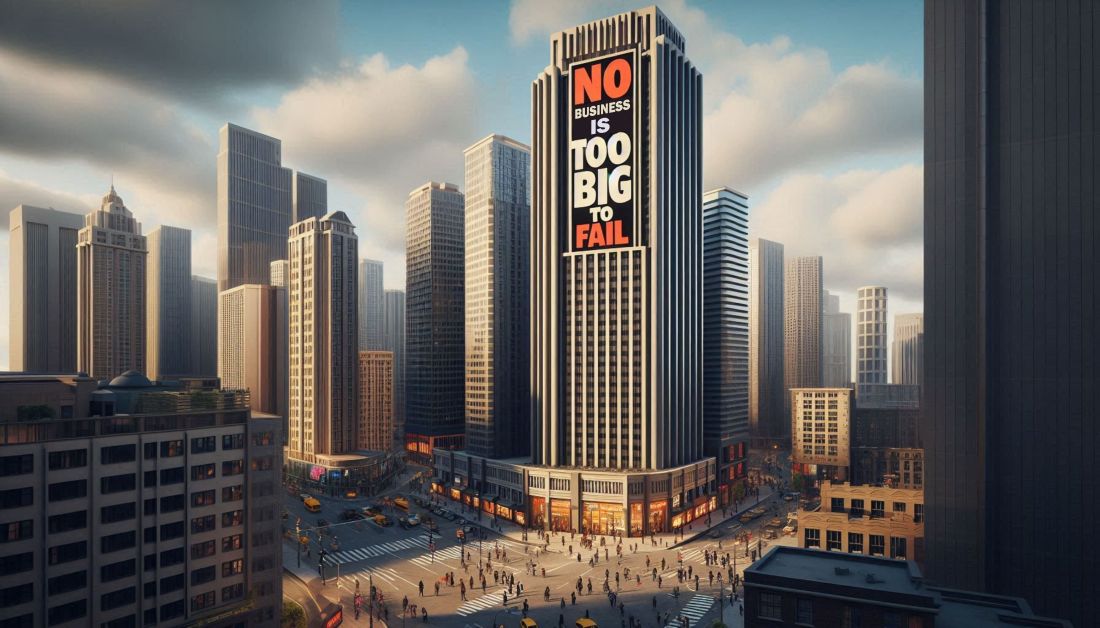
Contrary to common parlance, no business is too big to fail and no individual is too financially rich to fail – that is if politicians are genuinely doing their job. It is only fear and lack of ability to take responsibility on the part of the people we have elected to lead us that drives decision making otherwise.
So no, in 2008, the Banks should never have been bailed out. And certainly not in a way that they could resume paying bonuses to staff almost immediately and then return to profitability whilst we the public will continue paying for what was a commercially created – and therefore avoidable mistake, now and for potentially many years to come.
The difference between the banking crisis and the Covid crisis is that in 2008, the implications of a financial meltdown were assumed because of the ideas we all have about money, what happens without it and how we all perceive it to be the controlling force within our lives. In 2020, the implications of the Covid crisis are all about how the spread and presence of a real disease WILL genuinely affect us all – not just about how we feel and respond emotionally – and in some cases irrationally – to it in our thoughts.
Income, what we ALL face and the trickle-down solutions that we ALL now need
Today, businesses are worried about trade and therefore income.
People and employees are worried about jobs and being able to work and therefore income too.
But why is income so important?
Income is important because we all have to live – which other than for food pretty much means to keep paying bills.
But who takes money from us when we pay the bills?
If we remove basic food and essential items from the equation, its commercial interests, whether it be for phones, TV, utilities (such as water, electricity, gas etc), services, loans, leases, rents or anything else.
So when we are all facing a situation that has the ability to leave none of us untouched, why should any of those private interests be able to continue to profit from what is essentially a genuine crisis, public emergency and therefore public cause, when any one of them in isolation will be able to resume their profit making activities without anything standing in their way once the Corona Virus crisis is over and life in the UK returns to something like what we agree to be the norm?
The answer is that they shouldn’t.
And it is now that Boris and all of the wannabe politicians and advisors who surround him and inhabit our political system need to stand up to these interests that are indirectly responsible for so many of the ills that we face, simply because money and profit are their one an only motivation and cause.
The Government has the power to grant a moratorium on all non essential payments and financial activities such as the accumulation of interest in every sense possible.
The Government can also underwrite the actual cost of providing essential utilities and services during this crisis period without any profit being payable to any of the private interests or shareholders who are involved in providing the ‘public’ services that we will all continue to need.
Standstill Legislation: extraordinary measures for extraordinary times
No individual can survive on around £90 per week in what we would now call ‘normal times’ and for any politician to say otherwise is to tell a disproportionate lie.
However, if the Country comes to a standstill – as it is quite reasonable for us to now expect it will do so, the suggested £90 per week, per individual or thereabouts that the DWP would pay through ‘Universal Credit’ or whatever the benefit paid to those laid off from work as a result of the crisis would be, would certainly be enough just for food and essentials per person. That is if ‘Standstill Legislation’ halted the requirement for all other bills to be paid and Government takes control of essential services so that everyone can function within their homes with no travel or any other form of expenditure required.
Done in blanket form, without exception for any company, industry or anyone else involved, Standstill Legislation would not only be a fair, but very practical solution to effectively shut down the wider, profit-based nonessential goods economy and put it on hold until we are all ready and able to move forward with life in this Country as one.
Legislation could include but not be restricted to:
The temporary halt of all loan, mortgage, lease and credit card payments for all people and businesses, with payment plans resuming for full schedule beyond
The temporary halt to all interest accumulation on credit for all people and businesses with interest only becoming applicable once again once we move forward as one
The temporary halt to all council tax and business rate payments for all people and businesses with Central Government picking up the tab for revenue income flow for local authorities in-between
The implementation of anti-profiteering legislation for all businesses able and continuing to function throughout the shutdown period requiring margins to either reflect pre-crisis trading or those of the specific industry in the period before
Employers being able to lay-off staff until the crisis ends, with permanent staff being able to resume their positions as soon as the crisis ends unless the business can demonstrate that normal trading cannot be immediately resumed
Universal Credit or rather a ‘basic income’ payable to all those out of work because of the crisis purely for food and essential items
Government control of all essential and previously publicly owned services (Gas, Electricity, Water, Transport etc)
A temporary extension of VAT payment windows to at least 6 months from 3 for any business continuing to trade during the Shutdown Period
Staggered Taxation support for businesses that have been able to remain trading, applied relative to drop in trading
Suspension of all EU derived working hour legislation – including removal of the restrictions on driver hours, driver cpc training etc.
All tickets for holidays and events to be honored within 12 months of normal activates being resumed or repaid – with the choice being that of the customer, or refunded by default if the event or holiday cannot be honored for ANY reason which is identified at that specific point
Supermarkets being required to focus on essential foods and items only with rationing in place for items that are in genuine short supply
If there is one very good thing that can come from the Covid Virus outbreak and the crisis that has created, it will be the opportunity for politicians and big business to recognise how none of their actions or decisions take effect in isolation or in the targeted way that they might think. Echo chambers are only something that exists on the internet, not in real life.
The reality is that the Covid Virus is not only exposing us all to a potentially life-threatening illness. It is also demonstrating how the lives of all of us are already exceptionally vulnerable, and that Government already has the ability to address the weaknesses of an unrestricted economic system where private interest and profit making at one end of the spectrum are indirectly or otherwise making life misery for many others in a wide ranging and incalculable number of different ways.
Yes, the suggestions that I am making would be only on a temporary basis and that is how it would have to be once normality returns. But until politicians actually start doing their jobs properly, taking responsibility and making life better and more equitable for everyone in many different and far-reaching ways, the chaos and hardship that the Covid Virus is now revealing will continue to be an example of the daily struggles than many British people face until we all start thinking and behaving like we are one.
We are hearing promise after promise and commitment after commitment based upon what our current crop of politicians and aspiring MPs will do for us if we give them our vote.
The problem is that if any of them do get elected with a majority this week – and therefore attain the ability to actually deliver on any of the things they have promised – the promises they have made will look and sound very different when they come to fruition for many reasons, not least of all because so little thought and consideration has gone into how those promises were actually formed and made.
The UK is desperate for change
If we were able to elect the right politicians, we would not need manifestos at all.
Good politicians would do the right things and would be committed to doing whatever is necessary to get the job done – all without any consideration for what the impact of their actions may or may not be for them themselves, the Political Party they represent or anyone else who has influence upon the way that they think.
Unfortunately, we don’t have the option to choose the right politicians in the 2019 General Election.
The system that we have has ensured that different names, different people and the different things they all say won’t deliver anything different to the outcome or result. Anything and everything they do will always end up being exactly the same.
That isn’t to say there isn’t any value to the things that politicians are currently talking about.
Any good salesman knows that no matter how small it might be, selling anything has to be anchored on the basis of at least one truth.
The politicians we have are savvy enough to be able to focus in on topics that people will identify with and talk about them or make offers to the Public that suggest the politicians will address them. Promises that will be calculated as being just enough to get them elected – which is the only real job or purpose that any and all of these politicians genuinely want to get done.
We don’t know what the outcome of the Election on Thursday 12th December will actually be.
But whatever the outcome of the 2019 General Election is, the fact that we have such poor, self-serving politicians as the majority of Candidates to become MPs means it is pretty likely that even greater chaos than what we have seen in the past two years is well on its way. That chaos may really begin to hit us all very hard in our everyday lives if there really is no change in politics and politicians continue to believe that they can continue to behave just the same as they are.
So what could politicians be doing differently now if they were focused on the right things?
Actually there is an awful lot.
But successful outcomes for us all means having new politicians who are big enough and confident enough in their own abilities, knowledge and understanding to know that the biggest thing they have to think differently about is the desire to always in someway feel like they are in control.
No, not the kind of control we think of like driving a car or riding a bike.
This is the idea that politicians can control future events by the decisions they take now or at a certain time.
They can’t and never will.
It just looks like that – some of the time.
So when I say that good politicians wouldn’t need manifestos, what I mean is that they wouldn’t need to try and bribe us with whatever they can dream up to convince us.
We would just elect good politicians because we could trust them to get on and do what’s best for all of us whenever they make a decision.
We could trust good politicians to do the right thing.
Real Change
Because we don’t have good politicians, it’s worth having a think about the kinds of things they would actually be doing with the power that we have given them as part of that journey of doing the right things on our behalf.
Below is a list of the kinds of new policy ideas and changes that good politicians might be already acting upon, thinking about, questioning, discussing, researching and developing right now, if they were already in government.
It is not an exhaustive list by any means and I will apologise to any reader now who immediately finds the absence of a topic or suggestion in keeping with this document that I have for some reason or none left out.
There is, in reality today a never ending list of things that really need to be done and these are just a beginning or a start.
This is a Makeshift Manifesto
The points are deliberately short to bring focus and attention to the areas that need work in Public Policy if things in this Country were really to be changed and there was a genuine, wide-ranging commitment on the part of politicians to really get things done.
Some of the points will seem controversial, like withdrawing or rescinding the Legislation on Employment Rights that came from the EU.
I have raised them not with the intention of upsetting anyone or winding anyone up. They are there to serve as a gateway to the reality that there are much bigger and usually very negative consequences sitting beyond the mantras and sound bites that are deceptively used to draw voters in. The sweetest sounding lies and partial truths that often hurt the very people that they are supposed to help as they appear to positively impact the people they were designed for, but then negatively impact the world around them and then come back to haunt those same people too.
The way politics and the media operates today doesn’t foster genuine learning, discussion and debate. It focuses on fear and encouraging instant reactions and doesn’t allow anyone to take the time to sit down, go through ideas in the right way. It certainly doesn’t explain.
For example, when talking about subjects like hourly wages and rates of pay with young people and students, they will most often only be focused on what the value of pay to them is actually worth.
Yet when you take the time to discuss and explain how the businesses that employ them operate and what wage rises will actually mean as a result of the knock-on effects to the employer, the customers and the employees just like if not them, they are typically far more interested in what has been said. Indeed, they are genuinely receptive to the steps that would need to be taken to make the money they earn and already have in their pocket have better value. They want to see the changes come into being that would change not only theirs but everyone’s lives for the better – again, getting done what really needs to be done.
So no matter how the following points might immediately make the reader feel, they are offered up as no more than the equivalent of a light being shone on the areas of Public Policy that need to be changed; in some cases removed and in others completely transformed, simply to ensure that the battle to deliver something better for ALL People in the UK – that MPs are not yet fighting – is ultimately won.
‘You can’t do the right thing because it’s too complicated’
This isn’t costed. It can’t be done. Things don’t work like that. It’s not practical. It’s idealist.
These are all reactions that can be expected at the end of reading what follows below.
During conversations with many people about public policy generally and particularly with people who voted to Remain in the Referendum on Leaving the EU, I have become increasingly aware that the majority of us agree with all the kinds of suggestions I am making and with it the principle of ‘doing the right thing’. But they also believe this kind of change is impossible because it’s either too complicated or we will never have the right people in politics to do what it takes to get these things even considered, let alone started, completed or ‘done’.
Whilst this view is completely understandable when considering the mess that British politics is now in, it’s because politicians have not been prepared to look difficult policy decisions and challenges in the eye and deal with them properly as they should that the UK is now in the trouble that it is and so many people are suffering across our communities.
Brexit is a symptom of the very problem where the politicians who have been elected and given the responsibility to lead us and make decisions on our behalf always take the easy option. Do decision making in isolation without care for consequence. And give us government that is always thinking about the next election and is therefore on the run.
The reality is that if politics was done properly in the UK, manifestos and the false promises within them would be redundant.
Issues would be addressed and considered by Government as they need to be, rather than being wrapped up in shiny paper at election time and sold to us as part of some grand but nonetheless hollow strategic plan.
Cost, practicality, how the system works and all those things may be very relevant in considering what is only list of suggestions for consideration that follows here.
Any one of the suggestions made, when considered or even enacted in isolation might be appear impossible simply because of all the other existing policies that already interact with that area of policy, which in the immediacy of that apparently broader sense might make it seem impossible for that one thing to be done.
But none of this is impossible.
In fact, we all deserve an approach to public policy which is not fearful of even considering changes to public policy just like these.
This means that we need to change the way that we think as well as the people we elect to think on our behalf.
Only when we have political leaders who think differently will we all see and then understand how different and how better things in this Country can be if our politicians are prepared to break away from the idea that achievement only comes from compromise when repeated compromise itself means we continually end up with all the same things.
We must have real leaders in Government before we can actually be led.
A small caveat
Everything that follows is basically a starting point or a means to reaching or finding a way to an end. The overriding principle is that we should make better and more effective use of all that we have already got, rather than falling into the trap of thinking that the problems that we have can only be solved by throwing money around or by replacing whatever the problem is with something new.
This kind of thinking might be representative of ‘the way that things have always been done’. But in the long term, it helps no one.
PLEASE NOTE: There is no specific or intended order. As a result of an attempt to avoid duplication (which may have failed here and there…), some points or suggestions may appear to be located under headings which are different to where you might automatically assume they should be. It does however illustrate the point rather well that no public policy decisions should ever be made in isolation as all public policy is joined up!
Thanks for reading!
Best wishes to all,
Adam Tugwell
7 December 2019
The Makeshift Manifesto – December 2019
1 – Taxation
Reform of HMRC to make it ‘customer friendly’
Tax the ownership of land, property and wealth rather than personal income
Tax Internet transactions at the location of the customer or the device they were using, not at the location of the company base
Simplify the taxation system, providing transparency and remove confusion
Aim for flat tax or limited tier system which is not based on the level of earnings, but where all earners pay proportionally the same
Aim to reduce and then remove VAT once all other parts of the Tax system have been changed and are working appropriately
New ethical ‘in the spirit of’ legislation to prohibit Tax Evasion or Avoidance where no preventative Law is deemed to exist or cover the abusive act, but where Tax Evasion or Avoidance has taken place nonetheless
2 – Industrial Relations
Reform union legislation to prevent and make illegal any strike that will or has the potential to effect transport and public service provision
Remove right of unions to have paid shop stewards or other union representatives on organisational or company payroll
Legislate to prohibit unions making donations to political parties, third party organisations or outside causes
3 – Defence
Reinstate National Service to ensure that all eligible young people qualify academically, complete parallel apprenticeships or undertake military training as a key part of their professional development and steps towards the workplace
Aim to bring all military hardware and software development and manufacturing into the UK or UK hands, outsourcing only where no other options are available
International Military Policy to be non-interventionist and non-aggressive unless directly attacked or there is a requirement to maintain an appropriate military presence overseas either to support UK Foreign Aid activities or as part of Partnership commitments with other Countries (NATO, UN etc)
Outlaw civil prosecution against any alleged military ‘crime’ – whether current, recent or historic
Continue with the Renewal of Trident
New Naval Ship Building programme to include adequate ‘at sea’ Fisheries Protection for all UK Waters
Rearm and finance the Royal Navy, Royal Air Force and Army to ensure that combined forces are able to cover all domestic and possible/likely overseas requirements at all times
4 – Communication
Support the telecoms industry to provide 100% Broadband coverage across the UK within 5 years
Ensure that all critical infrastructure and software is provided by UK Companies, managed and manufactured in the UK
5 – Education
Apprenticeships at 14 for non-academic young people as part of a change to ‘heads’ vs. ‘hands’ parallel routes to age 21 where education is based on experience, academic attainment or both, rather than just exam results and educational level reached.
Prohibit bogus or ‘worthless’ degrees
Remove commercialism from all places of learning to ensure that the focus is on teaching, not running as a business
Cap the salaries of senior academic and management staff in all publicly funded educational establishments
Remove ‘private’ interest in any publicly funded educational establishment or vehicle
Legislate to support Teachers first and foremost in the parent-teacher relationship
Add critical thinking to become a required part of all curriculums
Means tested paid tuition fees for further and higher education students for first time applicants of all ages
Means tested maintenance grants for further and higher education students for first time applicants of all ages
6 – Foreign Policy
Reform overseas aid to provide direct and meaningful support, rather than just funds or contracts to private companies
Contracts awarded to private companies as part of Foreign Aid should be given to business indigenous to that specific Country, with the focus that profits and employment end up in the pockets of local people and businesses – not simply back in the UK
Create a non-military foreign aid logistics and development service
7 – Brexit
Immediate rejection of any of the existing ‘Withdrawal’ Agreements made with the EU
A completely Clean Exit from the European Union on WTO Terms – as directed by the UK Electorate in the European Referendum Vote on 23rd June 2016
No negotiations on trade until the UK has formally Left the EU and is functioning with trade on WTO Terms
No further payments to be made to the EU after the UK Leaves the EU
No balloon payments made as part of the process of the UK Leaving the EU
Immediate start on the alternative Borders option for Northern Ireland and the Republic of Ireland to include the establishment of the Open Border Service
Immediate protection orders to safeguard British Farming, Fisheries and all areas of production at risk from foreign imports
Immediate implementation of a temporary protectionist policy on all trade with the EU where the products, goods, foods and services are already available in the UK, to stay in place until those industries can self-sustain
Immediate ban on the import of all EU derived products, goods, foods and services that are subsidised and therefore underwritten by the EU, unless they are not already available in the UK
8 – Business & Finance
Readopt an unashamedly protectionist, UK first approach to all industries and services
Adopt a non-global approach to supply chains and production
Require all UK Business to adhere to new Covenant of UK Environmental Standards covering all production, operations and purchasing within 2 years
Focus new trade deals on Foods, Products, Goods and Services that the UK has not historically provided itself or for the period it remains unable to do so
Reform and limitation of financial services and banking to restrict or where necessary prohibit the use of speculative (betting), futures and non-transparent financial devices in any form
Restrict the power of privately owned credit scoring agencies
Regulate and restrict current system whereby banks and financial institutions can effectively create money through system of leverage
Confiscation of all material assets law for all Bankers and Financiers who are convicted of financial exploitation of others
Sell here, produce here requirement for products and services in mass Public or consumer use
Anti profiteering laws to be introduced
Restriction of intervention and right of agency in any supply chain where no value has been added via the transfer
services
Punitive fines to be introduced for unethical business practices
Fiscal prudence law outlawing policy decisions based only on cost and/or spending
Reverse changes made by Gordon Brown and the 1997 Labour Government to Pension Funds
Legislate to restrict or stop Planned Obsolescence consumerism
Legislate to prevent private companies issuing fines for parking offences
Create new Parking Court
Legislate to remove the grey area where gig economy companies can employ people on sub-contract or self-employed basis without being a full franchisee to be banned
9 – The Internet & Social Media
Legislate to ensure that identities of all social media account holders/users to be known to publisher and anonymity of public user identity (usernames) only given for legitimate reasons
10 – Public Services
Create Public Interest Companies (Trusts) to provide all municipal services and services across multiple Authorities covering traditional County areas or similar
Create new standard or charter for public servants
End the role of ‘created’ and unnecessary add-on management, back-room and administrative roles
End policies which facilitate and allow redundancy and rehire
Reform Local Government & Civil Service Pension Scheme
Rescind independence in decision making of all QUANGOs making them answerable Nationally to Parliament and locally to the most appropriate Local Authority or tier of Government
Remove EU Tender & Procurement Legislation
Prioritise new, small and local business over corporate business for any outsourcing requirement that remains
New non-financial or indirect corruption laws for all tiers of government and public services
11 – The Courts & Legal System
Reform and reinstatement of legal aid with appropriate fixed fee format, legal professional sector pay and enforcement body to administer and clear penalties for any abuse of the system
Reform of legal profession standards monitoring and regulation
Divorce Laws to be reformed with first point of call becoming mediation in all civil cases where no Criminal Laws have been broken
Mediation to become licensed
Create Legislation to impede influence of obstructive and unreasonable Divorce cases not settled by mediation
Volunteer Magistrates to be excluded from all Family Law cases
Reform Magistrates Service to remove innate prejudice and political correctness from recruitment processes
Legislation against ‘ambulance chasing’ or ‘where there’s blame, there’s a claim’ approach to litigation on basis of blame attribution
Dissolution of the Supreme Court and return to Law Lords or system that sits outside of political influence
Reform of litigation Laws to support David vs Goliath cases where small businesses could not afford to take on big business when in breech of contract
12. Law & Order
All convicted Terrorists to receive whole-life tariffs
Referendum on Capital Punishment
End to Police Community Support Officers
End requirement for Police Officers to be educated to degree level
End to direct entry for senior officers who have not come through the ranks
Resume system of Police Prosecutions
Aim for all minor offences to be prosecuted within 24 hours of arrest and before offender release
All young people from age 14 to 21 years convicted of criminal offences other than murder, manslaughter or terrorism to be immediately enrolled for National Service
Decentralisation of Police Stations and return to locality Policing
Remove all targets and statistical monitoring of Police work that incentivises behaviour or quality of work
13 – Freedom of Speech
Protection of the tolerant against spurious intolerance
Right to be forgotten to become automatic after 3 years
New law to support freedom of speech and right to speak with removal of right to inflict views on others verbally, in writing or through intimidation or threatening behaviour of any kind
14 – Animal Welfare
Rescind EU Laws on Abattoirs
Support construction of new local Abattoir network and mobile abattoir service for the most remote areas
No animal to travel more than 50 miles from farm to slaughter
Revise Hunting with Dogs Legislation to outlaw illegal or disruptive intervention by non-hunters, remove any right to prosecute for accidental Fox hunting, whilst tightening Law on prosecution against those seeking to flout Ban using birds of prey or other by-pass devices
RSPCA to lose charity status, be taken into public management and given evolved role to support work of DEFRA and all other Public Services and Agencies dealing with Animal Health & Welfare
15 – Nationalisation / Public ‘management’ of Everyday Essential Services & Utilities
Place all utilities and services essential for everyday public use into non-profit making status and/or create alternative public managed business providing alternative provider to all customers
16 – Transport
Scrap HS2
Remove Crossrail Company and replace with non-profit making commercial trust with reformed management structure
Build new terminus stations in London and expand number of platforms at existing terminus stations across UK
Reopen lines closed by Beaching Act
Public sponsorship or loans to new shipbuilding enterprises
Create new system of Bicycle & Rider Licensing
Focus technological development on Hydrogen and Battery Powered Vehicles
Rescind EU Legislation requiring Professional Drivers to do stepped tests for different vehicle sizes in same class (e.g HGV 3 and then HGV1 only afterwards following a qualification period)
Rescind Driver CPC Course requirement replacing current system with short online course and tests as part of first Licensing, then regular refresher courses and tests online thereafter to be provided and managed by DVLA for all UK ONLY commercial drivers
Professional Foreign Drivers required to undertake same short online courses and tests to drive in UK in ALL circumstances
Investment in new road surface technology research to extend lifetime
Fines for utility companies leaving temporary roadworks without work taking place at weekends and during daylight hours
Utility companies to be made liable for all road repairs where they have devalued the structural integrity of a road surface
17 – Welfare & Benefits
Institute a universally applicable basic standard of living rate for all persons
Create a people’s bank
All Benefits to be paid into a cashless bank account with restrictions on payments tailored to the recipient
Removal of assumed right to benefits for any foreign economic migrant
Return to common sense approach to disability payments
End the use of profit making back to work training contractors
18 – Poverty
Introduce a Basic Standard of Living level based upon what it costs to feed, cloth, house and transport a person or persons living in a household at a minimum realistic level
Base all benefits on the Basic Standard of Living Level
Base all future plans for minimum wage on the Basic Standard of Living Level
Explore validity of Universal Income set at Basic Standard of Living Level for the short term unemployed to restrict unnecessary exposure to benefits system and culture
Creation of blanket provision of hostels and services for the homeless with tailored approach to individuals and arms-length care and support for those who choose not to use any accommodation offered
All supermarkets and food retailers with 3000’ floor space of more to be required to provide and openly promote food bank donation bins
19 – Food & Farming
Unashamedly prioritise British Produce
Require that all publicly funded meal providers buy British
Incentivise local and ethical food supply chains to create a producer to retail industry able to compete directly with National Retailer supply chains with food travelling no more than 50 miles from farm to fork
Replace CAP with short term UK Farm Subsidies
Remove all EU-derived quotas and restrictions
20 – Politics and Government
Reform of electoral system
Reform of political Party system
Minimum age of Town & Parish Councillors set at 21 years
Minimum Age of District Level Councillors set at 25
Minimum Age of MPs set at 30
Removal of Allowances System for Councillors
Introduction of time-served, time-attended, effort-made ‘end of term handshake’ for Councillors
De-politicisation of lower tiers of Government
MPs barred from holding second jobs whilst in Office
MPs barred from holding non-executive directorships whilst in Office
MPs barred from holding consultant or sub-contract roles whilst in Office
MPs barred from holding any company ownership role with a shareholding of 51% or less whilst in Office
Politicians barred from holding more than 1 Elected Office at any time
End the Police & Crime Commissioner (PCC) system
Local Authorities to be barred from using fines from parking and road offences as revenue or as a source of income
Lords to either be dissolved or be reformed
Reform of the Honours List
Reform of Commissions system
‘Cronyism’ in Public Office to become a Criminal Offence
21 – Devolution & Localism
All powers that can be more effectively governed and implemented at local level to be devolved to the appropriate tier of Government from Westminster, Edinburgh, Cardiff and Belfast
Create Parish or Town, District or Borough and County Level independent local authorities where none currently exist
Dissolve Unitary Authorities
Dissolve Mayor-led Authority Areas
22 – Climate Change
Create a Covenant of UK Environmental Standards for all foods, products, goods, services, manufacturing and other items to be published within 12 months and implemented within 24 months
Ban on all non-UK based Companies moving into UK Marketplace which do not meet UK Environmental Standards
Return public transport to ‘public’ ownership
Improve public transport to levels that improve passenger participation
Provide 50 free journeys on one form of public transport per commuter per year
Prioritise carbon capture technology both for industrial and domestic use
Stop pretending that House building is the only solution to the Housing Crisis
Invest in water capture, desalinisation and storage technologies, where possible ensuring a crossover with green energy production
Introduce Packaging Tax to be applied to all disposable or non-recyclable packaging on a per-unit basis
Rescind decision on 3rd Runway at Heathrow until expansion will be at least carbon neutral in current terms
Legislate to make better use of existing transport systems and infrastructure prioritising improvement over new construction
Tax commuter journeys taken by car
Incentivise reduction of car-to-school journeys for children of secondary school age and where adequate and appropriate educational transport or public transport provision exists
Legislate to restrict or stop Planned Obsolescence consumerism
Subsidise network of community car sharing pools
Tax ownership of fossil fuel resources on an annual basis
Ban imports of all products not manufactured to UK environmental standards
23 – Planning
Dissolve Local Planning Committee structure and remove politicisation
Legislate to create Local Planning Courts
Create new Government Planning Investigation Unit with remit to investigate historic consent, overturn decisions not made in the Public Interest and given the right to seize land and property where corruption of any kind has been found or to instruct the immediate return of land or infrastructure to the previous state it was in before the Application(s) was/were made at the cost of the Applicant.
Reform Planning Policy to remove anchors for interpretation and focus decision making on real-life effects and locality
Create National Framework of Planning Policies to be adopted and tailored locally and left as stand-alone except in times of National Emergency or need
24 – Environment
All flood plain building and restructuring to be immediately banned
Revision of Flooding policy to include equal weighting being given to Fluvial and Pluvial flooding
Return to regular dredging and clearance of all river systems
25 – Housing
Tax all multiple home ownership at increasing levels per unit and/or depending upon size and unused capacity
Introduce staggered and increasing stamp duty upon all multiple house purchases
Regulate profit margin per new house for house builders
Introduce Tax breaks and incentives for unused room letting
All local authorities to prioritise local applicants for social housing
26 – Employment Rights
Step away from all EU derived Employment Legislation and end Working Time Directive
Regulate to ensure minimum hourly wage in line with agreed contractual hours, overtime rates (minimum 1 x 1.25 minimum wage for all zero hours contract workers) and holiday pay on per hour basis
Legislate to ensure that all gig-economy-type roles pay ‘employee’ on basis of zero hours contract AFTER realistic costs have been deducted, whether technically employed or self-employed
27 – Licensing (Gambling & Sale of Alcohol)
Gambling industry to have new system of governance mirroring alcohol licensing where ‘point of transaction’ must be managed by a responsible, appropriately qualified and upstanding person who will be held accountable for the safety of all customers on the basis of legally backed right to refuse
Internet and/or app gambling to be regulated to reflect the above or banned if the industry cannot present workable solutions to support gambling supervision on remote basis
System of Alcohol Taxation to be introduced to encourage use of Pubs, Restaurants and Social Clubs for drinking
28 – Health & the NHS
Top to bottom reform
Removal of unnecessary or created backroom management functions
Ban on consultancy buy-in for management purposes
Devolution of management to ward level
Supply purchasing to be returned to strategic, cross-NHS level
Dissolution of all remaining PFI Contracts
Social Care to be managed by NHS
Regulation of damages payouts to cover legal costs
Creation of Damages Court to filter spurious complaints
Legalisation of ‘Right to Die’ under 3x ‘unknown’ doctor sign-off system
Sex Industry to be legalised, Regulated and managed as a Public Health concern
29 – Science & Technology
UK First Policy
Regulate ownership to restrict foreign influence and call upon new technologies
Subsidise development of real technology
New public managed pharmaceutical development company
Incentivise scientific development, automation and artificial intelligence only to improve production, output and quality – not purely for financial purposes
Revise policy on foreign investment to ensure that Companies and Technologies critical to the UK remain in UK hands
30 – The Monarchy
Immediate scaling down to preclude ‘shirt tail’ and no longer relevant Royals
Remove any obstacle to prosecution under all UK Laws for any Member of the Royal Family, whether perceived or otherwise.
Further Royal Palaces to be given over to Public use as museums and tourist attractions
Crown Properties to be returned fully to Public hands with no income paid to Members of the Royal Family from profits
Review of Charities and fundraising to remove unnecessary and unhelpful duplication of services
Create a centralised charity giving system or personal account, possibly managed by HMRC where money is deducted at source and then allocated according to the choice of the individual with gift aid automatically added
The list above is not exhaustive by any means. There is plenty more.
Adam’s Book for Kindle ‘How to get Elected – doing politics the right way’ can be purchased and downloaded now from Amazon by clicking HERE.
If you were looking for a textbook example of what disruptive technology looks like when it hits a marketplace, the assault on the Taxi business in London by Uber would be it.
As a former business owner and entrepreneur, business advisor, business planning tutor and Chairman of a Licensing Authority, the case that has been bubbling away between TFL and Uber over a period of many months has become very interesting reading indeed.
It’s not only because the Licensing Principles have come in to question and this has formed the basis of TFL’s excuse to refuse to reissue Uber’s Operating License.
It’s because the License was awarded in the first place. Especially when the Company’s insistence that it is not itself a Private Hire Company is publicly known.
Licensing in London is of course different to the responsibilities of the Licensing Authority covering rural Gloucestershire and some of its Market Towns that I oversaw for 4 years from 2011 – 2015, just on the basis of size alone. But the principles that underpin Taxi and Private Hire Licensing in each and every part of the Country are exactly the same.
It doesn’t matter how much the Company protests otherwise. Customers know and understand the service and the app they use to book it to be ‘an Uber’.
Customers don’t know Uber to be a price comparison website, an advice site, a recommendation site or anything else that could sound like a plausible re-labelling of a what-it-says-on-the-can technology platform. One that aims to distance itself from the very responsibilities that govern the public-facing service and industry that it has aimed so successfully to disrupt – rather than as being a place where you connect online to get a choice of different ‘taxi co’s’.
The real cost of whatever influences allowed and facilitated the entry of Uber into our Capital in the first place – in these circumstances, have only since started to become known.
But the fact that Customers across London have now experienced the low-cost, comparatively easy to use side of a service that exists purely because of what might have been the intentional misinterpretation of Private Hire Legislation, means that the rules that were arguably broken to facilitate the arrival of the Uber service in London, no longer matter where public opinion is involved.
Herein lies the real problem for TFL having this battle with Uber. Because whoever influenced or made the decision to allow Uber to operate in London without the Company accepting and demonstrating that they would meet all of the requirements of being a Private Hire Operator – not only in principle – but in practical form too – at that very point created the problem that is TFL vs. Uber today.
Because TFL awarded a License in the first place, they should now accept that they have responsibility for Uber being present in London. No matter who was in charge then. No matter who is in charge now.
At the same time however, Uber should not expect to continue operating under the false pretence that it is not itself a Private Hire Operator when doing so is little more than an elaborate charade.
Just because so many drivers now provide a Private Hire Service through Uber in London, it should not in anyway mean that a privately owned company can do whatever it likes without impunity – especially where questions of Public Safety are very clearly involved.
However, the reality that Uber has already held a License of the type they are attempting to regain, does suggest that the Company should at least have the opportunity to address the wider issues that are present. To accept the real responsibilities they have towards customers, to employees and to contractors too. And to begin behaving like they are a part of an established and historic British Industry that they can work with, within and in support of, rather than treating it like it doesn’t exist and is something that they can walkover and ultimately replace.
No private company or commercial enterprise should be allowed to behave like a dictator over the provision of any service that involves public safety, at any level or at any stage.
If Uber wins its License back on Appeal, without any review, reform or change of the way that they operate, that however, is exactly what they will have become.
For good or for bad and for reasons unknown, TFL stepped outside the boundaries of the Licensing Principles to award Uber a Licence in the first place.
If it wants to fix the Uber problem properly it will have to be big enough to step outside those rules again for all the right reasons now and use the power and influence that it has to create a Private Hire model in London that works for TFL, for Uber, for the Industry, for the drivers, for the customers and basically everyone involved.
The people living and working in Villages and Towns around mid and Northern Gloucestershire and South Worcestershire experienced the worst that inland flooding can throw at us – and for a great many even more, when critical infrastructure was affected and the drinking water supply dried up as result.
Nobody could argue that the impact of the event did not come to the attention and supposed scrutiny of Westminster Politicians at the time. Pictures of RAF Rescue Helicopters winching stranded people to safety whilst hovering against the backdrop of the Cotswold Hills quickly caught international attention. I stood outside the Local Council Offices when then newly appointed Prime Minister Gordon Brown arrived.
At the time, within the immediacy of the flooding event itself, it felt like the powers that be simply couldn’t do enough.
But the moment that the floodwaters receded, the RAF had returned their big yellow flying machines to their bases and tap water supplies were restored, the media’s and therefore the attention of the politicians with the real power to do something meaningful simply drifted off to elsewhere and beyond.
Yes, remedial flood protection work took place here and there – especially in places that are very much in the wider public’s eye.
But the changes made in response to the Floods that year were in many ways little more than being aesthetic.
There was then and has been since no change in the way that Politicians, Government and the Agencies address the causes, influences upon and effects of flooding across the UK – despite many similar experiences for other people and communities across the Country that have already happened and are taking place in Yorkshire and the East Midlands today.
What was clear to me as a Local Councillor at the time of the 2007 Floods here, was that the Environment Agency wasn’t fit for purpose; that flooding was and always would be managed on the basis of so-called tried and tested thinking. And worst of all, that there was absolutely no room for new approaches or original thinking to deal with the problem as the specialists and those who possess the fiefdoms that are public sector responsibility would always know best – no matter what the reality and impact upon real people was or would be that was involved.
And whilst processes and procedures to deal the impact upon families that have to move out of their homes and perhaps live in caravans as a result for many months now appear to have become normalised, the fact that Government has concentrated only on managing the effects of any flooding crisis at the time, rather than dealing with the causes and what lies ahead should be telling us all that we really need to know.
Flooding isn’t a vote winner when there’s no water on the ground
With the shallow, self-serving politicians that we have in power today, the harsh reality we must all face is that in their majority, Politicians and the Political Parties that they represent are not interested in seeing any task through from start to finish, unless they believe that doing so will secure them more votes.
What our Emergency Services, our Military, and the people on the ground will do in Yorkshire and the East Midlands during the current crisis to help people will not be an issue in Westminster once the water has gone and this ridiculous General Election Campaign has passed by.
Addressing the issues that count and will make a difference – that’s Planning Policy, responding to the Housing Crisis, how we address Climate Change and the way that the Public Sector itself actually works, are not and never will be on the agenda for longer than it remains in the news. Or at least not until we have politicians with very different motives and people-first mindset involved.
Planning Policy
Many people don’t understand that Local Authorities don’t make planning law. They just interpret it.
And with rules that come from the centre – rules that sound great because they seem to consider this and sound great because they appear to consider that – we have all been misled into believing that a one-size-fits-all approach to the way that we build in all locations, environments and conditions across this Country can work out for everyone wherever they are in the same way – even with different people with different motives doing the interpretation that is involved.
For instance, the Planning System is itself so arbitrary that floodplains that have been built up and covered with dumped earth and inert debris then qualify as being safe to build on. Yet there is no consideration for the displacement of floodwaters that would have historically rested at that location. Nor is there though given for how that water might flow around this newly created island or indeed what other properties or places would now be affected by what will be both a new and at time of flooding inevitably different water flow.
For the impact of future flooding events to be limited for existing properties, Towns, Cities and Villages to the same levels and impact that they are having right now, Planning rules and the way that we interpret them must change to embrace the increasing likelihood of the black swans, rather than the imbedded mentality of ‘it couldn’t happen here’.
Unswerving technical adherence to manmade rules doesn’t allow for reach and impact of Mother Nature.
Solving problems without creating others must be a priority for all areas of civic life and activity.
The response to the Housing Crisis
Yet another of the political footballs that is currently being bounced around is the topic of which Political Party will build more houses and how quickly they will build them if they should find themselves in power once the Election question has been resolved.
The myth that we need to build so many new houses evaporates the very moment that you consider how much they actually cost.
How often have you seen house prices drop in any part of this Country when a new estate or development has been built?
The truth is that prices of old and new property in the local areas usually rise and like most things where prices and need can be manipulated, profit and therefore greed are the underlying cause.
Building at the levels we have already embraced is already creating a time bomb for potential flooding incidents that would never have had this kind of impact in the past – especially with planning policy as it is.
There needs to be a massive rethink and politicians who were thinking about the people they represent would certainly bring this foolish and ill considered approach to the problem to an immediate stop.
The way to deal with the housing crisis is to make better and more equitable use of the houses and buildings that we already have.
It isn’t helpful to pretend that the only solution is to keep on building more and more, whilst creating many more real ones than the hollow one that it is supposed to solve.
Climate Change
Yes, Climate Change or the Climate Crisis that our young people are now beginning to champion and the way of thinking that they are challenging is a very real part of the flooding problem too.
The weather in this Country and around the World is changing – no matter what your views might be about the cause.
The cold hard reality that we all have to face is that the weather patterns that are here today will take many years to reverse.
But there are steps that we can take to address their progression and pathway to becoming worse.
It is not simply about legislating to change the behavior of people who are already trying to make the best of what can be very difficult lives.
This is where the inexperience and impractical idealism of young people could easily be seen to make a valid argument that is beneficial to us all seem outwardly very wrong. Like Flooding events, protests soon disappear from the minds and plans of the wrong politicians and that is the truth – no matter how wrong.
Sadly, with Climate Change, much of the problem is again about money and greed.
The businesses that have the biggest part to play just need to be led to think differently and see that the profit which is their obsession is still there for them tomorrow as it is for them today. It will just come from them investing, operating and behaving ethically in a very different way.
Industry and money might not be listening now, but that will be different when we have different people in charge.
The necessity of political change that wont be served simply by having a General Election
The complexity of the problems that are contributing to the Housing Crisis, the failure of Planning Policy, Climate Change and Flooding as an issue in its own right will never be dealt with in the way that it needs to be by politicians who are only interested in the outcome of the next Election and how they convince all of us to give them their vote.
If we want the change that we need with the issues that we are facing not just like Flooding, but which we are experiencing each and every day, we must elect different people into Parliament, our Councils and into positions of power who will put people first. Politicians who know what it will take and – most importantly – are actually prepared to do everything necessary to get all of those things that need doing – and not just Brexit – done.