
We’ve reached a point where the law is treated like a moral compass, even though it no longer points anywhere near true north. People talk as if legality and morality are the same thing, as if the moment something is written into legislation it becomes right by default. But anyone paying attention can see that the law no longer serves the best interests of the public in any meaningful way. It has become a tool – a flexible, shape‑shifting instrument that bends to the will of those who write it, not those who live under it.
And this is happening at the very moment when we should be thinking more independently than ever. We have endless information, endless access, endless opportunity to question what we’re told. Yet somehow, we’ve drifted further away from genuine independent thought.
People feel that something is wrong – you can hear it in conversations everywhere – but they haven’t yet reached the point of understanding why.
That’s why the times feel so strange. It’s not that people can’t see the cracks. It’s that they’ve been conditioned to doubt their own instincts, to assume that if something is legal, it must be normal, and if it’s normal, it must be acceptable.
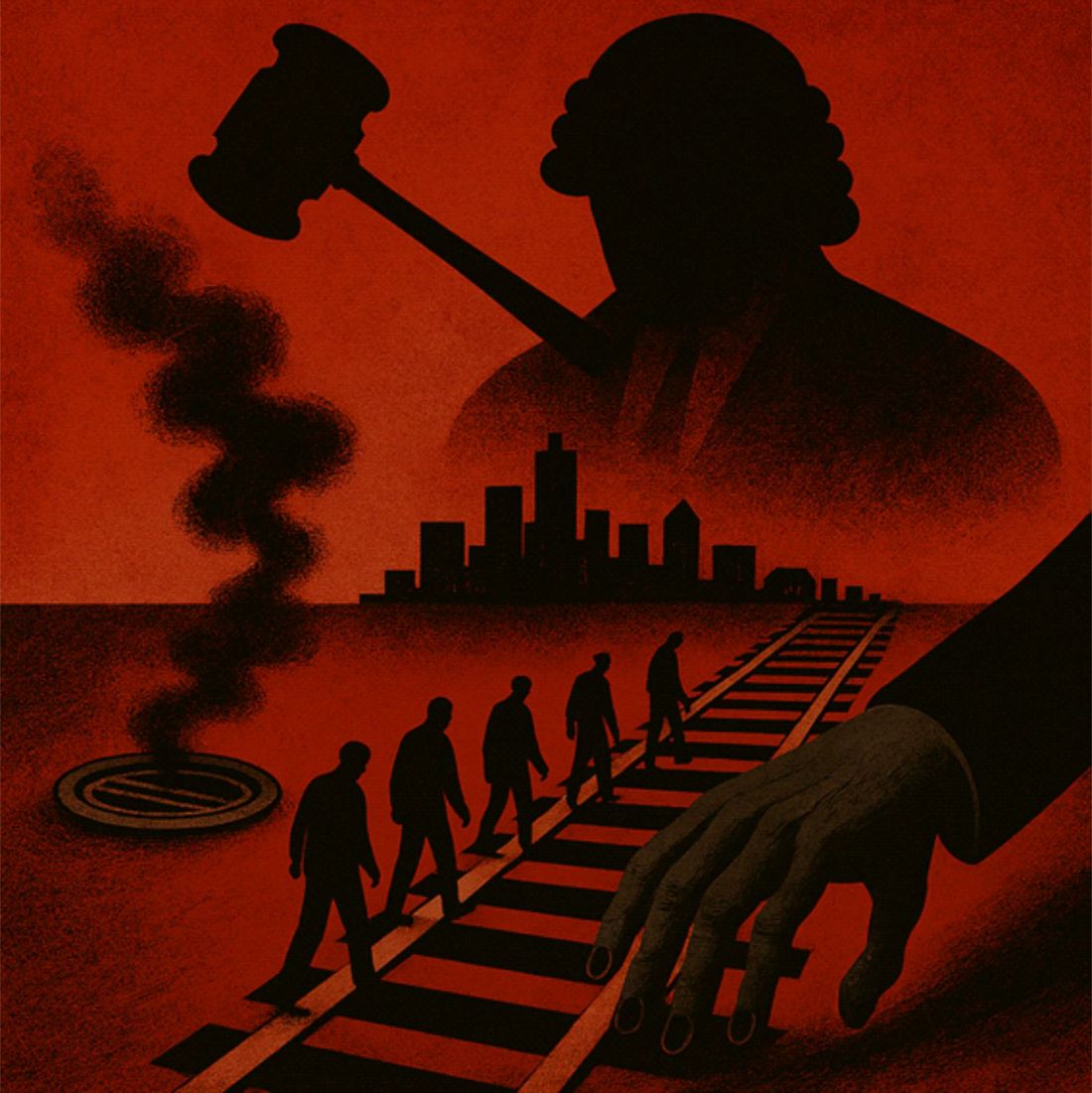
Meanwhile, the lid on the septic tank – the one that hides the real workings of the system – is rattling harder than ever. And every time it shakes, more people catch a glimpse of what’s really going on underneath.
Because when you look around, so much simply doesn’t add up. We’re told the system is fair, yet money is consistently prioritised over people, even when the human cost is obvious.
We’re told decisions are made for the “greater good,” yet the outcomes rarely reflect anything other than the interests of those who benefit.
We’re told to trust the process, even when the process produces results that defy common sense. And the more people try to reconcile what they’re told with what they see, the more they feel that something fundamental is off.
Over the past few days, this disconnect has been thrown into even sharper relief. The latest events in the Eastern Mediterranean, the Persian Gulf, and Iran have pushed the lid on that septic tank to the point of shaking loose. And the most revealing part hasn’t been the prospect of a US‑led war. It’s been the behaviour of our own government.
The Prime Minister has looked out of step, slow to approve US use of bases in Diego Garcia and the UK, and hesitant even about basic security commitments in Cyprus. The obsession in Number 10 seems to be whether the war is legal – as if legality is the highest moral test – rather than what leadership requires or what is right.
This should tell us everything. Yet many people still trip over the question of legality, when the deeper question – the one that should always come first – is morality itself.
The PM’s behaviour suggests a belief that if something is legal, it is automatically right. But that mindset is dangerous. It allows those in power to hide behind the law, using it as a shield for decisions that may be questionable, harmful, or outright wrong. Once something is made legal, it becomes almost impossible to challenge – even when it hurts the very people the law is supposed to protect.
And this isn’t new. Governments and the establishment behind them have been doing this for decades, if not centuries.
The idea that legality equals morality has become so ingrained that all a government needs to do is pass a rule, and suddenly the policy it supports is treated as ethically sound.
But law and morality are not the same. They cannot be the same. Laws are rail tracks laid by those in power, pointing society in the direction they choose. They are not – and must never be confused with – personal agency, independence, sovereignty, or genuine freedom of choice.
Real freedom of choice means decisions made without pressure, manipulation, or engineered constraints. Only in that space can morality exist. Only there can individuals decide what is genuinely right or wrong – and only from that foundation can society do the same.
Yet today, fixed direction is imposed everywhere. People believe they have freedom, but most of their choices have already been made for them. They’re offered false options that maintain the illusion of autonomy while keeping them on rails laid by someone else.
And here’s the heart of it: people have been conditioned to accept things that are wrong – even things that harm them – simply because a law exists that allows those things to happen. If it’s legal, it must be normal. If it’s normal, it must be acceptable. And if it’s acceptable, why should anyone question it?
This is how we end up with everyday absurdities that everyone recognises but few challenge. Healthy food becomes too expensive for the poorest to eat, yet nobody in authority calls that immoral – because the pricing is legal. Councils charge residents to park on their own streets and fine them when they don’t comply, and we’re told this is “policy,” as if that makes it right. Entire communities are reshaped to suit the aims of people who have no connection to them, and somehow their objectives are treated as the standard the rest of us should follow.
None of this happens by accident. It’s what you get when every new layer of legal complexity is built to serve an agenda rather than the public. And every time another pillar is added, the consequences are ignored – because selfish actions never look downstream. They don’t consider who gets hurt, who gets priced out, who gets silenced, who gets left behind, or the gaps that are created for more unscrupulous operators to hide behind. They only consider the goal.
Worse still, the legal system and our legislative processes have become a tool for gaslighting the public. They make ordinary people doubt their own moral instincts. It teaches them to override what their natural conditioning tells them is fundamentally right. If the law says it’s fine, then who are you to question it? If the law says it’s normal, then your discomfort must be the problem.
But nobody can learn what is right if all guidance comes from authority. And while those in authority may have the power to create laws, those laws cannot be considered legitimate unless they clearly and undeniably serve the best interests of everyone.
Within this context, it’s absurd to argue that any war can be morally justified simply because it is legal. At the same time, the right to defend ourselves or others should never be questioned – even if that defence requires full engagement in conflict. The difference lies in motive, not legality.
This is why the world feels upside‑down. It’s why so many things that are obviously wrong are treated as if they’re perfectly fine. Laws have been shaped and reshaped to make questionable policies appear right, and people have been taught to override their own moral instincts in favour of whatever the rulebook says today.
But that spell is breaking. People are waking up to the fact that a system built on extraction, complexity, and self‑interest cannot possibly have their wellbeing at heart.
They’re beginning to see how the law – the very thing they trusted to protect them – has been used to confuse them, restrain them, and in many cases exploit them.
They’re realising that the discomfort they’ve been made to feel isn’t a flaw in their thinking; it’s a sign that their natural sense of right and wrong is still intact.
And once people understand that, they start asking the questions they were never meant to ask. They start looking for the people who hid behind legal language to justify selfish decisions. They start recognising that morality doesn’t come from legislation – it comes from freedom of choice, from agency, from the ability to think without being pushed down a predetermined track.
When enough people reach that point, the system that relied on their compliance begins to lose its power. And that is exactly what we’re watching happen now.
1647


