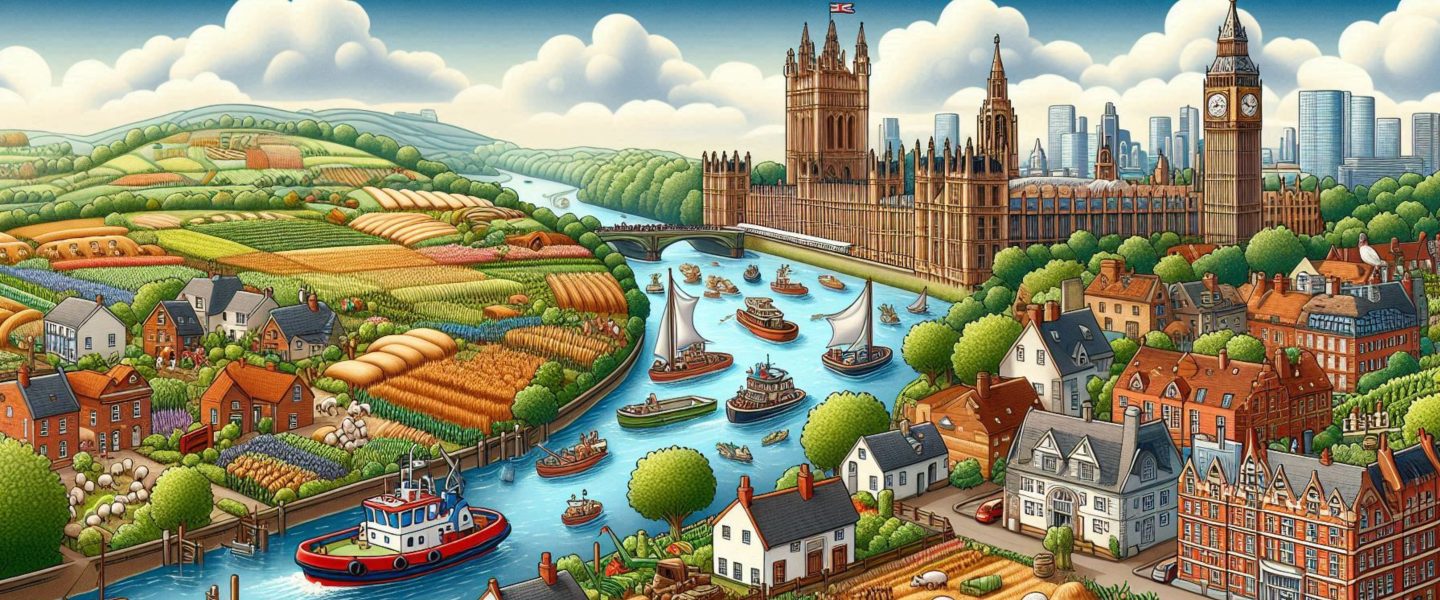

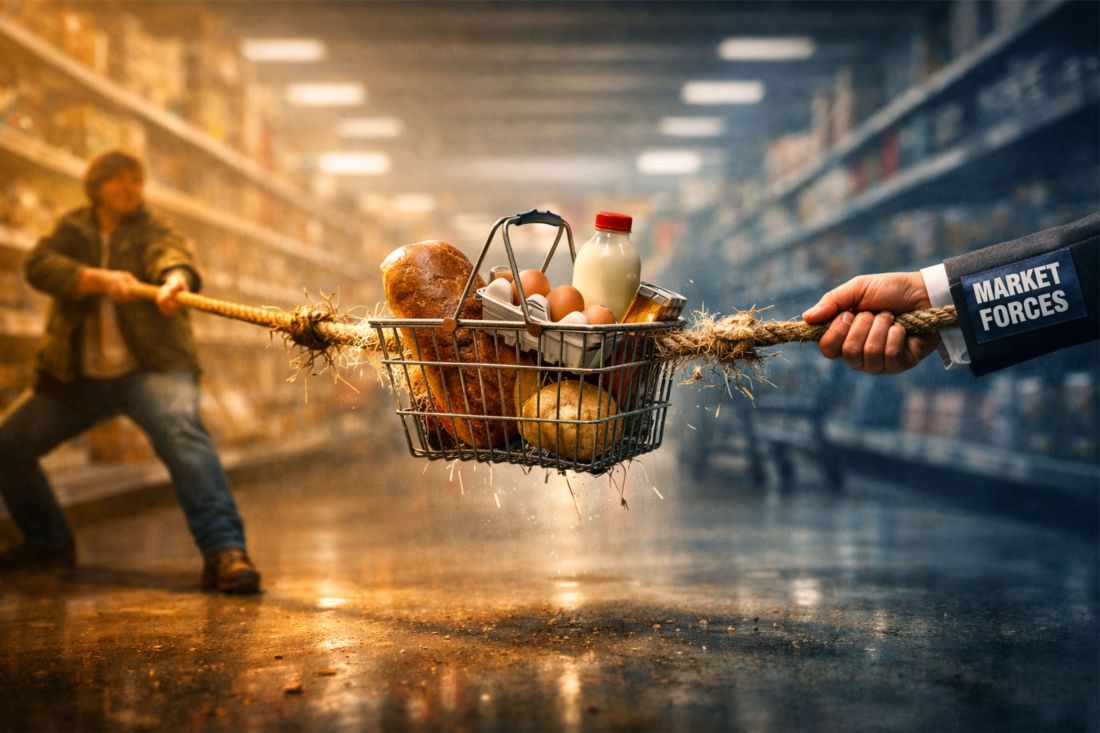
It says something about the moment we are living through that the government has begun quietly asking supermarkets to hold down the price of basic essentials. Not ordering, not legislating – simply asking.
The discussions, that have taken place between Treasury officials and the major retailers, were framed as a voluntary gesture: a request to restrain price rises on items like bread, milk, eggs and pasta in exchange for easing certain packaging and labelling rules.
It is not the kind of conversation British governments usually have. For decades, the political consensus has been that food prices are the business of the market, not the state.
Yet here we are, with ministers leaning on supermarkets in the hope of softening the cost‑of‑living crisis, even if only at the margins.
The fact that these talks happened at all is revealing. It shows a government under pressure, a public at breaking point, and an economic model that is no longer delivering what it once promised.
However, the idea itself is not new. France has been experimenting with similar measures since 2023, when it launched an “anti‑inflation quarter” – a voluntary agreement with retailers to keep a basket of everyday goods at the lowest possible price.
Later, the French government pushed large manufacturers to cut wholesale prices where their own costs had fallen, threatening to “name and shame” those who refused.
These interventions were time‑limited, targeted and heavily negotiated. They were not a blanket cap on essentials, nor a permanent redesign of the food system. And even in France, with its long tradition of state involvement in markets, the results have been mixed.
The UK’s version is far more modest. Retailers would choose which items to include. Participation would be voluntary. There would be no enforcement mechanism, no penalties, no mandated price points.
It is, in effect, a polite request dressed up as policy. But it is also a sign of something deeper: a system straining under its own weight, and a government reaching for tools that do not fit the machinery they are being applied to.
Because the truth is that price fixing – even the soft, voluntary kind – does not work inside the economic model Britain has built over the past fifty years.
It is not designed to.
The modern food system is a long chain of extraction. Farmers sell to processors, who sell to manufacturers, who sell to distributors, who sell to retailers, who sell to consumers.
At each stage, the expectation is the same: maximise efficiency, minimise cost, protect margin.
This is not a moral failing; it is simply how the system has been structured. But it means that when the government asks supermarkets to hold down prices, the pressure does not disappear. It moves backwards. Someone else absorbs it. And that someone is rarely in a position to do so.
In France, the state can lean harder on the chain because the chain itself is more consolidated and more accustomed to intervention.
In the UK, the system is looser, more fragmented, more globalised and far more resistant to pressure. A voluntary price restraint here is not a lever; it is a gesture. It may shave a few pence off a few items for a few weeks.
It will not change the underlying forces that have made essentials unaffordable for millions.
And those forces run far deeper than supermarket pricing.
The cost‑of‑living crisis did not begin with a war in Ukraine or a spike in global energy prices. Those events accelerated it, but they did not create it. The roots lie in an economic model that has, for decades, prioritised growth measured in GDP over the lived experience of the people who generate it. A model that has allowed wages to stagnate while housing costs soared. That has turned energy into a speculative commodity. That has stretched supply chains across continents in pursuit of efficiency, leaving them fragile in the face of shocks. That has treated essentials – food, heat, shelter – as opportunities for profit rather than foundations of a stable society.
In such a system, food poverty is not really about food. It is about the cost of being poor.
For millions of households, rent consumes the first share of income, energy the second, debt repayments the third. Food is whatever is left – and increasingly, there is nothing left at all.
Even if a voluntary price restraint saved a family a few pounds a week, that saving would simply be redirected to another essential cost. The underlying problem would remain untouched.
This is why the current moment feels so precarious. The government’s talks with supermarkets are not a sign of bold intervention; they are a sign of a system running out of road.
When policymakers begin asking retailers to voluntarily hold down prices, it is because the usual tools no longer work – or no longer work fast enough to prevent real hardship.
There are circumstances in which price controls become necessary. If supply chains in the Gulf were to collapse, or if energy markets were to spiral again, governments might have no choice but to intervene to prevent panic, hoarding or collapse of access to essentials. But even then, price controls only work when the entire system is aligned behind them. Without that alignment, they become temporary patches on a structure that is still pulling itself apart.
The alternative is to begin the slow, deliberate work of redesigning the system itself – building local resilience, shortening supply chains, ensuring that essentials are stable and accessible, and creating governance structures that reflect the needs of real communities rather than the demands of abstract markets.
This is the direction explored in The Basic Living Standard, Our Local Future and The Local Economy & Governance System: not as utopian visions, but as practical frameworks for a world where the old model no longer works.
The government’s talks with supermarkets are a symptom, not a solution. They reveal a political class that can see the crisis but is still trying to solve it within the logic of the system that caused it.
The cost‑of‑living crisis will not resolve itself. It will continue to deepen until decision‑makers confront the structural causes – or until events force their hand.
The question now is not whether change is coming. It is whether we choose to shape it, or wait for the system to reshape itself through crisis.

