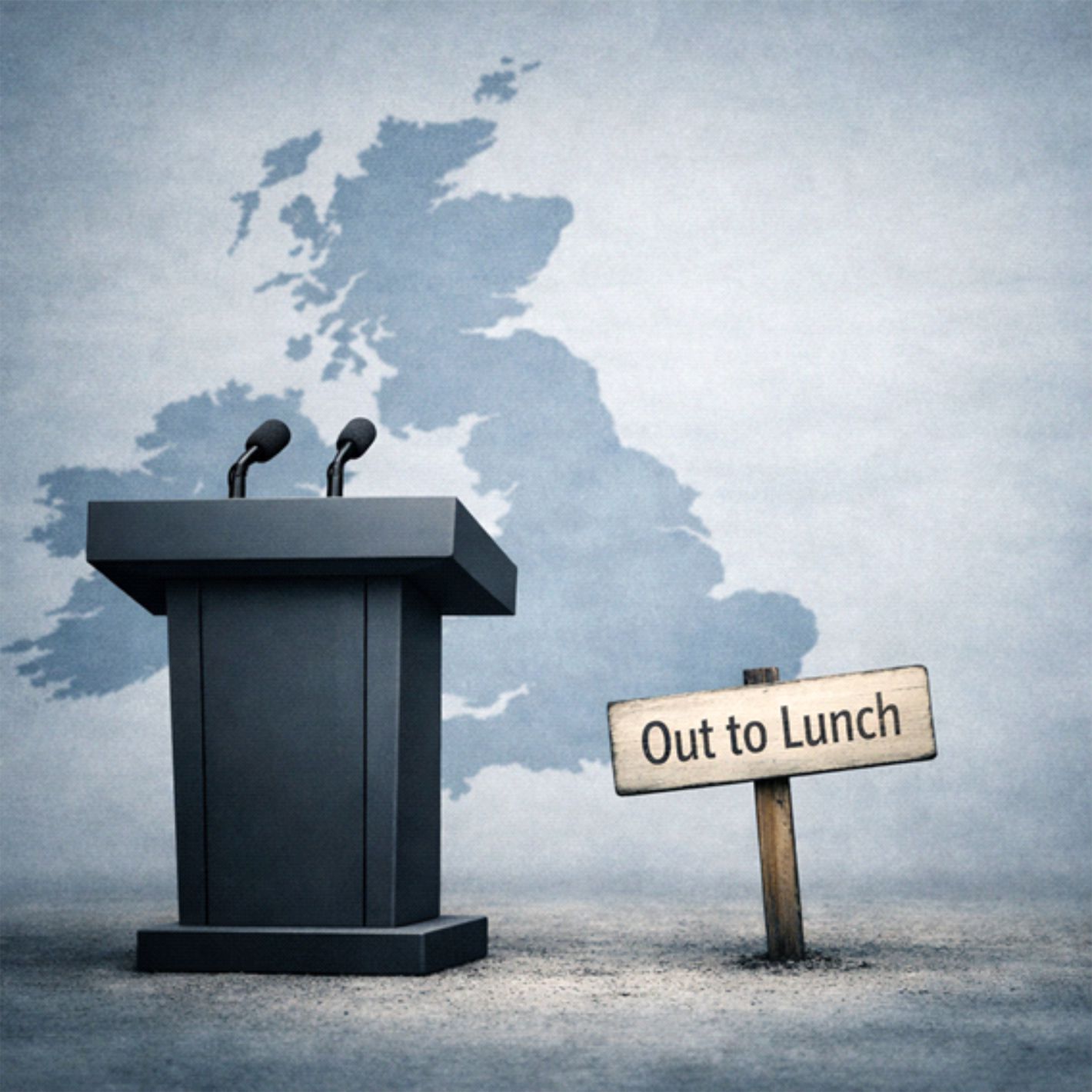

The most revealing part of Catherine West’s apparent decision to put herself forward as a stalking horse is not the move itself, but the political class’s response to it. The reactions have been immediate, loud, and contradictory, yet almost entirely inward‑looking.
Some MPs have rushed to distance themselves. Others have quietly welcomed the pressure it places on colleagues. A few have called for a slow, carefully managed contest, as though time were the commodity the country most urgently needs.
What unites these responses is the frame in which they are made.
Across Labour, the Conservatives, and even among those who present themselves as alternatives, the argument quickly narrows to personalities.
Who should lead. Who is “ready”. Who has the profile. Who has the right to step forward. Who is available.
It is treated as though leadership were a scarce resource held by a small circle of familiar figures, rather than a responsibility exercised on behalf of the public.
This way of thinking is not merely limiting. It narrows democratic life around internal succession and quietly sidelines the electorate these roles are meant to serve.
The assumption that only a handful of individuals could possibly fill these roles is not a reflection of talent. It is a reflection of a system that has forgotten where authority begins.
This is not about individual bad faith. It is the predictable outcome of a political culture that has spent years producing managers rather than leaders. Managers preserve structures, maintain processes, and protect their positions. Leaders take responsibility, absorb risk, and act in the public interest.
When a system rewards the former and filters out the latter, it is hardly surprising that political debate revolves around succession rather than service.
You can see that dynamic clearly in the way senior figures respond in moments of crisis. Some present themselves as indispensable, as though the system could not function without them. Others speak as if their continued tenure were itself the answer, regardless of public mood.
The Prime Minister’s response to the recent local election results offers a particularly clear example. Rather than acknowledging the scale of public dissatisfaction, he appeared to frame the outcome as a misunderstanding, as though voters had simply failed to grasp the government’s direction.
There was little sign of engagement with the reasons for those losses, little recognition of the pressures people are living under, and no clear signal that anything would change.
What stood out was not the harshness of the response, but its candour. The dismissal of public sentiment was neither softened by language nor obscured by process. The message, in effect, was that the government would continue on its current course, regardless of what the electorate had just said.
This is not merely an issue of tone. It is an issue of orientation.
A leader treats public judgement as the basis of authority. A manager treats it as an obstacle to be explained away.
That might be troubling in any circumstance. It becomes much more consequential when public trust is needed to meet pressures building beyond Westminster.
The situation in the Gulf, and the concern it is already prompting about global supply chains, is not a distant or abstract issue.
If events continue on their present course, there is a growing risk of disruption in the coming months, and the UK could face shortages or delays in essential goods sooner than many people may expect.
In such circumstances, the difference between leadership and management becomes more than theoretical. It becomes the difference between a society that can navigate a crisis and one that cannot.
We have already seen what happens when a government meets a complex emergency with managerial instincts. During the pandemic, the decision to lock down the country was presented as decisive leadership. In practice, it also functioned as a form of control that created the appearance of action while deferring the harder, earlier decisions that genuine leadership would have required.
The long‑term costs, economic, social, and psychological, are still unfolding, and they have contributed to the pressures the country now faces.
If supply chains falter in the months ahead, the challenge will be very different from managing movement or imposing restrictions. It will mean supporting people who may be short of food, fuel, or essential goods, people who will be anxious, uncertain, and looking for reassurance that someone is thinking ahead.
Managing fear by creating more fear will not work. Managing scarcity by imposing rules will not work.
These are conditions that require leadership: calm, clarity, honesty, and the ability to bring people with you rather than push them into compliance.
That is why the question this episode raises matters. It is not about who leads a party. It is about whether the political system still contains the capacity for leadership at all. The pressures building outside Westminster will not wait for internal debates to resolve themselves, and they will not be managed away.
They will require leadership, the kind that has been missing for far too long.
What matters is not the individual involved, but what this moment exposes: a political class so absorbed in its internal dynamics that it struggles to see the country standing outside the room. It reveals a system that has lost the ability to recognise leadership even when circumstances demand it, and it reminds us that the crisis facing the UK is not about personalities at all, but about a democratic culture that has drifted away from the people it is meant to serve.
The public is living through rising costs, collapsing services, insecure work, and a political environment that feels increasingly unresponsive. Yet the debate among those who seek to govern still turns on timing, positioning, and who might gain from a contest.
The country is experiencing a legitimacy crisis. Westminster is experiencing a staffing issue.
The question is not simply who should lead, but whether the political class is still capable of recognising leadership at all. Leadership is not a personality trait. It is a relationship, and it exists only if the public is at its centre.
Right now, the public is nowhere near the centre of the conversation. Until that changes, it will not matter who occupies the office. The vacancy will remain.


2 thoughts on “A Leadership Void in a Moment That Calls for Far More Than Westminster Politics”