It is often said that history is written by the victors of wars. Perhaps it should also be applied to controllers of any monetary system – that is when money or currency has itself taken on a role which means it is valued in such a way that gives power when the system can be controlled.
Money isn’t real. It isn’t a thing. Its true purpose – before that purpose was wilfully misrepresented and manipulated – is to be a medium of exchange for anything and everything that has value.
Money is a tool and nothing more.
Instead, Money has become the ‘thing of value’ itself. Meaning that everything else, whether it’s the effort of a labourer, the time of a professional, the purchase price of a house, or the cost to buy and cook the essential food that everyone needs, no longer holds the real value that it should.
The value of things in life that really do have value, that should be dictating the size, scope and way that economics work, are instead dictated by the technicalities of how a very sick and self-serving monetary system operates.
The history of anything only matters if you intend to make it real or legitimise it or whatever you intend to anchor to it. That’s why so many politically correct and woke people are falling over themselves to rewrite and manipulate history to give ‘truth’ to whatever it really is that they intend to do.
The question is, why do the architects of the coming monetary collapse feel it is so important to focus on the history of money right now?
Hold on! I hear you say, ‘Who are BRICS?’ ‘What’s a Gold Standard?’ ‘How can things I’ve never heard of put the global order at risk?’
And that’s the first point. How much do any of us know about what’s really going on, not only across the world, but anywhere outside of our own lives, our bubbles or the information sources that we choose to read?
If that question doesn’t concern you, it should.
If voices and messages that sit outside the mainstream news are correct, you and I, and pretty much everyone across the Western world is going to be hearing a lot more about BRICS, it’s new gold-backed money and the problems that it’s about to cause for us all, very soon.
A growing number of countries that we have been conditioned to look down on, could be about to attempt to blow up the way money works and rebalance the world’s one-sided economic system in favour of themselves.
We are too preoccupied with our own problems to see everyone else’s, elsewhere.
Whilst you may already have been touched by rampant inflation and the cost-of-living crisis we are experiencing in the U.K., the process that caused it has been ongoing for a very long time.
The issues the UK faces the massive wealth inequality that we have was caused by little more than greed. But the problem was only accelerated by the actions of our politicians in their response to the Brexit vote, the Covid pandemic and how the west has regrettably involved itself in the War in Ukraine. It wasn’t started by them.
What many do not realise, nor understand – and that includes many of the politicians that we have elected to know better – is that our own, or rather the Western-led monetary system that we currently have has been corrupt and has been run and managed by corrupt people and interests since it was first dreamed up and brought into being, over half a century ago.
The problem for the establishment is that no matter what happens or what they do, a corrupt way of running everyone’s lives can only be hidden for so long.
One way or another, the wheels are about to fall off.
We once had our own Gold Standard. But for the few, it was never enough.
Before 1971, for good or for bad, money worked in a more sensible and restrained way.
At that time, gold worked as an anchor for the way that our financial and economic system worked.
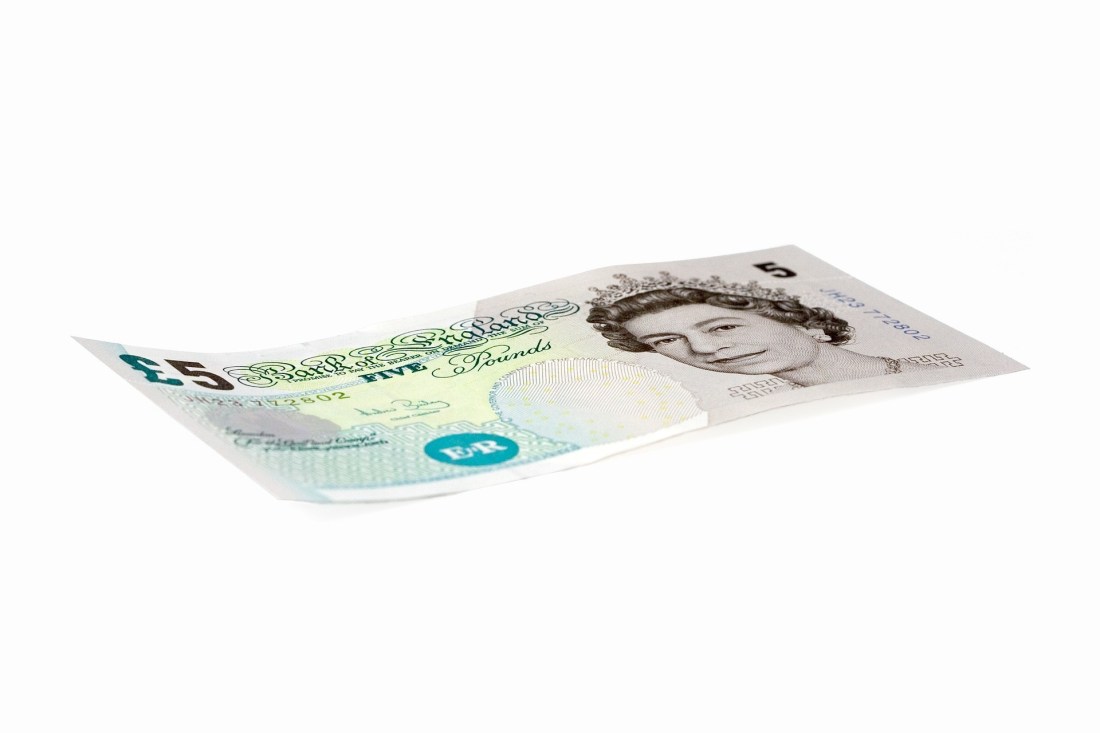
Gold provided a physical reference point that kept the flow of money in check. Because in theory at least, you could exchange the bank notes or cash that you have in your hand (which is a promissory note) for the equivalent in real money, if you were to surrender it to the Bank of England at any time. (Please take a look on a bank note and you will see the words from the Chief Cashier that says ‘I promise to pay the bearer on demand’)
The principle of the money system before 1971 was that the cash in circulation – or all the banknotes that people and businesses held at any one time – would be equivalent to the amount of gold that the Bank of England physically held at that time.
For practical reasons it made a lot of sense for people not being required to carry piles of gold around with them.
But the system was also built on trust and therefore the belief, that the Bank of England and whoever was influencing it – i.e., the Government, could always be relied upon to do the right thing where our money was concerned.
Even if money was leveraged (which means banks and financiers are quite literally and legally allowed to pretend they have X number of times the value of whatever money they actually have), all of the money that was in circulation was at best equal to, or at worst proportionally restricted to the amount or the value of the gold that Countries then held, and had physically stored in a bank vault somewhere.
Establishment mentality: ‘If they don’t know we are doing it, they won’t believe it to be true’.
The problem is that this kind of trust becomes assumed by us all, because everybody behaves as if its normal. It’s the way that things are done.
But that trust can be as easily abused by people with responsibility, just as it would be abused something trivial were to happen that brought into question the trust, we have with any person known to us in ‘real life’.
Regrettably, for those greedy for more money, more influence and more power, who were able to influence the system and our politicians at the time, such restraints meant that the commercialism and age of consumerism that was unleashed upon us after the second world war, could never deliver enough gain.
They could see ways of making more money, and they wanted to access those ‘golden opportunities’ – no matter the real cost or consequences for anyone else.
They looked to an economic philosophy called Neoliberalism and devices such as ‘Free Markets’ for the answer that would help them and convince public representatives that financial freedom or liberalisation would be a good thing for everyone, when they already knew that it was only about being good for them.
With the help of Richard Nixon, a US President of questionable morality, the Gold Standard was soon swept away and then replaced with the current FIAT money system, which we all assume to be as safe, secure and reliable as having our money backed by gold, but is in fact a monetary system that is pegged to nothing other than the belief that we have in it.
The money game now controls our whole reality and it’s making us sick.
Knowledge is power and a little knowledge is definitely a very dangerous thing when placed in the wrong hands.
High level bankers, financiers and business oligarchs had realised and understood that even a gold-backed monetary system only functions because of the end-users belief, and that without the restrictions of a defined amount of money available to them – even in leveraged form, those ‘in the know’ would be able to print and manipulate the amount and flow of money in any way they liked, just so long as the general population, who they were about to exploit in every way imaginable, were never ‘in’ on the con.
The con worked so well, that as decades have passed, politicians from all backgrounds and central banks lost sight of the realities of consequence. They came to believe that they could continue forever or at leave it all for someone else to sort out, because whenever the money ran out, they would just start up the presses and print a load more.
This is what happened in 2008 when the rot finally crashed this dreadful system. Instead of letting criminally legalised financial practices to destroy the corrupt companies and banks responsible, our politicians instead bailed them all out using public money that they printed on our behalf and saddling us all with what was then an unrepayable level of public debt.
Breaking their own rules and getting away with it, has let corporate interests set the whole world up for a fall.
The simple law of inflation is that there is a finite number of ‘things’ on the planet or within a country at any one time.
So, when the amount of money in circulation is increased, the value of those things must inflate, so that the new value of all that money is proportioned in the same way that it was before.
All well and good if you own ‘things’ like natural resources and property, as the value of what you own effectively increases each and every time additional money is added to what is already available in circulation.
You sell your house with its value inflated perhaps many times, and when you sell it, you have what feels like a great pay-day for sure.
But things are not nearly as good if the only thing you own is your ability to earn, and because of the way that this economy works, the amount you earn, or your income hasn’t in any way near caught up.
Remember: Under this monetary system, the value of ‘things’ will always inflate to meet their proportional value in relation to the money in circulation, whether it’s a house, and aeroplane, a car or any of the parts that made them.
There is always a delay in the way that the prices rise, and because the system focuses on the value of things, rather than the value of people, it is inevitable that wages are at the bottom of the pile when it comes to the rise in value that should come next.
The delay means that buying power and therefore the power that goes with money, always rests with those who are at the top.
We don’t control our lives; Money does. And Money is controlled by greed.
As people across the UK are realising quickly, normal people have no control over anything. Because normal people cannot control the value of the money they earn and have no influence over the prices of the things that they need to buy.
The value of money should always be in the hands of the most local form of government. Currencies should be operated as transparently as possible and to achieve this, they should be run functionally and universally in a city-wide, county, regional or most localised form.
Practicality pinned currencies at a national level for a very long time. And when we trusted politicians, bankers and the establishment, this made a lot of sense.
But where greed for money, power and influence was concerned, this wasn’t enough either.
Over twenty years before the travesty that was the end of the Gold Standard, the US regrettably used the power and influence gained from the role it played in ‘winning’ the second world war to insist that the US Dollar would have ‘Reserve Currency’ status right across the poorer economies of the world.
This has meant that for decades, hundreds of national governments have had to buy and sell anything that they needed from world markets using US Dollars and not the forms of money that were their own.
This is why you will sometimes hear the US Dollar referred to as ‘The Petrodollar’ – because countries couldn’t buy the fuel they needed without having enough US Dollars first.
Overtly, it has appeared to work very well for everyone. Just as long as a country got on with the USA and the USA remained the world-leading country that everyone has quite understandably assumed they could always trust.
However, pretty much every country that didn’t have a FIAT currency with a ‘trusted’ status such as the US Dollar, The Euro or The Pound was also being treated just as disrespectfully as the whole populations of Western Countries have been – and arguably so in much more obvious and cruel ways, that our media rarely allows us to see.
‘Those in the know’ have been able to devalue whatever they wanted to, no matter who it belonged to or what the consequences for whole countries and their populations would be. If by doing so they could make more money, or use money to achieve whatever results they wanted, wherever in the world, the opportunity to make a profit, gain influence or to exert power might have been.
Where we and the rest of the world find ourselves as a result of this greed-driven shitshow today
There is no better way to frame the reality we are all living in than this:
Global economics is a worldwide game of monopoly being played by the select few, with the purpose of helping those who have power to get whatever they want, in whatever way they choose to get it – no matter the true cost.
This is the truth that lies behind many of the wars, the poverty, the mistrust, economic migrancy, terrorism, and even the hundreds of illegal immigrants desperately crossing the English Channel each and every day, in the misplaced belief that there will be rivers of free gold flowing towards them, from the moment they step upon British shores.
The world is divided like never before: Money and greed are tearing us all apart
Western Politics, Business, Economic Policy and Practice have quite literally been shafting us and shafting just about every country and population around the world, that isn’t ‘in the know’ or been part of what is a very big, but nonetheless very exclusive club.
Those with the power to do so have achieved this by manipulating and changing the rules that govern the ‘respected’ money supply – either deliberately, or unintentionally where necessary to save their own skins.
Understandably, a lot of countries, particularly across the African continent, where this ‘hollow’ money has been used to buy up or secure massive deposits of minerals and the only natural resources they have, or to pay what in the West, even ‘normal people’ would recognise as slave wages, have increasingly been lefty feeling more and more exploited and especially so, as the false reality of Western wealth has become harder to hide.
Yet to go against the demands of the ‘rich West’ has in many cases resulted in political coups taking place, or those openly opposing Western ‘leadership’ being imprisoned by corrupt local leaders who are more than happy to take power locally themselves and then tip the hat to whoever is controlling them from the West and then play along.
This is what greed really does. With power, it knows no bounds.
The most destructive stage of the UK money printing extravaganza was set off by Rishi Sunak as Chancellor, which is rather ironic given how he has somehow avoided the blame and suggested that this has all ‘happened to him’ now that he is PM.
Western leaders such as the US and the European Union have overseen fiscal stupidity that has gone off the scale across the world just the same.
But it was the failure of Western powers to up hold their own end of the rules when the Ukraine War kicked off that really spelled out to many nations relying on the US Dollar and the reliability of Western currencies, that the West will openly abuse the responsibility of power that it has to other countries – as it does to its own citizens – if and when it suits for them to do so.
Tripping ourselves up by jumping across international lines
No matter who they are or what they do, independent nations have the right to have agreements with other countries that they have themselves respected, respected by those other countries too.
Our Politicians would do well to bear in mind that there is nothing good or moral about using economic devices and the disproportionate power that money and finance provides to try and force other countries to behave how you would like – especially when those countries have reason to believe they are protecting themselves from something you are likely to do, based on what you have already done.
We could debate the realities of what’s right and what’s wrong and the circumstances that have influenced The War in Ukraine, all day long.
But what you can be sure of, is that whatever we are or have been told through sanctioned channels about every news story that comes into view, there will always be other truths or perhaps even more important ones that it is in someone’s financial or other interests to keep hidden us.
We might be about to find out why.
Why the BRICS ‘Bomb’ may be about to explode now.
If the thought that this is all about Russia makes you feel a little prickly, it’s worth bearing in mind that a large number of the Countries that have played along with the Money con because it has up until now been in their interests to do so, have had enough.
They are worried, because in recent years the US has become unpredictable and arguably irrational. They have no idea what will happen next.
Most recognisable in the form of the International Bloc known as ‘BRICS’ (Brazil, Russia, India, China & South Africa), this growing group of Countries – that some reports suggest could be as big as forty-one (41) in number very soon, or perhaps as many as sixty-seven (67), are said to be in the process of creating their own new International Currency that as the Western, now FIAT currencies once were, will be backed by gold.
The key players (Russia, China) are documented to have been busily buying up gold over a period of many months and years. Whilst Western governments, like the last UK Labour Government when Prime Minister Gordon Brown was still Chancellor, have been steadily selling all of ours off.
With the potential launch of this BRICS Gold Standard currency, whether in digital or cash form, rumoured to be coming at a summit in South Africa between 22nd and 24th August, the West and the world beyond could be about to experience a Great Reset of a kind that even the WEF never had in mind – all because money has become more important than anything and is valued at every level of society, more than life itself.
The rude awakening for those who want to take and use the power that has been abused by the West.
Books will be written about the process that could be about to kick off in the coming weeks.
The chances are that some will frame a picture where the developing world and those who once considered themselves the West’s underdogs suddenly launch a currency that is real.
New money that has an anchored or underpinned value will expose the Western FIAT currencies for all that they are overnight, and the general view or newly accepted truth will underpin the successful roll-out of the BRICS gold-backed currency, the moment that it comes into world view.
The expectation will be that the BRICS currency will quickly take over as the worlds reserve currency where the US Dollar will have been forced to leave off.
It will mean that many of the goods that Western Countries buy from abroad – which wouldn’t be necessary if we hadn’t been conned into believing that Globalisation was the only way we could survive can only be bought using the BRICS currency. All at a price that will become very expensive to the West, once our currencies have been exposed as not being real, and that the whole of our economic system has been built and perpetrated upon one big lie.
Or at least, we can all be pretty sure this is the plan.
It’s audacious and if you can see it for what it is, you have to admire what the BRICS Nations are considering doing.
If BRICS launch their Gold Standard currency, will it shift the Global Order as they must surely hope it will?
On the balance of probabilities and knowing what greed has already driven Western leaders to do. Probably not.
Where the trouble really begins
The big flaw in the BRICS plan – if changing the Global Order and replacing US or Western dominance is what this is all really about – is that whether the intentions behind this move are good or not, the plan still involves taking what others believe is already theirs.
As the point has already been proven even when the West had its own Gold Standard before, there is nothing inherently good about any system that considers money to be god, in any way at all.
The value of anything and everything is determined by the mind. Men create value in things that reside outside of the mind, so that by possessing those things, they can possess more value than others and demonstrate that they are different.
This statement applies to gold and the value of gold. Even though the wisest amongst us have historically considered gold to be the only true money, probably since the dawn of human time.
The creation and world launch of a BRICS Gold Standard currency would certainly destabilise the world order.
It has the potential to create economic chaos across the world for a period of time. Chaos that at its worst will certainly have the power to destroy value within Western Financial Markets – if not the Marketplaces themselves.
This would quickly leave Western Countries unable to buy or secure sufficient supplies of anything from the International Markets where our currencies have become ‘void’ and the BRICS currency has taken over as the only one to trade with by choice.
However, the impact of BRICS controlling this new currency and with it, a lot of the world’s gold, is unlikely to have the effect that they would like, because of what most in the West have now been conditioned to believe.
Belief isn’t based on logic. So, the idea that logic alone will switch the Western belief system is genuinely unsound.
The open collapse of global supply is where the real questions surrounding the actions of Politicians, Business and anyone with economic influence to have pursued globalism at the cost of UK self-sufficiency will severely cut in.
The reality we face is that after the immediate political drama and huffing and puffing that we can be sure will take place, IF the BRICS gold-backed currency launch goes ahead, is that the things that are essential for life and that we all need to be able to buy or to access daily, will either be in very short supply, or will not be replaced.
If this happens, the truth of what those with power in the West have really been doing, will be pushed into full view and a power vacuum is likely to follow that both power hungry people and other nations will certainly want to try and fill.
For at least a time, the West will face a level of danger that very few alive today will have experienced at any time before.
Initially, the biggest risk will be that those in power across the West are unlikely to give it up lightly.
Weak leaders are regrettably very likely to resort to war as what they believe to be the easiest way to protect and preserve the current hegemony. One that regrettably for them, will have already disappeared out of the door, just as soon as the general population of the West realise that their lives are being lived on one giant Monopoly Board.
Then will come the false profits. The big names and public platformers who talk the talk but have no depth and will resort to doing all sorts of crazy things that will make current world leaders look like the sages of all time. There is a risk that their stupidity will embolden them to take power and then, when they have it, they will have absolutely no idea what to do.
What you can be certain of, is the unthinkable will be thinkable and everything will be in a complete mess.
The third and what is unlikely to be the final risk, is that whoever is at this time ‘in control’, will sell out to the BRICS ‘nations’, as so many exploited countries did to the US ‘reserve currency’ approach before.
We could all-too-easily have one set of false freedoms replaced with another. Because the leaders we have cannot look back to go forwards.
They do not see that the answer will be protectionism, UK self-sufficiency and an economic system that is built upon the only thing that is consistent – the value of the human beings living within it and the contribution to society that is made by people like you and me.
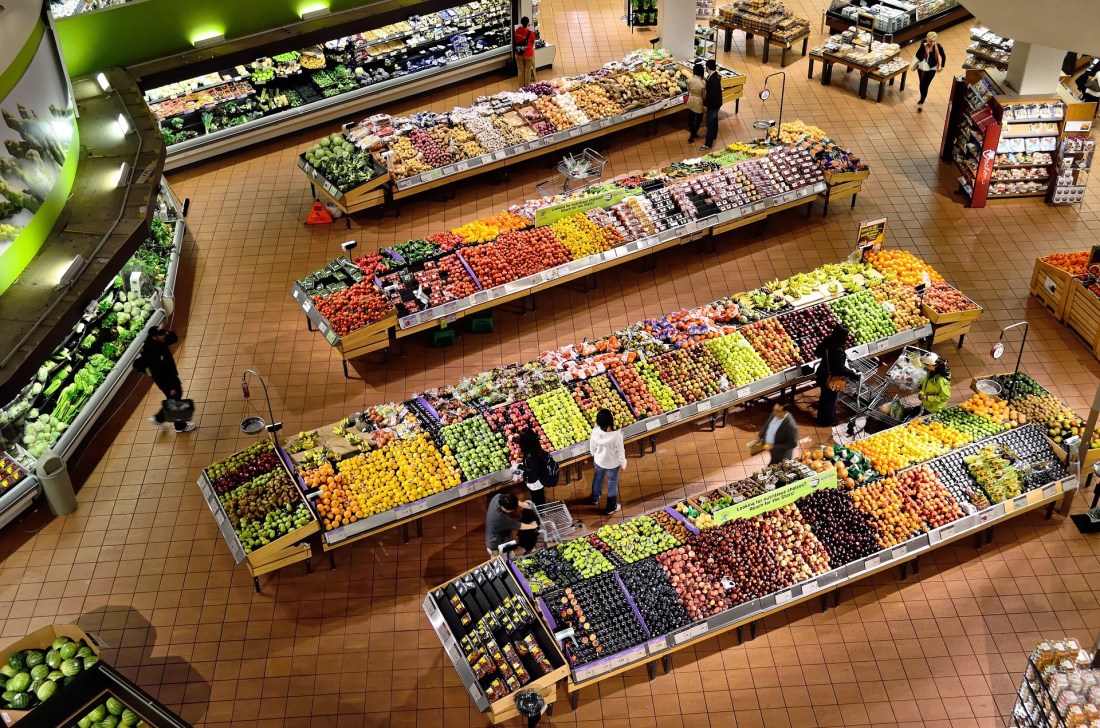
To some, Food Security would be the radio tags that supermarkets now attach to high value or vulnerable food items in stores where they are regularly taken without payment.
That it has become normal to focus on the overtly criminal act of theft, rather than the realities of a cost-of-living crisis where many people cannot afford to eat well, today, is bad enough.
But to overlook the reality that Food Security is the biggest, most pressing and bizarrely unspoken question that surrounds the UK’s dwindling self-sufficiency is in a different league all together.
The travesty doesn’t stop there. The farmers see it and are doing what they believe they need to.
But like everyone who believes that change happens when you convince the government and politicians that your argument is right, the farming industry is failing to reflect on experiences that make it clear that we have all been here with the political classes before.
Food security is the UKs ability to feed itself. It’s the condition, the reliability and the robustness of our own circular supply chain at local and national level that includes the foods that we grow, process, prepare and provide for ourselves or our own people.
Food Security represents the food-supply that the UK provides itself with, without any other country, international supply chain or other third party being involved. And what the reader may not realise is that current figures suggest that the amount of the food we eat in this country that is produced in this way through our own UK supply chains may now be as low as 50%.
All well and good, and there’s nothing to worry about if you can rely on the food that comes not only from Europe, but from across the world always being available and arriving on our supermarket shelves and at our doorsteps just in time.
But we can’t.
The fragility of global supply chains was laid bare for all to see by the government response to the Covid Pandemic and the paradoxical situation where politicians shut everyone up in their houses and still expected everything else to work as normal.
Those who are so heavily invested in globalisation and the monetary and economic system that they have profited from, are literally throwing everything they have at keeping the economic wheels turning to the point where the catastrophic damage that decades of financial mismanagement have caused is now plain to see, but everything appears to keep running while fuelling the expectation that they always will.
The explosively excessive printing of money should have imploded our economic system long before now. Anyone prepared to take a closer look at what is really going on, will soon see that economic and monetary stability is already hanging by a thread.
Those printing the cash could easily continue to keep flooding the economy with more and more monopoly money, until the hyperinflation that we can now expect kicks in.
However, the whole demise of this crooked way of managing and interfering with every part of our lives so that the few can continue to get rich may be about to hear the final bell called. If, as expected, the BRICS Nations launch their own gold-backed currency in just under two weeks’ time and FIAT Money such as the US Dollar, The Euro and our very own British Pound go into freefall, making the cost of everything – IF we can even get it – go into orbit.
Like the majority of us, Farmers do not have the true depth of our political talent weighed up for what it genuinely is. Just as they don’t understand how the public sector and everything that the tentacles of public policy and government touches, actually works.
Indeed, the ideas or expectations Farmers have of what politicians and public servants are in office for is quite correct in terms of what they should do. The now critical problem for us all, is that the Politicians, and those who would enthusiastically replace them, do not do as they should.
For now, that’s as much as it is worth saying on how we got here, and where ‘here’ really is.
Calling our Food Security or our Food Supply situation a ticking time bomb sounds dramatic. But it may well turn out to be far worse than it already sounds.
The stark reality we face is that even with the UK producing as much as 60% of our food – with much of that production currently geared to supplying large-scale food production and processing, rather than the production and supply of the daily essentials that each and every one of us need to live – the fragility of our food supply should be red faced and screaming at any politician who is genuinely there to represent the public good, telling them all they need to know about what will happen if an event should occur that effectively pulls the international food supply chain plug – or rather the rug, from under us.
Either way, on the current trajectory, we will reach this unspeakable destination, just through the progress that accompanies time.
Because we don’t have politicians who see any of this, accept this, and are prepared to act to deal with this, the UK is now dangerously exposed and vulnerable to critical food shortages.
With these same people in charge, as we have experienced with their response to the covid pandemic before, it is a safe bet that when the food crisis reaches our front doors, our decision makers will be primed to make a potentially catastrophic situation exponentially worse.
Today’s politicians don’t solve problems with the right solutions. They hide them with the easy ones.
If the UK’s external food supply collapses, the SPADS, advisors and civil servants in Westminster will take one look at the threat of hungry people taking to the streets and will conclude that UK self-sufficiency isn’t viable because nothing is in place. That it would take too long, will be too hard and will therefore be too risky to trust farmers and people to grow food for themselves, and that they will just have to pay someone else and prostitute the UK to outside interests. Rather than dig in and get everyone to start doing their bit for home production – just as our grandparents and great grandparents did without getting in a flap, when everyone had to before.
Farmers are some of the most creative and successful entrepreneurs that exist. There is no reason to doubt that if they were minded to do so, farmers, growers, fisheries and all their allied sectors across the UK could quickly reach and then go beyond a subsistence supply level for the whole Country, based on very local and highly transparent supply chains.
However, farmers are also some of the most damaged victims of the mind games, propaganda and deliberate measures taken to destroy the UKs self-sufficiency and industrial output that was forced upon us through the offshoot of globalisation that we have come to know as the EU.
Decades of subsidies, quotas and micromanagement rules ruined hundreds if not thousands of viable farming and growing businesses. They have conditioned today’s up and coming farming generations to believe that hand-outs accompanied by specific directives are ‘normal’ and are all that they can expect.
However we look at it, the Farming industry and its representatives still believe that the government and our politicians will eventually respond to the Food Security crisis that lies in front of us, in the way that they themselves see it. And that Westminster will come running with the public chequebook when they do.
But they wont.
And that isn’t going to change whilst we have the politicians that we have and know as the Conservatives, Labour, Liberal Democrats or indeed any of the pretenders who are outside of Parliament awaiting their chance – but think and behave just like all the rest.
The solution isn’t going to come from any politician.
The solution to the UK Food Supply and Food Security problem must come from within.
It’s our farmers that have to break through the perceptual barriers that currently encage them. They must do what they are best at, get on with the job that already waiting to go, and let the political classes catch up probably long after they begin.
I’ve written a whole series of books that focus on localism and how the focus of power must be brought back to local communities and for decisions that affect our daily lives to be made as close to us as possible and by people who we know and can trust.
The problem that I have faced throughout, is that when talking about anything in a broader or national sense, it quickly becomes as abstract as national politics and national news streams are, even though that’s how we often judge important things to be.
The problem is real life and what is important to us isn’t abstract. In fact, the real things that are important and all the things that can have the biggest impact upon everything that is happening to us are not abstract and very specific indeed. But we have somehow allowed the abstract to influence all of our specific choices.
With AI and technologies now forcing their way into our digital lives, with consequences that will make real life feel so much easier, whilst teaching us to forget how making decisions for ourselves and even learning new things, the choice between being led by an abstract world where the real influences are never seen or understood, or taking back control and regaining conscious choice in everything that we do has never been such an easy one, whilst also being impossibly hard.
Yet the damage of centralisation, globalisation and of allowing decisions that affect everyone to be made by people who are unlikely to ever visit the Towns and Villages in which we live, or have reason to understand the things that are happening in our streets and neighbourhoods, are very easy for us to see in the news every night.
People who have zero understanding of the consequences and impact of the policies they write, for every reason other than those that they should be, are condemning increasing numbers of People to harder and more challenging lives. They then go on to blame the People whose lives they are wrecking for the problems that their own ignorance and incompetence have caused.
A genuinely self-sufficient and fully localised system of public services and the governance that underpins the systems and processes that affect and impact daily lives, would not be in danger of being abused or mismanaged in this way.
Indeed, the only way that we will be able to create a genuinely level playing field of opportunity and a public or community sector that works in the way that it should for everyone, will be for the full balance of power, influence and decision making to be brought back to the People and local communities.
Power must be administered openly, transparently and without any bias in the way that it always should. This can only be achivieved within a circuit or within the dynamics of a relationship where everyone playing a part is both accessible and known.
The most simple way to explain the change of focus from where it is today (Global, Central, European etc) to where it should be (Local, Community etc), is to think of it as being a switch from a values set based on money, profit and the accumulation of power and wealth, to the alternative values set which is focused on People, humanity and what we genuinely need for everyone to be happy, healthy, secure and safe.
Localism isn’t rocket science. But it certainly meets with a lot of resistance when the true depth and scope of what it means are openly discussed. Because for many who do so well out of exploiting others (whether they are aware of it or not), localism represents what they believe to be a loss.
Sadly, because the Establishment know and understand that local communities are where the power of the people and everything that supports us should be, they frequently pay lip service to the principle, but as in the case of New Labour’s ‘Devolution’ from the 1997 General Election on, and then the Cameron Conservatives ‘Localism’ in the years that have followed since 2010, the type of localism and the return of power to local people that politicians from all sides having been selling us, all add up to no such thing.
We face a challenging, but achievable course of action, that requires us, our communities, charities and businesses to by-pass the Establishment and begin putting localism into everything we do and are motivated by, if we genuinely want to solve all of the societal problems that not only our communities, but the Country and the whole world faces.
Every one of us has a choice. We can take control of our lives. Or we can let life be something that happens to us.
Right now, the chances are that you believe you are in control of your life. But who decides how everything in your life is valued? Who decides what is wrong and what is right? Who decides if your life will be something that you can still afford – perhaps in just a few short months?
You get the picture and I do not need to spell out the obvious.
All I need to say is that when any decision or action is taken that influences any of the things that will have a direct effect on your life, not only today but for the foreseeable future, you can rest assured that it will not be happening with what’s best for you, for your friends, family and the people you love in mind.
Shouting about the injustice of all this won’t change anything. Things will just continue as they have been, whether it’s you speaking out or the people that you follow and are likely to believe in too.
Change is only possible if we concentrate and focus our energy and everything that we can influence at the things that are within our power to change.
We don’t need to wait for the Establishment to provide for anyone’s needs. Let’s face it, we can already see that they are slow to act, and increasingly don’t. It is within our power to begin the process of offering the services that people genuinely need, and to take the steps necessary to ensure that local businesses will be able to provide all the basic and essential foods, goods and services that people like you, and I will always need.
We don’t need to keep voting for the candidates in elections that the Establishment and those who aspire to be like them keep giving us. Elections are open and as a community, we can qualify and appoint the candidates so that we can vote for genuine public representatives that we and our communities choose.
To begin the process of change, we only need to take the first steps and have a plan or direction of travel that is there to show us all how.