No, MPs should NOT have second jobs. After all, being an MP is NOT a job anyway

The ongoing row over second jobs for MPs has certainly proven to be an interesting one. Yet it has also become increasingly concerning, as it has become ever more obvious that so very few journalists, commentators and people working around the political sphere have any real consideration or respect for what the role of an MP and public representative should actually be about.

Arguments in favour of second jobs range from the suggestion that MPs with outside work enrich their links with, and understanding of, the real world, to claims that additional money is the only way to make the role worthwhile. Those against argue that banning second jobs would be acceptable, but only if MPs were given a ‘realistic’ salary.

Nobody seems to have mentioned that being an MP or public representative is not a job.

Being an MP is a responsibility to others. It is not a role that should be taken if the individual concerned cannot guarantee that their responsibility to others will not be compromised by prioritising income, career opportunities, fears, influences of any kind, or any other motivations that put their own needs before anyone else’s at any time, at any level or in any way.

It is part of the human condition that we can only be loyal to one master. MPs are no different to anyone else. If an MP’s priority is income or career at any level, their focus will not be on anyone else.

There are simply no grey areas with this. It really is very black and white.

If an MP can be swayed in their decision-making by any factor that reflects on them personally at any level and in absolutely any way before anything or anyone else, they can be bought. As such, they cannot be relied upon to represent the general public and the voters within the constituency who elected them.

Being an MP or elected politician of any kind requires people who have the life experience, understanding of others and are at a stage in their lives where they can willingly and unswervingly put the needs of others before themselves in every meaningful way.

It is because we have for so long had a Parliament full of MPs on all sides of the political divides who are ruled by self‑interest at some level and in some way that the British political system – and, as a result, the whole of the UK – is in the mess it is in today.

Public service can be the only master of any politician who wants to fulfil the obligations of the role with which they have publicly been entrusted. There simply is no other way.

For as long as we keep electing politicians in this country and allow them to frame their own roles as careers and jobs, their attitude will continue to focus on nothing other than the impact and consequences of their actions for their future and for themselves before anything else.

There will be many who suggest that this is the way the system works and that you can only change the system from within. The regrettable truth is that this is a myth perpetrated solely for the benefit and furtherance of the interests of those already within that system – people who have a massive investment in ensuring that nothing happens that could bring about the comprehensive systemic change that would help and benefit us all.

Sadly, until we all come together and accept that the people leading this country in government, the establishment and the wider public sector are not working to put our collective best interests first, we are doomed to live the same experience. Public policy today is created in all areas of life where decisions have been made not with us as the priority, but with what is important to the people we elected always put first.

We only have ourselves to blame for each and every day that this sordid and perverse idea of democracy continues to rule, impinge upon and inflict avoidable pain and chaos in our lives.

None of the political parties we have on offer today are focused on all of us in the way they should be.

It is we who must make the decision to elect MPs and politicians of all kinds who will make promises and then keep them – because they are in Parliament as politics is a calling or a vocation for them, rather than just an interpretation of a career or a job. One that, to them, is nothing more than getting the maximum return for themselves for the least amount of work.

We need a real choice in politics. We need MPs who understand and genuinely care. We need #ANewPartyForAll for the next General Election.

To achieve this, we need to start thinking differently and begin to build the alternative to the madness we have right now.

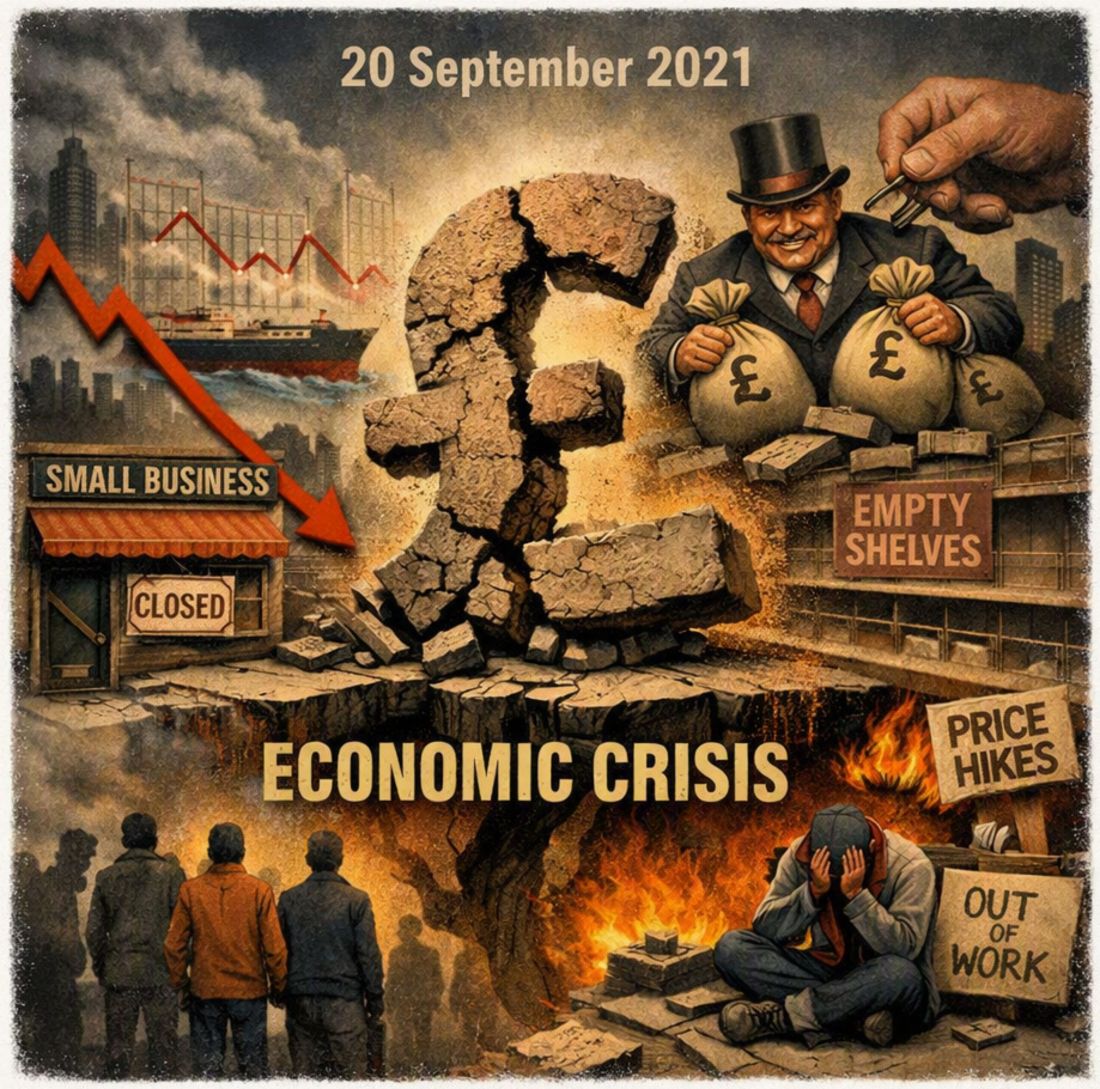
Small business cannot afford the escalating wage growth that the Government has fuelled. As we face a financial crisis, the greed funnelling money out of everything without putting value back must finally be stopped

We are constantly hearing about staff shortages and wage rises. Yet very little is being said by anyone about the real reasons underpinning what is happening.

There is no discussion about what we are seeing now being just the beginning or thin end of what will be a very thick wedge. There is no mention of how dealing with the problems we are now facing will require a lot more leadership and creativity on the part of our politicians rather than barking commands at businesses and demanding that they just put wages up.

Our Politicians, the media and a lot of other people too are taking for granted that everything will just keep rolling on ‘like normal’, certain that after a few temporary changes to deal with Covid here and there, things will carry on as they always have and that in no time at all, everything will be back to where it all was before.

In many respects, it certainly feels like business as usual. The problems that are being talked about are being blamed on Brexit, just as they have been at every opportunity for the past 5 years. And has always been the case without us paying all that much attention, the journalists, commentators and pundits are seeing everything through the lens of their own view of everything. The difference this time being that there is so much starting to happen that even the myopic nature of their supposedly broad thinking dialogue is quickly being exposed for being anything other than joined-up.

Yet we are now on the first steps of an accelerating downward spiral. A negative trend created by politicians and the banks cooking the books and getting away with it for such a long time, they genuinely believe that they could continue without risk of ever reaching a place called stop.

To be fair to them, the political class is so detached from the realities that face people outside of Westminster, it would be futile to imagine that this political class can suddenly develop empathy and understanding as another crisis looms. They certainly didn’t do so for the Covid Pandemic, and there is some irony that it is because of the choices that they have made in response to that, what comes next is set to be considerably worse.

In the coming months and possibly years ahead, we are set to experience a financial crisis of a kind that the world has never seen before. We are in the early stages of the descent towards it right now, and that thin end of the wedge – the employee shortages, empty shelves and the price escalation that we are now starting to see is just a small taste of what is set to come.

Our political class looks at every problem as being one that can be solved with money or a financial solution. But this is the same approach that politicians have been applying now for decades and all it does is make things progressively worse.

As our political class look at every problem through this ‘money solves all problems’ lens that many of they forebears have got away with – not because it works, but because there has been an awful lot of luck involved – they now see the staffing shortages as one that can simply be solved by telling business to put wages up.

Large supermarkets and hauliers have responded to the growing crisis by putting drivers wages up. Problems in other industries have resulted in large high street names like Costa throwing pay rises at staff ostensibly for their effort during the Pandemic. But this is the first sign of a panic materialising too.

There is no shortage of people to do jobs and to go to work in this Country. But no amount of money will solve what is now an out of control problem when employees are treated so badly and there are no controls placed upon what it costs and how much it costs the average person in this Country to live.

The rapidly expanding gap between what people earn and what it costs to live is an immediate problem for sure. But price inflation is now so firmly fixed in the hands of private interests who have seen the amount of money that Governments have created over the past eighteen months, that they will continue pushing prices up until the point that the system breaks. That is, if some other event hasn’t led to this already and proven to be one of the many straws that could so easily now break the camels back.

Perhaps the most useful example to illustrate the point is the cost of transporting a shipping container with goods to the UK from the Far East. Shipping costs have risen 1500% in the past 18 months, not because the costs of moving these items have become markedly different, but because world events have given the shipping conglomerate an excuse; together they have a stranglehold and ultimately, they know that they just can.

This change has in no small part led to goods shortages and price rises. And if you have already seen the presents that you want to buy for your children or family this Christmas, you might be very sensible to grab them now, whilst you still can.

What the shipping companies have and are doing is representative of how commercial supply chains now work. But what makes the situation even worse is the number of agents, speculators and handlers who have built ‘high performing’ business models, simply by handling goods – perhaps just buying and then selling them on at a profit – without adding any kind of value to the transaction. The end result being the unfathomable and unexplainable rise in the cost of living – with the end users and even the businesses one step removed from the end of the supply chain – struggling to keep going because all of the fat has been taken many times over and the prices of goods are too unrealistically high for anyone to afford or absorb.

Big name companies, that have a stake in how our broken economic model now works, can easily afford to pay their staff better than the living wage. They could easily absorb the rises with little impact on their bottom line. Yet the greed that drives them means that they would see the imposition of raising pay as one that gives them the excuse to raise their prices too.

Smaller businesses – and by this I mean the bedrock of our real economy and the ones that make everything work – don’t have the means or the economic scale to raise wages and then either absorb the difference or then pass on the costs to their customers and other without there being a significant cost the businesses that they own or run.

In fact, the demands that hapless Ministers have made last week for businesses to start paying more could easily result in people losing their jobs and making what were otherwise great small businesses no longer viable because the staff they need just to fulfil their normal order book has become a luxury they cannot reasonably afford.

In a prefect world, those small businesses or the trade organisations that represent them would sit down with the people running this country and be listened to in a way that counts.

Sadly, because we have the political culture that we have, that scenario is not one that is likely to ever play out. The system is literally going to have to break before those who should have been aware of the impact of what they have been doing will be ready to take note. And when then they do, then problem will be that we have the same people in power and pretending to lead us who got us into this mess in the first place.

Like everything Government in this Country touches or legislates for, the financial and economic system needs massive and comprehensive reform.

Money does not solve problems in the way that politicians would like and the process of the fat getting ever fatter by inflicting pain on everyone else without being forced to face up to what they have been doing is now over.

Things will not return to how they were before the Covid Pandemic began.

Net Zero is not only possible, we MUST aim for it too. However, it is an objective that requires inspiration and true statesmanship to deliver and it’s foolish to believe it can simply be imposed

Probably one of the most unhelpful arguments being conducted, then pushed by the media is the question over climate change, global warming and who or what is to blame or at fault.

It’s a dead cat debate, doing considerably more harm than good, simply because it is preventing reasoned discussion and action being taken to alleviate the impact on us all from the changes to the weather that are already evident and plain for us to see.

I cannot disagree with the concerns and arguments about the approach of big business and the consequences for the environment and serious risk to our quality of life from industrialisation, mechanisation, globalisation and the driving forces of greed and the motivation for achieving profit whatever the true cost.

But before we can even begin to tackle that problem in a way that will prove to be meaningful for all, there has to be an epiphany in governments right across the world. With it the recognition that public policy and the responsibility of government sits at the heart of the entire environmental debate, and that there are few areas of public policy which do not touch or fail to be influenced by the green question and environmental issues in some way.

The UK itself is already facing a range of problems from the climate changes taking place. A very good example of how different policy areas overlink in ways that are very serious, whilst being overlooked by our MPs and politicians would be the increasing problems that we are experiencing with flooding. Here, a rather large blind eye is also being covered over too, simply because housebuilding has become the obvious answer to a housing crisis that our politicians will not deal with in more appropriate ways. In so doing. Our political class are condemning existing homes, the villages, communities and towns around them to what might soon be very serious flooding problems, when taking responsibility and doing things differently could make this in many cases much easier to avoid.

Building green policy on what looks good in the media, what wins votes and what is easy to do is no way to tackle a worldwide crisis. One that will reach an inescapable point where its impacts are going to become very serious for us all.

Government cannot avoid the way the world works and why people and businesses are invested so heavily in things remaining as they are.

Ironically, the behavioural science that has been so heavily relied upon to coerce people into doing what the government wanted them to do as part of the political response to the Covid Pandemic, could be put to much better and constructive use. It could be applied to providing ‘nudges’ that govern the way people are thinking about their own impact on the environment and what they can independently do to help us all to go green.

However, using policies to force people to change does not consider the practical realities such as affordability, accessibility and what other policies green policy itself will impact – bearing in mind that you can be certain that with each step taken, there will be practical and in many cases hard-hitting consequences for us all.

To hear the Government, the media, the activists and academics preach, you could easily conclude that the UK is one of the worst sinners of the World. But it is not.

Whilst Government may feel galvanised in its ability to ‘impose’ green solutions on us all by the ‘success’ it has ‘achieved’ in forcing the UK to indulge all the unnecessary and costly responses to the Covid Pandemic it has imposed, taking this stupidity even further into the imposition of green technologies will end up in a disaster for this Country. One that will arrive much quicker and be far more consequential for all of us than the alternative of starting to deal with climate change the hard way and the right way. Currently, they are taking the easy route, as control freaks inevitably always do, concluding that giving this date or that date and a reliance on technology that doesn’t even exist, that future change is safe to impose upon us all.

In terms of the environment and the wider green issues that are involved, it is important to remember that the idealist’s viewpoint is that the problem will be solved with unilateral solutions that only affect people and businesses based in the UK. Yet isolated action will only hurt us, whilst doing nothing to address a problem that is the worlds, not just the UKs to own.

The reality is that we will not influence anyone or any other Country in a way that will be helpful to anyone, if our politicians just force through legislation such as heat pumps for homes, that are wholly impractical and consider none of the impacts on anything other than the environment itself – just as the Johnson Government has been doing by undertaking all policy decisions in isolation where Covid has been involved.

One of the biggest obstacles to progress on environmental issues worldwide, is the sordid fact that money is always and inevitably involved.

Money motivates people deeply in an emotionally entrenched way. And people who have lots of it and want more of it will not let issues that don’t agree with their own narrative get in their way.

Corporate interests are a massive part of the climate change problem. They will continue to be so until those responsible can be convinced that the same or more profit can be achieved for them, by conducting their business in a very different and environmentally friendly way.

Sadly, like most things historically, the biggest profits and margins are to be made when whatever you are doing means that you are in a position to exploit.

Morality and ethics are at a rare premium in business these days. It is the same people who are accumulating this wealth who already possess the deep pockets that our politicians suck up to and treat as if they are sacred cows.

There is as such a dangerous inevitability about the level of damage that is going to be done, before that moment of reason land collectively, and everyone starts working together voluntarily to address the issues and work better – because they have come to the decision as an informed and unselfish choice.

The saving grace to all this – strange as it may sound, may turn out to be the Covid Pandemic itself and the decisions that poor politicians have made in response.

Covid has literally seen governments around the world take decision after decision that has exponentially speeded up every problem that poor leadership has created over decades.

It means that a point is approaching where going greener will simply become the way that we all start to do things, rather than us having to wait on people who are so far choosing not to make the green choice.

Globalisation is over and done with in the way that we have known it before. The media are making very little of what is happening with shipping, supply chains and the provision of goods from around the world. But goods are not going to be available as they were before, and as the coming financial crisis beds in for the long haul, the realities of genuine localism, food and the supply of essential daily items from within a very local area, if not the immediate community itself, is going to become prevalent once again.

However, to make the very best of the opportunities that will come from a very serious crisis, it is vital that we have the right people influencing and making all of the key decisions that will need to be made.

Whatever happens next, it is essential that the decisions being made are not aimed purely at an electoral echo chamber as they have been now for decades.

Every decision being taken from now onwards will have very serious consequences for us all.

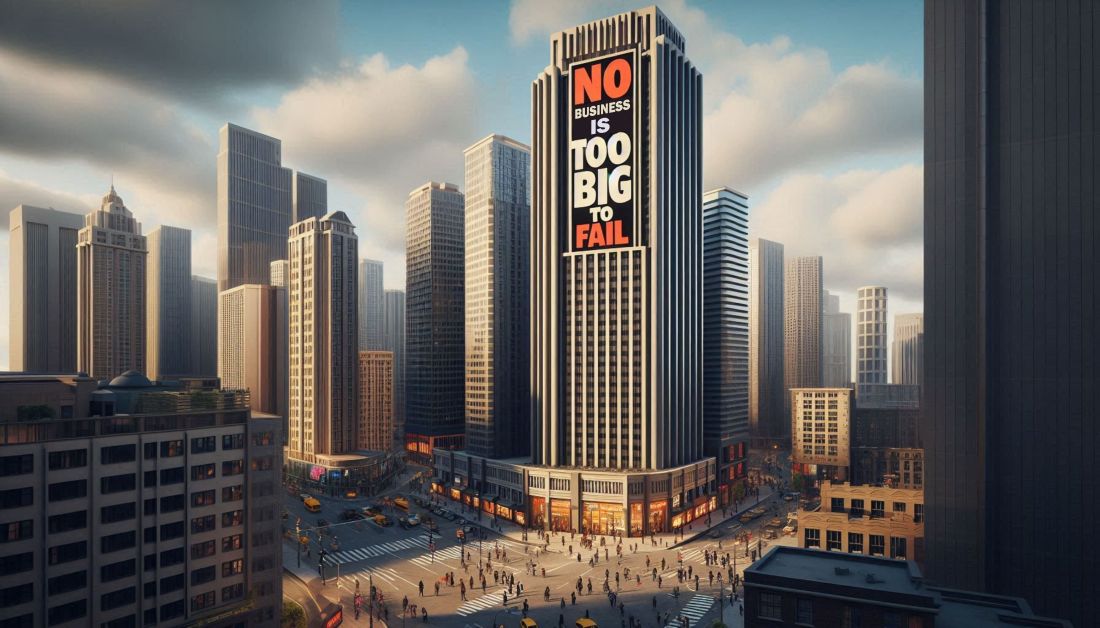
Government MUST NOT bailout airlines, banks or any privately owned business during the Covid Crisis. It should provide standstill legislation that trickles down to support EVERYONE and not just those who believe they are too rich to fail

Reading over the weekend that Virgin Airways boss Richard Branson is seeking a £7.5 Billion Government bailout for the Airline Industry because of the Covid crisis gave me quite a jolt. Not because of what it says about the exponential impact of the worldwide outbreak of this horrid virus on British based airlines. But because of the long term implications of another government writing out cheques to underwrite privately and shareholder-owned businesses as they did so in response to the 2008 Financial Crisis without any consideration for the long term impact that it still has for us all.

To be straight to the point; it is not the responsibility of any government, the Taxpayer, public purse or whatever you want to call it, to bail out private business and especially not in such profit-orientated times.

It simply doesn’t matter matter how bad the consequences might seem for staff, shareholders or anyone else involved. These businesses are not run as a public service. They exist to enrich the people who own them, not to prioritise the wellbeing of the people they serve.

It is certainly not legitimate for any politician, elected or otherwise to underwrite the rescue of any privately or shareholder owned business so that it can again become profitable whilst the public is saddled with a debt for doing so that has not or never will be repaid.

Whilst we might all be at least concerned if not genuinely worried about what the coming days and weeks will bring, there are remarkably few businesses or organisations that will not be affected in some way. Within these, staff will have to change where they work or be laid off if they have not already done so, and in a large proportion of cases they will find themselves with a reduced income, whether that be from losing work completely or finding their hours lowered or indirect income reduced from a reduction in expenses or some other specific way that they would normally accumulate what they count as being pay.

Small businesses are going to fail. Especially those that are owner led and may have none or very few employees, where margins literally pay a living wage to the owner and nothing more. Other businesses, if not all of them, will have to lay off many staff.

Without clever thinking on the part of Government and politicians which really starts to join up all the dots and goes way beyond the brainstorming of Dominic Cummings current weirdos and misfits team, businesses that were not only viable a few weeks ago, but also very profitable will overnight become a permanently lost cause.

It is genuinely the case that like birth and death being the great levelers that they are, Corona virus does not see wealth, status or any other factor as being a mitigating factor against its dark and malevolent cause.

Nobody has the right to be treated better or differently to any other in this Country. If this Government is to succeed in leading us all through a crisis of what could very well become an indeterminate length, it is essential that Politicians on all sides put equitable thinking and the consequences and knock-on effects of all this and how it is going to effect people and businesses alike at the heart of their decision making and at the centre of what should now be a purely non-partisan cause.

Whilst we have many experts who are putting forward their opinions and trying to pressure the government to change policy and go in different ways, the reality is that whether these ‘experts’ are economists, mathematicians, scientists or doctors, none of them are experts on the full and comprehensive complexity of the snowballing issues that this crisis is building. Even the political leaders themselves have never dealt with a situation like this one and none of them have a specific historical example to look back on which could be shoehorned into use as a blueprint for managing this 2020 pandemic.

The time to question the ability, decision-making and motivation of any politician is at election time. Not when a crisis of this magnitude comes to call.

For better or for worse, right now, we have the politicians that the electorate gave us and we MUST give them the support necessary to get something done that for some if not all of us is never going to feel right.

The question should therefore be not whether our Politicians are suitable for the jobs that they had in December – because public opinion has already concluded that for us.

The question must now be whether our Politicians can now adapt and think differently to the way that they historically appear to have always done so – without foresight, empathy or any reasoned ability to look beyond the situation that appears to be right in front of their faces and then think through the implications of everything that their decisions and responsibility will now touch and lead to not just one, but potentially many steps beyond.

When big names like Branson come calling and are given an immediate public spotlight because of the fickle world of media and celebrity we have been living in until now, we must all look to see and consider the realities that roll out beneath, in front of and beyond the self interest that drives these people and see the impact of every single decision government and influential people now make as being part of the same very big cause which is actually theirs, mine and yours.

Why does anyone want a bailout?

Right now, there are lots of businesses and whole industries asking themselves and looking to our Political Leaders to answer the question ‘who will keep the lights on’?

But it is not the responsibility of the Government and therefore the Taxpayer (that’s you and I…) to keep any business functioning when it cannot trade – no matter what the circumstances or cause.

To do so – with the way that our economy currently works – will help them now, whilst causing long-term pain for us all.

Sounds harsh I know. But if a business stops trading and isn’t doing anything, so needs to be ‘mothballed’ even temporarily – what are the costs and how can or rather how should those costs be met in order to keep that business viable for when ‘normality’ can return?

Contrary to common parlance, no business is too big to fail and no individual is too financially rich to fail – that is if politicians are genuinely doing their job. It is only fear and lack of ability to take responsibility on the part of the people we have elected to lead us that drives decision making otherwise.

So no, in 2008, the Banks should never have been bailed out. And certainly not in a way that they could resume paying bonuses to staff almost immediately and then return to profitability whilst we the public will continue paying for what was a commercially created – and therefore avoidable mistake, now and for potentially many years to come.

The difference between the banking crisis and the Covid crisis is that in 2008, the implications of a financial meltdown were assumed because of the ideas we all have about money, what happens without it and how we all perceive it to be the controlling force within our lives. In 2020, the implications of the Covid crisis are all about how the spread and presence of a real disease WILL genuinely affect us all – not just about how we feel and respond emotionally – and in some cases irrationally – to it in our thoughts.

Income, what we ALL face and the trickle-down solutions that we ALL now need

Today, businesses are worried about trade and therefore income.

People and employees are worried about jobs and being able to work and therefore income too.

But why is income so important?

Income is important because we all have to live – which other than for food pretty much means to keep paying bills.

But who takes money from us when we pay the bills?

If we remove basic food and essential items from the equation, its commercial interests, whether it be for phones, TV, utilities (such as water, electricity, gas etc), services, loans, leases, rents or anything else.

So when we are all facing a situation that has the ability to leave none of us untouched, why should any of those private interests be able to continue to profit from what is essentially a genuine crisis, public emergency and therefore public cause, when any one of them in isolation will be able to resume their profit making activities without anything standing in their way once the Corona Virus crisis is over and life in the UK returns to something like what we agree to be the norm?

The answer is that they shouldn’t.

And it is now that Boris and all of the wannabe politicians and advisors who surround him and inhabit our political system need to stand up to these interests that are indirectly responsible for so many of the ills that we face, simply because money and profit are their one an only motivation and cause.

The Government has the power to grant a moratorium on all non essential payments and financial activities such as the accumulation of interest in every sense possible.

The Government can also underwrite the actual cost of providing essential utilities and services during this crisis period without any profit being payable to any of the private interests or shareholders who are involved in providing the ‘public’ services that we will all continue to need.

Standstill Legislation: extraordinary measures for extraordinary times

No individual can survive on around £90 per week in what we would now call ‘normal times’ and for any politician to say otherwise is to tell a disproportionate lie.

However, if the Country comes to a standstill – as it is quite reasonable for us to now expect it will do so, the suggested £90 per week, per individual or thereabouts that the DWP would pay through ‘Universal Credit’ or whatever the benefit paid to those laid off from work as a result of the crisis would be, would certainly be enough just for food and essentials per person. That is if ‘Standstill Legislation’ halted the requirement for all other bills to be paid and Government takes control of essential services so that everyone can function within their homes with no travel or any other form of expenditure required.

Done in blanket form, without exception for any company, industry or anyone else involved, Standstill Legislation would not only be a fair, but very practical solution to effectively shut down the wider, profit-based nonessential goods economy and put it on hold until we are all ready and able to move forward with life in this Country as one.

Legislation could include but not be restricted to:

  • The temporary halt of all loan, mortgage, lease and credit card payments for all people and businesses, with payment plans resuming for full schedule beyond
  • The temporary halt to all interest accumulation on credit for all people and businesses with interest only becoming applicable once again once we move forward as one
  • The temporary halt to all council tax and business rate payments for all people and businesses with Central Government picking up the tab for revenue income flow for local authorities in-between
  • The implementation of anti-profiteering legislation for all businesses able and continuing to function throughout the shutdown period requiring margins to either reflect pre-crisis trading or those of the specific industry in the period before
  • Employers being able to lay-off staff until the crisis ends, with permanent staff being able to resume their positions as soon as the crisis ends unless the business can demonstrate that normal trading cannot be immediately resumed
  • Universal Credit or rather a ‘basic income’ payable to all those out of work because of the crisis purely for food and essential items
  • Government control of all essential and previously publicly owned services (Gas, Electricity, Water, Transport etc)
  • A temporary extension of VAT payment windows to at least 6 months from 3 for any business continuing to trade during the Shutdown Period
  • Staggered Taxation support for businesses that have been able to remain trading, applied relative to drop in trading
  • Suspension of all EU derived working hour legislation – including removal of the restrictions on driver hours, driver cpc training etc.
  • All tickets for holidays and events to be honored within 12 months of normal activates being resumed or repaid – with the choice being that of the customer, or refunded by default if the event or holiday cannot be honored for ANY reason which is identified at that specific point
  • Supermarkets being required to focus on essential foods and items only with rationing in place for items that are in genuine short supply

If there is one very good thing that can come from the Covid Virus outbreak and the crisis that has created, it will be the opportunity for politicians and big business to recognise how none of their actions or decisions take effect in isolation or in the targeted way that they might think. Echo chambers are only something that exists on the internet, not in real life.

The reality is that the Covid Virus is not only exposing us all to a potentially life-threatening illness. It is also demonstrating how the lives of all of us are already exceptionally vulnerable, and that Government already has the ability to address the weaknesses of an unrestricted economic system where private interest and profit making at one end of the spectrum are indirectly or otherwise making life misery for many others in a wide ranging and incalculable number of different ways.

Yes, the suggestions that I am making would be only on a temporary basis and that is how it would have to be once normality returns. But until politicians actually start doing their jobs properly, taking responsibility and making life better and more equitable for everyone in many different and far-reaching ways, the chaos and hardship that the Covid Virus is now revealing will continue to be an example of the daily struggles than many British people face until we all start thinking and behaving like we are one.
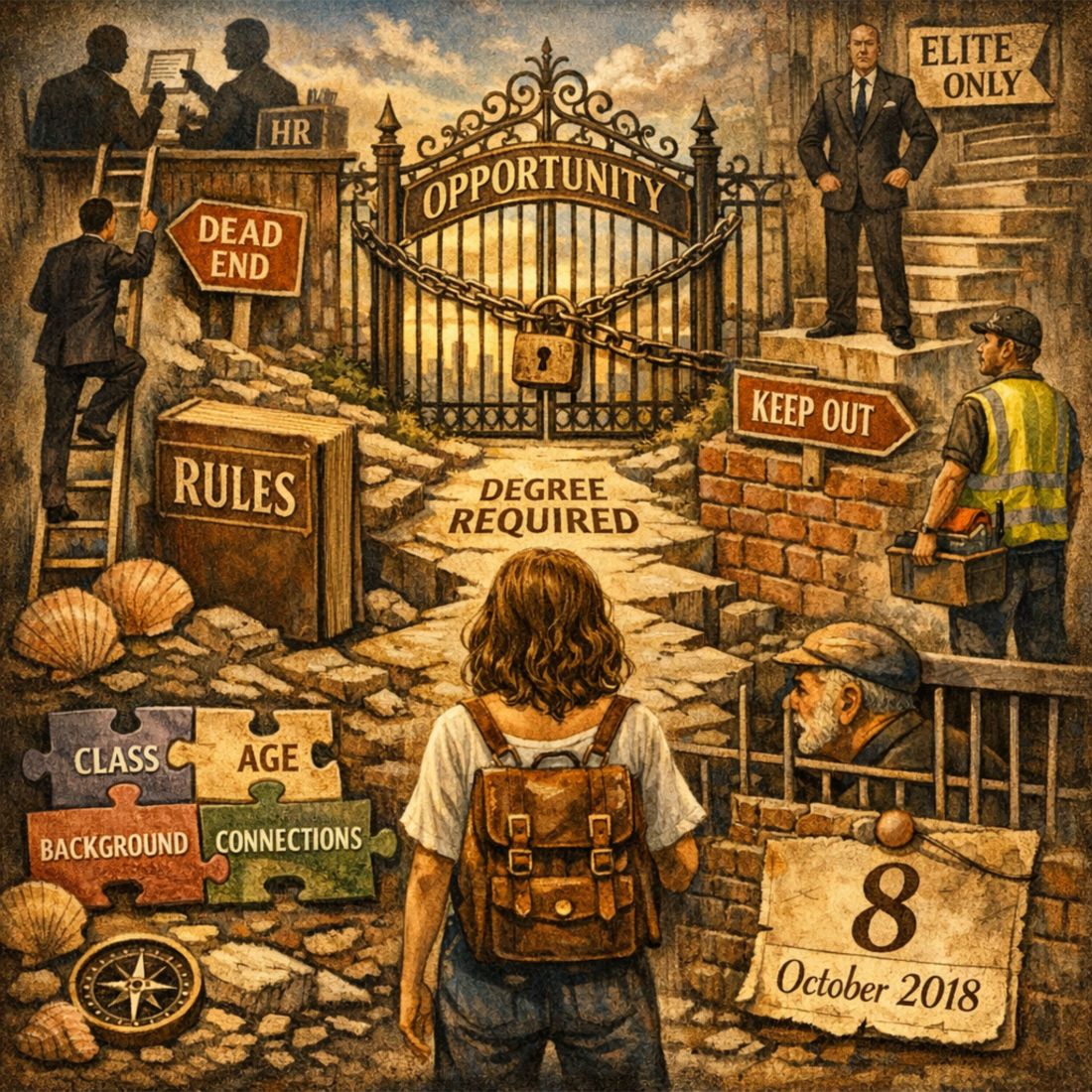
Improving Social Mobility is about addressing the way decision makers think, not about academic education alone

The three key misunderstandings and fallacious barriers to Social Mobility are:

  • That Social Mobility issues only affect young people who are in their career development years
  • That the only way to improve Social Mobility is through ensuring that everyone achieves a ‘full’ academic education and that the attainment of degrees is key
  • That Social Mobility issues relate to the achievement, progress or outlook of the individual and nobody else

With one evolution of the Social Mobility Commission having resigned because of lack of Government support and another now appointed in the image of all the same Establishment ideas, the key issues underpinning lack of progress in tackling the barriers to Social Mobility are still being overlooked and this travesty is set to continue further still.

As is often the case when a cause is given a label, the Social Mobility problem is an issue which has become closely aligned with just one interpretation of its cause. This closes down debate and dialogue about the much wider range of issues which attribute to reducing opportunities. It also excludes consideration of a wider malaise and certainly overlooks the real impact on not only the individuals affected themselves, but also upon the wider community as a whole.

Yes, many young people are overlooked because of the start they had in life. The place in which they lived. The schools which they did and did not attend. The qualifications which they did or didn’t gain.

But the reality is that it is a very long list of factors which prevent any one person from progressing.

The interpretation of someone’s validity on the road to progress and passing these barriers is not simply restricted to that of employers, educators or any of the external gatekeepers of opportunity.

No. The perception of not being good enough to overcome any barrier to Social Mobility can be that of the individual all on their own.

The obstruction to unhindered Social Mobility, is the many prejudices which are not and cannot be managed by regulation or by the methods of review and reform which have become the cultural norm in this Country.

In a society which has learned to make effect synonymous with cause, we overlook the real causes of societal problems and as such have no way to address the consequential effects.

The social justice warriors, the politically correct, the rights lobby and liberal left all congratulate themselves on the strangle hold of regulation which decades of manipulation and social engineering have helped them impose.

Yet the rules which govern Equality of Opportunity in their purest sense have actually made prejudices easier to employ.

Only now, beyond the scope of the processes which assure us that prejudices have been all but removed, they are less likely to be evidenced and hide in plain sight.

Yes, we have regulation against gender and sex discrimination. Race discrimination. Disabilities discrimination, Religion, Age and sexual orientation too.

But in creating these frameworks or safety notes, the idealistic engineers of this ill-considered social plan have provided the perfect opportunity for people to surrender ethical responsibility to being seen to adhere to the set of rules which now exist. They have been given a set of pillars that once worshipped, allow them to do whatever they want to by behaving in ways which legitimately go around these rules or sit somewhere in the spaces in between.

We now not only have a situation where decision makers can quietly be racist, sexist, or are allowed to quietly indulge any other prejudice we might not collectively like. They can continue to do so unimpeded.

The consequences of this ‘big vision’ engineering project create many other problems too. Problems which include disadvantaging the already disadvantaged and building barriers to progress which the very same people will now never cross.

And guess what. Yes. We find again that achievements exist only for the same few to easily win all over again.

Take for example the assault on the education system that the Blair Government undertook, with the overt aim of giving everyone the opportunity to gain a degree.

The result has been the commercialisation of the further and higher education system, leading to the prioritisation of winning fees, rather than focusing on the quality and commercial durability of the education provided. Running education as a business has almost certainly put its future in serious doubt.

It is a process which has already led hundreds and thousands of hopeful young people to begin professional life in serious debt and with academic qualifications which are to many businesses completely worthless.

Yet the debt-laden graduates only find out too late that these quack qualifications don’t mean much at all to the world around them once they have left the supposed safety of the academic universe behind.

The world of big business and its new world of ‘created roles and specialisms’ has responded to the glorifying of academic qualification over the benefit of time-served experience by recognising degrees as a standard for anybody worth looking at. Not as a way to recognise specialism in itself. But as a like-for-like replacement in recent years for what would previously have been well illustrated by the attainment of 3 A ‘Levels, and only a few years before that just 5 GCSE’s.

Not everyone is cut out to be a CEO, Director or even a manager and non-academic people bring value to business which only when added to the contribution of real academics can it add up to a formula which is so much more.

The dangerous mix created by this non-stop meddling has fuelled the entitlement culture. Qualification has become more valuable than experience and experience is not of value to those who have qualifications.

Letters on a CV are seen as more important than attitude, motivation, or the many other life skills which business used to intrinsically value, which they now overlook. The system now unwittingly leads them to place applications from people who could and should be the next generation of commercial superstars straight in the bin.

It doesn’t stop there, and within a tick box, risk-averse culture where Recruiters and HR Officers – that’s people who have and never will do these jobs themselves – have overwhelming power over recruitment processes, there is an untamed focus on identifying reasons to not even shortlist candidates – usually because they don’t have a degree.

Good people are now denied jobs where they can thrive and the employers and companies themselves never gain access to the wider pool of candidates where the real benefits of selecting people with the right experience rather than just a paper qualification lies.

The consequences of this social meddling are already far reaching indeed and because the UK could never afford to provide education to 21 years as a standard – which in itself was never needed, it was inevitable that a new form of educational discrimination would introduce itself. And it’s the worst one of all. The preclusion from opportunity for even more young people based simply on cost.

Just in this one example of social meddling focusing on education alone, where impractical idealists have tried to impose a system of restrictions based upon no experience that they have or have in no way never known, we can see how far reaching the impact on consequences of quixotic thinking can be.

This is a pattern which is unfolding itself over and over again within all the areas of our lives where lack of consideration has been applied to the consequences of imposing the ‘consideration’ of rights and ‘positive’ discrimination on a society which will always have its own mind and not the one which political busy-bodies wish to create for it.

The barriers to Social Mobility are all about the way that we think.

But the change needed and the tools which will enable us to break down those barriers and make that change will only come when decision makers with the power and therefore the ability to oversee that change go through a voluntary process of accepting that they themselves need to think differently.

That change will come about as a direct result.

That change cannot and never will be imposed.