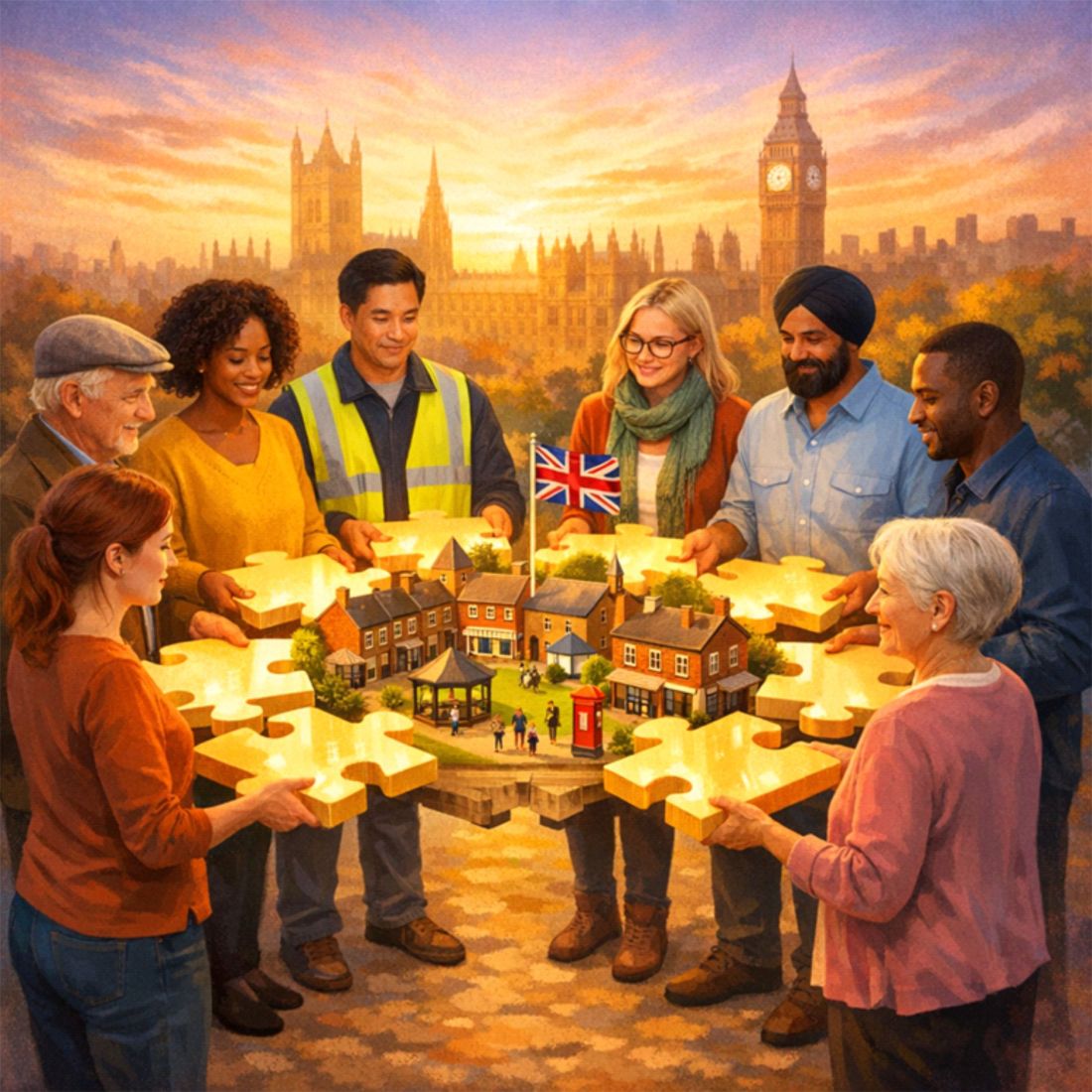
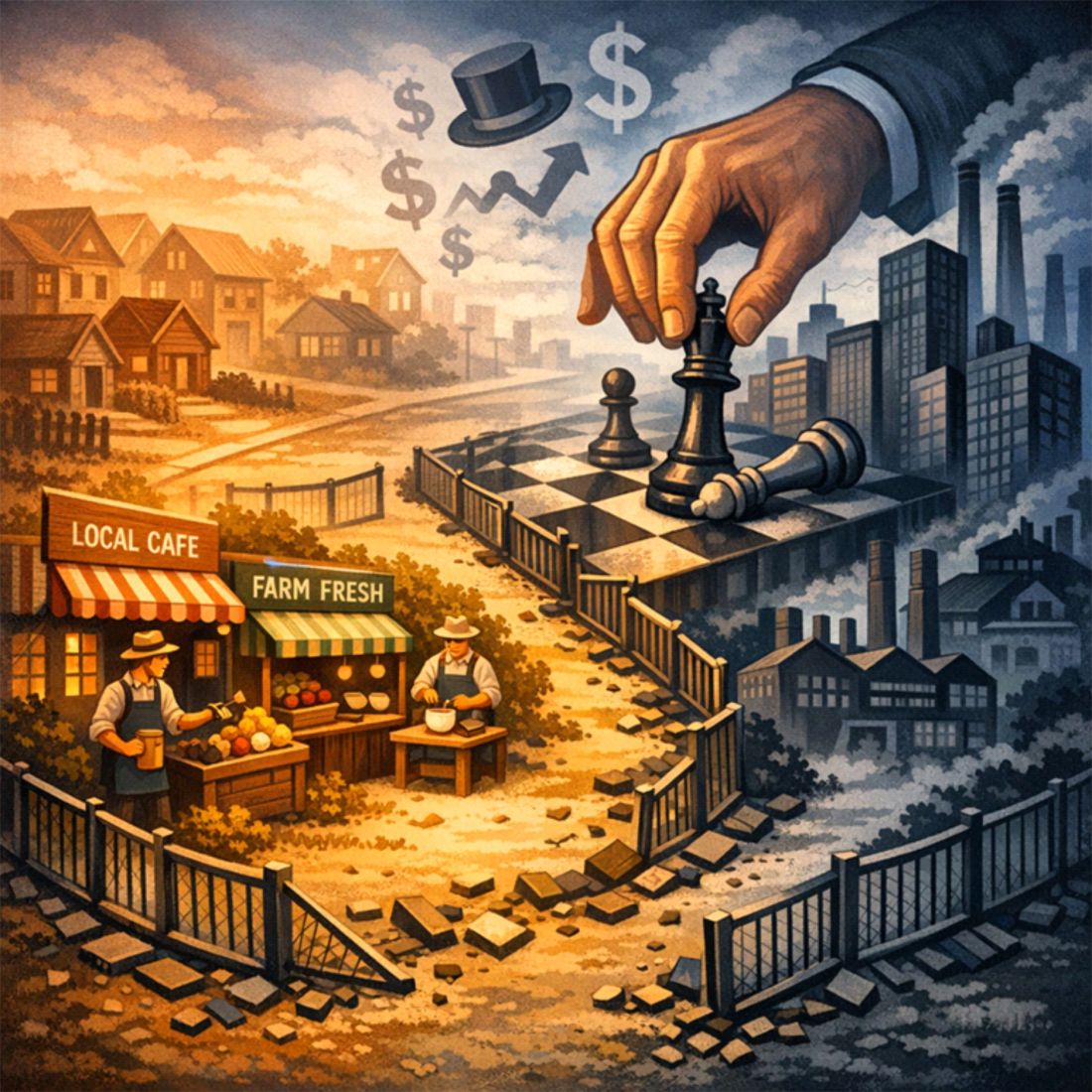
When you ask people who they vote for, or who they’re planning to vote for at the next election, the answer almost always comes back as the name of a political party. Labour. Conservative. Reform. Liberal Democrat. SNP. Green. It’s become such a normal part of our political culture that we rarely stop to question it. Voting equals choosing a party. That’s just how things are done.
But if you pause for even a moment, a more important question starts to surface – one that most of us never really ask ourselves.
The Disconnect Between Politicians and People
Who are we actually voting for?
Not the party. Not the brand. Not the colour on the leaflet. But the people. The individuals. The ones who will sit in rooms we never enter, making decisions that shape our lives in ways we often don’t see until long after the fact.
And the truth is, we don’t know these people.
We didn’t choose them.
We didn’t interview them.
We didn’t test their judgement, their awareness, their integrity, or their understanding of real life.
We simply accepted the list of names the parties put in front of us and hoped for the best.
We’ve been conditioned to believe that this is democracy. That this is how representation works. That this is the best we can do.
But deep down, most people already sense that something isn’t right. They feel the distance. They feel the disconnect. They feel the frustration of decisions being made that make no sense to ordinary people, yet are pushed through as if they were inevitable.
You only have to look at the decisions made in recent years – decisions that have cost billions, decisions that have reshaped communities, decisions that have affected national security, public services, and everyday life – to see how far removed they are from the experiences of the people who live with the consequences.
And people feel it. They feel it every time a politician talks confidently about a problem they’ve never personally faced. They feel it every time a policy is announced that sounds good on paper but falls apart the moment it meets reality. They feel it every time they’re told that things are improving when their own lives tell a very different story.
This isn’t cynicism. It’s awareness.
It’s the early recognition that the political system we have today is not working the way we assume it does.
Election season only makes this clearer. The leaflets arrive. The promises flow. Candidates knock on doors with the same lines we’ve heard for decades. They promise to fix things they can’t fix, change things they can’t change, and deliver things they have no power to deliver. And we play along, because what else can we do?
We pick the least bad option. We vote tactically. We hold our noses. We hope.
But hope isn’t a strategy. And it certainly isn’t a system.
The deeper truth – the one we’ve avoided for far too long – is that the political system we have today is built on assumptions that no longer hold. It assumes that parties represent people. It assumes that politicians understand real life. It assumes that centralised power can make good decisions for millions of people it never meets. It assumes that distance doesn’t matter.
Assumptions That No Longer Hold
But distance matters more than anything.
Because the further away power moves from the people it affects, the more distorted, harmful, and unaccountable it becomes. And that’s exactly what we’re living through now.
Politicians today are making decisions without understanding the lives of the people those decisions affect. Not because they’re bad people, but because they’re disconnected. They’re insulated. They’re operating in a world that has very little in common with the world most people live in.
And when you combine that with a party system that rewards obedience over integrity, loyalty over awareness, and ambition over service, you end up with a political class that is simply not equipped to make good decisions.
This is why public services are failing.
This is why communities feel abandoned.
This is why trust has collapsed.
This is why everything feels harder than it needs to be.
It’s not because the problems are impossible. It’s because the people making the decisions don’t understand the problems in the first place.
And they don’t understand because the system doesn’t require them to.
The system checks the paperwork, not the person.
It checks eligibility, not suitability.
It checks the form, not the character.
It checks the rules, not the awareness.
And because the parties control the selection process, the real questions – the ones that matter – are never asked in public.
They’re asked behind closed doors, by people whose priorities are not aligned with the public interest.
This is how we end up with politicians who are loyal to the party, not the people.
Who follow the whip, not their conscience.
Who defend the indefensible because their career depends on it.
Who vote for policies that harm their own constituents because the party leadership demands it.
It’s not an accident.
It’s not a glitch.
It’s how the system is designed.
And if the people at the top were making good decisions, perhaps we could tolerate it.
But they’re not. And the consequences are everywhere.
This is where the conversation naturally shifts – not into a list of solutions, but into a recognition that the system itself cannot deliver what people need. Not because people are bad, but because the structure is wrong.
And when the structure is wrong, no amount of money, noise, or political theatre can fix it.
So the question becomes:
If the system cannot be fixed from within, what do we do?
Understanding the Foundations of the Problem
Once you see that the system itself can’t deliver what people need, everything changes. It stops being about which party is better, or which leader is less damaging, or which manifesto sounds more believable. Those questions start to feel small – almost irrelevant – because they’re all framed inside a structure that no longer works.
And when you realise that, you start to see the same pattern everywhere. You see it in the way public services are run. You see it in the way decisions are made. You see it in the way politicians talk about problems as if talking were the same as solving. You see it in the way money gets thrown at crises without ever addressing the reasons those crises exist in the first place. You see it in the way communities are left to cope with the fallout of decisions made by people who have never lived the consequences.
It becomes obvious that the system isn’t broken in one place – it’s broken in its foundations.
And once you see that, you can’t unsee it.
You start to notice how far removed politicians are from the realities of everyday life. You notice how often they speak with confidence about things they don’t understand. You notice how decisions are made without any sense of how they will play out in real communities, with real people, living real lives. You notice how the people who are supposed to represent us seem to spend more time representing their party, their donors, or their own ambitions than the people who actually put them there.
And you notice something else too – something that sits quietly in the background until you finally pay attention to it.
You notice that the people who do understand real life, the people who do have awareness, the people who do have integrity, the people who do care about their communities, are almost never the ones who end up in positions of power.
Not because they’re not capable.
Not because they’re not willing.
But because the system isn’t built to select for those qualities.
It selects for obedience.
It selects for ambition.
It selects for people who won’t challenge the party line.
It selects for people who will vote the way they’re told.
It selects for people who fit the mould.
And the people who don’t fit the mould – the ones who think for themselves, who speak honestly, who put the public first – are quietly filtered out long before they ever get near real influence.
Once you understand that, the idea of “voting for the least bad option” starts to feel like a trap. Because it is. It’s a way of keeping the system going without ever addressing the reasons it keeps failing.
And that’s the moment – the moment when people realise the system can’t fix itself – when the real discussion begins.
Because if the system can’t deliver what we need, then we have to look somewhere else. Not upwards, to Westminster or party headquarters, but outwards – to each other, to our communities, to the places where real life actually happens.
This is where the idea of participatory democracy stops sounding like a theory and starts sounding like common sense. It’s where the idea of choosing representatives based on awareness, integrity, and lived experience stops sounding idealistic and starts sounding necessary. It’s where the idea of a contribution‑based culture – where people are valued for what they bring to their community, not just what they earn or what job title they hold – starts to feel like the only thing that could actually work.
Because when you strip away the noise, the slogans, the party branding, the media spin, and the political theatre, what people really want is simple. They want to be heard. They want decisions to make sense. They want fairness. They want honesty. They want competence. They want leaders who understand real life. They want a system that works for everyone, not just for those who hold power.
And the truth is, we can have that.
But we won’t get it from the system we have now.
We’ll get it by building something different – something grounded in community, shaped by contribution, and led by people who understand the lives of the people they represent.
People-Centric Governance: A New Approach
Once you start looking outward – toward your community, toward the people you actually live alongside – something shifts. The whole idea of politics begins to feel different. It stops being this distant, abstract thing that happens in Westminster or on the news, and it becomes something much closer, much more human.
You begin to realise that the real expertise about how life works isn’t held by politicians or party strategists or think tanks. It’s held by the people who live with the consequences of decisions every single day.
And that’s the part the current system never acknowledges. It treats people as if they’re too uninformed, too emotional, too inconsistent to be trusted with real influence.
Yet the irony is that the people who are supposedly “qualified” to make decisions are often the ones who understand the least about the realities those decisions create.
You see this everywhere once you start paying attention. You see it in the way national policies land in local communities like a dropped weight – heavy, clumsy, and completely out of sync with what people actually need. You see it in the way councils are forced to implement decisions they had no say in, even when they know those decisions will cause harm. You see it in the way people talk about politics with a kind of weary resignation, as if they’ve accepted that the system will never work for them, no matter who they vote for.
And that resignation is dangerous. Not because people are giving up, but because they’re giving up on something they were never truly included in to begin with.
This is where the idea of stepping up – of taking part in your community – stops being a nice sentiment and starts becoming a practical necessity. Not in the sense of “everyone must become an activist,” but in the sense that communities work best when people are involved in them. When people talk to each other. When they share responsibility. When they notice what’s happening around them and feel able to do something about it.
You don’t need a political party to do that.
You don’t need permission.
You don’t need a manifesto.
You just need to care about the place you live and the people you share it with.
And the moment you start thinking in those terms, the idea of a different kind of political system – one built around communities rather than parties, around contribution rather than competition, around awareness rather than ambition – stops feeling radical and starts feeling obvious.
Because the truth is, most of the problems we face today aren’t complicated.
They’re made complicated by the distance between the people who make decisions and the people who live with them.
Remove that distance, and everything becomes clearer. You can see what needs to be done. You can see what isn’t working. You can see what would make life better. And you can see who in your community has the awareness, the integrity, and the lived experience to help make those decisions well.
That’s what participatory democracy really is. Not endless meetings or constant voting, but a way of organising public life that recognises the value of lived experience. A way of choosing representatives who understand the people they represent because they are part of the same community. A way of making decisions that reflect real life, not party strategy.
The Value of Lived Experience
And once you start imagining that – once you let yourself picture what it would feel like to have representatives chosen by the community, accountable to the community, and grounded in the community – the old system starts to look even stranger. You start to wonder why we ever accepted a system where people we don’t know, chosen by organisations we don’t control, make decisions about our lives with almost no input from us.
It’s only when you step back that you realise how upside‑down it all is.
And that’s the moment when the alternative stops being an idea and starts becoming a direction – a path that leads away from distance, away from party control, away from unconscious decision‑making, and toward something more human, more grounded, and more capable of actually working.
Reimagining Politics: Contribution Over Competition
As soon as you start imagining politics as something rooted in the place you live – rather than something happening far away, controlled by people you’ll never meet – the whole idea of governance begins to feel different. It becomes less about ideology and more about practicality. Less about parties and more about people. Less about winning and more about contributing.
And contribution is really at the heart of all this. Not in the narrow sense of “what job you do” or “how much tax you pay,” but in the broader, more human sense of what you bring to the life of your community. The way you show up. The way you help. The way you care about the people around you. The way you take responsibility for the things that matter.
When you look at communities that work well – the ones that feel alive, connected, supportive – you notice that they’re not built on politics. They’re built on contribution. People know each other. They talk. They help. They notice what’s happening. They step in when something needs doing. They don’t wait for permission. They don’t wait for a party to tell them what to think. They just get on with it because they care.
What Makes Communities Thrive
And that’s the part the current political system has never understood. It treats people as voters, not contributors. It treats communities as administrative units, not living ecosystems. It treats representation as a transaction, not a relationship. It treats governance as something done to people, not with them.
But when you start from contribution – when you start from the idea that people are the value, not the problem – everything changes. You begin to see how much wisdom, awareness, and capability already exists in every community. You begin to see how many people understand what needs to be done because they live with the consequences every day. You begin to see how much better decisions could be if they were made by people who actually understand the lives they affect.
This is where the idea of a different system – one built around locality, participation, and contribution – stops being theoretical and starts becoming real.
You can picture it. You can feel it. You can imagine what it would be like to have representatives chosen by the community, accountable to the community, and grounded in the community. People who know the streets, the schools, the services, the challenges, the strengths. People who understand the detail because they live in it.
And once you imagine that, the old system starts to look even more absurd.
The idea that someone chosen by a party, living miles away, following instructions from people even further away, could possibly understand what your community needs – it starts to feel almost comical. Like a relic from a time when people didn’t know any better.
But we do know better now.
We can see the consequences.
We can feel the distance.
We can recognise the harm.
And we can imagine something better.
That’s the moment when LEGS – the Local Economy & Governance System – begins to make sense.
Not as a grand plan or a political project, but as the natural next step in the story.
A way of organising public life that reflects how people actually live. A way of making decisions that reflect real experience. A way of choosing representatives who are awake, aware, and capable of putting the best interests of everyone first.
LEGS isn’t complicated. It’s not ideological. It’s not a manifesto. It’s simply a way of bringing governance back to where life happens – in communities, among people who know each other, who understand each other, who share the same streets, the same services, the same challenges, the same hopes.
And once you see that, you realise something important:
We don’t need to overthrow the old system. We just need to outgrow it.
People are already losing faith in party politics.
Communities are already stepping up.
Local initiatives are already filling the gaps.
People are already imagining something different.
The shift has already begun – quietly, naturally, almost inevitably.
And that’s where the story goes next:
Into the recognition that the future of governance isn’t something we wait for. It’s something we build, together, through contribution, awareness, and community.
Participatory Democracy is natural within any real community
The more you sit with this idea – that the future of governance grows from communities rather than parties – the more obvious it becomes.
It’s not a leap. It’s not a revolution. It’s not even particularly radical. It’s simply a return to something we’ve drifted away from: the understanding that people know their own lives better than anyone else, and that decisions work best when they’re made close to the people they affect.
And once you see that, you start to realise how much of our frustration with politics comes from the fact that we’ve been trying to solve local, human problems with distant, impersonal structures.
We’ve been expecting people who don’t know us, don’t live where we live, and don’t experience what we experience to make decisions that fit our lives. And then we’re surprised when those decisions don’t fit.
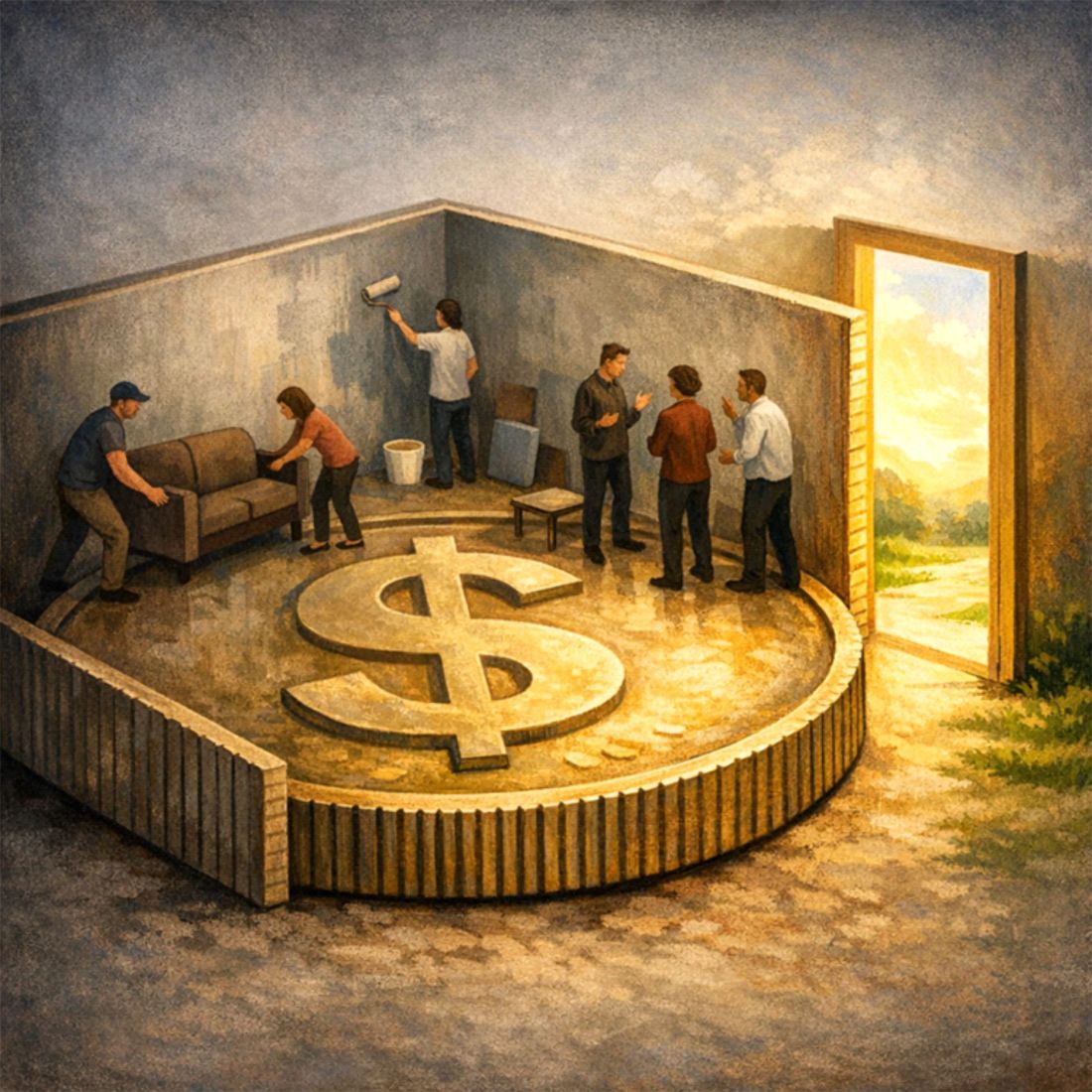
It’s like asking someone who’s never been in your house to rearrange your furniture. They might have opinions. They might have theories. They might even have confidence. But they don’t know where the light falls in the morning, or where you like to sit, or which chair has the wobbly leg, or where the dog sleeps, or how you move through the space.
They don’t know the detail. They don’t know the lived reality. And so whatever they do will always feel slightly off.
That’s what national politics feels like now – a constant rearranging of furniture by people who don’t live in the house.
And the thing is, people feel this. They might not use the language of systems or governance or political theory, but they know when something doesn’t make sense.
They know when decisions are made without understanding. They know when the people in charge don’t get it. They know when the system is too far away to see what’s really happening.
This is why so many people have lost faith in politics. Not because they don’t care, but because they’ve been excluded from it for so long that it no longer feels like it belongs to them. And when something doesn’t belong to you, you stop expecting it to work for you.
But the moment you bring politics back into the community – the moment you make it something people can see, touch, influence, and take part in – everything changes. It stops being abstract. It stops being distant. It stops being something you watch from the outside. It becomes something you’re part of. Something you help shape. Something that reflects your life, your values, your experience.
And that’s where LEGS really comes alive – not as a model or a framework, but as a way of living. A way of organising ourselves that feels natural because it is natural.
People making decisions together. People contributing to the place they live. People choosing representatives they actually know. People taking responsibility for the things that matter. People building a system that grows from the ground up, not imposed from the top down.
It’s not complicated.
It’s not ideological.
It’s not theoretical.
It’s human.
And once you start thinking in those terms, the idea of continuing with the current system starts to feel almost absurd.
Why would we keep relying on a structure that has shown, again and again, that it cannot deliver what people need? Why would we keep electing people we don’t know, chosen by parties we don’t control, to make decisions about lives they don’t understand? Why would we keep pretending that this is the best we can do?
It isn’t.
It never was.
We just forgot that we had other options.
And that’s the real turning point – the moment when people realise that the alternative isn’t some distant dream or complicated plan. It’s simply a different way of organising ourselves. A way that starts with people, not parties. With contribution, not competition. With awareness, not ambition. With community, not distance.
Everyone being accountable is accountability for everyone
The more you picture this shift – away from distant party politics and toward something rooted in real life – the more you realise how much sense it makes.
It’s not a leap into the unknown. It’s not a rejection of everything we’ve built. It’s simply a recognition that the way we’ve been doing things no longer fits the world we live in.
And once that becomes clear, you start to see how much of our frustration with politics comes from the fact that we’ve been trying to solve human problems with a system that has forgotten how to be human.
A system that treats people as data points, communities as administrative zones, and decisions as transactions. A system that has become so tangled in its own processes, hierarchies, and loyalties that it can no longer see the people it was supposed to serve.
You can feel this in the way public services operate now – stretched, strained, and often held together only by the goodwill of the people working in them.
You can feel it in the way communities talk about politics, not with anger anymore, but with a kind of tired acceptance, as if they’ve quietly concluded that the system will never work for them.
You can feel it in the way people describe their lives: everything harder than it needs to be, everything more complicated than it should be, everything feeling just slightly out of reach.
And when you look at it through that lens, the idea of continuing with the same system – the same parties, the same structures, the same distance – starts to feel almost surreal.
Why would we keep doing this to ourselves? Why would we keep relying on a model that has shown, time and again, that it cannot deliver what people need? Why would we keep electing people we don’t know, chosen by organisations we don’t control, to make decisions about lives they don’t understand?
It’s only when you step back that you realise how strange it all is.
And that’s the moment when the alternative stops feeling like a theory and starts feeling like a return to something we’ve always known: that people understand their own lives better than anyone else, and that communities work best when the people in them are involved, connected, and able to contribute.
Contribution is the thread that runs through all of this. Not in the narrow sense of “what job you do,” but in the broader sense of what you bring to the life of your community. The way you show up. The way you help. The way you take responsibility for the things that matter. The way you care about the place you live.
When you look at communities that thrive, you see contribution everywhere. You see people who know each other, who talk to each other, who notice what’s happening around them. You see people who step in when something needs doing, not because they’re told to, but because they care. You see people who understand that community isn’t something you consume – it’s something you create.
And that’s the part the current political system has never understood. It treats people as voters, not contributors. It treats communities as problems to be managed, not places full of capability. It treats governance as something done to people, not with them.
But when you start from contribution – when you start from the idea that people are the value – everything changes. You begin to see how much wisdom already exists in every community. You begin to see how many people understand what needs to be done because they live with the consequences every day. You begin to see how much better decisions could be if they were made by people who actually understand the lives they affect.
This is where LEGS – the Local Economy & Governance System – stops being a concept and starts becoming a picture. You can imagine it. You can feel it. You can see how it would work. Not as a replacement for everything overnight, but as a way of organising ourselves that grows naturally from the problems we face today.
It’s not complicated.
It’s not ideological.
It’s not abstract.
It’s human.
It’s people making decisions together.
It’s communities choosing their own representatives.
It’s contribution shaping the life of the place.
It’s awareness guiding decisions.
It’s governance happening where life happens – locally, visibly, responsibly.
And once you imagine that, the old system starts to look like something from another era – a structure built for a world that no longer exists, held together by habit rather than purpose.
The People Centric Future of Politics and Governance
Once you begin to see the old system as something we’ve simply outgrown, the future stops feeling like a distant hope and starts feeling like something we can actually reach.
Not by waiting for the next election. Not by hoping the next party will be different. Not by trusting that the same structures will somehow produce different outcomes. But by recognising that the power to change things has always been closer than we think.
Because the truth is, communities already know how to look after themselves. They always have.
Long before party politics existed, people organised their lives through relationships, contribution, shared responsibility, and awareness of each other’s needs.
They didn’t need manifestos or whips or party lines. They needed each other. And they still do.
You can see this whenever something goes wrong locally. A flood. A fire. A crisis. A family in trouble. People don’t wait for Westminster to intervene. They don’t wait for a party to issue a statement.
They step in. They organise. They help. They contribute. They do what needs to be done because they care about the place they live and the people they share it with.
That instinct – that natural, human response – is the foundation of the alternative. It’s the part of us that the current political system has ignored, suppressed, or simply forgotten.
But it’s still there, in every community, waiting to be recognised for what it is: the real engine of governance.
And once you see that, you realise that the future of politics isn’t about replacing one party with another. It’s about replacing distance with connection. Replacing hierarchy with participation. Replacing competition with contribution. Replacing unconscious decision‑making with awareness.
This is where LEGS – the Local Economy & Governance System – fits so naturally. Not as a grand plan imposed from above, but as a way of organising ourselves that grows from the ground up. A way of making decisions that reflects real life. A way of choosing representatives who understand the people they represent because they live among them. A way of building a system that works because it’s built by the people who use it.
And the thing is, once you imagine this – once you picture a community choosing its own representatives, discussing its own priorities, shaping its own future – it stops feeling like an alternative and starts feeling like the most obvious thing in the world. You wonder why we ever accepted anything else.
Why did we ever believe that people we don’t know, chosen by organisations we don’t control, could represent us better than we represent ourselves? Why did we ever think that distance was a strength? Why did we ever assume that awareness, integrity, and lived experience were less important than party loyalty?
It’s only when you step back that you realise how upside‑down the old system is.
And that’s the moment when the future becomes clear. Not as a dream, not as a theory, but as a direction – a path that leads away from the frustration, the distance, the noise, and the dysfunction, and toward something more grounded, more human, and more capable of actually working.
A system built on people.
A system built on community.
A system built on contribution.
A system built on awareness.
A system built on the understanding that representation only works when it grows from the place it represents.
Transformation begins with Acceptance
Once you recognise that the future of governance grows from communities rather than parties, something else becomes clear too: the shift doesn’t begin with a grand announcement or a national movement. It begins quietly, in the smallest places, with the simplest actions. It begins when people start to see themselves not as spectators of politics, but as participants in the life of their community.
And that’s the part that often surprises people. They imagine that changing the system means conflict, upheaval, or some dramatic break with the past.
But real change rarely looks like that.
Real change looks like people doing what they’ve always done when systems stop working – they start building something better alongside it.
Building Change from the Ground Up
You can already see this happening. Look at any community that’s thriving despite the pressures around it, and you’ll find people who’ve stopped waiting for permission. People who’ve stopped expecting distant institutions to fix things. People who’ve taken responsibility for the place they live because they know nobody else will do it for them. People who’ve realised that the most powerful thing they can do is contribute.
And contribution doesn’t need a title. It doesn’t need a party. It doesn’t need a manifesto. It just needs awareness – the awareness that you are part of something bigger than yourself, and that your actions shape the life of the place you live.
This is why the idea of a contribution‑based culture fits so naturally into the story. It’s not a theory. It’s not a policy. It’s simply a recognition of how communities actually work when they’re healthy.
People contribute because they care. They contribute because they belong. They contribute because they understand that community isn’t something you receive – it’s something you help create.
And once you see contribution in that light, you begin to understand why the current political system feels so hollow. It has no place for contribution. It has no mechanism for it. It has no understanding of it. It treats people as voters, not participants. It treats communities as problems, not partners. It treats governance as something done by a small group of people, rather than something shaped by everyone.
But the moment you bring contribution back into the centre – the moment you recognise that people are the value – the whole picture changes. Governance stops being a distant process and becomes something rooted in everyday life. Representation stops being a transaction and becomes a relationship. Decision‑making stops being abstract and becomes grounded in lived experience.
This is where LEGS – the Local Economy & Governance System – becomes more than an idea. It becomes a way of organising ourselves that feels natural because it is natural. It’s built on the understanding that people know their own lives. That communities know their own needs. That awareness grows from proximity. That responsibility grows from involvement. That good decisions grow from understanding.
And once you imagine a system built on those principles, the old one starts to look like something we’ve simply outgrown. Not something we need to fight, or overthrow, or destroy – just something that no longer fits the world we live in.
Because the truth is, systems don’t collapse when people oppose them.
They collapse when people stop believing in them.
They collapse when people stop participating in them.
They collapse when people quietly build something better alongside them.
And that’s exactly what’s happening now.
People are losing faith in party politics.
Communities are stepping up.
Local initiatives are filling the gaps.
People are imagining something different.
People are contributing in ways the old system can’t see or measure.
The shift has already begun – not loudly, not dramatically, but steadily, in the places where real life happens.
No reason to wait until its obvious
The more you sit with this idea – that the future grows from contribution, awareness, and community – the more you realise that the shift doesn’t require permission from anyone.
It doesn’t need a vote in Parliament. It doesn’t need a party to endorse it. It doesn’t need a national campaign.
It simply needs people to recognise what they already know: that the system we have isn’t working, and that the alternative is already taking shape in the places where people live their lives.
And once you see that, the whole conversation about politics changes. It stops being about who’s right or wrong, who’s winning or losing, who’s up or down in the polls.
Those things start to feel small – almost irrelevant – compared to the bigger truth that’s been hiding in plain sight: that the real power has always been with the people who show up, who contribute, who take responsibility, who care.
That’s the part the current system has never understood. It thinks power comes from authority, from hierarchy, from distance.
But real power – the kind that actually changes things – comes from connection. It comes from people who know each other, who trust each other, who understand the place they live because they’re part of it.
And once you recognise that, the idea of continuing with the old system starts to feel like trying to repair a machine that was never designed for the job it’s being asked to do.
You can keep patching it. You can keep replacing parts. You can keep hoping it will somehow start working the way you want it to. But deep down, you know it won’t. It can’t. It’s built on the wrong assumptions.
So the question becomes: what do we build instead?
And the answer, when you strip away the noise, is surprisingly simple.
We build something that reflects real life.
We build something that grows from the ground up.
We build something that values contribution.
We build something that understands awareness.
We build something that keeps decision‑making close to the people it affects.
We build something that treats communities as the foundation, not an afterthought.
We build a system that works because it’s built by the people who use it.
That’s what LEGS really is. Not a theory. Not a manifesto. Not a political project.
It’s a way of organising ourselves that feels natural because it is natural.
It’s a way of making decisions that feels human because it is human.
It’s a way of choosing representatives that feels trustworthy because it’s built on relationships, not party loyalty.
And once you imagine that – once you picture a community choosing its own representatives, discussing its own priorities, shaping its own future – the old system starts to look like something we’ve simply outgrown. Not something we need to fight, or overthrow, or destroy. Just something that no longer fits.
Because the truth is, systems don’t end when people oppose them.
They end when people stop believing in them.
They end when people stop participating in them.
They end when people quietly build something better alongside them.
And that’s exactly what’s happening now.
People are tired of being ignored.
They’re tired of being talked at.
They’re tired of being treated as voters rather than contributors.
They’re tired of decisions that make no sense.
They’re tired of a system that feels distant, disconnected, and unaccountable.
But they’re not powerless.
They’re not apathetic.
They’re not incapable.
They’re simply waiting for something that feels real – something that feels like it belongs to them.
Because the truth is simple:
Politics fails when it is built on distance.
Representation succeeds when it is built on community.
And the moment we choose community over distance, everything changes.
Conclusion
In the end, this isn’t really a story about politics at all. It’s a story about people – about how far we’ve drifted from each other, and how much better things work when we find our way back.
It’s about remembering that representation was never meant to be distant, and that leadership was never meant to be something done by strangers.
It’s about recognising that the system we’ve inherited no longer fits the world we live in, and that the alternative isn’t something dramatic or disruptive, but something deeply familiar.
Because the truth is, we already know how to build a society that works. We do it every day in the places where life actually happens – in our homes, our streets, our neighbourhoods, our communities. We do it when we show up for each other. We do it when we contribute. We do it when we take responsibility. We do it when we care.
And if we can do it there, we can do it everywhere.
The future won’t be shaped by parties or manifestos or distant institutions. It will be shaped by people who decide that they’ve had enough of watching from the sidelines. People who realise that the power to change things has been in their hands all along. People who understand that community isn’t something you wait for — it’s something you build.
We don’t need to fight the old system.
We just need to stop feeding it.
We just need to outgrow it.
We just need to choose something better.
And the moment we do – the moment we choose connection over distance, contribution over competition, awareness over ambition – everything begins to shift. Quietly at first, then unmistakably.
Politics fails when it forgets the people it’s meant to serve.
Communities thrive when they remember who they are.
And that’s where the future lies.
Not in Westminster.
Not in party headquarters.
Not in the next election.
But here – with us – in the places we live, in the choices we make, and in the way we show up for each other.
That’s where representation begins again.
That’s where governance becomes human again.
That’s where everything changes.
Further Reading:
1. Understanding the Problem: Why Politics Fails
Power and Distance: Why UK Politics Fails the Public and How Local Governance Can Restore Trust
https://adamtugwell.blog/2025/12/06/power-and-distance-why-uk-politics-fails-the-public-and-how-local-governance-can-restore-trust/
Summary:
This article explores the core argument that the increasing distance between decision-makers and the public is at the heart of political failure in the UK. It details how centralisation and party control have eroded trust and effectiveness, and makes the case for restoring governance at the local level as a way to rebuild public confidence and deliver better outcomes.
2. The Alternative: Local Economy & Governance System (LEGS)
The Local Economy & Governance System (LEGS) – Online Text
https://adamtugwell.blog/2025/11/21/the-local-economy-governance-system-online-text/
Summary:
This foundational piece introduces LEGS, a model for organising public life around local communities rather than distant parties or institutions. It explains the principles, structure, and practicalities of LEGS, showing how it can empower communities to make decisions that reflect their real needs and lived experiences.
From Principle to Practice: Bringing the Local Economy & Governance System to Life – Full Text
https://adamtugwell.blog/2025/12/27/from-principle-to-practice-bringing-the-local-economy-governance-system-to-life-full-text/
Summary:
Building on the LEGS concept, this article offers a practical guide to implementing local governance. It covers the steps, challenges, and opportunities involved in moving from theory to action, with examples and strategies for communities ready to take the lead.
3. The Culture Shift: Contribution and Participation
The Contribution Culture: Transforming Work, Business, and Governance for Our Local Future with LEGS
https://adamtugwell.blog/2025/12/30/the-contribution-culture-transforming-work-business-and-governance-for-our-local-future-with-legs/
Summary:
This article explores the idea of the “contribution culture,” where value is measured by what individuals bring to their community rather than by status or party loyalty. It connects this cultural shift to the success of LEGS and shows how contribution-based thinking can transform not just governance, but work and business as well.
4. Practical Guidance: Getting Involved and Making Change
How to Get Elected – Full Text
https://adamtugwell.blog/2025/02/26/how-to-get-elected-full-text/
Summary:
A practical guide for those interested in stepping up and representing their communities. It demystifies the process of standing for election outside traditional party structures, offering advice, encouragement, and real-world tips for would-be local leaders.
Officially None of the Above – Full Text
https://adamtugwell.blog/2025/03/26/officially-none-of-the-above-full-text/
Summary:
This piece discusses the realities of “None of the Above” and its potential significance for democratic renewal. It examines why many people feel unrepresented by existing options and how new forms of participation and candidacy can give voice to the disillusioned.
5. Deeper Philosophy: Rethinking Politics and Society
The Way of Awakened Politics for Good Government – Full Text
https://adamtugwell.blog/2025/01/17/the-way-of-awakened-politics-for-good-government-full-text/
Summary:
A philosophical exploration of what it means to practice “awakened politics”- politics rooted in awareness, integrity, and service. This article provides a vision for ethical leadership and governance that prioritises the well-being of all.
A Deep Dive Guide to the Philosophy of a People-First Society
https://adamtugwell.blog/2026/01/03/a-deep-dive-guide-to-the-philosophy-of-a-people-first-society/
Summary:
This guide delves into the foundational ideas behind a people-first approach to society and governance. It offers readers a comprehensive look at the values, principles, and mindset shifts needed to move beyond party politics and toward genuine community empowerment.
Recommended Reading Order
- Power and Distance: Why UK Politics Fails the Public and How Local Governance Can Restore Trust
- The Local Economy & Governance System (LEGS) – Online Text
- From Principle to Practice: Bringing the Local Economy & Governance System to Life
- The Contribution Culture: Transforming Work, Business, and Governance for Our Local Future with LEGS
- How to Get Elected – Full Text
- Officially None of the Above – Full Text
- The Way of Awakened Politics for Good Government – Full Text
- A Deep Dive Guide to the Philosophy of a People-First Society
This order takes readers from understanding the problem, through the proposed solution and practical steps, to the deeper philosophical context that underpins the movement for local, people-centric governance.