Food From Farms Guaranteed | Full Text

Creating a New, Independent Food Chain Assurance Scheme, then using it to begin a Farmer and Consumer led Revolution in UK Food Security and Production

(Food From Farms Guaranteed was first published for Kindle on Amazon on 15 February 2024)

Preface

‘Food From Farms – Guaranteed’ (3FG), is an idea, or rather a set of ideas that have the potential to begin a conversation, then a process which will enable farmers and food producers to take back control of their own destiny and with it, the independence and autonomy that any business should legally be entitled to achieve.

The 3FG concept itself is responsive to the wider disconnect that many across related industries now feel.

Growing frustration and anger with the Red Tractor Scheme is indicative of the loss of control that farmers and food producers feel, with many now questioning a future where public policy, rules, regulations, laws, standards and direction itself, seems so out of touch.

Red Tractor itself is perceived to be out of touch and working on behalf of outside interests in the creation, monitoring and administration of standards relating to farming and food production within the supply chain that takes everything that UK farms and food producing businesses create, along the journey to where consumers buy or receive it.

The question being left unanswered is ‘Where should the balance of power and influence in the farm to consumer relationship naturally lie?’

3FG will answer that question and explain why. 3FG will then suggest the ways that the balance of power and influence can be restored to the people who should be making all the decisions that really matter, and how that relationship can be developed, strengthened and secured.

The focus of 3FG is local. Because working locally is the only way that food chain assurance of the kind that farmers and consumers now need can be managed and applied consistently and fairly to every part of the process that is involved.

3FG isn’t a perfect work, plan or strategy. It is not intended to be.

The knowledge, experience, drive and motivation that has the power to change everything in farming and food production for the better will come from the people and businesses within farming and food production, with help from consumers themselves.

It is for the people that matter in the farm to consumer relationship that this book has been written and the creation of a completely new food chain assurance scheme is therefore proposed.

Introduction

UK farming and food production is in crisis.

Latest figures suggest that the UK only produces around 52% of the food that we consume. Yet we are increasingly reliant on trading relationships threatened by war and the collapse of global supply chains, making the supply of imported food increasingly vulnerable and insecure.

Despite the risk to UK food security, politicians and big business keep pushing UK farms and food production towards profit making systems. This approach increases consumer reliance on unhealthy and highly processed foods and manufacturing, is quickly leading to the destruction of agriculture and our ability to grow food naturally in the UK, and it uses organisations and standards like the Red Tractor scheme to exert ever more influence and control, knowing that significant change can be achieved without question, if guidance and direction comes from organisations that farmers and growers trust.

The short-, medium- and long-term future of UK farming and food production now hangs in the balance.

If UK Farmers don’t begin to take risks to save their own industry today; there will no longer be anything left of UK Farming worth taking a risk on in just a few tomorrows.

However, the risk taken to secure the future of UK farming needs to be measured and considerate of all the ingredients necessary to secure permanent change, putting locally grown, healthy and nutritious food back at the centre of consumer and community life.

This cannot be achieved through populist protests and civil disruption that will damage the relationships that we now need to cement.

The creation of a new food chain assurance standard, led by farmers, with the help of consumers and everyone who genuinely believes in and champions UK food production, offers the opportunity to achieve change that will not be possible in any other way.

This is 3FG.

The Aim of this Book: Let’s think about an alternative to the Red Tractor Scheme. One that prioritises Farmers and Consumers and not the profiteers and idealists ruining everything in between.

Whilst farming and the rural community have never been far away from my life, recognising the massive risk to food security and the health of our nation because of the direction that UK farming, Food Production and everything related has been taken has still come as a shock. I feel passionate about finding practical, real-world solutions that will help us all, right now.

As an experienced politician with an understanding and perspective that doesn’t align with the direction that Politics and government in the UK has gone, broadening my understanding to focus on the issues that are causing real problems within the industry and academia too has been immensely frustrating and at a personal level, quite challenging.

Not least of all because I am a ‘doer’ and hate being able to see so many of the issues and potential solutions so clearly. Whilst also recognising the perceptual and cultural barriers that exist right across and that surround the industry, that have created massive walls that stand in the way of anything meaningful being done.

I dip in and out of social media to follow what’s really going on for everyone (no matter what side of the political divide they think they might be on) and whilst there are other important issues that I have already and will certainly talk about later in this book, the one that keeps popping up regularly for me is the reality that UK Farming and the Public desperately need a replacement for the Red Tractor Scheme: One with all the hangers on and vested interests left out.

The Organisations involved in food policy today are all about the interests of those Organisations.

Whilst I am hesitant to say anything that suggests that I intend to place the NFU and what any of the representatives who speak for them in a bad light, because I don’t, it has to be said that no matter what meetings they have, what promises they receive or whatever headlines they make, lobbyist organisations like them will not achieve the results that farmers need. Because for them, the approach that would be needed and the perceived risk to the relationships that they have with politicians, government departments, NGOs, business and retailers, or many other organisations by doing what needs to be done, is perceived to be too high.

This isn’t a criticism. This is how established and well-known lobbying organisations work, right across every area of public policy.

They value the relationship that they have with the establishment more than they do the need to do whatever it will take to achieve meaningful solutions for the people and businesses that they represent. That results in compromise, fudges and being grateful for nothing more than politicians, business and public sector leaders paying lip service to the idea that the change they offer is the same thing as a genuine outcome being achieved.

To be fair, one of the myths that too many of us have bought into is the idea that politicians and the establishment do actually know and understand what they are doing. That they have integrity with the responsibility they have to the electorate, and that they are therefore people we can trust.

Few have a real appreciation of the interconnectedness of every problem that exists within the realm of Public Policy, and I’m afraid that I speak from experience when I say that this very much includes the politicians who are supposedly in Westminster to legislate on our behalf.

Waiting for a Top-Down solution will inevitably result in more of the same.

The Red Tractor issue and the kinds of complex issues that it represents is about so much more than a quality benchmarking scheme or system that has been taken over by the people taking all the profit out of UK Farming and Food Production.

It’s about the misuse of power, influence and position by people who are now obsessed with change in a direction that goes against everything that Farmers know and are now using every tool that they can employ to exert pressure and therefore to increase control.

A completely new Red Tractor, or rather, what replaces it could become the catalyst that Farmers, Food Producers and a very tired public employ to turn the whole balance of power and what is an increasingly unworkable and therefore Food-Security-destroying situation around.

But to do so, Farmers need to wake up to the direction that the industry is now being deliberately taken.

There is an industry or lifesaving need to accept that it’s a situation where everyone who appears to have any control over what Farmers do and produce, other than the farmers themselves, are well and truly committed to farming in the UK becoming unrecognisable. That their priorities are money and profit, idealistic theories, and keeping and increasing control over a public and businesses whose current level of independence they are massively afraid of and want to end, no matter the real cost of doing so.

3FG offers a process that can be the basis of the conversation that everyone who has a genuine stake in this needs to take part in.

3FG could be the start.

About me and why am I proposing 3FG (or something similar)

My name is Adam Tugwell, and I wrote and published ‘Food From Farms – Guaranteed’ in the early part of February 2024.

I have become increasingly concerned about UK Agriculture and food production. Where everything that surrounds the UK food chain is being taken, and the troubling reality that attempts are now being made by populists to try and harness the growing frustration and anger that now exists within the farming community, to stoke up protests that have no real direction. Action that could easily be used to make the situation that Farmers face even worse than it already is.

Although I’m not a farmer, farming and industries that are traditionally affiliated to farming and rural industry are part of my heritage.

My father and his wife were smallholders. My uncle was one of the early pioneers in Agri-contracting. My grandfather was a wheelwright and his father before him a steam ploughman.

After many summer holidays riding a bale sledge and annoying my older cousins, I had a number of jobs on farms in my early career that included harvest driving and lots of relief milking. It was through working with a former President of the County YFC Federation that I became a member myself and made many farming friends who I remain in contact with today.

I went ‘back to school’ in my early 20’s to do the qualifications that a disrupted experience of school never provided. Doing so helped me into management training with Pickford’s and what at the time was the National Freight Consortium (NFC).

I’ve since run a local authority refuse and recycling operation. I’ve managed and developed people centric projects and services for a Rural Community Council and for a county council based Rural Transport Partnership, supporting charities. My last full-time job was as a regional manager for the British Lung Foundation where I had a big focus on managing and developing a network of volunteer led user groups.

When I was 30, I set up my first proper company, and as a startup won a large distribution contract with the Northcliffe Press which was then part of the Daily Mail Group or what is known as DMGT. I created the kind of working environment for others that I always wanted to experience myself, and committed to building systems and procedures around quality benchmarks like Investors in People and what was then the DWP Two Ticks scheme, right from the start.

I set up and ran a number of businesses that have included an online local and organic food delivery business, and have advised different businesses, and coached their managers and owners. I also tutored business planning to final year undergraduates at a University Business School.

I’ve been interested in politics and public policy since I was a teenager. I believe the first letter I ever wrote to the media was published in The Farmers Weekly when I was 18.

I first became a Councillor in 2003 at Tewkesbury Town Council (Where I also chaired the committee that looked after the Town’s Severn Ham – a 70Ha SSSi). In 2007 I was elected as a District Level Councillor at Tewkesbury Borough where I served for 8 years and was heavily involved in the local response to the 2007 Gloucestershire Floods and the water shortages that followed. I also joined the newly formed Ashchurch Rural Parish Council in 2008 to help as a founding member.

For my second term at Tewkesbury Borough, I was elected and then reelected every civic year to serve as Chairman of the Licensing Authority, with lead responsibility for the Council’s Regulatory Licensing service. My role oversaw local Licensing, Licensing Policy development, National Licensing Policy implementation and Licensing hearings and Reviews.

Theres a lot more that I could say about my professional and political experiences and everything else that I have experienced in life. However, the important thing has been the insight and understanding that I have gained about how public policy, government, the establishment, the public sector, charities, businesses, people and communities’ work.

With other priorities since 2015, I have continued to blog and write books in the hope that they will help others and broaden perspectives about things that not everyone can or has the time to see or understand.

At the time of writing, I have been studying and researching an MSc in Sustainable Agriculture and Food Security at the RAU. It has regrettably been an experience that has served to consolidate and amplify my own view of just how bad things really are. It is because I now have a clear, up to date understanding of the role that academia plays and more importantly doesn’t intend to play in the future of farming and food production policy, that I refer to its role later in this Book.

Farming and Food Production in the UK is not in a good place. But neither are any of the organisations (government and public sector) that should be falling over themselves to support it. That isn’t going to change because of a General Election with the options we currently have.

Challenging as it is to try and convince anyone that government and the public sector doesn’t and will not do what it says on the can is hard enough.

But the issue that has the greatest potential to destroy any chance that UK Agriculture and the organisations that Farmers should be working with to succeed in turning things around and getting the industries and its allies to the place they should be, is that so many influencers and people who have useful and beneficial things to say are losing sight of the truth that many others do too.

Regrettably, solutions built on commonality and practices that could work for us all are being lost.

If anyone can take the bull by the horns and turn UK agriculture and food production around, it will be UK farmers and the brilliant people that populate this wonderful community.

However, even those who know a lot more about farming than I ever will also need to listen to views and perspectives that can fill the holes in their understanding of everything else. We all need to be open to the realities of how different parts of a very unfriendly world work.

This Book is my contribution to the conversation.

Adam Tugwell

Cheltenham, 16 February 2024

Part 1: The Important Stuff

What Farmers and Food Producers need to consider for a new Food Chain Assurance Scheme

Over the following pages, I have outlined a number of different opportunities, suggestions and functions that 3FG has the ability to create and provide as part of a new food chain assurance and standards scheme.

These pages cover different ways of thinking, alternative approaches and practical approaches that will make sense of where the real opportunity for approaching the assurance question and relationship between key stakeholders can begin.

It’s not a perfect list. There is no specific order, and the reader will need to continue through the following sections covering issues like 3FG structure and governance, and then the future of farming before the most informed picture will be available of what 3FG has the power to do and to create.

The Key Stakeholders in Farming Standards and Food Quality are the Farmers and Consumers

We need to ask the questions: ‘What does it mean to be a stakeholder?’ and ‘Who are the real stakeholders?’

Because the interests of the people who are guiding, influencing and controlling the most visible forms of food standards that communicate what farmers do to those who consume the food produced, are not focused or aligned with the interests of the most important players who are located at each end.

Their focus is instead the many middle parts of what is in the main an otherwise unnecessary chain, where no value is added. But production prices are squeezed whilst the price to the consumer is repeatedly being raised.

I will come to the role of other organisations who affect the food chain. But any argument that statutory authorities have the right to dictate the direction of an assurance, standards or benchmarking organisation as a key stakeholder, is willfully and deliberately misplaced and, in all honesty, wrong.

The key principle for 3FG is transparency of the food chain

Any new standards, food production benchmarking or quality assurance system must revolve around farming today and what it will be in the future, along with what’s best for the consumer in mind.

Farms, food producers and the consumer must not be expected to change their habits to meet the requirements of businesses that have become involved in the supply chain, whose only interests are making money – as has been the case now for a significant period of time.

The role of government, regulation and legislation in 3FG

One of the most back to front or upside-down realities of the way people believe government and any organisation that regulates or legislates today works, is the idea and sadly the acceptance that these bodies exist to ‘tell us what we are allowed to do’, rather than being there ‘to serve us’.

Whilst regulatory organisations are there to regulate and advise on the interpretation of those regulations, none of them should have a controlling interest in the management of any assurance or standards scheme that they are not paying for and that can only thrive and deliver in the many ways that it has the potential to do so, by maintaining its independence and autonomy.

Following rules or laws doesn’t take away independence. It’s what all businesses do and businesses that take their responsibilities seriously, are likely to exceed any standards or guidelines that regulating bodies set.

It is vital for 3FG to have independence from any form of government or political control. As such, it must be funded, managed and maintained in ways that do not mean taking funds from anyone who will require adherence to agendas of any kind. No matter how innocent they might appear to be.

Operating areas and governance to reflect and promote community links and localism.

One of the first important opportunities that establishing a new assurance mark or brand creates is to localise and federate the structure of the organisation before it is even launched.

By creating a localised model built upon the same frameworks, 3FG can:

  • Allow better access to the Board of Governors and the advisory team.
  • Create localised branding for the most local produce.
  • Help to rebuild local production identities, brands and styles that help promote and market food products with a geographical area alignment.
  • Keep control localised.
  • Promote better relationships with other businesses and organisations at community level that farmers and food producers are increasingly likely to need to develop productive working relationships with as globalisation ends and the need for much more localised supply chain models are recognised.
  • Provide an improved and arguably more democratic system of governance.
  • Support transparency and provenance for consumers when they buy food that has come from other areas of the country.

Many do not see it yet. But there is good reason to believe that a new model of operation for UK Agriculture that is led by farmers, will take a much more community-based approach that is similar to the current Small Scale Farming model, rather than the production and output focused model that is disintegrating around us now.

Farming has the opportunity to return to being financially independent and commercially viable in a way that frees the ties, restrictions and the damage from supermarket-type contracts and subsidies.

These will always have agendas attached that will inevitably push Farming in all sorts of different and often detrimental directions, the motivations usually being unseen.

Agreeing, Implementing and Maintaining Standards that provide Assurance

It is very important to understand and accept that the regulatory standards that farms and food production must adhere to today, are not the property of a private organisation or person. They are owned by the public and are therefore in the public domain.

The farmers, food producers and business owners that 3FG is aimed at all know the rules and regulations that govern their practices, operations and what they already do.

3FG is not about hacks, go-arounds or finding ways to ignore any system that protects farmers and consumers already.

3FG is about redefining, reestablishing and reenforcing the relationship between farmers, food producers and the consumer. So that quality, experience and fair prices paid and received at each end of the food chain are the only priorities that sit beyond the level where public health, animal health and legal requirements exist to protect any of us.

Farmers, food producers and consumers don’t need anyone else, any outside organisation or any of the agendas that they bring with them to create a new standard mark that offers any of this on a universal basis.

Using the right knowledge

The answers, solutions, knowledge and experience already exist within the groups of key stakeholders that 3FG is looking to as future members.

Beyond proactive, respectful, dynamic communication and respect for the laws of the land that we are all obligated to, that is where all of the focus and responsibility for the success of 3FG and the role in securing the future of farming in the UK lies.

Funding

Sustainability is a big word in Farming today, and it’s no less important in terms of creating, developing and maintaining a food chain assurance scheme that can pay for itself.

Financial independence is essential to keep self-serving and other destructive agendas away, that could all too easily corrupt or redirect the purposes and objectives of a new food chain assurance scheme that should be about nothing more than being able to offer quality standards and guarantees of provenance and production, to the people who eat the food produced.

It is the development of executive and so-called ‘professional functions’ of any organisation that really starts to rack up the costs.

When you have growing numbers of staff who are shielded or insulated from what the work of the organisation is really all about, they soon start finding ways to take the organisation and its objectives in a very different direction – especially if the only contact they have with others is people who fund them or they otherwise wish to carry favour with in some way.

As much as possible of the management and decision making of 3FG should be made by volunteers.

It keeps costs down and removes all sorts of potential governance and management issues that we will come to a little later.

3FG should be as near as self-funding as possible.

This can be achieved through:

A standard per item charge to retailers, which could be tiered and would be applied either per item sold or weight/wholesale unit delivered.

  • A Membership fee for all farmers and food producers
  • Tiered Membership Fees for Retailers, based on number of shops, size of business etc.
  • A token consumer membership fee for members of the public who want to support the Scheme.
  • Ongoing crowdfunding initiatives

3FG MUST be financed by suppliers, supporters, consumers, sales and fundraising. Not by other interests which are not aligned with those of the Key Stakeholders.

A Rating system based on location, length of supply chain and size of business

The visibility of 3FG (or whatever it might be called) is very important.

Using an emblem like a Plough, Tractor, Windmill or a traditionally attired farmer will certainly draw recognisable links to food and food production in ways that schemes such as the Red Lion mark for eggs will not.

However, creating ‘just another brand’ or assurance mark that can quickly be incorporated into the design and print of supermarket packaging isn’t the answer either. It isn’t what a live, considered, recognisable and meaningful link for the relationship between Farmer and consumer is all about.

Many will have seen environmental rating badges that are awarded and regularly updated for pubs, takeaways, supermarkets and any business that sells freshly prepared food to the public.

The award is made on a premises-by-premises basis by the local district level authority or council and can be clearly seen as a 1-to-5-star rating, illustrated on a green sticker that is usually displayed as you enter, pay or order at the premises.

It is arguable whether consumers really take that much notice of food assurance marks in the forms offered today.

The primary reason for this is that especially now, during a genuine cost of living crisis, at the point of purchase, it is cost rather than anything other than a quick look at whatever the consumer can see, that is the real determinator of whether a product will be bought.

Creating a dynamic badge system with the potential to identify different sources, size of farm, method of farming and distance travelled, would offer engagement that would provide consumers with a very different level of meaning.

Giving the ‘end product’ a real identity for the food chain that it followed would create further forms of buy-in that large retailers resist because of the costs involved.  Yet they are very happy to create different ‘created’ farm brands to give consumers the impression that what they are about to buy from the supermarket, came from a farm with a nice name and the feeling that the food was grown (or prepared) just around the corner or just down the road.

Please bear in mind that administering and adding this level of detail about the food chain journey – which consumers do want to see, is only resisted by the big retailers because of:

  • The perceived cost for margin obsessed businesses, and
  • That by offering a tag that makes clear whether the food purchased really is local or came on a 600-mile journey, the consumer would demand of the retailer that they guarantee legitimacy to the promises about food quality that they make.

By adopting a new food chain assurance scheme with a standards mark that clearly promotes local, identifiable businesses or perhaps cooperatives of a number thereof, 3FG will be encouraging and promoting the decentralisation (deglobalisation) of food production, whilst redirecting political influence as well as commercial power back into Farmers’ hands.

The immediate kick back from retailers to any kind of food chain assurance system that recognises production at individual farm level will be built around protecting what is a genuinely impractical model of supply and distribution that must control every contributing part within what is a machine that must continue to grow margins to survive.

The direction of travel for supermarkets is the extinction of small, recognisable farms and food production units. However, the big retailers will always be very happy to suggest to the consumer – through marketing – that their priorities are directed only at the benefit to the customer and that everything they do is achieved in completely the opposite way to what they actually do.

Payment structure from Retailers for branded or qualified products

Retailers should always pay for the standards marks that are applied to products. Because they will pass on that charge to the consumer.

However, it doesn’t mean that big retailers have any right to dictate how food is produced or made.

Perhaps the most challenging aspect of creating a grassroots-up food chain assurance scheme is that favouring local production and short supply chains, in ways that run counter to the operating models of retailers that currently hold so much of the market share, is that in the first instance and early days of 3FG, the implementation of a scheme which offers transparency will not have the volume of products or wholesale units passing through it to keep the product or unit price at a negligible level.

It will therefore be necessary to subsidise the implementation of 3FG until this can be achieved.

Remember, the format for 3FG being proposed in this book isn’t one that is expected to grow into some massive HQ near London type organisation, where there are departments full of staff who have never seen a farm or upon doing so, would immediately hold their nose.

The role of academia

Anyone in UK farming or food production wanting real change must be very careful about the role of academia in creating the solutions to the problems that the industry faces.

Academia is a very useful source and resource for the supply and collection of technical data that relates to how things have been; how they work and what known technologies and working methods can do for farming and food production, today.

However, academia, like the lobbyist organisations discussed earlier, is very focused on the relationship that it has with government, politicians, the public sector, big business and people who fund what it already does, rather than creating, identifying or endorsing solutions that might change market directions or contradict what is currently accepted or what establishment narratives say.

Being tied to accepted and establishment thinking, often for no better reason that funding is involved, means that there are incredible biases at work, that academics and the institutions they represent are highly unlikely to admit to, even though some quietly will off the record.

As such, if you approach an academic institution – even a highly revered one and ask them for a review of anything new or ‘outside of the box’, they may well pay lip service to whatever benefits they may perceive to exist.

But they will also do everything they can to refocus attention on methodologies, systems and ways of working that already exist or have already been tried. Even when it is quite clear to third parties that delivery is either weak, serving agendas, or doesn’t actually work or deliver the results that it was supposed to.

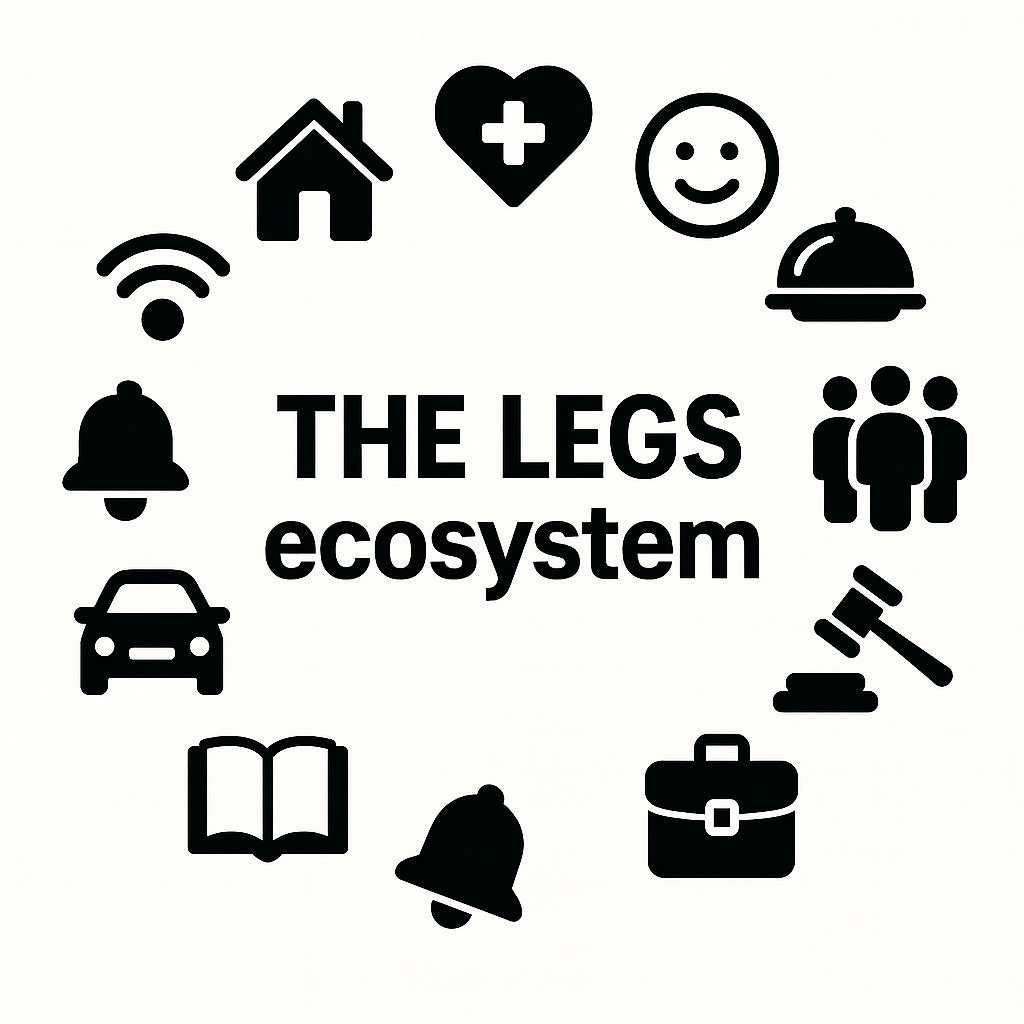
Creating an ecosystem putting Farmers and Consumers first

Thoughts become things.

So, changing the way that the industry thinks about measuring and promoting food standards, the transparency of the food chain and the direct relationship with consumers will quickly deliver benefits that cannot be seen. Simply because a leap of faith has been taken in the direction of putting right a lot of things that are currently wrong.

Knowing the land as farmers and many food producers do so well will mean that many with the power to embrace change will already appreciate how ecosystems work. And that within big ecosystems, there can be a great many more besides.

This thinking can be applied to businesses, to the public sector and the way that businesses or a range of different organisations have a shared interest, goals or set of aims too.

The important thing to consider is that although the players in a flipped, localised supply chain may appear to be obvious when we think about farms selling whatever they produce as an end product to people the farmers knows, the reality is that with a grassroots-up, rather than a top-down focus, 3FG will open the doors to the central role that food should always have within the community.

Working at the heart of the local community means that there are likely to be many more potential working partners – a good proportion of which will be unique to specific locations – that farmers will not immediately recognise as being there, today.

Putting the key stakeholder or farmer and consumer relationship first will open the doors to new ways of working, new partnerships, new opportunities and new ways of taking the food that farmers produce to market, and to the consumer, that will benefit everyone involved.

This type of symbiotic relationship with the community – with models that might resemble Small Scale Farming, but with much more significant scaling involved – is what a genuinely sustainable future for UK Agriculture is likely to now be all about and how genuine UK Food Security can be achieved.

Regional, Localised meets for Members that inform localised standards marks for sales in stores.

3FG is all about being local. Being localised and bringing a level of power and autonomy back to farmers that will not be possible again, if the industry continues to be led on the path that it is currently on.

Farmers will never again feel powerless if they choose to work with and trust only the people and businesses that they regularly see.

From the community members that come together as a steering group to create the local and primary form of 3FG, the most able and appropriate representatives can then be nominated and elected, to represent and report back to a meeting of all local representatives who can then define what the common, cross-UK governance for 3FG should be.

The real power of this new food chain assurance system is keeping it as local and as locally or community attuned as it can be.

By doing so, the idiosyncrasies of farming practices such as fruit growing, hill farming or even hop farming can gain the specialised consideration and promotion that a truly holistic and UK-wide food production system should champion throughout.

One of the reasons that government, the public sector and even lobbyist organisations are so out of touch, is because they do not have or share the appreciation or understanding of what being a farmer, food producer and regrettably – a consumer in every sense genuinely means, at organisational level.

Nobody with genuine issues about the public policies that affect them will continue to shout, once they know that their concerns have been heard AND have been listened to.

With power focused on locality and community, 3FGs direct contact with the two key stakeholders will make responsive and therefore attuned proactive action hard to resist.

3FG cannot involve big money interests or retailers as influencers

BIG retailers and market players might today be responsible for a high proportion of the business that UK Agriculture does.

But that does not mean that big retailers have any right to dictate farm management or food production practices at any level or in any way.

The two key stakeholders in the food chain are the farmers (and food producers) and the consumer.

Nobody else should be making demands or forcing the direction of either food production or consumer eating habits from any part of the food chain in between.

Farmers and food producers have a VERY GOOD range of products to sell, and it is they who should be setting the production terms and standards – that with feedback from the consumer, ensure that UK Agriculture is providing the food and food products that people who with 3FG will experience full transparency over the whole supply chain – wish to buy.

The 3FG Membership

The organisations that will constitute the farm business, food production, preparation and supply side of the 3FG Membership will include:

  • Any farm or farm business committed only to UK Agriculture, sustainable Food Production and Food Security with prioritisation of supply to the consumer in the most localised way possible, with the production of the widest range of foods and food products that the land can produce sustainably.

Along with SME (non-public or shareholder) owned:

  • Abattoirs
  • Bakeries
  • Butchers
  • Dairies (Milk & Dairy Product creation and Home Delivery)
  • Farm Shops
  • Fishmongers
  • Greengrocers
  • Independent Food Retailers
  • Independent Fisheries
  • Independent Trawler & Fishing business owners
  • Independent Garage Forecourts
  • Mills
  • Pubs (Genuine Free Houses and those without Food Ties), Independent and non-franchised Takeaways, Cafes and Hotels

Along with any other independent retail or food production business able to meet and maintain the standards agreed by the primary and secondary governance requirements and member agreement of 3FG.

Universality to include Farm Shops, Farmers Markets and the smallest UK Food producers

It is no accident that the main focus of existing food assurance schemes are labels on products sold by big retailers that pushes the narrative that food standards are only really applicable to food that ends up in BIG shops, BIG supermarkets and that is handled by BIG business.

It is the upside-down reasoning that underpins this idea, that gives BIG retailers and the businesses and organisations they work with the apparent power to dictate what any farm or food business that sells to them must do, to secure that sale – and to be grateful for whatever they are given in return.

There is no reason why the food chain assurance labelling that a consumer sees on a farm product on a shelf in one of the large UK supermarkets isn’t the same as what that same consumer could see if they were to travel to the local farm shop and look at the same kind of product on the same day.

That the BIG retailers don’t push for this universality in standards or that this level of assurance doesn’t exist already, tells us all we need to know about what the real priorities for the parts of the food chain that they control.

3FG Offers the opportunity to create a universal system of food chain assurance and quality standards benchmarking that means a consumer can look for the same guarantee of quality and information upon where the food they are about to buy came from, no matter where they buy it.

Yes, such an approach certainly favours localised food production and smaller farm businesses. But that is where the focus of food production for Farmers and Consumers desperately needs to be.

Committing to detail certainly doesn’t preclude any large food retailer from supporting a food chain assurance system, that under the exclusive governance of the two key stakeholders, will far exceed any of the standards those businesses currently use to control the industry. Existing commercially driven ‘standards’ that are not about people or farmers, but all about the profit-obsessed monoliths that supermarkets really are.

A QR code for every 3FG farm, food producer and every product too

Farms and food producers are businesses that play a very important role in life and the community.

Sadly, the way the world works today means that three meals a day are often taken for granted in the same way that we don’t even think about the air that we breathe.

Farms producing the food or ingredients that contribute to any food or drink deserve to be recognised for the importance of the role that they play.

However, it is just as important to allow consumers to reconnect with the reality that surrounds every part of the food chain. Where their meals have come from.

By embracing this dynamic by making the relationship between farmer and consumer direct, power will be returned to the most important part of the food supply relationship, whilst taking back influence from all the hangers on.

If you hadn’t realised it yet, 3FG isn’t about rejecting technology.

3FG is about embracing technology that helps to make things better.

QR codes that any smart phone can instantly read, offer the opportunity to make every farmer and food producer’s portfolio, story, aims and objectives available in live time, as consumers do their weekly shop.

Websites, blogs, videos and downloads offer farmers and food producers the opportunity to open up their businesses as virtual worlds. Golden moments of discovery where value of a kind that only comes from human interaction and the sense of reality that these mediums are able to provide, mean that added value and credibility of supply can be given in a way that globalization and big supermarkets cannot offer, and that no form of money can buy.

Accepting that money always comes with ties and UK Agriculture is currently tied down to a pathway of destruction

The 3FG proposal will be controversial to some, as it’s all about changing direction from the way we are all used to things working now. That means that it’s about changing the way that we think.

From the direction I have found myself looking at UK Agriculture, Food Production, its relationships with business, retail, government and academia too; and arriving here with the experience that I have, there is nothing great about trying to talk through the mechanics of a situation that many farmers now face. One that whichever way you write it, has the ability to suggest that the very people reading about 3FG are wrong.

The truth is that nobody is doing anything wrong. But what a great many of the people involved in farming and food production are doing right now, is looking at the problems that UK Agriculture faces in a way where they are expecting the answers and the solutions to come from the same places, the same faces and the same organisations that at least two and increasingly three generations of farmers have grown use to as being the centre of everything.

Farmers are financially savvy people. Most know only too well that subsidies have been the lifeblood of viability for a long time, with the promises of regular contract payments from relationships with retailers and market-focused organisations sitting almost too snugly alongside.

Most across the industry already know that the price is too high.

For those that don’t, it is impossible to ignore the evidence of our own eyes, as farm businesses close and land is sold without any hint or suggestion that it will ever return to productive use once again.

The reality of UK farms and food production today

Whatever politicians and business leaders tell us, paying lip service to solving problems and even shouting out loud warnings about the direction UK farming and where food production is being taken, this is not evidence that they can or will doing anything constructive to help. Because even in the rare cases that you are listening to a farmer who has decided to wear a different cloak, they are still only one of an overwhelming number who have to understand and think the same way as farmers and food producers before there will be real and meaningful change that comes from them.

Help isn’t coming from the government in any way that will save UK farming in the long term.

What politicians and public sector managers will do is just enough to keep giving farmers hope – and what will probably be just enough to keep the majority bought in to the accepted narrative, because the risk of doing otherwise will appear to be too high.

Meanwhile, the big retailers and traders will continue using every underhand contractual trick that they can, to keep farmers tied to them in just the same way, all the time pushing everything across the industry in a direction where for many farmers, the problems will soon reach a point where it is no longer possible to turn back.

If you ever wanted to understand how obvious the lies of the system that underpins the way that government, big business and the economy work, please stop reading and think about the so-called freedom that UK Farmers currently have.

The system or economic philosophy that runs everything today is called Neoliberalism.

Neoliberalism is based on the principle of free markets and deregulation.

So, the question to consider if you are a farmer is ‘How is freedom of the marketplace working out for you?’

The thinking that all farmers need to change is the reliance upon someone else coming up with and then delivering the solutions, along with the expectation that whatever the change someone else decides upon looks like and what it will cost to be implemented, the government or someone else will step in and pay.

If farmers and food producers want freedom, want a future and want to continue to exist, the time to act and take the risk of breaking away from a system that doesn’t serve UK Agriculture is now.

Not in perhaps as little as just a few years’ time, when the current course will be run and there will be nothing left of UK farming to take a risk on.

Part 2: 3FG Governance and Structure Development

3FG governance can be built around farms and food production standards.

The real strength in a new food chain assurance scheme is keeping as much of the management and strategy in the hands of volunteers who have skin in the game.

That’s Farmers, Consumers and then representatives of local small businesses that buy, use and sell the produce that comes from those farms.

Man cannot have two masters. So, the priority of those influencing the food chain could be many things other than farming or food production itself, IF the net is allowed to be cast too far and wide.

The priorities of influence that would damage 3FG could be:

  • Career advancement or Personal Ambition
  • Currying favour
  • Idealism
  • Money, Profit and Greed
  • Political Gain or keeping specific people or interests happy
  • The easiest choice

Creating a Central Framework (Created in reverse)

The best forms of governance are those that guide and give direction, rather than aim to instruct and control.

There is a fine line between them that once crossed can quickly find the metaphorical pendulum that swings between them picking up speed and travelling in the opposite way.

Governance is important to:

  • Confirm and govern the terms of membership and the standards themselves
  • Create a management structure
  • Document aims, priorities and methods of working
  • Identify responsibilities
  • Maintain the integrity of the organisation and protect it from malign influences that will change the direction of the organisation and its priorities if they can
  • Manage relationships with other organisations
  • Provide direction if and when anything goes wrong

However, whilst the immediate temptation would be to believe that creating a centralised system of governance or the instrument of governance itself is the first step, this is not so.

The ‘magic’ ingredient that will make 3FG work, be successful and for it to fulfill the aims of bringing real power back to farmers and to the consumer, will be in the creation of governance that comes from the grassroots up, rather than from immediately falling into the trap pf falling back on a system of governance that is created from the top-down.

The central framework or instrument of governance must therefore be created and updated by representatives of all the localised regions or areas, once they have been formed.

Local Governance of the New Standards Scheme (The first step)

Farmers, local food producers, food retailers and pubs/restaurants/cafes that are local, small businesses, supported by qualified local public interest is where the first steps of creating a governance framework for 3FG should begin.

Everyone involved in growing, producing, processing, preparation and the sale of food today is already well aware of the Standards, Regulations and Laws that exist.

There is therefore no need for look beyond any business owner or person with a legitimate interest in supporting the creation of 3FG at local level, for the knowledge, ideas and experience that will identify the rules framework that will:

  1. Be used to inform the creation and further development of the central framework or instrument of governance, or
  2. Be used to inform the creation and further development of the local framework, which would be localised rules or by-rules that constitute a sub-framework or addendum to the central framework

Once a local ‘meet’ or ‘committee’ has been convened and the basic objectives of that meeting or committee have been agreed, the process can be used to identify and elect a representative who will then attend and discuss the objectives, ideas and priorities of the local group at a meeting of representatives of all the local groups, where a central steering group or pre-committee can be formed.

The Members Charter or Agreement

The nuts and bolts of 3FG will be the commitment that everyone makes as a member of this new food chain assurance scheme and the standards it will require of them.

It cannot be emphasised strongly or repeated enough that 3FG offers the opportunity for Farmers to reclaim and maintain their power and independence from organisations and interests that do not see the future of farming in the same way that they do.

However, 3FG isn’t some kind of pathway to Farmer anarchy and rebellion.

3FG is a legitimate tool that has the ability to be very successful in achieving its aims, whilst reaching well beyond them in terms of the added value that it can deliver for everyone – BUT only if those involved are committed to doing everything that is agreed that 3FG is there to do.

Some will understandably feel resistant to rejecting one set of contractual relationships with government and commercial partners just to commit to another.

But contracts aren’t always the same thing.

Setting up a membership charter or agreement, which is of course a contract using different words, offers 3FG members the opportunity to build both an evolving and dynamic type of agreement, that when run, operated and promoted by members who have ‘skin in the game’, will genuinely work with the best interests of all involved in mind.

The 3FG membership charter or agreement will be a dynamic, living document. Because unlike subsidies from government and contracts from retailers and buyers, the growth and success of 3FG will create opportunities to give members opportunities and incentives back that will support and enhance their businesses, rather than being designed to take more and more from them at every turn.

The need for and function of the 3FG members charter or agreement

The core function of a membership agreement or charter is to provide the framework rules of what 3FG expects from every member on a universal basis. The only variations being those that will be necessary to accommodate the different functionality of the relationship.

For example, a dairy business producing cheese will have very specific rules that apply to the production of cheese. Meanwhile there will be many other rules that apply to food production or processing business that would also be specific to those similar at another level. And there will then be rules and requirements that apply to every member universally, no matter who they are or what they do.

Whether rules are applied at 3 levels, as the example above suggests, or there is a need for even more levels – perhaps because they are location specific, it is essential that every like for like business that joins 3FG is treated the same.

Equality of Interest

Fairness and the integrity that underpins it is an essential part of the pathway to 3FGs success.

A situation should never exist or be encouraged in any way where a business of any kind is single out and is deliberately prejudiced in some way with the rules of membership that everyone is expected to follow.

Membership rule infringement is another matter entirely. There should be zero tolerance of any breaks in membership rules that have the potential to bring the 3FG relationship between members and with consumers into dispute.

Give and Take – What a membership agreement or charter will expect from 3FG members

The steering groups at primary and secondary level will need to agree what the key requirements and standards of membership will be in respect of:

  1. The member relationship with 3FG
  2. The food chain assurance standards themselves

The 3FG membership agreement or charter will probably include the requirement:

  • To attend local meetings regularly in person or online
  • To pay any agreed fees on time or as scheduled
  • To provide regular feedback to help inform the development of new and evolution of existing standards
  • To undertake to meet all agreed food production or growing standards
  • To undertake to meet all agreed food handling standards
  • To undertake to meet all agreed animal husbandry standards
  • To not enter into new contract arrangements that have the ability to prejudice 3FG in any way
  • To meet and where possible exceed all legal requirements
  • To join and promote the 3FG marketing system
  • To report to the local meet when circumstances create difficulty for the member in their ability to meet any or all of the above

The membership agreement or charter would also include a non-disclosure agreement (NDA) that requires ongoing confidentiality of shared commercial data, and the protection of any personal information, from beyond the public realm, that is shared as a direct result of membership.

Give and Take – What a membership agreement or charter will give back to farmer and food-producer members

The benefits of joining and contributing to 3FG must go beyond the obvious and give back more and more to those supporting the scheme as its reach, influence and the access to opportunities grow.

The kind of support that is likely to be offered to 3FG farm and food production members will include:

  • Access to any cooperative support businesses that are created locally within the 3FG network
  • Business Mentoring and Coaching from other members of the 3FG Community and signposting to other, more specialised support services when and where needed.
  • Complaint handling system
  • Discounts with commercial suppliers wishing to offer support to 3FG member businesses
  • Industry representation that is always focused on the needs of members and the issues that they face in real time, rather than at government or establishment speed
  • Proforma websites, training and support with all forms of social media
  • Regular Meetings with local members where feedback will be prioritised as part of the agenda
  • Regular social events with members (and consumers)
  • Regular updates, information and advice bulletins

Membership for ‘affiliate businesses’

The real strength or foundation that 3FG has the ability to build something very special upon isn’t just a repurposed and revitalised farm and food production industry. It is all of the small businesses and independent retailers of various kinds that work with or retail food, who will also benefit from an interactive membership arrangement with 3FG.

Technology used for the right purposes offers ways of working to build upon commonality of purpose across a wide range of different businesses that were not even available just a few years ago.

The costs are often negligible, and the creation of very productive relationships are all about the governance and engagement practices that focus on what is practical and what will work well for everyone, rather than what anyone would ‘like to see’.

The suggestion made for the purpose of sharing the 3FG concept is that the primary and secondary governance steering groups use the lists above and below to apply to this very important prospective pool of members and partners.

Membership for Consumers

Some will be surprised that there is even mention of extending membership of 3FG to consumers.

But facts are facts, and as the other key stakeholder in the food chain assurance relationship, it is essential that the relationship between farmers, food producers and consumers be developed and enhanced in every conceivable way.

No opportunity to engage consumers should ever be missed and whilst there is always some fear of trolling and negative approaches from activists, where handled correctly and where rules are followed and maintained, the oxygen that such people need to thrive can quickly be removed from any potential interaction, whilst legitimate consumer interest can be welcomed in.

3FG will not need to offer consumers anything that you wouldn’t expect any business to consider offering a loyal customer base – which is the way that 3FG will need to consider every legitimate consumer to be.

In return, it is likely that a minimum membership fee, or donation can be attracted by consumer members who can pay.

Once the legitimacy and integrity of 3FG has been fully established, which won’t take long, some will willingly make additional donations that will support 3FG and running costs.

What 3FG could offer to consumer members includes:

  • Complaint system
  • Discounts for specific businesses or products
  • Food Preparation Training
  • Home growing training and advice
  • Job board
  • Online feedback on experience of 3FG member businesses and products
  • Opportunities to take part in member meets, speak and ask questions
  • Recipes, cooking tips and regular cooking competitions
  • Regular Newsletter, updates and links including highlighted businesses and member stories
  • Visits to 3FG member businesses, farm open days

The Benefits of 3FG (Or something very similar)

For now, at least, we have reached the end of the list of suggestions that underpin the creation of 3FG and the system that manages it as well as the food chain assurance scheme that it offers.

So, before we move on to the next steps and what happens next, here is a quick run through just some of the benefits of the 3FG food chain assurance scheme:

  • Creating immediate opportunities for individual farm and food production businesses to build direct relationships with the consumer
  • Encouraging natural or organic development towards local farm-centred food supply chains
  • Introducing a new, definable and clearly branded form of food chain quality standards and assurance
  • Moving towards sustainable agriculture and UK food security
  • Prioritising the relationship between the key stakeholders: farmers & consumers
  • Reestablishing the farming community and food production at the heart of local life
  • Removing political influence
  • Stopping imported and mixed foods being rebranded as being from a specific farm, being local or being from the UK
  • Taking power away from big retailers, big business and big money
  • Supporting an immediate, practical drive towards healthier, affordable, nutrition-focused eating without making a complete meal of it

Part 3: Where do we Begin?

The interesting thing about creating 3FG (or whatever it ends up being called) is that local farming and food producer communities have the opportunity to begin work on developing this new food chain assurance scheme immediately.

One business owner on their own cannot do much. But perhaps as few as 12 will have the links, networks, knowledge and skills between them to get many more people involved and to quickly build momentum towards 3FGs early governance development goals.

Arranging the early (Primary) Meetings

One thing farmers and the farming community are good at is getting people together.

Face to face will always be better. Especially when people coming together for the first time are looking for reassurance that those, they could be about to work with are motivated in the right way and that they are people they feel it likely they can trust.

Not everyone can be at meetings whenever they are called. So, the use of streaming, or video chat software like Microsoft Teams or Zoom can be offered as a way to broaden participation – which will always be good.

The advantage of recording meetings using video is that there is an immediate record of everything discussed.

As long as there is not commercially sensitive or personal data being discussed on a video (which could be edited out if it’s there), this will immediately provide the opportunity to publish the whole meeting so that everyone can see it, and feedback online.

If you are keen to get started and would like some ideas or pointers, please drop me a line: ourfoodproblem@gmail.com

Embrace formality to play by the rules on the pitch

Whilst the direction within this book is nothing less than a revolution within UK Farming, Food Production and the relationship they have with consumers and the community, the tools suggested and offered are all about action and taking positive, proactive steps to create change.

There are no empty gestures or protests of any kind involved.

Whilst it’s a term that many don’t like to use where real life is concerned, the fact is that where anything that will have an impact upon public policy is concerned and you want things to change in a meaningful way, there is a game to be played.

That means that there are rules involved that need to be followed – and some of those rules are rules that might not easily be seen.

Therefore, the way to play the game the best way possible is to do things the right way from the beginning and to use creativity, outside of the box thinking and reinterpretation of existing rules and shibboleths to make the existing system work for farmers and consumers, until the public sector, business and government catch up and start to help with what they will then and only then recognise as inevitable change.

Common Purpose is Key

Doing things the right way sounds very time consuming.

As someone who has witnessed just how slow the wheels of government and the public sector turn when there is so much competing self-interest involved, there is no doubt that the success and depth of the change that is possible for farming and food production in the UK – which could realistically add up to what it will now take for the industry to be saved – will not be possible if competing ideas, self-interest or egos get in the way of agreeing objectives and what needs to be prioritised.

For example, there is an existing misconception that any form of commercially viable agriculture and forms of farming that are genuinely environmentally friendly are mutually exclusive propositions and that one can only truly exist without the other.

Whereas the reality and truth is that there are already commercially viable forms of farming that not only promote but depend upon a very holistic approach to land and the environment in a very balanced and sustainable way.

The difference is that they are not  purist in such senses as accepting that the end result can only be achieved through ending the production of animals for food, but meet somewhere in the middle with the general acceptance that it would actually be a lot healthier for us  all to eat less meat – But that our priority is moving towards a self-sustainable food producing and food secure UK, before jumping the gun on what might be the finishing touches of how future food production across the UK runs.

Few of us really understand the mechanics of:

  • How we got to a place where we have forgotten how the mechanics of good farming and land management works
  • How cheap, unhealthy food is the outcome of increased profitability for the few, all at the cost of small producers who are going out of business at an alarming rate
  • Why we were duped into allowing this to happen
  • How traditional management practices which are both respectful of and aligned with good soil management, sustainable farming practices and the direction it takes us into food production, which is once again much more community led, will save the industry for our future.
  • Why the future of farming in the UK really is in UK farmers’ hands

The common purpose is for those who step up and use their voices for themselves and to genuinely represent the best interests of others to decide.

However, the core priorities will be clear. They will be outcomes and will not focus on the detail of the map that dictates the route of the journey – which will inevitably lead to a failure to launch, even before anything begins.

Building The Structure of 3FG

In the first instance, the creation of the Primary (local) Meets which will then feed in Member Representatives to the Secondary (national) Meets will not immediately require a formal arrangement between founding members and those others who are early to join.

It is the shared commitment to 3FG and what it means that is most important at this stage.

With the knowledge already being available within the prospective membership that will allow a draft constitution or whatever formal document to be created that gives legitimacy to both the Secondary and Primary structures, the biggest decision that members will then need to make is a) whether and when a legal organizational structure will be required, and b) what kind of legal organizational structure is most appropriate and therefore which it will be (i.e. Limited Company, Partnership, Charity or Other)

No matter the speed with which 3FG and its systems are formed, any formal structure and governance agreements (including membership agreements) MUST be in place and be available to read BEFORE any business relationships between members or between members and outside parties is opened up for discussion with a view to being agreed.

Getting advice on the 3FG structure and governance

Whilst even mentioning organisational structures and membership or contractual arrangements can set some on a path to worry, the creation of a structure that works locally (Primary) and at national level (Secondary) isn’t difficult, as long as there are no hidden agendas or motives in the room.

With the level of success and reach that 3FG could have, getting someone to cast a legal eye over anything that is agreed before it is documented and signed off is essential. However, it is very important to be selected regarding where such help and support comes from.

Under no circumstances should the creation of any part of the 3FG governance structure be influenced or have the potential to be influenced by anyone who is linked to companies or any kind of organisation that would itself be excluded from having 3FG membership of any kind – even if that ‘help’ is offered as a donation of some kind, is apparently pro bono or given ‘free’.

The chances are that once 3FG gets known and starts to build momentum, there will be legitimate volunteers of different kinds who will step forward and be able to offer exactly the kinds of skills and knowledge that the process of signing off governance tools will need.

3FG as a Functioning Organisation

As I continue to write, I am acutely aware that many of you reading this will be experienced business owners and professionals.

Every one of you will have skills, knowledge and experience that will be helpful to 3FG – depending on what and how much of it you are happy and willing to give.

Once the governance structure is in place, the next step will be to agree strategy and who is going to do what.

Tasks to consider include:

  • Coordinating the Research, Creation and testing of the ‘Standard’ of the New Food Chain Assurance Scheme
  • Consulting with 3FG Members and Consumers over the proposed ‘Standard’
  • Appointing Inspectors/Trainers to conduct 3FG Member and prospective Member Farms and Businesses
  • Creation, design and procurement of the Guarantee ‘Stamp’, Logo or information badge for products
  • Web design and web training
  • Social Media Training
  • Public Relations Training
  • ‘Trade’ representation and negotiation between member organisations
  • ‘Trade’ representation and negotiation with external organisations
  • Cooperative Coordinators
  • Local Board Members
  • Membership Officer (Trade)
  • Membership Officer (Consumer)
  • Events Officer(s)
  • Treasurer or Finance Officer
  • 3FG Ambassadors
  • Newsletter editors, writers and news reporters

And more.

These are all people that 3FG can expect to volunteer from within the 3FG membership, or as consumers who are independent of any of the food related businesses that are excluded from membership of the scheme.

You will know which areas are most important and which will need to be prioritised first.

The key thing to bear in mind that the responsibilities at national (secondary) level will be fully and comprehensively universal for 3FG, whilst those at local (Primary) level will be much more tailored to the needs and requirements of the locality, rather than being in an umbrella form.

Part 4: Thoughts on the Future of Farming

Accepting the need for change

Whatever your interest or role in Farming and Food Production, or even if you are just interested in 3FG as the consumer that the supply of food is really all about, it is unlikely that you would not agree that Farming and Food Production across the UK has massive problems, and something has to change.

We all recognise that the need for change is something that we have in common. This is a great start.

Barriers to progress

The real problem and barrier to progress is agreeing on what change is needed and what that change will therefore be.

The number of people, business owners, organisations and lobbying organisations that have an interest in the future of farming and food production, simply because of the many areas that the food chain touches and relates to, is mind boggling.

Every one of them has a different take on what’s happening, what the real issues or causes and effects of the problems are, and therefore what the solution needs to achieve.

In many cases, that also means they will already have an idea of what the solution needs to be.

This is where everything hits the metaphorical brick wall. Because we all have a habit of getting emotionally tied into the dynamic of the experience we have vs the problem as we see it vs what we know the solution needs to be or look like for us.

Work together. Find all that we have in common. Then we will have common cause

It’s frustrating to watch the same old arguments unfold and play out between different interests that have so much more in common than what are probably just a few ideas that divide them. Ideas that would probably be progressed anyway, by focusing on what aims we share in common, with the people that we might today be refusing to listen to, because the few things we appear to disagree on appear to make everything else they have to say or can do to help us, wrong.

For instance, we all:

  • Need to eat (healthy food that will not harm us)
  • Need to drink (clean, healthy water)
  • Need food and water that is natural with a good nutritional base
  • Want eating healthy food to be ‘normal’ or easy
  • Want food to be readily accessible to us at a price that we can afford
  • Need Food Security
  • Need the UK Food supply to be sustainable
  • Need the planet to continue being able to support our lives
  • Want to be happy

And there will certainly be more.

However, the issues we see about issues like climate change (and whether its real), money, being vegetarian or vegan, rewilding, wild animals, animal welfare standards, who deserves to be guaranteed access to food, hedgerows, building on productive land, what a sustainable life really is and just about everything else that can be argued as being personal to us and therefore how we see ourselves is a belief.

It isn’t what we have in common.

That’s why adopting a purist approach and saying anyone or all of these MUST be the end result, in order for us to agree, is what stops us all from coming together to achieve something that could quickly become very good.

Reading the room

The default setting for most of us when we think about the future or rather how we would like the future to be, is based upon everything we know and experience now, with all the things we find uncomfortable ended or addressed in whatever way we believe they will be.

However, if we stop, stand back and look at the way the world is working today, it isn’t difficult to understand that small changes will no longer do. That the people who should be changing things and helping us aren’t changing anything for the better.

Whilst ‘influencers’ might give a good talk, we struggle to recognise the last time that anyone with responsibility in the public realm really did anything that really helped – but rather just created different problems that in time added up to feeling exactly the same.

The knowledge, experience, skills and determination needed to revive UK farming and Food production and do it in a way that respects the environment, is sustainable and makes the UK Food Secure, already lies dormant and untapped, at rest within the community that surrounds the industry and way of life that so many of us love.

Making predictions can soon come back to bite us. Because none of us know what factors may come into play. Nor do we know what events will take place that will lead to change of some kind anyway.

However, there are things that we can all see happening today that tell us that things that we know and expect as being normal today, cannot continue to go on in the same way.

For instance:

  • Politicians aren’t listening. They hear and they talk a good talk. But they aren’t doing anything that really helps. They just do and say things that make it look like they are.
  • Farming and food production is not respected by the establishment – even though every one of us needs to eat each and every day.
  • There is an undertone in everything we read and experience in the media that suggests UK farming and food production is archaic, and that any need for food that the UK has for the future will be met by other sources, most of which don’t exist in the UK and which external businesses or other countries have.
  • Politicians believe in market freedom. Just not freedom in the markets of the kind that small, independent autonomous businesses have.

However:

  • Globalisation is over. It just hasn’t ended yet. This means that the food supply that the UK currently relies upon to come from outside, could stop at any time.
  • The UK is bankrupt. The money that we have is created and the more that gets created, the wider and wider grows the distance between the wealth divide.
  • The wars and growing talk of war is likely to speed up the collapse of global supply chains – in one way or another, especially if conflict of a kind that the UK is directly involved in should come at any time.
  • The EU or ‘European Project’ is collapsing. It was a sub-project of globalisation that never did anything for UK Farming or Food Production in ways that actually helped. It just taught farmers and food producers to be dependent upon handouts which always came with a cost which was always about destroying the independent functions and autonomy of once great industries leading to ever greater reliance on big business and tech that is destroying the usefulness of farms – as we are now painfully finding out.

And yes, once again there is much, much more.

After reading and considering all this, you may still believe that UK farming and food production has a future, left in the hands of the people and the type of people who are running everything now.

Personally, I don’t. And what is more, I believe that the future of UK farming and food production will not only be safer and much more secure, but it will also be massively successful and play a beneficial role for everyone – IF the future is guided and stewarded by people like YOU.

Not undoing the shackles of one set of chains to be quickly shackled by another

A challenging aspect of the kind of change and the change in thinking that Farmers and Food Producers will need to embrace for an independent and autonomous future is that the rejection of the level of influence that so many establishment level organisations currently have, doesn’t mean that farming and food production can operate and thrive within a bubble.

Farming and food production are probably the most important industries for continuing human life.

Yet as things stand today, the narrative tells us that these vital functions and industries that provide the fuel for life deserve to be treated as being subservient to all others.

The true role of farming and food production is at the heart of the communities that they feed.

Because of the role that food plays in the life of everyone, it necessarily follows that farming and food production has links of one kind or another with everyone and everything.

The future is about the dynamics of that role and how farming and food production must change to fulfil that role in a relationship that will save them and place them back at the heart of everything.

Progress is not one directional.

People from all backgrounds fall into the deliberately manufactured trap of believing that progress goes only one way.

It’s the kind of argument that says we no longer need meat in our diets because someone clever has found a way to replace the nutrients that meat provides, another way.

What those same people don’t tell anyone, is that what we have done before and what we have always done, is the foundation stone upon which everything is built that we currently think we are.

To attack the foundations of life is like standing in a bucket and then lifting the handle*.

It doesn’t matter if it’s a healthy diet, or tractors that today can do the work that seven tractors did fifty years ago.

There are principles and values at work that tell us very clearly that when something is wrong or something isn’t working because of the direction that things have gone or the choices that have been made, there is no good reason for us to continue on a pathway that’s hurting us and keep taking dangerous steps into the unknown.

Big, productionist farming methods and all the hidden agendas that go with them haven’t helped farmers.

The obsession with output hasn’t helped UK agriculture, food production or the quality of our food.

It certainly hasn’t helped the health of the people who eat food in the UK, nor has it provided the security of knowing that whatever trials and tribulations may come, there will always be an adequate supply of food for everyone across the UK to eat.

However, what big, productionist farming methods and all the hidden agendas that go with them have achieved has been the funneling of power away from farms, communities and the industry, which has passed through the sieve-like hands of incompetent politicians and establishment apparatchiks, to the wants and desires of big money and ways of thinking that have nothing beneficial for day-to-day farmers and consumers in mind.

The globalist, neoliberal propaganda, the narratives and the endless barrage of marketing that comes with it is frighteningly good and effective. Because over decades, through conditioning, it has successfully changed all that we believe, so that we look at our options today and conclude that there is no way that we can go back.

But we can.

*(Sir Winston Churchill is quoted to have said this in relation to a nation taxing itself into prosperity)

Going back to make progress from where we are now is the leap forward that we need.

No matter how we feel about sustainable agriculture, UK food security, regenerative farming or any of the words that can cause as much concern as they can create reassurance, traditional farming methods and systems of production that look much more like they did a hundred years ago, are where the real answers for UK Farming’s future and longevity now lie – in a scaled-up way.

However, the future of farming also lies at the centre of a 21st century version of life based around local communities. Where industrial scale monocropping and transporting food across continents and countries was just a misguided phase that we went through in the past.

Farming has allies waiting to step in, alongside. Independent business and community leaders who are ready to help this transition and change, who don’t yet realise that the commonality in purpose that we all share is the most important thing.

We can live life very well with everyone else, if we just concentrate on doing what’s important to everyone together and respect that the need to be right and the need to agree stops there.

Set up a Cooperative System to support the development of a not-for-profit supply chain between Farmers and Consumers

Farmers are good at what they do. Growing whatever they grow.

Yet the surrender of responsibility for whatever happens once it passes the farm gate has not helped the industry in any way.

The world appears to be successful in ways that we overlook and take for granted today, because it has become ‘normal’ for so many different ‘specialists’ to take on different roles and responsibilities within supply chains.

Regrettably, this splitting up, distillation or ‘professionalisation’ of certain roles or functions has also opened the gate to many additional roles that add cost, but don’t add value, squeezing down on farmer earnings at one end of the supply chain, whilst unnecessarily pushing up retail prices for consumers at the other.

Farmers might not need the responsibility of taking control of the entire food supply chain. But it is in the interest of the whole industry to redefine the roles and responsibilities of any party that has a role in the chain between farmers and the consumer, and to ensure that those involved add value without taking anything out.

Relocalisation of the food supply chain offers the opportunity to do just that. And whilst many farmers won’t want to return to running their own lorries, setting up their own abattoirs, butchery or even a farm shop on site, there are others who certainly will.

The establishment of non-profit making cooperatives or social enterprises that are ‘owned’ and ‘governed’ by those who have skin in the game will mean farmers can keep a higher proportion of the retail (or wholesale) value of everything they produce. Whilst the consumer will also benefit twice – because they have improving access to higher quality, higher nutritional value food, whilst prices will lower and then be genuinely reflective of what food really costs.

Skin in the game

The idea of what ‘skin in the game’ means and why it is important to the future of UK Agriculture cannot be underestimated or underplayed.

Skin in the game is a phrase or name given to the presence of those who genuinely have a stake in the success or failure of any enterprise, activity or policy.

Sadly, farming in the UK is in the mess that it is today because there are far too many people and organisations with influence over what UK Agriculture does, that don’t have skin in the game.

Therefore, they have no real commitment to and therefore no concern over the direction of UK farming and food production, or what it really does.

To be clear, investing in farming or food production at any level or in any way without being committed to what UK farming, food production and its true purpose is all about, isn’t having ‘skin in the game’.

It’s what’s called ‘making a bet’.

Politicians, Legislators and Decision makers don’t have skin in the game

Regrettably, Politicians, Legislators and Decision makers today don’t have ‘skin in the game’ either, because they aren’t focused upon or representing either farmers OR consumer’s needs.

The political and therefore the government and public sector ‘system’ is broken and massively out of touch with everyone and everything that sits outside of the sphere of its own influence.

That’s why we have the unfolding tragedy that is beginning to lay a very dark blanket over every part of UK life and the businesses, organisations and communities that fall outside.

A snapshot of where Farming and Food Production fits?

I’ve mentioned the series of ten books that I wrote and published before this one. They are listed in the ‘Books by this Author’ section which follows at the back of this book.

One of them ‘The Future is Local’, isn’t really a book or booklet in the same sense of this one.

It represents a proposal or call to action for different people from across local communities, who may wish to take on the role of becoming community business leaders or social entrepreneurs.

The Future is Local offers a pathway to creating a franchise-type system of turnkey enterprises that represent the key businesses and functions that local communities of our future are likely to need. Especially if, as many now expect, things generally take a turn for the worse and we have to approach the mechanics of life and community in a very different way.

Farming and Food production is at the centre of that proposition. What I called ‘The Glos Community Project’, for no other reason than it is where I am based and Gloucestershire and some of its Towns represent the areas and the communities that I know.

If you really would like to think about how things could be run in a much more people centric way, without all the woo-woo nonsense and bullshit that comes from people who have got a little too high on impractically idealistic views, please do take a look.

We could all soon be running good, healthy and viable businesses, or have work and be able to afford good, healthy and happy lives – without exploiting anyone or profiting unnecessarily through the abuse of rules and power.

Change your mind. Change the world

Farmers are truly some of the most creative and entrepreneurial people that I know.

Not only that, working 24/7 in an operational environment, where the unexpected is what you are conditioned to expect, means farmers are comfortable dealing professionally with uncertainty, when dealing with the responsibilities that are within their realm of control.

So, whilst many within UK agriculture are effectively paralyzed by the industry-wide reliance on government subsidies and sales which are contract led, there is absolutely no doubt that if any business sector and the people within it could take control of a very bad situation and turn it around, it will be farmers who do it first and do it comfortably, before anyone else.

It sounds like a tall order to create something new that would be big enough and powerful enough to have real meaning and impact anytime soon.

But it is only perception, experience and acceptance of the narratives that we are all regularly fed that tell any of us that change is something that can only be achieved by other people and other organisations who are established, that have a name or have what we therefore recognise often wrongly as experience, knowledge and understanding that we don’t have.

Revolutions come in very different ways and whilst nothing less than a revolution in UK Agriculture and food production will now save the industry, there is still time for Farming to save itself without resorting to meaningless gestures and protests that an establishment capable of misleading so much in life will have absolutely no problem spinning, so that the public and the people who should now be farmers allies, look on and see what’s happening in a very different and very negative way.

Farmers still represent one of the last great communities that the UK has left. And it is the power that the farming community has, alongside all those interests that sit alongside, who believe in it and feed into it, that will really make a very different grassroots-up, reprioritized way of presenting food chain assurance and quality standards work, work quickly and work very well.

The opportunities that await the industry and the ability it has to redesign, repurpose and redirect its own future, with new alliances that will be very different from what experiences today tell us to expect, will quickly become apparent. Once the people that count here – that’s farmers and consumers – begin to look at the relationship that we have with big business, government and the public sector in a much healthier, appropriately deferential and non-subservient way.

Your Feedback

This book has been written with the best interests of everyone in mind who wants to be able to continue to eat good, healthy and nutritious food, whatever events may be thrown at us, or we will experience in the months and years ahead.

It is up to you how you interpret the content of 3FG and what you then choose to do with it.

Either way, whether you feel enthusiastic, hopeful, uncertain, scornful or don’t agree with me in any way, I will always be very happy to respond to questions and discuss the material I have written – as long as the feedback being shared is informative and helpful in some way.

3FG is not a finished idea. It is food for thought.

I am, like I hope anyone reading this booklet will be, very open to ideas and suggestions that can improve what is in the pages above or offers something that is genuinely better to any or all parts of it.

If you want to get in touch for a chat, please drop me a line: ourfoodproblem@gmail.com

Whatever you decide to do, I wish you good luck and happy eating.

More Reading

Food From Farms Guaranteed supports or sits alongside a series of books that I have written and published since early 2022 that began with Levelling Level.

It was really brought into the frame by the work I did on The Glos Community Project and An Economy for The Common Good, where I began to focus on the central role that food production should be playing in life and within every community, and which itself led me to take up a place at the RAU.

To see how Food and Food Production could sit at the centre of our future and our communities, please read Our Local Future and do bear in mind that it is providing a suggestion rather than a prediction of exactly how everything will look or how things should be.

It would be better for everyone, if instead of waiting for everything we know to collapse without taking any kind of voluntary or proactive action before hand, that we embrace the options and exercise the real power that we can to precipitate change, right now.

This is where Food From Farms Guaranteed steps off and every title below will add perspective for the read in some different but simultaneously real way.

All of the following titles are available to purchase as complete eBooks for Kindle from Amazon using the links provided.

Where indicated, titles may also be available to download FREE as PDF Copies from my Blogsite in different forms, using the links provided.

If you would like to discuss any of the works listed, please get in touch.

Levelling Level (30 Mar 2022)

Amazon

PDF Download

From Here to There Through Now (3 Oct 2022)

Amazon

The Way of Awakened Politics for Good Government (3 Dec 2022)

Amazon

PDF Download

A Community Route (28 Mar 2023)

Amazon

PDF Download

The Grassroots Manifesto (18 Apr 2023)

Amazon

PDF Download

Officially None of the Above (18 May 2023)

Amazon

PDF Download

Actions Speak Louder than Digital Words (8 Jun 2023)

Amazon

PDF Download

One Rule Changes Everything (23 Dec 2023)

Amazon

PDF Download

Food From Farms Guaranteed (3G) (15 Feb 2024)

Amazon

PDF Download

Days of Ends and New Beginnings (7 Apr 2024)

Amazon

The Basic Living Standard (14 Apr 2024)

Amazon

Our Local Future (18 Aug 2024)

Amazon

PDF Download

Who Controls Our Food Controls Our Future (14 Nov 2024)

Amazon

PDF Download

Your Beliefs Today create Everyone’s Experiences Tomorrow (11 Jan 2025)

Amazon

PDF Download

Manifesto for a Good Dictator (26 Jan 2025)

Amazon

If you would like to download a FREE to read PDF copy of Food From Farms Guaranteed or alternatively buy the Book for Kindle, please find the links at the bottom of this page.

The welfare budget is out of control. But many claimants are there through no fault of their own and slashing payments won’t address the poverty problem or help out-of-their-depth politicians either

The coming weeks are likely to be a bleak time, not only for those on benefits who receive payments that could be cut. But also for growing numbers of the low paid, whose employment is likely to be at risk because of national insurance changes and yes – the April rise in the National Minimum Wage.

Appropriate credit should of course be given where it is due and the Labour Government certainly do appear to be digging themselves further and further into a hole with every policy decision that they make.

However, nothing is as straightforward as it looks in politics. And as I wrote in a blog in early December when I asked if Labour has been set up as ‘custodians of the collapse’, there is much to suggest that when it comes to the quality of politicians that we currently have in the UK today, the group filling the government benches are the unfortunate ones who have been left to carry the can.

I say this, as the collapse that there is very good reason to believe the collapse that is now underway, could, in theory have began at any time, since the decision to bail out the banks during the Great Financial Crisis of 2007/08.

The chances that a collapse would arrive sooner and more severely has grown significantly as a result of the Government response to the Covid Pandemic, the War in Ukraine, and basically everything that the politicians in power have been printing money to cover the cost of, ever since.

A collapse is and has always been inevitable. Because the financial, economic or monetary system that we have had since 1971 is to all intents and purposes little more than a massive game or perhaps what we might call man’s greatest confidence trick.

The financial, meonetary and economic system that we currently have was put together, successfully implemented (adopted) and pushed so that those ‘in the tent’ would become rich beyond their wildest dreams.

Meanwhile, control of the greater population has slowly but surely been passed to the same set of interests, using all manner of manipulation and incentives that mean people have effectively been surrendering their freedom – usually through financial means.

Hard as the reality may be to swallow, many people have been unaware of what has been happening to them; how their approach to life, relationships and everything has changed and in real terms, what a small set of very selfish and self-serving interests have so-far successfully done to everyone else, just so that they could become very rich.

The big flaw in ‘the game’ and with it the source of the greatest risk – which is the loss of control when that flaw inevitably becomes too obvious to hide, is the only way that money can be created or printed in the increasing amounts that it has been and still is, is for the value of the money that normal people possess or are able to earn to lessen much quicker than wage rises or the value of property they have the ability to own to rise and offset it. Let alone go beyond in the wealth creating sense that any does who is part of the clique who ‘rigged the game’.

By now, you are probably wondering what any of this has to do with welfare, benefits or the National Minimum Wage.

The National Minimum Wage, which was conveniently brought into being by the Blairite Labour Government on 1 April 1999, was of course sold to us all as a tool to ensure that everyone received a fair wage for every hour worked.

And as far as that story was sold, the people who the establishment needed to believe what was being suggested, almost certainly did and have done ever since, not least of all as the National Minimum Wage has increasingly become known as the National Living Wage too.

The problem is that even at the rate of £12.21 which will be the hourly rate of the National Minimum Wage from this coming April, it is and will continue to be nowhere near enough for any single person to live independently, self-sufficiently and without the help of benefits, charity (like Foodbanks), by going into debt or raiding savings – or falling back on them all.

The National Minimum Wage is certainly nowhere near enough for anyone to live on!

Done properly and with the intentions that should have underpinned its implementation, the National Minimum Wage could have performed and impacted lives very differently to the way that it has.

However, what it has actually done has been to serve as a wage suppressant. Keeping the wage ceiling deliberately low for significant numbers of people within a system that has been funnelling money in one direction only.

Let’s be clear. Not having the guarantee of taking home enough to ‘pay their own way’ makes it near impossible for people to feel in control of their own lives.

However, the legal requirement to pay the National Minimum Wage itself has the perverse consequence of ensuring that small businesses can no longer succeed. Because the margins that big global businesses are working to have made it impossible to keep paying the same number of people they could previously afford to.

Meanwhile, those big businesses themselves could actually afford to pay what it costs their lowest paid employees to live, but too often don’t. Instead choosing to move everything that they possibly can to countries where they can pay exactly what they want to, whilst everything we need is quickly becoming a luxury that more of us can no longer afford.

Guaranteeing that everyone on the minimum wage earns enough to live without help would solve problems that many simply wouldn’t believe

In my recent Paper ‘Is Poverty Invisible to those who don’t Experience it’, I talked about the experience of being on benefits today. What that actually means to those unfortunate enough to find themselves claiming them, and what it is like for normal, decent people to step through a door where only the most resilient could ever maintain the levels of confidence and self-surety needed to navigate a system where anyone who cannot fend for themselves financially is treated like a pariah, at each and every turn.

To put it bluntly, most people who find themselves within the benefits system today, without a career background or experience that makes them employable in a way that almost certainly guarantees they would never be there anyway, are damned. They are unable to escape, because the most basic of jobs that are readily available do not offer an income level that is genuinely realistic enough to provide anyone with the kind of independence and freedom that only a genuine wage that links directly to what it costs to live can afford them.

For those who need it to be spelled out; the number of people who are on benefits because they want to be there or because they cannot function in any way without benefits is very small and much smaller than any of the statistical evidence that is available would suggest.

However, working a ridiculous number of hours per week, to only then have to rely upon benefit top ups and the bewildering experience that goes with it; to struggle enough that you have to ‘qualify’ for an emergency food package from a Foodbank or to have to go into debt or use money that was put aside for living rather than to simply stay alive, holds no great incentive for anyone. Especially when the work itself usually attracts scorn and ridicule from others who see themselves as better and look down on those they see as beneath them or without the same value.

Solving the benefits problem should be as simple as government telling every employer that they have to pay everyone whatever it costs to live.

Yet we have long since passed the time when this would have been possible without collapsing the economy. Even if it would only have made a difference for a short period of time.

People are on benefits and living with less than what anyone needs to live, in this day and age, because for many of them it really is the lesser of the evils. Even though the evils that they are being subjected to still hurt and reach very deeply indeed.

The Government ‘view’

At the other end of the problem, the growing welfare bill is fast approaching a cost that simple mathematics has long since told us that the UK can no longer afford.

However, politicians have continued to do ‘find’ or create the money to keep covering the welfare bill (even though they talk up the mean actions that they do take), as the political fall out from exposing the truth, that there is a significant and growing underclass of people whose incomes are nowhere near what it actually costs to live and that businesses of ALL sizes are effectively having wages subsidised by the state, whilst vested interests are pretty much taking every bit of available wealth from everyone, would mean a confrontation and battle with the system itself that only a very rare breed of politician would be big enough to tackle.

The cost for everyone is the society and culture we were once proud of now crumbling around us, having its destruction accelerated by those in power who have become so desperate that they are turning everything to ash, just so that they can be seen to remain in control.

The reality is that politicians no longer have enough legitimate or morally workable options available to them to justify creating enough money out of thin air to save them now or to ensure their re-election, when the UK has for a long time already been technically broke.

What so few can or are prepared to either accept or to see, is that money doesn’t work for people in the system that we have and never did. Even though generations have regularly been conditioned to believe that getting wealthy or having everything would come quickly to all of us on the cheap. Just as long as we all went along with the lie.

The UK is now caught within a whirlwind of parallel death spirals. Where the poor and those with less can only become even poorer. Whilst the ability of government to do anything meaningful has been hollowed out.

The situation leaves the entire political class on the edge of a precipice where government is about to become unable to do anything. And all of this has been inflicted upon us so that a few could become wealthy and obtain power, always knowing that they would have to achieve oppressive levels of control over society, before anyone who would be brave enough to speak out and be believed by enough people had worked it all out.

Has the time come for us to look for and put our faith in a Good Dictator?

If you are able to overlook the impact and outcomes that come from such a chaotic mess, the current political environment and the media circus that surround it can certainly provide a lot of entertainment.

Sadly, growing numbers of us are either feeling the pain of many years of political incompetence or at the very least having our breath taken away by the constant flow of unbelievable actions and decisions that politicians are taking not just in the UK, but across the world.

In the UK, many who had been hoping that the Reform UK party would prove to be our saviours when the next General Election comes (whenever that might actually be) have found themselves awakening with a jolt this week as the real character and depth of the Party has been exposed by the expulsion of MP Rupert Lowe and the allegations that have been made, after he openly questioned the prime ministerial credentials of Nigel Farage.

However, behind the ‘let’s back whatever we can see as being different’ facade – which is regrettably just a second attempt at what the UK basically voted into No.10 last July – there exists the rather unsettling reality for everyone that Reform offer nothing that is fundamentally different to any of the other Political Parties that we currently recognise.

The Reform MPs and active members who are working towards elections and seats across the Country are motivated like the majority of the political class that exists in and across the UK today, in the very same way. And doing more of the same, isn’t going to deliver change, no matter how different the choice may seem or look.

A good example of the many problems that any political movement or group that has a genuine desire to change anything that the UK government and public sector system faces, can be illustrated by how well people (especially on the political ‘right’) have been responding to DOGE (Department of Government Efficiency) in the USA, since Trump returned to Office and Elon Musk began his ‘job’. As it demonstrates just how out of touch with the way our own system of government and the public sector in the UK works, and how little regard there is for the consequences and impact of doing anything with public policy in isolation, without considering the interconnectedness and links between all policies and how everything works.

Regrettably, it is unlikely that even a Parliament filled with 650 of the best MPs that we could identify as being available and willing to take on the real responsibility that each of them has to the British Public would be able to deliver the kind of change that we need in the UK today, because they wouldn’t be able to agree on the way to make change work, without having to reach compromises and going down the same routes where all of today’s problems could be viewed as having began.

Whilst the idea conjures up all sorts of negative parallels, the reality we face is that achieving the type and level of change that decades of the wrong politicians has given us now requires a level of single-mindedness that can only come from having one person at the very top.

Yes, that one person would have to be a very unique kind of leader, who not only understands the true realities and depth of all the problems alongside how everything works; they would also have to be incorruptible and driven with a sense of public service and selflessness that we simply haven’t seen in politics as we know it at any time before.

No, it’s not impossible. But it’s certainly a lot to ask.

However, with things going as they are and in the circumstances we are already experiencing and where many of us are now realising where everything is already heading, there may never before have been such a need for a Good Dictator and the leap of faith from us all that would back them to do what it will take to get everything done.

The Basic Living Standard: A Pathway to Economic Equality and Fairness throughout Life

The coming weeks are likely to see increasing talk of benefits, unemployment and what it costs to live as the government makes budget cuts and then as the reality of the changes to National Insurance contributions really begin to bite in early April, alongside the rise in the Minimum Wage.

Whilst the current government is very much the focus of blame, the difficult truth that many still cannot see and politicians will not talk about – IF they actually understand, is that the Minimum Wage is the benchmark that is used by everyone as the ‘accepted’ level of what it costs someone to live.

However, although the Minimum Wage will rise to £12.21 in April, this level of pay – even for a 40 hour working week, is nowhere near enough for a single person, living alone to cover the cost of everything they need to pay for each week, without seeking benefits, help from charities such as Foodbanks, going into debt (or using savings), or a mixture of them all.

Regrettably, the way that our economic system works and has deliberately been developed and evolved over a period of more than 50 years means that money and everything related to it can only make some people fabulously wealthy in the way that they are now, by many others being financially left behind.

Although this unbalanced financial system has appeared to work for a very long time, and long enough that it means most of us cannot picture the world we live in working any other way, the reality is that it could only work for a period of time, because it has developed around the growth of what we all know as the wealth divide.

Money has been created in such volumes, especially since the Great Financial Crisis, the Covid Pandemic and the War in Ukraine, that the shelf-life or end-date is arriving even more quickly than those who understood and benefitted from the system imagined, and it is the reality that the impact and consequences of decades of having this system in place which are now proving very difficult for politicians to hide and why we are now experiencing so much that people in power are either avoiding or simply refusing to explain.

Money is the centre of everything. It’s the reference point for the value of all that we have, want, need and do, and its presence and influence has reached the point where the role that money now plays in our lives is dehumanising everything – and being helped to do so by those who are benefitting from what we believe about money (that isnt actually true), and what we will accept from them as a result.

However, the world could be very different. And to be very different, we need to put people, community and our locality and environment back at the heart of everything.

The Basic Living Standard is the radical proposal to change the way that economics and money works, so that everyone working a full working week would be guaranteed a level of pay that would ensure that they could be completely self-sufficient, and live independently, working in the lowest-paid employment, thereby giving EVERYONE the same benchmark for life and minimum human value in all and whatever they do.

The Basic Living Standard would require everything in business and across society to change, so that we all recognise the value of people and what living a good, healthy, happy, safe and secure life within a genuinely fair, balanced and just system, in every part of life and in everything that we do – as it should be – rather than the focus always being upon profit, greed and advancement, as it is right now.

Please follow the link below to read the Full Text of The Basic Living Standard, download the FREE PDF version or buy the Book for Kindle.

The Basic Living Standard | Full Text

Introducing Locality Based Economics and how we can achieve financial freedom for ALL

A note to readers about this online version of The Basic Living Standard

Published in this second form as an eBook for Kindle on Amazon on 14 April 2024, From The Basic Living Standard follows here in the form of the original text, with some minor editing principally to allow publishing in online format and this PDF form.

First discussed in Levelling Level, published in March 2022, The Basic Living Standard has become a common theme of the eBooks that have followed that are listed with links to purchase and/or download as PDFs to read FREE under ‘More Reading’ which follows at the end.

If you understand that the way we value money and how money has become the benchmark in all things across life is the root cause of just about every problem the world now has, you may be ready to accept that meaningful change requires that our relationship with money and everything that places money at its heart MUST be thought about and acted upon differently.

The Basic Living Standard cuts straight to the bottom line and if instead of immediately accepting any thoughts you have that might sound like ‘This wont work because…’, and then repackage those thoughts as pointers to what The Basic Living Standard would require to change, you may then begin to grasp just how extensive the changes that are required for humanity to flourish really now are.

Thank you for your interest.

AT, Cheltenham, UK. 6 March 2025

Epigraph

Trust your instincts. Trust the thoughts, the feelings, the unexpected, unsolicited and unemotive words that ‘arrive’ in your mind.

Trust the messages that don’t suggest outcomes or results, but when trusted always deliver the better outcome for you and as you will only ever appreciate given time.

Trust yourself before all others, and when you find yourself ready to embrace truth that others contradict or don’t appear to believe in, remember that both things can be true – from your respective points of view.

Preface

Nobody has the right to make a profit

Government and politicians have willfully overlooked this truth for decades, whilst helping to remove the regulation and safety barriers that once helped to keep life for the lowest paid affordable to live.

Whilst many pour score upon the lowest paid and society’s most vulnerable and buy into the propaganda that their financial misery is somehow self-inflicted and that only they are at fault, the truth is that the prices of all the essential basics that we all need would never have escalated and reached the unstoppable highs that they have already, if the whole business and financial system hadn’t been manipulated to serve the interests of profiteering and greed.

We have all been conditioned and enslaved by money, the accumulation of material wealth and the status that goes with it.

These are the only things in this world that count. Today.

The function of every real business and organisation is to provide goods or services that support or improve the lives of people. Not to generate income. Yet the businesses that don’t do anything to support or improve the lives of people are the ones pushing up prices and making life for everyone else so hard.

This, the cost-of-living crisis and all of the UKs social problems have come into being because we have become obsessed with money as the key priority in life, rather than having values and humanity which are the benchmark of how a good life should be.

However, the world is changing, and it is changing fast. Nothing is certain in the way that we used to believe, and we are now experiencing a time of chaos and change that cannot offer any certain outcomes for any of us, unless we all embrace the need for meaningful change as a conscious and voluntary choice.

Money is God (But not for much longer…)

The FIAT monetary system that we have today has slowly been destroying our humanity and replacing it with commerce and consumerism since 1971.

FIAT translated quite literally means ‘let it be so’, and if the majority of the population already understand that the money that is holding them and their misery to ransom doesn’t even exist but is created out of thin air by their jailers, it is fair to assume that this tyrannical financial system that effects everything, would no longer exist.

FIAT is no better than a massive confidence trick that relies on those with influence and power gaining too much from their involvement to stand against it, and everyone else never understanding or asking the questions that would immediately make it fall apart.

Whilst FIAT has always been flawed, it has taken until now and the massive bouts of public spending that have been underway since the government responses to the Covid Pandemic, which have led to the runaway price escalation in every area of life.

This is the warning signal that the system is about to break.

The return to values and humanity

Because money has been our priority in everything for so long, we have lost sight of what the experience of having a good life is all about. We have quite literally forgotten our humanity and find excuses to apportion blame and see guilt in others who are struggling, when we are doing well – because when things are good for us financially, it’s all too easy to assume that everyone who counts in life will be doing exactly the same.

However, we are all in for a very rough ride and whether  the establishment succeeds in their aims of introducing a new financial system of their own that will herald in an unprecedented level of  human control, or we collectively wake up and reject their ‘leadership’ and replace it with something better that we can call our own, FIAT as we know it and the unsustainable way that we have been living may not yet be over, but it  is certainly now at its end.

Rejecting the lead of money and embracing people-centric economics

Difficult as it might be to visualise a world that works with money in a very different way, there is no universal law that says one person has the right to exert any form of control over any other, even if the methods, the yolk or the chains they use restrain us using forms of fear that are carefully hidden from everyday view.

With the monetary habit or addiction regrettably now ingrained, we must embrace the opportunity that this period of inevitable change now offers, to create a new system, and to create and embrace new laws, that put people and specifically the essential or basic needs of each person, at the centre of life and of every business transaction. Rather than being like today, where those people ‘without’ or who have become vulnerable to the greed of others, are just considered to be a lost cause.

The Basic Living Standard and the way that it can be used to influence change throughout everything in life, offers precisely that choice.

Introduction

Life is our economy. Economics should never be our way of life

Wealth divide

We are living in an age when nobody should go without. There is wealth of a kind that the world may never have experienced before and living standards have reached heights that have extended human lifetimes massively, whilst drastically reducing mankind’s susceptibility to disease and physical ailments that were guaranteed to kill or be life-changing for everyone exposed, perhaps as recently as 100 years ago.

Yet poverty and the vulnerability that sits alongside it is relatively unseen and draws scorn, whenever those in need of benefits, the support of food banks or of other kinds of support demonstrate an experience of life that we believe to be intolerable and one that deserves punishment and guilt, because we somehow believe that we are better and that it could never happen to us.

This phenomenon isn’t new. Government of one kind or another has been legislating to support society’s poor since Tudor times. Despite all of the advances that include the industrial revolution and the period of rapid technical change that we have experienced in recent decades, poverty continues to exist. In fact, poverty is thriving. Yet few really ask the question why and nobody has dared suggest a real solution or fix.

We believe that for some to be financially rich, it is necessary for others to remain poor.

Uncomfortable and as disagreeable as this statement may appear to be, the actions of the culture and the society we live in and are experiencing today, tell us that this is our unspoken truth.

Yet this statement isn’t the truth. It is just how our experience of the world we live in today has conditioned us to think.

There is no need for anyone to be left behind. There is enough of what we need for everyone

As we buy in and commit ourselves to the rat race, consumer-led mentality that has been ruling the world and steadily taking over every part of human life since the end of the Second World War, we easily learn to lose sight of what is really important in life as our values switch from relationships, our community and our immediate  environment, to seeking qualification and acknowledgement from the material world that now dictates everything from outside.

What we have forgotten and learned to overlook, is that everything we really need to be happy, content and lead very good lives is already available to us from all those things, and that the real answers that we are looking for can only come from looking within.

It is in everyone’s interests that nobody is left behind. It is because we have forgotten this that so few of us could argue that we have really prospered, whilst even those who believe themselves financially wealthy in today’s terms have actually been left behind.

We can all have the happiness we only believe to be available to those who are billionaires just by doing our bit to ensure that everyone has access to meet their basic and essential needs, without being forced to experience the fear, worry and anxiety that comes from debt, being forced to seek charity, or being beholden to and exploited by others who have embraced the idea that their own success can only be achieved at someone else’s expense.

Making the best of inevitable change

In the previous Book Days of Ends and New Beginnings, we discussed the period of change and the crisis we are now in.

This pathway of inescapable change is likely to result in the complete reform of our financial system and the money we use, alongside everything we know involving the way that business and industry run, and even our government and political system work too.

If we are to make the best of the difficulties we face and achieve meaningful change as the outcome, we must accept that we have all played a part in what is happening to some degree. Even if it is just down to the products we buy, or what we do or don’t do when it’s time for us to vote.

Understanding the need to change how we think about money and economics

Hear the words economy or economics, and you will probably have the word ‘money’ come immediately to mind.

But the idea that money = the economy isn’t really the truth.

The truth is that money is just a part of our economy.

Money should play a part in the economy, just like all the other things that we do and the interactions we have in any relationship that we have with the world outside of our door.

A twisted reality

Because we have been conditioned to believe that the economy is our life, it has been very easy for us to accept that there is a monetary value to all things, and that anything that cannot be given a monetary value, simply has no real value at all.

Life has literally become all about money. Money – and everything to do with it, whether it be power, influence, ambition and anything that can be considered to be material wealth – is how our world qualifies absolutely everything.

But the true cost of building our lives around money has been that we have forgotten who we really are and that we no longer place value upon the things that are really important in real life.

We are addicted to money. Money is our habit. Habits become our truth

Money is an addiction. An addiction like every other, whether it be alcohol, smoking, drugs, gambling or anything else.

Money is an addiction that brings nothing but misery whose lives are on the wrong end of its power. The deception of being happy and in control when we have more money that we need takes complete control of us but delivers nothing but pain when we don’t have enough of it and money becomes the only thing that we want.

As with people, our culture, community, and entire country (and World) has become addicted to the money myth and everything that surrounds it.

We are the drunk or drug addict that we have collectively become. Rolling around in a world we have allowed to become our own gutter, thinking all about the next ‘fix’, but with no idea who and what we really are.

Those who have experienced the realities of addiction know what comes next.

Remove the metaphors, and the collapse of everything we know is now knocking at the door.

This is who. This is where we are right now.

We can have a money-focused economy, or we can have a people-focused life. We cannot have both

Turning the period of crisis and change that we are going through on its head so that it becomes beneficial and meaningful through the experiences of constant price rises and the cost-of-living crisis will be horrifically difficult. Because progress is dependent upon our understanding and accepting that our destructive relationship with money is all about the way that we think.

We quite literally have to do ‘cold turkey’ to get over the money-based addiction that is destroying us and the world around us.

We MUST accept that as with every other kind of addiction, there really are no different levels of addiction involved.

There is no halfway house.

We either believe in the power that money has over us today. Or we don’t.

If we continue to maintain our belief in money and award it the value that we do today at any level, we will damn ourselves to repeating exactly the same mistakes of the past. No matter how much we do to correct everything in life as we have the opportunity to do so right now.

The Basic Living Standard and locality-based economics are the building blocks of the to a good future for everyone, rather than the pathway we are on right now

The Basic Living Standard follows Days of Ends and New Beginnings and builds upon the suggestions, ideas and principles that you will find mentioned there.

In the coming chapters, we will add further detail to the proposals already made that surround the creation of a new (or renewed) fully locality-based economy or what would be easier to imagine as being a large series of micro economies covering local communities and their geographical areas.

Whilst we could much more easily move to a locality-based system of economics voluntarily today – and it would be highly advisable for us to do so, for the purposes of this Book, it has been concluded that voluntary change will not be possible and that instead, this fundamental switch of systems and governance will instead hinge upon or be anchored to The Basic Living Standard.

The Basic Living Standard and related Basic Living Standard Wage are covered a little later.

Together, The Basic Living Standard and locality-based economics offer an alternative economic structure that that has the ability to turn every social problem and the difficulties we face in our relationships with the World around by refocusing both our thinking and our activities back to valuing people and therefore ourselves.

The alternative, which is a choice, nonetheless, is the passive acceptance of the changes that are now being dictated and imposed upon us by somebody, somewhere else, that will only make any sense to us for as long as we value money and everything that goes with it, above all else.

An economy focused solely on money and a Locality based Economy focused on values and people are mutually exclusive. We cannot have both at the same time.

There is no in-between or hybrid system that sits between either money or people-based values.

As such, the proposals built around The Basic Living Standard for the new world ahead and where we go next, really are the alternative to everything that is going wrong for us all now.

It is up to us whether we want to take control of the process of change so that we can reach that new world, or just accept the inevitable change as it comes to us each day anyway and whatever that means for our quality of life in the times that lie ahead.

Part 1:

The Principles of the Basic Living Standard.

The Basic Living Standard is the foundation of a locality-based economy that puts people, values and humanity first 

There is one fundamental rule of a system that will be and remain balanced, fair and just, that works for everyone:

That every rule and law remain subservient to and respectful of the Basic Living Standard, and that its existence or impact will not compromise the principle of The Basic Living Standard in any way, no matter the relationship.

The adoption of The Basic Living Standard, whether through a resetting of the current system of governance or as the result of everything we know stopping and then starting all over again, is the act of completely overturning the top-down or hierarchical system of governance.

Implementing The Basic Living Standard will turn the mechanics of the whole top-down, hierarchical system on its head, so that the system becomes ‘grassroots-up’.

The Basic Living Standard is the rule that puts people and values first.

It will end the prioritisation of money, the disproportionate accumulation of material wealth, the abuse of power, influence and of gaining more of anything and everything before considering anyone else.

A fair, balanced and just society can only operate by maintaining a fundamental benchmark for equality across the system.

This can only be achieved by creating and maintaining a framework of governance and rules that ensure the material independence of each person cannot and will not be compromised by either the action or will of any other.

It MUST be the primary objective of the community and any structure of governance around or beyond it, to ensure that this principle is maintained at all times.

By adopting and maintaining the principle of The Basic Living Standard, the overwhelming number of societal problems that we face today will be addressed.

As long as the individual remains respectful of the dynamics of the principle of The Basic Living Standard which is and always be ‘treat others how you wish to be treated yourself’, almost everything that needs to be fixed, needs answers or requires solutions will create its own fix.

The Basic Living Standard (BLS):

The Basic Living Standard is a formula or form of words designed to ensure that every person, no matter who they are, will have the unhindered ability to sustain themselves independently and without help.

The Basic Living Standard is summarised as follows:

Each person working a full working week must be able to feed, house, clothe and provide adequately for their own travel, whilst providing for all their essential needs, without credit, loans, benefits or third-party support of any kind.

Every part of business, charity and civic life MUST prioritise The Basic Living Standard as its focus and run with this priority in mind at all times.

For absolute balance, fairness and justice across society, the commitment to that system of balance through fairness and justice to each person MUST be absolute too.

How the Basic Living Standard (BLS) will work practically through the Basic Living Standard Wage (BLSW)

The Basic Living Standard (BLS) is based on the proportional division of what a working adult would earn for the equivalent of a working week in the lowest paid role.

The BLS Wage MUST be equal to the minimum amount necessary for that same adult to live safely, securely and healthily in a self-sustainable way, without the need of any kind of subsidy, the requirement to engage in debt, or the need to fall back upon charity such as food banks.

Money-centric thinking makes people-centric thinking feel impossible

The immediate response to the suggestion that the whole system is built around the lowest paid being financially independent in every way is likely to be, ‘That’s not the way that wages work. We get paid and then we see what we can afford!’ – or similar.

This is the thinking of the money centric world that we are experiencing today.

It is the thinking of the old age.

It is the thinking of the system and the governance that we are now leaving.

It is the thinking of a system that is about what’s best for somebody somewhere else.

It is the thinking that always prioritises someone other than us – all too often without you, me or any of us realising that’s the way that it always works.

Once the framework has been established that says the first rule of the new system will always be the BLS Wage, everything that relates to or relies upon what workers are paid, will have to redirect, recalculate, reform, reset or even restore to values that reflect what the lowest paid can afford, rather than the profit that any business decides it may be entitled to make.

The BLS and The BLS Wage will mean that personal freedom through material independence will be assured for each person and no longer be threatened by the actions of those who abuse the power and influence that they may have.

The BLS Wage and The Basic Living Standard will ensure that greed, profiteering or the accumulation of disproportionate wealth of any kind will no longer lead the way for everyone in how they conduct their lives.

Personal Freedom through material independence is how life should always be.

The mechanics of the Basic Living Standard Wage (BLSW)

In Days of Ends and New Beginnings, we discussed the basic needs for each person to function and survive.

Foods, goods & services that meet each person’s basic needs are essential.

Essential Foods, Goods & Services are what each of us need. They are not what we want.

What we need and what we want are two very different things.

The Basic Living Standard is a benchmark that allows each person who genuinely wishes to work to live, rather than live to work, has the choice to do so.

Through receipt of the Basic Living Standard Wage, given by employers in return for providing the most basic functionality to fulfil the most basic role, each person can live and maintain their own personal freedom through material independence.

The Basic Living Standard is not inflationary. Therefore, the Basic Living Standard Wage is not inflationary.

If an individual wants to earn more than the Basic Living Standard Wage, they will have the option to gain more through the accumulation of skills, experience and/or time served that they can then offer to fulfill the needs of business and/or the community.

Each person can fulfill a role that requires a greater level of skill or experience once they have it. But that role cannot change or be awarded a higher wage, just because it’s what the employee wants.

If the principles of The Basic Living Standard are followed, the highest wage within any organisation will find its own natural ceiling.

However, reaching this point of balance will take time and in the first instance, it is suggested that the highest paid employee or income earner within any organisations should not receive a gross income larger than the Basic Living Standard Wage any greater than five times (5x).

Breakdown of the Basic Living Standard Wage (BLSW):

The following Table provides a suggested breakdown of how the BLSW should be apportioned:

The Essentials:% Proportion of Income / Time (Suggested)
Basic Food20
Accommodation20
Utilities10
Healthcare5
Transport5
Clothing5
Communication5
Entertainment5
Savings, Investments & Other Eventualities15
Taxation and/or Community Contribution10
  
TOTAL (%):100

Figures of this kind may be unrecognisable in today’s terms. But that is because the cost of living has been pushed so disproportionately out of control and driven by the greed and profiteering of private interests.

Inflation only exists because the current financial system isn’t balanced, fair, or just. It allows anyone able to influence the system to do so, purely on the basis that doing so will enable them to make more – no matter the true cost.

The Reset or Great Reset: Recognising inevitable change and making it meaningful

In Days of Ends and New Beginnings, we referred to the period of change and crisis that we are now experiencing as a system ‘reset’, ‘restart’ or as a complete flipping of the system which has money at its centre, and which relates to how everything is governed and how everything works.

Due to the way that the establishment uses the media to create narratives and also the way that many of us have responded, we often refer to this process as ‘The Great Reset’.

Whether we see the danger of the message being conveyed by use of ‘The Great Reset’, the fact remains that World Elites and the World Economic Forum have been building a narrative around this term and it has become vital that we all recognise that ownership of this process of change and the future beyond it is ours.

The Great Reset is not theirs.

Reset or Great Reset – it doesn’t matter. Reset is likely to prove to be the most accurate term. As whatever happens, what is affected or however we look at it, unless the world is completely destroyed, there will be restarts, re-establishment, redirection and resets of everything at all levels, right across everything to do with life.

IF we take control of this process with the aim that the change will be good for all of us, everything will be corrected so that it works fairly and in a balanced way – as it always should.

As part of the price correction or system reset, each business and organisation must restructure their pricing so that it reflects genuine worker input, rather than the bottom line

With the collapse of the existing money-centric system taking place step-by-step, like a series of falling dominoes, where one is knocked and then they all follow, it may seem strange that the reconstruction process that will create our new world, could be achieved in a very similar way.

It is the adoption of The Basic Living Standard and with it, The Basic Living Standard Wage, that MUST be the first principle to be adopted.

Adoption of the Basic Living Standard Wage will serve to be the first domino that knocks over all the others that need to fall into place so that the Basic Living Standard becomes the benchmark for all.

Our system of governance only has to adopt and get the framework that guarantees The Basic Living Standard right, to set off the process that will ensure that it works and operates in every way that it should.

Once the Basic Living Standard becomes the principle upon which all rules and laws governing business and finance are based, all activities will then realign away from profit to people.

Putting the value of people right at the heart of economics and making every business and legislative process think of each person in this same way will be like a catalyst that leads to everything that is unjust, unfair or out of balance, being put into its correct alignment with the outcome that everything will work out right.

Defining the prices of all the essential basics that each person needs

Within the system based upon The Basic Living Standard, there are two forms or streams of commerce we can identify: The foods, goods and services that we need (The essentials) and the foods, goods and services that we want (The non-essentials or ‘luxuries’).

The retail or consumer cost prices of ‘essentials and every part of the process that provides for them must always correspond to the requirements of The Basic Living Standard in every way.

When the rules and principles of locality-based economics and the Basic Living Standard that underpin it are followed in every way, the entire system will function as it is intended to do so and as it should.

On this basis, business and industry would adopt the following basic formulas to identify the prices of essential foods, goods & services or their proportional attribution.

For purposes of illustration, this Table is based on the current Minimum or Living Wage (£11.44 per hour, per 40-hour week as of April 2024) and demonstrates the maximum corresponding prices or compounded values for essential goods and services, in today’s terms and based upon what the lowest paid are likely to receive for a full working week:

The Essentials:Monthly % AttributionEnd of Month Value £UK
Basic Food20396.59
Accommodation20396.59
Utilities10198.29
Healthcare599.15
Transport599.15
Clothing599.15
Communication599.15
Entertainment599.15
Savings, Investments & Other Eventualities15297.44
Taxation and/or Community Contribution10198.29

For anyone attempting to gauge how unaffordable life is today for each person on the minimum or living wage and why we are in a cost-of-living crisis, this table demonstrates just how much they would be paying, if the minimum weekly wage were enough to support the lowest paid outright.

This table shows how wages would then be apportioned in a way that was both affordable and fair to cover the cost of basic essentials at the end of each month if the minimum wage could cover these costs in April 2024.

Please note that these figures assume there being no requirement for Benefits Payments (subsidy) or taking on debt (loans & credit cards etc.) in any way.

The figures and proportionality suggested would be agreed democratically before the Basic Living Standard Wage system is adopted and implemented.

However, given how the cost of essential basics would be apportioned fairly and in a balanced and fair way, it the variance is unlikely to be any more or any less that 1 or 2 percentage points either way (+/- 1 or 2 %).

Once adopted, the rates of apportionment will not be changed because one interest or another claims that their business or industry wants, is entitled to or must have more. Changes would only be permitted as any change to the way that we live dictates any related change to the goods and services that are essential for each person to be able to sustain themselves.

The prices of the essential basics each person needs MUST remain fixed

The relationship between the Basic Living Standard Wage (BLSW) and the prices of essential goods or services (or their accumulated value), MUST remain static, for a fair, balanced and just society to function and for locality-based economics, underpinned by the Basic Living Standard to work.

Setting the exact value of the Basic Living Standard Wage, versus the monthly value of each person’s essential costs is not the most challenging issue to be faced, once everyone is committed to putting people first.

In today’s terms, the minimum or living wage would have to rise or the current prices of essentials would have to fall to meet the requirement of meaningful change, one way or another.

We are emotionally tied to the perceived value of the £Pound ($Dollar etc.) as we experience it today. So, for the purposes of illustrating this people-centric way of using and valuing money, it may be helpful to use another form of nomenclature or currency in order to establish the Basic Living Standard and Basis Living Standard Wage, at least on a temporary basis.

Quality of life for everyone should never hinge on a name or label and in the next part of this Book, we will adopt a new currency value to help visualise this very different and much more beneficial picture of the future.

Part 2:

The Locality based Economy

The future is local

Few can see it; many would pour scorn upon it. But the future is local, IF we genuinely have the desire to live in a fair, balanced and just system, where we are all happy, healthy, safe and secure to enjoy the freedom to be in the most meaningful and human way.

We have regrettably become so used to the money-centric, consumerism-led world that we live in today, because many of our living generations have not experienced life in any other way.

We genuinely believe that the unsustainable way that we live life based upon what we want is here forever, and that having the next or newest available technology is what we need so that we can be the best that we can be.

But we are using money that few of us really have, all the time under the direction and adoption of a values set which comes to us from someone, somewhere else, using digital devices that plug us into a parallel universe which isn’t real, but we accept it as such because everything seems so much more credible when it comes to us ‘online’.

Consumerism and the globalisation that it opened the doors to is quite literally killing us physically as we eat foods that are increasingly bad for us, whilst the flow of meaningless information and opinion presented as fact are destroying our ability to be healthy in our thought processes and to look at every interaction or encounter with others in a helpful and human way.

The point has been missed or is being deliberately obscured, that the healthiest and most beneficial way for each person to live is to interact with, listen to, eat, work with and have relationships of any kind with people, places, goods, services and anything else essential to life – that we can physically touch.

We should only use digital technology as a way to improve life. Not so living life digitally becomes the way of life itself.

The future is local. Because it is only by adopting systems of production, supply and relationships built upon real interaction with the people within the communities that actually surround us, that we will be able to rediscover who we really are, embrace a life with humanity and values, and then build a new world around us which is balanced, just and fair.

The real value of money and cryptocurrencies (DeFi) today

Crypto or cryptocurrencies have become increasingly popular in recent years. But in their current form, they have a massive and potentially terminal flaw: Today’s cryptocurrencies are worth ZERO.

Today’s cryptos work on the same basis as the FIAT money system that they were intended to side-step.

The value of Cryptocurrencies is based only on what anyone using them, buying them or accepting them as payment believes.

For many of us, this is a very difficult truth to understand.

We only have to look at news in the media that suggests cryptos such as Bitcoin are worth tens of thousands (x10,000) of £Pounds, $Dollars or the equivalent in many other currencies or monetary terms to see what people believe they are worth.

Yet cryptocurrencies are not tied to anything of value. They do not have anything of value linked directly to them.

Even the arguably sensible idea of only creating a limited or finite number of them doesn’t answer the fundamental questions or realities of what a currency or any form of money is, and how they should really work.

Money is a unit of exchange. Money is a value transfer tool. Money is a medium and nothing more.

Money has become the benchmark that is set against everything in our lives. Because making us believe that the value of money is real has benefitted someone else’s greed for wealth, power and influence in some way.

With the FIAT Money system on its way to collapse, we are all going to go through a process of realising the real value of the things that we genuinely need, as opposed to the things that we want.

That process will lead to us rediscovering the true value of money and any form of currency.

When money or currency of any kind can no longer be used to buy anything, either because we simply don’t have enough of it, it’s not tangible, or because what we need is not available to buy, circumstances will force us to appreciate what the value of the things that we need really is.

The tipping point

Whilst a systemic and financial collapse may not appear to be a one off momentary event, or have the stop-start feel that the ending of one system that will have to be replaced by another suggests, the reality we face is that for what may only be a short period of time, it is likely that there will come a time when none of the currencies we use either in physical or digital form, will have any value when it comes to being able to secure anything that we need to buy or survive.

Despite what your immediate thoughts might be after reading that we might find ourselves having to function without any form of money, it is within the collapse of the mechanisms of the current money-centric system where the seedbed of the greatest opportunity to secure meaningful change exists.

When boiled down to its purest elements or the nuts and bolts of the current top-down hierarchical system, we can see that our belief in the money-centric system is based on the idea that everything we do or that we can achieve in life is about the value of money, the accumulation of material wealth, and the power and influence that supposedly goes with it.

At the point in this process of change when circumstances and practicality tell us through our experience, that this belief, idea, principle, motivation – or whatever you want to call it, no longer works, we will have reached a seminal moment.

This will be the moment in time when the light can shine through on the darkness of our current reality, and our true values and understanding of what life is and how it should really be will face an open door to changing life so that it is better for us all.

This is not about making light of what will happen when the World we know today, that runs on money in every way, simply stops functioning. Because money doesn’t work anymore.

It will be hard. In fact, it will be very hard.

But adversity really is the mother of invention. And it is at this point that we have the opportunity at the local, community level to establish a locality-based economy, founded upon Local Market Exchanges (LME), that will feed into and provide the basis of how a new system of governance works.

Locality based economics is focused on people. Not money. Not things.

The basic building block of locality-based economics will be the value that we place on each person in a very practical and measurable way: The input or contribution that each person makes.

Locality based economics is quite literally all about putting the value created by people first.

It is by founding and then building a system of locality-based economies upon the value of the input or the contribution that each person makes, we will successfully create The Basic Living Standard for All.

It will be the priority of the new system of governance to maintain The Basic Living Standard. As by doing so, the majority of the social problems that we have today won’t just disappear or be removed from view. They will be gone for good.

If money no longer works, the basic laws of trade and commerce will rule

So, let’s imagine we have reached the point where the financial system as we know it has collapsed.

Money simply doesn’t work. What happens next?

Well, people need to eat. People need to be able to buy essential food. People then need to be able to secure the basic essentials that they need.

With no money in circulation, or no money that has value in circulation, people will begin to exchange or swap what they have and have accepted they don’t need, or can do without, for the things that they do need and that they cannot do without.

No law, regulation or threat from any authority will stop this.

When people are hungry or need to provide, they will do whatever they can to secure whatever they need, and swapping, exchanging or bartering is a lot more civilized than what will happen if theft or violence becomes the next step.

The good news for us all is that whilst the system may have collapsed around us, the technology and infrastructure are unlikely to have disappeared.

The issue we face is that the technology and infrastructure isn’t currently set up to work in a very localised or microeconomic way, when this is how we need technology, infrastructure and the governance that oversees it, to operate so that it can help and support All of us.

The emergency birth of Local Market Exchanges and Local Market Exchange Platforms

We should all feel confident that we can survive and thrive through the coming years and months.

We can all play an active and positive part in creating the new system that is balanced, fair and just for all, because much of the creative and innovative thinking already exists that we will need to build every part of it.

It is just the question of what, why and who people will be doing their bit for that has to be settled before work on our new world and the locality-based economy can begin.

If the moment is reached when money doesn’t work for the majority of people, events could unfold in a number of ways.

A note of caution: Please look kindly at anyone who loses their shit in these circumstances. Desperation doesn’t excuse poor behaviour of any kind. But it does provide good incentive to organise anything and everything that we have available to our communities and the people within them, as quickly and as efficiently as we can.

The first step to maintaining civil order is to pool everything that the community has available and to be fully transparent about what the community has, and how it can and will be shared.

If events should result in a situation where people are going hungry, transactions cannot be based on exchange, and must be based on the simple act of sharing all that we have and don’t require to meet our own immediate requirements.

Genuine help cannot ever be provided on the basis of what others can ‘afford’.

The next step is to create a system of fair exchange, that functions on what everyone can give, or what they can trade or barter.

The principle value of this exchange system, or Local Market Exchange, will be based on the time, skills, experience and basic labour that it took to provide whatever the essential foods, goods or services being exchanged might be, or what it would be when the complete process of producing that food, those goods or services would be, when considering the process or supply chain from end-to-end.

The creation and development of the Local Market Exchange will take place in two primary stages:

  1. Bartering & Exchange of goods, supplies and services that the community already has available, or which it has the ability to grow, manufacture or provide, and
  2. The creation of a new localised currency linking, anchoring or pinning transactional value of foods, goods and services directly to the number of people and/or the contributions (input to the system) that they make.

Bartering & Exchange

There will be a transition between the thinking that people have today – the current money-centric ‘value set’, and where it will end up – the ‘people-centric’ value set.

During this process of transition, where it is likely we will experience shortages, through necessity people will want to use goods that they have but do not need to exchange or swap for the foods, goods and services that they do.

To maintain order and promote community cohesion, communities will be required to create markets in a physical form, to allow bartering, swapping and exchange to take place in an open forum that supports transparency of distribution for all.

Historically in times of shortages, black markets have always thrived. But they are also representative of the same power structure that top-down unfairness and bias creates.

It is essential that the communities come together to provide a support structure that ensures transactions of any goods or services deemed essential to each person are made available to all.

Beyond ensuring fair distribution of everything each person needs that is available, the creation of formal exchanges will ensure that any goods or services that can be considered beyond what is essential – i.e. anything that anyone wants to trade, are exchanged in a way that reflects the newly developing local economy, and doesn’t change hands at a level that continues to promote the money-centric value set that we have moved away from.

The Basic Living Wage has been constructed, so that the process of calculating the true value or price of any essential foods, goods or services will be as straightforward as possible within the new Local Market Exchanges and locality-based economics.

As discussed in Part 1, it is the apportionment of essential basics in relation to the Basic Living Standard that is most important. The money or currency adopted will literally just be a method of exchange – not a device that can be used to manipulate the price or value of anything that is essential to life – and can therefore be massively exploited, as is the case today.

Developing new local currencies (Cryptocurrency, DeFi)

The Basic Living Standard and Basic Living Standard Wage create the basic principle, guidance framework or directive for the operational priorities of Local Market Exchanges and how governance of locality-based economics will function.

All transactions anchor to or hinge upon The Basic Living Standard, a universal benchmark, which through the mechanism of the Basic Living Standard Wage, provide the basic rate of exchange between all local or decentralized currencies, or any umbrella, centralised or connective currency linking them all, as the basic unit of value remains constant throughout.

A currency that works on a fair, balanced and just basis MUST correspond exclusively to its own system of governance.

The fairest, most balanced, just and most democratic form of governance is where power has been attributed and responds in its most local form.

As such – despite the commonalities between different currencies, the power to govern local currencies must remain in local community hands – not for the purchase of essentials – but so that non-essential or luxury goods, can be exchanged at rates which correspond to the idiosyncrasies of production in their very localised form.

Beyond the practicalities of the requirements of the Local Market Exchange system, it is also ethically correct to keep the balance of power that accompanies use of currencies and finance in their most dispersed, local and transparent form, so that they cannot be used as a leverage tool within an oversized governance system that relies upon coercive control.

Local decentralised finance (DeFi) in the form of both paper or coin and local blockchain derived cryptocurrencies, based on an intrinsic population-based value and linked only by the Basic Living Standard, will assure our personal freedom from economic tyranny, in the most basic sense.

Supply chains of every kind must always be as simple as it’s possible for them to be. As it is through the accumulation of additional stops or steps in a supply chain that don’t add value, but add additional and unnecessary costs, where so many problems begin.

The roles that each person has within the locality-based economy will be redefined and reconsidered as the evolution of our new system takes hold.

Some forms of employment that are today highly regarded for all the wrong reasons will no longer be ‘needed’ and will no longer have any reason to exist.

Using Tech and AI for good: Developing the Local Market Exchange app

If you are one of the many people with an interest in new currencies, new ways of living and a new (or a return to) people-centric way of living you will already appreciate that a process of change and chaos is underway. Even if you are not sure what it all means.

Many of us find the idea that massive change can happen without us even being aware very challenging. So, the suggestion that the world we know could change in just about every way imaginable step-by-step is equally hard to accept. However, we all need to be open to the reality that the collapse of the system or any part of it doesn’t necessarily mean that absolutely everything stops.

Within the process of change that we are now experiencing, it could well be the case that because the world doesn’t stop many of us will continue to believe that nothing has changed.

This creates two specific dangers for us all:

  1. That the people who believe nothing has changed will stand still, do nothing and allow those who have created all the social problems that we have now, to dictate and recreate a system that continues to work only for them, and:
  2. That when things do reach a critical point and we are experiencing social disorder, people will not look to themselves and to our communities for the answers and the solutions, and instead will continue to listen to the same old sources and go around in circles – back to point 1!

Preparation today, is and will be one of the most effective ways to counteract and lessen the risk from the impact of change, whether that change is step-by-step, or should happen as part of a recognisable event.

More importantly, preparation today is the best way to help ourselves, the people we care about and everyone within the communities where we live.

There is no doubt that the long-term success of the Local Market Exchange and within locality-based economies will require the development of a new app-based exchange systems for foods, goods and services, and that these are fully interactive and linked to or with the fully localised or decentralised currencies that we need to create and correlate them with.

In time, Local Market Exchanges will require a localised or franchised version of an app that works as follows:

  • Operates within geographical parameters that are definable using existing postal codes or GPRS
  • Allow an item (or group of items) to be swapped directly for a rate of currency to be agreed, OR another item (or group of items) IF the two parties involved in the direct transaction should agree
  • Allows a source of community governance to set the values of basic or essential foods, goods and services, but prohibits any other kind of change
  • Shows what essentials foods, goods and services are available collectively to the community transparently at all times
  • Makes any goods that are not essential to community members, (which could be the surplus of otherwise essential foods etc.) available to other Local Market Exchange Franchises – in the order of prioritising immediate neighbours first
  • Is based on a membership structure that requires sign-in and acceptance of all terms
  • That will either be or can quickly and easily become fully interactive with a new Local Digital Currency that is directly linked to the number of ‘members’ in terms of the structure of its value, with the ability to change or rescind those values on the membership status of each member of that community group
  • That is fully open source
  • Each ‘franchise’ will be owned by the community that manages it, with a salary to be paid from the local governance body to those administering the system on behalf of it

Locality based economics revolve around the mechanics of a genuine minimum wage

The Basic Living Standard is based on what we would today recognise as a genuine minimum or living wage.

Genuine, because the Basic Living Standard is a minimum wage based on what it costs the employee to live and to support themselves. NOT on what the government has told employers it is acceptable for them to pay, which is less today, than it costs for anyone to live independently with all their essential needs met without benefits, charity or going into debt.

Today’s minimum or living wage is just a sum that is set by the government as the minimum amount per hour that every employer must pay.

The Basic Living Standard instead tells suppliers of essential foods, goods and services, what the recipient of The Basic Living Standard Wage will be able to pay for everything that is set within the standard. Suppliers will not be able to charge more for essential foods, goods and services, because The Basic Living Standard will be a universal framework rule.

It will be a legal requirement that every supplier provides essential foods, goods and services of some kind.

‘Luxury’ or ‘non-essential’ products must always be the secondary purpose, not the primary purpose of any business or organisation.

No business will be able to develop their primary business, based on what people can ‘afford’.

Valuing each person and the contribution they make

Through the creation and implementation of The Basic Living Standard, we will give back the real to each and every person who contributes to the community by working in any role, no matter how much it is paid or how it might be perceived.

It is essential for everyone to recognise the value to all of our lives, that contributions made within the most basic of roles actually have.

People who pick fruit. People who empty our bins. People who fix the roads. People who stack the supermarket shelves. People who deliver parcels and takeaways to our doors. People who make and serve our coffees. People who serve us a pint in the pub.

These are the people who undertake all of the very different tasks that make our life experiences easier in the real and everyday sense.

These are the people who must be recognised through the award of The Basic Living Standard Wage, so that contributing to all our lives by filling any of these roles can be a genuine and happy lifestyle choice.

The value of currency is anchored to the value of the contribution or input that each person makes

Money and cryptos or digital finance today have no real value, other than what any of us believe.

Today’s money or currency system may now be over, even though it hasn’t ended yet, but that doesn’t mean physical money in the form of paper/coins and cryptocurrencies won’t have a place in our future.

Local digital currencies, built on a Local Market Exchange platform or exchange, will be the best way for our communities and a world built on locality-based economics and microeconomies to thrive.

To make any form of currency work properly, it is necessary to give or attribute a system around them that underpins their value as a medium or a unit of exchange.

The basic unit of value in locality-based economics is the Basic Living Standard Wage, or any part or unit thereof.

However, the figure or the specific values agreed for The Basic Living Standard Wage is not the important factor.

Once the whole system works around The Basic Living Standard, the figure itself is a technicality.

It is the value or de facto guarantee that we attribute to the Basic Living Standard, where the importance of the whole principle must be placed.

Foundations of Value in locality based economics

For the purposes of illustration and suggestion, we will create a new unit of currency for locality-based economics and the new system itself.

We will name the currency a ‘Goal’ and give it ^ as its symbol.

So, if we begin with the BLSW being set at 75 units per agreed working week, it would be written like this: ^75.

^75 is the weekly rate of pay that each person will have available to them as a gross wage, from working a 40-hour week, before any deductions are made.

To establish the new system, each person within it must be given or awarded a residual value, so that the total value of the currency available within the system is always proportionally and directly related to the number of people who exist within it.

So, at the establishment of the new system, let’s say each person is awarded ^75.

The ^75 apportioned to each entrant is added to the Local Market Exchange balance sheet, so that an overall ‘market value’ and record of the ‘Goal currency’ in circulation always exists from that point.

The entrant can spend the ^75 or begin using it as a medium of exchange within the Local Market Exchange immediately. But the entrant can never withdraw or draw into this sum in cash or equivalent form.

When the entrant leaves the system, the ^75 must be removed from the Local Market Exchange Balance Sheet.

Newborn babies (and children under 14) would be added to the system @ ^25, with their ‘account’ being managed by their parents or guardians until they are 14 years of age, with a further ^50 added to their own independent account.

A guide to apportionment of The Basic Living Standard

The Essentials:% Income AttributionEnd of Month Value ^ (xBLSW)Annual Value ^
Basic Food20%65780
Accommodation20%65780
Utilities10%32.5390
Healthcare5%16.25195
Transport5%16.25195
Clothing5%16.25195
Communication5%16.25195
Entertainment5%16.25195
Savings, Investments & Other Eventualities15%48.75585
Taxation and/or Community Contribution10%32.5390
TOTALS:100%3253900

Whereas the above table illustrates monthly and annual equivalent values of all essential cost centres, the table below uses basic foods to show what the daily allowance (maximum) would be:

Essential FoodsWeekly Allowance ^Daily Allowance ^Meal Allowance ^
Basic Food152.141.07

Essential basic foods are quite literally the ‘meat and two veg’ or very basic, healthy food options that are available, or will become readily available, once locality-based supply chain structures have been (re)established to create the microeconomies that our new localised world will require.

Once again, these are the foods that people need. Not the foods that people want.

Essential or basic foods typically remain identifiable in their prepared (cooked) form, with they were when they were in their pre-harvested form or the condition in which they entered the food chain.

The exceptions are good basic foods that have been through traditional forms of processing, such as bread and basic dairy products. Foods that can be produced through processes that can be powered by hand, or using energy in very sustainable forms, through processes of milling, baking or churning, that can be powered directly by wind or by water, without any reliance upon electrical power or energy in any other form.

Please remember, it will be perfectly normal to look at these figures and think ‘that doesn’t sound like a lot’. But that thinking relates to how things operate today, within a money-based system.

Locality based economics is people-centric or ‘people first’, and values driven.

The value of everything will be determined by people. Not by ‘market forces’ – which is profiteering or greed using another name.

Community Contributions: Our contribution to address shared need across the community

Another change that will be necessary for us to achieve a workable Basic Living Standard is our relationship with charity giving. How we pay for services in the community, and how we all give back or contribute in ways that give us ownership or a stake in the success of the society we are part of.

The fairest way to achieve personal buy-in and a pay-off that creates a positive impact on the world around us that we can see, will be for each person to give the community 10% of our working time or income – or the equivalent of one-half day working per week, through Community Contributions.

Many of us could easily use the specialist skills and experience that we have to offer during a three-and-a-half-hour weekly contribution of massive impact and contribution within public service delivery. We could also volunteer to support charities and public organisations with three and a half hours each week of whatever help they may need, where we cannot.

By providing such help and support, through a new local community services hub, linked to the revamped and localised system of governance, we will reduce the cost of the local public services that we still need. We will reduce our reliance on ‘professional’ government staff, and we will all be able to play a part in improving the experience that we all have of our local environment, which will help us all regain a healthy view and respect for all the public services and infrastructure that we share.

Community contributions: A public sector run by and for us all

The system of community contributions will allow the cost, influence and involvement of the public sector to be returned to the level where it should be, with its focus being service to the community and not as a business or sector in its own right as it is seen today by too many to be.

There will always be a need for full-time roles. But the emphasis will return to front line professionals that carry out purposeful and dedicated professional roles, such as Police Officers, Doctors, Nurses, Firefighters and Paramedics, rather than disproportionately sized backrooms and systems of managers behind them, that refocus energy and resources away from what public services are actually there for.

Taxation & community contributions in the locality based economy

Taxation would run not on a Pay as You Earn basis (as in the UK today) or as a simple tax on income as it is earned.

Taxation would run as a flat tax at the equivalent of 10% of income, OR the contribution of one-half days’ work, within any basic role that the community needs fulfilled, or the equivalent professional skill that the individual can offer – if and only their skillset, experience or knowledge is something that the community needs.

Community contributions rather than tax would be obligatory for a period of 5 years from the end of each person’s period of full-time study or apprenticeship (vocational pathway), which would normally be 21 years.

The half day to be worked as a contribution to the community would be given ‘back’ at any time during the standard working week which would be mornings and afternoons on Mondays to Fridays and Saturday mornings too.

Employers would be expected to release staff during the week, with any such absence made up on Saturday mornings.

Working from home (WFH) sports, spiritual well-being and time off

In an economy where you work only to live, rather than being expected to live to work, we will all be much happier with the way that our days and weeks are broken down.

A working week will cover five and a half days and be the same for everyone within the locality-based economy, with only very few public services needing to be operated around the clock.

Working from home (WFH) or hybrid working will be normal for every form of employment where no physical presence is required, with those who have to attend their place of employment to complete their work doing so very locally and paid higher remuneration if there is any need for them to travel beyond their locality.

Saturday afternoons should be dedicated to community activities and sport, which will always be participatory for those who wish to take part.

Sundays shouldn’t normally be commercial or work-focused in any way and should be a day of rest and spiritual development in whatever forms each person would choose that to be.

Weekdays are used for illustrative purposes only. Different Religions place different values on different days of the week, and there is nothing contrary to the purpose of the locality-based economy if rest days or spiritual days should be defined as a personal preference or choice. In fact, the overlap is likely to be beneficial to the community, ensuring that the number of those working when others with shared priorities are not, are kept to the absolute minimum in every respect.

Back Page

We can only solve the problems that society faces if we give the lowest paid the means and opportunity to earn enough to sustain themselves independently and without the need for support.

The national minimum or living wage will never achieve this, because within this broken financial system, the nearer the minimum wage gets to the true cost of living, the faster the cost of all the essentials that we all need will inflate or go up.

We need nothing less than a paradigm shift from a money-centric system to one that puts people first in every respect.

The Basic Living Standard introduces the principle of Locality Based Economics and offers the basis of a new financial system in which we can achieve financial freedom for ALL.

More Reading

The Basic Living Standard was the second book in a series that I began writing about three years ago in early 2022 and has been featured throughout.

Each of the Books that follow are a variation on a shared theme, working very much under the principle that it is not only possible but actually healthy to be able to understand, value and even hold different views or perspectives of the same situation or set of circumstances at the same time, whether that be in the Past, Present or Future tense.

Equally, it is also important to be able to consider different pathways for the future that sit beyond what many consider to be the obvious, simply because the obvious itself is usually inextricably linked with what has already been done and what sits in the past.

All of the following titles are available to purchase as complete eBooks for Kindle from Amazon using the links provided.

Where indicated, titles may also be available to download FREE as PDF Copies from my Blogsite in different forms, using the links provided.

If you would like to discuss any of the works listed, please get in touch.

Levelling Level (30 Mar 2022)

Amazon

PDF Download

From Here to There Through Now (3 Oct 2022)

Amazon

The Way of Awakened Politics for Good Government (3 Dec 2022)

Amazon

PDF Download

A Community Route (28 Mar 2023)

Amazon

PDF Download

The Grassroots Manifesto (18 Apr 2023)

Amazon

PDF Download

Officially None of the Above (18 May 2023)

Amazon

PDF Download

Actions Speak Louder than Digital Words (8 Jun 2023)

Amazon

PDF Download

One Rule Changes Everything (23 Dec 2023)

Amazon

PDF Download

Food From Farms Guaranteed (3G) (15 Feb 2024)

Amazon

PDF Download

Days of Ends and New Beginnings (7 Apr 2024)

Amazon

The Basic Living Standard (14 Apr 2024)

Amazon

Our Local Future (18 Aug 2024)

Amazon

PDF Download

Who Controls Our Food Controls Our Future (14 Nov 2024)

Amazon

PDF Download

Your Beliefs Today create Everyone’s Experiences Tomorrow (11 Jan 2025)

Amazon

PDF Download

Manifesto for a Good Dictator (26 Jan 2025)

Amazon