UK Farmers’ Inheritance Tax Changes: What does the Government’ Christmas Announcement Really Mean for Food Security?

This morning, I was asked by someone who grew up in farming and knows what I do whether I thought the government’s announcement about changes to the farmers’ inheritance tax threshold and transfer allowance would be the end of it.

My immediate reply was that, given the Spring Budget or Statement date had been announced only the day before, the whole thing seemed suspicious to say the very least.

That’s before we even consider the timing: just before Christmas, and only days after the Batters Farming Profitably Review (FPR) was published.

As I suggested in my follow‑up blog, the FPR told many truths about the downward spiral that U.K. farming is now in, but it did so firmly within the context and framing that government and the wider establishment have set.

That’s only helpful if you believe that having the truth spelled out about the things killing an industry – and by default, UK food security – is the same as being heard. And that being heard – if you actually are – will lead to meaningful change rather than simply becoming more words added to the pile.

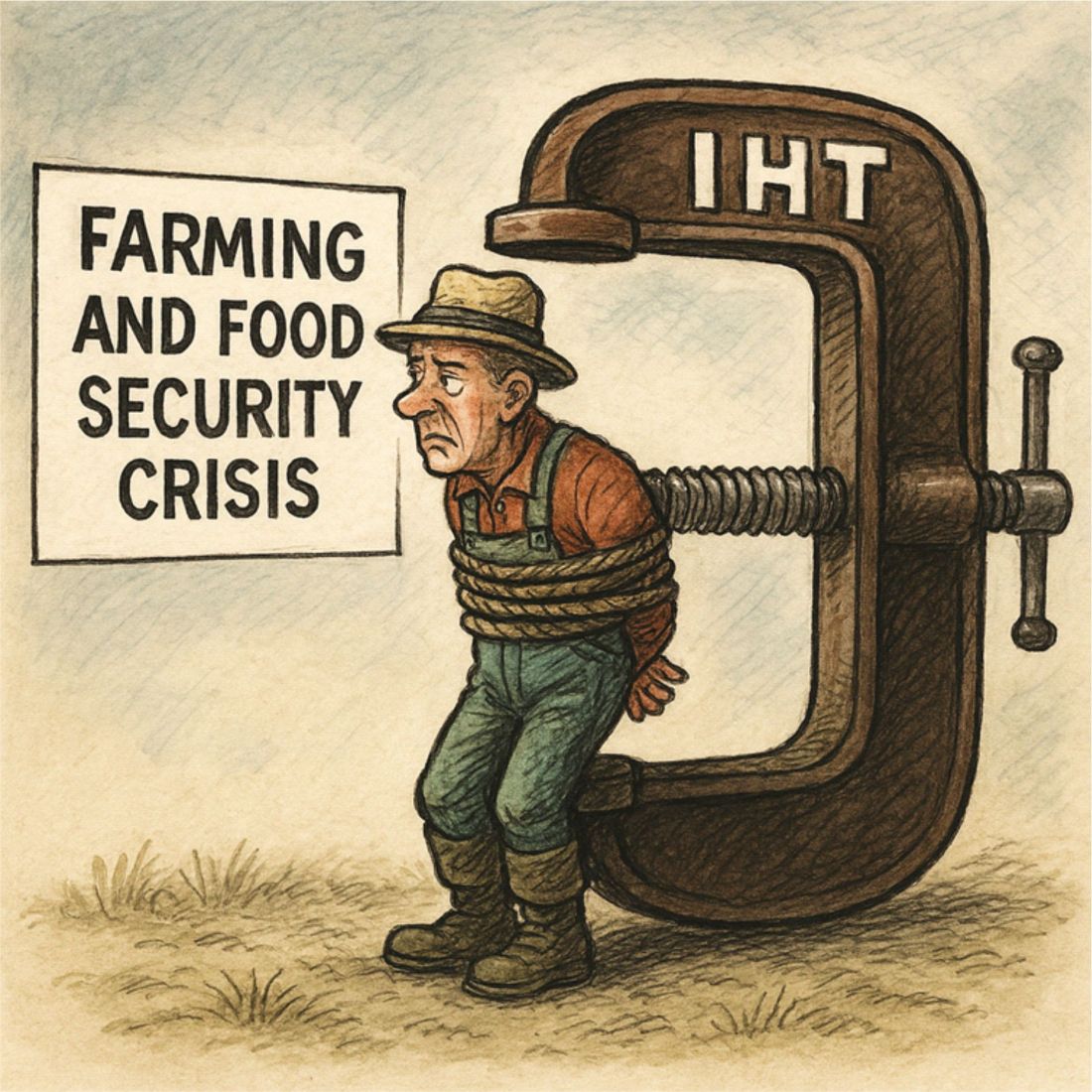
Whilst the news will bring some comfort to those who see the extension of the IHT window as a kind of Christmas gift, the regrettable truth is that even a complete U‑turn by the government on this single policy won’t change the direction of travel.

Nor will it alter the wide range of influences and pressures – many of which were identified in the FPR – that are tightening like a thumb screw and will ultimately destroy independent and traditional farming methods in this country.

The question, regrettably, given that everyone is still moving in the same direction, when you look at what their legs rather than what their lips are doing, is this: what will be the real cost of a story that grabs just enough attention to make people believe the farming and food‑security crisis is suddenly heading somewhere different?

Further Reading: Understanding the Context and Challenges Facing UK Farming

To help you dive deeper into the issues discussed in this blog – especially the government’s inheritance tax changes, the Batters Farming Profitably Review, and the broader crisis in UK food security – here’s a recommended list of Adam’s articles.

Each summary highlights the relevance of the link to the ongoing debate and the future of British farming.

1. https://adamtugwell.blog/2025/12/19/a-few-thoughts-on-minette-batters-farming-profitability-review-fpr/

A critical analysis of the FPR, this post explores the truths revealed about the downward spiral in UK farming, while questioning whether simply acknowledging the problems will lead to meaningful change. It sets the stage for understanding the policy environment and the pressures facing farmers today.

2. https://adamtugwell.blog/2025/08/14/farm-inheritance-tax-was-always-about-wrecking-independent-uk-food-production-thats-why-it-defies-common-sense/

This article delves into the history and intent behind farm inheritance tax, arguing that it has long undermined independent food production in the UK. It provides essential background for readers seeking to understand why inheritance tax remains such a contentious issue.

3. https://adamtugwell.blog/2025/11/22/risk-and-responsibility-why-farmers-must-choose-to-rebuild-the-uk-food-system-before-its-too-late/

This post emphasises the urgency for farmers to take proactive steps in rebuilding the UK food system. It discusses the risks involved and the responsibilities that fall on those within the industry to drive change before the situation becomes irreversible.

4. https://adamtugwell.blog/2025/11/23/understanding-who-controls-our-food-controls-our-future-everything-you-need-to-know/

An exploration of the power dynamics in UK food production, this article explains how control over food systems shapes the nation’s future. It’s a vital read for those interested in the intersection of policy, industry, and food security.

5. https://adamtugwell.blog/2025/01/18/the-need-for-a-collaborative-approach-to-the-uk-farming-and-food-security-problem/

This piece advocates for collaboration among farmers, policymakers, and stakeholders to address the complex challenges facing UK farming and food security. It offers practical insights and solutions for building a more resilient system.

6. https://adamtugwell.blog/2025/12/22/how-the-trail-hunting-ban-exposes-a-bigger-battle-for-britain/

Broadening the discussion, this article connects rural policy battles – like the trail hunting ban- to the larger struggle over Britain’s countryside, farming, and food systems. It provides context for understanding the wider political and cultural forces at play.

7. https://adamtugwell.blog/2025/12/18/adams-food-and-farming-portfolio-a-guide-to-books-blogs-and-solutions/

A comprehensive guide to further reading and resources, this portfolio is ideal for readers who want to explore more about UK farming, food security, and potential solutions.
How the Trail Hunting Ban Exposes a Bigger Battle for Britain

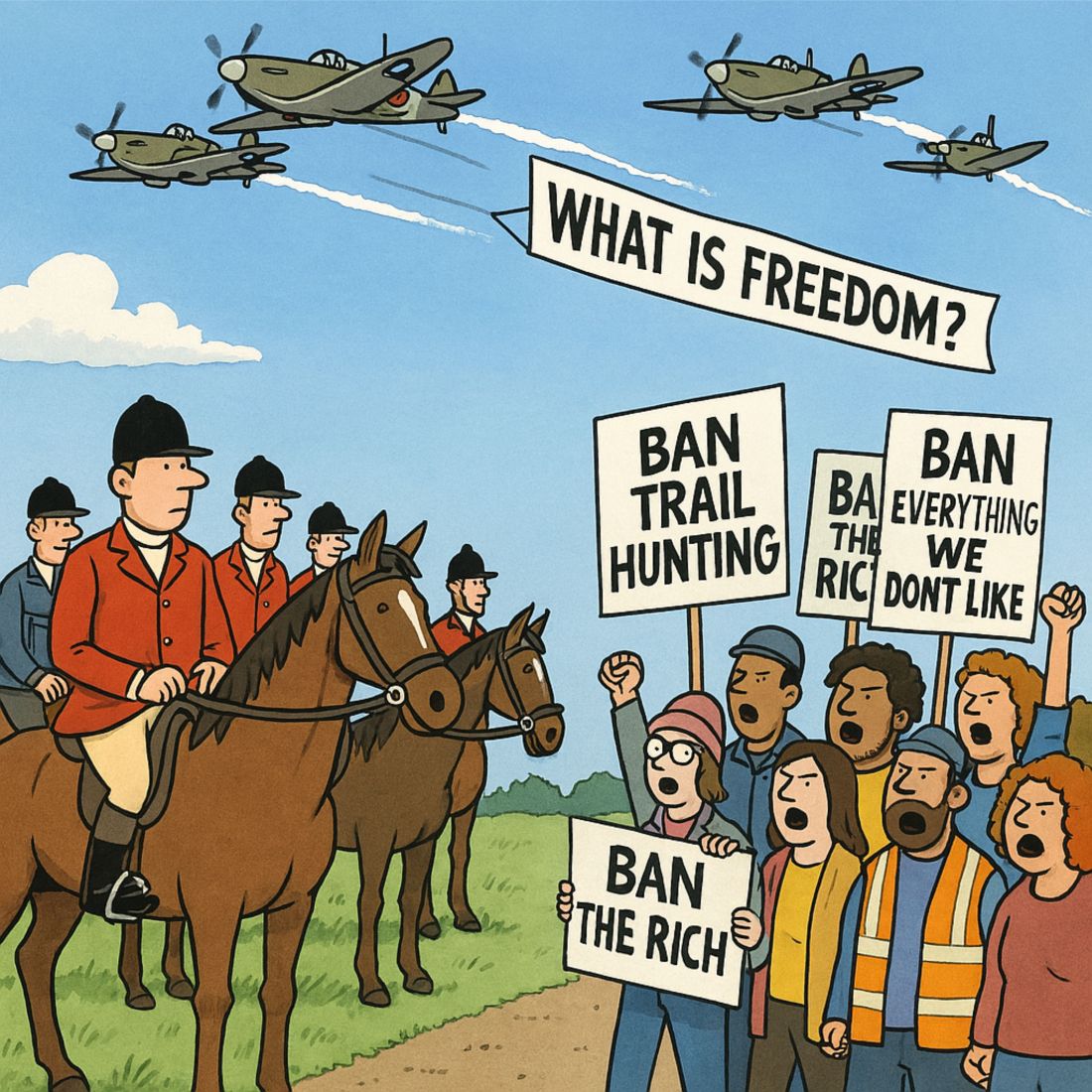
Trying to unpick what looks like the sudden announcement that the government intends to ban trail hunting in the upcoming animal welfare strategy is far more complicated than it first appears.

The easy explanation is to fall back on the familiar left‑vs‑right framing – the tired them‑vs‑us narrative that has shaped the hunting debate for decades. But that framing has always obscured more than it has revealed.

Across the UK today, some will feel they have won and others will feel they have lost. Yet this moment isn’t new, nor is the opportunity to take a different path.

As I argued in my blog published on Christmas Day in 2017, the solutions that could have kept young people, rural voters, and the wider public onside have been hiding in plain sight for years.

Knowing people who hunt and people who don’t – and many who sit somewhere in between – I feel exactly as I did when I wrote that piece.

There was always a workable middle ground. The model we have today could have functioned well and kept most people broadly content, if only all sides had been willing to look beyond their own entrenched positions.

Instead of trying to rewrite the rules of the game or cling to the past as if personal belief were a universal right to impose on others, they could have chosen a bigger‑picture approach that protected both rural culture and public confidence.

But we live in a time when being “right” has become more important than being effective.

That mindset pushes people into emotional trenches, where the goal becomes defeating the other side rather than understanding what winning actually looks like in a changing world.

As the years have passed, since the ‘Hunting Ban’ came into force, the battle lines have hardened. Few have stopped to consider how easily self‑made traps can spring shut. And the hunting community, through its own shortcuts, diversions, and refusal to adapt, has handed the government the perfect excuse to act.

This is the same government that has already shown its willingness to undermine British rural life – the illogical Farm IHT rule being a prime example. Now, with trail hunting, they have been gifted a justification that many outside the community will accept without hesitation.

Many will still refuse to see what is happening. But when a government is openly delaying local elections, it is not unreasonable to expect they may attempt the same with the next general election if they can cling to power until 2029.

At the heart of this is a belief that everyone else is wrong and they alone are right.

If they succeed in pushing this change through before they lose power – assuming they haven’t already managed to entrench themselves further – the concern is that this will mark the true end of hunting as a living part of our culture and heritage.

Once an outright ban, or anything that functions as one, is in place, reversing it will be nowhere near the top of anyone’s agenda. Not with the scale of the political, economic, and social mess we have building up ahead.

Further Reading:

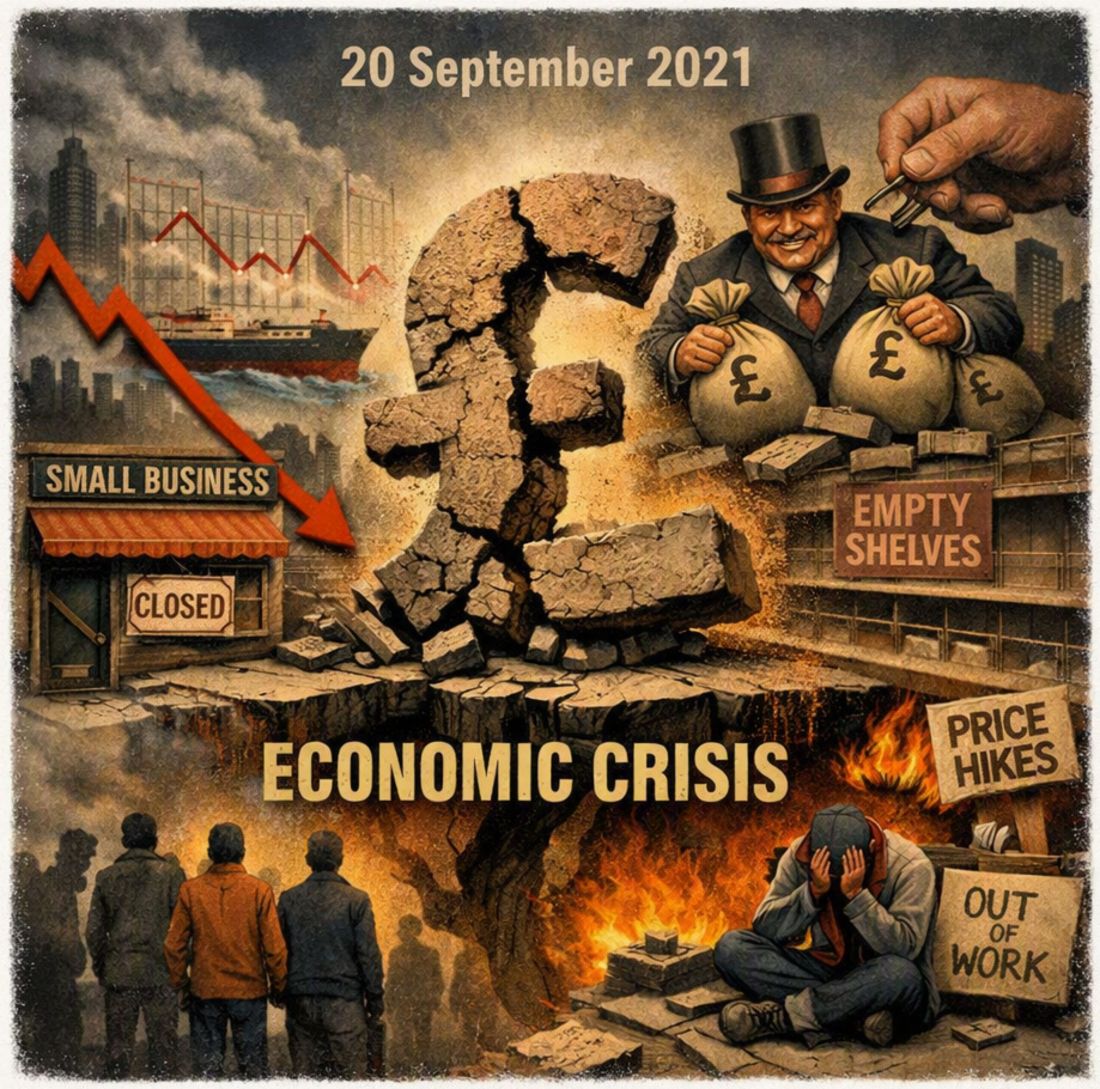
Small business cannot afford the escalating wage growth that the Government has fuelled. As we face a financial crisis, the greed funnelling money out of everything without putting value back must finally be stopped

We are constantly hearing about staff shortages and wage rises. Yet very little is being said by anyone about the real reasons underpinning what is happening.

There is no discussion about what we are seeing now being just the beginning or thin end of what will be a very thick wedge. There is no mention of how dealing with the problems we are now facing will require a lot more leadership and creativity on the part of our politicians rather than barking commands at businesses and demanding that they just put wages up.

Our Politicians, the media and a lot of other people too are taking for granted that everything will just keep rolling on ‘like normal’, certain that after a few temporary changes to deal with Covid here and there, things will carry on as they always have and that in no time at all, everything will be back to where it all was before.

In many respects, it certainly feels like business as usual. The problems that are being talked about are being blamed on Brexit, just as they have been at every opportunity for the past 5 years. And has always been the case without us paying all that much attention, the journalists, commentators and pundits are seeing everything through the lens of their own view of everything. The difference this time being that there is so much starting to happen that even the myopic nature of their supposedly broad thinking dialogue is quickly being exposed for being anything other than joined-up.

Yet we are now on the first steps of an accelerating downward spiral. A negative trend created by politicians and the banks cooking the books and getting away with it for such a long time, they genuinely believe that they could continue without risk of ever reaching a place called stop.

To be fair to them, the political class is so detached from the realities that face people outside of Westminster, it would be futile to imagine that this political class can suddenly develop empathy and understanding as another crisis looms. They certainly didn’t do so for the Covid Pandemic, and there is some irony that it is because of the choices that they have made in response to that, what comes next is set to be considerably worse.

In the coming months and possibly years ahead, we are set to experience a financial crisis of a kind that the world has never seen before. We are in the early stages of the descent towards it right now, and that thin end of the wedge – the employee shortages, empty shelves and the price escalation that we are now starting to see is just a small taste of what is set to come.

Our political class looks at every problem as being one that can be solved with money or a financial solution. But this is the same approach that politicians have been applying now for decades and all it does is make things progressively worse.

As our political class look at every problem through this ‘money solves all problems’ lens that many of they forebears have got away with – not because it works, but because there has been an awful lot of luck involved – they now see the staffing shortages as one that can simply be solved by telling business to put wages up.

Large supermarkets and hauliers have responded to the growing crisis by putting drivers wages up. Problems in other industries have resulted in large high street names like Costa throwing pay rises at staff ostensibly for their effort during the Pandemic. But this is the first sign of a panic materialising too.

There is no shortage of people to do jobs and to go to work in this Country. But no amount of money will solve what is now an out of control problem when employees are treated so badly and there are no controls placed upon what it costs and how much it costs the average person in this Country to live.

The rapidly expanding gap between what people earn and what it costs to live is an immediate problem for sure. But price inflation is now so firmly fixed in the hands of private interests who have seen the amount of money that Governments have created over the past eighteen months, that they will continue pushing prices up until the point that the system breaks. That is, if some other event hasn’t led to this already and proven to be one of the many straws that could so easily now break the camels back.

Perhaps the most useful example to illustrate the point is the cost of transporting a shipping container with goods to the UK from the Far East. Shipping costs have risen 1500% in the past 18 months, not because the costs of moving these items have become markedly different, but because world events have given the shipping conglomerate an excuse; together they have a stranglehold and ultimately, they know that they just can.

This change has in no small part led to goods shortages and price rises. And if you have already seen the presents that you want to buy for your children or family this Christmas, you might be very sensible to grab them now, whilst you still can.

What the shipping companies have and are doing is representative of how commercial supply chains now work. But what makes the situation even worse is the number of agents, speculators and handlers who have built ‘high performing’ business models, simply by handling goods – perhaps just buying and then selling them on at a profit – without adding any kind of value to the transaction. The end result being the unfathomable and unexplainable rise in the cost of living – with the end users and even the businesses one step removed from the end of the supply chain – struggling to keep going because all of the fat has been taken many times over and the prices of goods are too unrealistically high for anyone to afford or absorb.

Big name companies, that have a stake in how our broken economic model now works, can easily afford to pay their staff better than the living wage. They could easily absorb the rises with little impact on their bottom line. Yet the greed that drives them means that they would see the imposition of raising pay as one that gives them the excuse to raise their prices too.

Smaller businesses – and by this I mean the bedrock of our real economy and the ones that make everything work – don’t have the means or the economic scale to raise wages and then either absorb the difference or then pass on the costs to their customers and other without there being a significant cost the businesses that they own or run.

In fact, the demands that hapless Ministers have made last week for businesses to start paying more could easily result in people losing their jobs and making what were otherwise great small businesses no longer viable because the staff they need just to fulfil their normal order book has become a luxury they cannot reasonably afford.

In a prefect world, those small businesses or the trade organisations that represent them would sit down with the people running this country and be listened to in a way that counts.

Sadly, because we have the political culture that we have, that scenario is not one that is likely to ever play out. The system is literally going to have to break before those who should have been aware of the impact of what they have been doing will be ready to take note. And when then they do, then problem will be that we have the same people in power and pretending to lead us who got us into this mess in the first place.

Like everything Government in this Country touches or legislates for, the financial and economic system needs massive and comprehensive reform.

Money does not solve problems in the way that politicians would like and the process of the fat getting ever fatter by inflicting pain on everyone else without being forced to face up to what they have been doing is now over.

Things will not return to how they were before the Covid Pandemic began.

Equality in Education has been destroyed by the idea that all can make the best of the same opportunities

images (31)

I seem to have the phrase ‘cause and effect’ branded in my thought processes right now as I look at all of the problems with Government and no less so when recently reading yet more bad news about struggling school pupils failing to catch up.  But is anybody really surprised?

One of the greatest problems with modern government and law-making is that once an issue has been addressed, the people who have been put in place to deal with that issue then have nothing to do – unless of course they create something else to justify their existence. Have a good look at every area of life where some kind of policy has been created or exists and you might just begin to see what I mean.

The problem with this process is that whilst you can easily see that some things do benefit from being revised from their original form to meet a need which was not originally considered or indeed, to bring that a policy or law up-to-date to meet or to be applicable to contemporary need, the rise of the bureaucrat and ‘professional’ politician has led to unnecessary meddling and the creation of having laws for laws sake. This is particularly evident in matters such as education.

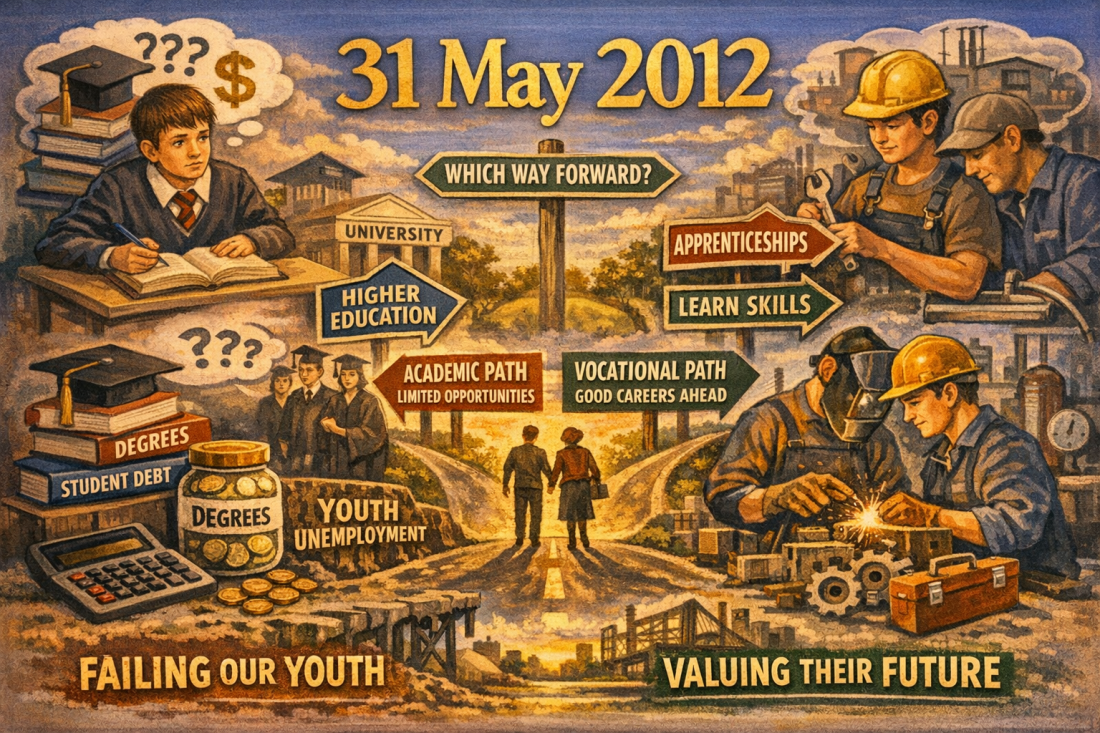
The value of education has been appreciated for a long time but the system we have probably began the headlong descent that we are now experiencing when the concept of real apprenticeships was lost and the school leaving age was raised to 16 in 1972. Speak to what some might call ‘old school’ educators and they will tell you that children were either ‘heads or hands’; the inference being that they were academic or practically inclined. Would you hear a teacher say the same in a similar conversation today? No.

The 1997-2010 New Labour project oversaw much of the destructive push towards blanket qualification levels which now seem to be the accepted way to enhance an evolving society. Put simply, the approach of such meddlers is to work on the basis that the easiest way to improve education is to make the education fit the population, rather than encourage the population to meet the demands of the time. Now is that real equality or just a twisted view of it which is taking our once highly educated and envied Nation backwards?

Everyone is different for many reasons, not least because of their genetics, demographics and social conditioning. It is therefore sheer folly to believe that by applying the one-size-fits-all mentality that you will create a perfect and fully functioning society by making everyone equal ‘by default’. We currently see high levels of youth unemployment and dissatisfaction with the system (Something apparently highlighted by the August 2011 Riots), but again no real attempts to address the causes of these problems being made by the very people who could genuinely make a difference.

There are many young people who don’t want to be in ‘school’ and others who just don’t get the benefit from a dumbed-down degree system where 3 years of undergraduate study provides what could be a lifelong debt and a qualification that industry views as useless, all against the backdrop of a Government that cannot afford to provide such diversions in the first place. The balance has been lost and somebody needs to get this all back where it should be so that each and every individual can follow a route to a career which gives them the best opportunities to realise all that they can achieve based on what they are capable of doing; not what some idealist in London thinks it right that they should do.

Rather than scratching heads about the escalating problems created by the decline in standards in education, why not get back to a basic appreciation of the fact that everyone has something unique to offer and that in itself requires real diversity of opportunities and not one which is offered by an encyclopaedic exam syllabus. Put 14 year-olds who have no academic inclination – or don’t recognise one at that age – into real 7-year vocational apprenticeships in industry and SME’s where time and application give them the career footing that they would otherwise never achieve?

Why not begin to rebuild the ‘time-served’ bank of talent and experience that no amount of schoolroom activity can provide our dwindling industries and hungry-for-help businesses with, in a cost effective way which reduces the burden on the State and will probably address all manner of other issues hurting society at the same time such as youth crime?

I can almost hear the ‘it won’t work because…’ right now. What – because of employment laws or other legislation? – That’s exactly the point and the very reason we are getting into more and more of a mess isn’t it?