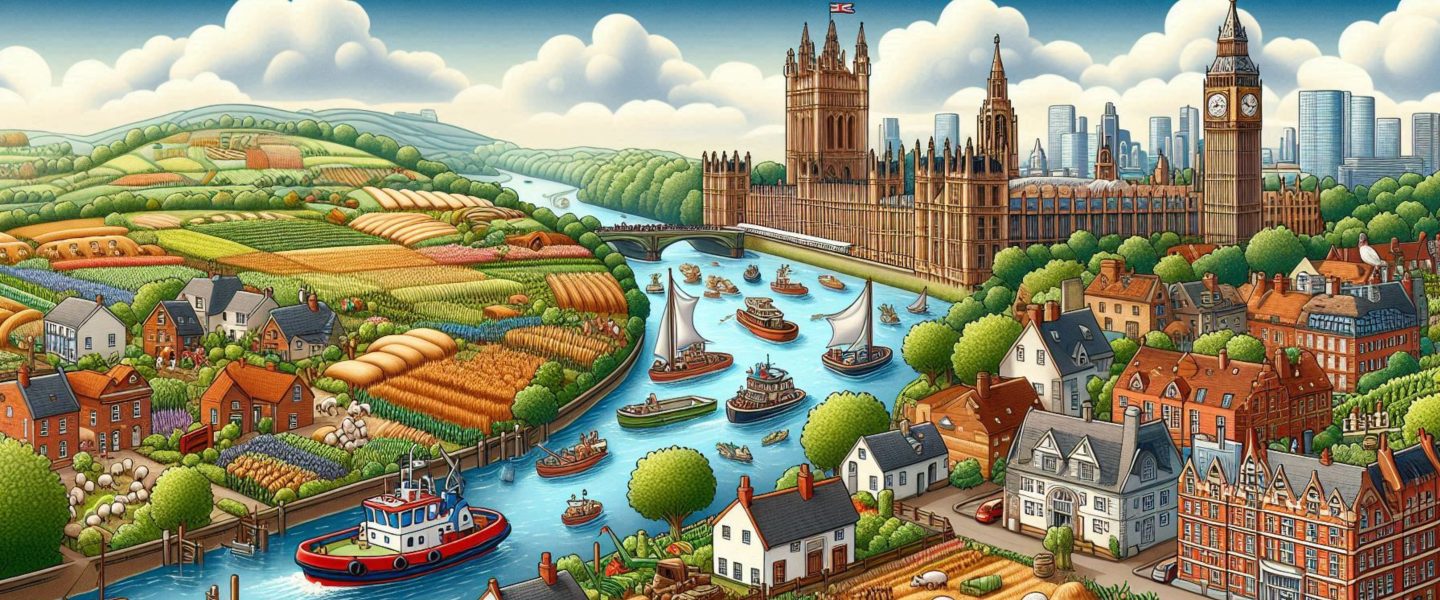
We like to believe that if something is real, we would see it. That a divide in society would be obvious, visible, tangible.
But the most profound changes in a nation rarely announce themselves. They creep in quietly, shaping lives long before anyone realises what has happened.
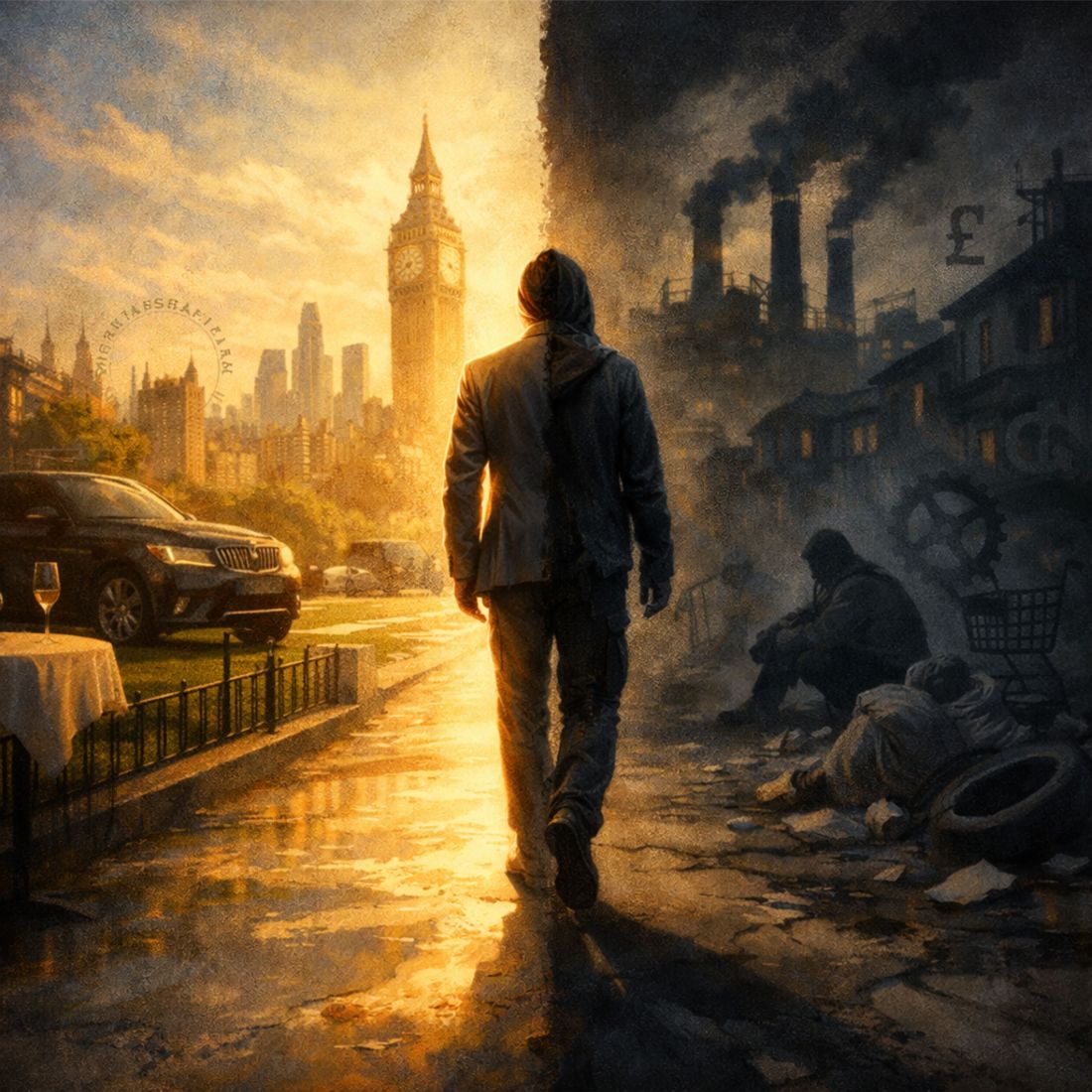
Today, Britain is already a split society – not becoming one, not drifting toward one, but living fully inside one. And the reason most people cannot see it is simple: we have been conditioned to look at the wrong differences.
The real divide is structural, economic, and existential. It is the difference between those the system rewards and those it punishes. And the split is widening every day.
The Blindfold of Visible Differences
We live in a culture obsessed with what can be seen. Identity, labels, categories, tribes – the system elevates these differences because they are emotional, dramatic, and endlessly distracting.
Diversity, in its current institutionalised form, has become a paradox. It celebrates difference while deepening division. It elevates identity markers that have no bearing on power, security, or opportunity, while ignoring the structural forces that determine all three.
These visible differences become the battlegrounds of public life. They stir emotion. They create polarity. They keep people fighting each other instead of questioning the system that shapes them both.
Meanwhile, the real difference – the one that defines who thrives and who suffers -remains invisible.
The Narrative That Keeps Us Looking the Wrong Way
We have reached a point where people believe only the stories told by the “right” voices.
Narratives have become truth, and truth has become whatever fits the narrative.
“Two‑tier Britain” is a perfect example. It is used as a political weapon, usually to attack public services or to frame cultural grievances.
But this version of the divide is superficial. It points at symptoms, not causes. It directs attention toward institutions and away from the system that governs them all.
Partial truths are accepted because they feel familiar. But they stop people from seeing the bigger picture – the one that explains why life feels harder, more insecure, and more exhausting for almost everyone.
The Emotional Logic of Those Who Still Think They’re Safe
What makes the real divide even harder to see is the way people who appear to be “doing fine” respond when the conversation turns to money.
For example, mention that the minimum wage is not enough to live on, and many small business owners – themselves squeezed by rising costs, falling margins, and relentless pressure – immediately reframe the issue in terms of what a higher wage would do to them.
Their fear is real. Their anxiety is justified. But it also reveals something deeper: they sense, at an emotional level, how close they are to the edge. And that fear blinds them to the lived reality of those who have already been pushed across the divide.
Instead of seeing a system that is failing everyone, they see a threat to their own fragile stability.
Their reaction is not selfishness; it is survival. But it illustrates the wider truth: the problems faced by those on the “wrong side” of the divide are directly connected to the pressures felt by those who still believe they are on the right side.
Everyone is being squeezed – just at different stages of the same process.
This is the interdependence nobody talks about: the suffering of one group is the shadow cast by the insecurity of another.
The Money System: The Quiet Engine of the Real Divide
Here is the truth that sits beneath everything else:
The system can only make some wealthy by progressively making everyone else poor.
This is not ideology. It is mechanics.
The modern economic model is not a rising tide. It is an extraction machine.
Wealth does not trickle down; it is pulled upward. Gains at the top require losses at the bottom. The system rewards accumulation, not contribution.
And because of this, financial dependence is not a personal failure – it is a structural inevitability.
People are not poor because they made bad choices. They are poor because the system needs them to be.
The national minimum wage for a standard working week is not enough to live independently. That is not an accident. It is a design.
Most people receiving benefits are working. They are contributing. They are doing everything society told them to do. And yet they cannot survive without support, charity, or debt.
Instead of questioning why the system produces this outcome, society blames the people trapped inside it. They are ostracised, shamed, and treated as morally defective – all while the system quietly ensures they can never escape dependence.
This is not a bug. It is a feature.
The Myth of Meritocracy: The System’s Favourite Lie
We are told that life follows a simple formula:
Qualifications → career → money → status → happiness
This story is comforting. It suggests fairness. It suggests control. It suggests that success is earned and failure is deserved.
But it is a myth.
Many people are vocational, not academic. Many never had the stability, support, or freedom to pursue qualifications. Many grew up in environments where survival came before study.
Yet the system values what is measurable, not what is meaningful.
Experience is devalued because it cannot be quantified.
Human ability is replaced by credentialism.
Entire generations are left behind not because they lack talent, but because they lack paperwork.
And then they are blamed for it.
Keeping Up: The New Survival Game
Even those who appear to be “doing well” are trapped.
The system moves the ground beneath everyone’s feet. Standing still means falling behind.
People who earn good salaries must run faster each year just to maintain the same life.
Mortgages, rents, bills, childcare, transport – everything rises except the sense of security.
Values shift.
Money becomes the only measure of worth.
Success becomes survival.
And survival becomes a full‑time job.
This is not living. It is coping.
The Psychological Toll of a System That Never Stops Taking
The mental health crisis is not a mystery. It is the emotional footprint of an economic system that demands more than human beings can give.
Chronic insecurity becomes normal.
People internalise systemic failure as personal failure.
Shame becomes a constant companion.
Those who fall behind are blamed.
Those who keep up are exhausted.
Those who succeed are anxious about losing everything.
Peace of mind becomes a luxury good.
The Tech Future People Fear Is Already Here – Just Not in the Way They Think
Many people worry that society is drifting toward a tech‑driven future where the “haves” accelerate into a world of automation, AI, and abundance, while the “have‑nots” are left behind in a wasteland of low‑paid work and shrinking opportunity.
But the irony is stark:
The split they fear tomorrow is the split they are already living inside today.
The future people dread – a world divided by access, opportunity, and agency – is not waiting for us. It is here. It has simply been hidden behind distraction, narrative, and the comforting illusion that the playing field still exists.
Lift the stone, shine a light beneath it, and the truth is there in black and white:
A society already divided by a system that sorts people long before technology ever gets the chance.
And the most striking part is how little those on the “right side” of the divide understand the consequences of their own beliefs and actions.
Many genuinely cannot see the damage being done to those already on the wrong side – not because they are cruel, but because the system has insulated them from the realities it creates.
They believe the rules are fair because the rules have worked for them. They believe effort determines outcome because effort has always been rewarded in their world. They believe the system is meritocratic because they have never had to live in the parts of it that are not.
But the ground is shifting.
The split is moving.
And the very people who defend the system most fiercely may soon find themselves on the wrong side of it.
The AI revolution – designed, championed, and accelerated by those currently insulated from harm – is already reshaping the labour market in ways that will not spare them.
Be it through the AI Revolution or as a result of other events, same extractive logic that has hollowed out the lives of the most vulnerable will, in time, turn its attention to the middle layers of society: the professionals, the knowledge workers, the people who once believed they were safe.
They may discover, too late, that they have become part of the same “left behind” Britain they once viewed from a distance.
Not because they changed, but because the system did – and because they never saw the split that was already there, hidden in plain sight.
Why We Don’t See It – And Why We Must
The system hides the real divide behind a theatre of false differences.
It keeps people fighting over identity while it quietly determines their destiny.
It rewards a few by extracting from the many.
It blames the victims and protects the structure.
And because the split is invisible, people suffer alone, believing their struggle is personal rather than systemic.
But the truth is simple:
This divide affects almost everyone.
It is widening.
And it will not close on its own.
To rebuild a society grounded in human values, we must first see the system for what it is – and recognise the split that has already taken hold.
Only then can we begin to close it.