
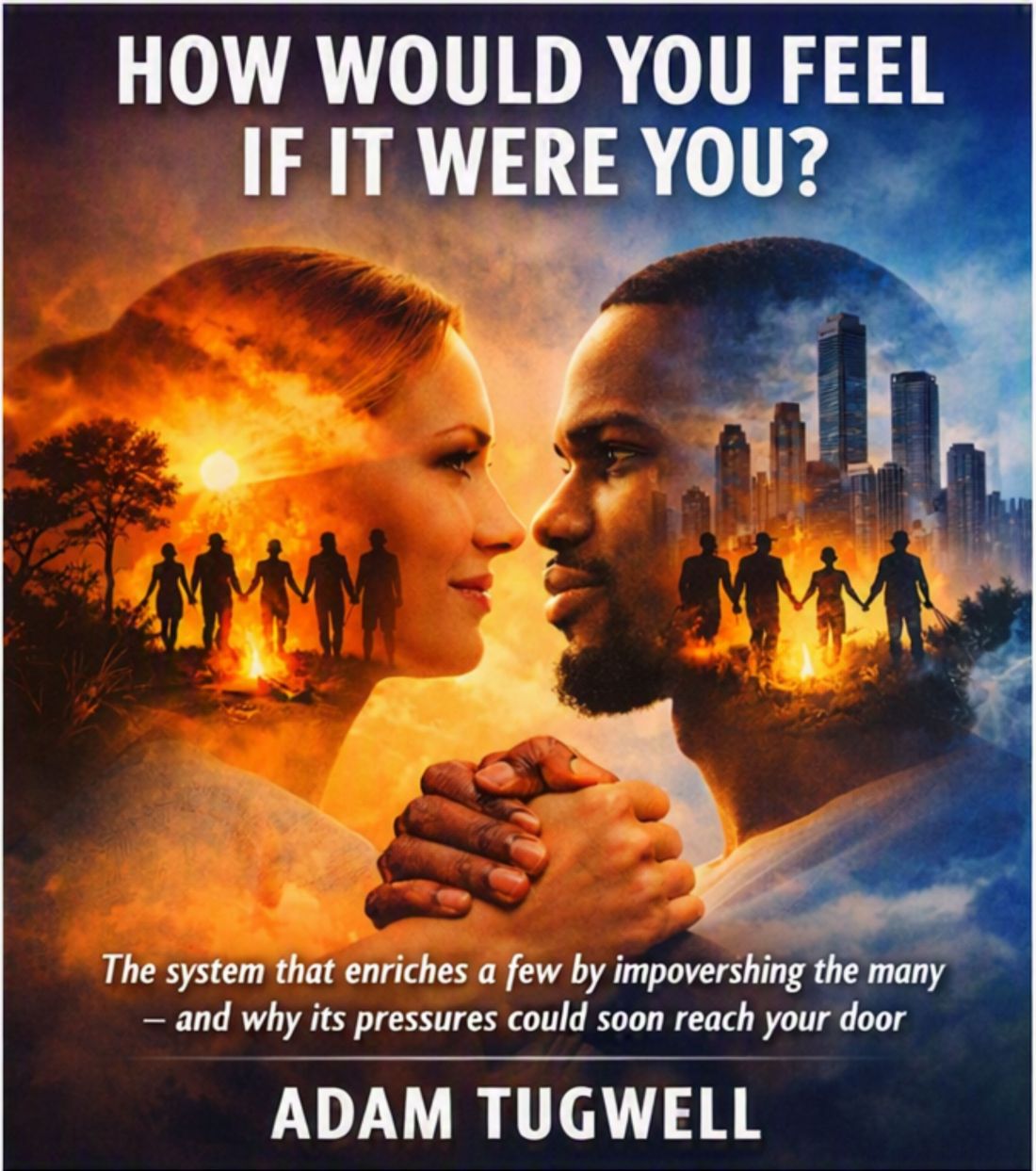
The system that enriches a few by impoverishing the many – and why its pressures could soon reach your door.
1. Introduction: What Would You Feel If It Were You?
We talk about poverty, benefits, work, and hardship as if they are abstract issues – political talking points, economic debates, or moral judgments about other people’s choices.
But poverty is not abstract. It is lived. It is felt. It is endured. And it is often invisible to those who have never experienced it.
The truth is simple, but uncomfortable: Most people who judge poverty have never had to imagine themselves inside it.
They see headlines, stereotypes, and social media narratives. They hear confident voices insisting that hardship is a lifestyle choice, that people simply need to “row their own boat,” that work always pays, and that anyone struggling must be doing something wrong.
But what if we paused? What if we stepped back from the noise? What if, instead of judging, we asked a different question – one that cuts through politics, ideology, and assumption?
What would you feel if it were you?
What would you feel if you worked full‑time and still couldn’t afford to live? What would you feel if your rent rose faster than your wages? What would you feel if your food shop cost more every week? What would you feel if your job disappeared overnight? What would you feel if your commitments swallowed your income? What would you feel if your mental health collapsed under the weight of constant financial fear? What would you feel if society judged you for struggling in a system designed to make you struggle?
This essay is not an argument. It is an invitation.
An invitation to imagine. To empathise. To see clearly. To think differently.
Because poverty is not a personal failure. It is a structural outcome. And the only way we begin to change it is by understanding what it feels like – not from the outside, but from within.
2. The Invisible Reality of Poverty
Poverty in Britain is not always visible. It doesn’t always look like the images people imagine – threadbare clothes, empty cupboards, cold homes, obvious struggle.
More often, it looks like ordinary people living ordinary lives, quietly falling further behind each month while the world insists everything is improving.
Part of the problem is that poverty has become statistical. It is described through percentages, inflation rates, GDP growth, wage averages, and economic forecasts.
These numbers create the illusion of objectivity, but they rarely reflect the lived experience of real households.
Official narratives say:
- wages are rising
- inflation is easing
- the economy is recovering
- employment is high
- people should be coping
But lived experience says something very different.
People feel poorer. People are poorer. And the gap between the official story and real life grows wider every year.
The Impoverishment Index captures this gap clearly. It shows that:
- prices rise faster than wages
- essentials rise faster than headline inflation
- savings lose value
- disposable income shrinks
- the cost of participation in society increases
- the cost of simply existing increases
Yet because these pressures accumulate quietly – a few pounds more on food, a few pounds more on rent, a few pounds more on energy – many people don’t realise they are being squeezed until they are already in crisis.
And those who aren’t in crisis often don’t see it at all.
Poverty becomes invisible not because it isn’t happening, but because it happens in ways that are easy to overlook:
- the colleague who skips lunch
- the neighbour who keeps the heating off
- the parent who avoids social events
- the worker who hides their exhaustion
- the family who moves frequently
- the person who never complains
People hide their hardship because they feel ashamed. People hide their hardship because they fear judgement. People hide their hardship because they believe it is their fault.
And when hardship is hidden, it becomes easy for others to assume it doesn’t exist.
This invisibility is dangerous. It allows stereotypes to flourish. It allows judgement to harden. It allows people to believe poverty is rare, distant, or self‑inflicted.
But poverty is none of those things.
It is widespread. It is local. It is structural. It is lived by millions. And it is often happening right next to people who cannot see it.
The truth is simple: You cannot understand poverty by looking at statistics. You can only understand it by imagining what it feels like or experiencing it yourself.
3. When Work Isn’t Enough
For generations, the story Britain told itself was simple: If you work hard, you will be able to live.
It wasn’t a promise written into law, but it was woven into culture, politics, and identity.
Work was the path to independence, dignity, stability, and belonging. It was the dividing line between “doing well” and “falling behind.”
But today, millions of people work hard – harder than ever – and still cannot afford a basic, secure life.
This is not a fringe issue. It is not rare. It is not limited to a small group. It is not caused by laziness, irresponsibility, or poor choices.
It is structural.
The numbers tell a story that contradicts everything people were taught to believe:
- A single adult now needs well over £30,000 net per year to live independently without debt or deprivation. (Based on current UK living‑cost modelling; varies by region.)
- A family with one child often needs £55,000–£65,000 net per year just to meet essential costs. (Housing, childcare, transport, food, utilities — all rising faster than wages.)
- Minimum‑wage workers fall hundreds of pounds short every month, even when working full‑time. (This is consistent across most UK regions once rent and transport are included.)
- Because Universal Credit removes 55p of every extra £1 earned above the work allowance, many low‑income workers keep less than half of what they earn from overtime. (The exact “effective hourly gain” varies by household and cannot be expressed as a single fixed figure.)
- Many households must work 50–66 hours per week simply to break even — and that’s before any unexpected costs. (This reflects typical budgets for low‑income families facing high rent and childcare.)
These aren’t extreme cases. These are ordinary workers in ordinary jobs – the people who keep society running:
- refuse collectors
- kitchen porters
- baristas
- shelf‑stackers
- delivery drivers
- care assistants
- cleaners
- teaching assistants
- retail workers
People who serve, lift, carry, clean, support, and care. People who do the jobs everyone relies on but rarely notices.
And yet, after forty or fifty hours a week, many still cannot afford:
- rent
- food
- heating
- transport
- childcare
- basic essentials
They are exhausted, undervalued, and financially trapped.
They are told to “work harder,” even though they already work harder than most. They are told to “budget better,” even though they have nothing left to budget. They are told to “take responsibility,” even though they carry more responsibility than anyone should have to bear.
And when they finally reach breaking point – when they need help, when they visit a food bank, when they fall behind on bills – society judges them.
Not for their lack of effort, but for their lack of income.
Agency and Structure
None of this means personal responsibility does not matter. People make good decisions and bad decisions. Choices have consequences. Effort matters. Planning matters. Discipline matters. But personal choices do not occur in a vacuum. They take place within economic structures that can either expand opportunity or restrict it. Recognising structural pressures is not the same as denying agency. It is acknowledging the environment in which agency must operate.
What would you feel if you worked full‑time and still couldn’t afford to live?
Would you feel lazy? Or would you feel defeated by a system where work no longer guarantees survival?
This is the reality for millions.
Not because they have failed, but because the system has.
Work used to be enough. Today, it isn’t. And pretending otherwise only deepens the suffering of those already carrying the heaviest load.
4. The Two‑Tier Britain We Refuse to See
Britain has always had inequality. But today, the divide is no longer simply between “rich” and “poor,” or “working” and “unemployed.” It is deeper, more structural, and more hidden than most people realise.
We live in a two‑tier Britain – not defined by culture, geography, or identity, but by the system itself.
On one tier are those the system rewards. On the other are those the system punishes.
This divide is not about effort. It is not about intelligence. It is not about morality. It is not about character.
It is about structure.
The system rewards people who:
- have stable, well‑paid jobs
- own property
- have savings
- have access to credit
- have predictable income
- can absorb shocks
- can plan ahead
The system punishes people who:
- rent
- earn low wages
- have insecure work
- have no savings
- rely on credit to survive
- face unpredictable income
- cannot absorb shocks
- live month‑to‑month
These two groups often live side by side, work in the same towns, shop in the same supermarkets, and send their children to the same schools – yet their experiences of Britain are completely different.
One group experiences stability. The other experiences continual crisis.
One group feels confident. The other feels afraid.
One group sees opportunity. The other sees barriers.
One group believes the system works. The other knows it doesn’t.
And because the divide is structural, not cultural, people often misinterpret it. They assume that those who struggle must be doing something wrong – because they themselves are doing everything “right” and things are working out.
But this is an illusion.
The system is designed to reward some and punish others. It is designed to extract from the bottom to sustain the top. It is designed to keep people in their tier.
This is why:
- wages stagnate while rents rise
- essentials inflate faster than income
- work no longer guarantees security
- benefits fill the gap between survival and collapse
- people who “should be fine” are drowning
- people who “look fine” are visiting food banks
- people who “do everything right” still fall behind
And yet, because the divide is invisible to those on the rewarded tier, they often assume it doesn’t exist. They assume everyone has the same opportunities, the same choices, the same chances.
They assume the system is fair.
But fairness is not the lived experience of millions. Fairness is the illusion of those who benefit from the structure.
The truth is simple:
Britain is not divided by culture – it is divided by economics. Not by identity – but by extraction. Not by effort – but by design.
And until we acknowledge this two‑tier reality, we will continue to blame individuals for outcomes created by the system itself.
5. The Mental Health Toll of Falling Behind
Poverty is often described in financial terms – income, rent, bills, debt, inflation. But the deepest wounds it creates are not economic. They are psychological.
Falling behind in a money‑centric culture doesn’t just mean struggling to pay for essentials. It means struggling to maintain your sense of self.
It means living with a constant, grinding fear that you are failing at life.
And that fear is everywhere.
If every day began with financial anxiety
How would you feel if:
- you woke up each morning wondering whether you could afford food
- you checked your bank balance before every purchase
- you feared every brown envelope through the letterbox
- you lived with the knowledge that one unexpected bill could ruin you
- you felt guilty every time you spent money on anything that wasn’t essential
This is not occasional stress. This is chronic, unrelenting pressure – the kind that rewires the brain.
People living in poverty experience:
- heightened anxiety
- depression
- sleep disruption
- cognitive overload
- difficulty concentrating
- reduced decision‑making capacity
- emotional exhaustion
Not because they are weak, but because they are human.
Shame: The Silent Weight Nobody Talks About
Poverty carries a stigma that is rarely acknowledged openly. People feel ashamed of struggling. Ashamed of needing help. Ashamed of not coping. Ashamed of being seen as “less than.”
This shame is not natural. It is taught.
It is taught by:
- political narratives that frame poverty as a choice
- cultural messages that equate wealth with virtue
- social media that showcases curated success
- workplaces that reward overwork and punish vulnerability
- public voices that mock or dismiss those who fall behind
Shame becomes internalised. People begin to believe they are the problem.
What would you feel if you believed your hardship was your fault?
Self‑Exclusion: When People Withdraw Because They Feel They Don’t Belong
One of the most damaging mental‑health consequences of poverty is self‑exclusion.
People withdraw from social life not because they want to, but because they feel they don’t deserve to participate.
How would you feel if:
- you stopped seeing friends because you couldn’t afford to join in
- you avoided social spaces because you felt embarrassed
- you declined invitations because you couldn’t afford petrol or a drink
- you felt ashamed of your clothes, your car, your home, your situation
- you believed others were judging you even when they weren’t
This is not isolation by choice. It is isolation by shame.
And it deepens the mental‑health crisis.
The Collapse of Identity
In a society where financial status is treated as identity, falling behind feels like losing yourself.
People begin to think:
- “I’m failing.”
- “I’m not good enough.”
- “I’m letting everyone down.”
- “I’m not worth anything.”
- “I don’t belong.”
These thoughts are not rare. They are widespread. They are predictable. They are the psychological architecture of poverty.
And they are devastating.
The Cruel Irony: Poverty Creates the Conditions That Make Escape Harder
The mental‑health toll of poverty doesn’t just hurt people emotionally – it makes it harder to escape poverty itself.
Chronic stress reduces:
- motivation
- confidence
- concentration
- resilience
- decision‑making ability
People who are struggling financially often appear “unmotivated” or “disorganised” to outsiders. But what outsiders see is not laziness – it is cognitive overload.
It is the brain trying to survive under pressure it was never designed to endure.
What would you feel if your mind was constantly fighting to stay afloat?
The Final Truth: Poverty Isn’t Just About Money – It’s About Mental Survival
The mental‑health consequences of poverty are not side effects. They are central to the experience.
They shape:
- how people see themselves
- how people see others
- how people move through the world
- how people cope
- how people hope
- how people survive
And until we understand this – until we see poverty not just as an economic issue but as a psychological one – we will continue to misunderstand the people who live it.
6. Money as the Master Hierarchy
In Britain today, money is not just a practical necessity. It has become the primary measure of human value. It decides who is respected, who is listened to, who is welcomed, who is dismissed, who is admired, and who is ignored.
It is the quiet, unspoken hierarchy that shapes every social interaction.
People rarely admit this openly. But they live it every day.
The loaded question: “So, what do you do?”
It sounds harmless. It sounds friendly. It sounds like small talk.
But in a money‑centric culture, it is anything but.
It is a coded question about:
- income
- lifestyle
- status
- class
- belonging
- hierarchy
It is not really a question about your interests, your skills, your passions, or your contribution to society. It is a question about where you sit.
How would you feel if every introduction was actually an assessment?
Would you feel comfortable, or would you feel judged before you even spoke?
The psychological weight of being “low status”
When society uses money as the default measure of worth, people who earn less – or who struggle – internalise that hierarchy.
They begin to feel:
- embarrassed
- inferior
- ashamed
- insecure
- judged
- exposed
Not because they lack value, but because the culture tells them they do.
How would you feel if your job title determined how seriously people took you?
How would you feel if your income shaped how people treated you?
How would you feel if your financial situation dictated whether you belonged?
This is not vanity. This is not insecurity. This is the predictable mental‑health outcome of a society that equates wealth with virtue.
The hierarchy is everywhere – even when people don’t notice it
It appears in:
- conversations
- workplaces
- friendships
- dating
- family dynamics
- social media
- neighbourhoods
- schools
- politics
People judge others by:
- the car they drive
- the house they live in
- the clothes they wear
- the holidays they take
- the job they do
- the salary they earn
And when someone falls behind – even slightly – they feel the hierarchy closing in around them.
They feel exposed. They feel vulnerable. They feel “less than.”
The cruel irony: the hierarchy harms everyone
Even those at the top of the hierarchy feel its pressure.
They fear:
- losing their job
- losing their home
- losing their lifestyle
- losing their status
- losing their identity
They fear falling into the tier below.
And that fear often turns into judgement of those already there.
Not because they are cruel, but because they are scared.
The hierarchy creates insecurity at every level. It creates anxiety at every level. It creates pressure at every level.
It harms everyone – just in different ways.
The hierarchy shapes identity
In a money‑centric culture, financial status becomes identity.
People begin to think:
- “I am my job.”
- “I am my income.”
- “I am my possessions.”
- “I am my success.”
- “I am my ability to keep up.”
And when they can’t keep up, they feel like they are losing themselves.
This is why poverty is not just economic. It is existential.
It affects:
- how people see themselves
- how people see others
- how people move through the world
- how people feel about their place in society
It shapes belonging. It shapes confidence. It shapes mental health. It shapes identity.
The final truth: money has become the measure of who is “in” and who is “out”
Financial status is used as the default judgement against others.
Rich or poor, money is used to qualify:
- who matters
- who belongs
- who is respected
- who is listened to
- who is valued
- who is dismissed
This hierarchy is not natural. It is cultural. It is constructed. It is learned. And it can be unlearned.
But only if we first recognise it.
Only if we ask the question at the heart of this essay:
What would you feel if your worth was measured in pounds?
7. Fear, Projection, and the Clarkson Effect
When people judge those who are struggling, it is easy to assume the judgement comes from confidence, superiority, or indifference. But in reality, much of it comes from something far more human – fear.
Not fear of the poor themselves. Fear of becoming poor.
In a money‑centric culture, financial security is fragile. Jobs disappear. Health fails. Costs rise. Contracts tighten. Debts accumulate. Savings evaporate. Rent increases. Unexpected bills strike without warning.
Most people know, deep down, that their stability depends on everything continuing to go right. And that knowledge creates a quiet, persistent anxiety beneath the surface of everyday life.
If your comfort could disappear overnight
How would you feel if:
- your mortgage depended on staying healthy
- your lifestyle depended on staying employed
- your identity depended on your job
- your status depended on your income
- your sense of belonging depended on keeping up
You might cling to the belief that:
- “I’m safe because I work hard.”
- “I’m safe because I’m responsible.”
- “I’m safe because I’m better than that.”
Because the alternative – that you could end up struggling through no fault of your own – is too frightening to contemplate.
This is where judgement comes from. Not confidence. Not superiority. Fear.
Projection: When people push their fear onto those already living it
When someone sees a person who is struggling, something uncomfortable happens:
They see a version of themselves they are terrified of becoming.
And that discomfort often turns into anger.
How would you feel if:
- someone else’s hardship reminded you of your own vulnerability
- someone else’s poverty made you question your own stability
- someone else’s struggle made you realise your comfort is fragile
You might feel:
- defensive
- irritated
- dismissive
- resentful
Not because the other person has done anything wrong, but because their existence threatens your sense of security.
This is projection – the mind pushing away its own fear by placing it onto someone else.
The Influencer Effect: When public voices validate private fear
When a public figure says:
- “People just need to row their own boat.”
- “If you’re poor, it’s your fault.”
- “Hard work always pays off.”
…it doesn’t just express an opinion.
It validates the internal narrative people use to protect themselves from fear.
It tells them:
- “Your comfort is deserved.”
- “Your stability is earned.”
- “Your success is proof you’re different.”
- “Your fear of falling is unnecessary – because falling only happens to people who fail.”
This is comforting. It is reassuring. It is psychologically soothing.
But it is also untrue.
And it deepens the stigma faced by those already struggling.
Anger as a defence mechanism
When fear is too uncomfortable to face directly, it often transforms into anger.
Anger at:
- people on benefits
- people who use food banks
- people who fall behind
- people who “don’t keep up”
- people who “should be doing better”
This anger is not really about them. It is about the person feeling it.
It is about their fear of losing what they have. It is about their anxiety that their own life could collapse. It is about their need to believe they are safe.
And the easiest way to feel safe is to believe that those who struggle are fundamentally different.
That they are lazy. That they are irresponsible. That they are weak. That they are “not like me.”
Because if they are different, then their fate cannot become yours.
The final truth: judgement is often fear in disguise
People judge the poor not because they are confident, but because they are afraid.
They fear:
- losing control
- losing status
- losing identity
- losing belonging
- losing security
And instead of confronting that fear, they project it onto those who have already fallen through the cracks.
What would you feel if someone else’s suffering reminded you of how fragile your own comfort really is?
8. Disposable Income Collapse and the Culture of Commitments
There is a quiet crisis unfolding across Britain – one that rarely makes headlines, yet affects millions of households.
It is the crisis of disappearing disposable income.
Not because people are reckless, irresponsible, or living beyond their means, but because modern life has been reshaped around contracts, subscriptions, debts, and forward commitments that swallow income before essentials are even considered.
This is the part of poverty most people never see.
The culture of commitments
Over the past two decades, “normal life” has shifted from paying for things outright to paying for things monthly.
Almost every aspect of modern living is now tied to a recurring payment:
- phone contracts
- broadband packages
- car finance
- rent agreements
- insurance policies
- streaming subscriptions
- childcare fees
- credit cards
- buy‑now‑pay‑later
- gym memberships
- loan repayments
These commitments are not luxuries. They are the baseline expectations of participation in society.
But here is the trap:
These payments come out first. Essentials come last.
When someone’s income drops – even slightly – the commitments remain. The penalties remain. The contracts remain. The direct debits remain. The system does not adjust to their circumstances.
And suddenly, a person who “looks” financially stable is left with nothing for food, heating, transport, or basic survival.
The BMW at the food bank
This is why people sometimes see a BMW driver pull up at a food bank and assume they are playing games.
They are not.
They are living the tragedy of modern Britain:
- The car is on finance.
- The job that paid for it has gone.
- The commitments remain.
- The penalties for defaulting are severe.
- The person is trying desperately to keep up with a society that punishes anyone who falls behind.
They are not pretending to be poor. They are pretending not to be failing.
Because in a money‑centric culture, failure is treated as a moral flaw.
What would you feel if people judged your car instead of your crisis?
The mental‑health cost of “keeping up”
The pressure to maintain commitments is not just financial – it is psychological.
People fear:
- losing their home
- losing their car
- losing their job
- losing their identity
- losing their place in society
They cling to the commitments because those commitments represent:
- stability
- normality
- dignity
- belonging
- self‑worth
Even when those commitments are the very thing destroying them.
This is status anxiety, and it is one of the most powerful mental‑health drivers in modern Britain.
The culture of debt: a system designed for overcommitment
Society encourages people to commit to more than they can afford:
- “Spread the cost.”
- “Upgrade.”
- “Finance it.”
- “Pay monthly.”
- “Don’t fall behind.”
But it never warns them that:
- their income might drop
- their job might disappear
- their rent might rise
- their bills might spike
- their commitments might become unaffordable
People commit to a lifestyle that is only sustainable if everything goes right.
And when something goes wrong, they collapse.
Not because they are irresponsible. Not because they are careless. But because the system is designed to extract until people break.
The judgement that comes from misunderstanding
When people see someone who “should be doing fine” but is drowning, they often assume:
- mismanagement
- irresponsibility
- wastefulness
- laziness
- deceit
But they don’t see:
- the commitments
- the penalties
- the contracts
- the debts
- the fear
- the shame
- the collapse of disposable income
- the collapse of mental health
They don’t see the person who used to be secure, used to be confident, used to be proud – and is now falling apart because one change in circumstances made their entire life unaffordable.
They don’t see the tragedy of someone who is not trying to look rich, but trying not to look like they are failing.
The final truth: people aren’t drowning because they’re reckless – they’re drowning because the system demands more than they can give
Disposable income collapse is not a personal failure. It is a structural outcome.
It is the predictable result of:
- rising costs
- stagnant wages
- extractive contracts
- punitive penalties
- cultural pressure
- financialisation of everyday life
And until we understand this, we will continue to judge people for symptoms of a system they never chose.
What would you feel if you could pay your contracts but not your food?
9. The Extractive System We All Participate In
Up to this point, we have focused on what poverty feels like: the pressure, the shame, the judgement, the fear, the commitments, and the quiet collapse of disposable income.
But if these experiences are becoming so common, a difficult question follows:
Why do so many different pressures seem to point in the same direction?
Why do wages fail to keep pace with living costs? Why does rent absorb so much of people’s income? Why do debts grow faster than people can repay them? Why do penalties fall hardest on those least able to pay? Why does basic participation in society feel increasingly expensive?
At some point, we have to look beyond individual hardship and ask whether these are separate problems, or symptoms of something larger.
This is where the idea of an extractive system matters.
Not as a slogan. Not as an accusation. But as a way of describing a society where more and more of people’s money, time, attention, stability and emotional energy is taken simply to keep going.
The system extracts from everyone – but not equally
Many of the pressures people experience follow a familiar pattern. More of their income is spoken for before they can make meaningful choices about how to use it.
Rent rises. Debt repayments increase. Interest accumulates. Penalties are applied. Contracts renew. Essential services become more expensive. Food, energy, childcare, transport and housing all demand a larger share of income.
Each pressure may appear manageable on its own. Together, they steadily reduce financial freedom.
For those with savings, assets, secure work or family support, this extraction may be irritating, stressful or inconvenient. For those without a financial buffer, it can be catastrophic.
This is why two people can face the same bill and experience it completely differently. For one person, it is an annoyance. For another, it is the beginning of a crisis.
The discomfort of participation
The most uncomfortable part of this is that none of us stands completely outside it.
We all need homes. We all need work. We all need food, heating, transport, communication and access to money. We all have to participate in the same housing market, labour market, financial system and culture of status, debt and consumption.
Participation is not a moral failing. It is a condition of belonging to the society we live in.
That is what makes it so difficult to face. Even people who see the system clearly still have to live inside it. They may dislike the pressures it creates. They may oppose the unfairness. They may want something better. But they still have rent or a mortgage to pay, bills to meet, food to buy, work to keep, transport to fund, and commitments to manage.
This creates a quiet tension:
We may not want to contribute to a system that harms people, but most of us cannot survive without participating in it.
Some people respond to that tension with guilt. Some with anger. Some with helplessness. Some with denial. Some avoid thinking about it altogether.
But avoiding it does not make the tension disappear.
How ordinary life becomes connected to pressure elsewhere
This is not about blaming ordinary people for living ordinary lives. It is about recognising how connected modern life is.
Many of the goods and services we depend on are produced within structures that rely on low-paid labour, insecure work, high housing costs, debt, and constant consumption. The food we buy, the deliveries we receive, the services we use, the properties we rent, the platforms we subscribe to, and the companies we rely on are all part of wider systems of cost, profit and pressure.
Most of us do not design those systems. Most of us do not choose their rules. Most of us are simply trying to get through the month.
But that does not mean the consequences vanish. It means the consequences are hidden inside normality.
The human cost remains hidden until we choose to see it
For people on the wrong end of these pressures, the consequences are not theoretical. They are lived in homes, bodies and minds.
They show up as empty cupboards, cold rooms, missed payments, debt letters, anxiety, depression, isolation, illness and exhaustion.
They show up when someone works full-time and still falls behind. When someone pays their contracts but cannot afford food. When someone keeps a car because losing it means losing work. When someone hides their hardship because the shame feels unbearable.
These outcomes are not random. They are what happens when the cost of participation rises faster than people’s capacity to carry it.
And when the pressure becomes too great, people do not simply “tighten their belts.” They break.
Recognising the system is not the same as escaping it
Seeing this clearly does not mean any one person can step outside the system tomorrow. We cannot individually redesign the housing market. We cannot individually rebuild the labour market. We cannot individually remove debt, low pay, high rent or financial insecurity from other people’s lives.
But we can stop pretending these experiences are isolated failures.
We can stop pretending poverty is simply the result of weak character, poor discipline or bad choices. We can stop judging people for struggling inside pressures we would find unbearable if they landed on our own doorstep.
We can recognise that the people suffering most are not separate from the rest of us. They are not a different kind of person. They are people living with fewer buffers, fewer options and less room for error.
And perhaps that is the uncomfortable truth this chapter is really asking us to face:
We are not separate from the system. We are inside it. And because we are inside it, we have a responsibility to see it clearly.
That does not require guilt. It requires honesty.
It requires asking the question this essay keeps returning to:
What would I feel if this were me?
And it requires the courage to imagine a society where human worth is not determined by financial status, and where ordinary people are not expected to survive pressures no one should have to carry alone.
10. The Human Cost for Those at the Bottom
For people on the wrong end of the extractive system, the consequences are not abstract. They are not theoretical. They are not political talking points or economic indicators. They are lived, felt, endured – in bodies, in minds, in homes, in families.
The cost is material. The cost is emotional. The cost is physical. The cost is human.
And it is paid every single day.
Material consequences
People at the bottom of the system face continual, grinding deprivation:
- cupboards that empty too quickly
- heating that stays off even in winter
- rent that consumes half their income
- bills that rise faster than wages
- debts that accumulate quietly
- food shops that shrink each month
- transport they can’t afford
- childcare that costs more than they earn
These are not occasional hardships. They are daily realities.
And they create a life defined not by choice, but by constraint.
Emotional consequences
The emotional toll is heavier still.
People feel:
- ashamed of struggling
- guilty for not coping
- embarrassed to ask for help
- anxious about every bill
- afraid of every envelope
- overwhelmed by every decision
- exhausted by constant vigilance
- isolated from friends and family
- judged by society
- invisible to those who have never lived it
This emotional burden is not weakness. It is the predictable outcome of living in continual crisis.
It is the mind trying to survive under pressure it was never designed to endure.
Physical consequences
Poverty is not just a financial condition. It is a physical one.
It leads to:
- chronic stress
- sleep disruption
- weakened immune systems
- malnutrition
- untreated health conditions
- increased risk of illness
- reduced life expectancy
People become ill not because they are irresponsible, but because their bodies are worn down by fear, stress, cold, hunger, and exhaustion.
Poverty literally shortens lives.
The collapse of hope
Perhaps the most devastating cost is the collapse of hope.
People begin to believe:
- “Nothing will change.”
- “I will never get out.”
- “I am failing.”
- “I don’t belong.”
- “I’m letting everyone down.”
- “I’m not worth anything.”
Hope is not a luxury. Hope is a survival tool.
And when hope collapses, people collapse with it.
The cruelty of misunderstanding
The tragedy is not only that people suffer – it is that their suffering is misunderstood.
People assume:
- laziness
- irresponsibility
- poor choices
- lack of effort
- lack of discipline
But they do not see:
- the structural barriers
- the psychological toll
- the cultural hierarchy
- the fear of falling
- the commitments that swallow income
- the extractive system that traps people
- the shame that silences them
- the exhaustion that overwhelms them
They do not see the human being behind the hardship.
They do not see the person who is doing everything they can – and still sinking.
The final truth: poverty is not a personal failure – it is a systemic outcome
The human cost of poverty is not created by individuals. It is created by the system.
A system that extracts. A system that divides. A system that punishes. A system that shames. A system that blames. A system that demands more than people can give. A system that leaves millions behind.
And until we understand this – until we see poverty not as a moral issue but as a structural one – we will continue to misjudge those who suffer most.
What would you feel if this were you?
11. The Final Question: What Would You Feel If This Were You?
After everything you’ve read – the structural pressures, the psychological toll, the cultural hierarchy, the fear, the commitments, the extraction, the human cost – one truth becomes impossible to ignore:
Poverty is not something that happens to “other people.” It is something that could happen to you.
Not because you are careless. Not because you are irresponsible. Not because you are weak. But because the system is fragile, unforgiving, and built on assumptions that no longer hold.
So the question at the heart of this essay returns, more urgent than before:
What would you feel if this were you?
What would you feel if:
- your income dropped and your commitments didn’t
- your rent rose faster than your wages
- your food shop cost more every week
- your energy bill doubled
- your car finance swallowed your pay
- your mental health collapsed under pressure
- your savings evaporated
- your job disappeared overnight
- your identity felt tied to your income
- your sense of worth felt tied to your status
- your hope began to fade
What would you feel if:
- you were judged for struggling
- you were blamed for circumstances you didn’t choose
- you were told to “work harder” when you already worked harder than most
- you were told to “budget better” when you had nothing left to budget
- you were told to “take responsibility” when you carried more responsibility than anyone should
- you were told your hardship was your fault
What would you feel if:
- you visited a food bank in a car people assumed meant you were fine
- you hid your struggle because you feared shame
- you withdrew from friends because you couldn’t afford to join in
- you felt inferior because society equated money with worth
- you felt invisible because nobody saw the truth behind your life
What would you feel if:
- you realised the system was designed to extract until you broke
- you realised your stability was more fragile than you thought
- you realised your comfort depended on everything going right
- you realised you were not immune to falling
- you realised you were not separate from the people you judged
What would you feel if you finally understood that poverty is not a personal failure – but a structural outcome?
Would you feel anger? Would you feel fear? Would you feel empathy? Would you feel responsibility? Would you feel the need for change?
Or would you simply feel human?
Because that is the point.
Poverty is not about “them.” It is about all of us. It is about what happens when a society forgets that human worth cannot be measured in money.
And once you see that – once you truly feel it – you cannot unsee it.
12. Conclusion: We Are All Capable of Better
We live in a society where poverty is misunderstood, judgement is normalised, fear is hidden, and financial status has quietly become the measure of human worth. We live in an extractive system that demands more than people can give, punishes those who fall behind, and pressures everyone – even those who are coping – to keep running just to stay still.
But we also live in a society full of people who care. People who want fairness. People who want dignity. People who want security. People who want to understand. People who want change.
The problem is not that people are cruel. The problem is that people are afraid. The problem is that people are misinformed. The problem is that people are disconnected from the lived reality of those who struggle.
And the solution begins with something simple:
Thinking differently.
Not with guilt. Not with shame. Not with self‑punishment. Not with denial. Not with defensiveness.
But with awareness.
With empathy.
With the willingness to imagine what life feels like for those on the wrong end of the system.
With the courage to question narratives that blame individuals for structural outcomes.
With the honesty to recognise that we all participate in a system that harms people – even when we don’t want to.
With the humility to accept that financial status is not a measure of human worth.
With the clarity to see that poverty is not a personal failure, but a predictable result of policies, structures, and cultural norms that no longer serve the society we want to be.
And with the hope that things can change.
Because they can.
Change begins with perception. Perception shapes conversation. Conversation shapes culture. Culture shapes policy. Policy shapes lives.
And it all begins with one question:
What would you feel if this were you?
If we can hold that question in our minds – not just today, but tomorrow, and the day after – then we can begin to build a society where dignity is not conditional, where worth is not measured in money, and where nobody is left behind because the system demanded more than they could give.
We are all capable of better. And thinking differently is the first step toward a very big change.
Further Reading
The following pieces are suggested as a guided route through the wider thinking behind this essay. They begin with the lived experience of poverty, move through work, welfare and the benefits system, and then widen into the broader structural and cultural questions that shape the argument.
Start here: lived experience and the hidden reality of poverty
Work, wages and the benefits crisis
Is Poverty Invisible to Those Who Don’t Experience It?
https://adamtugwell.blog/2025/02/24/is-poverty-invisible-to-those-who-dont-experience-it-full-text/
This is the best starting point for readers who want to understand the human and emotional reality behind poverty. It connects research, lived experience and foodbank insight, making visible what is often hidden from those who have never had to live inside financial hardship.
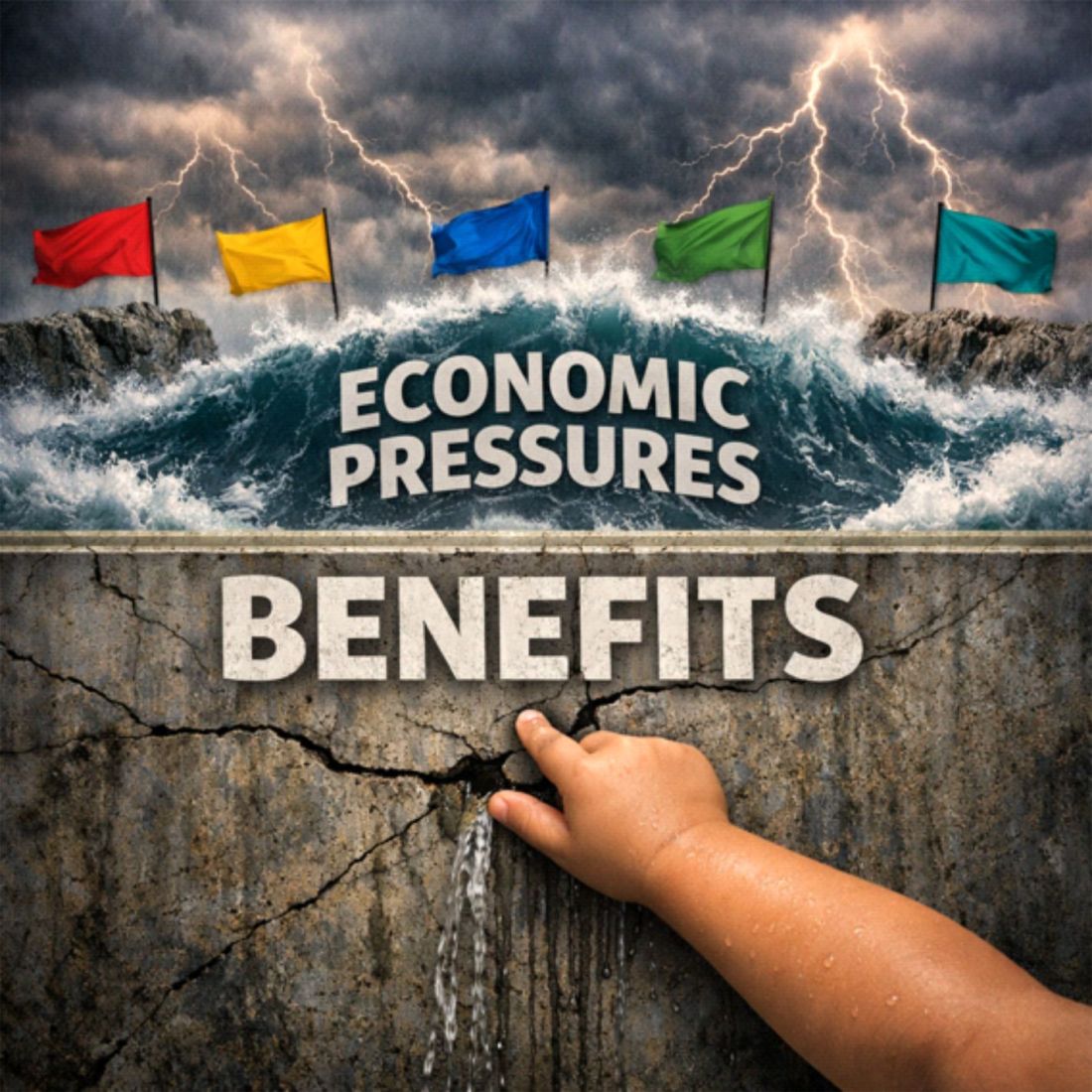
The Finger in the Dam: How Britain’s Benefits System Is Holding Up a Broken Economy
https://adamtugwell.blog/2026/06/04/the-finger-in-the-dam-how-britains-benefits-system-is-holding-up-a-broken-economy/
This develops the argument further by presenting welfare as structural infrastructure: the pressure valve holding together an economy where wages, rents, living costs and debt no longer allow millions of people to live securely from work alone.
The wider system: inequality, culture and belief
Being on Benefits Isn’t a Culture; for Many It’s a Living Hell
https://adamtugwell.blog/2025/03/24/being-on-benefits-isnt-a-culture-for-many-its-a-living-hell/
This piece challenges the idea that benefits are a lifestyle choice. It shows how the benefits system, low pay, foodbank use, debt and public judgement combine to create fear, shame and practical difficulty for people who are already under pressure.
When the System Runs Out of Road
https://adamtugwell.blog/2026/06/15/when-the-system-runs-out-of-road-britains-benefits-crisis-the-defence-dilemma-and-the-limits-of-an-economy-built-on-low-wages-and-public-subsidy/
This piece widens the benefits discussion into a broader systems argument. It explores why governments face narrowing room for manoeuvre when an economy is built around low wages, public subsidy, household debt and rising costs.
The Hidden Gap Driving Britain’s Benefits Crisis
https://adamtugwell.blog/2026/04/15/the-hidden-gap-driving-britains-benefits-crisis/
This article explains the gap between what work pays and what life costs. It is especially useful for readers who want the core economic argument behind the claim that benefits are increasingly being used to subsidise low wages rather than simply support unemployment.
A World of Broken Dreams That Were Never Ours
https://adamtugwell.blog/2026/06/18/a-world-of-broken-dreams-that-were-never-ours/
This essay extends the argument beyond poverty itself, looking at how people blame themselves for failing to reach goals and expectations they did not truly choose. It is a useful bridge between personal shame and wider cultural conditioning.
The Real Two-Tier Britain: The Split We Still Refuse to See
https://adamtugwell.blog/2026/05/22/the-real-two-tier-britain-the-split-we-still-refuse-to-see/
This piece gives readers a fuller version of the structural divide explored in this essay. It argues that Britain’s most important split is not primarily cultural or political, but economic, security-based and increasingly invisible to those not yet on the wrong side of it.
The Establishment Is Not What You Think It Is
https://adamtugwell.blog/2026/07/15/the-establishment-is-not-what-you-think-it-is-why-the-modern-establishment-is-a-worldview-not-a-class-and-why-that-makes-it-so-hard-to-escape/
This article reframes “the Establishment” as a worldview rather than a fixed class or hidden group. It may help readers understand the cultural operating system that normalises hierarchy, extraction and the belief that existing economic arrangements are inevitable.
For readers who want the deeper economic framework
The Impoverishment Index
https://adamtugwell.blog/2026/05/29/the-impoverishment-index-a-report-on-the-widening-gap-between-official-economic-narratives-and-real-world-lived-experience/
Best read after the pieces above. This is the most detailed and analytical work in the collection, bringing together many of the themes explored throughout the previous essays. It sets out the wider economic framework behind the argument, focusing on the growing gap between official economic narratives and the lived reality of declining living standards, financial insecurity and erosion of opportunity experienced by ordinary households.