Qualified academically or not, we are all capable of greatness or of being complete and utter fools

Qualified academically or not, we are all capable of greatness or of being complete and utter fools

As humans, we love difference. We love it so much that we use it as a way to qualify other people by colour, gender, sexual orientation, financial and material wealth, social background, taste, appearance and in many other ways too.

Many of the benchmarks we carry within our own personal make‑up, as we attribute value to others, are unconscious or, to the world outside us, completely hidden.

The fact that we make these judgements behind closed doors means that no matter how hard do‑gooders attempt to legislate or control our behaviour, controlling other people’s thinking at a personal or private level is a battle that even the most politically correct amongst us will never win.

The obsession with qualifying others

We have become obsessed with legitimising our qualification of others when it suits us. Society provides markers intended to help, yet we use them to create differences that stand far outside their original purpose.

For a long time, academic qualification has increasingly been used as the preferred way to distinguish ability, attitude, application, intelligence and countless other traits. To the audience, these markers become a convenient way to judge whether someone is “qualified” or not.

By bypassing the cold, hard reality that academic qualifications – whether GCSEs, A Levels, Degrees, Masters or PhDs – are simply benchmarks created in someone’s (usually an academic’s) thoughts, the elephants of our society have fallen head over heels into the trap of believing that academic standards portray the genuine quality or value of every individual. They do not.

Angela Rayner and the cruelty of perception

Yesterday, we witnessed these maleficent social anchors at their worst, when Shadow Education Secretary Angela Rayner was ridiculed for having what are considered to be four very poor GCSEs and, academically speaking, no more.

Whilst Labour and their principal spokesperson for Education demonstrate little credibility in terms of the policies they have been putting forward with an eye on the upcoming General Election at their Party Conference this week, there are few of us outside Westminster who could list on one hand the number of politicians from any Party who we could hand‑on‑heart consider credible in fulfilling their roles properly and representing the people well.

Perception is everything – particularly when it comes to the influences on our thinking and lives played out on social media and TV.

Just because an MP or politician looks good on camera, comes across as confident, sounds competent or can boast an academic CV that includes Eton, Oxford or wherever it may be, the reality may be – and in many cases is – that they are not “qualified” by being any such thing.

The lost value of real‑world experience

We have learned, and increasingly been conditioned against, the value of life experience and the practical understanding of people, business, community, and the views that time in the real world brings.

We have reached a stage where we look for things that make high‑profile people stand out for all the wrong reasons, mistakenly thinking those reasons are right.

There is rich irony in the fact that it was the Labour Government of 1997–2010 that pushed qualification bias to its extreme by suggesting that everyone should have a degree.

This malignant and ill‑conceived step has contributed to the biggest shift in perception about what qualifies a person. It has pushed us further away from regarding each individual as equal and the same.

The consequences of commercialised Higher Education

The meddling of Angela Rayner’s political predecessors bears much responsibility for the commercialisation of Higher Education. The rancid truth is that many young people have been condemned to financial servitude by a past Labour Government, encouraged to take degrees that nobody in industry values.

Others are being left behind simply because they are excluded by a system that frowns upon anyone not academically inclined, or because they know that a lifetime of debt is not something they can realistically afford.

Education, in its real sense, is only partially academic. No matter how any person is educated, they are equally capable of greatness or of behaving like fools. The suggestion that people are only capable of anything great if they have good academic qualifications is fundamentally flawed.

A better way forward

When we finally have a Government led by politicians who are responsible and not so easily led, the hard decisions over how we educate and support our young people will be addressed properly.

The focus will return to the basic reality that as teenagers, we are pretty much all either “heads” or “hands”. Once we value the fact that not everyone in their early teens is ready or able to spend another seven years in books, we can get back to providing real parallel educational – not academic – pathways.

Developed properly with business, and with the opportunities that Leaving the EU will give us, rewarding lives for people – whatever their background or birth – will, for many more of them, be fully assured.

Degree level entry for all Police Officers is a retrograde step which will push a common sense approach to policing even further away down the bureaucratic queue

With everything happening across the political and public sector world feeling so very uncertain already, it will have come as a surprise to many that the Government has allowed the College of Policing to announce that candidates wishing to become Police Officers will be required to have Degrees from 2020.

The reasoning cited behind this move is the increasing level of activity within the role including the research which Police Officers are required to undertake online. But is this itself really justification enough to raise the bar to an occupation and public service which in recent years has been a key target to become a lighthouse of diversity?

Information Technology and ‘web fluency’ levels are arguably highest within the generation now reaching the workplace at 16 and above – irrespective of the level of formal education they have attained, simply because use of smartphones and PCs to access the web has now reached a point of social permeation where children are culturally conditioned in their use. To suggest otherwise would arguably demonstrate just how seriously out of touch our policy makers have now become.

Cyber-crime has become increasingly prevalent. But it has not in any way superseded the need for real-world policing, which has itself become painfully absent in recent years as a mix of bureaucracy and the public sector funding crisis have hit the Police Service very hard indeed. The widespread perception exists that the physical presence of our Police forces have now dwindled to a point where it would logical for us to ask if our communities are really safe.

The concept that more can be delivered using less is one that is now followed in every sector. In some cases there are significant efficiencies that can be made within organisations of all descriptions, particularly when new technology can reduce the workload or requirement of staff numbers. However, this is not without consequence as the current raft of strikes in the UK have arguably displayed. There is also a significant question to be addressed regarding these economies being made when the financial benefit has become the priority over the experience of the customer or members of the public.

Like many, I grew up with a respect for the Police which is increasingly hard to justify, given the level and type of interaction which Police Officers and Police Community Support Officers now have within the community. The focus on a system of delivery where you once felt that a Police Constable really did have autonomy as they enforced and represented the Law appears to have long since left the building. It appears to have been replaced with a bureaucratic nightmare where Officers now have to look over their shoulders before they decide either to engage or to act.

It may seem romantic, but an age where a Police Officer didn’t have to resort to making arrests or presenting Court Summons to achieve a real-life result with ‘petty crime’ was not so long in the past. Yes, these Officers of the Law did not have to chase their quarry online, but they also engaged with would-be criminals in a much more meaningful way. One which was adapted to the specific circumstances they were addressing and did not result in so many young people being tarred by acts of stupidity which with the arrival of the net itself, have become far too accessible to the people looking for controversy who need no degree to go searching for any mud that can easily be used to stick.

Most of those less senior Officers had very little formal education. But what they did have was life experience and common sense by the bag load; the essential ingredient for constructive interaction with people of all levels and of all kinds.

Being ‘streetwise’ isn’t something that can be taught from a text book. One of the simple facts that the College of Policing may be seriously overlooking, is that degree level students want to earn their money straight away. University leavers will not have the world view or wherewithal that the public should be able to expect any Police Officer to have, whilst waiting for the graduates who would make ideal police officers to gain experience in other occupations first may prove to be a fruitless exercise given that they will probably stay in other safer, more lucrative and perhaps even more rewarding careers if they have by then already found them.

Police Officers in the UK already undergo extensive training to support them in their roles, and extra modules to support non-specialist officers to fit their IT skills to the purposes of our Law enforcement regime would be no quantum leap for those who have qualified for entry by today’s terms.

Sadly, this move towards elitism within the Police Service has all the hallmarks of taking one very large step in the progress of bureaucracy too far and risks disenfranchising communities from those in power beyond that too.


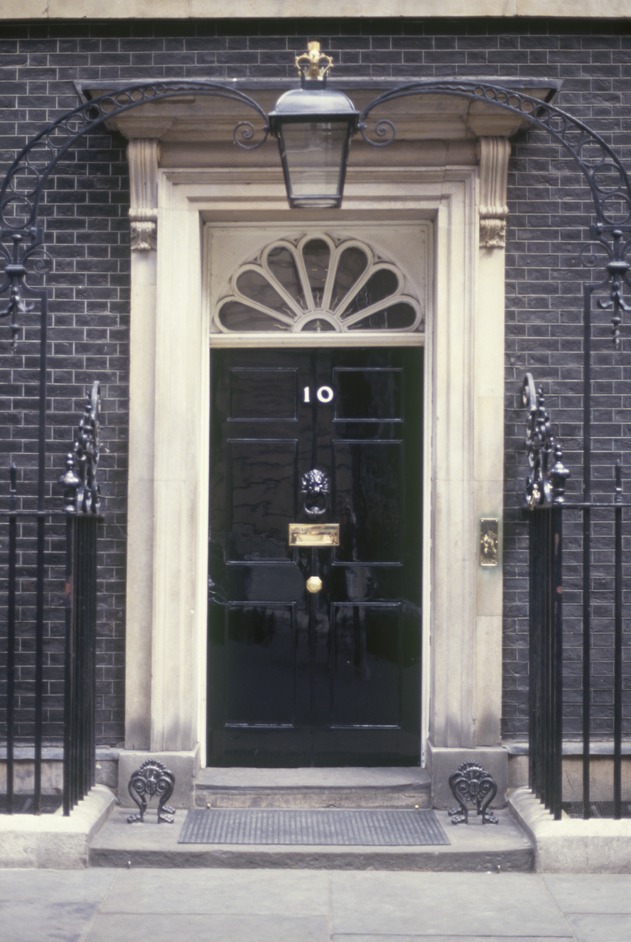
Jail terms for public servants who overlook their safeguarding responsibilities sounds tough. But if the cause of the problem is actually government wide, should David Cameron be volunteering himself for 5 years in prison rather than another jolly in No. 10?

Rotherham has already reached such levels of notoriety in local government that the place name has itself become synonymous with the darkest aspects of our society and the lack of responsibility taken by those who we all somehow know simply should have done much better.

At first account, David Cameron’s announcement that any public official – whether an officer or politician – who is shown to have overlooked child safety issues may soon face a jail term, sounds exactly like the kind of tough-minded policy making that we all really want to have coming out of Westminster.

Many of us will agree with the sentiment.

But then, what if those responsible didn’t actually see a problem? What if they didn’t ask questions, because they didn’t see it as their job to do so? What if those individuals were more sure of difficult consequences as a result of speaking out than they were of being any help to others by doing so?

We do not know the specific circumstances and chronology of all the events and actions that contributed to Rotherham. But neither are we likely to do so, given that inquiries will reflect the often-accepted perception that all decisions are black and white in nature, and that the evidence will speak for itself.

On one level it will, and particularly so when there is a kneejerk response from Central Government to the idea that an individual can always be blamed.

However, the thought processes we all have are still thankfully just our own. Very few of us would willingly provide a word-by-word account of what we have ever at any one time thought – even if we could remember the exact detail for long enough to do so.

Regrettably, in terms of getting tough on those who neglect their responsibilities to the public is concerned, the PM’s plan is a measure which neither accounts for the inadequacies of the government system as it exists today, nor the people who are and who have been in the position to actually do something about it – even now.

Let us be in no doubt, child abuse is horrific however you consider it. Public officials failing to protect, safeguard and prevent the abuse of vulnerable people of any age within our communities is an inexcusable act in every sense.

But it has happened, and it is probably happening in places where we wouldn’t dream it to be even remotely possible, right now. And it may well have been missed because public servants were doing exactly what they understand their job requires them to do.

Whilst this one emotive subject has captured the public imagination and the vote-seeking cynicism of one political party as it thinks of the General Election in May, lack of responsibility on the part of public servants extends way beyond the realms of what government currently calls ‘safeguarding’.

There is an institutional failure at work, which permeates every part of the political, executive and administrative tiers of government, NGO’s and public services.

Decisions effecting the lives of you and I are in no way guaranteed to be made in our best interests by the very people we have elected and who have been employed to serve us.

Just as children have and may still be being abused when someone might have been able to stop it from happening, other people may actually be dying because people with responsibility for others at many different levels are not considering the real impacts of their decisions on the people in their care, when we all objectively know that they should.

Outrageous as this all may sound, tackling this problem, whether it is the way that a medical product is purchased within the NHS, a planning decision is made within a district council, or the action taken within social services means that a child is left exposed to the influence of someone who is considered as the member of an ethnic minority first and a peadophile second, may in no way be as simple as it may look.

Solving these many problems facing our public services is not as straightforward as punishing individuals for overlooking, or deliberately ignoring information or experiences that that public servants have had in their roles.

Before anything else, we have to understand at least some of the basic rules of the protectionist and ineffectual culture, which exists throughout our Public Services.

Only then might we begin to find solutions without automatically attacking those, whose actions would perhaps look very like many of our own, were we to find ourselves working and considering where our own responsibilities would stop in the very same circumstances.

Government is not a happy place. It stands to reason that if the people who are sat at the top of the tree behave in a certain way, the same kind of behaviour will soon begin to manifest itself throughout the branches and departments of the organisation below, often with consequences that could never have been foreseen.

My own experience comes directly from working within a local authority, with a national charity, as a politician, and anecdotally through third hand contact throughout. Its real, its tested and I have experienced first hand how the whole system is failing us all, because it is fundamentally, institutionally and culturally sick.

What follows is an overview or perspective of Local Government alone. However, many of the points raised will be applicable to any government body or what we would call a public service.

Whilst I have attempted to focus my thoughts on specific areas, the reality is that there is significant overlap, and the behaviors, processes and methods discussed are very much interdependent, effecting and effected by many different factors and the input of Officers, Politicians and Central – or Westminster-based Government alike.

  • Managers are increasingly becoming qualification rich and experience poor, as part of a ‘textbook technocracy’. The system rewards those who dedicate themselves to playing the progression game, much as it does the politicians. Those climbing the career ladder are usually specialists in one area, rather than having had a grounding in a variety of operational areas where they will have gained a broader understanding not only of the technical aspects of other service areas, but of the life issues and behavior of the wide variety of people from different backgrounds that the staff they will soon manage are interacting with daily. This is not a problem that is exclusively attributable to the most senior levels of management. With an increasing push to share services and responsibilities both within and with other authorities, lower tier managers are now finding themselves with roles where frontline experience of service provision can be critical across many disciplines. The results are plain to see, and as experience is lost through natural wastage, redundancies and attractive jobs with private business, good management is increasingly becoming reliant upon luck, rather than good judgment. When you have deficient management, you then become reliant upon political leadership and that is often as inadequate, if not more so than the relevant officers within the executive itself.
  • Many people are unaware of how desperate the financial circumstances facing the Public Sector actually are. In local government, funding for services is not solely raised by Council Tax alone, and what we pay each month is itself shared out between our local parish, district, county and police authorities. Central government provides an annual settlement or grant to our councils which is being continually lowered and this process has been speeded up throughout the period of Austerity. Some of this is being given back in the form of incentives, such as the New Homes Bonus, which relates to the number of new homes built in the area of the Authority during the year. Unfortunately, payments like this are a two-edged sword and are effectively a way of coercing local authorities to implement government policy and keep doing so, simply to maintain income which is otherwise irreplaceable without cuts.
  • Current Government Policy is not normally to allow rises in Council Tax above 5% annually. But even with this, there is a tendency for many ruling Political Groups to keep this figure as near to zero% as possible, simply as voters are likely to respond to this form of taxation and the way it has been decided than any other. The downward side to this ‘crowd pleasing’ approach is that Council Tax income is often not increasing in line with normal price rises (inflation), whilst other forms of funding are also being cut. This means that authorities aren’t even financially ‘standing still’, and have no option but to cut services, reduce staff or share services with other authorities, which is a process which ultimately takes power further away from the people. Money is tight and decisions are being made that are effecting lives, based upon funding alone. It’s not necessarily because the person on the other end of the phone doesn’t care, but because they have to decide who gets the fixed amount of money (the budget) that they have available.
  • Politically speaking, ‘can do’ is actually ‘can’t, don’t’. As is the case nationally, local government is experiencing a critical shortage of politicians who are ‘in it for the right reasons’. Of those who are – or get first elected on the basis that they are, many are simply not equipped with the experience or leadership-related–confidence that ALL politicians, at every level of government need to effectively represent the people who elected them – within what is actually a leadership role. This functional naivety leaves party dinosaurs unchallenged from within their own ranks, and officers increasingly able to guide policy on the basis of what works most safely for them, or for the furtherance of their CV’s. The situation is growing progressively worse and is only becoming enhanced further by the policy coercion which comes either from Government, or from the National Party HQ’s.
  • Despite the perception that local government makes decisions, much of its responsibility lies in the form of interpreting law and legislation which has been created by MP’s and civil servants in Westminster. Central Government retains the right to overturn local decision making that doesn’t meet the rules that it has set. The reality of this is that decisions are increasingly made on the basis of strictly adhering to central legislation, rather than what local need may actually require. The most obvious manifestation of this can be seen within the Planning and Licensing functions, where decisions are made that are openly transparent within a process with which members of the public or business community interact. When even our local policies are made very much on the basis of frameworks which have been set in London, politicians and officers alike are becoming more and more inclined to defer reasoned judgment on real life decisions they are facing on behalf of the public, to a subservience to a ‘greater power’. The financial, cultural and institutional aspects of the problem play heavily into this process also, but the greatest irony of the controlling way in which Central Government runs every part of the government, is that the structure already exists which would allow power to be well and truly devolved to local people – were it able to work as it could. The legislative problem is reflected in the attitudes of politicians and officers alike and is becoming ever more obvious to observers. Policy making has become a truly questionable process, the machinations of which were once only thought of, or perhaps spoken about behind closed doors. It is now openly discussed in public in a way that simply beggars belief.
  • The bureaucratic structure within Government is continually tightening, despite the messages we hear in the media to the contrary. Common sense; being allowed to think on your feet; taking into consideration all that factors which are specific to each and every case. These are all no more than ideas in a heavily proscribed environment, which leaves officers and increasingly elected members also having to adopt a highly arbitrary approach to decision making. The Influence of the rights culture has come significantly in to play and the creation of increasingly detailed and instructive processes are removing the human touch from interaction between councils and their customers, all to ensure that risk is limited to the remotest degree. Put simply, decision-making has become increasingly black and white when real life is a very grey area. Managers report upwards through respective line management to their CEO, who in turn reports to the political leadership of the council. Less senior politicians have very limited means to address performance issues relating to officers, which have to be passed to department heads, or to a council’s delegated committee which deals with employee issues – one which is often assembled politically. When both the political and executive leadership are incompetent, there is no robust system in place which will enable anyone to do anything about it. For a complainant, speaking out to the media is a highly risky approach to take, and one which is seriously frowned upon, when you are effectively bringing in to question the actions of the Authority of which you are yourself a part.
  • Officers operate within a protectionist system where responsibility is the equivalent of risk and where risk is to be avoided at all costs. Staff are closed down to wider issues affecting the organisations they work for and operate often with a kind of tunnel vision which effectively thrives on passing the buck, or more often than not, simply assuming that someone else will pick the issue up departmentally or organisationally – either because the person who raised it will just assume they need to go elsewhere, or because they just don’t have to deal with anything that sits outside of their job description. The way that we see this manifested most clearly is by the way that consultants are often employed – at great cost – to write reports, giving conclusions or recommendations which departments and whole organisations already understand and will normally have had skilled staff employed to know very well before. The views of a third party are somehow and mistakenly perceived to give a level of legitimacy that nobody employed to actually do the job could provide. Decisions often become assignments for ‘contractors’ by being passed from one level of management to the next. Nobody wants to rock the boat and put at risk what has historically been one of the safest occupations to have, with gold-plated consequences at the end of a highly uneventful career, doing all that it takes to keep your nose clean.
  • Managers have a clear distrust, and in many cases open contempt for the members of the authorities that they work for. This is a situation which has been exacerbated by the lack of interest that many politicians actually show in the areas of responsibility that they have – if they understand them in the first place. Managers often forget that they are employed by the council itself – which is the body made up of the elected members. Indeed, even a CEO is technically the clerk to the council, a point which is well illustrated by the role and position they often take up in council meetings.
  • The business of government today is more autocratic in nature than it is democratic and could easily be compared with the feudal system. Democracy leaves the building almost as soon as the votes have been counted in elections and then decisions are nearly always made under the guidance of those politicians upon whom power has been centralised. Genuine debate is stifled by restrictive procedures and processes which effectively enable officers and politicians to duck drawn out examination processes which would allow real answers to be produced within public forums.
  • Scrutiny processes are generally very weak, ineffective and are failing to serve the public interest in any way. Scrutiny is often treated with distain by controlling political groups who believe that their elected majority gives them and specifically their leadership a level of legitimacy that should not be questioned. Scrutiny cannot be relied upon by opposition groups who are unlikely to successfully influence the decision of a majority using what is currently an arguably worthless ‘checks and balance’ process, unless there is a problem so clearly obvious with a policy, that it almost certainly wouldn’t have been adopted anyway.
  • The political system does not currently encourage strong leadership – usually based upon experience, which is often perceived as divisive in a system where it is normal for politicians to be working to an agenda of some kind. Ineffectual or ‘all things to all people’ styles of leadership are however in practice very weak, opening the door to poor guidance from officers which in such circumstances could be viewed as almost being coercive. When that executive leadership is itself weak, inadequately experienced or just as self-serving as many of the politicians, the results will speak for themselves.

The issues are different for each and every public service organisation, and will almost certainly cover areas that go way beyond what has been described here.

There are also many exceptions. There are some truly exceptional officers and politicians in local government who are doing what they can to ‘get it right’.

There are many more officers and politicians who could be just as exceptional. But the system simply doesn’t encourage them to give the public service that they are capable of giving, and that we, as taxpayers should reasonably be able to expect.

If you consider all of the points that have been made; allow for them to be adjusted, moved or even considered in a different place, you might begin to be able to visualise just how complex the institutional crisis facing all government or public sector organisations actually is, and how critical it has now become that meaningful reform be enacted throughout, for the best interests of all.

The required process of change can only begin from the top. The legislative levers that must be moved to instigate change, are more than ready to be pulled.

The change needed has to be undertaken with the level of understanding, impartiality and diligence that will be essential in ensuring that all forms of self-interest are not only removed, but no longer tolerated within an extremely complex system that exists and should only ever exist to serve the public.

Decisions are being made right now on the basis of ‘what if’ and ‘what will be the consequences for me’ throughout the system.

Officers and politicians are not working within a culture which equips, enables or encourages them to empathise with the people they are supposed to help, or to look beyond and consider the consequences of their decisions and actions for others in any sense.

This is itself highly reflective of the processes which successive Governments have inadvertently nurtured, maintained and developed, and there would be great difficulty in criticising officers within any authority operating at any level for taking this approach, when the example that they continue to be set by Westminster is simply telling them that this is an acceptable way to carry on.

Public servants who fail the people they are employed or elected to protect should be expected to take full responsibility for their actions.

But when the institutional culture of government and public services tells them to do everything but make reasoned decisions alone, it must logically follow that those responsible for the system itself must take responsibility for the faults that lie within it.

So before doling out 5-year jail terms for the people who may just be scapegoats and the easiest to blame, should David Cameron perhaps be volunteering for 5 years in Prison rather than another jolly in No. 10?

This article was converted to PDF and its accompanying image was updated on 10 October 2026. The original text remains unchanged.

Without Legalising Assisted Suicide & the Right to Die, it is an uncomfortable truth that we are kinder to our animals than we are to other human beings

Without realising that we even do so, it is quite normal for us to look upon any situation and even the content of a conversation in terms of how its content affects us personally at some level.

Fear permeates the decisions that people make at the deepest levels and whilst this can easily prove to be a self-destructive trait, it can also lead to arguably selfish acts in the extreme, when considering the impact and consequences these decisions can have upon others.

Most of us grew up conditioned to think this way and unaware of the processes at work. It is therefore possible to become quite blasé about the way we talk about issues which may not seem to affect us directly, but nonetheless have the effect of pushing a deeply concealed emotional ‘button’ that twangs our personalities just the same once pressed.

Death is one such issue and one that provokes all kinds of responses from people. Probably because of the many unknowns that surround it and the very definite nature of its existence for us as part of our human experience.

When I suffered the acute stages of a serious illness that nearly killed me at 28, I was forced to look my own mortality in the eye. In doing so, I became aware of how self-focused and personal the issues surrounding death can be for partners, relatives and friends who are not going through the experience physically themselves.

My own experience provided invaluable insight and understanding when dealing with the terminal illness and decline of my father, whom I hope may have been at some advantage by having such nearby support.

Sadly, others forced to deal with their own mortality and the many conditions that facilitate terminal decline do not receive that same level of understanding and selflessness that they need from us all and it seems incredible that rules are made for the dying by a majority who have never or may never have experienced what it could be like to be terminally ill, when their perspective on mortality may be dramatically different from what it may be right now.

Our inherent fear of death and the lack of control that we have over it does mean that for many the issue of Assisted Suicide or Right to Die is undoubtedly a personal one. Rather than it being a matter of ethics as many in the world would prefer us to believe.

Very few people are likely to covet death at any time; even those who commit suicide without any form of premeditated suggestion that they are readying themselves to do so.

Suicide is itself a matter of escape and release at a very personal level. It is unlikely that any other person will ever understand the complexity of issues, emotions and pain that any suicidal person is experiencing at that time – no matter how learned they are or how well they have been trained.

It is the same for those contemplating the need for Assisted Suicide or their Right to Die.

As a society, we now not only need to recognise this; we must put personal feelings and perceptions aside and provide help to those who have reasoned and concluded that it would be better for them to be assisted to end their life, without any threat of recourse or stigma being attached to those who have provided or would willingly facilitate that help.

Our fear of Legalising Assisted Suicide and the taboo of the subject are borne from the concern that through illness or debilitation, we could find ourselves or loved-ones unable to communicate with or have influence with the outside world as we now know it. That subsequently, the decision will be made to end our own or their life in that situation whether we consent to it or not.

Such perceptions have been helped little by interpretations of Health Authority Policies such as The Liverpool Pathway. But this should not prevent us from dealing with the subject as we should. If anything, this is the strongest evidence that everything possible must now be done to get this difficult subject addressed in the right way for everyone – and not least of all those who it really concerns.

With input from the Medical Profession, the Government could easily legislate to put the necessary stop-guards in place that would provide the best assurances possible against abuses of a Right to Die.

This could include processes such as a perquisite consultation with 3 independent Doctors and/or Psychologists. Professionals who are likely to know quickly, if an Assisted Death is the right solution if they are able to selflessly put the interests of the patient in question first without any other influences coming in to play.

There is no doubt that those suffering with horrific and terrifying conditions such as Locked-in Syndrome or those who have such low quality of life because of their physical conditions or deterioration should have the right to end their lives, with help, if they so choose.

We must all now be big enough to put our own fears aside and make it as easy as it can be for them to do so.

Without Legalising the Right to Die, it is an uncomfortable truth that in terms of our approach to ease of suffering, we are selfishly kinder to our animals than we are to other human beings.

Government is not the same thing as a business, and should never be run like it is one

AU491810_942long

The word ‘business’ conjures up different meanings for different people, depending on their background and of course what exposure they may have had to its use or application.

Most will agree that its use as a term suggests enterprise and methods of working which would sit snugly within a commercial environment. But should this word actually be applied to the modus operandi of any form of Government when the two terms are completely incongruous?

Much is made of the idea that the best people to run Government at any level are those who have a business background. One of the current arguments against the demographic makeup of our MP’s today is the substantial lack of solid business experience possessed by those who lead the Country from Westminster, with the accompanying notion that MP’s who have run or owned businesses of their own would somehow automatically have an almost esoteric level of understanding and midas touch which would solve just about any problem. They wouldn’t; they don’t and they never have.

With years of Local Government experience as both an Elected Member, an Officer and from working within 3rd Sector Organisations alongside, I have also often heard the term ‘business case’, ‘business plan’ and the idea often suggested that Councils are now run ‘like a business’ in meetings.

The problem with this is of course that the political leadership and members of Councils rarely have ‘hands on’ experience of running any kind of business you could draw reasonable parallels with themselves, and when they do, it is often the case that it has been so long since they did so, that any lack of an appreciation that time moves on or that things continually change will soon erode any tangible benefit.

Perhaps worse is the ability that Officers and Civil Servants have been gifted by political demographics and the opportunity to use such terms in plans, which are then taken as read by those who simply don’t know any better as being a true ‘business case’, when such ‘business’ cases could never be any such thing.

Recognising the differences between running a business in its purest sense, and running Government under the delusion that it can be run as business has never been more essential for today’s politicians, because neither Central or Local Government are businesses, and the people running them have to stop believing and behaving like they are.

A business is of course run for the profit of an individual or shareholders. All decisions will normally be made with the form of pay-off that they will receive firmly in mind. It can be expanded or changed to meet the demands of customers as it sees fit, and a business can choose which customers it may wish to target and how much profit it will seek from delivering any particular product or service. Its revenues are never guaranteed.

On the other hand, Government does not run to make profit, but to provide services and support for all those which it has been elected to serve.

Run properly, Government would not actively target any particular group of customers to provide a different quality of service depending on the feedback or profit that it gets from that group, and would work to meet demand for services as best and prudently as it can, well knowing that it has a duty to do so without seeking payment from one customer to pay for the benefits of another, or to irresponsibly borrow money from lenders that it knows it doesn’t have the appropriate levels of revenue to comfortably repay.

However, Government revenues – as long as they remain sensible – will always be guaranteed, and it is with this significant difference that come the even greater levels of responsibility than no one business should ever realistically be able to have.

One of the greatest dangers facing us as a society comes from the fact that politicians at all levels of Government have either failed to recognise these basic differences and therefore maintain them, or have willingly abused their ability to raise revenues to cover badly managed services or implement policies without any due regard to striking the balance for every member of this society or in applying fairness to all, while they have given every thought to political expedience and electability.

The British political system is broken, because it has adopted those very same values of a profit-making business, which are to further the interests of that business. For politicians, this comes in the form of power, whilst they have ignored the basic rule of business as they have done so; the rule which states they must deliver profit to every single one of the shareholders rather than to themselves. Profit in this sense should always be seen as the delivery of the same results for all.

So if our politicians really feel that they have to treat Government like a business, they then must also realise that if they continue to keep raising the fees on the same old products time and again without offering new products and value for money, they will soon price their offerings way beyond the purse of the people who normally pay, and the cash will soon start ceasing to flow.

Government is not run for a financial profit, any more than it should ever be so for the bottom-line benefit of just the ‘staff’.

Whatever their backgrounds, experience and level, politicians must remember that they are the managers; the facilitators; the decision makers; not the beneficiaries themselves – and especially so where the end profit is not even perceptively the same as what it would be for a business.

The time has long since passed when the electorate could continue to live decent lives, whilst those within Government continue to focus on the end result for themselves. Government is not the same thing as a business, and should never be run like it is one.