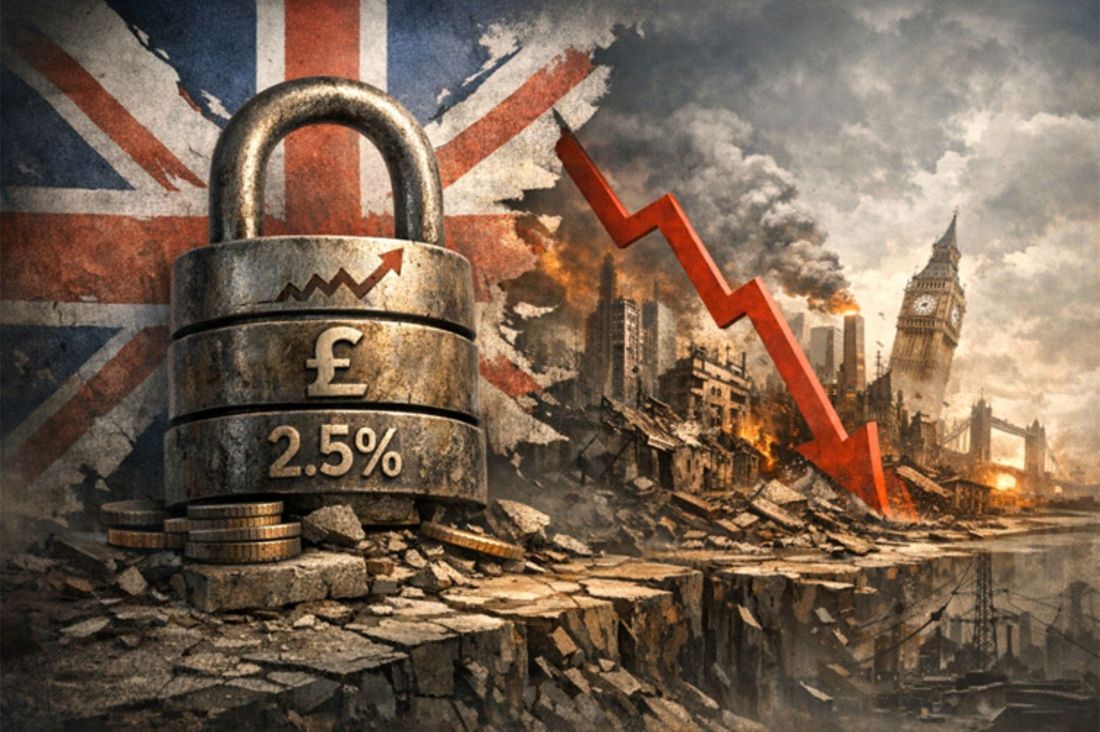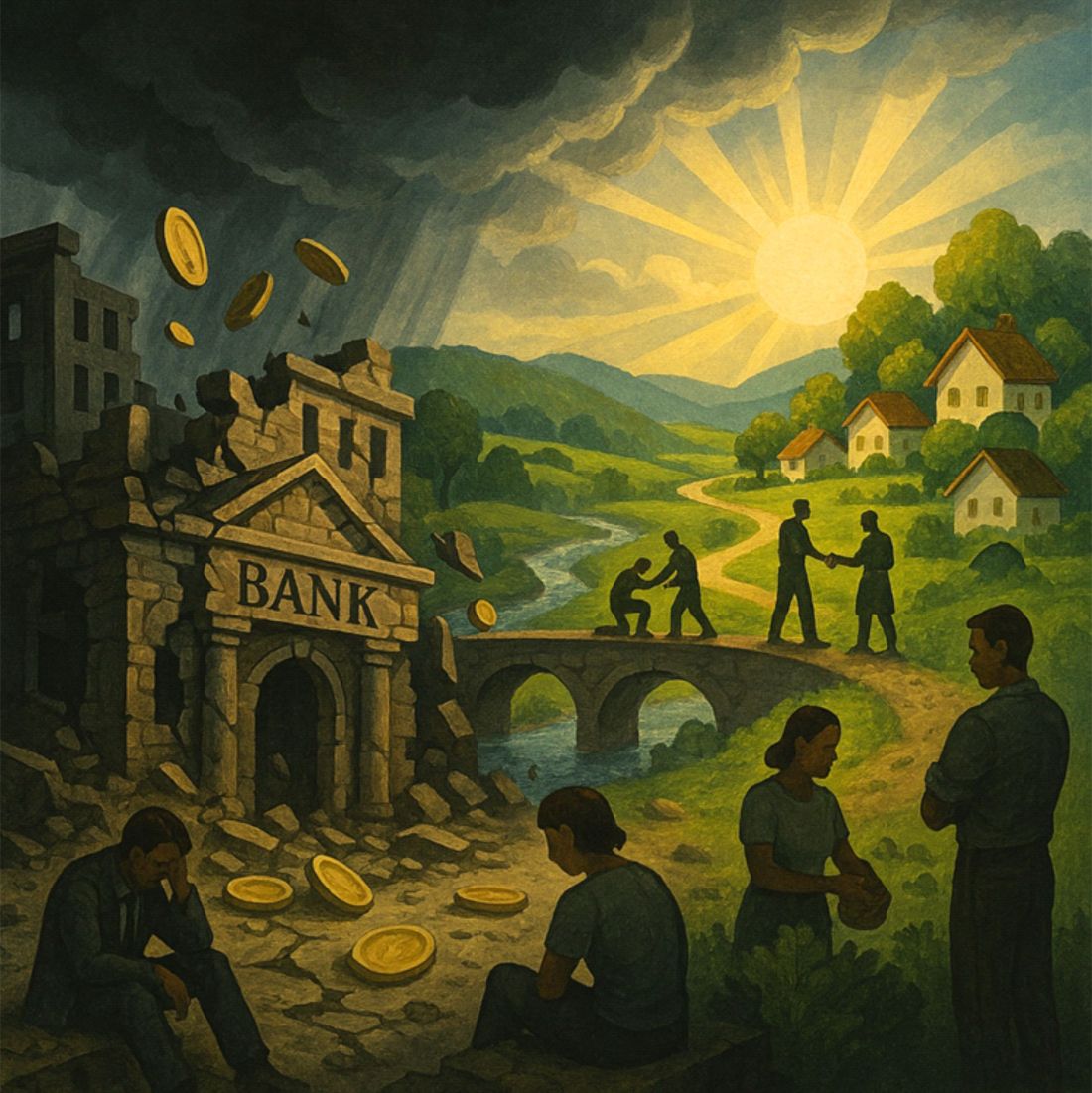

The Real Two‑Tier Britain: The Split We Still Refuse to See

We like to believe that if something is real, we would see it. That a divide in society would be obvious, visible, tangible.

But the most profound changes in a nation rarely announce themselves. They creep in quietly, shaping lives long before anyone realises what has happened.

Today, Britain is already a split society – not becoming one, not drifting toward one, but living fully inside one. And the reason most people cannot see it is simple: we have been conditioned to look at the wrong differences.

The real divide is structural, economic, and existential. It is the difference between those the system rewards and those it punishes. And the split is widening every day.

The Blindfold of Visible Differences

We live in a culture obsessed with what can be seen. Identity, labels, categories, tribes – the system elevates these differences because they are emotional, dramatic, and endlessly distracting.

Diversity, in its current institutionalised form, has become a paradox. It celebrates difference while deepening division. It elevates identity markers that have no bearing on power, security, or opportunity, while ignoring the structural forces that determine all three.

These visible differences become the battlegrounds of public life. They stir emotion. They create polarity. They keep people fighting each other instead of questioning the system that shapes them both.

Meanwhile, the real difference – the one that defines who thrives and who suffers -remains invisible.

The Narrative That Keeps Us Looking the Wrong Way

We have reached a point where people believe only the stories told by the “right” voices.

Narratives have become truth, and truth has become whatever fits the narrative.

“Two‑tier Britain” is a perfect example. It is used as a political weapon, usually to attack public services or to frame cultural grievances.

But this version of the divide is superficial. It points at symptoms, not causes. It directs attention toward institutions and away from the system that governs them all.

Partial truths are accepted because they feel familiar. But they stop people from seeing the bigger picture – the one that explains why life feels harder, more insecure, and more exhausting for almost everyone.

The Emotional Logic of Those Who Still Think They’re Safe

What makes the real divide even harder to see is the way people who appear to be “doing fine” respond when the conversation turns to money.

For example, mention that the minimum wage is not enough to live on, and many small business owners – themselves squeezed by rising costs, falling margins, and relentless pressure – immediately reframe the issue in terms of what a higher wage would do to them.

Their fear is real. Their anxiety is justified. But it also reveals something deeper: they sense, at an emotional level, how close they are to the edge. And that fear blinds them to the lived reality of those who have already been pushed across the divide.

Instead of seeing a system that is failing everyone, they see a threat to their own fragile stability.

Their reaction is not selfishness; it is survival. But it illustrates the wider truth: the problems faced by those on the “wrong side” of the divide are directly connected to the pressures felt by those who still believe they are on the right side.

Everyone is being squeezed – just at different stages of the same process.

This is the interdependence nobody talks about: the suffering of one group is the shadow cast by the insecurity of another.

The Money System: The Quiet Engine of the Real Divide

Here is the truth that sits beneath everything else:

The system can only make some wealthy by progressively making everyone else poor.

This is not ideology. It is mechanics.

The modern economic model is not a rising tide. It is an extraction machine.

Wealth does not trickle down; it is pulled upward. Gains at the top require losses at the bottom. The system rewards accumulation, not contribution.

And because of this, financial dependence is not a personal failure – it is a structural inevitability.

People are not poor because they made bad choices. They are poor because the system needs them to be.

The national minimum wage for a standard working week is not enough to live independently. That is not an accident. It is a design.

Most people receiving benefits are working. They are contributing. They are doing everything society told them to do. And yet they cannot survive without support, charity, or debt.

Instead of questioning why the system produces this outcome, society blames the people trapped inside it. They are ostracised, shamed, and treated as morally defective – all while the system quietly ensures they can never escape dependence.

This is not a bug. It is a feature.

The Myth of Meritocracy: The System’s Favourite Lie

We are told that life follows a simple formula:

Qualifications → career → money → status → happiness

This story is comforting. It suggests fairness. It suggests control. It suggests that success is earned and failure is deserved.

But it is a myth.

Many people are vocational, not academic. Many never had the stability, support, or freedom to pursue qualifications. Many grew up in environments where survival came before study.

Yet the system values what is measurable, not what is meaningful.

Experience is devalued because it cannot be quantified.

Human ability is replaced by credentialism.

Entire generations are left behind not because they lack talent, but because they lack paperwork.

And then they are blamed for it.

Keeping Up: The New Survival Game

Even those who appear to be “doing well” are trapped.

The system moves the ground beneath everyone’s feet. Standing still means falling behind.

People who earn good salaries must run faster each year just to maintain the same life.

Mortgages, rents, bills, childcare, transport – everything rises except the sense of security.

Values shift.

Money becomes the only measure of worth.

Success becomes survival.

And survival becomes a full‑time job.

This is not living. It is coping.

The Psychological Toll of a System That Never Stops Taking

The mental health crisis is not a mystery. It is the emotional footprint of an economic system that demands more than human beings can give.

Chronic insecurity becomes normal.

People internalise systemic failure as personal failure.

Shame becomes a constant companion.

Those who fall behind are blamed.

Those who keep up are exhausted.

Those who succeed are anxious about losing everything.

Peace of mind becomes a luxury good.

The Tech Future People Fear Is Already Here – Just Not in the Way They Think

Many people worry that society is drifting toward a tech‑driven future where the “haves” accelerate into a world of automation, AI, and abundance, while the “have‑nots” are left behind in a wasteland of low‑paid work and shrinking opportunity.

But the irony is stark:

The split they fear tomorrow is the split they are already living inside today.

The future people dread – a world divided by access, opportunity, and agency – is not waiting for us. It is here. It has simply been hidden behind distraction, narrative, and the comforting illusion that the playing field still exists.

Lift the stone, shine a light beneath it, and the truth is there in black and white:

A society already divided by a system that sorts people long before technology ever gets the chance.

And the most striking part is how little those on the “right side” of the divide understand the consequences of their own beliefs and actions.

Many genuinely cannot see the damage being done to those already on the wrong side – not because they are cruel, but because the system has insulated them from the realities it creates.

They believe the rules are fair because the rules have worked for them. They believe effort determines outcome because effort has always been rewarded in their world. They believe the system is meritocratic because they have never had to live in the parts of it that are not.

But the ground is shifting.

The split is moving.

And the very people who defend the system most fiercely may soon find themselves on the wrong side of it.

The AI revolution – designed, championed, and accelerated by those currently insulated from harm – is already reshaping the labour market in ways that will not spare them.

Be it through the AI Revolution or as a result of other events, same extractive logic that has hollowed out the lives of the most vulnerable will, in time, turn its attention to the middle layers of society: the professionals, the knowledge workers, the people who once believed they were safe.

They may discover, too late, that they have become part of the same “left behind” Britain they once viewed from a distance.

Not because they changed, but because the system did – and because they never saw the split that was already there, hidden in plain sight.

Why We Don’t See It – And Why We Must

The system hides the real divide behind a theatre of false differences.

It keeps people fighting over identity while it quietly determines their destiny.

It rewards a few by extracting from the many.

It blames the victims and protects the structure.

And because the split is invisible, people suffer alone, believing their struggle is personal rather than systemic.

But the truth is simple:

This divide affects almost everyone.

It is widening.

And it will not close on its own.

To rebuild a society grounded in human values, we must first see the system for what it is – and recognise the split that has already taken hold.

Only then can we begin to close it.
The Hidden Gap Driving Britain’s Benefits Crisis

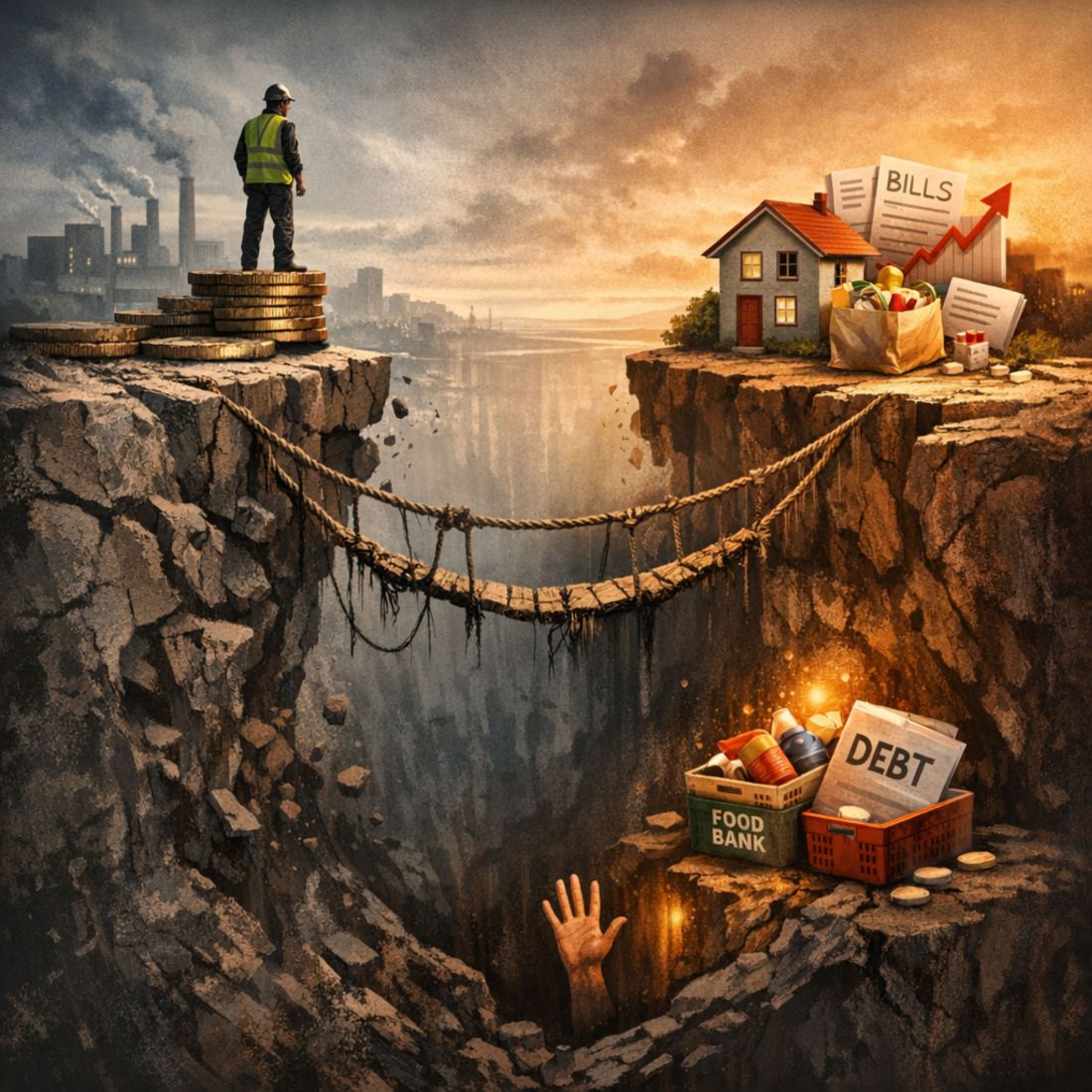
The benefits crisis isn’t driven by idleness but by a widening gap between what work pays and what life costs. Until that hidden shortfall is acknowledged, the system will keep producing dependency – and blaming the people trapped in it.

Every few months, a familiar headline resurfaces: the benefits bill is spiralling. It’s costing more than defence, more than policing, more than many of the things politicians like to invoke when they want to sound serious about national priorities.

And the explanation offered to the public is always the same. Too many people aren’t working. Too many people are “choosing benefits”. Too many people are “economically inactive”.

It’s a simple story. It’s also the wrong one.

Because beneath the political theatre lies a far more uncomfortable truth:

Millions of people in Britain are working – often in demanding, low‑paid jobs – and still cannot afford to live without benefits, charity, or debt.

This isn’t a moral failure. It isn’t a behavioural problem. It’s a structural one. And until we acknowledge that, the benefits bill will keep rising no matter who occupies Downing Street.

The real cost of independence – and the myth of the minimum wage

The national minimum wage is often presented as a kind of moral floor: the lowest amount a person can legally be paid while still supposedly being able to live a basic, independent life.

But when you calculate the actual cost of living independently – rent, utilities, food, transport, clothing, and the unavoidable basics of modern life – the picture changes dramatically.

In a blog I published in October 2023, I calculated the Real Cost of Living Wage at £14 per hour for a 40‑hour working week. Updating that same calculation for today’s prices – driven primarily by rising rent, utilities, food, and transport costs – puts the figure at £14.92 per hour.

That’s the real price of independence within the money‑centric system we have today.

Not comfort. Not luxury. Just the ability to live without relying on benefits, charity, or debt.

Now compare that to the legal minimum wage – which is today set at £12.71. The gap isn’t a shortfall – it’s a chasm. And that chasm is where millions of people live.

The dependency nobody talks about

Here’s the part the national conversation consistently misses:

If wages don’t reach the Real Cost of Living Wage, then the benefits system isn’t a safety net – it’s a subsidy for low pay.

People in minimum‑wage jobs aren’t failing.

The system is failing them.

Yet the public narrative frames benefit claimants as if they’re all unemployed, unmotivated, or unwilling to work.

In reality, a significant proportion of Universal Credit claimants are already working. Many work full‑time. Many work in physically demanding, emotionally draining roles.

They’re doing everything society asks of them – and still can’t make ends meet.

That’s not a benefits trap.

That’s a wage trap created by the structure of the system itself.

Why people on benefits don’t rush into minimum‑wage jobs

Politicians often ask why someone on benefits doesn’t “just get a job”.
The answer is brutally simple:

Because a minimum‑wage job doesn’t lift them above the Real Cost of Living Wage.

It just changes the type of dependency.

Instead of relying entirely on benefits, they rely on:

  • benefits
  • charity
  • debt
  • and often, going without essentials

All while working in jobs where they’re treated as low‑value by employers and customers alike.

If taking a job doesn’t improve your life – and may even make it harder – the system is broken, not the person.

The political blind spot: the system needs dependency to function

This is the part that rarely gets said out loud.

If every employer were required to pay wages that met the Real Cost of Living Wage:

  • many low‑margin business models would collapse
  • profit extraction would shrink
  • prices would rise
  • the labour market would rebalance in favour of workers

In other words:

The money‑centric system we have today depends on wages being too low to live on.

And because wages are too low, the state steps in to fill the gap – not out of generosity, but out of necessity.

Without benefits, millions of workers simply couldn’t survive.

This is why governments of all colours avoid acknowledging the Real Cost of Living Wage or any term or form of words that would make this reality open and clear.

It exposes the contradiction at the heart of the system.

Why the benefits bill keeps rising

The benefits bill isn’t exploding because people have suddenly become lazy.

It’s rising because:

  • Living costs have surged
  • Wages haven’t kept up
  • More people are working in low‑paid, insecure jobs
  • Health‑related claims have increased sharply
  • The gap between wages and the Real Cost of Living Wage keeps widening

The system produces dependency faster than it reduces it.

And yet the public is encouraged to blame the people trapped in it.

The human cost of a misdiagnosed problem

When politicians misdiagnose a structural problem as a behavioural one, the consequences are predictable:

  • people in poverty are blamed
  • workers are shamed
  • the public is misled
  • the real causes go unaddressed
  • resentment grows
  • the benefits bill keeps rising

Meanwhile, the people stuck beneath the Real Cost of Living Wage – many of whom work incredibly hard – are framed as freeloaders.

It’s not just unfair.

It’s dishonest.

What would happen if everyone earned the Real Cost of Living Wage?

Here’s the irony:

If every job paid at or above the Real Cost of Living Wage:

  • many people on benefits would happily return to work
  • people in high‑pressure jobs might downshift to simpler roles
  • the labour market would stabilise
  • dependency would fall
  • the benefits bill would shrink

People don’t avoid work.

They avoid exploitation.

The truth we need to face

The benefits bill is rising because the economy relies on low wages and then blames the people who can’t survive on them.

Until we acknowledge the gap between the minimum wage and the Real Cost of Living Wage – the hourly rate required for independence in a 40‑hour week – nothing will change. Governments will keep blaming individuals. The public will keep resenting the wrong people. And the benefits bill will keep climbing.

This isn’t a story about laziness.

It’s a story about a system that no longer delivers independence through work.

And until we face that, we’ll keep treating symptoms while ignoring the cause.

The Triple Lock and Structural Crisis of the British Economy

The debate over the future of the State Pension triple lock is often framed as a simple question of fairness: should pensions rise each year by the highest of inflation, wage growth or 2.5%? But the timing of Reform UK’s recent pledge to retain the policy – announced immediately after the party removed its housing spokesperson over comments about the Grenfell tragedy – highlights something more political than economic. The announcement reflected the sensitivity of the moment, not a deeper understanding of what the triple lock represents within the wider economic system.

The triple lock itself, introduced in 2010 by the Conservative–Liberal Democrat coalition and applied since 2011, was designed to ensure the State Pension kept pace with living costs. On paper, it is a straightforward mechanism. In practice, it has become a symbol of intergenerational tension and a lightning rod for wider anxieties about the sustainability of the welfare state.

Yet much of the public debate rests on a misunderstanding – not of the triple lock, but of the system that surrounds it.

The National Insurance Illusion

A significant part of the resentment directed at pensioners – and at benefit claimants more broadly – stems from a widespread belief that National Insurance functions like a personal contribution scheme. The idea is simple: pay in during working life, draw out later if needed. It is a reassuring narrative, and one that shapes how people judge who is “deserving” of support.

But it is not how the system works.

National Insurance is, in practice, another form of taxation. It creates the impression of a ring‑fenced fund, but the money is not stored or invested on behalf of contributors. It flows into the wider fiscal system, supporting pensions, disability benefits, the NHS and more. The distinction between NI and income tax is largely psychological – a way of obscuring the true scale of the tax burden.

This misunderstanding fuels the belief that some groups are “taking out” more than they “put in”.

Pensioners are portrayed as receiving disproportionate benefits, while claimants are accused of drawing on funds they have not earned. Yet both groups are navigating a system shaped not by individual choices, but by structural economic forces that have made independent living increasingly difficult.

Few pensioners enjoy the “gold‑plated” incomes often imagined. And for many, the wealth tied up in property is not liquid wealth at all – it is simply the roof over their heads.

A Safety Valve in a Distorted Economy

The official justification for the triple lock is to protect pensioners from falling living standards. But its deeper purpose is more systemic.

It acts as a safety valve in an economy where wages have failed to keep pace with the cost of living for years, and where millions rely on top‑up benefits simply to survive.

Recent calculations suggest that the real minimum income required for independent living is around £14.92 per hour for a full‑time worker – far above the statutory minimum wage. In this context, the triple lock is not generosity. It is a stabiliser in an economy where the fundamentals no longer align with the lived reality of ordinary people.

The triple lock attracts scrutiny precisely because it exposes this gap: the distance between what the economy delivers and what people need to live.

The Extractive System Behind the Debate

To understand why the triple lock is under pressure, it is necessary to look at the broader economic model. Since the financial crisis of 2007–08 – when the Labour government bailed out the banks on the grounds that they were “too big to fail” – the UK has relied increasingly on debt‑fuelled growth. Public money, or rather public borrowing, was used to stabilise a financial system whose own excesses had caused the crash.

The result was an acceleration of an extractive economic system: one that draws value out of industry, infrastructure and natural resources faster than it replaces them.

Over time, this leaves the state with fewer productive assets and greater reliance on financial engineering to keep the system afloat.

The Covid‑19 pandemic and the war in Ukraine intensified these pressures. Government spending surged, supply chains fractured, and inflation returned with a force not seen in decades.

In such an environment, policies like the triple lock become both more expensive and more politically contentious – even as they become more essential for those who rely on them.

Reform UK and the Politics of Constraint

Reform UK’s pledge to retain the triple lock, while simultaneously promising deep cuts to welfare, illustrates the bind facing all political parties.

The party argues that reducing benefits will free up resources to protect pensioners. But most people receiving benefits are not living comfortably; they are surviving on the margins of a system that no longer delivers affordable housing, adequate wages or predictable costs.

The irony is that many of the people who would be affected by such cuts were encouraged to come to the UK in the first place to sustain a model that depends on population growth and consumer spending to generate GDP. The same pounds circulate through the economy, creating the appearance of growth even when underlying productivity is stagnant.

Reform’s position is not unique. Every major party faces the same structural constraints. None can deliver the full range of promises they make without confronting the underlying economic model – something no mainstream political actor has yet been willing to do.

There is, ultimately, no way to rob Peter to pay Paul when both are already struggling.

A System at Its Limits

The triple lock debate is therefore not really about pensioners. It is about a system approaching the limits of what can be sustained through borrowing, population growth and statistical measures of economic activity.

When the government can no longer create enough debt to paper over the cracks, policies like the triple lock become flashpoints.

The question is not whether the triple lock is fair. It is whether the economic model that makes it necessary can continue in its current form.

Conclusion

The triple lock has become a symbol of a deeper truth: Britain’s cost‑of‑living crisis is not a temporary shock but a structural feature of an economy that no longer aligns with the needs of its people.

Pensioners are not the cause of this problem, nor are benefit claimants. They are simply the most visible participants in a system that has been stretched to breaking point.

The debate over the triple lock is, in the end, a debate about the future of the UK’s economic model – and whether any political party is prepared to confront the realities that underpin it.

Minimum Wage, Maximum Exploitation: A Collapsing System Propped Up by Rising Taxes

Introduction

As the cost of living continues to climb across the United Kingdom, many households find themselves struggling to maintain even the most basic standards of financial independence.

With impending tax rises on the horizon, the pressure on those already living near the edge is set to intensify, pushing even greater numbers below the threshold of self-sufficiency.

This is not a temporary crisis, but a symptom of a deeper, systemic failure—a collapsing economic model that now survives only by extracting more from those who can afford it least.

The money-centric economic system that we have – The “Moneyocracy” – perpetuates itself by shifting the burden onto workers and taxpayers, while the promise of prosperity grows ever more distant for the majority.

Against this backdrop, it is essential to confront a fundamental question – one that exposes the uncomfortable realities at the heart of our economy.

A Question:

Do you believe the minimum wage is enough for a full-time worker to live on – and if so, why?

The answer to this question, which varies depending on one’s relationship with the minimum wage, reveals uncomfortable truths about the foundations of our economy and the way work is valued in this country.

What is not surprising is that those who already have financial security often agree in principle that low-paid workers should earn more. Yet when confronted with the implications of paying every worker enough to live independently, many recoil. Why? Because such a change would disrupt their own relationship with the economy.

The Minimum Wage Reality

Let us be clear: the national minimum wage in the UK is not enough for anyone working a full-time 40-hour week to live independently—free from reliance on benefits, charity, or debt.

The widespread acceptance of this wage stems from government and establishment narratives.

What is legally mandated is presented as morally and practically sufficient.

Yet, in truth, the minimum wage is a carefully placed rock covering a pit of myths and lies.

Those who benefit from the system prefer not to lift that rock, because doing so would expose their complicity in maintaining the illusion.

The Employee

A worker earning the minimum wage – currently £12.21 per hour, equating to £488.40 per week or £25,396.80 annually – cannot afford the basic essentials required for independent living.

The gap between what they earn and what they need is effectively the amount by which they are underpaid.

Employers exploit workers by failing to cover the true cost of living.

Regardless of how the deficit is filled—through benefits, charity, or debt—someone else is subsidising both the employee and the employer.

The Employer (Small Business)

Small business owners often insist they pay fairly because they comply with the law. Yet compliance does not equate to fairness.

Paying the legal minimum is not the same as paying enough for employees to live independently.

Common justifications include:

• “They can top up with benefits.”

• “I can’t pay more or I’ll go out of business.”

But these arguments miss the point. The government—and by extension, taxpayers—should not subsidise businesses that cannot afford to pay workers a living wage.

In reality, small businesses are also exploited: they cannot operate independently within the current economic system, because they too are constrained by models that undervalue their work.

The Employer (Big Business)

Large corporations differ because they can afford to pay more.

Supermarkets and other major employers of minimum-wage staff generate enormous profits – even during a cost-of-living crisis, like the one we are experiencing now.

They could easily pay wages that allow workers financial independence, if boards and shareholders accepted smaller returns.

Instead, big businesses exploit both employees and taxpayers. Workers are underpaid, while the government subsidises wages through benefits.

This allows corporations to maximise profits while keeping the mechanics of exploitation hidden from public debate.

The Government

Why does the government subsidise wages so small businesses can survive and big businesses can thrive? Why not simply set a minimum wage that reflects the true cost of living?

The answer is stark: doing so would collapse the system.

The economy functions by undervaluing the majority of jobs deemed “low-skilled” or of “little value.”

If wages reflected reality, the house of cards would fall.

The Taxpayer

The system is a con. The complex machinery of what can be called a Moneyocracy manipulates trust and deference so effectively that taxpayers rarely ask basic questions.

Why, in an economy where corporations make billions annually, must taxpayers top up their employees’ wages through taxes?

Why are we threatened with price hikes whenever government policy shifts, while corporate profits remain largely unscrutinised?

Following the money reveals the truth: wealth is funnelled in one direction, made possible only by exploiting workers, taxpayers, and weak governments.

Corporations profit by underpaying staff, then spin narratives that justify charging consumers more.

Reality Bites

Exploitation of normal people has gone too far. The system enriches the few by exploiting the many – sometimes multiple times over – so profits can grow while wages stagnate or reduce in real terms.

The Moneyocracy survives by perpetuating the myth that it is acceptable for many to grow poorer while a few grow disproportionately rich.

The promise dangled before workers – that if they play the game long enough, they too might “live the dream” – is false.

Humanity is destroying itself chasing a dream that continually recedes, because playing the game requires forgetting our true worth.

The basic equation of the Moneyocracy is simple: for some to be rich, most must be poor.

This is neither humane nor true.

The Alternative

There is another way. A system built on real values – where people, communities, and the environment come first – can replace the current money-centric model.

This alternative requires transparency, local systems, and a commitment to prioritising human worth over profit. Instead of hiding self-interest behind complex structures, society must embrace a model where business and life are conducted openly, sustainably, and with fairness at the core.

The choice is absolute: continue with a Moneyocracy that exploits us all or build a future centred on people.

Path Forward

The Local Economy & Governance System provides the foundational framework for a truly people‑centric future – one where People, Community, and Environment sit at the heart of every decision.

At its core lies a new benchmark: The Basic Living Standard, a guarantee that every individual receives a weekly wage sufficient to cover all essential needs.

This principle of equity and equality is not an optional add‑on, but the priority that guides every part of the system.

By shifting away from exploitation and toward fairness, transparency, and sustainability, this model offers a pathway to rebuild trust and resilience in our economic and social structures.

To explore how this vision can be realised and what it means for the future, please follow these links:

Facing the Economic Collapse: the Real Crisis Behind Money, Wages, and Freedom

Facing Uncomfortable Truths

It is regrettable that most people avoid confronting uncomfortable truths about the crisis we’re in.

Many actively ignore or dismiss what they know deep down to be true, preferring comfort over honesty.

But this habit of hiding from inconvenient realities isn’t new. It’s been passed down for generations. People have often chosen what feels good over what’s obviously right, leading us to our current predicament.

Pretending everything is normal, focusing only on ourselves, and letting others make decisions for us has brought us to the brink of systemic collapse.

The comfortable system we rely on is failing, and we must face this reality.

The Source of the Problem: Money

Many prefer to hear hard truths from trusted figures like academics or politicians, but deep down, we know the truth doesn’t depend on who says it.

It’s time to think, research, and analyse for ourselves.

At the heart of our problems is the money system. We’ve been conditioned to believe money is everything, shaping our choices and values around financial cost, reward, and status.

Yet, the money system itself is artificial. A belief system manipulated by private bankers, big businesses, and the politicians they control.

They change the rules to enrich themselves, transferring wealth and ownership away from ordinary people, all under the guise of normality.

Imminent System Collapse

Politicians obsess over “growth.” But for them, growth means increasing the size of the economy (GDP). Not helping small businesses or working people.

Real productivity has vanished as industries and assets have been sold off to those who profit from the system, while jobs have been outsourced.

GDP figures are misleading, counting money created through private finance and government borrowing multiple times. Politicians have tried to spend their way out of trouble, but even that strategy is failing.

With rising unemployment due to AI and unproductive sectors and a government so possessed by fear that they are regularly changing their minds, lenders are now worried the scam will be exposed.

Desperation has set in, and the government seems set to resort to ever-increasing taxes, hoping to keep the system afloat and their secrets hidden.

The System Enriches the Few

Prices keep rising while wages lag behind, making it harder for most people to keep up.

This isn’t new—it’s how the system was designed.

Once, a single working adult could support a family. But now, financial independence is reserved for the wealthy, while dependence and poverty are imposed on the rest of us.

The Myth of the Minimum Wage

The national minimum wage is misleading. It’s not enough to live on, but rather the lowest acceptable wage set by those in power, regardless of the real cost of living.

However, even the average wage isn’t enough for genuine financial freedom.

Financial Freedom Is the Solution

Almost every social problem can be traced back to the fact that the lowest-paid jobs don’t pay enough for people to live independently.

Admitting this would expose the system’s flaws and those who benefit from it.

The system survives by prioritizing money over people. Every decision made by those in power serves the money system. Not human needs.

Choosing People Over Money

If we want a better world, we must redirect government, business, and our rules to prioritize people, not money or the economy.

Unfortunately, our political leaders hide the truth instead of addressing it, covering up the growing cracks in the system.

Collapse Is Inevitable. But We Have a Choice

Systemic collapse is inevitable. But we can choose what comes next and who benefits.

If we do nothing, things will only get worse.

Those who created this mess believe they can protect themselves with wealth and security, but ordinary people will lose freedom.

The powerful will restrict our freedoms to protect their own interests.

Paradoxically, a collapse could be an opportunity.

If we embrace it, we can build a freer, fairer system for everyone. Something only possible when the current corrupt system is removed.