The Local Economy & Governance System (LEGS): Escaping the AI Takeover and Building a Human Future

The Future Is No Longer Distant

There is growing disquiet, fear, and quiet concern about the turbulence we are experiencing in the world, alongside a deep, intrinsic sense that nothing is as it should be – and that it will never be the same again.

Yet at the heart of this unsettling feeling lies confusion. The prevailing narratives insist that with AI now here, and the technology it commands about to permeate every conceivable part of our lives, humanity should be grateful.

We are told we stand on the cusp of a new age, where surrendering to AI will deliver a dream life unlike anything mankind has ever known.

Some are already suspicious, beginning to question what the rollout of this digital revolution will truly mean.

Others believe the only way to progress – or to feel in control of either the real or digital worlds – is to recapture what they perceive as the “good times,” attempting to fix everything as if it were possible to freeze life and live forever in a single moment of the past.

Uncomfortable as it may be, the time has arrived for everyone to begin asking the hard questions: what happens next, and where will we find ourselves in a future that is no longer a distant shadow on the horizon, but already towering above us right now.

The Watershed Moment We Cannot Ignore

The Coming Crisis of Agency & Survival

The answer to the question so many wish to avoid is that, if we continue on our current path, ordinary people will be left with no means to provide for themselves. They will have no income to pay others to do so, and neither government nor business will exist with the resources or the intent to supply even the basic essentials necessary for the masses to survive.

Everything we know – whether or not we recognise its connection to our current reality – has been moving in this direction for as long as most of us have been alive.

There has been a steady erosion of agency, independence, and self‑resourcefulness for ordinary human beings, first through the transfer of all forms of wealth, and now, taking place through the progressive takeover of every aspect of working life and function by both existing and rapidly emerging forms of AI.

Whilst many today spend quiet moments fearing the apparent opening of immigration floodgates and the erasure of Western culture, society, and life as we know it, others, for reasons seemingly unknown, appear to have embraced a suicidal empathy that insists the only correct behaviour of Western society is to destroy itself in order to prioritise all others.

AI’s Encroachment on Everyday Life

Yet everyone fails to see that the impending and critical threat to everything we hold dear has already been welcomed into our governments, our businesses, our technology, and the very functionality of daily life, and is so deeply embedded that it now resides in our computers and our phones.

The Myth of Effortless Utopia

AI, along with the robotics and technology now emerging to support it, is becoming the option of choice for carrying out the majority – if not all – tasks across what we currently understand as life.

This development will soon mean that, for the majority of us, there will soon be no reason for work to continue to exist.

Exploitation and Systemic Transformation

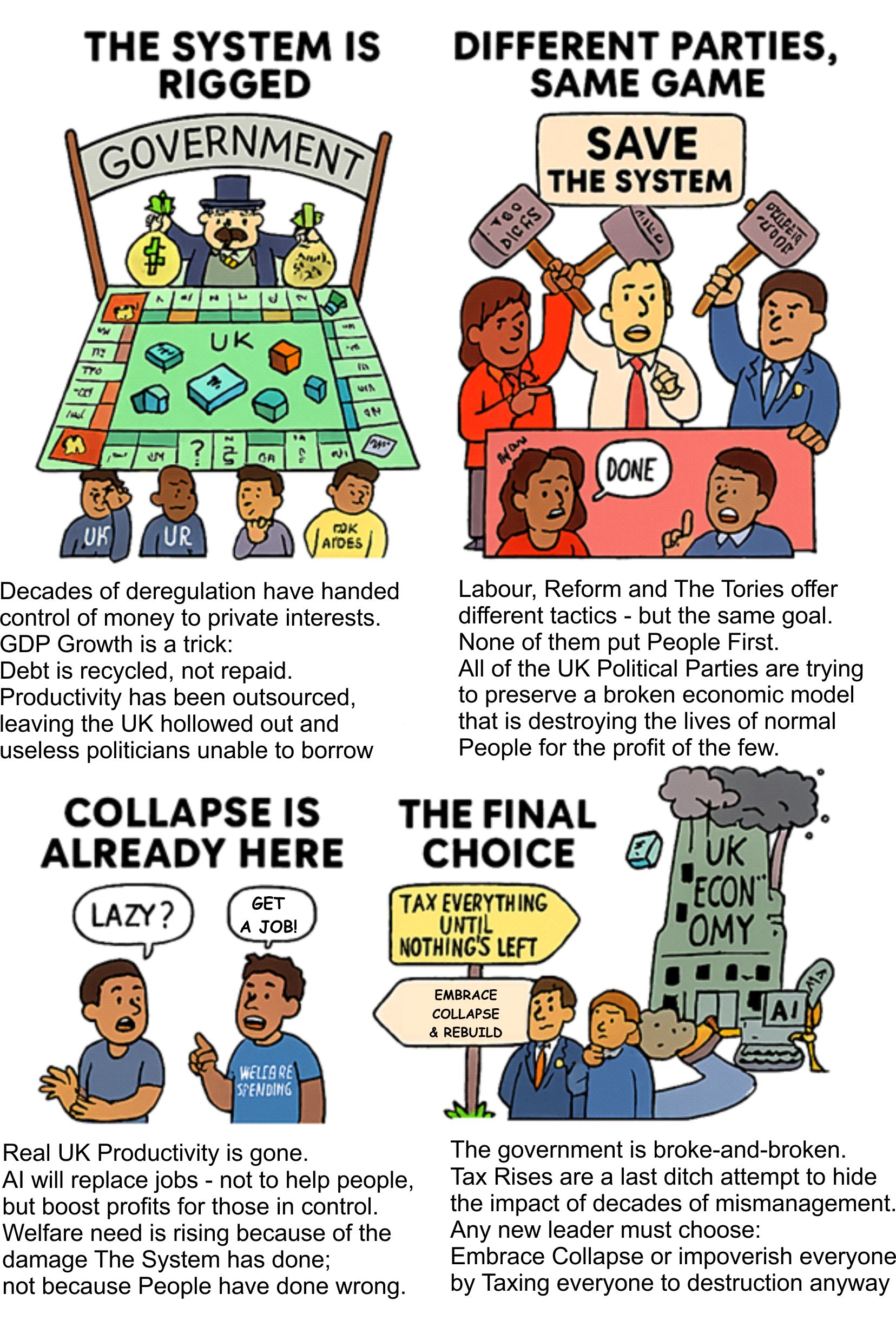
Whilst many of us hear talk of the AI takeover, the reduction in new hiring and training opportunities across numerous professions and industries, and the replacement of jobs of all kinds, we fail to connect these developments with the rising welfare bill as people find themselves with no choice but to accept a life of unemployment.

The New Divide: Inclusion and Exclusion

Nor do we pause for a moment to consider the pressing question: What does it mean when there is no job left for you?

The Last Chance for Human Agency

Yes, many truly believe the stories openly shared by members of the elite community driving this change – that in no time at all, life will become cheap and effortless for everyone because AI and machines can do everything.

The Value of Effort and Contribution

People really do believe we are about to step into a new and previously unrecognisable utopia, where the system has eliminated the need for human industry, effort, and value in the form of contribution, and instead provides everything we can imagine, free of charge and experienced as if life were one giant, permanent holiday for us all.

Historic Patterns and Systemic Endgame

Such benevolence, hinted at in the form of words from these few, and the feeling it inspires about our future, is one that few can fail to imagine.

Indeed, the words and the ease with which life now comes at us makes it very easy to accept the disproportionate levels of wealth for the few that has been encouraged by the progress of this new technical revolution.

People are taking for granted that once the evolution of everything needed to perform every task that human beings carried out across all functions of life is complete, these are the very same few who will then happily smile and sit back while everything they own and have developed works and provides for all of us in return for absolutely nothing. All whilst we continually maintain an everimproving standard of life and receive a universal basic income that covers every requirement beyond the luxurious permanence of 24hour leisure, which is somehow ever present and that we somehow believe we would actually enjoy.

In truth, we do not need to understand how or why we arrived here to see the situation for what it really is. The fundamental truths are already available for us all to observe, consider, and comprehend, hiding in plain sight: the masses have been used and exploited to create the very means that will ultimately be implemented to destroy humanity as we know it.

As this has all progressed, we have all been fed and indoctrinated with stories, technology, forms of easy wealth, and advances convincing us that things can only ever improve along this path and that a golden age awaits.

At the same time, we have given our consent to puppet politicians who have willingly changed and enforced every rule necessary to facilitate this under the veil of progress -driven not by principle, but by submission to those with power and self‑serving agendas, lured by promises of glory and gain that appeal to their true, hidden selves.

Many struggle to believe that those we have elected, and those who have grown rich or benefitted so greatly from the rewards of leadership in a modern world and society, could truly be so cruel. Yet does it matter whether we – or even they – accept that as truth, when the outcome fast approaching, without a change in our direction, will inevitably be exactly the same?

Within the world and its structures – The System as it operates, functions, and controls every part of life today – the true divide of them and us lies between those whom the system will continue to carry and cater for once the concept of human independence no longer exists, and the masses who have no further use, whom the system will either choose to exclude or find some means to remove.

This is neither a horror story nor a work of fiction. The only uncertainty – without a change in direction – lies in when and how events will unfold that bring about the critical period of transition.

Today, humanity still possesses agency, choice, and the power to pursue an alternative pathway – even though so many of us are sleep‑running toward the end of freedom’s existence, actively embracing and welcoming the very tools that will soon replace the need for us within our own lives.

The fundamental truth of any life worth living is that there can be no reward without effort, and that effort itself is the pathway to reward when life is grounded in truth.

We hold no value to anyone or anything if we do not contribute or participate when we are able. There are no free rides for anyone or anything, unless they come in the form of charity – or unless we ourselves assume the role, if deemed desirable, of pets.

History repeats this truth time and again. We need only look further to see how power is abused by the powerful—how they seek to control everything they find useful, and how quickly they dispose of it when they do not.

Everything about the moneocratic, money‑centric, top‑down, centralised, hierarchical, and patriarchal system was ultimately designed to end this way.

The arrival of technology – and finally AI – has brought humanity to a genuine watershed moment, an endgame in which we must either abandon the unsustainable way of life to which we have become addicted and embrace one that restores balance, fairness, and justice for all, or continue living the lie created by those who profit from our subservience.

If we choose the latter, we will participate in it until the moment we realise we no longer hold any value, and the destiny imposed upon us by others has arrived.

The Alternative Pathway

The temptation for many, upon realising what has happened and what is happening, is to believe that all we need to do is step back a few years and remove the most corrosive technological advances that have entered our lives.

As simple as the removal of AI might seem – even if we were able to overhaul politics and replace politicians with those who agree – the real damage to society and culture has not come from technology or its advances themselves. It comes from the reasoning, motives, intent, and forms of control behind them.

These forces have long been at work, reshaping how everything functions across society – manipulating and redirecting life so that what we have already become is accepted as normal.

The way we live, work, conduct business, relate to others, and even relate to ourselves must return, rediscover, and recreate a way of being that transforms our system of values.

Our entire value set must shift so that we understand and expect meaning from life in ways that, by today’s standards, may seem counterintuitive or even alien.

The Human Value Imperative:

  1. We must embrace the reality that everyone is equal, and that the only difference between us lies in our roles, functions, and contributions within society—roles that are always dynamic and open to change.
  2. We all need to accept that differences do not make us different when it comes to what is ethically, morally, and fundamentally right.
  3. We all need to accept, understand, and embrace that no person should be advantaged over another by circumstances beyond their own efforts or control.
  4. We must accept that deviation or allowances beyond these principles will always lead to growing unfairness—even when special circumstances seem justified or privileges are believed not to be abused.
  5. We must accept that hierarchies are not a natural system of order, even though the need for order in society means that some will naturally take the lead.
  6. We all need to share responsibility and take part in collective choices that shape the aspects of life we share.
  7. We all need to contribute to the community in whatever ways we can.
  8. We all need to work and actively contribute to shared life whenever we are genuinely able.
  9. We must live by the principle that the responsibility we have toward others is the same responsibility we owe to ourselves.
  10. We all need to accept that once our needs are met, nothing is gained if any one of us seeks to have, take, or control more.
  11. We must accept that true abundance means having as much as we need, not everything we want.
  12. We must accept that people are the greatest source of value, and that real economics should be centred on that value.
  13. We must embrace the reality that full employment is both natural and normal when employment is defined by all forms of contribution, not just financial return.
  14. We must welcome and protect the truth that locality, and the transparency it brings to every kind of relationship, is key to maintaining and benefiting from a system we can trust to be fair, balanced, and just.
  15. We must ensure that AI and all technologies are used only to support human life and enhance working practices—not to replace jobs or create circumstances in which any human being is considered useless.

When we commit to all of these principles, we can begin to envision a society and way of life that truly functions as it should with equity, equality and accountability for all – one that is transformed in almost every possible way.

The Turning Point: Choosing Freedom and a Better Future

For many of us, the uncomfortable reality we must face is that passive inaction – or continuing to accept life under the control of others, believing things will simply carry on as they are – poses an existential threat that is all too real. It is a danger that extends beyond the confines of Orwell’s 1984 and, for those who truly value their lives, could mean something far worse.

The choice – while we still have one- is to not only accept but to embrace an alternative path.

This path, though carrying forward some familiar aspects of the world around us, demands that every part of our lives be lived in a fundamentally different way: a way where people, community, and the environment come first; where power rests with the individual, their freedom, and their personal sovereignty; and where the whole experience of life unfolds in a completely new direction.

The Local Economy & Governance System Framework: A Path to Empowerment

Exploring the Local Economy & Governance System

Visualising a different world – how it operates, what it requires of us, what we must give, how we work together, and how frameworks of rules function (rather than laws that micromanage every part of life, as is increasingly the case today) – may sound simple. Yet their adoption, interpretation, and our response to them within a system centred on empowering every person, rather than controlling them in every conceivable way, will be fundamentally different.

This shift will inevitably provoke resistance, not least because we have become addicted to the unsustainable, money‑centric way of living that dominates our lives today.

The Local Economy & Governance System provides a detailed picture of these frameworks, showing how this new people‑centric model will look and how it can be implemented.

Perhaps the most important element of this new world is that it will be built upon direct, participatory democracy – a system entirely unlike the hollow or pretend democracy that defines the moneyocratic world we currently inhabit.

Participatory Democracy: Power in the Hands of People

Participatory democracy means that everyone takes part in the decision‑making processes that shape public policy.

It ensures that we all hold the power to change or remove the public representatives we choose and appoint.

This requires a level of accountability and participation that is not only regular and personal, but far greater than the limited choice we currently have – voting every four or five years for candidates selected by someone else.

There is much to consider about the processes that enable true participatory democracy and how it can work effectively and diligently.

One of the most striking differences between this future system and what we have today is that there will be no political parties.

Instead, public representatives will be chosen directly by the community – respected individuals with proven commitment to serving the best interests of everyone involved.

To learn more about The Local Economy & Governance System, please visit: The Local Economy & Governance System Online Text or support my work by purchasing the book for Kindle.

From Possibility to Reality: A System That Works for Everyone

The Local Economy & Governance System will work because it prioritises people, community, and the environment in ways that may seem inconceivable today.

It places value on personal sovereignty and the freedom that comes from living lives defined by who we truly are, rather than by external factors and reference points that remain under someone else’s control.

Yes, the practical mechanics of LEGS will work – and they will work well – if we choose to embrace them.

After all, the dysfunctional world we inhabit today has appeared to “work” only because we came to believe in it, even as it has harmed so many of us.

We must not underestimate the ability, ingenuity, and creativity of humankind to deliver and implement solutions that succeed under any circumstances, when motivated and convinced it is right to do so.

Together, we can reclaim power and value and build a new world and system that functions with equity, equality, and open accountability for everyone – just as a truly civilised society always should.

Together, we can turn possibility into reality and create a society that truly works for everyone.

The Choice Before Us

We stand at a decisive moment in human history.

The turbulence we feel, the erosion of agency, and the encroachment of systems that strip away our independence are not distant threats. They are realities already shaping our lives.

The arrival of AI and the technologies that support it has brought us to a genuine watershed: either we continue down the path of dependency and control, or we choose to reclaim balance, fairness, and justice through new systems built on empowerment, community, and sovereignty.

The Local Economy & Governance System, grounded in participatory democracy and people‑centric values, offers a practical and principled alternative.

It is not a utopia promised by elites, nor a nostalgic return to the past, but a framework for living that restores meaning to contribution, accountability, and shared responsibility.

Human ingenuity has always risen to meet the greatest challenges. If we believe it right to do so, we can build a society that works for everyone – where equity, equality, and open accountability are not ideals but lived realities.

The choice is ours. To continue sleepwalking into a future where humanity holds no value, or to awaken and embrace the possibility of a new civilisation. One that honours freedom, restores dignity, and ensures that life itself remains worth living.

Breaking The Money Myth: Rethinking Value, Exchange, and Equality

An Economy That Cannot Function Without Money Will Not Work for Anything Else

Coming to terms with the role money plays in our lives is challenging for most people. But the difficulty doesn’t end there.

We have come to value money not just as a tool, but as the benchmark by which we measure everything in life.

This leads us to a deeper truth—one that must be faced, rejected, and overcome: an economy that functions for money, with money, or through money cannot, will not, and does not work for anything else.

An economy should always serve People, Community, and the Environment. These are the only foundations that truly support a good life and foster genuine equality for all.

Most people instinctively reject the idea that any form of economy or trade could operate without money. This reaction stems not from truth, but from habit. We’ve grown so accustomed to money being present in every transaction that we take it for granted—not because it’s inherently necessary for exchange.

The reality is this: an economy designed for the people must be capable of operating without money, currency, or any medium whose value can be universally—or nationally—controlled or manipulated by external parties.

Instead, value must be determined solely by those directly involved: the buyer, the seller, and the facilitator (or a community body that sets local trade rules for the exchange of essential goods and services).

This doesn’t mean money or currency must be eliminated entirely. Rather, it means that their value must remain free from inflationary or deflationary forces.

Any variation in exchange value must reflect only the true worth of the goods, services, or contributions involved.

The Moneyless Economic System

The essential shift—both in action and mindset—is from a system where money is required in every transaction, to one where the exchange of life’s necessities does not inherently depend on money at all.

One of the fundamental truths of our world is that not all things are equal. However, the way we treat people and the planet should be equal and fair for all.

It follows, then, that money—or any form of currency used as a medium of exchange—should not be governed by a universal benchmark, especially when that benchmark can be manipulated by a powerful few to serve their own interests.

It is normal that we all contribute work to meet our needs. Therefore, the things we need should be accessible to everyone, based on the value of what they can offer through their work.

The imbalance in this equation today arises not from scarcity, but from the greed of those who control access to what others need.

This imbalance is reinforced by systems of privilege, power, and the illusion of ownership that steps beyond the requirements of genuine personal need.

Future Economics must be tied only to people, their contribution, what is important to sustain good, fair and balanced lives, and legal currency must never again be open to speculation and manipulation

You don’t need to be a trained economist to know that the model of economics the world uses and the way economics is revered like work of the gods today is wrong.

In fact, it is probably better if you aren’t, and that you aren’t involved in economics, banking or corporate wealth creation either. As you are much more likely to be objective and untainted by ‘being in the tent’ in some way.

The misplaced ingenuity of the economic system and how it works has made it as complex as it is mind boggling. But that doesn’t give any surety or guarantee that how it works and what it achieves is in any way good.

For those actually thinking about why money is the common factor in everything across the world that is now going wrong, the complexity of the economic system is being exposed to light as the smokescreen that it is giving the hallucination of credibility to all the darkness and malevolence that has been so cleverly hidden within.

How can something so clever and complex not be real, is a question that many would employ as a riposte to counter the suggestion that there is absolutely no legitimacy to the FIAT monetary system, MMT, Free Markets, Globalisation and Neoliberal Orthodoxy that we have been subjected to for 5 decades or more.

But isn’t it the case that any good game that feels good to play is only good for those playing, because of the complexities and therefore levels for ‘the players’ that are involved?

How many carrots does it cost to buy a wheel?

To really understand why the world now has got the relationship with money so wrong – even though it was deliberately made this way by corrupt interests who have changed the laws so that their crimes have been legitimised and wiped clean – we really do need to stop for a moment, count to ten and think about what money is, or rather was really intended for.

In so far as the accepted narrative of human history goes, the whole pathway of our development has been progress that moved towards today in a linear fashion, stepping off from very primitive times when man couldn’t even speak, let alone farm for food.

The point here is not to argue whether or not any accepted version of the evolution of man is true. But to set the first picture back at a point when everything was considerably more simple. Long before more and more of those complex ideas or complexities became involved in how people trade.

Then, as now; different people did different things and produced different foods, goods and services to others as the direct result of whatever it was that they did.

For the purposes of this explanation, let’s assume that there are already fishers, farmers, growers, millers, bakers, saddlers, farriers, blacksmiths, cheese and butter makers, butchers, water carriers and pretty much someone or some small business providing all the different forms of foods, goods and services that we need to provide for life, from around a village green.

Some days a baker doesn’t want fish and a fisher certainly doesn’t want a saddle or leather goods daily. Even though they probably need something made to protect them against the elements from time to time.

However, everyone needs something regularly. Whether it’s for their own consumption, or it’s there to help them complete and provide output or goods from their own work.

Bartering and exchange, or swapping goods or even hours of work are of course a very straightforward and sensible way for two parties to make a transaction when one has something available that the other needs.

But the real benefit of bartering and exchange comes from being localised. And its weakness soon showed when the transactions were required to take place over distance, or for items – like that saddle or something equally special – which in day-to-day terms, are rather obscure.

Money, or coins of some kind used at first, created a transactional value, or to be more accurate, a medium of exchange.

The creation of a medium of exchange meant that one person’s goods or efforts could be exchanged for coins that could then be exchanged for whatever that person wanted themselves. All without there being any excessive delays or the need for a very complex or convoluted chain of different transactions to be involved.

The beauty of the system, at that point, was that the money in use could only relate to the agreed value of the transaction.

It would have been good for everyone, once the related practicalities involved were ironed out, if that system had continued without further ‘progress’. The relationship we all have with money could then have remained the same in relative terms – as that unit of exchange and nothing more.

Unfortunately for mankind, progress very quickly created wealth disparity or what we call wealth inequality today.

This imbalance was itself made progressively worse by the inter-generational transfer of property and wealth (and the power it buys) which has snowballed over time. Quite literally meaning that people can be advantaged or disadvantaged by birth, even before any one of the many other factors that skew life opportunities can come into view.

One of the most unfortunate elements of the human condition is the innate desire to always possess and accumulate more. For no better reason than the basic fear we all have of experiencing lack. With the rather perverse dimension that those who have more guard it more jealously than others, probably because they believe they have much more to lose.

The power and influence that money has given people who really weren’t fit to have the responsibility they had over the lives of others, has only got worse over time.

As industry and technology has improved and made it easier and easier to avoid genuine consideration for the consequences of their actions upon others, the human cost has become increasingly irrelevant, whenever the opportunity to make more profit was involved.

When promissory notes or what we know as cash came into being, a giant leap forward was taken towards the system that we have now, where the accepted wisdom is that the value of the money – or what we are agreeing to exchange as being representative of money – is being exchanged under a mutual understanding of trust, that is shared across society, and not just between the people where the specific transactions are involved.

Trust is of course belief. And as those with power and influence at the centre of the banking system realised that having currencies pinned or anchored to anything meant that they could only ever use or suggest they were able to use the money or sensible multiples of the money that they knew they either held, were owed or could earn within a certain time frame, they knew that they would have to create a new system that would release these chains. So that in terms of the money that they could create and use in the future, the only restraints would be dictated by them.

We should be under no illusion that this process of creating an economic system that could lead to limitless wealth and the control of everything for those who controlled it, wasn’t a plan that developed overnight.

The economic system that we have today was created and implemented over decades and carefully constructed so that it would make life much easier for the interests and in particular the politicians who needed to be bought. So that the useful idiots who gained power under the illusion of democracy would obligingly pave the way with system changes that have legitimised this otherwise criminal system at every step of the way therein.

When everything is about money, the answers to every question can only be found in monetary terms.

The money we have today and the way that it comes to and is taken from us – the economy – is the direct result and design of this massive, corrupt and inhuman game that the worlds wealthy, powerful and influential – the elites, decided to play.

The money we have in our pockets, bank accounts and have the ability to earn changes value quickly at the will or as a result of the actions of others.

Meanwhile, the direction of travel for the general population has always been that we are and always would become increasingly poor, as the value of the money which is typically what the poorest in society have only been able to hold, decreases faster than the rate at which our skills and experience develop or there is any chance to earn more so that we can keep up with or counteract the fall.

It was always intended to be this way. As those with wealth always knew that the real wealth was the control of assets and anything and everything that could then rented out to everyone. All as the world became increasingly poorer and their ability to grow control and rent out everything the money they created had bought them gave them even more.

It is ironic that billionaires now have so many zeros on their balance sheets. As everyone who has been a victim of what is probably mankind’s greatest con is now beginning to realise that they have been left with zero. Or if they are lucky, a diminishing amount of liquid capital that isn’t worth a lot more.

I would like to add at this stage that this essay is not an attack on any individual for whatever it is that they may believe they possess, control or have influence over today. Many of those with excessive wealth, power and influence today have just played along with the rules of a very clever game. One that has removed the balance, Justice and morality from every part of life and has done it so successfully that the poison it has replaced values with is embedded across cultures and normal life to the point that even the academics and leaders in finance and economics believe in the legitimacy and correctness of an entire system which is bewilderingly anti-human at its very core.

In simple terms

The simplicity of the mechanics of an economic system and more specifically a monetary system that revolves around private banks creating money from nothing – a process which is carefully hidden from view – so that government always looks like it is borrowing  or rather selling bonds to private interests to finance everything, whilst those banks also lend money that doesn’t exist to us through loans, finance, credit cards and even pay day loans, really do make it horrendously difficult to accept that this is one massive confidence scam. Especially as everything is hidden in plain sight by little more than the disinterest that we typically have in anything that goes beyond having our perceived needs met.

However, let’s think about it as if we were reading a story about two friends at the start of their working lives; one with the motivation to work hard and deliver through their own industry, whilst the other has had life easy and just wants to find another easy way to get more, and we can then perhaps see how this gargantuan scam rolls out when exposed to light.

The diligent and easy living friends talk one day, looking at property that they would both like to own.

The diligent friend commits to working hard and earning the money to buy what they would like to own and leaves, promising to catch up when this outcome has been achieved.

Meanwhile, the easy living friend knows that he has the contacts and ideas necessary to go away and print enough of the money he needs to buy that same property today. And that he can do this from nothing, which will work out well for him but not his friend, so long as he doesn’t speak openly about what he’s doing. Uses his contacts to change a few rules so that what he’s doing is legal. And he doesn’t keep printing more money to buy everything else so that it becomes obvious what he’s been doing all along. Afterall, nobody will know if he uses the money he then earns from renting out that property to pay all that money back…

The money that the easy living friend has created, has just increased the amount of money that exists.

This means that because there isn’t actually any more property, production or anything else with ‘real’ value that corresponds to the increasing  pool of money, all of the money that’s available is now worth much less than it was.

The real world impact of this fantasy being made reality is that the diligent friend will have to worker harder, longer or both, to pay for the property that the easy living friend has just taken without effort.

What is more, the easy living friend is now offering to rent the property he’s bought to the diligent friend who now realises that he may never be able to afford to buy it.

If you can see and understand the basic mechanics of how this situation works, you only need scale up the same principles to understand how the massive, growing amount of money – and the ridiculous inflation and the growing cost of living problem we are all facing, has been created and is now growing at a ridiculous rate.

It is an unavoidable, inescapable fact that if one person or set of people are able to buy real, tangible things that have value to us – whatever those things might be – with money that doesn’t actually exist, they can take lawful possession of those things and do with them whatever they so choose – as any legitimate owner would be able to do so.

However, the illegitimate creation of the money and the legitimised theft of assets, businesses, infrastructure and everything else imaginable that it has financed means what they have been doing is just one part of a multifaceted crime against everyone else.

The crimes that follow the created money pathways include the impoverishment of the masses.

Yet they become even worse when we consider that public services and infrastructure such as utility companies have been bought up with fake money.

Entire business sectors like the pub trade and small, local shops have also all become unviable because fake money has financed industry expansion of big retail and all their centralised supply chains, that would not otherwise have been possible.

To cap that all off, markets and the practices of big business and finance have been deregulated through the drive for ‘Free Markets’. So that those making money can make more and more, because the rules that once protected us all and small independent businesses have been removed, whilst regulations that cost us, exclude us and disqualify us from our own independence and from taking part have instead been imposed under the pretence that they help and protect us.

The whole pathway of illegitimate money creation using the FIAT system leads or rather has led to the doorstep of nothing less than worldwide system control.

The only thing that now gives us the opportunity to save ourselves from a very challenging fate is the reality that those with their hands in the till have already broken too many of the rules of their own game.

The whole system is starting to collapse before the great reset or imposition of the next new world order has conclusively been imposed.

The Future of Money

I could stop there. But in lifting the stone or exposing what lies beneath it to light I am certainly not alone.

Before continuing further, I would encourage anyone who has read this far to do their own research and use as many different sources and mediums as they can to uncover and draw their own conclusions about all of this and what is really going on.

My real interest and passion is what happens next for us and for our future. Once we have got through this horrid time and whatever turbulence and challenges that we now face, once we have got to the other side and left them all behind.

Whilst I have written extensively about what a good working model for our future society would look like in Our Local Future, I have also spent time sharing thoughts and ideas about the way money and commerce would work, in books from Levelling Level, to An Economy for the Common Good and The Basic Living Standard too.

What we should perhaps all be able to conclude – once we have dealt with our own addictions and attachment to the way that endless money supposedly works for us all now – is that money should never hold its own value. Should never be speculated upon, and the power of its creation and policing should never be under private control.

What is more, the value of legal currency should never be pinned to anything that can itself vary in value, especially when whatever that currency is pinned to is in short supply or can be controlled manipulatively or otherwise at will.

People are the only legitimate economic constant

If everyone did what they do, only took what they need and were happy to share or exchange what they didn’t with whoever needed it in return for something they did in return, there would never be need of money of any kind, ever again.

Whilst I can see that to many the idea that everyone just does what they do today for nothing and that in return, they get just enough of what they need of everything else in return might seem fanciful, this suggestion does nonetheless make a very important point about everyone only taking or expecting to have access to what they actually need.

Need is NOT the same thing as want.

Too much want is what has led to a situation where there are people right across the world today who don’t have access just to the things that they need.

An economy – a legitimate economy – will function only to provide for the needs of people within it.

There isn’t an argument that can counter this legitimately. Any argument made against this, no matter how compelling or well elucidated, is inevitably built upon one person being able to obtain or accumulate more things than others. Because the alternative system favours their interests more.

These are the fundamental basics of greed.

Locality based economies and economics

Everyone who can, should play their part or contribute to the function of a legitimate economy, in whatever role they are able. So that everyone who is active, then comes together to become the sum of all the parts – with the sum of those parts being the community, which because of what members can do together collaboratively, will be greater than what everyone would be able to do by working alone.

The value of a legitimate economy should therefore be based upon the number of people who are active within it and include what they input or contribute to that economy individually and therefore collectively.

If every member of the community does what they should be doing, and the needs of everyone being met are always prioritised and planned for or budgeted for as they should be, the whole system will move closely towards self-containment, with the amount of money in circulation always being closely related to the number of heads within the population.

A localised and online local market exchange system that focuses on bartering and exchange for foods, goods, services and work being made universally available alongside cash and digitally transferable money, should also exist so that everything works in a circular fashion and everyone’s particular needs are always met in ways that favour everyone.

The needs for public service, infrastructure, community activities and everything beyond should be met by everyone who is able to work volunteering the equivalent of 1/10 of their working week and their skills or experience to the community. Thereby meeting whatever needs and community income generation requirement there may then be.

Excess goods produced, surplus service capacity and over production which is specialist to the community would also be traded with other communities and traded where any additional requirements beyond the scope of community production exist.

The blight of greed-driven thinking

The only reason that an economic system that will work like this, which promotes freedom and financial independence of the masses, would not work, is because those who would no longer be able to define themselves as being different to others through the accumulation of additional and unnecessary wealth will argue that it isn’t practical and cannot work.

Even within a genuinely egalitarian approach to economics based along these lines, it is a fact that some could always do better, because they choose to do so through their own industry. Whilst many others – and the majority at that, would be happy to just make the contribution that was absolutely necessary, knowing that they would be happy, healthy, safe and secure because all of their basic and essential needs were being met.

It is part of the capitalist myth that entrepreneurialism and creativity in commerce cannot exist when the ability to earn or rather profit is capped.

The real truth of the matter is that everyone will be productive and make a valuable contribution when anything that goes beyond what it takes to look after themselves and those who depend on them is a choice and the ability to just live a normal life without dependency on anything beyond themselves hasn’t been denied by the actions of others.

Nobody has the right to take or have more than they need and certainly not when it can only come to them through the exploitation and infliction of pain and suffering of any kind upon others.

Further Reading (Updated 14/1/26):

1. Breaking the Money Myth: Rethinking Value, Exchange and Equality

https://adamtugwell.blog/2025/11/12/breaking-the-money-myth-rethinking-value-exchange-and-equality/
Summary:
Challenges conventional beliefs about money, exploring how value and exchange have been distorted by modern economic systems. This article lays the groundwork for understanding why current monetary practices are problematic and why rethinking these fundamentals is essential for a fairer society.

2. The Basic Living Standard Explained

https://adamtugwell.blog/2025/10/24/the-basic-living-standard-explained/
Summary:
Explains the concept of a “basic living standard” – the minimum requirements for a dignified life. It discusses how economies should prioritise meeting everyone’s essential needs, and why this principle is central to building a legitimate, people-focused economy.

3. An Economy for the Common Good (Full Text)

https://adamtugwell.blog/2025/02/24/an-economy-for-the-common-good-full-text/
Summary:
Presents a comprehensive vision for an economy designed to serve the common good, rather than private interests. It explores practical models and policies that could shift economic priorities toward collective wellbeing and sustainability.

4. The Role of Barter and Exchange in the Local Economy Governance System

https://adamtugwell.blog/2025/12/03/the-role-of-barter-and-exchange-in-the-local-economy-governance-system/
Summary:
Delves into how barter and local exchange systems can strengthen community resilience and independence. Offers practical insights into alternative economic mechanisms that bypass traditional currency, supporting the idea of locality-based economies.

5. The Local Economy Governance System (Online Text)

https://adamtugwell.blog/2025/11/21/the-local-economy-governance-system-online-text/
Summary:
Provides a detailed framework for governing local economies, emphasizing community participation, transparency, and sustainability. Ties together previous concepts, showing how they can be implemented at the local level for maximum impact.

Trump’s Reset: Catalyst for Change. Doorway to Cataclysm, or both?

A Time of Turbulence

Whilst ‘real life’ appears to be continuing for most of us across the UK ‘as normal’, almost a month on from Wednesday 2nd April 2025, when Trumps Tariffs were first announced, the reality remains that shock waves are reverberating around the world – even though the American President has now put the whole thing on ice for everyone – other than China.

What most of us know as the global economy is peaking and troughing throughout the global markets system with a level of fear and mistrust that hasn’t been seen for a very long time. However, the fact that the financial system hasn’t come to a grinding halt already is being taken by some to mean that whatever Trump has done and will do, it will work itself out. And very quickly too.

Many others – and in this sense I am talking about economists (whether qualified or self-styled) and those who comment, report and write about economics – are talking about turmoil, a crash and even a new great depression.

Nonetheless, the words, stories and narratives are typically loaded with suggestion that whatever impact Trump blowing up the global economy may have, the results will only be temporary, and everything will soon return to the way that it has always been.

If you believe that, you’ll believe anything

One of the key reasons economists and so many others, made credible only by the platforms they have, speak about the turbulent and challenging times that we are within as if ‘it’s just one of those things’, is because they are completely bought in to the way that the global economic system works.

Most of those who dismiss the truths that lie behind the turbulence we were already experiencing before Trump even mentioned Tariffs are tied to the mast of an economic ship that has long been doomed by the money sirens call.

Those committed to the global economic model believe that it is only with the continuance of the system as we know it – with money working in the way it does today, that they themselves can continue to win, and stay on top.

Everyone bought in to the mess that some believe Trump intended to address will continue their dedication to it and champion it, until the evidence against their position speaks for itself and becomes undeniable, even for them.

The Trump model of Free Trade isn’t Free Trade at all. Its aims are market dominance and no more

The Trade Tariffs that have existed across many international borders until now, that have been used as an excuse for the Trump moves, were all that remained of a myth of protectionism. One that has maintained the belief of many different populations, that countries such as the UK can still be taken seriously as ‘global players’.

This is now very much in doubt.

Although arguably wafer thin and sometimes even self-defeating, the Tariff structure that already existed has provided what many nations needed to stay afloat within a massively manipulated global marketplace that itself has never really been about freedom to trade at all.

That same myth that comes into play every time a UK politician bigs up our international trading credentials will not provide anything like what is necessary to stand up against anyone, anymore.

Regrettably, this is not something we can expect to hear from any Labour front bencher or the representatives of any of the political parties that we can vote for, anytime soon.

Yet any step towards accepting an open free-trade deal of the kind that Trump is effectively demanding with the threat of explosive Tariffs will become an admission, through action, in very much the same way.

The carefully constructed, economic and intergenerational money ‘con’

The strange (and what really should be troubling) truth is the way that our accepted form of economics work today (Neoliberalism, MMT, FIAT Money and globalism in very short terms), and how we have all come to believe that the way money works is ‘normal’.

The accepted form of economics that effectively runs money and finance around the world today is more dark witchcraft and wizardry than it is, ever will or ever could be about building a fair, balanced and just system of commerce, economics or the processes that underpin life beneficially for everyone. And that’s why it has increasingly be causing so much pain.

Yet the system we have has been in place for so long that many genuinely believe there is no alternative and no other way.

The United States was right at the heart of this system’s creation, and it is the chronology of events and the timescales that the process and changes that brought the world here that help make the realities that underpin the way that money, finance and economics work, so hard for people to believe. Not least because it involves multiple generations, world level events and a whole lot of ‘democratic’ decision making that make the real story very hard to believe.

Right now, Labour politicians in the UK are trying to shift blame for all of the problems they are facing away from the decisions that they have made that have just started to come into effect, to Trumps Tariffs, along with everything they inherited from the Conservatives before them and every government over at least a 50-year period before that. All as what Trump has done will now be the only thing in economics that really counts.

The government and establishment can only do this because of what is akin to the cultural amnesia that we all have about political history.

We are suffering from a form of encouraged forgetfulness that has evolved over years, decades and even centuries of time, where the shortened attention spans we have all developed tell us that blame for the decisions, monetary and public policies that cause us harm can only be attributed in the here and now or be relevant to the tenure of the politicians who are in power, today.

Today’s problems have been over a century in the making

The first step towards the economic system that we have today came with the creation of the US ‘Fed’ or Federal Reserve that was implemented as the Central Banking System of the United States in 1913. (Yes – that’s one hundred and twelve years ago!).

The second was the Bretton Woods Agreement in 1944, towards the end of the Second World War, which effectively put the world’s economy at the beck and call of the US (and therefore the Fed).

The third, and arguably the most pivotal was the ending of the Gold Standard in 1971, when the whole idea that money should be pegged to the fixed value of the amount of gold that any nation owned was finally dropped, primarily by then US President Richard Nixon – and then by pretty much everyone else.

It really was no accident that gold backed currencies were dropped at around the very same time that the use of all the magic tools that make today’s bogus economic system work, such as GDP were adopted. And leaps towards so called ‘free markets’ and bureaucratised world government were made, most notably for us in the UK across Europe through the Common Market which then evolved into being the EU, as if it was ‘just one of those things’.

The devil was always in the detail. But excuses built on complexity could never override the gut feelings that have told increasing numbers that something is very wrong

Whilst the ‘anti-European Union’* groups of the 70’s, 80’s and 90’s were quite deliberately caricatured as being lost on nostalgia, nationalism and many other unsavory attributes that have been carefully crafted as extreme and funneled towards the political ‘right’, the reality is that the mistrust of what was then just portrayed as being only about removing barriers to trade and the wish of many who believed in their national identity to stick to basic principles of sovereignty, has been proven to be correct many times over.

Everything that has happened was very carefully thought out, planned, coordinated and orchestrated, using a clear understanding of what it would take to create public buy-in of anything necessary within the public awareness, that could then be used to cover and in reality hide so much more that was not. 

Public acquiescence, engineered by governments that were ‘democratically’ elected, using manipulative narratives and even the 1975 United Kingdom European Communities Membership Referendum – deliberately created political divides all the way along. However, the real damage to us was that they unknowingly gave a green light awarding power to unscrupulous politicians and bureaucrats to change everything and ultimately life as we know it.

All in ways presented to us, our parents and grandparents, that few would complain about. Because we have all been continually told it was about growth, wealth, prosperity – all under the guise of ‘trade’.

Whilst the US may not have been directly involved in the political sub-global system European experiment, that was little more than a trial franchise of the intended global model, they have nonetheless remained right at the core of globalisation’s march.

Indeed, the US has arguably benefited much more than it ever could have done by being an active part of what being tied into the EU project has meant for so many of us. Because of the way that post-war, international ‘settlement’ at Bretton Woods was made.

*What we know as the EU today, was previously known as the ‘European Community’, European Economic Community (EEC) and ‘The Common Market’. These evolutions of names were no accident.

This economic mess is the consequence of plans that were about furthering private interests and never about the Public Good

The Bretton Woods ‘settlement’, put the USA front and centre of what was always intended to be a ‘global economy’.

The processes behind the centralization of power that this system intended to create, have for most of the time since the second world war given the US the ability to wreak havoc wherever in the world that it believed there would be a benefit to them from doing so. Simply because of the power that having the US Dollar as the world’s reserve currency created.

The power the US held since long before the Bretton Woods deal was made, was however always intended to be handed to global bodies, the unelected bureaucrats that run them and therefore the private hands that control them ‘at the top of the tree’ whenever the time was finally right.

Just as democratic power was progressively transferred to Brussels under a growing spiders web of lies that began life with a narrative built on the foundations of having a common area of trade.

The whole process, which has been a textbook example of how to hide the theft of democratic power and control in plain sight, has been nothing less than the sell-out of entire populations, by successive governments that we have elected and trusted.

The aim for generations of politicians was that of ceding power and control of everything to an elite few and the useful idiots who unswervingly support them, using a money, financial and economic system that is no better than a game. One that has cleverly used our own greed against us whilst teaching us that it is normal to live in very unsustainable ways.

The treasonous act of passing power to third parties, that was never any politicians to give away, is something that only those who have lost touch with respect for the sovereignty of other human beings, as part of their own relationship with power and influence, could ever explain.

However, for any ‘world leader’, whose ego is bigger than the appetite for a payoff, this kind of surrender to a form of power and control that would require them to be little more than a puppet, is not something they could easily accept.

That’s where Trump, his contra-reset and the Tariffs walk in.

Trumps Reset ‘Takeover’ and a strange parallel with the tenure of UK PM Liz Truss

Perhaps the most interesting aspect of the Trumpian roadblock against what might be better framed as the WEF derived Great Reset, that was otherwise already underway across the West – and that the Democrats in the US appear to have strongly embraced – is that Trump, his ‘power’ and what he currently ‘controls’ – are all much too big for the machine that the Globalists actually control to deal with directly.

They cannot yet refocus sufficiently enough that either Trump and what he represents can easily be pushed out – in no small part because of how ridiculous and unworkable much of what they are doing has already become.

There is no question that Trump has changed the game, and the known Western sphere alternative may only be able to respond by embracing paths they previously didn’t intend:

Many in the UK laugh at the ridiculously short prime ministerial tenure of Liz Truss.

The accepted narrative is that her economic intervention was a disaster in the making for all of us.

Yet the disaster that was feared by the establishment was nothing to do with what was good or bad for anyone beyond those tied into and benefitting from the actions of the establishment itself.

What Liz Truss did in just a brief moment, was like putting the establishment approach to money, economics and finance on steroids. It had to be stopped immediately, and the risk of it happening again quickly removed.

It is a measure of what ‘money’ and ‘the markets’ were able to do on behalf of the establishment to destabilise Truss so quickly, that give an invaluable insight into just how rigged, planned and controlled the whole system has been.

However, it’s also a clear indication of how desperate things have become that those in power are now applying hindsight to suggest that what Truss did may have had some merit after all.

Trump really is the piper playing the tune, right now. But that isn’t because what he is doing has longevity or value in terms of rescuing an economic system that was already collapsing under the weight of its own nefarious plans.

Trump’s ‘reset’ is arguably little more than a brazen attempt to take the world back to the post war era on 21st century terms. Aiming to put the USA back at the heart of everything economic, whilst leaving Trump to be what he may well believe to be Emperor of the World.

Are we now experiencing the death of the global economic system in real time?

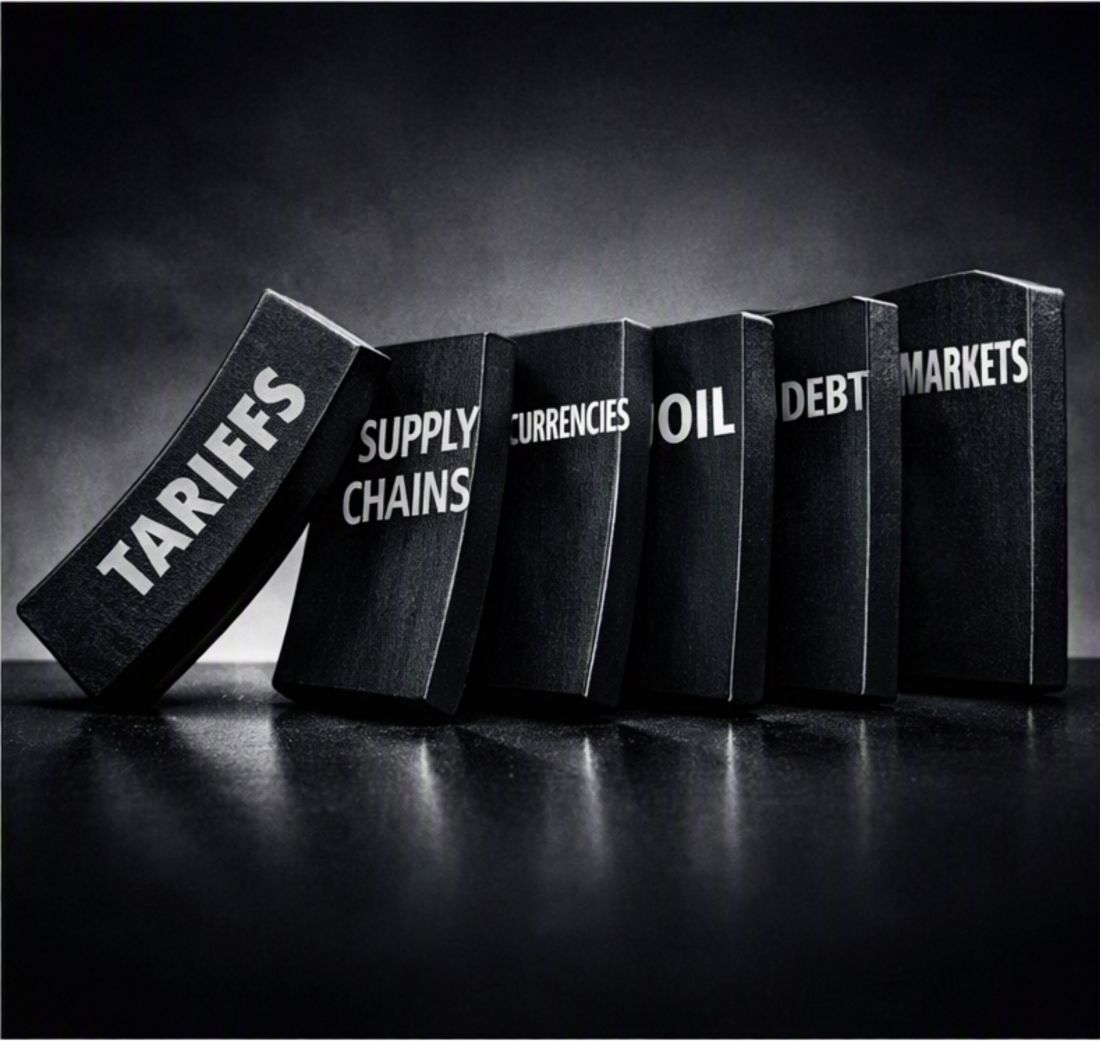
With capitalism dead in the form that we have known it, because the world is waking up to the reality that the deck was always stacked and the result for the poor and those working hard to become wealthy alike, is that the whole thing is inherently unfair – Trump will only have as long as no workable alternatives to saying yes to him exist, before his reset will collapse. And in all likelihood with it, the world economic system will fall like dominoes, starting with the USA.

What many cannot see right now is there isn’t any way back for the rest of the ‘western system’ countries and the WEF puppet governments either. Because the only responses possible mean torching what is left of that which is already broken – just to keep up, or by working towards what could quickly be seen as a multipolar world order that by its very nature cannot and will not offer world control – even if the cracks can be temporarily painted over once again.

Although I wrote about the 3 competing Resets that have been building just a couple of weeks ago, before the Trump Plan was announced, it remains likely that the BRICS nations and what they have been working on together will come into play.

Even though anyone in any government who has any sense will soon begin to realise that the US has just proven how foolish it is to once again place all your eggs in any one basket this way.

The difference in just this short time is that rather than awaiting what some might call a reasoned attempt at switching the polar world from western dominated to eastern dominated control, BRICS will instead increasingly look like an emergency tool for survival and replacement trading. For all the countries that have signed up to it as well as most of those who are on the most drastic end of the Tariffs that are about to unfold.

Will desperation lead the EU-centric/WEF led countries to do similar or the same?

Trump: Catalyst, Cataclysm or both

Whilst many will understand and perhaps even sympathise with the Trumpian ‘Make America Great Again’ rhetoric, few outside of the United States will find value or appeal in the idea that Making America Great Again means everyone else must bow down and become beholden – economically, metaphorically and in every other possible sense, to Trumps USA.

Whereas The Bretton Woods System (which originally kicked everything off internationally) was arguably unavoidable, given the massive role that the USA had come to play, once it had joined the Second World War, it is likely that its acceptance was a begrudging one, and only considered an acceptable choice given the alternative and what so many countries had just been through.

The open subservience to the US required and whatever it might have ushered behind it was a price that many nations across the world accepted they would simply have to pay.

However, Trump doesn’t have that same hand of cards as Roosevelt had to play in 1944. And there’s nothing he can do to recreate them 80 years on. Not least of all because US hegemony has been abused by those who hide behind and have controlled it in so many open (and many more hidden) ways, during that time.

The biggest difference between the Spring of 2025 and the Summer of 1944 is the desperation of weak leaders around the world today is all about their own survival and what happens to them next.

Whereas at the end of the Second World War, those leaders who were left with any kind of seat at the table worth having were being practical about saving war-weary nations from what those able to visualise a fear-led future interpreted as being a very bleak time of peace.

Bretton Woods may have seemed necessary. But necessity wouldn’t either remove nor excuse the use of manipulation and abuse – no matter the ‘opportunity’.

Yes, the global economic model is finished. But no expert will tell you that

So, it very much looks like Trump is harking back to the glory days of this dreadful economic system. Where the abuses that made the abusers fantastically rich, whilst nobody else really noticed, were there, open and available to everyone who pushed their way in.

Regrettably for us all, what has changed since then is everything that had real value – and that means infrastructure, industries, communities and everything that goes with that paradigm – has been stripped, bought or taken over employing created money that would never have been available to the money men without this system being in place and accepted as being legitimate.

All these varied financial and business interests have bought or taken control of using this contemporary form of dark magic have been moved, changed or broken up.

Whatever often nationally recognisable industries used to produce, manufacture or supply has been outsourced to someone and somewhere that it can be done more cheaply. Or added to some other elaborate supply chain where many more opportunities to ‘create wealth’ for the already wealthy ‘friends’ have been added in.

Trump probably sees this much from his experience with the way that money has been working. That is arguably why he is so keen to bring production and manufacturing back to the USA. Because sovereignty over supply chains is power over them in every form.

So, Trump knows that protectionism can be a practical way to uphold sovereignty, security and appropriate power.

But what Trump doesn’t appear to appreciate is that protectionism can also backfire spectacularly and have massive consequences if it is abused, used overbearingly or used as a weapon in any other way.

A New World dawns

There is no way to turn the clock back. The United States that Trump appears to want to lead existed at least 80 years ago.

The damage – and the part that the US has played in it, alongside all of the western powers who have acquiesced – is already done.

The global economic system as we know it is already beyond repair.

However, the experts won’t suggest that there is another ending to one where money remains king. Because most of them have by now been taught, indoctrinated or conditioned by a system that we are all now victims of to believe that there simply is no other way.

Regrettably, what we must remind ourselves of is that experts know a lot about a little, and that knowledge is then itself typically applied in very subjective ways.

On the other hand, real leaders know enough about lots. But they are objective enough to bring many different experts together. So that the very best decisions can be made.

The problem that we all have with politicians, is that they aren’t really leaders in the sense of what it takes to be good national or international leaders at all.

Trump almost certainly sees himself as being an expert – in this case, in business. And it appears that he has fallen into the trap, like so many others do, of believing that economics and the economy are all about business. Rather than being about people and life – as some very greedy and power-hungry people have always intended and worked tirelessly to make truth.

This is where one of the biggest mistakes and injustices in human history has been made.

The harsh reality that we are all now in the process of awakening to is that not even Trump can reset a system that was designed to be so unfair, so unbalanced and so unjust, that it has finally broken and began revealing its secrets under the weight of its own intentional greed and the harm upon humanity that it inflicts.

Being on benefits isn’t a culture; for many it’s a living hell

As you read through the pages of this blog or read the eBooks that are available and recognise the story unfolding and the different parts that we can all see, you may be able to step back and observe the reality that those who ‘take from the state’ are the easiest for everyone else to blame.

No matter their background or reason for being dependent upon the State, Benefits Claimants have become scapegoats and little more than everyone else’s ‘guilty bastards.

Worst of all, they have now become a very easy target for those who are actually responsible for everything that is going wrong with the UK, to project their own guilt and fear upon.

For anyone receiving benefits when they could or would rather be ‘paying their own way’, being anywhere near the Benefits System, the many organisations that work within and around it, and being within the exploding sub-class of our society currently being gaslit by the financial benchmark of the National Minimum or Living Wage; life is a fearful, emotionally and practically challenging living hell.

In my recent research article and eBook ‘Is Poverty Invisible to those who don’t Experience it’, I discussed the realities that people using Foodbanks and in poverty face across the UK today.

Given the nature of the announcements due to be made as part of the Spring Statement this Wednesday and what we already know is on the way from the October ’24 Budget, I will expand here on 5 of the most important points of what being within or touched by the Benefits System means to many of those whose lives are touched by it:

1. It costs more to live than the Minimum or Living Wage allows

The elephant in the room that is the cost-of-living crisis, is this:

What we currently accept as being the National Minimum Wage or Living Wage, isn’t anywhere near enough for a single person without any parental, caring or partner responsibilities, to live independently without top-up benefits, help from charities (foodbanks), going into debt or raiding savings.

2. Working on the Minimum Wage means you still need help

People working in Minimum Wage jobs in the UK, cannot earn enough, working a 40-hour week, to pay their own way.

Those on Minimum Wage cannot live independently, without still having to jump through the hoops and requirements that come from being a benefit claimant; from ‘qualifying’ to get emergency food packages from Foodbanks; by going into debt using credit cards, loans or pay-day-credit type schemes; or by falling back on family or friends for handouts, just to make ends meet.

3. Being on benefits is no breeze: Welfare cuts are an act of increasing cruelty when many just want safe-to-climb ladder to escape

Being on benefits means being treated like you are someone else’s guilty bastard and like you are the one who is in the wrong.

The staff in jobcentres (understandably) often don’t really want to be there. They are regularly exposed to some of the UKs most unhappy people. When they themselves are at the cutting edge of a Benefits System that has ALREADY removed all sense of humanity from its heart and behaves like it already runs with the dehumanisation that we can expect from universal AI that is being  introduced for all the wrong reasons.

People who are not working or who have personal issues that have made them dependent upon benefits often feel vulnerable.

They suffer from the lowered levels of confidence that any form of unexpected or inescapable vulnerability brings. Even before they contact Jobcentres, the Benefits Office or any other organisations that provides the different services and offerings that provide income and support that comes from the public purse.

Some active claimants do use anger and exhibit loud forms of frustration. But this is often a self-protection mechanism and way to try and secure what they need from the System.

Sadly, these few are the stereotype upon which much of the prejudiced behaviour towards those on Benefits that reaches far beyond DWP staff is formed.

The profit-led private contractors who provide ‘back to work’ or ‘welfare to work’ services and ‘support’ are no better.

The tick-box culture that is applied universally towards anyone whose existence touches the welfare purse is one where claimants are considered capable of working if they tried, and therefore there because they choose to be.

Once through the turnstile of the benefits door, benefits claimants are considered worthless.

Nobody operating or administering the benefits system from within is prepared to look at anyone asking for help as being anything other than the same.

The Benefits system is inherently cynical and labels everyone who doesn’t work as being in the benefits queue as a lifestyle choice.

Unless benefits claimants possess a CV or situation which would be strong enough to indicate that they wouldn’t even be there in the first place, the experience of being just within the benefits system itself quickly takes its toll. Once inside, it is a downwards spiral for many where there is no genuine escape, even if you find a way to leave.

Politicians may indeed be openly questioning the number of unemployed who there because of mental health issues.

But beyond the torture of what it takes for growing numbers to keep up with a financial and money-centric culture that demands everyone keep up, the constant hits that come from being in ‘the system’ and treated like you are sub human by those who do and can work, makes for a progressively difficult challenge, that in the situation we all face today, has come down to little more than lucky breaks for the many who do want to escape.

4. Very few want to be on benefits – Living independently on a basic wage is key

I mentioned the angry and the frustrated above.

These are the people that hide behind a mask and fight the contact that they have with the Benefits System, because it’s what they believe they have to do, to survive.

Yes, many receiving benefits suggest openly and behave with a sense of entitlement. But this is the situation that decades of poor politicians – and therefore that we all have created, because of the responsibility that we all have, for appointing the politicians who have created, developed and maintained the mess that the UK is now in.

The stories of people who cannot step out of the benefits trap, because they cannot afford to do so, are also true.

There is something perverse about a situation where claimants will not take the risk of taking jobs and opportunities because of how they will be treated by the benefits system and what support they will lose immediately if and when they take those steps to get out.

Unless they cannot work because of other commitments or they find themselves genuinely unable to do so, there are few Benefits Claimants who have entered or remain within the Benefits System by choice.

5. A Minimum Wage that is guaranteed to be a Living Wage would change everything

Another truth that we have turned a blind eye to, is that many people who cannot do so currently, would be very happy to be working in Minimum Wage jobs IF they actually paid what its costs to live independently.

Many people would choose to work in Minimum Wage jobs, in receipt of a wage that they could live independently on. Because their only working responsibility or responsibility to others would then be to do what they are asked for the time that they are at work.

Many of us would be very happy just to work a working week and at the same time earn enough so that all of the bills and the essentials that it takes  to live an independent and self-sustaining life today are paid for. Just as long as we don’t then have to go looking for and making ourselves vulnerable to anyone or anything else, reaching out for help, just to make  ends meet.