The Two‑Edged Sword of Social Mobility: Why Our System Elevates Narratives, Not Capability

Social mobility is often presented as a simple moral project: remove barriers, widen opportunity, and allow people from disadvantaged backgrounds to rise.

It is a noble ambition, and one that any fair society should pursue. Yet the way social mobility is currently understood – and operationalised – contains a structural flaw that is rarely acknowledged.

It is a two‑edged sword, capable of empowering genuine talent, but equally capable of elevating individuals for their narrative value rather than their capability.

When this happens, the system not only fails the individuals it seeks to help; it also undermines trust in the very idea of social mobility itself.

At the heart of this problem lies a fundamental confusion between help and hand‑up.

Help is empowering. It equips individuals with confidence, skills, and the ability to step forward on their own merit. A hand‑up, by contrast, is elevating. It places individuals into positions they have not yet earned, often because their background fits a narrative that institutions find symbolically useful.

These two approaches are not merely different; they produce entirely different outcomes.

Help opens a metaphorical door. It says: you have value, you have ability, and we will remove the barriers that prevent you from showing it. A hand‑up opens a literal door and pushes someone through it, often without ensuring they are ready for what lies on the other side. Help respects agency and capability. A hand‑up risks creating fragility, because it confers status without building the foundation required to sustain it.

This distinction becomes dangerous when institutions begin selecting individuals who fit a hero‑mould – dramatic adversity, visible difference, a compelling story – rather than those who possess genuine capability.

Hero narratives are emotionally powerful and politically convenient. They allow institutions to demonstrate progress, inspire audiences, and signal virtue. But hero narratives reward the story, not the skill.

When someone is elevated primarily because their background is narratively useful, two predictable consequences follow. First, they may struggle to perform at the level to which they have been elevated. Second, their struggle becomes a referendum on social mobility itself. Critics generalise from the individual to the group, and from the group to the entire project.

The collateral damage is severe. Exceptional talent gets left behind. Many disadvantaged individuals possess extraordinary capability precisely because of their formative experiences.

They have developed resilience, adaptability, emotional intelligence, and problem‑solving skills that cannot be taught in classrooms. But because their adversity is not dramatic enough, or because they do not perform their hardship in a way that fits the hero narrative, they are overlooked.

Meanwhile, individuals whose wounding – whether true, exaggerated, or misunderstood – is narratively compelling are elevated. Their trauma becomes their currency. Their background becomes their qualification. Their story becomes their evidence.

This dynamic is intensified by the way society has come to value education. In a wealth‑centric system, financial productivity becomes the measure of human worth. Academic qualifications correlate with income, so they become the primary gateway to opportunity.

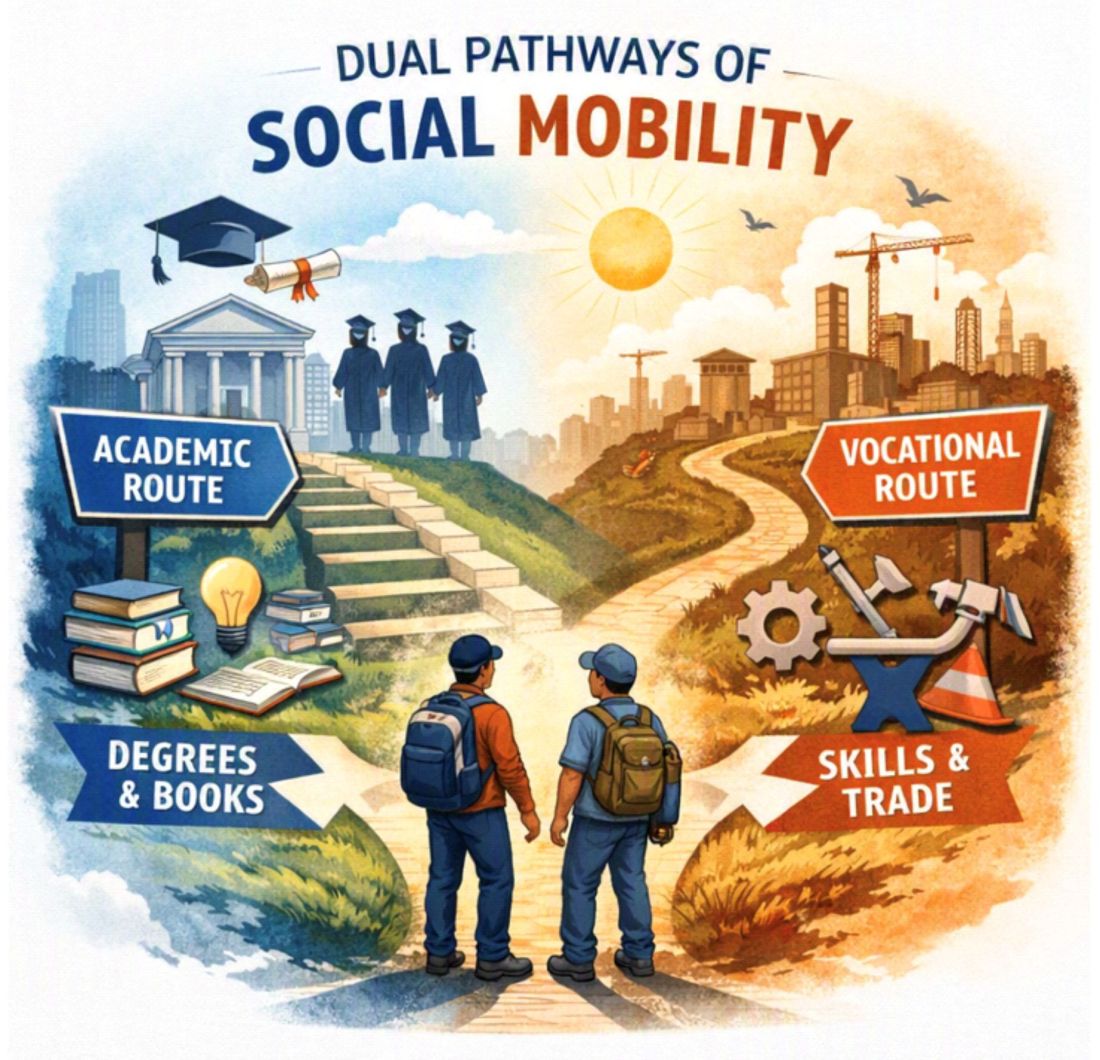
The result is an educational system weighted almost entirely toward academic achievement. The narrative that “everyone should get a degree” sounds egalitarian, but it is built on a false assumption: that academic learning is the universal route to success.

It isn’t. Many people are not academic or consciously cerebral learners. They are experiential, practical, hands‑on – individuals whose intelligence expresses itself through doing rather than theorising.

These young people are not less capable; they are differently capable. Yet the current system treats them as failures because it only recognises one form of intelligence.

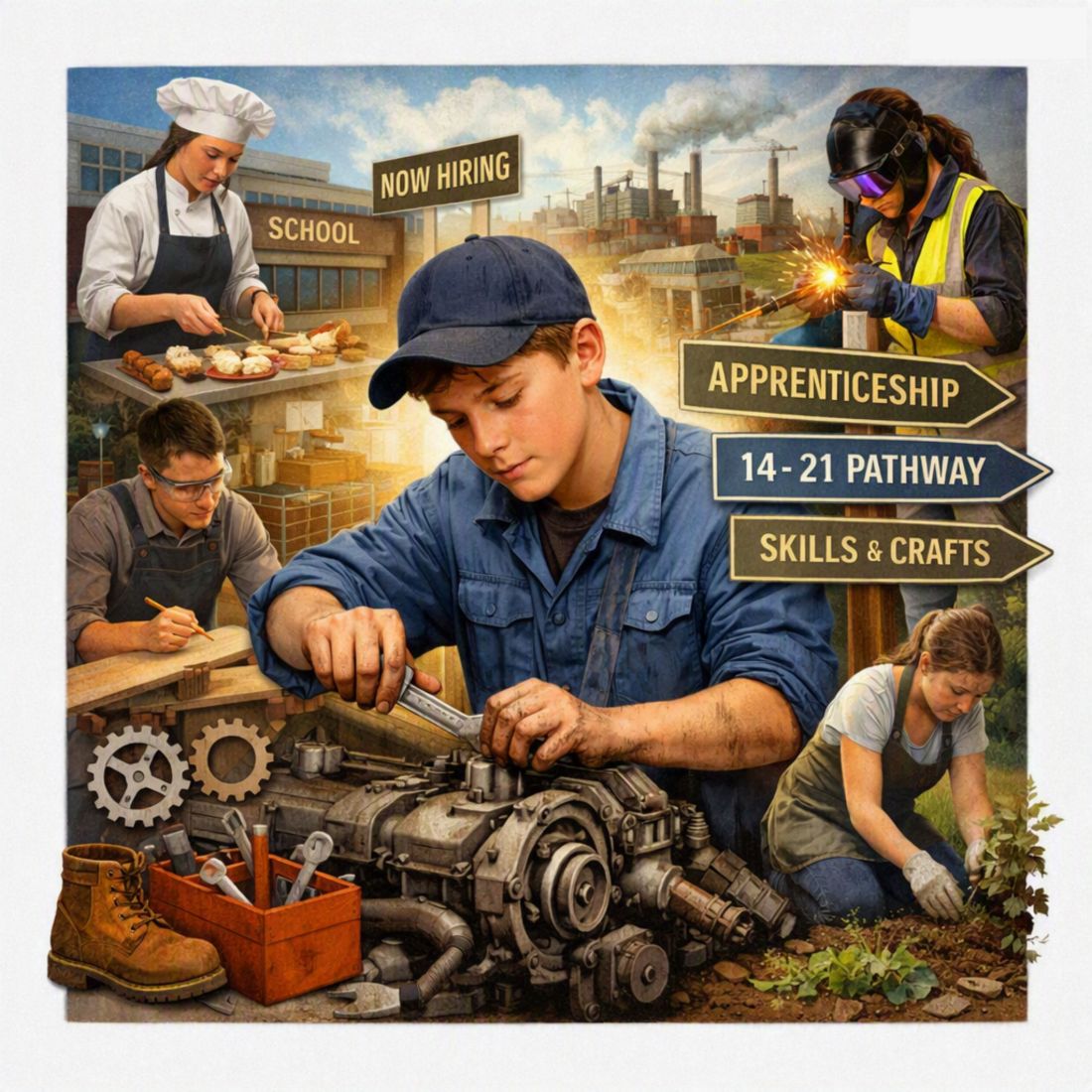
A genuinely vocational pathway – beginning at 14 and continuing to 21 – would allow thousands of young people to thrive in ways no degree can replicate. By the time they finish, they would possess experience, maturity, and professional identity that academic pathways cannot provide.

The tragedy is that the system also fails traumatised young people who could be academic. Growing up in poverty, instability, or survival‑mode environments means that adolescence is not a time for learning; it is a time for coping. These young people may have academic potential, but they cannot access it because their teenage years are spent navigating chaos rather than studying. The system punishes them for circumstances they did not choose.

All of this makes social mobility far more complicated than it needs to be. The bottleneck is not so much the lack of opportunity; it is the narrowness of the educational model and the hero‑mould narrative that sits on top of it.

When society values only academic achievement and visible adversity, it elevates the wrong people and overlooks the right ones. It confuses narrative with merit, background with capability, and trauma with qualification.

Fixing this is not a matter of adding certificates or tweaking qualifications. It requires a fundamental shift in how we value people. We must stop treating wealth as the primary marker of worth, academic credentials as the only legitimate pathway, and adversity as the currency of mobility.

We must start recognising all forms of human capability – practical, vocational, emotional, experiential, and intellectual. When we do this, the number of people genuinely being held back becomes far smaller, and far easier to support.

Social mobility should be about empowerment, not optics. It should uncover talent, not manufacture heroes. It should build capability, not confer status.

And it should recognise that human potential comes in many forms – most of which cannot be measured by degrees, narratives, or the visible markers of wealth.

Improving Social Mobility is about addressing the way decision makers think, not about academic education alone

The three key misunderstandings and fallacious barriers to Social Mobility are:

  • That Social Mobility issues only affect young people who are in their career development years
  • That the only way to improve Social Mobility is through ensuring that everyone achieves a ‘full’ academic education and that the attainment of degrees is key
  • That Social Mobility issues relate to the achievement, progress or outlook of the individual and nobody else

With one evolution of the Social Mobility Commission having resigned because of lack of Government support and another now appointed in the image of all the same Establishment ideas, the key issues underpinning lack of progress in tackling the barriers to Social Mobility are still being overlooked and this travesty is set to continue further still.

As is often the case when a cause is given a label, the Social Mobility problem is an issue which has become closely aligned with just one interpretation of its cause. This closes down debate and dialogue about the much wider range of issues which attribute to reducing opportunities. It also excludes consideration of a wider malaise and certainly overlooks the real impact on not only the individuals affected themselves, but also upon the wider community as a whole.

Yes, many young people are overlooked because of the start they had in life. The place in which they lived. The schools which they did and did not attend. The qualifications which they did or didn’t gain.

But the reality is that it is a very long list of factors which prevent any one person from progressing.

The interpretation of someone’s validity on the road to progress and passing these barriers is not simply restricted to that of employers, educators or any of the external gatekeepers of opportunity.

No. The perception of not being good enough to overcome any barrier to Social Mobility can be that of the individual all on their own.

The obstruction to unhindered Social Mobility, is the many prejudices which are not and cannot be managed by regulation or by the methods of review and reform which have become the cultural norm in this Country.

In a society which has learned to make effect synonymous with cause, we overlook the real causes of societal problems and as such have no way to address the consequential effects.

The social justice warriors, the politically correct, the rights lobby and liberal left all congratulate themselves on the strangle hold of regulation which decades of manipulation and social engineering have helped them impose.

Yet the rules which govern Equality of Opportunity in their purest sense have actually made prejudices easier to employ.

Only now, beyond the scope of the processes which assure us that prejudices have been all but removed, they are less likely to be evidenced and hide in plain sight.

Yes, we have regulation against gender and sex discrimination. Race discrimination. Disabilities discrimination, Religion, Age and sexual orientation too.

But in creating these frameworks or safety notes, the idealistic engineers of this ill-considered social plan have provided the perfect opportunity for people to surrender ethical responsibility to being seen to adhere to the set of rules which now exist. They have been given a set of pillars that once worshipped, allow them to do whatever they want to by behaving in ways which legitimately go around these rules or sit somewhere in the spaces in between.

We now not only have a situation where decision makers can quietly be racist, sexist, or are allowed to quietly indulge any other prejudice we might not collectively like. They can continue to do so unimpeded.

The consequences of this ‘big vision’ engineering project create many other problems too. Problems which include disadvantaging the already disadvantaged and building barriers to progress which the very same people will now never cross.

And guess what. Yes. We find again that achievements exist only for the same few to easily win all over again.

Take for example the assault on the education system that the Blair Government undertook, with the overt aim of giving everyone the opportunity to gain a degree.

The result has been the commercialisation of the further and higher education system, leading to the prioritisation of winning fees, rather than focusing on the quality and commercial durability of the education provided. Running education as a business has almost certainly put its future in serious doubt.

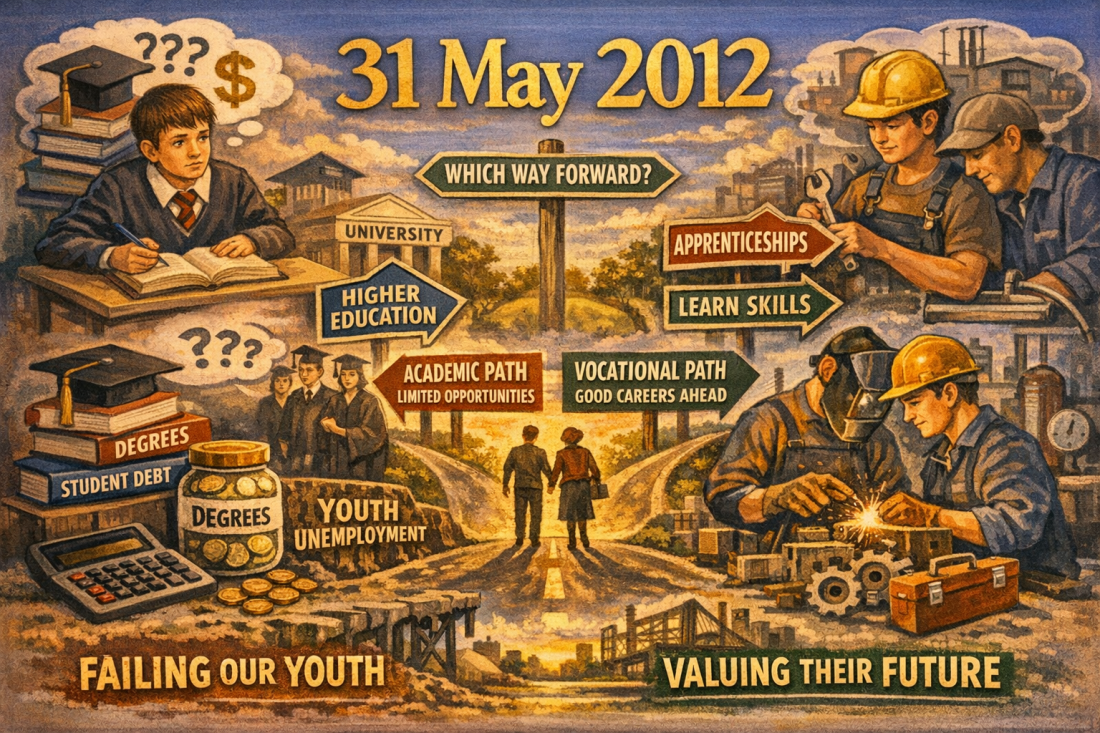
It is a process which has already led hundreds and thousands of hopeful young people to begin professional life in serious debt and with academic qualifications which are to many businesses completely worthless.

Yet the debt-laden graduates only find out too late that these quack qualifications don’t mean much at all to the world around them once they have left the supposed safety of the academic universe behind.

The world of big business and its new world of ‘created roles and specialisms’ has responded to the glorifying of academic qualification over the benefit of time-served experience by recognising degrees as a standard for anybody worth looking at. Not as a way to recognise specialism in itself. But as a like-for-like replacement in recent years for what would previously have been well illustrated by the attainment of 3 A ‘Levels, and only a few years before that just 5 GCSE’s.

Not everyone is cut out to be a CEO, Director or even a manager and non-academic people bring value to business which only when added to the contribution of real academics can it add up to a formula which is so much more.

The dangerous mix created by this non-stop meddling has fuelled the entitlement culture. Qualification has become more valuable than experience and experience is not of value to those who have qualifications.

Letters on a CV are seen as more important than attitude, motivation, or the many other life skills which business used to intrinsically value, which they now overlook. The system now unwittingly leads them to place applications from people who could and should be the next generation of commercial superstars straight in the bin.

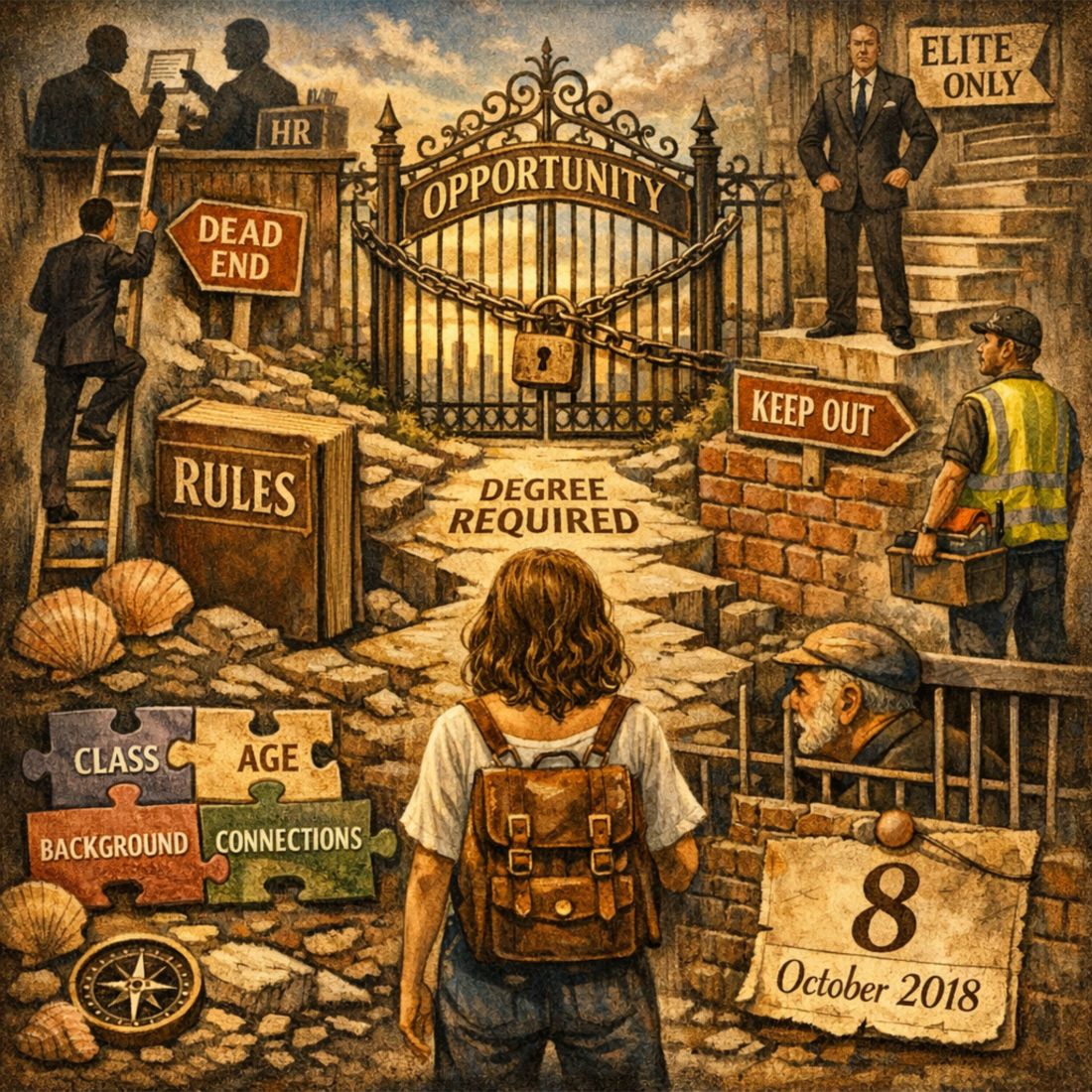
It doesn’t stop there, and within a tick box, risk-averse culture where Recruiters and HR Officers – that’s people who have and never will do these jobs themselves – have overwhelming power over recruitment processes, there is an untamed focus on identifying reasons to not even shortlist candidates – usually because they don’t have a degree.

Good people are now denied jobs where they can thrive and the employers and companies themselves never gain access to the wider pool of candidates where the real benefits of selecting people with the right experience rather than just a paper qualification lies.

The consequences of this social meddling are already far reaching indeed and because the UK could never afford to provide education to 21 years as a standard – which in itself was never needed, it was inevitable that a new form of educational discrimination would introduce itself. And it’s the worst one of all. The preclusion from opportunity for even more young people based simply on cost.

Just in this one example of social meddling focusing on education alone, where impractical idealists have tried to impose a system of restrictions based upon no experience that they have or have in no way never known, we can see how far reaching the impact on consequences of quixotic thinking can be.

This is a pattern which is unfolding itself over and over again within all the areas of our lives where lack of consideration has been applied to the consequences of imposing the ‘consideration’ of rights and ‘positive’ discrimination on a society which will always have its own mind and not the one which political busy-bodies wish to create for it.

The barriers to Social Mobility are all about the way that we think.

But the change needed and the tools which will enable us to break down those barriers and make that change will only come when decision makers with the power and therefore the ability to oversee that change go through a voluntary process of accepting that they themselves need to think differently.

That change will come about as a direct result.

That change cannot and never will be imposed.


Equality in Education has been destroyed by the idea that all can make the best of the same opportunities

images (31)

I seem to have the phrase ‘cause and effect’ branded in my thought processes right now as I look at all of the problems with Government and no less so when recently reading yet more bad news about struggling school pupils failing to catch up.  But is anybody really surprised?

One of the greatest problems with modern government and law-making is that once an issue has been addressed, the people who have been put in place to deal with that issue then have nothing to do – unless of course they create something else to justify their existence. Have a good look at every area of life where some kind of policy has been created or exists and you might just begin to see what I mean.

The problem with this process is that whilst you can easily see that some things do benefit from being revised from their original form to meet a need which was not originally considered or indeed, to bring that a policy or law up-to-date to meet or to be applicable to contemporary need, the rise of the bureaucrat and ‘professional’ politician has led to unnecessary meddling and the creation of having laws for laws sake. This is particularly evident in matters such as education.

The value of education has been appreciated for a long time but the system we have probably began the headlong descent that we are now experiencing when the concept of real apprenticeships was lost and the school leaving age was raised to 16 in 1972. Speak to what some might call ‘old school’ educators and they will tell you that children were either ‘heads or hands’; the inference being that they were academic or practically inclined. Would you hear a teacher say the same in a similar conversation today? No.

The 1997-2010 New Labour project oversaw much of the destructive push towards blanket qualification levels which now seem to be the accepted way to enhance an evolving society. Put simply, the approach of such meddlers is to work on the basis that the easiest way to improve education is to make the education fit the population, rather than encourage the population to meet the demands of the time. Now is that real equality or just a twisted view of it which is taking our once highly educated and envied Nation backwards?

Everyone is different for many reasons, not least because of their genetics, demographics and social conditioning. It is therefore sheer folly to believe that by applying the one-size-fits-all mentality that you will create a perfect and fully functioning society by making everyone equal ‘by default’. We currently see high levels of youth unemployment and dissatisfaction with the system (Something apparently highlighted by the August 2011 Riots), but again no real attempts to address the causes of these problems being made by the very people who could genuinely make a difference.

There are many young people who don’t want to be in ‘school’ and others who just don’t get the benefit from a dumbed-down degree system where 3 years of undergraduate study provides what could be a lifelong debt and a qualification that industry views as useless, all against the backdrop of a Government that cannot afford to provide such diversions in the first place. The balance has been lost and somebody needs to get this all back where it should be so that each and every individual can follow a route to a career which gives them the best opportunities to realise all that they can achieve based on what they are capable of doing; not what some idealist in London thinks it right that they should do.

Rather than scratching heads about the escalating problems created by the decline in standards in education, why not get back to a basic appreciation of the fact that everyone has something unique to offer and that in itself requires real diversity of opportunities and not one which is offered by an encyclopaedic exam syllabus. Put 14 year-olds who have no academic inclination – or don’t recognise one at that age – into real 7-year vocational apprenticeships in industry and SME’s where time and application give them the career footing that they would otherwise never achieve?

Why not begin to rebuild the ‘time-served’ bank of talent and experience that no amount of schoolroom activity can provide our dwindling industries and hungry-for-help businesses with, in a cost effective way which reduces the burden on the State and will probably address all manner of other issues hurting society at the same time such as youth crime?

I can almost hear the ‘it won’t work because…’ right now. What – because of employment laws or other legislation? – That’s exactly the point and the very reason we are getting into more and more of a mess isn’t it?