
1. Leadership is a Human Phenomenon, Not a Structural Role
Leadership arises from human qualities – empathy, courage, responsibility, and service – not from titles, hierarchy, or authority.
A system cannot manufacture leaders; it can only create positions.
Leadership exists only where human relationships and accountability are real.
2. Systems Shape Behaviour More Than Individuals Do
People behave according to the incentives, pressures, and structures around them.
When a system rewards compliance, it produces compliant people.
When a system punishes leadership, it eliminates leaders.
The behaviour of those in power is a reflection of the system, not their personal morality.
3. Centralised Systems Inevitably Produce Managers, Not Leaders
As systems grow in size and complexity, decision‑makers become distant from the people affected by their actions.
This distance forces them to rely on rules, processes, and abstractions – the tools of management.
Leadership becomes impossible at this scale because it requires proximity, understanding, and direct accountability.
4. Real Leadership Can Only Function at Human Scale
Human scale means environments where people know one another, consequences are visible, and accountability is direct.
Leadership thrives where relationships are real, not abstract.
When systems exceed human scale, leadership collapses and managerialism fills the void.
5. The Political Party System Manufactures Non‑Leaders
Parties pre‑select candidates long before voters see them, filtering for malleability, compliance, and predictability.
Insecure non‑leaders then select even weaker successors, creating a downward spiral of capability.
This ensures that those who rise to positions requiring leadership are the least equipped to lead.
6. Managerialism Is Self‑Reinforcing and Self‑Protecting
Once managers dominate a system, they reshape it to reward their own traits: caution, conformity, and self‑interest.
They use rules, procedures, and centralised control to avoid responsibility and suppress challenge.
The system becomes designed to preserve itself, not to serve the public.
7. Wealth and Centralised Power Form a Symbiotic Relationship
Centralised political systems depend on wealth for influence, stability, and survival.
Wealth depends on centralised systems to maintain access and control.
This alliance shapes priorities, incentives, and behaviour – and excludes genuine leadership, which threatens both sides.
8. The Public Has Forgotten What Leadership Looks Like
Because managerialism has replaced leadership for generations, people now mistake authority for leadership, hierarchy for competence, and compliance for responsibility.
The absence of real leadership has normalised dysfunction and lowered expectations of public life.
9. Decentralisation Is Essential for Restoring Leadership
Leadership cannot be imposed from above; it must emerge from below.
Decentralised, community‑rooted systems restore proximity, accountability, and human connection – the conditions leadership requires.
Power must return to the smallest viable unit where real relationships exist.
10. The Purpose of Governance Is Service, Not Control
Governance should enable communities to thrive, not manage them into compliance.
Systems must be designed around human needs, not institutional preservation.
Leadership is the act of serving others; managerialism is the act of preserving the system.
What These Principles Achieve
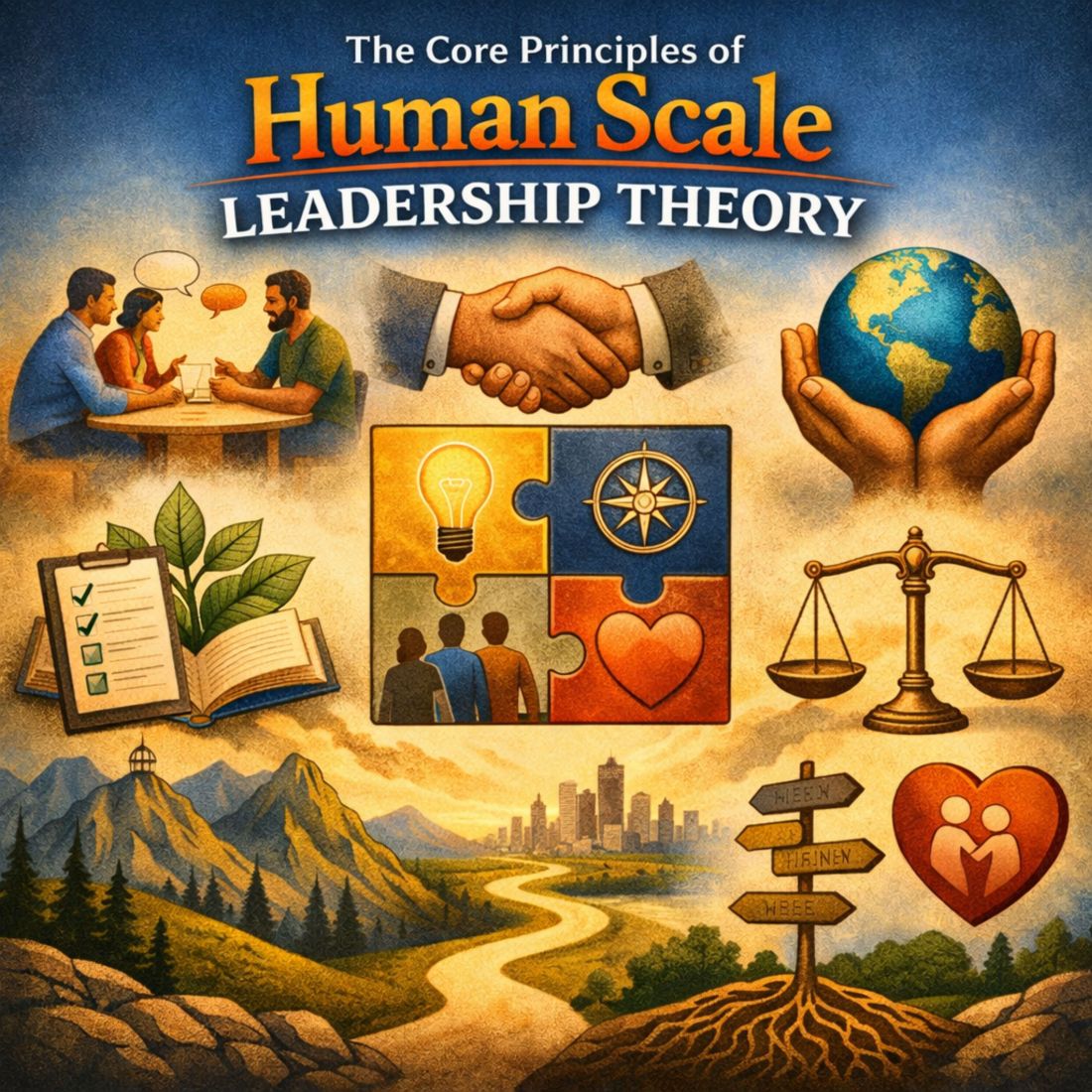
Together, these principles:
- explain why leadership has collapsed
- show how systems produce behaviour
- reveal why centralisation fails
- expose the mechanics of the party system
- define the conditions leadership requires
- offer a path toward renewal through decentralisation
They form a complete philosophical foundation – coherent, original, and deeply aligned with the essay you’ve developed.