
The Two‑Edged Sword of Social Mobility: Why Our System Elevates Narratives, Not Capability

Social mobility is often presented as a simple moral project: remove barriers, widen opportunity, and allow people from disadvantaged backgrounds to rise.

It is a noble ambition, and one that any fair society should pursue. Yet the way social mobility is currently understood – and operationalised – contains a structural flaw that is rarely acknowledged.

It is a two‑edged sword, capable of empowering genuine talent, but equally capable of elevating individuals for their narrative value rather than their capability.

When this happens, the system not only fails the individuals it seeks to help; it also undermines trust in the very idea of social mobility itself.

At the heart of this problem lies a fundamental confusion between help and hand‑up.

Help is empowering. It equips individuals with confidence, skills, and the ability to step forward on their own merit. A hand‑up, by contrast, is elevating. It places individuals into positions they have not yet earned, often because their background fits a narrative that institutions find symbolically useful.

These two approaches are not merely different; they produce entirely different outcomes.

Help opens a metaphorical door. It says: you have value, you have ability, and we will remove the barriers that prevent you from showing it. A hand‑up opens a literal door and pushes someone through it, often without ensuring they are ready for what lies on the other side. Help respects agency and capability. A hand‑up risks creating fragility, because it confers status without building the foundation required to sustain it.

This distinction becomes dangerous when institutions begin selecting individuals who fit a hero‑mould – dramatic adversity, visible difference, a compelling story – rather than those who possess genuine capability.

Hero narratives are emotionally powerful and politically convenient. They allow institutions to demonstrate progress, inspire audiences, and signal virtue. But hero narratives reward the story, not the skill.

When someone is elevated primarily because their background is narratively useful, two predictable consequences follow. First, they may struggle to perform at the level to which they have been elevated. Second, their struggle becomes a referendum on social mobility itself. Critics generalise from the individual to the group, and from the group to the entire project.

The collateral damage is severe. Exceptional talent gets left behind. Many disadvantaged individuals possess extraordinary capability precisely because of their formative experiences.

They have developed resilience, adaptability, emotional intelligence, and problem‑solving skills that cannot be taught in classrooms. But because their adversity is not dramatic enough, or because they do not perform their hardship in a way that fits the hero narrative, they are overlooked.

Meanwhile, individuals whose wounding – whether true, exaggerated, or misunderstood – is narratively compelling are elevated. Their trauma becomes their currency. Their background becomes their qualification. Their story becomes their evidence.

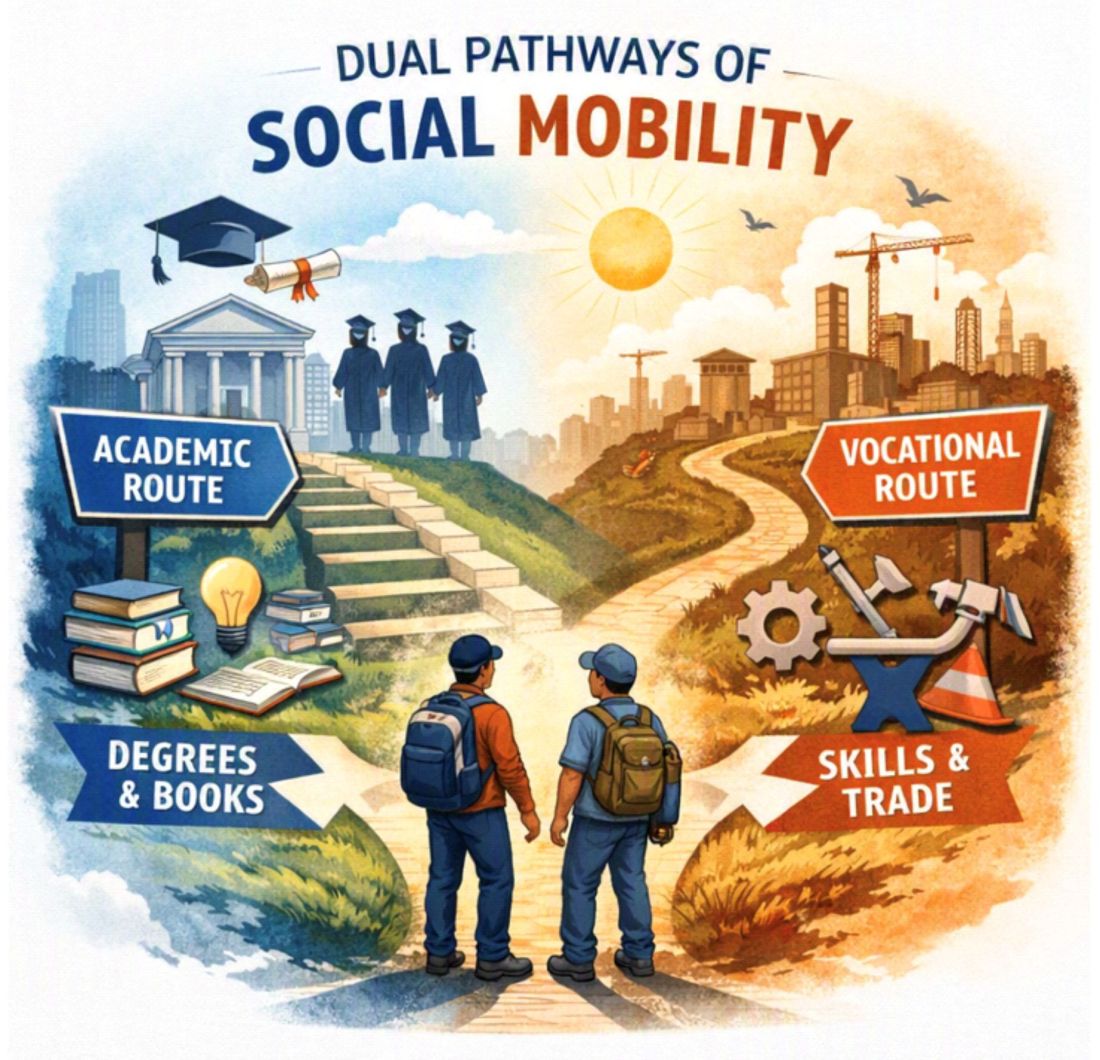
This dynamic is intensified by the way society has come to value education. In a wealth‑centric system, financial productivity becomes the measure of human worth. Academic qualifications correlate with income, so they become the primary gateway to opportunity.

The result is an educational system weighted almost entirely toward academic achievement. The narrative that “everyone should get a degree” sounds egalitarian, but it is built on a false assumption: that academic learning is the universal route to success.

It isn’t. Many people are not academic or consciously cerebral learners. They are experiential, practical, hands‑on – individuals whose intelligence expresses itself through doing rather than theorising.

These young people are not less capable; they are differently capable. Yet the current system treats them as failures because it only recognises one form of intelligence.

A genuinely vocational pathway – beginning at 14 and continuing to 21 – would allow thousands of young people to thrive in ways no degree can replicate. By the time they finish, they would possess experience, maturity, and professional identity that academic pathways cannot provide.

The tragedy is that the system also fails traumatised young people who could be academic. Growing up in poverty, instability, or survival‑mode environments means that adolescence is not a time for learning; it is a time for coping. These young people may have academic potential, but they cannot access it because their teenage years are spent navigating chaos rather than studying. The system punishes them for circumstances they did not choose.

All of this makes social mobility far more complicated than it needs to be. The bottleneck is not so much the lack of opportunity; it is the narrowness of the educational model and the hero‑mould narrative that sits on top of it.

When society values only academic achievement and visible adversity, it elevates the wrong people and overlooks the right ones. It confuses narrative with merit, background with capability, and trauma with qualification.

Fixing this is not a matter of adding certificates or tweaking qualifications. It requires a fundamental shift in how we value people. We must stop treating wealth as the primary marker of worth, academic credentials as the only legitimate pathway, and adversity as the currency of mobility.

We must start recognising all forms of human capability – practical, vocational, emotional, experiential, and intellectual. When we do this, the number of people genuinely being held back becomes far smaller, and far easier to support.

Social mobility should be about empowerment, not optics. It should uncover talent, not manufacture heroes. It should build capability, not confer status.

And it should recognise that human potential comes in many forms – most of which cannot be measured by degrees, narratives, or the visible markers of wealth.
When Hero-Making Fails, Social Mobility Pays the Price

The intense scrutiny surrounding Jason Arday is no longer simply a story about one academic. It is a warning about what happens when Britain turns individuals into symbols of social mobility. When those symbols collapse, the damage extends far beyond the person at the centre of the story. It reaches thousands of people whose opportunities become collateral damage in the collapse of the narrative.

This moment is not only about reputational damage to one individual. It is about the harm that follows when a society mistakes an exceptional life story for proof that the system itself is working.

This is not a defence of Arday, nor a judgement of him. Investigations will reach their own conclusions. But the reaction to his case reveals something more troubling than any single biography: the fragility of a system that turns people into symbols, rewards narrative over capability, and then tears those symbols down with equal force.

To understand the wider impact, we must examine the machinery that created the narrative in the first place: why heroes are made, who benefits from them, why they become vulnerable, and who pays the price when they fall.

The Media’s Cycle: Elevation, Performance, Collapse

The media has a familiar pattern: it elevates individuals whose stories of adversity and triumph are emotionally compelling, then scrutinises them with equal intensity when inconsistencies emerge.

This cycle is not unique to Arday. It is a structural feature of how public heroes are created, celebrated, consumed, and dismantled.

Hero-making is powerful because it offers institutions a visible way to demonstrate progress. A story of overcoming poverty, disability, or exclusion becomes proof that Britain is meritocratic, open, and fair.

But it can also be extractive. It turns a person into a narrative asset. Their life becomes a vessel for a story others want to tell.

When the story falters, the media does not merely report; it dismantles. The individual becomes a spectacle, and the public is invited to watch the fall.

The damage does not stop with the person at the centre of the story. It spreads to everyone whose life experience resembles theirs.

Trauma, Disadvantage, and the Pressure to Perform

Many people in Britain’s deepest social-immobility pool carry trauma that is profound and lifelong. Poverty, instability, violence, and neglect shape how they see themselves and how they believe the world sees them. They learn early that survival requires adaptation, resilience, and sometimes storytelling too.

In that context, it is not difficult to understand how someone might come to believe that hardship is currency: that adversity is the only thing that makes them visible or valued.

When institutions reward narrative over capability, they unintentionally teach people that performance is expected, embellishment is strategy, and storytelling is survival.

Arday’s background includes real adversity. Whatever the investigations ultimately conclude, it is clear that his life has been shaped by experiences many readers will never encounter. The tragedy is that those experiences – legitimate, complex, and deeply human – may now be overshadowed by the collapse of the story built around them.

It is not an excuse. But it is context.

The Wider Impact: A Blow to Social Mobility Itself

The danger now is that Arday’s story becomes a symbol – not of institutional failure, but of supposed flaws in disadvantaged people themselves.

The risk is that some observers will treat one case as evidence of a wider pattern. In symbolic public debates, individual failures are often used to question entire programmes, communities, or ideas. Trauma becomes recast as manipulation. Diversity is accused of undermining standards. Social mobility is dismissed as a façade.

That would be profoundly unfair. It would also be profoundly damaging, because there are real people – thousands of them – who have lived through trauma, who have extraordinary capability, and who deserve opportunity.

They will not be interviewed on television. They will not be profiled in newspapers. They will not be invited to speak at conferences. They will simply be harmed by the shadow cast by this moment.

The media will not see them. But the consequences will reach them.

This is the true cost of a collapsed hero narrative: it does not fall on the hero alone. It falls on everyone who shares the hero’s background, even when they have done nothing to invite that burden.

The Educational Distortion Behind the Crisis

This moment also exposes a deeper flaw in Britain’s educational model. The same system that creates social mobility heroes is also the system that misunderstands talent.

In a wealth-centric society, value is measured by financial productivity. Academic qualifications correlate with income, so they become the primary gateway to opportunity. Prestige concentrates into a narrow set of pathways. Those who succeed through them become symbols. Those who do not are often overlooked altogether.

The result is an educational system weighted almost entirely toward academic achievement, even though academic success is only one form of human capability.

The narrative that “everyone should get a degree” sounds egalitarian, but it rested upon a false assumption: that academic learning is the universal route to success.

It isn’t.

Many people are experiential learners: practical, hands-on, intuitive. They often possess exceptional capability, but the system does not recognise it because it cannot be easily measured in academic terms.

A genuine vocational pathway, beginning at 14 and continuing to 21, would allow thousands of young people to thrive in ways no degree can replicate.

The tragedy is that the same system also fails traumatised young people who could be academic.

Growing up in survival-mode environments means adolescence is not always a time for learning; it can be a time for coping.

These young people may have academic potential, but they cannot always access it because their teenage years are spent navigating chaos rather than studying.

This is the educational bottleneck that makes social mobility far more complicated than the public debate often allows.

The Moral Question Institutions Must Ask

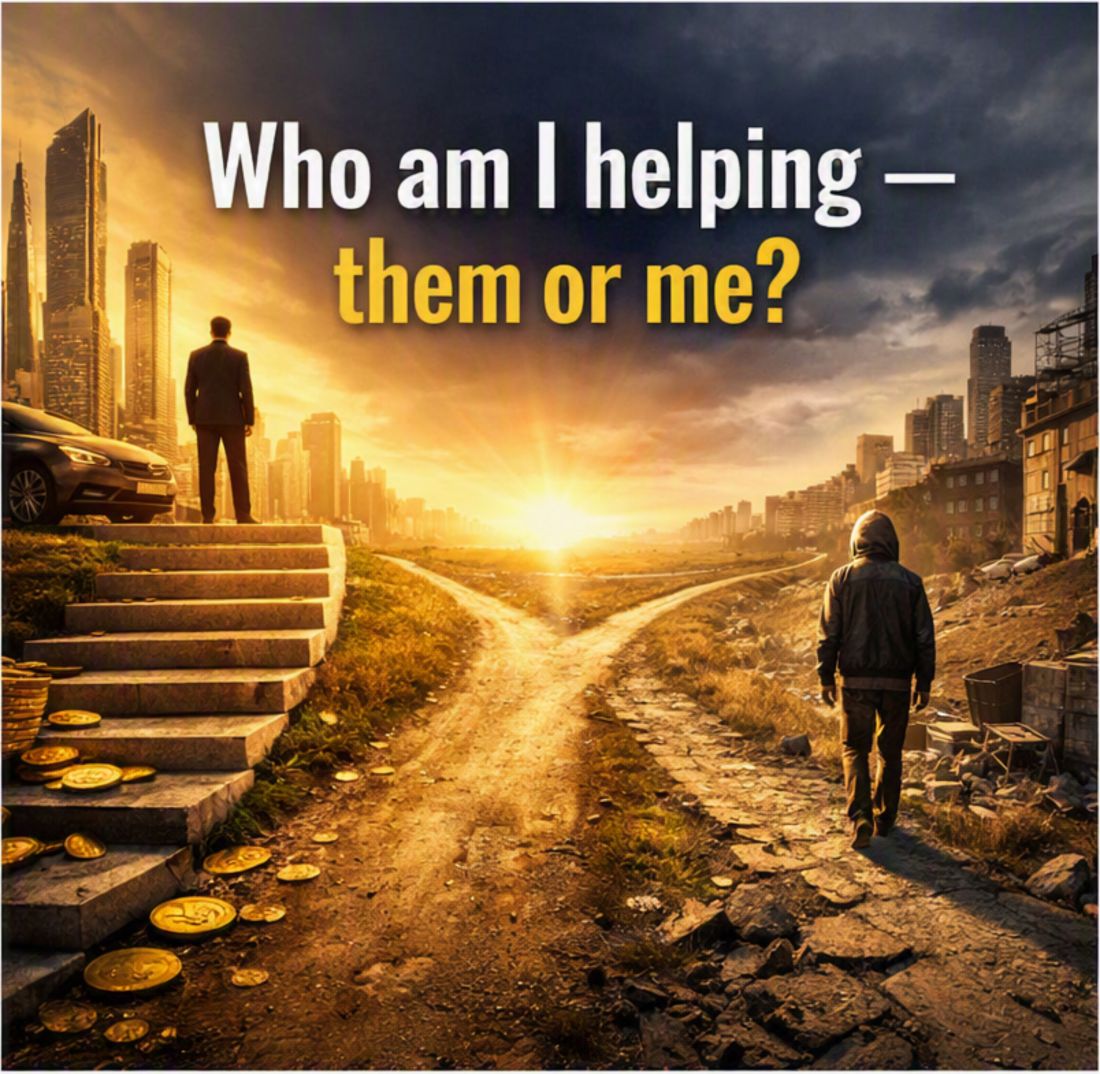
The question that should guide every institution, journalist, and policymaker involved in social mobility is simple, and it should be asked before any story is promoted, any platform offered, or any individual elevated:

Who am I helping – them, or me?

If the answer is “me,” the project is not social mobility. It is self-promotion.

If the answer is “me,” the hero is being used, not supported.

If the answer is “me,” the collapse of the narrative becomes more likely – and the consequences will fall hardest on those least able to bear them.

True help empowers individuals to recognise their own value, develop their capability, and rise on their own merit.

False elevation – the hand-up – places individuals into positions they may not be prepared for, then abandons them when the pressure becomes unbearable.

The media rarely distinguishes between the two. Institutions often don’t either.

What Must Change

If social mobility is to survive this moment, institutions and media organisations must confront their own role in creating and extending the barriers that underpin it.

They must stop rewarding narrative over merit. They must stop treating trauma as currency. They must stop manufacturing heroes for their own benefit. They must stop confusing elevation with empowerment.

Social mobility was never meant to be about producing heroes. It was meant to be about widening opportunity. Heroes are exceptional by definition; opportunity should not be.

If institutions continue to reward stories more than capability, they will keep creating symbols and then destroying them. Each collapse will make the next person from a disadvantaged background harder to trust, harder to support, and harder to champion.

The question is not whether Britain needs more heroes. The question is whether it is finally prepared to build systems that make heroes unnecessary.