UK Farmers’ Inheritance Tax Changes: What does the Government’ Christmas Announcement Really Mean for Food Security?

This morning, I was asked by someone who grew up in farming and knows what I do whether I thought the government’s announcement about changes to the farmers’ inheritance tax threshold and transfer allowance would be the end of it.

My immediate reply was that, given the Spring Budget or Statement date had been announced only the day before, the whole thing seemed suspicious to say the very least.

That’s before we even consider the timing: just before Christmas, and only days after the Batters Farming Profitably Review (FPR) was published.

As I suggested in my follow‑up blog, the FPR told many truths about the downward spiral that U.K. farming is now in, but it did so firmly within the context and framing that government and the wider establishment have set.

That’s only helpful if you believe that having the truth spelled out about the things killing an industry – and by default, UK food security – is the same as being heard. And that being heard – if you actually are – will lead to meaningful change rather than simply becoming more words added to the pile.

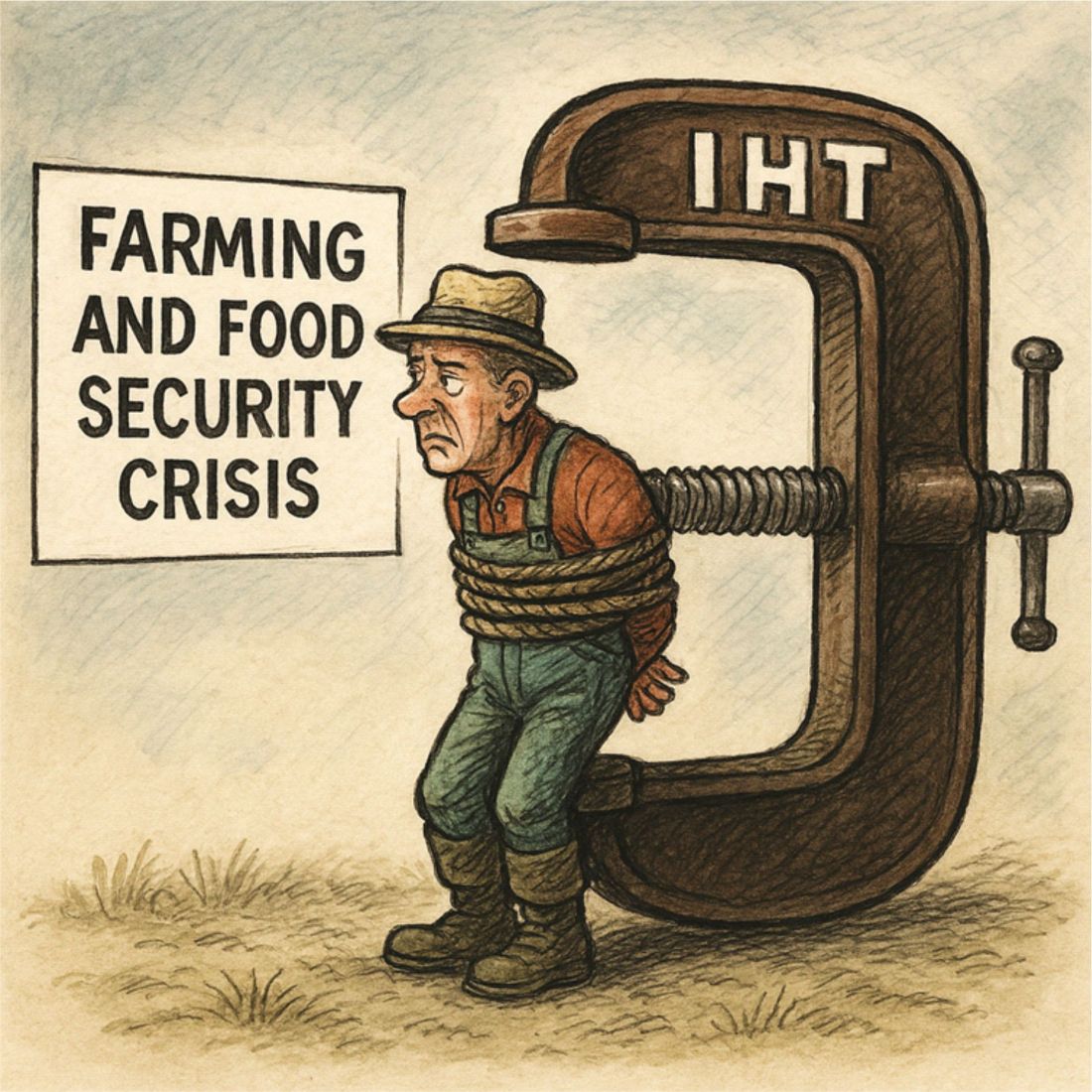
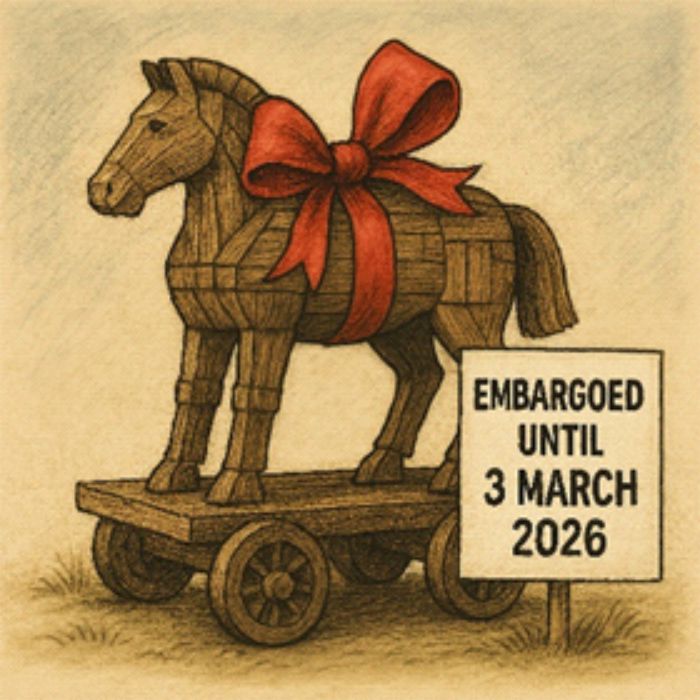
Whilst the news will bring some comfort to those who see the extension of the IHT window as a kind of Christmas gift, the regrettable truth is that even a complete U‑turn by the government on this single policy won’t change the direction of travel.

Nor will it alter the wide range of influences and pressures – many of which were identified in the FPR – that are tightening like a thumb screw and will ultimately destroy independent and traditional farming methods in this country.

The question, regrettably, given that everyone is still moving in the same direction, when you look at what their legs rather than what their lips are doing, is this: what will be the real cost of a story that grabs just enough attention to make people believe the farming and food‑security crisis is suddenly heading somewhere different?
Further Reading: Understanding the Context and Challenges Facing UK Farming

To help you dive deeper into the issues discussed in this blog – especially the government’s inheritance tax changes, the Batters Farming Profitably Review, and the broader crisis in UK food security – here’s a recommended list of Adam’s articles.

Each summary highlights the relevance of the link to the ongoing debate and the future of British farming.

1. https://adamtugwell.blog/2025/12/19/a-few-thoughts-on-minette-batters-farming-profitability-review-fpr/

A critical analysis of the FPR, this post explores the truths revealed about the downward spiral in UK farming, while questioning whether simply acknowledging the problems will lead to meaningful change. It sets the stage for understanding the policy environment and the pressures facing farmers today.

2. https://adamtugwell.blog/2025/08/14/farm-inheritance-tax-was-always-about-wrecking-independent-uk-food-production-thats-why-it-defies-common-sense/

This article delves into the history and intent behind farm inheritance tax, arguing that it has long undermined independent food production in the UK. It provides essential background for readers seeking to understand why inheritance tax remains such a contentious issue.

3. https://adamtugwell.blog/2025/11/22/risk-and-responsibility-why-farmers-must-choose-to-rebuild-the-uk-food-system-before-its-too-late/

This post emphasises the urgency for farmers to take proactive steps in rebuilding the UK food system. It discusses the risks involved and the responsibilities that fall on those within the industry to drive change before the situation becomes irreversible.

4. https://adamtugwell.blog/2025/11/23/understanding-who-controls-our-food-controls-our-future-everything-you-need-to-know/

An exploration of the power dynamics in UK food production, this article explains how control over food systems shapes the nation’s future. It’s a vital read for those interested in the intersection of policy, industry, and food security.

5. https://adamtugwell.blog/2025/01/18/the-need-for-a-collaborative-approach-to-the-uk-farming-and-food-security-problem/

This piece advocates for collaboration among farmers, policymakers, and stakeholders to address the complex challenges facing UK farming and food security. It offers practical insights and solutions for building a more resilient system.

6. https://adamtugwell.blog/2025/12/22/how-the-trail-hunting-ban-exposes-a-bigger-battle-for-britain/

Broadening the discussion, this article connects rural policy battles – like the trail hunting ban- to the larger struggle over Britain’s countryside, farming, and food systems. It provides context for understanding the wider political and cultural forces at play.

7. https://adamtugwell.blog/2025/12/18/adams-food-and-farming-portfolio-a-guide-to-books-blogs-and-solutions/

A comprehensive guide to further reading and resources, this portfolio is ideal for readers who want to explore more about UK farming, food security, and potential solutions.
How the Trail Hunting Ban Exposes a Bigger Battle for Britain

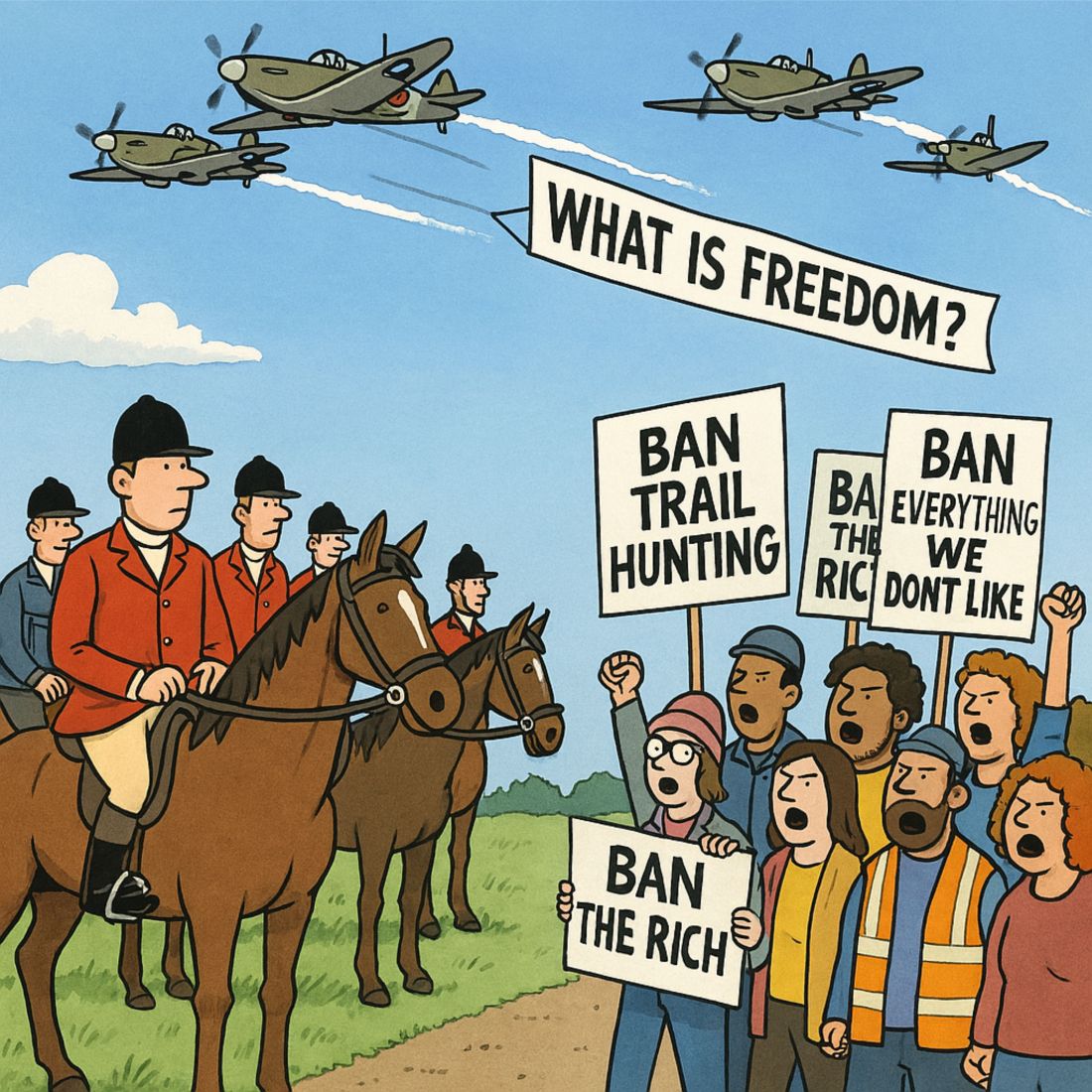
Trying to unpick what looks like the sudden announcement that the government intends to ban trail hunting in the upcoming animal welfare strategy is far more complicated than it first appears.

The easy explanation is to fall back on the familiar left‑vs‑right framing – the tired them‑vs‑us narrative that has shaped the hunting debate for decades. But that framing has always obscured more than it has revealed.

Across the UK today, some will feel they have won and others will feel they have lost. Yet this moment isn’t new, nor is the opportunity to take a different path.

As I argued in my blog published on Christmas Day in 2017, the solutions that could have kept young people, rural voters, and the wider public onside have been hiding in plain sight for years.

Knowing people who hunt and people who don’t – and many who sit somewhere in between – I feel exactly as I did when I wrote that piece.

There was always a workable middle ground. The model we have today could have functioned well and kept most people broadly content, if only all sides had been willing to look beyond their own entrenched positions.

Instead of trying to rewrite the rules of the game or cling to the past as if personal belief were a universal right to impose on others, they could have chosen a bigger‑picture approach that protected both rural culture and public confidence.

But we live in a time when being “right” has become more important than being effective.

That mindset pushes people into emotional trenches, where the goal becomes defeating the other side rather than understanding what winning actually looks like in a changing world.

As the years have passed, since the ‘Hunting Ban’ came into force, the battle lines have hardened. Few have stopped to consider how easily self‑made traps can spring shut. And the hunting community, through its own shortcuts, diversions, and refusal to adapt, has handed the government the perfect excuse to act.

This is the same government that has already shown its willingness to undermine British rural life – the illogical Farm IHT rule being a prime example. Now, with trail hunting, they have been gifted a justification that many outside the community will accept without hesitation.

Many will still refuse to see what is happening. But when a government is openly delaying local elections, it is not unreasonable to expect they may attempt the same with the next general election if they can cling to power until 2029.

At the heart of this is a belief that everyone else is wrong and they alone are right.

If they succeed in pushing this change through before they lose power – assuming they haven’t already managed to entrench themselves further – the concern is that this will mark the true end of hunting as a living part of our culture and heritage.

Once an outright ban, or anything that functions as one, is in place, reversing it will be nowhere near the top of anyone’s agenda. Not with the scale of the political, economic, and social mess we have building up ahead.

Further Reading:

Minimum Wage, Maximum Exploitation: A Collapsing System Propped Up by Rising Taxes

Introduction

As the cost of living continues to climb across the United Kingdom, many households find themselves struggling to maintain even the most basic standards of financial independence.

With impending tax rises on the horizon, the pressure on those already living near the edge is set to intensify, pushing even greater numbers below the threshold of self-sufficiency.

This is not a temporary crisis, but a symptom of a deeper, systemic failure—a collapsing economic model that now survives only by extracting more from those who can afford it least.

The money-centric economic system that we have – The “Moneyocracy” – perpetuates itself by shifting the burden onto workers and taxpayers, while the promise of prosperity grows ever more distant for the majority.

Against this backdrop, it is essential to confront a fundamental question – one that exposes the uncomfortable realities at the heart of our economy.

A Question:

Do you believe the minimum wage is enough for a full-time worker to live on – and if so, why?

The answer to this question, which varies depending on one’s relationship with the minimum wage, reveals uncomfortable truths about the foundations of our economy and the way work is valued in this country.

What is not surprising is that those who already have financial security often agree in principle that low-paid workers should earn more. Yet when confronted with the implications of paying every worker enough to live independently, many recoil. Why? Because such a change would disrupt their own relationship with the economy.

The Minimum Wage Reality

Let us be clear: the national minimum wage in the UK is not enough for anyone working a full-time 40-hour week to live independently—free from reliance on benefits, charity, or debt.

The widespread acceptance of this wage stems from government and establishment narratives.

What is legally mandated is presented as morally and practically sufficient.

Yet, in truth, the minimum wage is a carefully placed rock covering a pit of myths and lies.

Those who benefit from the system prefer not to lift that rock, because doing so would expose their complicity in maintaining the illusion.

The Employee

A worker earning the minimum wage – currently £12.21 per hour, equating to £488.40 per week or £25,396.80 annually – cannot afford the basic essentials required for independent living.

The gap between what they earn and what they need is effectively the amount by which they are underpaid.

Employers exploit workers by failing to cover the true cost of living.

Regardless of how the deficit is filled—through benefits, charity, or debt—someone else is subsidising both the employee and the employer.

The Employer (Small Business)

Small business owners often insist they pay fairly because they comply with the law. Yet compliance does not equate to fairness.

Paying the legal minimum is not the same as paying enough for employees to live independently.

Common justifications include:

• “They can top up with benefits.”

• “I can’t pay more or I’ll go out of business.”

But these arguments miss the point. The government—and by extension, taxpayers—should not subsidise businesses that cannot afford to pay workers a living wage.

In reality, small businesses are also exploited: they cannot operate independently within the current economic system, because they too are constrained by models that undervalue their work.

The Employer (Big Business)

Large corporations differ because they can afford to pay more.

Supermarkets and other major employers of minimum-wage staff generate enormous profits – even during a cost-of-living crisis, like the one we are experiencing now.

They could easily pay wages that allow workers financial independence, if boards and shareholders accepted smaller returns.

Instead, big businesses exploit both employees and taxpayers. Workers are underpaid, while the government subsidises wages through benefits.

This allows corporations to maximise profits while keeping the mechanics of exploitation hidden from public debate.

The Government

Why does the government subsidise wages so small businesses can survive and big businesses can thrive? Why not simply set a minimum wage that reflects the true cost of living?

The answer is stark: doing so would collapse the system.

The economy functions by undervaluing the majority of jobs deemed “low-skilled” or of “little value.”

If wages reflected reality, the house of cards would fall.

The Taxpayer

The system is a con. The complex machinery of what can be called a Moneyocracy manipulates trust and deference so effectively that taxpayers rarely ask basic questions.

Why, in an economy where corporations make billions annually, must taxpayers top up their employees’ wages through taxes?

Why are we threatened with price hikes whenever government policy shifts, while corporate profits remain largely unscrutinised?

Following the money reveals the truth: wealth is funnelled in one direction, made possible only by exploiting workers, taxpayers, and weak governments.

Corporations profit by underpaying staff, then spin narratives that justify charging consumers more.

Reality Bites

Exploitation of normal people has gone too far. The system enriches the few by exploiting the many – sometimes multiple times over – so profits can grow while wages stagnate or reduce in real terms.

The Moneyocracy survives by perpetuating the myth that it is acceptable for many to grow poorer while a few grow disproportionately rich.

The promise dangled before workers – that if they play the game long enough, they too might “live the dream” – is false.

Humanity is destroying itself chasing a dream that continually recedes, because playing the game requires forgetting our true worth.

The basic equation of the Moneyocracy is simple: for some to be rich, most must be poor.

This is neither humane nor true.

The Alternative

There is another way. A system built on real values – where people, communities, and the environment come first – can replace the current money-centric model.

This alternative requires transparency, local systems, and a commitment to prioritising human worth over profit. Instead of hiding self-interest behind complex structures, society must embrace a model where business and life are conducted openly, sustainably, and with fairness at the core.

The choice is absolute: continue with a Moneyocracy that exploits us all or build a future centred on people.

Path Forward

The Local Economy & Governance System provides the foundational framework for a truly people‑centric future – one where People, Community, and Environment sit at the heart of every decision.

At its core lies a new benchmark: The Basic Living Standard, a guarantee that every individual receives a weekly wage sufficient to cover all essential needs.

This principle of equity and equality is not an optional add‑on, but the priority that guides every part of the system.

By shifting away from exploitation and toward fairness, transparency, and sustainability, this model offers a pathway to rebuild trust and resilience in our economic and social structures.

To explore how this vision can be realised and what it means for the future, please follow these links:

Why People Can’t Just “Get a Job”

This morning, Chancellor of the Exchequer Rachel Reeves delivered her pre-budget statement ahead of the Autumn Budget, scheduled for 26th November.

Despite mounting welfare costs, Reeves offered no meaningful solutions — only strong hints that taxes will rise, paired with blame deflected onto everything and everyone except the government itself.

It’s no surprise, then, that Nigel Farage rushed out a bold announcement promising welfare cuts if Reform wins the next general election yesterday, while Tory leader Kemi Badenoch quickly followed Reeves with an online broadcast that, in substance, amounted to much the same.

As the government flounders, it seems poised to announce little of substance of savings on benefits or public services — yet millions already trapped in a financial vice not of their own making will see the cost of living rise again, working harder for ever-diminishing returns.

The Tories — who helped engineer the current crisis over their 14-year tenure up to summer 2024 — and Reform — now visibly undergoing their own establishmentisation makeover — aren’t offering help to people either. They’re offering help to the economy.

And that’s precisely where the problems began for those whose lives revolve around the benefits system today.

There are hard truths here. Truths that many untouched by poverty still find just a little too uncomfortable to believe.

There will always be people who are:

• Out of work for valid reasons

• Unable to work due to illness, disability, or caring responsibilities

But there are also many people who want to work and are able to work — yet still can’t. Why? Because:

• They can’t find jobs that match their experience

• They can’t find roles that fit their qualifications

• They simply don’t “fit” the mould employers are looking for

It’s easy to assume that anyone who wants a job can get one — any job, at any time. And it’s just as easy to judge those who don’t take “any job” as lazy, entitled, or abusing the benefits system.

But those who make these judgments often haven’t experienced what it’s like to be unemployed and dependent on state support.

The Reality of Benefits

Let’s be clear: basic benefits are not enough to live on.

We’re surrounded by comforting myths — stories we rarely question unless we’re forced to confront the truth. One of the most dangerous myths is that the National Minimum Wage is enough to live on independently.

Here’s the reality in November 2025:

• Universal Credit: Between £316.98 and £628.10 per month, depending on your circumstances

• Minimum Wage: £12.21/hour. For a 40-hour week, that’s about £2,116.40/month

• Actual cost of living: To live independently, a single person likely needs £16–£17/hour — around £2,773.33/month

That’s a shortfall of over £600/month, even for someone working full-time on minimum wage.

The Impossible Choice

Now imagine you’re unemployed, with no savings or support, and your only option is to claim £628.10/month. What do you do?

• Take a job that still doesn’t cover your basic needs?

• Or claim every benefit you can, just to survive?

For many, working full-time in a low-paid job — often under poor conditions and public judgment — while still needing benefits just doesn’t make sense.

The Myth of the “Benefits Culture”

The idea that claiming benefits is an easy ride is a myth. Genuine claimants are treated the same as those gaming the system. The rules are rigid, often making it harder — not easier — to find meaningful work.

Pushing people into low-paid jobs that still leave them reliant on benefits, food banks, or debt might reduce one type of welfare cost. But it could as easily increase the others — through the problems that an ill-considered attempt to push everyone into ‘work’ will create, like mental health issues, workplace burnout, and long-term poverty.

The AI Displacement Problem

A growing wave of joblessness is being driven not by lack of talent, but by the unnecessary and unchecked takeover of roles by artificial intelligence.

Skilled, experienced professionals — once vital to their industries — are being sidelined by automation that prioritizes cost-cutting over human value.

As more capable workers are pushed into the job queue, many will find themselves forced to claim benefits, not because they lack ability, but because the system no longer has space for them.

The Bigger Problem

Most people on benefits aren’t lazy — they’re surviving.

When life becomes a daily struggle, the benefits system can feel like the only option.

But simply cutting benefits without creating real alternatives — like jobs that pay enough to live on — risks pushing thousands into homelessness and crisis.

The Psychology of Work and Pay

Most people don’t need prestige — they need security.

If lower-paid or less challenging jobs guaranteed that workers could meet all their financial obligations and live with dignity, many would take them without hesitation.

The problem isn’t the work itself — it’s that the pay doesn’t match the cost of living.

When people know they can cover rent, bills, food, and essentials every month, they’re far more willing to contribute, even in roles that society undervalues.

What Needs to Change

We can’t fix the benefits system without fixing the economic system that creates the need for it.

If we want fewer people on benefits, we must:

• Build an economy where full-time work pays enough to live on — without top-ups

• Stop supporting a system that enriches a few by impoverishing the many.

Until the government legislates for a fairer system — one where the lowest-paid can live independently on a full day’s work — poverty will persist.

That’s where real change begins.

Farm Inheritance Tax was always about wrecking independent UK food production. That’s why it defies common sense

Watching the continuing bewilderment, frustration, fear and anger from so many across the UK farming community is not easy.

But the real difficulty for someone like me isn’t the wholly avoidable tragedies that are part of the much bigger engineered tragedy that is unfolding.

It is the reality that we cannot do a thing about what is happening, and why it is happening, until many more of us, and not least of all people from within farming and its related industries, begin to accept that what we are seeing, experiencing and increasingly becoming victims to, bears no relationship with our reasoned expectations of government and governance. But is instead being driven by a different set of truths that are very difficult to accept.

Whilst many within the farming industry may feel that you can only understand and relate to the turmoil that this one change in public policy has caused, if you are a farmer and have obvious skin in the game yourself, the action taken by the government and its failure to respond to months of concern, in any way which makes sense, is far from being isolated. Not least of all because the Tax that could be raised by the policy is in public spending terms trivial and was never what the change was really about.

Indeed, what appears to just be a nasty attack on ‘rich farmers’, was, is and will continue to be all about food and the independence that locally controlled food production gives us. It’s this that should be concerning us all more than anything.

It is vitally important for anyone who wants to address the real issues that UK food production faces to stop and look beyond the question of Farmers IHT itself.

To begin understanding how the bigger and deliberately complicated picture works, we all need to see how the IHT policy didn’t arrive in isolation. But was in fact just the next step in a long and calculated chain of policy changes and their implementation, which have been reforming, remodelling and slowly strangling, if not killing off all parts of UK food production for a period that now exceeds 50 years.

We should be under no illusion that the Farm Inheritance Tax Policy is part of a much bigger strategy and plan. One that places the end of independent farming and food production of all kinds across the UK at its very heart.

Likewise, we must recognise that food is power. And Who Controls Our Food Controls Our Future.

So those who wish to have control over everything – including people and how we are allowed to live and behave – want to secure complete control of the food chain. Simply because of the absolute control that it will shortly allow them to impose, if the status quo continues, unopposed.

The last thing an establishment already struggling to hide its totalitarian and authoritarian plans for the future wants, is for anyone or any business to exist that can provide any person or any community with the independence that could very quickly derail and wreck everything they aim to do.

Whilst this malfeasant but cleverly legitimised strategy is being slowly but very surely implemented across every area of life today to restrict freedoms, including just about every rule that’s meant to create safety and switch to digital and online alternatives to ‘real life’ that there is, there are none that have quite the same level of potential impact on all of us as food and the supply of it.

Many of those farming smaller, ‘family sized farms’ or rather farm businesses that lie outside of corporate control, understandably perceive a specialised business landscape that cannot exist without subsidies, commercial contracts and the revival of the golden egg – which is a fair income from whatever they produce.

However, contrary to the accepted narrative that tells us ‘This is just how things work’ or this is where ‘progress’ has taken food production in the 21st century, the truth that we all have to wrestle with a very serious paradox indeed, namely:

The only business sector that can genuinely provide UK Food Security, and with it the freshest, most nutritious, healthiest, most cost-effective food supply, that every person’s body across the UK needs at least twice daily is unable to provide the producers with a viable, unsupported or independent income.

Truly, the idea that growing the food that we genuinely need is not possible, can only begin to make sense when we accept that the whole problem has been created for farmers (and consumers), so that specific interests can be advantaged above others and that this was the deliberate choice of whoever has and is now controlling the levers of government.

Far from being the anachronism that many of today’s two-faced politicians would like voters to believe, small independent family farms are the future of food as a part of a great future for us and for our communities.

The relatively easy to solve problem for farmers and consumers that really is a very big concern of the establishment, is the threat that we will rediscover the legitimacy of food independence, whilst realising that we don’t need centralised power structures and business models to thrive and have much better life experiences on our own.

It’s this that the establishment really doesn’t like and is quietly terrified of.

All the rules that have slowly choked small farmers out of business, following policy change after policy change, heralded by Trojan horses like the Common Agricultural Policy, and bureaucratic initiatives that have cascaded down into practical business operations in ways that have made support industries like abattoirs unviable, through health, environmental and quality rules, have all been created with long term outcomes in mind.

Policy after policy has been created, changed and implemented that have at best been intended to redirect and at worst destroy businesses that could have and still could adapt to the needs that people genuinely have for food. Needs that could otherwise already be being fully met by functioning and supported UK food producers, rather than what is left of UK food producing industries being the victims of engineered circumstances that tell everyone they are unnecessary and are therefore done.

6365 farming businesses have closed in this past year alone and with suggestions made that over 100,000 were lost between 1990 and 2023, it was arguably inevitable that as wider plans for controlling the food supply and pushing public dependency towards sources such as factory made ‘alternative proteins’ became more important, that remaining independent food growing and producing businesses, still capable of changing direction to meet direct public need, should be encouraged to close.

Whilst even now, many reading this essay may well scoff at what I am sharing, I’m afraid that the evidence of all this is now beginning to shout very loudly as it emerges into public view at breakneck speed.

To be fair, it certainly defies the logic and expectations of so many of us, who have always believed that we could trust public representatives to actually do what’s best for us.

Dealing with this problem should be as simple as getting politicians to change their minds. Perhaps do a U-turn. Or even waiting until the next government comes in behind just the latest in a long line who everyone believes to be solely responsible for wrecking everything today.

But it’s not as simple as that in any kind of way.

Government and politics no longer work anything like we expect them to. Or in any way as they should.

With many of the politicians we can publicly identify being incapable of leading as they should and they themselves being wholly reliant upon the advice and direction of many other people and influencers who are both considered to be ‘experts’ (in what?!) and who we are unlikely to ever know of, we have to begin to understand that what and why the politicians we have are doing what they are doing may actually be for reasons that may be very different to what we expect.

Even then, if we knew what the politicians honestly believe, the genuine purpose or truth behind what they are being advised or directed to do may not even then be something that they themselves would easily believe.

Regrettably and rather worryingly, the establishment and any political party, group or movement that is aligned with the establishment, rather than the people and what remain of al independent businesses themselves, will not change the direction of travel of any of this, until they either succeed or their plans are stopped.

This means that to reshape and redirect UK food production, farmers, growers and fishers must themselves voluntarily step away from the reliance and expectation historically placed upon the establishment as well as those who wish to become part of it.

Food producers must take all steps necessary to develop a new, direct relationship with the public and therefore go it alone.

Regrettably, the alternative is to keep shouting whilst continuing to accept the status quo, whilst in effect sitting back and watching as UK food production and everything that still remains able to provide us with genuine freedom is destroyed, right up to the point that traditional, ‘natural’ farming and food growing practices no longer exist, and people will never be able to function independently and away from the control of the establishment ever again.