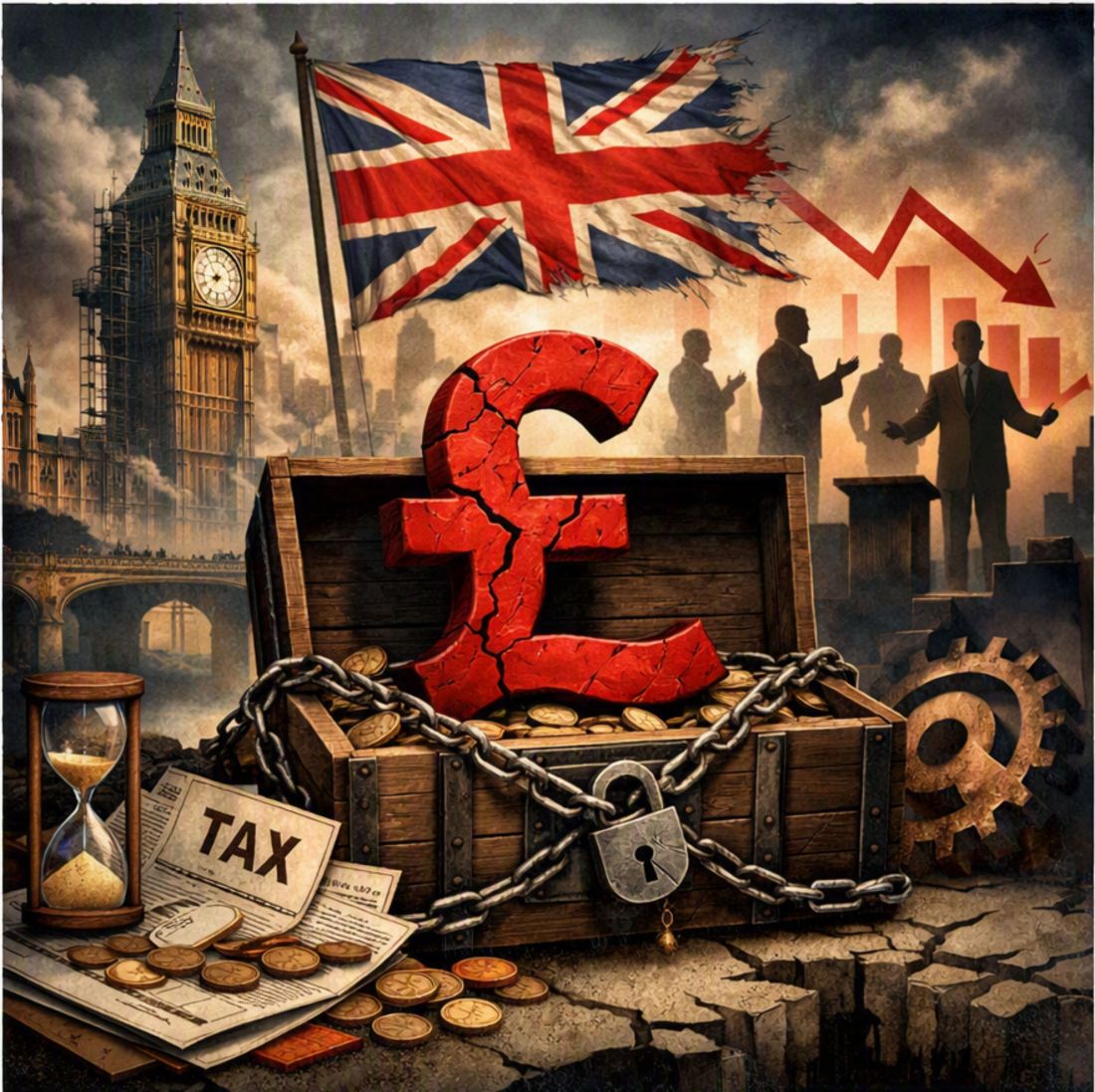
For generations, representative democracy relied on a simple, unspoken contract: those who win seats must use them.
Not occupy them. Not perform within them. Not protect them. But use them – to act, to decide, to govern, to take responsibility for the present.
Yet in today’s politics, that contract has quietly collapsed.
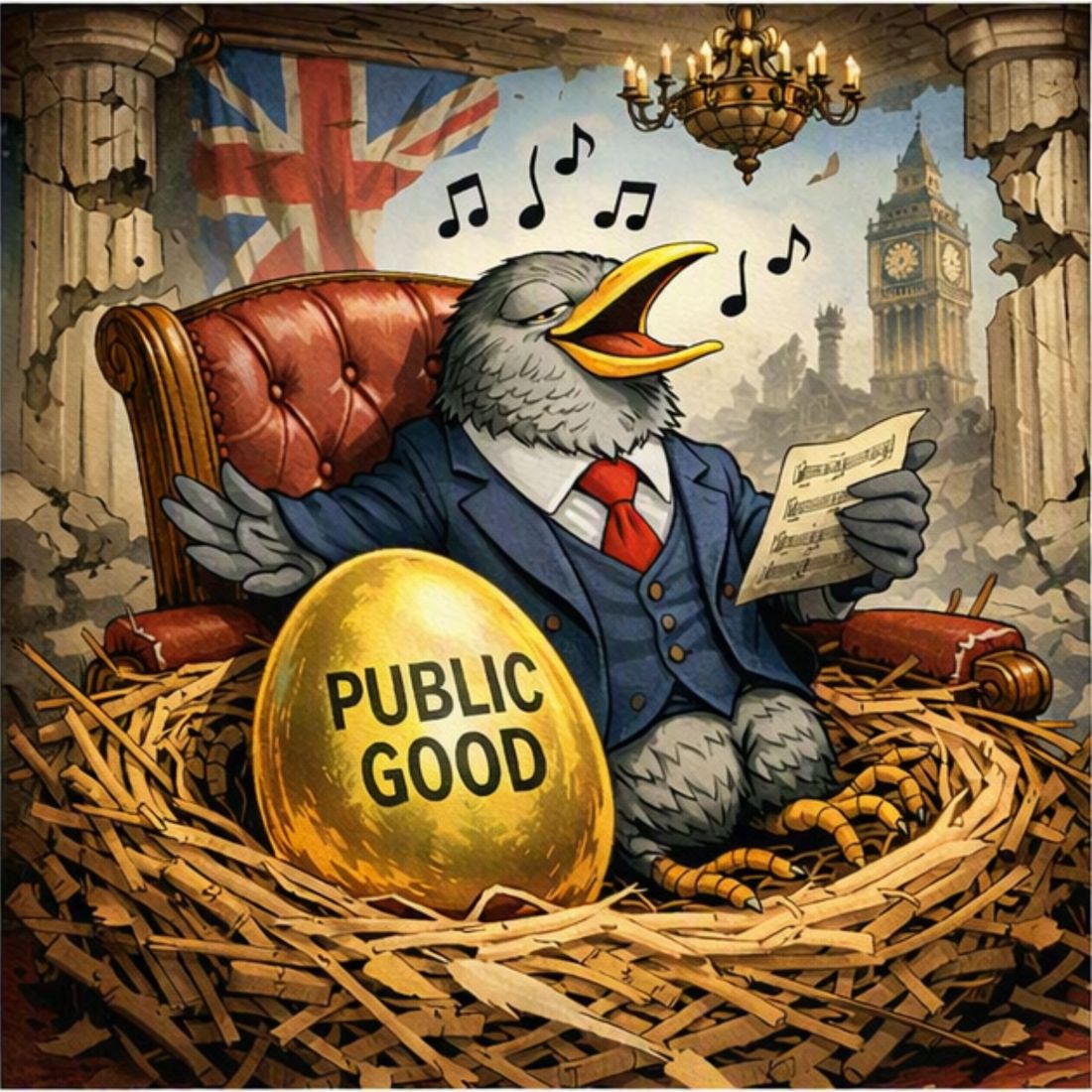
A new behaviour has taken root in Westminster and beyond. It is subtle, structural, and deeply corrosive. It is the habit of taking over seats simply to occupy them – to be seen to be there, to enjoy the insulated safety of incumbency – while rejecting the golden egg that comes with the role: the opportunity, and the responsibility, to do what is right for everyone now.
This is political cuckooism.
Like the cuckoo that lays its eggs in another bird’s nest, today’s political class lays its promises, its reforms, its responsibilities, and its obligations into the future – the next Parliament, the next cycle, the next government. The present becomes a perch. The future becomes a dumping ground.
And representative democracy is the real victim.
1. What Political Cuckooism Really Means
Political cuckooism is not procrastination. It is not caution. It is not long‑term planning.
It is the deliberate practice of deferring meaningful policy into the next Parliament so that incumbents can enjoy safety today.
It works like this:
- take the seat
- occupy the role
- perform competence
- announce reform
- schedule it for “next time”
- avoid consequences
- avoid responsibility
- and repeat
It is leadership without action. Authority without obligation. Presence without purpose.
It is the political class behaving as if the seat itself is the achievement – not the work that must be done from it.
2. The Golden Egg: The Opportunity They Refuse to Hatch
Every seat in representative democracy comes with a golden egg: the chance to act in the present.
To make decisions that matter. To confront reality. To govern.
But political cuckoos reject the egg.
They sit in the nest. They enjoy the perch. They protect the seat. They perform the role. But they refuse to hatch the egg.
Instead, they push every meaningful decision into the future:
- tax reform
- public service restructuring
- constitutional change
- welfare redesign
- infrastructure investment
- economic strategy
- democratic renewal
All of it becomes “next time”.
The egg remains unhatched. The nest remains occupied. The seat remains safe.
And democracy remains unfed.
3. How We Got Here: The End of Britain’s Operating Model
Political cuckooism did not appear out of nowhere. It is the late‑stage behaviour of a political system whose operating model has already failed.
For forty years, Britain relied on a Thatcher‑era framework built on:
- deregulation
- privatisation
- asset inflation
- consumption‑driven growth
- and the belief that markets could solve structural problems
That model worked – until it didn’t.
By the mid‑2010s, the machinery was visibly failing. By the early 2020s, it was exhausted. By the mid‑2020s, it was no longer capable of delivering meaningful outcomes.
The system now produces obligations rather than opportunities, constraints rather than choices, and risk rather than capacity.
Political cuckooism is the behavioural adaptation to that failure.
When the system can no longer deliver meaningful reform, politicians stop trying to deliver meaningful reform. They start performing it instead.
They occupy the seat. They protect the seat. They defer the egg.
And the system continues to fail.
4. The Contemporary Politicians’ Dilemma: The Mechanism Behind Cuckooism
Once in office, politicians discover a truth that the public never sees:
the system cannot absorb meaningful action – yet they must still appear to act.
They learn that:
- every lever they pull has unintended consequences
- every reform destabilises something else
- every decision carries risks they cannot control
- every structural change threatens the machinery
- and every attempt at real‑time governance exposes the system’s fragility
So they face a choice:
Act meaningfully and risk collapse, or act symbolically and remain safe.
They choose safety.
They choose symbolism. They choose narrative. They choose performance.
And they choose to defer meaningful policy into the future – where it cannot hurt them.
This is political cuckooism’s engine.
5. The Rise of Performance Politics
Performance politics emerged because:
- the machinery no longer responds to real‑time decisions
- the levers of government no longer produce predictable outcomes
- the public finances no longer support meaningful reform
- and the political class no longer understands the system they are managing
So politicians adapted.
They learned to:
- narrate competence
- perform direction
- announce future reform
- avoid present‑tense responsibility
Performance became the product. Narrative became the tool. The future became the nest.
Political cuckooism is performance politics applied to policymaking.
6. Paradigm Blindness: Why Leaders Keep Looking Backwards
When leaders cannot imagine a new model, they cling to the old one. When they cannot act in the present, they promise action in the future. When they cannot confront structural reality, they narrate structural optimism.
This is why so many reforms are framed for “the next Parliament”. It is not strategy. It is not vision. It is not long‑term planning.
It is the inability to act now.
Paradigm blindness turns the future into a storage unit for every difficult decision.
Political cuckooism is the behavioural expression of that blindness.
7. Leadership in a Failing System
Leaders cannot lead if the system cannot respond.
When the machinery is failing:
- leadership becomes symbolic
- decision‑making becomes performative
- accountability becomes abstract
- and responsibility becomes deferrable
This is why today’s leaders occupy seats rather than use them.
They are not lazy. They are not cowardly. They are not incompetent.
They are trapped.
The system cannot absorb meaningful action, so leaders stop attempting meaningful action.
Political cuckooism is the survival instinct of leaders inside a system that no longer works.
8. They Sing All the Right Songs
They sing all the right songs. They say all the right things. They perform all the right gestures.
But the actions at the heart of everything tell us the only story we all need to know:
they will not act now.
They will not hatch the egg. They will not confront the present. They will not use the seat for what it is meant for.
They will only occupy it.
This is political cuckooism in its purest form – the performance of leadership without the practice of leadership.
9. The Media’s Role: Mistaking the Nest for the Egg
Political cuckooism thrives because the media consistently misreads future‑facing commitments as present‑tense policy.
The media still reports politics as if:
- the system works
- timelines are meaningful
- governments have agency
- and policy announcements reflect real‑time decisions
So when politicians announce reforms “for the next Parliament”, the media treats them as if they are happening now.
This creates:
- the illusion of action
- the illusion of direction
- the illusion of leadership
It allows political cuckoos to occupy the nest without ever hatching the egg.
10. Representative Democracy Cannot Survive Without Present‑Tense Action
Representative democracy relies on one fundamental principle:
Governments must act in the present.
Not the next Parliament. Not the next manifesto. Not the next cycle.
The present is where accountability lives. The present is where consequences exist. The present is where democracy happens.
Political cuckooism destroys this.
When governments push meaningful policy into the future:
- accountability evaporates
- consequences disappear
- mandates become meaningless
- elections become theatre
- and representation becomes symbolic rather than functional
Democracy becomes a ritual rather than a mechanism.
People vote for change. Politicians promise change. The system defers change.
And the public is left with the performance.
11. The Nest Is Full of Cuckoos – And No One Is Hatching Anything
The problem is not one or two individuals behaving this way. The problem is that the nest is full of cuckoos.
Every seat becomes a perch. Every Parliament becomes a holding pattern. Every government becomes a caretaker administration. Every manifesto becomes a list of future eggs.
And none of them hatch.
The political class has become a colony of cuckoos – each one eager to take control of the seat, each one unwilling to take responsibility for the egg.
The nest is occupied. The egg is ignored. The system is failing.
12. What Happens When “Next Time” Finally Arrives?
Political cuckooism works only as long as the future remains abstract.
But eventually, “next time” becomes this time.
Eventually, the deferred reforms pile up. Eventually, the structural failures converge. Eventually, the system runs out of future.
And when that moment arrives, the political class will face a crisis they cannot defer.
A crisis they cannot narrate. A crisis they cannot perform their way through. A crisis they cannot push into the next Parliament.
Political cuckooism is not sustainable. It is a temporary survival mechanism inside a system that is already failing.
And when it fails, representative democracy will face its reckoning.
13. The Only Honest Conclusion
Political cuckooism is the defining behaviour of the modern political class.
It is the habit of taking over seats simply to occupy them – to be seen to be there – while rejecting the golden egg: the opportunity to do what is right for everyone now.
It is the survival instinct of a political class that no longer knows how to govern.
It is the performance of leadership without the practice of leadership.
They sing all the right songs. They say all the right things. But the actions at the heart of everything tell us the only story we all need to know.
The future has become the nest. The present has become the performance. And democracy has become the victim.
Further Reading
To understand how Britain’s political, economic, and cultural systems have evolved – and why they now appear to be reaching a breaking point – the following essays offer a structured path through Adam’s analysis.
They begin with the broad systemic shift, then move through establishment dynamics, political behaviour, economic assumptions, and finally the personal dilemmas facing today’s leaders.
1. The End of Britain’s Current Operating Model: Thatcherism’s Forty‑Year Reign and the Beginning of the Post‑Thatcher Era
A foundational essay explaining how Thatcherism shaped the UK’s political and economic architecture for four decades – and why its underlying assumptions are now collapsing. This piece provides essential context for all the others, outlining the structural shift Britain is entering.
2. The Establishment Is Not What You Think It Is: Why the Modern Establishment Is a Worldview, Not a Class – and Why That Makes It So Hard to Escape
This essay reframes the “establishment” as a shared worldview rather than a social elite. Adam argues that the real power structure is cultural and psychological, not institutional – making it far more pervasive and difficult to challenge.
3. The Performance of Politics: Why Power No Longer Serves People
URL: https://adamtugwell.blog/2026/06/18/the-performance-of-politics-why-power-no-longer-serves-people/
A critique of modern political behaviour, exploring how politics has become performative rather than functional. Adam shows how leaders increasingly prioritise narrative, branding, and spectacle over meaningful public service.
4. We Can’t Fix Society Because We Won’t Question Money
URL: https://adamtugwell.blog/2026/01/22/we-cant-fix-society-because-we-wont-question-money/
An exploration of how deeply‑rooted assumptions about money limit society’s ability to solve major problems. Adam argues that economic orthodoxy has become a cultural belief system that prevents genuine reform.
5. The Contemporary Politician’s Dilemma
URL: https://adamtugwell.blog/2024/12/05/the-contemporary-politicians-dilemma/
A shorter, more personal reflection on the pressures facing modern politicians. It highlights how systemic constraints, public expectations, and party dynamics trap leaders in cycles of reactive decision‑making.