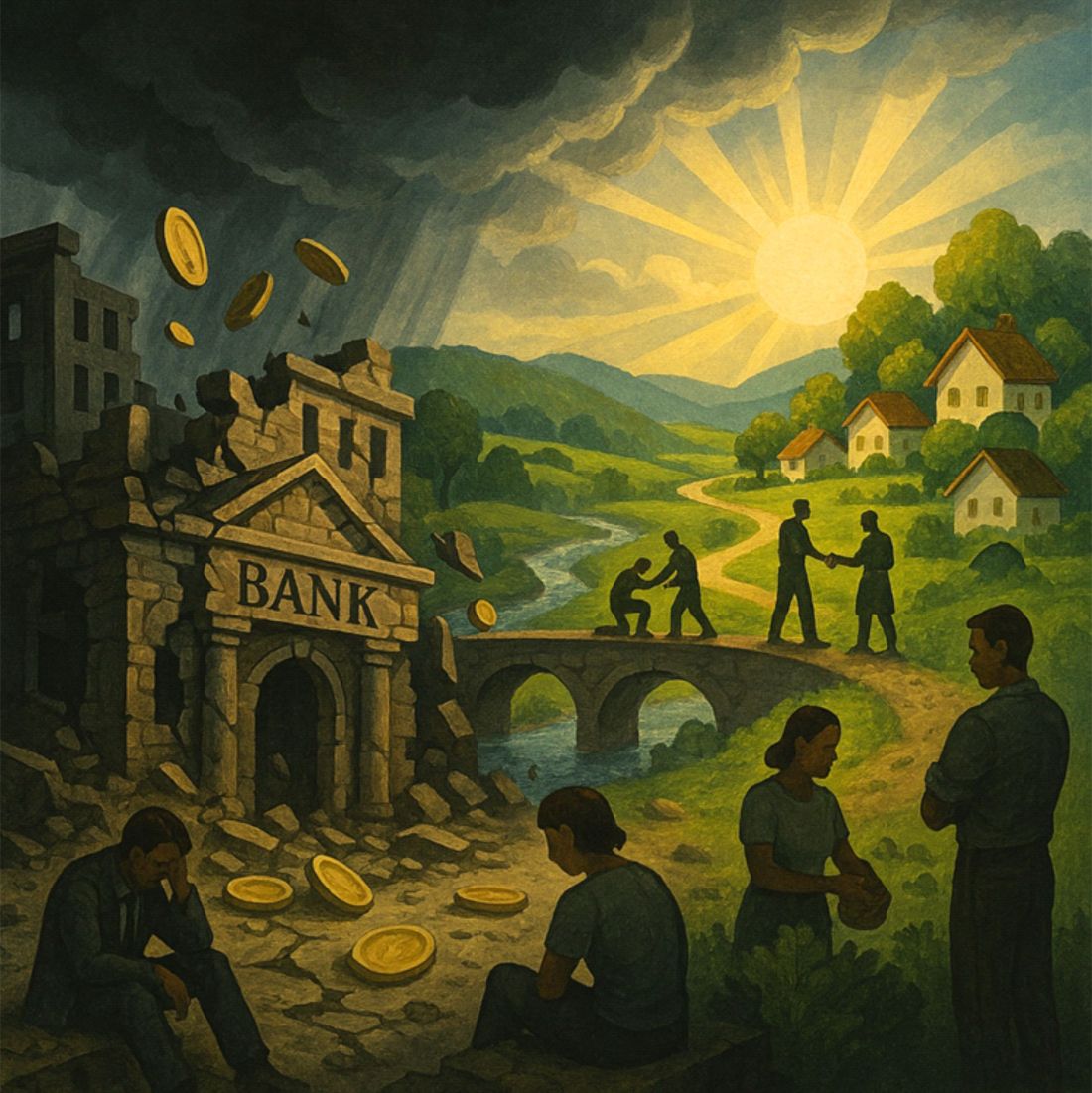
The Road We Are On is Broken – And We Built It Ourselves

The solutions we need won’t come from anything we already do. Because it’s everything we already do that caused the problems.

The Familiar Path That Led Us Here

Right now, people believe they’re seeing the full picture. They believe they understand the crisis, the chaos, the uncertainty – because the surface‑level symptoms are impossible to ignore.

But the deeper reality is still being missed. Not because it’s hidden, but because most people aren’t yet in a place where they can recognise what they’re looking at.

Perspectives shape perception. And when perspectives are shaped by habit, fear, conditioning, or the comfort of familiar narratives, they filter out the very things that matter most.

That’s why so many warning signs are dismissed. Why so many contradictions go unchallenged. Why people can feel informed while still being completely unaware of what’s actually unfolding.

Understanding doesn’t come from information alone. It comes from readiness – from the moment when someone’s internal landscape shifts enough for them to finally see what was always there.

Until that readiness arrives, even the clearest truth will look like noise, exaggeration, or irrelevance.

And that’s the challenge we face: not just to speak truth, but to recognise that truth only lands when the conditions allow it to.

Seeing Through the Fog of Perspectives

In times like these, people assume they’re fully aware of what’s happening around them.

The noise is loud, the chaos is visible, and the headlines never stop. It creates the illusion of clarity – as if simply noticing the disruption means understanding its cause.

But awareness and understanding are not the same thing.

Much of what matters is still out of view. Not because it’s hidden, but because most people aren’t yet equipped to recognise the patterns behind the events.

They see the symptoms, not the structure.

They see the fallout, not the forces shaping it.

They see the drama, not the design.

That’s why so many explanations sound far‑fetched to those who aren’t ready for them. Why warnings are dismissed. Why truths are labelled extreme until the moment they become obvious.

And this is the danger: when people believe they already see everything, they stop looking for what they’ve missed.

Rattles in the Vehicle We Thought Was Safe

We are, metaphorically speaking, passengers in a vehicle we don’t realise is breaking or already broken.

We race along, ignoring the rattles, because it’s still moving.

We convince ourselves everything’s fine, right up until the moment it stops and we’re forced to accept that we’ve broken down.

The warning signs are everywhere. No matter your business, sector, or situation, the red flags are waving from every direction in plain sight. But because the wheels are still turning – or appear to be – we keep believing that a change of driver or a quick pit stop is all we need.

We imagine that after a brief pause, the journey will resume, more comfortable than before, with a better seat and a better view.

But the vehicle – whether you can picture it as a car, train, or bus – represents everything we do and everything we believe we’ve always done.

The road beneath it is the path we’ve been set upon, shaped by our behaviours, expectations, attitudes, approaches, and the values we’ve allowed to guide us.

The Quiet Ways We All Contributed

And here’s the uncomfortable truth: no matter what problem you’re facing, no matter what crisis is unfolding, if it involves decisions made by others, then yes – you can probably identify who’s responsible. But at some level, we all share responsibility. We all helped build the road.

Even if we didn’t make the active choices that led us here, into this mess, we made choices nonetheless.

When we avoided risk, chose the easy option, kept quiet to avoid rocking the boat, ignored the truth, or failed to do what was right – we took action. And often, that action was simply allowing those with hidden agendas to get their way.

Everything has a cost.

For decades, we’ve been conditioned by manipulation, sleight of hand, and narratives designed to convince us that non‑conformity leads to isolation.

But the real cost has been far greater.

Everything that once held value – our businesses, workplaces, sports, social spaces, food, water, money, communication, education, jobs, reputations – has been diminished.

Not by accident, but by design. So it could be reformed, centralised, and ultimately placed under someone else’s control – even while we still believe we own it.

This includes the institutions people still trust by default: government, the public sector, and the systems built around them. They were supposed to safeguard society, yet they’ve become part of the machinery that has allowed decline, mismanagement, and manipulation to take root. Not because everyone within them is corrupt, but because the structures themselves are no longer fit for purpose – and haven’t been for a long time.

Understanding Comes Only When We’re Ready

The problems we face — in farming, hospitality, industry, with people, community, the environment, government, the public sector – all stem from the same system. From all the “everythings” each and every one of us do.

No matter our background or bubble, it all adds up to the same thing: the trouble the world is now in.

And what we’ve done and been doing so far cannot or will not fix it.

It doesn’t matter if we wait for a change in government while continuing to elect candidates chosen by people we don’t know.

It doesn’t matter if we keep believing the establishment is structured to serve us, or that it has the integrity to do so.

It doesn’t matter if we trust the financial system, or believe that inflation and the cost of living are beyond anyone’s control.

If we don’t change the fundamental building blocks – of life, economics, and governance – then no matter who’s in charge, things will only get worse.

And we’ll keep being told they’re getting better.

Crisis as Catalyst

Today, life just happens to us.

Business, money, governance – they’re systems we’re expected to show up for, participate in, and conform to. That’s it.

But conformity is what brought us here. And we’re standing at the doorway of something that, once we step through it, may quickly reveal that there is no way back.

It’s only this way and we only got here because we surrendered our power – more often than not without ever realising that we had even given it up.

Building Something That Puts People First

If we want to change anything – even the smallest thing – in the world around us, we must participate. We must play our part. That’s what living a proper life demands.

And if we want things not just to improve, but to become truly better, then we must all get involved.

The collapse we’re experiencing offers something rare: the chance to see and experience life differently. A chance that wouldn’t have come if things had continued as they were. Which they no longer can.

As circumstances worsen and reality begins to speak for itself, we have a choice.

We can take back our power. We can work with the people we know – the people we share our lives with – to reclaim genuine control. To put people, community, and the environment first.

The Local Economy & Governance System (LEGS) – built upon The Basic Living Standard – offers a new structure for the future.

LEGS isn’t a shortcut, and it isn’t a promise that someone else will fix things for us.

LEGS is simply a framework that puts people, community, and the environment back at the centre of life – where they always should have been.

What comes next won’t be shaped by governments, institutions, or systems that have already failed us. It will be shaped by the choices we make now, the conversations we have with the people around us, and the willingness we each find to choose and step through the doorway in front of us, that leads to a Future that no one else can define.

The world we knew is ending. But what replaces it is still ours to decide.

Further Reading

1. Awakening & How We Perceive the Crisis

Understanding how people ‘wake up’ to what’s really happening

There’s No Fast‑Track to Awakening

Link: https://adamtugwell.blog/2026/01/05/theres-no-fast-track-to-awakening/
A reflection on why meaningful awareness can’t be forced or rushed. People don’t see deeper truths until they are personally ready, no matter how clear the evidence appears.

Beliefs We Accept as Our Own Are Destroying Everything — Including Who We Really Are

Link: https://adamtugwell.blog/2025/09/16/beliefs-we-accept-as-our-own-are-destroying-everything-including-who-we-really-are/
Explores how inherited assumptions shape society’s decline and block real understanding or change.

The Choice – A Waking Up Story (Full Text)

Link: https://adamtugwell.blog/2025/07/19/the-choice-a-waking-up-story-full-text/
A narrative‑style exploration of what it feels like to realise the system doesn’t work the way we once believed.

2. The Hidden System Behind Society’s Problems

What’s really driving the chaos people can see – but don’t fully understand

The War Behind the World We Know

Link: https://adamtugwell.blog/2026/01/05/the-war-behind-the-world-we-know/
Examines the unseen mechanisms and competing interests that shape global events and public perception.

Safe Shores – The Pathway That Led to the Local Economy Governance System and the Basic Living Standard

Link: https://adamtugwell.blog/2025/12/29/safe-shores-the-pathway-that-led-to-the-local-economy-governance-system-and-the-basic-living-standard/
Shows how decades of systemic decline created the conditions that make new governance ideas not just desirable, but necessary.

After the Collapse – Who Gets the Blame?

Link: https://adamtugwell.blog/2025/11/12/after-the-collapse-who-gets-the-blame/
Explains why the wrong people and causes tend to be blamed when systems fail, and why this delays real solutions.

Choosing Outcomes Over Comfort – A Path to a Better Future

Link: https://adamtugwell.blog/2025/11/13/choosing-outcomes-over-comfort-a-path-to-a-better-future/
Looks at how comfort, convenience, and avoidance prevent individuals and communities from acting differently – even when change is essential.

3. Economics, Collapse & the Global Order

Why the economic system is failing – and what’s really behind it

Facing the Economic Collapse – The Real Crisis Behind Money, Wages, and Freedom

Link: https://adamtugwell.blog/2025/11/14/facing-the-economic-collapse-the-real-crisis-behind-money-wages-and-freedom/
Explores how wages, inflation, money creation, and governance combine into a crisis much deeper than people realise.

Money Is the Greatest Crime of Our Time

Link: https://adamtugwell.blog/2025/11/12/money-is-the-greatest-crime-of-our-time/
Reveals how the monetary system has been manipulated to serve central interests at the expense of the public.

Desperate Times, Desperate Resets

Link: https://adamtugwell.blog/2025/03/24/desperate-times-desperate-resets/
Discusses major societal “resets” and why moments of crisis are exploited to reshape systems from the top down.

The BRICS Money Bomb – Will a New Gold‑Backed Currency Flip the Global Order?

Link: https://adamtugwell.blog/2023/08/14/the-brics-money-bomb-will-a-new-gold-backed-currency-and-monetary-system-really-flip-the-global-order-or-does-the-end-of-world-peace-lie-immediately-ahead-essay/
Analyses the potential shift in global power if BRICS nations introduce a hard‑asset‑backed currency.

Trump’s Reset – Catalyst for Change, Doorway to Cataclysm, or Both?

Link: https://adamtugwell.blog/2025/04/29/trumps-reset-catalyst-for-change-doorway-to-cataclysm-or-both/
Investigates the destabilising ripple effects of political “resets” and their global economic consequences.

4. Politics, Institutions & Public Misunderstandings

Why political systems fail – and why people keep expecting them to work

The Contemporary Politician’s Dilemma

Link: https://adamtugwell.blog/2024/12/05/the-contemporary-politicians-dilemma/
Shows why modern politicians cannot meaningfully fix systemic problems — even when they want to.

Government Is Broken – Collapse Now or Collapse Later?

Link: https://adamtugwell.blog/2025/11/05/government-is-broken-collapse-now-or-collapse-later/
Explains why existing government structures are no longer fit for purpose and cannot deliver sustainable solutions.

Any Fool Can Be a Politician

Link: https://adamtugwell.blog/2025/10/07/any-fool-can-be-a-politician/
A sharp look at how politics attracts the wrong incentives, creating leaders unsuited to solving real‑world challenges.

Why People Can’t “Just Get a Job”

Link: https://adamtugwell.blog/2025/11/04/why-people-cant-just-get-a-job/
Breaks down the structural economic and social barriers that make simplistic advice meaningless.

5. The Local Economy & Governance System (LEGS) and the Basic Living Standard (BLS)

Practical frameworks for rebuilding society from the ground up

The Basic Living Standard – Freedom to Think, Freedom to Do, Freedom to Be

Link: https://adamtugwell.blog/2025/12/15/the-basic-living-standard-freedom-to-think-freedom-to-do-freedom-to-be-with-personal-sovereignty-that-brings-peace-to-all/
Introduces BLS as a foundation for genuine human freedom, community wellbeing, and resilience.

The Basic Living Standard Explained

Link: https://adamtugwell.blog/2025/10/24/the-basic-living-standard-explained/
A straight‑forward breakdown of what the BLS is, why it matters, and how it functions.

The Local Economy Governance System (Online Text)

Link: https://adamtugwell.blog/2025/11/21/the-local-economy-governance-system-online-text/
A reference version of the LEGS framework for those seeking a structural model for local governance.

From Principle to Practice – Bringing LEGS to Life (Full Text)

Link: https://adamtugwell.blog/2025/12/27/from-principle-to-practice-bringing-the-local-economy-governance-system-to-life-full-text/
A detailed, practical guide on implementing LEGS within a community context.
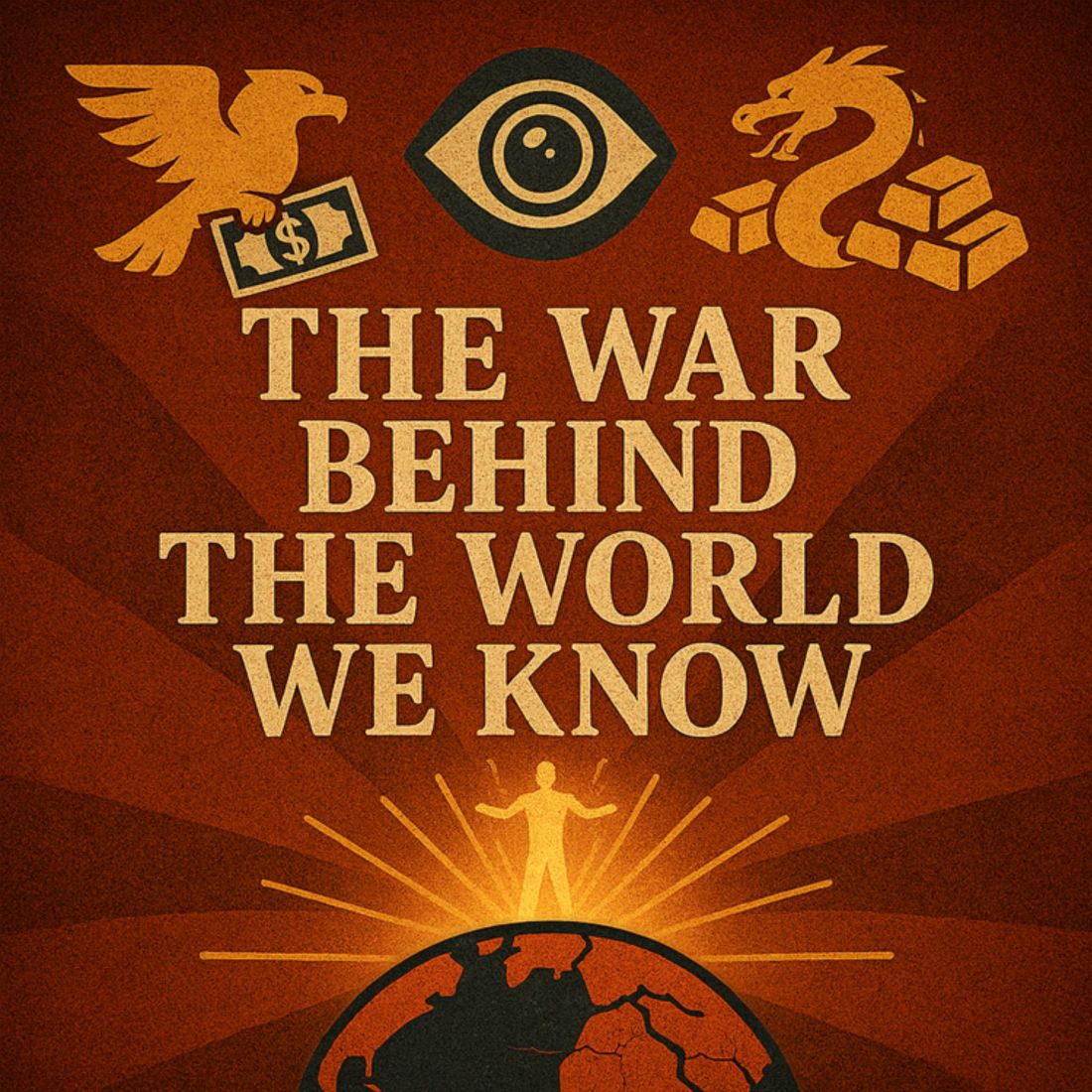
The War Behind the World We Know

The Three World Orders and the Coming Choice: How Venezuela, Iran, and a Fractured Global System Are Forcing Humanity Toward a Crossroads

Introduction: The Moment the Hidden Becomes Visible

Every era has a moment when the tensions that once simmered quietly beneath the surface suddenly break into the open.

For years, the world has been drifting toward such a moment – a slow, grinding collision between what are now three competing visions of global power.

Today, the events unfolding in Venezuela, the rising turbulence in Iran, and the escalating confrontation between the United States, Europe, and the BRICS nations suggest that the long‑brewing conflict may be about to erupt into something undeniable.

But this is not simply geopolitics. It is not just another chapter in the endless struggle between nations.

It is the beginning of a profound reckoning with the systems that govern our lives – systems built on money, control, and the belief that human beings exist to serve the machinery of power.

The world is approaching a crossroads where we may soon be forced to choose between a future defined by money and a future defined by people. And the chaos now emerging may be the catalyst that makes that choice unavoidable.

1. What We Think War Is – and What War Has Become

Most people still imagine war as something unmistakable: tanks crossing borders, cities burning, soldiers in trenches, and the kind of devastation that defined the two World Wars.

If not that, then the spectre of nuclear exchange – a few catastrophic decisions by powerful men who should know better.

But the world rarely repeats its past so neatly.

The turmoil now engulfing the UK, the US, Europe, and much of the world does not resemble the wars we were taught to recognise. It does not look like the wars in our history books. It does not feel like the wars our grandparents described.

And so we tell ourselves that we are not at war.

But we are.

We are in a war that:

• does not require armies,

• does not rely on bombs,

• and does not announce itself with declarations.

It is a war fought through currencies, sanctions, supply chains, digital systems, and the quiet rewriting of laws that reshape society without consent.

It is a war over who controls the world’s money, who defines the rules of global trade, and who gets to shape the future.

This is not a hot war.

It is not a cold war.

It is a systemic war – a war of structures, narratives, and economic weapons.

And the tragedy is that most people don’t see it, because we’ve been conditioned to believe war only counts when the bombs fall.

2. The Three World Orders Now Colliding

For years, competing visions of global power have been circling each other like predators. Each believes it will inherit the world. Each believes it is the rightful architect of the future.

Today, there are three:

A. Trump’s America: A Nationalist, Transactional Order

This world order is built on:

• tariffs,

• leverage,

• economic pressure,

• and the reassertion of US dominance.

It is a world where the dollar remains king – or dies trying.

A world where alliances are transactional, not ideological.

A world where power is measured in deals, not treaties.

B. The EU/WEF Technocratic Order

This vision is not nationalist but supranational.

It imagines:

• digital currencies,

• centralised governance,

• “managed democracy”,

• and a world run by global institutions rather than nation states.

It is a world where crises justify permanent oversight.

A world where stability is engineered, not chosen.

A world where freedom is redefined as compliance.

C. The BRICS Alternative

Led by Russia and China, this order is built on:

• gold reserves,

• commodity power,

• and the promise of a post‑Western financial system.

It is a world where the West no longer sets the rules.

A world where the dollar is dethroned.

A world where economic power shifts eastward.

These three systems are not merely competing.

They are colliding.

And the crises in Venezuela and Iran may be the sparks that ignite the confrontation they have been preparing for.

3. Venezuela, Iran, and the Fracture Point of a Global System

Venezuela: The Resource Flashpoint

Venezuela is not just a country in crisis. It is a nation sitting on some of the world’s largest oil reserves – a resource that all three world orders desperately need to control or deny to their rivals.

US intervention there is not simply humanitarian.

It is strategic.

It is economic.

It is systemic.

Iran: The Geopolitical Fuse

Iran is the crossroads of:

• energy routes,

• regional power,

• and global alliances.

Turbulence there threatens to destabilise not just the Middle East but the entire global economic system.

It forces the US, Europe, and BRICS into positions they can no longer hide behind diplomacy.

Together, Venezuela and Iran expose the truth:

the world’s systems are no longer stable enough to absorb shocks.

The fractures are widening.

The masks are slipping.

The stakes are rising.

4. The War for Money – and the Illusion That Money Is Real

The uncomfortable truth is that the world’s economic system has already collapsed in everything but name.

Western governments borrow money that doesn’t exist, from institutions that don’t create value, to sustain systems that no longer function.

The BRICS nations know this.

The EU knows this.

Trump knows this.

The fight is not about ideology.

It is about who controls the reset.

Gold, dollars, digital currencies – none of these have intrinsic value. They only work because we believe in them. And belief is collapsing.

When belief collapses, systems collapse.

When systems collapse, power grabs begin.

When power grabs begin, wars – of one kind or another – follow.

5. The Elites Are Fighting for Control. The People Are Fighting for Survival.

Whether the reset is driven by:

• Trump’s America,

• the EU/WEF bloc, or

• the BRICS alliance,

the outcome for ordinary people is the same:

none of these systems are designed with us in mind.

Every one of them is built on coercion, hierarchy, and the assumption that human beings exist to serve the system – not the other way around.

But humanity is exhausted.

Exhausted by selfishness.

Exhausted by elites who dress up control as progress.

Exhausted by being told that the only value we have is economic.

The coming clash may finally force a choice that has been avoided for generations.

6. A World Built on Money – or a World Built on People

The future does not have to belong to any of the three world orders now circling each other.

A different future is possible.

One built on:

• fairness,

• balance,

• justice,

• local sovereignty,

• genuine productivity,

• and the recognition that human beings are not economic units but living, thinking, feeling people.

A future where systems serve humanity, not the other way around.

But that future will not emerge by accident.

It will only emerge when enough people recognise that the war we are in is not between nations, but between worldviews.

One worldview says money is the measure of all things.

The other says people are.

And the chaos now unfolding may be the moment when the world is finally forced to choose.

Further Reading:

1. The Mechanics and Triggers of Systemic Collapse

These works explain why the current global order is fracturing and what might trigger a reset.

2. Competing World Orders and the Global Reset

These works focus on the power struggle between the US, EU/WEF, and BRICS, and the tools (like currency and governance) they use.

3. The Human Cost and the Search for Alternatives

These readings shift the focus from systems and elites to ordinary people and possible new directions.

4. Building a People-Centred Future

For those interested in solutions and new models, these articles offer practical ideas and frameworks.

Facing the Economic Collapse: the Real Crisis Behind Money, Wages, and Freedom

Facing Uncomfortable Truths

It is regrettable that most people avoid confronting uncomfortable truths about the crisis we’re in.

Many actively ignore or dismiss what they know deep down to be true, preferring comfort over honesty.

But this habit of hiding from inconvenient realities isn’t new. It’s been passed down for generations. People have often chosen what feels good over what’s obviously right, leading us to our current predicament.

Pretending everything is normal, focusing only on ourselves, and letting others make decisions for us has brought us to the brink of systemic collapse.

The comfortable system we rely on is failing, and we must face this reality.

The Source of the Problem: Money

Many prefer to hear hard truths from trusted figures like academics or politicians, but deep down, we know the truth doesn’t depend on who says it.

It’s time to think, research, and analyse for ourselves.

At the heart of our problems is the money system. We’ve been conditioned to believe money is everything, shaping our choices and values around financial cost, reward, and status.

Yet, the money system itself is artificial. A belief system manipulated by private bankers, big businesses, and the politicians they control.

They change the rules to enrich themselves, transferring wealth and ownership away from ordinary people, all under the guise of normality.

Imminent System Collapse

Politicians obsess over “growth.” But for them, growth means increasing the size of the economy (GDP). Not helping small businesses or working people.

Real productivity has vanished as industries and assets have been sold off to those who profit from the system, while jobs have been outsourced.

GDP figures are misleading, counting money created through private finance and government borrowing multiple times. Politicians have tried to spend their way out of trouble, but even that strategy is failing.

With rising unemployment due to AI and unproductive sectors and a government so possessed by fear that they are regularly changing their minds, lenders are now worried the scam will be exposed.

Desperation has set in, and the government seems set to resort to ever-increasing taxes, hoping to keep the system afloat and their secrets hidden.

The System Enriches the Few

Prices keep rising while wages lag behind, making it harder for most people to keep up.

This isn’t new—it’s how the system was designed.

Once, a single working adult could support a family. But now, financial independence is reserved for the wealthy, while dependence and poverty are imposed on the rest of us.

The Myth of the Minimum Wage

The national minimum wage is misleading. It’s not enough to live on, but rather the lowest acceptable wage set by those in power, regardless of the real cost of living.

However, even the average wage isn’t enough for genuine financial freedom.

Financial Freedom Is the Solution

Almost every social problem can be traced back to the fact that the lowest-paid jobs don’t pay enough for people to live independently.

Admitting this would expose the system’s flaws and those who benefit from it.

The system survives by prioritizing money over people. Every decision made by those in power serves the money system. Not human needs.

Choosing People Over Money

If we want a better world, we must redirect government, business, and our rules to prioritize people, not money or the economy.

Unfortunately, our political leaders hide the truth instead of addressing it, covering up the growing cracks in the system.

Collapse Is Inevitable. But We Have a Choice

Systemic collapse is inevitable. But we can choose what comes next and who benefits.

If we do nothing, things will only get worse.

Those who created this mess believe they can protect themselves with wealth and security, but ordinary people will lose freedom.

The powerful will restrict our freedoms to protect their own interests.

Paradoxically, a collapse could be an opportunity.

If we embrace it, we can build a freer, fairer system for everyone. Something only possible when the current corrupt system is removed.

Overtaxed, Overburdened, Overpowered: The role of the UK State has become all bread and no jam for too many of us, and we are fast approaching a place called stop

Each of us sees the problems this country is facing from different points of view.

Whilst conversations about the crisis now unfolding with a range of different people would almost certainly deliver a range of common themes, the emphasis, value or meaning of each of those conversations will almost certainly be different.

However, the one commonality, which isn’t about anything that we all have in common, would be the solutions that almost all of us will have based on our own world view, that in the bigger scheme of things, may be in no way similar at all.

Ironically, because so many of us have so many interpretations of the whys, hows and whats that have got us all here, and share them with what will be a relative few, we spend next to no time – if indeed any time at all, thinking about the common problems that we all really do share.

We certainly don’t think about the ways we can work together to create a better way of life for everyone and then how we get the leaders and mechanisms in place that will actually get us there.

The devil is in the detail

It really is no accident that the UK is in the kind of mess that it is. Because life has become so very complicated – and deliberately so.

The more detail, the more distracting and the more impossible a solution to just about anything might seem. Even to those amongst us who really can see that the status quo cannot continue and that no matter how bought into the things we like about the way we live – which we want to keep but don’t recognise that they are actually the part of the problem that’s making everything so impossible to fix – we really do need to snap out of the fixation with noise that’s doing none of us any good.

We must recognise that the things that work well for everyone and will work even better for everyone are much simpler than what we have been convinced we need.

It is inevitable that we will keep tripping ourselves up each and every time we think of the next step as being only about putting our own self-interest first.

Unfair, Unjust and Unworkable living, demonstrated best by Tax

Perhaps the best example of how we get lost and misdirected by the detail of what needs to change for us, rather than focusing on what needs to change so that it works for everyone, relates to the question of tax, taxation and everything else that means people like you and I are stumping up cash that we could often do with being able to spend, just so we can live without debt or in some cases rely on handouts or even food banks.

Yes, even framing the ‘tax issue’ this way will make some prickly – and that really is the point.

The UK Tax code is today thought to be over 21,000 pages and 10 million words long, giving everyone the distinct impression that the subject of how the bill for government action and delivery gets paid for (ostensibly on our behalf), needs to be tailored specially to everyone as if bespoke governance is the only kind of governance that’s really fair to everyone.

Have you heard of Tax Freedom Day?

This is ‘The day when Britons stop paying tax and start putting their earnings into their own pocket’. Or alternatively, the final day of the year when every penny we’ve earned goes to the government – if we start counting on January 1st, which was this year (2025) calculated as being June 11th by the Adam Smith Institute.

The reason I’m using this figure isn’t to upset anyone by drawing attention to the fact that as an average, we arguably all work for no other reason than to keep the wheels of government turning every year for at least 5 months.

I’m doing so because it may be the only way to look at the relationship all taxpayers have with the government in the same way. Given how easy it is to get sidetracked by the question of what everyone earns!

June 11th 2025 was the 162nd day of the year (as 2025 is not a leap year), and with 365 days in 2025, this means that in comparative terms, people are giving over 44% of their earnings (162 divided by 365 days), before they can even begin to think about what they need to spend money on, in turn before anything that they might actually want.

For a moment, let’s forget the amount anyone is actually earning for themselves, as we know that some have considerably more than others, whilst many just don’t have anywhere near what it takes to live without struggling to make ends meet, and then take it as read that everyone is giving up 44 Pence in every Pound they earn (£0.44).

After realising just how much of everything we do have taken from wages and then what we pay for that includes some form of tax, it doesn’t take much to realise that government or rather the model of government that we have is simply unaffordable, unsustainable and that we must do everything we can to find a different and much better way to pay for the things that we share.

Regrettably, the complexity of rules and regulations supposedly there to benefit and protect us don’t stop at taxation.

One of the reasons that every part of life, that doesn’t already relate to the question of financial affordability in some way, seems so difficult or restricted, is because our freedoms and therefore our independence from the system and government are already being actively controlled in many different silent rules that have deliberately been put there using the excuses like health and safety, and protecting us or someone in some way.

Even if we aren’t actively being followed around by a police officer all the time the fact that we are aware of and abiding by these rules usually adds up to being the same.

Government isn’t what it should or was ever supposed to be

Whilst many would actually like to see the wealthiest in our society directly paying at least 44% of their income to the government to help run everything outside of our front doors, we still need to keep some perspective when it comes to the obvious question we will come back to in a moment about who pays and begin with the question, ‘Does government actually work?’

Government certainly functions. Even the deepest or most vocally critical of what government in the UK does will find it difficult to argue otherwise.

Because no matter the organisation or service that comes under the rather large umbrella of government, they all continue to do something. Even if they are not delivering what we might agree to be the correct results. And that’s the only reason it can be argued that it all works.

However, functioning and succeeding are not the same thing.

The time is long overdue that we all took a very hard and questioning  look at every part of government and decided what, if anything, public services should or could be; just exactly where the scope and reach of government should end, and then and only then, what many believe to be the most important question of all, ‘How whatever government and the public sector does is paid for and by whom’.

Whilst it remains the case that there are services, infrastructure and even public facing roles that every modern society needs to be provided by the community, so that everyone can have universal experiences and opportunities which will always be the same, no matter who, where or what you are, the practical approach to not-for-profit service delivery – which this really should in almost all cases be, is not the same as the public sector and system of governance that we have today.

Every part of government and the public sector that we have today is focused on delivering (political) and therefore biased agendas which will inevitably advantage some people more than others in some way. Or is all about the jobs, terms and conditions for whoever the incumbent employees are who currently have the jobs.

There have always been politicians, officers and suppliers who for many reasons have chosen to advantage themselves in some way, if and where they failed to have the integrity to exercise their roles properly. And regrettably, it’s the position of trust we gave them all that enabled them to behave in such questionable ways.

Yet even more shocking reality that we all face today is that the whole public sector and everything that runs within it is now dysfunctional in terms of delivery in some of the most critical ways.

It has only been able to become this way because decisions have either been made (or not made) at the very top by people who really should have known better, and whose actions have allowed or facilitated everything that serves the public unwinding in this way.

Money before People

Regrettably, like so many areas of life today, the role of money – which stretches far beyond the scope of the tax question that we’ve already considered – is also the key element within the dysfunctionality of government and public services across the UK. Because the poor leaders that we have are obsessed with the idea that the only way any problem can and will be fixed is by having enough money to spend – no matter where it comes from, which is itself is these days even better for some politicians who dare not do anything which could restrict what they are already committed to spend.

Idealism and agendas cost a lot of money. Because their implementation requires the creation of systems, rules and infrastructure somebody wants but nobody needs.

The very perverse outcome from decades of government and the public sector serving itself, its people and whoever or whatever influences them, is that the changes that have been made in every way imaginable to support this are now costing too much for either the Taxpayer or government itself to sustain.

We have a VERY BIG problem. Because nobody in government or who wishes to form one either can or will be honest about the true depth and breadth of the mess that the UK is now in.

With Tax rises thought to be well on their way this coming Autumn, the reality that too many of us face is the 44% (or probably much more) that we are already contributing to this public sector black hole through so many of the things that we buy, pay for or earn, are set to keep going up.

All to cover the exploding costs of incompetence, waste and the furtherance of playing up to what are very dangerous egos. Because somewhere in amongst all of this the point has been lost that government does not and never did have the right to exist over the people that it was created to represent.

For any kind of government to be unrepresentative of the people it represents, would by its very nature and intended purpose mean that it represents someone or something else.

Money: The drug wrecking everything to enrich and empower the few

The way that money actually works, how it is controlled and worst but not least, how it is actually created at will, is the truth that sits behind everything bad, that few of us will willingly believe.

It’s much easier to believe that it is all good rather than even having the potential to be bad – even when almost everyone can see the destruction that money or the lack of it is causing to everyone in some way or form.

At the heart of the money tree and its root and branch system sits the mechanisms that supposedly fund government, but actually do so by doing everything to help grow the volume of money that is in circulation, so that the public spending – and the only way that politicians know how to get themselves out of trouble, can leverage ‘growth’ so that the depth and scope of the real problem can be hidden from public view.

Unfortunately for all of us, the exponential growth of the ‘money’ that has entered circulation, particularly since the responses of government to the Global Financial Crisis of 2008 and the Covid Pandemic of 2020, has wildly contributed to the inflationary spiral that accompanies such an expansion of available cash.

The creation of money that doesn’t relate to anything else like productivity or output devalues the money and incomes that normal people already have, as well as what they have the ability to earn.

It does so at breakneck speed whilst the real value of everything is funnelled towards those who control and benefit from what is a fully legal, legitimised but nevertheless completely corrupt system that appears real, because they have typically become millionaires and billionaires in the process.

Put simply, the lowest paid and most vulnerable now have zero chance of ever being able to earn enough to live independently of benefits, charity, debt or worse.

For as long as the money madness continues, the bubble containing all of those who are branded as being a drain on the system will rapidly continue to expand.

The leadership void or black hole

When a country has such questionable leadership, and has done for the period of time that the UK has, it wouldn’t be unfair for any of us to be asking, ‘How did we get them?’ and ‘How did they get to where they are?’.

However, as we all need to realise, very few of us do ask these questions or indeed any questions that are like them. And because we don’t, each time an election takes place locally or nationally, we are, as a majority, making the same mistakes over and over again.

We are chewing at the very same dogs dinner with the bits just wrapped differently with words, rosettes and faces – all hiding the same miserable self-interested and dangerously incompetent content that always delivers outcomes that are the same.

Because we have a very bad, self-destructive habit of going along with the idea that the political fairies come along and give us all a genuine choice at election time – as all good democracies surely would, we have not only accepted that government after government and council after council has worked on all of our behalf. We have also jumped into an elephant trap of our own making that tells us these same fairies will deliver the politicians to choose from at the next election, who will sort out and solve the very same mess that they and their own kind created (with a little help from their friends) in the first place.

Sadly, there are no exceptions to the reality that we must face that there are no real leaders in politics today.

The so-called leadership we see, and what the people we identify as leaders say, is much more likely to be aligned with us hearing and seeing whatever we need to fuel our own confirmation biases than it either is or ever will be about the solutions and outcomes that we might not be ready to hear about, but nonetheless actually need.

Victim or Victimiser: There is no longer an in-between

As a society and culture, we are collectively suffering what might be the worst type of addiction of all. Simply because it is majority of us are addicted rather than the few.

Meaning that that same majority is completely out of touch with the realities of what that addiction does and will remain so, until the supply runs out – which is where all those who cannot afford to live independently within the current system have or are beginning to find out.

Money, or rather the way that money is used by those who control the system – and that means government and politicians, who are very much under their control too, has become the key factor in every equation and consideration in our lives.

The role of money and its reach has dehumanised everything to the point where money and the power, influence and control it is perceived to give at every level of life has become more important than the value of life and community itself.

Few realise just how their lives are completely at the mercy of the ability to spend, borrow and achieve the momentary of transitory hit that this money centric, Moneyocracy we inhabit demands of everyone and which is enforced by the barrage of non stop marketing and remote, typical digital pressure which comes at us constantly and demands that we all conform.

Money; what it does, what it can do and what it says about you is the qualification and gatekeeper that runs through every part of functional life and if you are in, you are in and if you are out, you really are all the way out and fully at the mercy of those who continue to be ‘in’.

The tragedy of the system is the ruthless and methodical way that human behaviour has been used against the masses by the few and the experts they pay who understand it.

The sweeties and trinkets that have been flowing towards for decades have only been bettered by what has appeared to be the endless ability to secure more and more credit to buy it with, all the time becoming more and more essential to secure as real earnings and wealth have been stripped by the printing of all this extra ‘pretend’ or non existent money that even relatively wealthy people have no chance of keeping up with.

The irony is that those of us who continue to believe we benefit from what the establishment is doing and therefore acquiesce or go along with it are – through our actions – making those who cannot the victims.

All for no better reason than this whole situation could not exist without the elites treating the masses as a resource that is not real. But is instead just like oil, coal, precious metals, forests, farms, land and even animals – and just something else for those who ‘own them’ to exploit.

We all need to contribute to what we share in life. But real life cannot continue if we are required to contribute everything we have

Whilst we must all accept it is correct for everyone to contribute to the upkeep and maintenance of the systems and infrastructure that serve us all, from the moment we step onto the pavement or road outside of our homes, what we share is not and never should become more important than the right to have a fully independent, functioning and self supported life experience.

The system that we have discussed is at breaking point and cannot continue as it has, or as it is today.

Those in charge don’t know how to do anything other than borrow or tax us. And as the system can no longer sustain the borrowing that idealism and agendas have made necessary, the current government are now looking at everything they can tax beyond everything they already do.

One way or another, the system is going to collapse. Because we are all living unsustainably in a system that itself is unsustainable and at the centre of which is a plague which is the absence of real leadership, replaced with what is instead no better than incompetent management that makes it the most unsustainable part of it all.

Real life and a money-centric economy are mutually exclusive outcomes

Government already costs us way too much – even at 44%.

That’s before we even begin to consider the work and additional value to public service that charities and other nonprofit organisations bring, that we are all in one way or another contributing to too.

The whole model of economics needs to be restructured and redeveloped so that it supports life, rather than feeding off it like the giant parasite that the financial system and the role that government plays in it now is.

A realistic level for everyone to contribute to ‘the community’ would be around 10% – without any form of exception for anyone.

We should also be considering the added requirement that everyone able to work also contributes the equivalent of 10% of their working time and the skills and experience they offer, to help make our communities, their governance and infrastructure work.

Thereby creating real buy-in and ownership for what we all share, whilst drastically cutting the scope and influence of an out-of-control sector, and the ballooning costs that are actually paying for lots of agendas and idealistic ideas, but very little that is actually about people and certainly nothing that’s doing everyone equally any good.

The identity, qualification and process of finding good leaders

Good public leaders, public representatives and public servants, would not facilitate or contribute to the creation, implementation and furtherance of agendas, ideologies and idealism that doesn’t serve the genuine best interests of those who they have been elected, appointed or recruited to serve.

Yet we have been experiencing decades of exactly that. And we have no hope that this will change if we continue to rely on a system that needs to change giving us the leaders who will then do the right thing when it comes to the delivery of that change.

Contrary to accepted thought, we do not need money to play the role across society that it has been deliberately engineered to do.

Power and control are certainly not a gift that should be secured within the hands of a distant, faceless, unanswerable few who we will never meet and whether intended or not, are treating humanity as a resource and no better than a numbers game that they can do with as they like. All as if they are now, as the result of decades of manipulating the system and bending it to their will, the new gods of everything with everyone else’s destiny theirs and only theirs to decide.

The truth that few see is that the centralisation and push for remote control of everything that globalisation and everything that walks alongside it has been, has been the active and complete restructuring of our society and culture, so that nothing can or will work without the say so and direction of those who make all the decisions.

None of this was accidental. Locality, local relationships, local businesses, local supply chains, local decision making and everything that goes with it promotes sovereignty and independence. It encourages and grows a living environment and cultural model that is good for everyone other than those who want to advantage themselves and be in power or control.

Meanwhile, the downsides of centralisation and everything that goes with it are the for every one of us to see.

However, despite the various attempts, compelling rhetoric and highly credible narratives that work so well when playing up to the addiction for material living that we currently have, there is an alternative and much better alternative to running life and everything that we and our communities need. And the real upside of this real alternative is that it centres completely around putting normal people and our local communities back in control.

The fact that generations of political leaders and those they favour or are influenced by have misused and abused their position to create a system with faux legitimacy – simply by legalising immorality to make it appear moral and therefore unquestionable, doesn’t make it right. And it certainly doesn’t become right, just because those in power today continue to insist and behave as if it is so.

We have a legitimate right to hold power and control over our own destiny.

The power of collective decision making should sit as part of a new structure of governance within our communities, amongst people and representatives who we ourselves select and know we can trust.

A moral obligation arguably also exists to reset the entire system and the various devices such as money and the tools of governance the existing system uses, so that we once again bring the focus of everything in life back to people, to humanity and to creating the best kind of environment that we can to ensure that every person has the life experience that everyone – and not just a selective few should have.

However, nobody else will step up or step in to do this for us – no matter how compelling or necessary this might seem.

Whether addicted or not, the choice and the steps necessary to return power to people and to our communities, and with it the creation of a genuine democracy we can all trust and believe in, are ours and only ours to take.

Nobody in the public sphere today can or will do this. None of them will give us back the influence that is rightly ours. Because they all imagine themselves as leaders who can only lead by having absolute control over everyone and everything else.

We don’t have a roadmap agreed for the future.

But there are plenty of ideas we can share about the outcomes that will serve all of us equally well and in a balanced, fair and just way.

This is where the conversation must start.

The one thing we can be sure of is that real leaders do actually lead. But also know that it is real equality, balance, fairness and justice that applies equally to everyone where the pathway to everything good for everyone really starts.

Links: