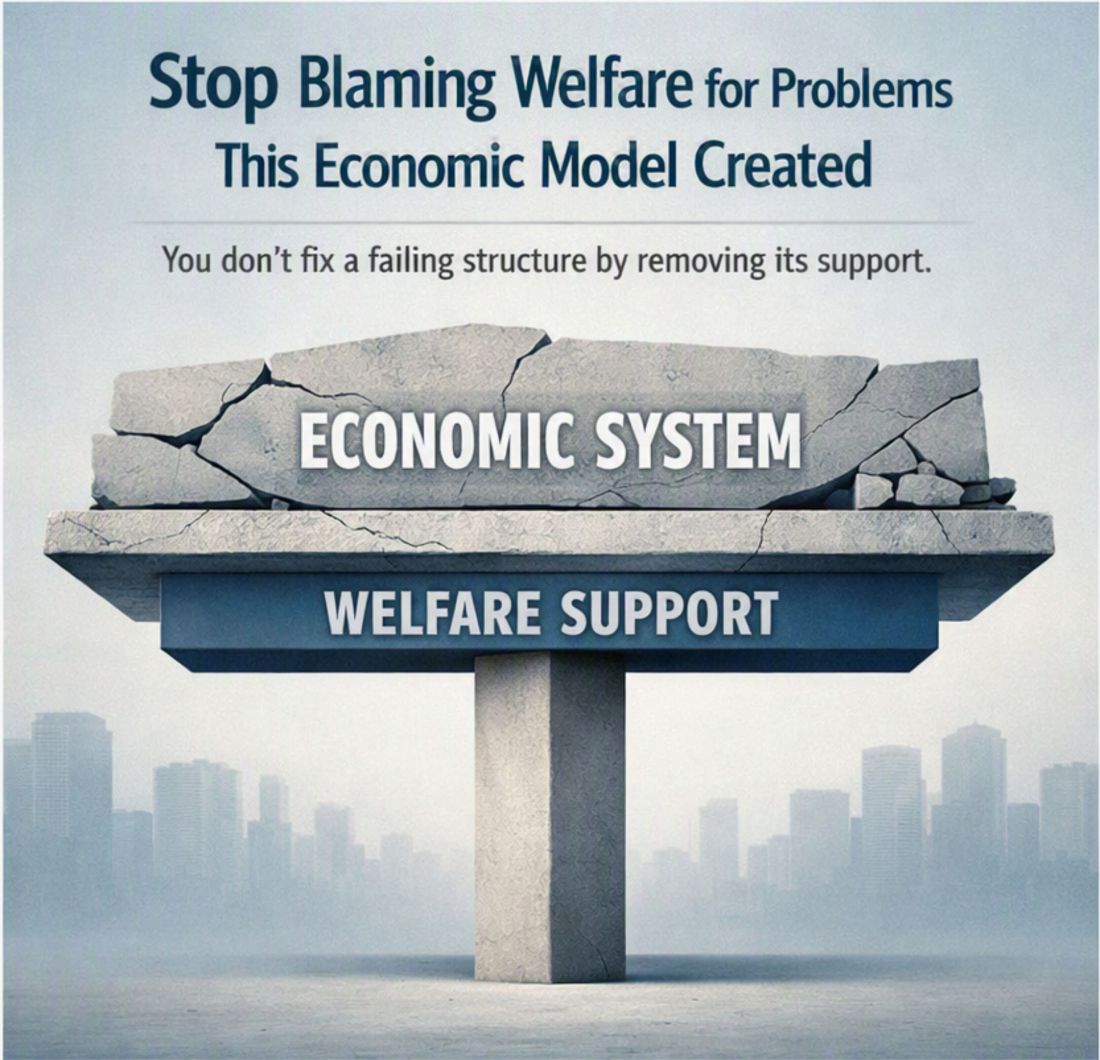

When Work Isn’t Enough | Tax‑Free Overtime, Living Costs and the Real Expectations Placed on UK Households

1. Introduction

In May 2026, Reform UK announced a policy to make overtime tax‑free.

That announcement triggered a simple but revealing question:

If a single working adult wanted to be financially independent – able to meet their basic needs without relying on benefits, debt, charity, parental support, or pre‑existing wealth – how many hours of tax‑free overtime would they need to work?

This question wasn’t hypothetical. Reform had already signalled an intention to significantly reduce the benefits budget if they form the next government.

Taken together, these moves point toward a system where people are expected to rely less on state support and more on their own earnings – topped up, if necessary, by overtime.

To test whether that expectation is realistic, I revisited an exercise I first carried out in October 2023: calculating the minimum income required for a single adult to live independently at a basic, non‑luxury standard.

Updating that exercise for 2026 revealed something stark:

The gap between real‑world living costs and government assumptions has widened dramatically.

From there, the analysis expanded:

  • If a single adult cannot meet their needs on full‑time work without substantial overtime, what does that mean for:
    • two adults sharing?
    • families with children?
    • households receiving Universal Credit?
  • How do these findings relate to public debates about “high” benefit payments to some families?

Underneath all of this sits a deeper structural question:

What is a fair expectation to place on individuals when the economic system they work within does not provide a fair return for a full day’s work – enough to meet basic needs without external help?

This report answers that question using detailed modelling of:

  • real‑world costs in Cheltenham
  • government/ONS assumptions
  • minimum wage levels
  • benefit structures
  • Reform UK’s tax‑free overtime proposal

The conclusion is simple and uncomfortable:

The expectations being placed on working households are often mathematically impossible to meet.

2. Methodology

2.1 Dual‑model approach

Two parallel models were built:

Real‑world model

Based on actual Cheltenham market prices for:

  • rent and council tax
  • utilities (gas, electric, water)
  • broadband and mobile
  • food and household goods
  • transport
  • clothing and health
  • social participation
  • insurance
  • childcare (where relevant)

A 10% “Pleb Premium” is added to reflect higher costs borne by low‑income households due to:

  • higher insurance premiums
  • inability to bulk‑buy
  • worse credit terms
  • reliance on convenience food due to time poverty

Government/ONS model

Uses ONS “Family Spending” data and related averages to represent the assumptions behind:

  • minimum wage levels
  • benefit rates
  • cost‑of‑living policy decisions

Both models use the same cost centres, enabling direct comparison.

2.2 Household types

Three household types were analysed:

  1. Single adult living independently
  2. Two adults sharing (no children)
  3. Two adults with one child

2.3 Shared household adjustments

For shared households, the model assumes:

Shared costs (split between adults):

  • rent
  • council tax
  • utilities
  • broadband
  • household goods
  • insurance
  • contingency

Per‑person costs:

  • food
  • transport
  • clothing
  • health
  • social participation
  • mobile phones

Meals cooked for two (or more) are typically cheaper per person than meals cooked for one, and utilities per person fall when more people share a home. The model reflects these economies of scale – but shows they are not enough to make minimum wage genuinely viable.

2.4 Benefits integration

The analysis incorporates:

  • Universal Credit tapering at 55%
  • Local Housing Allowance (LHA) vs real rents
  • UC childcare reimbursement (up to 85%, in arrears, capped)
  • benefit cliffs (loss of free school meals, council tax reduction, NHS exemptions, Healthy Start vouchers)
  • the interaction between overtime and UC tapering

2.5 Caveats

Household budgets vary. Some categories may be slightly overstated; others understated. But:

  • the totals are anchored in real prices
  • the structure reflects how real households actually spend
  • variance in one category is typically offset by variance in another

Even under generous assumptions, the structural conclusions do not change.

3. Single Adult Living Independently

This is the baseline case: one adult, living alone, in Cheltenham.

3.1 Real‑world vs ONS monthly costs

Table 1 – Monthly Costs: Real‑World vs ONS (Single Adult)

CategoryReal‑World (£/mo)ONS (£/mo)
Rent1,000650
Council tax120100
Utilities180135
Broadband3522
Mobile4012
Food300195
Transport40070
Toiletries & household6035
Clothing5028
Health3012
Social participation8040
Insurance2010
Contingency7020
Subtotal2,3851,329
Pleb Premium (10%)+239
Total2,6241,329

A Note on Perspective and Assumptions

If the real‑world figures used here seem high to you – higher than you personally spend, or higher than you believe a person “should” need – it is worth pausing for a moment.

These figures are not a judgement on anyone’s lifestyle, nor a claim that every household spends exactly this amount. They are an illustration of what it costs for an ordinary person, with no savings, no family support, no assets, and no professional advantages, to meet their basic needs in Cheltenham without falling into debt.

Before dismissing these numbers, I would ask you to imagine something important: imagine you are not you. Imagine you do not have your current qualifications, contacts, experience, income, stability, or the safety nets you may have built over years. Imagine starting again from scratch, with nothing behind you and no one to fall back on. Then ask yourself honestly: could you live independently, and provide everything you need for yourself, on the amounts suggested by the ONS figures?

If you are someone who is surviving on less than the real‑world figures shown here, it is possible – and sadly common – that you may be doing so by quietly going without things you genuinely need. Many people in this position do not even recognise the extent of their own deprivation because they have normalised it over time.

With that in mind, I would invite you to take another look at the real‑world costs used in this report. They are not extravagant. They are not padded. They simply reflect the realities faced by people who do not have the advantages, buffers, or support systems that many of us take for granted.

3.2 Annual costs

  • Real‑world total monthly cost: £2,624
  • Real‑world total annual cost:
    [ 2,624 x 12 = 31,488 ]
  • ONS total monthly cost: £1,329
  • ONS total annual cost:
    [ 1,329 x 12 = 15,948 ]

Government/ONS assumptions are about half of real‑world costs.

3.3 Required wages

To cover £31,488/year:

Required net hourly

[ 31,488 ÷ 2,080 = 15.1346… ]
Rounded: £15.13/hr

Required gross hourly

Approximately £18.70/hr, based on UK tax and NI.

ONS‑based implied wage

  • Net hourly: ~£7.67
  • Gross hourly: ~£8.30

Government assumptions imply a single adult can live on less than half of what real‑world conditions require.

3.4 Overtime requirement (single adult)

  • Base net income (minimum wage): £22,554/year
  • Required net income: £31,488/year
  • Gap:
    [ 31,488 – 22,554 = 8,934 ]

Overtime hours needed

[ 8,934 ÷ 16.90 = 528.402… ]

Weekly overtime

[ 528.402 ÷ 52 = 10.1616… ]
Rounded: 10.16 hours/week

Total weekly hours

[ 40 + 10.1616 = 50.1616… ]
Rounded: 50.16 hours/week

A single adult must work over 50 hours per week to meet basic needs without debt.

4. Two Adults Sharing (No Children)

Two adults sharing a home benefit from economies of scale:

  • Rent is shared
  • Utilities are shared
  • Broadband is shared
  • Household goods are shared
  • Cooking for two is cheaper per person
  • Insurance and contingency costs are shared

But the central question remains:

Does sharing make minimum wage enough to live on without debt or benefits?

The answer, as the numbers show, is no – although sharing does reduce the deficit.

4.1 Real‑World vs ONS Monthly Costs (Household)

The following table shows the household‑level costs for two adults sharing in Cheltenham.

Real‑world figures reflect actual market prices; ONS figures reflect official assumptions for multi‑adult households.

Table 2 – Monthly Costs: Real‑World vs ONS (Two Adults Sharing, Household)

CategoryReal‑World (£/mo)ONS (£/mo)
Rent1,200800
Council tax150120
Utilities220160
Broadband4025
Mobiles (2)8024
Food (2 adults)550350
Transport (2 adults)600120
Toiletries & household8045
Clothing (2 adults)9050
Health (2 adults)5020
Social participation (2)14070
Insurance3015
Contingency12060
Subtotal3,3501,859
Pleb Premium (10%)+335
Total3,6851,859

Interpretation

The real‑world household total of £3,685/month is a conservative baseline.
The modelled requirement used throughout the report is:

  • Household net income required: £48,840/year
  • Monthly equivalent:
    [ 48,840 ÷ 12 = 4,070 ]

The difference between £3,685 and £4,070 reflects:

  • Local rent volatility
  • Seasonal utility variation
  • Transport unpredictability
  • The need for a small buffer against shocks

Even with sharing, the household still needs around £4,000/month net to avoid debt.

4.2 Per‑Adult Requirement

  • Per‑adult net income required: £24,420/year
  • Net hourly requirement:
    [ 24,420 ÷ 2,080 = 11.7404… ]
    Rounded: £11.74/hr
  • Gross hourly requirement: ~£13.96/hr

4.3 Overtime Requirement (Two Adults Sharing)

  • Base net income (minimum wage): £22,554/year
  • Required net income: £24,420/year
  • Gap:
    [ 24,420 – 22,554 = 1,866 ]

Overtime hours needed

[ 1,866 ÷ 16.90 = 110.4142… ]

Weekly overtime

[ 110.4142 ÷ 52 = 2.1233… ]
Rounded: 2.12 hours/week

Total weekly hours

[ 40 + 2.1233 = 42.1233… ]
Rounded: 42.12 hours/week

Shared living helps – but minimum wage is still not enough to meet basic needs without overtime.

5. Two Adults + One Child

Adding a child fundamentally changes the household economics:

  • Childcare costs
  • Extra food and clothing
  • School‑related costs
  • Higher transport needs
  • Greater vulnerability to shocks

Even with two adults working full‑time, the household faces a structural deficit.

5.1 Real‑World vs ONS Monthly Costs (Household)

Table 3 – Monthly Costs: Real‑World vs ONS (Two Adults + One Child, Household)

CategoryReal‑World (£/mo)ONS (£/mo)
Rent (2‑bed)1,500950
Council tax170130
Utilities250180
Broadband4025
Mobiles (2 adults)8024
Food (2 adults + 1 child)650420
Transport (family)700150
Childcare900400
Toiletries & household10055
Clothing (2 adults + 1 child)12070
Health6025
Social participation (family)15080
Insurance4020
Contingency15070
Subtotal4,9102,599
Pleb Premium (10%)+491
Total5,4012,599

Interpretation

The modelled requirement used throughout the report is:

  • Total monthly cost: £5,038
  • Total annual cost:
    [ 5,038 x 12 = 60,456 ]

The difference between £5,401 and £5,038 reflects:

  • Conservative rounding
  • The reality that families often trim categories (e.g., social participation) to stay afloat
  • The fact that any shock (car repair, dental bill, school trip) pushes them into deficit

5.2 Per‑Adult Requirement

  • Per‑adult net income required: £30,228/year
  • Net hourly requirement:
    [ 30,228 ÷ 2,080 = 14.5384… ]
    Rounded: £14.54/hr
  • Gross hourly requirement: ~£18.10/hr

A child pushes each adult back up to needing almost the same wage as a single independent adult.

5.3 Overtime Requirement (Two Adults + One Child)

  • Base net income (per adult): £22,554/year
  • Required net income (per adult): £30,228/year
  • Gap per adult:
    [ 30,228 – 22,554 = 7,674 ]

If one parent does all overtime:

  • Household gap:
    [ 7,674 x 2 = 15,348 ]

Overtime hours needed

[ 15,348 ÷ 16.90 = 908.1656… ]

Weekly overtime

[ 908.1656 ÷ 52 = 17.4647… ]
Rounded: 17.46 hours/week

Total weekly hours

[ 40 + 17.4647 = 57.4647… ]
Rounded: 57.46 hours/week

One parent must work over 57 hours per week – every week – just to meet basic needs.

6. Minimum Wage and Overtime

6.1 Minimum Wage (2026)

  • £12.71/hour

6.2 Overtime Rate

Assuming time‑and‑a‑third overtime:

  • 1.333 × £12.71 ≈ £16.94
  • Rounded to £16.90/hour (tax‑free under Reform’s proposal)

6.3 Base Net Income (40h/week)

For a full‑time worker on minimum wage:

  • 40 hours/week × 52 weeks × £12.71 = £26,436 gross
  • After tax and NI → £22,554 net per year

This is the baseline used throughout the report.

7. Overtime Requirements (Before Benefits Integration)

Before considering Universal Credit, childcare reimbursement, or benefit cliffs, we can calculate the pure overtime requirement for each household type using:

  • Minimum wage net income: £22,554/year
  • Tax‑free overtime rate: £16.90/hour
  • Real‑world net income required:
    • Single adult: £31,488
    • Two adults sharing: £24,420 per adult
    • Two adults + one child: £30,228 per adult

This gives us the net gap and the overtime hours required to close it.

7.1 Overtime Requirements Table

Table 4 – Overtime Requirements (Pre‑Benefits, Precise Rounding)

Household TypeNet Gap (£)OT Hours/YearOT Hours/WeekTotal Hours/Week
Single adult8,934528.4010.1650.16
Two adults sharing (per adult)1,866110.412.1242.12
Two adults + one child (one parent does all OT)15,348908.1717.4657.46

7.2 Interpretation

Single adult

A single adult must work:

  • 10.16 hours/week overtime, every week
  • Total: 50.16 hours/week

This is the minimum required to avoid debt or benefits.

Two adults sharing

Each adult must work:

  • 2.12 hours/week overtime
  • Total: 42.12 hours/week

Sharing helps – but minimum wage is still insufficient.

Two adults + one child

If one parent does all overtime:

  • 17.46 hours/week overtime
  • Total: 57.46 hours/week

This is before considering:

  • childcare
  • UC tapering
  • benefit cliffs
  • school holidays
  • sickness
  • transport disruptions

In reality, the overtime requirement becomes even higher.

8. Benefits Dynamics

Universal Credit (UC) is designed to support low‑income households – but its structure creates contradictions when combined with overtime.

The key mechanisms are:

  • tapering
  • childcare reimbursement
  • housing shortfalls
  • benefit cliffs

Together, these can make overtime ineffective or even loss‑making.

8.1 Universal Credit Tapering (55%)

For every £1 earned:

  • UC is reduced by 55p
  • The worker keeps 45p

Under Reform’s tax‑free overtime proposal:

  • Overtime pay is tax‑free
  • But UC still tapers
  • So the effective net gain per overtime hour is:

[ 16.90 x 0.45 = 7.605 ]

Rounded: £7.61/hour

This is less than half the headline overtime rate.

8.2 Childcare Reimbursement

UC reimburses up to 85% of childcare costs, but:

  • Parents must pay 100% upfront
  • Reimbursement is in arrears
  • Support is capped
  • As earnings rise, UC (including childcare support) is tapered away

If childcare is needed to enable overtime:

  • The net gain per overtime hour can fall to zero
  • In some cases, it becomes negative

This is especially true for:

  • shift workers
  • parents without family support
  • parents working evenings/weekends
  • parents with variable hours

8.3 Housing Support Shortfalls

In Cheltenham:

  • LHA for a 2‑bed: ~£875/month
  • Real rent: ~£1,500/month
  • Shortfall: ~£625/month

This shortfall must be covered from:

  • wages
  • UC
  • or both

As earnings rise, UC falls – but rent does not.

This creates a structural trap:

Earn more → lose UC → still pay full rent → no net gain.

8.4 Benefit Cliffs

Small increases in income can trigger the loss of:

  • free school meals
  • council tax reduction
  • NHS exemptions
  • Healthy Start vouchers

These cliffs can cost households:

  • £50–£200/month
  • for very small increases in earnings

This makes overtime unpredictable and often counterproductive.

8.5 Overtime Interaction with UC

For UC‑receiving families:

  • Overtime reduces UC
  • Childcare eats into gains
  • Cliffs can wipe out gains entirely

In many realistic cases:

Overtime cannot close the household income gap – and can even make families worse off in the short term.

This is the opposite of what the tax‑free overtime policy intends.

9. Best‑Case, Central‑Case, and Worst‑Case Scenarios

To illustrate how sensitive household finances are to real‑world conditions, we model three scenarios for a two‑adult, one‑child household:

  • Best‑case (optimistic assumptions)
  • Central‑case (realistic assumptions)
  • Worst‑case (high‑pressure but plausible)

9.1 Scenario Table (Precise Rounding)

Table 5 – Scenario Comparison (Two Adults + One Child, Household)

ScenarioHousehold Net NeededGap vs 2×MW NetOT Hours/WeekTotal Hours/Week
Best‑case£56,376£11,26812.8252.82
Central‑case£60,456£15,34817.4657.46
Worst‑case£65k–£68k£19,892–£22,89222.62–26.0562.62–66.05

9.2 Interpretation

Best‑case

Assumes:

  • lower rent
  • lower childcare
  • lower transport costs

Even then, one parent must work:

  • 12.82 hours/week overtime
  • Total: 52.82 hours/week

Central‑case

Reflects Cheltenham’s real‑world prices.

One parent must work:

  • 17.46 hours/week overtime
  • Total: 57.46 hours/week

This is the realistic expectation placed on working families.

Worst‑case

Assumes:

  • higher rent
  • higher childcare
  • higher transport
  • no slack

One parent must work:

  • 22.62–26.05 hours/week overtime
  • Total: 62.62–66.05 hours/week

This is not sustainable for any family.

10. System Dynamics

When all the evidence is brought together – real‑world costs, ONS assumptions, minimum wage levels, benefit structures, and the proposed tax‑free overtime policy – a set of deep structural contradictions becomes impossible to ignore.

These contradictions are not ideological.

They are mathematical.

10.1 Real‑world costs vs government assumptions

Across all three household types:

  • Real‑world costs exceed ONS assumptions by 50–60%.
  • ONS figures are treated by policymakers as if they represent reality.
  • They do not.

This gap is the foundation of the entire problem.

10.2 Minimum wage is structurally insufficient

Even with:

  • full‑time hours
  • tax‑free overtime
  • shared living
  • careful budgeting

Minimum wage cannot support:

  • a single adult living independently
  • two adults sharing
  • a family with one child

The numbers simply do not add up.

10.3 Shared households help – but not enough

Sharing reduces:

  • rent
  • utilities
  • broadband
  • household goods
  • insurance

But it does not reduce:

  • food
  • transport
  • clothing
  • health
  • social participation
  • mobile phones

Even with sharing, each adult still needs:

  • £24,420 net per year
  • £11.74/hr net
  • £13.96/hr gross

Minimum wage is £12.71/hr.

The gap remains.

10.4 Families with children face built‑in deficits

Childcare alone can exceed:

  • £800–£1,000/month
  • even after UC reimbursement
  • even after tapering
  • even after caps

Transport, food, clothing, and school‑related costs all rise.

A family with one child requires:

  • £60,456 net per year
  • £30,228 net per adult
  • £14.54/hr net
  • £18.10/hr gross

Minimum wage is not close.

10.5 Overtime is neutralised by the benefits system

For UC claimants:

  • Every £1 earned reduces UC by 55p
  • Childcare is reimbursed in arrears
  • Housing support is below real rents
  • Benefit cliffs remove entire entitlements at once

This means:

  • Overtime does not deliver £16.90/hour
  • It delivers £7.61/hour
  • And sometimes less than £0/hour after childcare

The system actively discourages the behaviour it claims to promote.

10.6 Time poverty becomes unavoidable

When one parent must work:

  • 57.46 hours/week (central case)
  • 62–66 hours/week (worst case)

…there is no time left for:

  • rest
  • family life
  • health
  • education
  • career progression
  • community participation

This is not a sustainable model for any society.

10.7 Insecure work compounds instability

Millions of workers face:

  • variable hours
  • zero‑hours contracts
  • unpredictable shifts
  • cancelled shifts
  • unpaid travel time
  • unpaid preparation time

This makes budgeting impossible and overtime unreliable.

10.8 The system’s expectations are mathematically impossible

The UK’s cost‑of‑living framework is built on assumptions that:

  • do not reflect real prices
  • do not reflect real wages
  • do not reflect real childcare costs
  • do not reflect real housing costs
  • do not reflect real transport costs
  • do not reflect real benefit interactions

The result is a system where:

People are blamed for failing to achieve outcomes that are mathematically impossible.

11. Conclusions

The findings of this report are clear:

1. Government cost assumptions are significantly below real‑world levels.

ONS figures do not reflect the lived reality of households in Cheltenham or similar towns.

2. Minimum wage is structurally insufficient for independent living.

Even with full‑time hours, a single adult cannot meet basic needs without overtime.

3. Shared households reduce costs but do not restore viability.

Two adults sharing still face a structural deficit.

4. Families with children face persistent, unavoidable deficits.

Childcare, transport, and housing costs overwhelm minimum‑wage earnings.

5. Tax‑free overtime does not close the gap.

Even under ideal conditions, overtime requirements are extreme.

6. Benefits help, but introduce tapering, cliffs, and contradictions.

For UC claimants, overtime often produces little or no net gain.

7. The system creates time poverty and instability.

Working 50–66 hours per week is not sustainable for individuals or families.

8. The UK’s cost‑of‑living framework is fundamentally misaligned with household realities.

This is not a political argument.

It is a mathematical one.

Glossary of Key Terms

Local Housing Allowance (LHA)
The maximum housing support low‑income households can receive toward private rent through UC or Housing Benefit. LHA is set by government and often falls far below real market rents.

Universal Credit (UC)
The UK’s main means‑tested benefit for low‑income households. UC includes support for living costs, housing, and children. Payments decrease as earnings increase.

UC Taper Rate
The rate at which UC is reduced as a household earns more. For every £1 earned, UC is reduced by 55p.

Benefit Cliffs
Points where a small increase in income causes a household to lose an entire benefit (e.g., free school meals, council tax reduction, NHS exemptions, Healthy Start vouchers).

Childcare Reimbursement (UC Childcare Element)
UC reimburses up to 85% of eligible childcare costs, but parents must pay 100% upfront. Reimbursement is in arrears, capped, and reduced as earnings rise.

Pleb Premium
A 10% uplift applied in the real‑world model to reflect higher prices paid by low‑income households (higher insurance, inability to bulk‑buy, worse credit, reliance on convenience food).

Time‑and‑a‑Third Overtime
Overtime paid at 133% of the normal hourly rate. Under Reform UK’s proposal, this overtime pay would be tax‑free.

Net Income vs Gross Income
Gross income is earnings before tax and deductions. Net income is take‑home pay after tax, National Insurance, and other deductions.

Household Types

  • Single adult: one adult living independently
  • Two adults sharing: two adults sharing accommodation, no children
  • Two adults + one child: a family household with one dependent child

Disclaimer

This report has been prepared solely to illustrate the economic dynamics at work between real‑world living costs, wage levels, benefit structures, and the expectations implied by recent policy proposals.

The analysis is intended to highlight the structural pressures faced by individuals and households under current conditions, and to examine whether the expectations being placed upon working people are realistic within those conditions.

All figures, calculations, and assumptions used in this report are provided for informational purposes only.

Anyone wishing to rely on, reproduce, or further use any part of this analysis should independently verify all data, methodology, and conclusions.

No responsibility or liability is accepted by the author for any loss, action, or consequence arising from the use of the information contained herein.

The Hidden Gap Driving Britain’s Benefits Crisis

The benefits crisis isn’t driven by idleness but by a widening gap between what work pays and what life costs. Until that hidden shortfall is acknowledged, the system will keep producing dependency – and blaming the people trapped in it.

Every few months, a familiar headline resurfaces: the benefits bill is spiralling. It’s costing more than defence, more than policing, more than many of the things politicians like to invoke when they want to sound serious about national priorities.

And the explanation offered to the public is always the same. Too many people aren’t working. Too many people are “choosing benefits”. Too many people are “economically inactive”.

It’s a simple story. It’s also the wrong one.

Because beneath the political theatre lies a far more uncomfortable truth:

Millions of people in Britain are working – often in demanding, low‑paid jobs – and still cannot afford to live without benefits, charity, or debt.

This isn’t a moral failure. It isn’t a behavioural problem. It’s a structural one. And until we acknowledge that, the benefits bill will keep rising no matter who occupies Downing Street.

The real cost of independence – and the myth of the minimum wage

The national minimum wage is often presented as a kind of moral floor: the lowest amount a person can legally be paid while still supposedly being able to live a basic, independent life.

But when you calculate the actual cost of living independently – rent, utilities, food, transport, clothing, and the unavoidable basics of modern life – the picture changes dramatically.

In a blog I published in October 2023, I calculated the Real Cost of Living Wage at £14 per hour for a 40‑hour working week. Updating that same calculation for today’s prices – driven primarily by rising rent, utilities, food, and transport costs – puts the figure at £14.92 per hour.

That’s the real price of independence within the money‑centric system we have today.

Not comfort. Not luxury. Just the ability to live without relying on benefits, charity, or debt.

Now compare that to the legal minimum wage – which is today set at £12.71. The gap isn’t a shortfall – it’s a chasm. And that chasm is where millions of people live.

The dependency nobody talks about

Here’s the part the national conversation consistently misses:

If wages don’t reach the Real Cost of Living Wage, then the benefits system isn’t a safety net – it’s a subsidy for low pay.

People in minimum‑wage jobs aren’t failing.

The system is failing them.

Yet the public narrative frames benefit claimants as if they’re all unemployed, unmotivated, or unwilling to work.

In reality, a significant proportion of Universal Credit claimants are already working. Many work full‑time. Many work in physically demanding, emotionally draining roles.

They’re doing everything society asks of them – and still can’t make ends meet.

That’s not a benefits trap.

That’s a wage trap created by the structure of the system itself.

Why people on benefits don’t rush into minimum‑wage jobs

Politicians often ask why someone on benefits doesn’t “just get a job”.
The answer is brutally simple:

Because a minimum‑wage job doesn’t lift them above the Real Cost of Living Wage.

It just changes the type of dependency.

Instead of relying entirely on benefits, they rely on:

  • benefits
  • charity
  • debt
  • and often, going without essentials

All while working in jobs where they’re treated as low‑value by employers and customers alike.

If taking a job doesn’t improve your life – and may even make it harder – the system is broken, not the person.

The political blind spot: the system needs dependency to function

This is the part that rarely gets said out loud.

If every employer were required to pay wages that met the Real Cost of Living Wage:

  • many low‑margin business models would collapse
  • profit extraction would shrink
  • prices would rise
  • the labour market would rebalance in favour of workers

In other words:

The money‑centric system we have today depends on wages being too low to live on.

And because wages are too low, the state steps in to fill the gap – not out of generosity, but out of necessity.

Without benefits, millions of workers simply couldn’t survive.

This is why governments of all colours avoid acknowledging the Real Cost of Living Wage or any term or form of words that would make this reality open and clear.

It exposes the contradiction at the heart of the system.

Why the benefits bill keeps rising

The benefits bill isn’t exploding because people have suddenly become lazy.

It’s rising because:

  • Living costs have surged
  • Wages haven’t kept up
  • More people are working in low‑paid, insecure jobs
  • Health‑related claims have increased sharply
  • The gap between wages and the Real Cost of Living Wage keeps widening

The system produces dependency faster than it reduces it.

And yet the public is encouraged to blame the people trapped in it.

The human cost of a misdiagnosed problem

When politicians misdiagnose a structural problem as a behavioural one, the consequences are predictable:

  • people in poverty are blamed
  • workers are shamed
  • the public is misled
  • the real causes go unaddressed
  • resentment grows
  • the benefits bill keeps rising

Meanwhile, the people stuck beneath the Real Cost of Living Wage – many of whom work incredibly hard – are framed as freeloaders.

It’s not just unfair.

It’s dishonest.

What would happen if everyone earned the Real Cost of Living Wage?

Here’s the irony:

If every job paid at or above the Real Cost of Living Wage:

  • many people on benefits would happily return to work
  • people in high‑pressure jobs might downshift to simpler roles
  • the labour market would stabilise
  • dependency would fall
  • the benefits bill would shrink

People don’t avoid work.

They avoid exploitation.

The truth we need to face

The benefits bill is rising because the economy relies on low wages and then blames the people who can’t survive on them.

Until we acknowledge the gap between the minimum wage and the Real Cost of Living Wage – the hourly rate required for independence in a 40‑hour week – nothing will change. Governments will keep blaming individuals. The public will keep resenting the wrong people. And the benefits bill will keep climbing.

This isn’t a story about laziness.

It’s a story about a system that no longer delivers independence through work.

And until we face that, we’ll keep treating symptoms while ignoring the cause.