Universal Basic Income won’t genuinely help anyone, least of all our Farmers

There’s no such thing as a free lunch. So, when it comes to giving away money, anyone who thinks that a Universal Basic Income is going to help anyone and in particular our farmers, either has an agenda they aren’t sharing, or they don’t have any real understanding of the true cost of making UBI work.

UBI is certainly well intended. A lot of research and thinking has gone into the trials and projects where a localised equivalent of a guaranteed basic income has been tried.

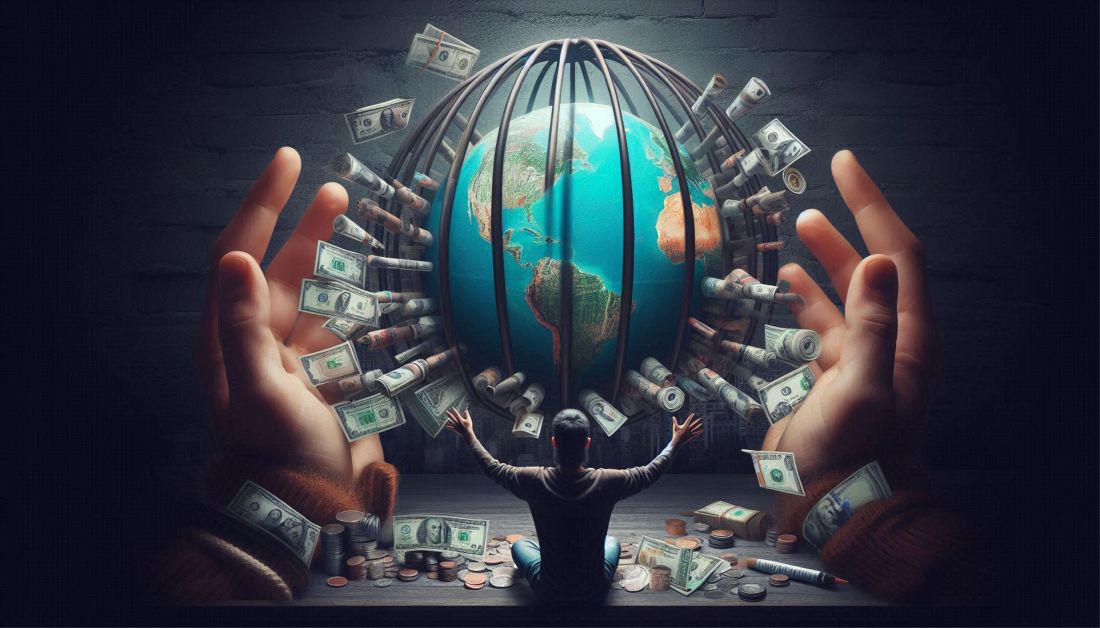
The problem is UBI is a solution that uses the creation or printing of money to enable it to work.

Money creation or printing is an essential part of the FIAT monetary system that we have today. The same system that is the root cause of all the money related and inflationary problems that we and our farmers are facing.

It is ironic that giving cash handouts to farmers would only build upon the culture of dependency that now exists, where the conditioned over reliance on subsidies and guaranteed contracts have made farmers vulnerable to the greed underpinning big money and profiteering retailers. Corporate interests that are not only taking all the profit that would be available from the food chain if it were accurately priced, but they are also using their market positions to inflate prices even further so that they can continue to take even more, without giving a damn about the impact and consequences for us all.

Minded that every one of us needs food every day in pretty much the same way that we need water and the air that we breathe, it defies sense or logic that British Farmers should be in a situation where they cannot have a secure, financially sound and fair-income-paying business, in return for providing a service which really should be considered a public good.

That farmers cannot survive and there are now organisations suggesting that UBI is the answer makes very clear that the working model or operational platform for British Agriculture is broken.

This reality  is all the more alarming given the fact that in a time of growing world crisis, we only grow the equivalent of around 52% of our own food in the U.K.

Regrettably, the farming problem isn’t one that good politicians would be able to fix in isolation. Because the issues farmers are facing are interconnected with many other areas of public policy that are breaking down today. All for no bigger reason than we have now had decades of politicians and the political parties they represent that have become increasingly poor.

If good politicians were representing us all as they should be today, the focus on farming would be to use legislation to immediately end the profiteering, price manipulation and speculation taking place that keeps taking money from the food chain without adding any form of value.

The next step would likely be to provide financial support and other legislation to help farmers transform food production and the pathway to retail to a system which is a contemporary version of what we had historically, where food was produced and consumed locally and in much more original, unprocessed and therefore healthier forms.

However, we don’t have good politicians and when the eagerly anticipated General Election comes, we will not have the option of good politicians to choose from even then.

This leaves farmers with a very difficult choice. To remain at the mercy of poor politicians who say lots but do very little. Or step back from conformity with the current broken system, take the risk of funding change themselves and then taking the lead and working closely with consumers who are the other key stakeholders in the food chain, so that food security, healthy nutritious food, and viable food producing businesses supplying every one of our local communities are brought back.

No Farmers No Food may be a wasted opportunity for UK Farming in its current form. But personal attacks on those leading it are no better than any one of us shooting at our own hand

A few days ago, I wrote and published a blog where I outlined why No Farmers No Food (NFNF) campaign will achieve nothing, whilst it could also end up doing UK Farming and Food Production considerable harm.

To do so meant mentioning the founder, James Melville. I don’t know James personally, but because of my ongoing interest in politics and the true depth of the problems that the U.K. is facing, I have been aware of him since he first appeared as a growing voice in what I’ll call the anti-lockdown ‘movement’ that appeared in the summer of 2020 following the first lockdowns.

Whilst I have discussed my reasoning that NFNF will not be able to achieve anything more than the range of existing organisations that are already working on the issues UK farming faces or have tried to do so before, it is also important to recognise what this new campaign is doing differently: NFNF has reached a much wider audience and has captured the imagination of people in ways that many of the existing lobbyist organisations supporting UK Farming have not done, so far.

The impact of NFNF is down to marketing and online campaigning. Or rather, making the best of the communication mediums that are currently available to anyone or any organisation that wants to change anything in the public realm, and isn’t already in a position where they have a platform where they could have the same effect just by opening their mouths.

The people who could do that – who arguably should already be doing that on behalf of UK Agriculture, are the people who are already in power. The people who we have elected and the people with roles in the establishment, who aren’t getting the things that they should be right. Because they are putting what’s important to them or what’s important to the people who are important to them, first.

Having the exposure that James has generated repeatedly since he emerged online, or being one of those people with public responsibility who isn’t using it as they should be, all adds up to the same outcome, IF there is no understanding or appreciation of the cause of the problems beyond an obsession with their effects, along with an appreciation of how everything in government, politics and the establishment really works today. Which genuinely isn’t anything like what most of us expect – even some of those within it.

Appearing to have a platform, with growing support and ‘breakthrough’ messages that give the immediate belief that those behind it can achieve things, will bring many different people and interests out of the woodwork who want to use that exposure for themselves. Usually because they aren’t getting the level of success with their own approaches, that they can see that new platform has.

It’s this visually-derived focus that brings groups like Together, climate deniers, right-wingers, anti-Brexiteers, and all sorts of different people with badges those who disagree with their priorities have given them, who identify with the issues that UK Farmers face tom banners like NFNF.

They see a vehicle that could be the answer to whatever problem they see as the priority, believing that their ‘fix’ will be the one that fixes everything for everyone else too.

The biggest obstacle to a successful outcome or resolution to all the common issues that Farmers share, is what we are now seeing unfolding in the disagreements about NFNF.

Different groups and individuals are attacking each other or piling in on individuals who have said something they don’t like about their take on what NFNF are going to do, and using links, affiliations and everything but the issues around what will actually work, when the point is being missed that in its current form, with the current mentality and the current lack of genuine engagement of a kind that social media simply cannot give, there will be nothing meaningful that NFNF can achieve.

The truth is that there is a massive range of people with different skills, experiences and talents that need to be involved in any movement that is going to succeed in delivering change for UK Farmers and Food Producers, where so many have already failed or been bought off with meaningless compromises before.

The parallels between this new campaign and how entry to the current political system works are frightening. Success in one area of business, obtaining a platform or just getting yourself elected doesn’t equip anyone with the understanding that it takes to do anything and certainly not where the realms of public policy interconnect and interacting with a completely broken system are concerned.

We shouldn’t doubt the good intent behind NFNF. But it’s been said that the road to hell is paved with good intentions and a large number of rightly angry, desperate and frustrated people are getting carried away by an idea that presents a good story, that in reality will end up a very long way from what it now seems.

We cannot have all the things that we want. That much is clear from the reality that we are all living through.

We need to focus upon the things that we genuinely need.

What we have the power to do is recognise the key things or rather the aims that we have in common. Such as saving U.K. Farming and making sure that everyone in the U.K. has everyday access to good, healthy, natural and farm-grown food.

It’s easy to dismiss workable solutions on the basis that they don’t appear to deliver the solutions that we want. But that’s really the most important point.

If we work together to deliver what’s right for everyone and not just what we want, what we want is likely to be delivered or will become a lot nearer by doing so.

We will then be winning multiple times over. Rather than fighting each other for no good purpose and not delivering anything to help anyone at all.

Sustainable Agriculture is part of the pathway to UK Food Security. But it wont work well for anyone until it works for everyone in the same way

My focus on Agri politics and the mass of issues that surround UK Food Security, Sustainable Agriculture and the growing problem of Food Poverty in the UK has made the past few months and my time at the Royal Agricultural University highly beneficial. Especially as I have began to look further and further outside my own social and professional circles to see if the troubling patterns that I already recognised, were evident in the same way elsewhere.

I have to be blunt and say that nothing I have experienced has given me any comfort. In all honesty, everything that I have seen has made me realise that the UKs Food Security and self-sustainability issues are significantly worse than I’d already concluded, and they are getting worse the whole time.

As you will have already read, Sustainability and Sustainable Agriculture are issues that are important to what I wish to share. However, the English language, the way that we multipurpose words and the obsession with subtext that most of us have, make communicating difficult issues that need to easily be grasped very difficult. Especially when alternative terms and their meanings can be used as a barrier that allow emotional ties to get in the way of progress and constructive dialogue.

There are very important distinctions to be made about Sustainable Farming in the context of what sustainability really is. Given that terms such as Regenerative Agriculture, Conservation Agriculture and Rewilding have been pushing their way into the Rural, Green, Environmental and Agricultural lexicon. As despite what should be very distinctive threads of commonality running throughout all of them, the differences between them and more importantly what everyone believes to be the most important priorities of each of them, are endlessly getting in the way.

Misunderstanding, misinterpreting and misrepresenting key benefits and issues is preventing everyone coming together to build upon shared commonality to identify and implement ways of working for the future that are meaningful and beneficial for everyone involved.

To add to the complication of addressing these issues, there is also a need to focus on methods and thinking that are likely to seem counterintuitive in a way that requires many of the most logical and business minded people that we could meet, to think about a future that looks very different to how it does today. A comfort zone we are resistant to leaving where every system, policy and story we encounter tell us all that the basics of everything that we accept without thinking, are always set to remain the same.

It’s what a politician thinks of and does for the person they least identify with that really matters for Fairness, Balance and Justice in Government to exist

Diversity, alternative Political Philosophies and differences in Politics don’t promote or guarantee fairness and balance.

Anyone appointed to a position of influence and authority because of the physical, material or ideological difference they have with others is more likely to prioritise those who they most closely identify with – or for want of a better term, prioritise the interests of ‘those of their own kind’.

The benchmark of any system of government and the political system that facilitates or leads it being truly representative, Fair, Balanced and Just, is what the politician or political decision maker does on behalf of the person they know least about, have least in common with or are least likely to understand.

A system of government cannot and will not work in the best interests of all, if it doesn’t consider and treat fairly, justly and without bias of any kind, even the very people we might consider that we have every reason want excluded in some way or to despise.

If you have read this and immediately think of someone or some group of people that you feel to be undeserving of the same care and consideration that you for yourself would like, you can now use that feeling and emotion to understand how any system of governance and politics will quickly be undone.

This Blog is part of the e-book ‘The Way of Awakened Politics for Good Government’.

Qualified academically or not, we are all capable of greatness or of being complete and utter fools

Qualified academically or not, we are all capable of greatness or of being complete and utter fools

As humans, we love difference. We love it so much that we use it as a way to qualify other people by colour, gender, sexual orientation, financial and material wealth, social background, taste, appearance and in many other ways too.

Many of the benchmarks we carry within our own personal make‑up, as we attribute value to others, are unconscious or, to the world outside us, completely hidden.

The fact that we make these judgements behind closed doors means that no matter how hard do‑gooders attempt to legislate or control our behaviour, controlling other people’s thinking at a personal or private level is a battle that even the most politically correct amongst us will never win.

The obsession with qualifying others

We have become obsessed with legitimising our qualification of others when it suits us. Society provides markers intended to help, yet we use them to create differences that stand far outside their original purpose.

For a long time, academic qualification has increasingly been used as the preferred way to distinguish ability, attitude, application, intelligence and countless other traits. To the audience, these markers become a convenient way to judge whether someone is “qualified” or not.

By bypassing the cold, hard reality that academic qualifications – whether GCSEs, A Levels, Degrees, Masters or PhDs – are simply benchmarks created in someone’s (usually an academic’s) thoughts, the elephants of our society have fallen head over heels into the trap of believing that academic standards portray the genuine quality or value of every individual. They do not.

Angela Rayner and the cruelty of perception

Yesterday, we witnessed these maleficent social anchors at their worst, when Shadow Education Secretary Angela Rayner was ridiculed for having what are considered to be four very poor GCSEs and, academically speaking, no more.

Whilst Labour and their principal spokesperson for Education demonstrate little credibility in terms of the policies they have been putting forward with an eye on the upcoming General Election at their Party Conference this week, there are few of us outside Westminster who could list on one hand the number of politicians from any Party who we could hand‑on‑heart consider credible in fulfilling their roles properly and representing the people well.

Perception is everything – particularly when it comes to the influences on our thinking and lives played out on social media and TV.

Just because an MP or politician looks good on camera, comes across as confident, sounds competent or can boast an academic CV that includes Eton, Oxford or wherever it may be, the reality may be – and in many cases is – that they are not “qualified” by being any such thing.

The lost value of real‑world experience

We have learned, and increasingly been conditioned against, the value of life experience and the practical understanding of people, business, community, and the views that time in the real world brings.

We have reached a stage where we look for things that make high‑profile people stand out for all the wrong reasons, mistakenly thinking those reasons are right.

There is rich irony in the fact that it was the Labour Government of 1997–2010 that pushed qualification bias to its extreme by suggesting that everyone should have a degree.

This malignant and ill‑conceived step has contributed to the biggest shift in perception about what qualifies a person. It has pushed us further away from regarding each individual as equal and the same.

The consequences of commercialised Higher Education

The meddling of Angela Rayner’s political predecessors bears much responsibility for the commercialisation of Higher Education. The rancid truth is that many young people have been condemned to financial servitude by a past Labour Government, encouraged to take degrees that nobody in industry values.

Others are being left behind simply because they are excluded by a system that frowns upon anyone not academically inclined, or because they know that a lifetime of debt is not something they can realistically afford.

Education, in its real sense, is only partially academic. No matter how any person is educated, they are equally capable of greatness or of behaving like fools. The suggestion that people are only capable of anything great if they have good academic qualifications is fundamentally flawed.

A better way forward

When we finally have a Government led by politicians who are responsible and not so easily led, the hard decisions over how we educate and support our young people will be addressed properly.

The focus will return to the basic reality that as teenagers, we are pretty much all either “heads” or “hands”. Once we value the fact that not everyone in their early teens is ready or able to spend another seven years in books, we can get back to providing real parallel educational – not academic – pathways.

Developed properly with business, and with the opportunities that Leaving the EU will give us, rewarding lives for people – whatever their background or birth – will, for many more of them, be fully assured.