When Legality Replaced Morality

We’ve reached a point where the law is treated like a moral compass, even though it no longer points anywhere near true north. People talk as if legality and morality are the same thing, as if the moment something is written into legislation it becomes right by default. But anyone paying attention can see that the law no longer serves the best interests of the public in any meaningful way. It has become a tool – a flexible, shape‑shifting instrument that bends to the will of those who write it, not those who live under it.

And this is happening at the very moment when we should be thinking more independently than ever. We have endless information, endless access, endless opportunity to question what we’re told. Yet somehow, we’ve drifted further away from genuine independent thought.

People feel that something is wrong – you can hear it in conversations everywhere – but they haven’t yet reached the point of understanding why.

That’s why the times feel so strange. It’s not that people can’t see the cracks. It’s that they’ve been conditioned to doubt their own instincts, to assume that if something is legal, it must be normal, and if it’s normal, it must be acceptable.

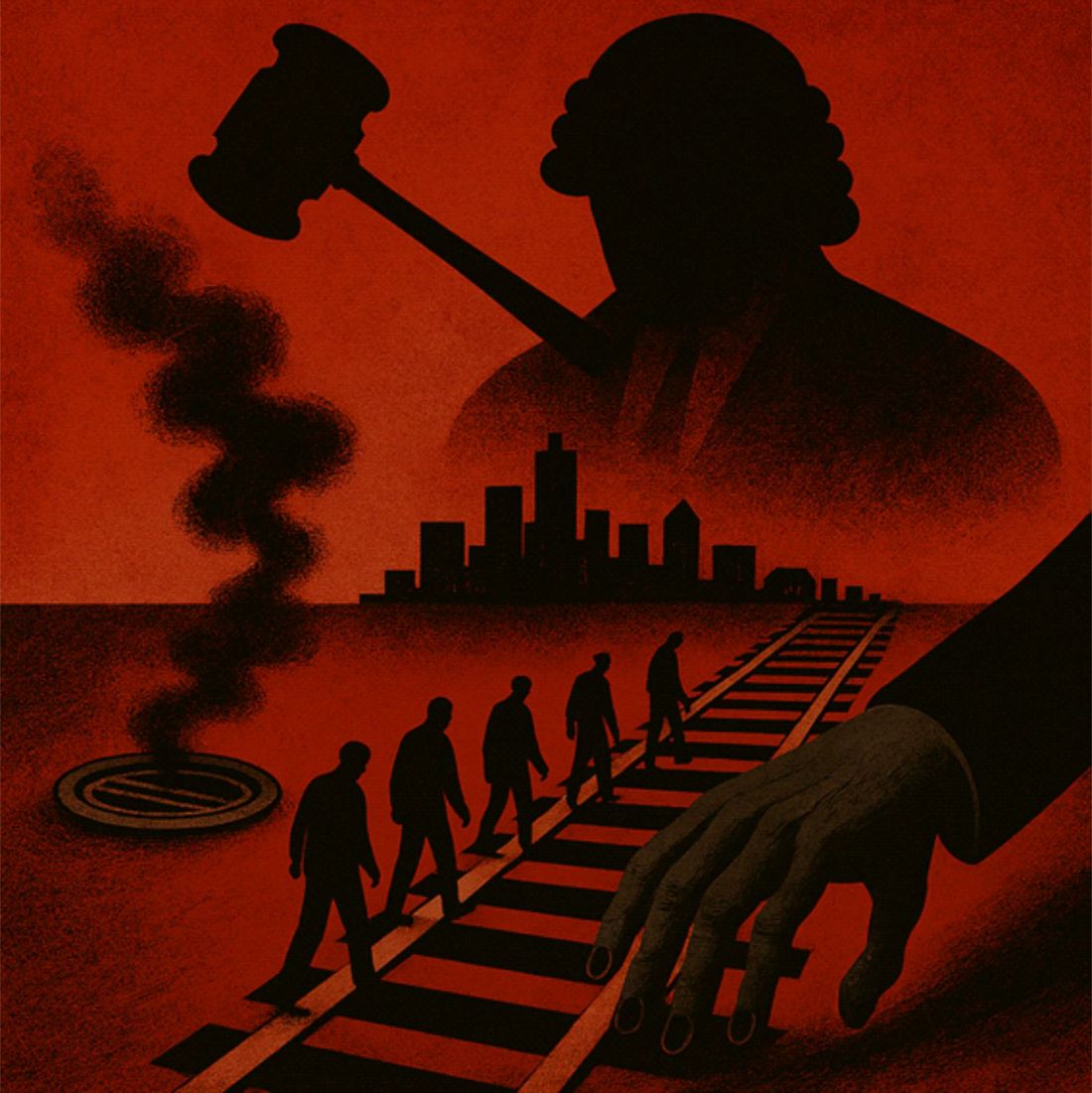
Meanwhile, the lid on the septic tank – the one that hides the real workings of the system – is rattling harder than ever. And every time it shakes, more people catch a glimpse of what’s really going on underneath.

Because when you look around, so much simply doesn’t add up. We’re told the system is fair, yet money is consistently prioritised over people, even when the human cost is obvious.

We’re told decisions are made for the “greater good,” yet the outcomes rarely reflect anything other than the interests of those who benefit.

We’re told to trust the process, even when the process produces results that defy common sense. And the more people try to reconcile what they’re told with what they see, the more they feel that something fundamental is off.

Over the past few days, this disconnect has been thrown into even sharper relief. The latest events in the Eastern Mediterranean, the Persian Gulf, and Iran have pushed the lid on that septic tank to the point of shaking loose. And the most revealing part hasn’t been the prospect of a US‑led war. It’s been the behaviour of our own government.

The Prime Minister has looked out of step, slow to approve US use of bases in Diego Garcia and the UK, and hesitant even about basic security commitments in Cyprus. The obsession in Number 10 seems to be whether the war is legal – as if legality is the highest moral test – rather than what leadership requires or what is right.

This should tell us everything. Yet many people still trip over the question of legality, when the deeper question – the one that should always come first – is morality itself.

The PM’s behaviour suggests a belief that if something is legal, it is automatically right. But that mindset is dangerous. It allows those in power to hide behind the law, using it as a shield for decisions that may be questionable, harmful, or outright wrong. Once something is made legal, it becomes almost impossible to challenge – even when it hurts the very people the law is supposed to protect.

And this isn’t new. Governments and the establishment behind them have been doing this for decades, if not centuries.

The idea that legality equals morality has become so ingrained that all a government needs to do is pass a rule, and suddenly the policy it supports is treated as ethically sound.

But law and morality are not the same. They cannot be the same. Laws are rail tracks laid by those in power, pointing society in the direction they choose. They are not – and must never be confused with – personal agency, independence, sovereignty, or genuine freedom of choice.

Real freedom of choice means decisions made without pressure, manipulation, or engineered constraints. Only in that space can morality exist. Only there can individuals decide what is genuinely right or wrong – and only from that foundation can society do the same.

Yet today, fixed direction is imposed everywhere. People believe they have freedom, but most of their choices have already been made for them. They’re offered false options that maintain the illusion of autonomy while keeping them on rails laid by someone else.

And here’s the heart of it: people have been conditioned to accept things that are wrong – even things that harm them – simply because a law exists that allows those things to happen. If it’s legal, it must be normal. If it’s normal, it must be acceptable. And if it’s acceptable, why should anyone question it?

This is how we end up with everyday absurdities that everyone recognises but few challenge. Healthy food becomes too expensive for the poorest to eat, yet nobody in authority calls that immoral – because the pricing is legal. Councils charge residents to park on their own streets and fine them when they don’t comply, and we’re told this is “policy,” as if that makes it right. Entire communities are reshaped to suit the aims of people who have no connection to them, and somehow their objectives are treated as the standard the rest of us should follow.

None of this happens by accident. It’s what you get when every new layer of legal complexity is built to serve an agenda rather than the public. And every time another pillar is added, the consequences are ignored – because selfish actions never look downstream. They don’t consider who gets hurt, who gets priced out, who gets silenced, who gets left behind, or the gaps that are created for more unscrupulous operators to hide behind. They only consider the goal.

Worse still, the legal system and our legislative processes have become a tool for gaslighting the public. They make ordinary people doubt their own moral instincts. It teaches them to override what their natural conditioning tells them is fundamentally right. If the law says it’s fine, then who are you to question it? If the law says it’s normal, then your discomfort must be the problem.

But nobody can learn what is right if all guidance comes from authority. And while those in authority may have the power to create laws, those laws cannot be considered legitimate unless they clearly and undeniably serve the best interests of everyone.

Within this context, it’s absurd to argue that any war can be morally justified simply because it is legal. At the same time, the right to defend ourselves or others should never be questioned – even if that defence requires full engagement in conflict. The difference lies in motive, not legality.

This is why the world feels upside‑down. It’s why so many things that are obviously wrong are treated as if they’re perfectly fine. Laws have been shaped and reshaped to make questionable policies appear right, and people have been taught to override their own moral instincts in favour of whatever the rulebook says today.

But that spell is breaking. People are waking up to the fact that a system built on extraction, complexity, and self‑interest cannot possibly have their wellbeing at heart.

They’re beginning to see how the law – the very thing they trusted to protect them – has been used to confuse them, restrain them, and in many cases exploit them.

They’re realising that the discomfort they’ve been made to feel isn’t a flaw in their thinking; it’s a sign that their natural sense of right and wrong is still intact.

And once people understand that, they start asking the questions they were never meant to ask. They start looking for the people who hid behind legal language to justify selfish decisions. They start recognising that morality doesn’t come from legislation – it comes from freedom of choice, from agency, from the ability to think without being pushed down a predetermined track.

When enough people reach that point, the system that relied on their compliance begins to lose its power. And that is exactly what we’re watching happen now.

1647
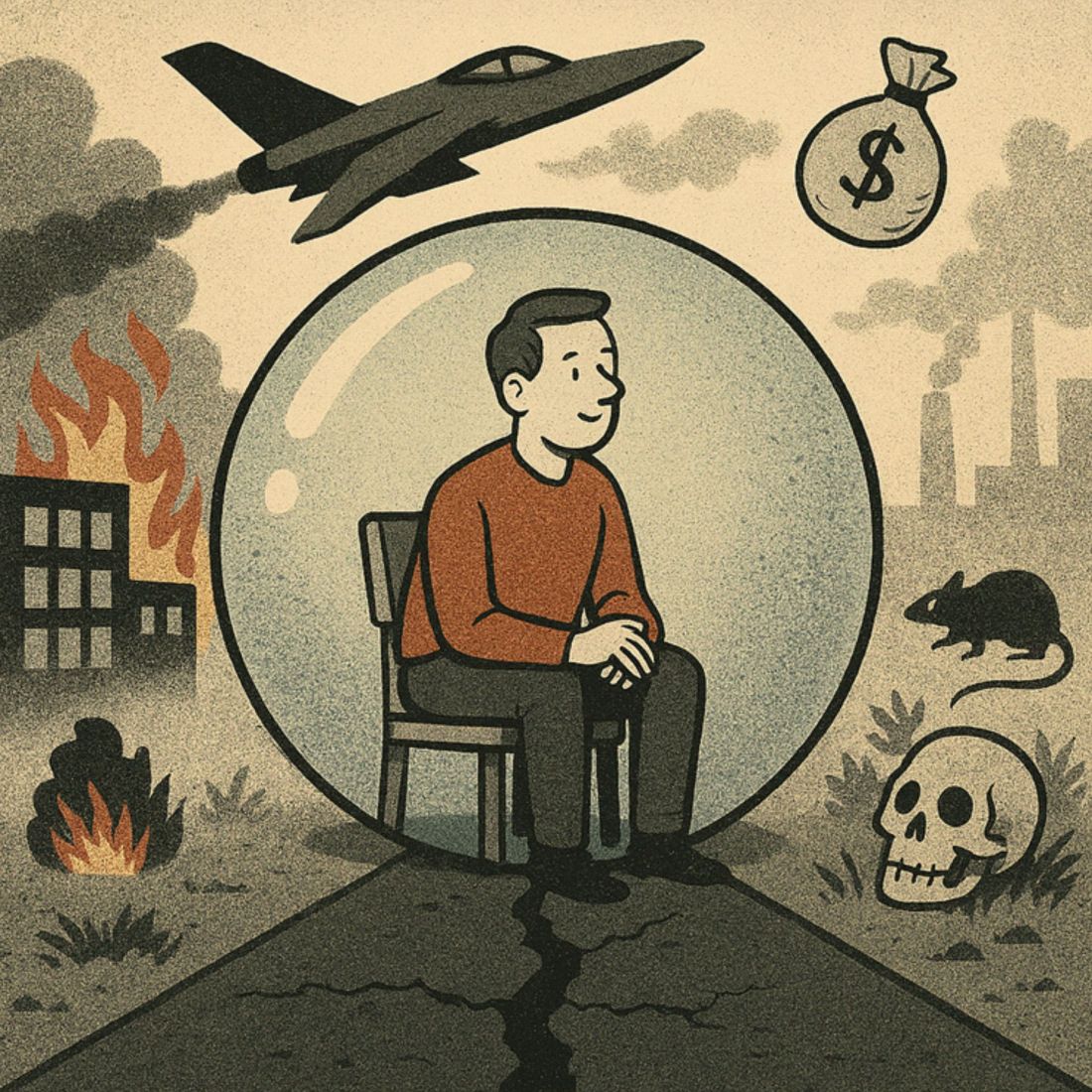
The Road We Are On is Broken – And We Built It Ourselves

The solutions we need won’t come from anything we already do. Because it’s everything we already do that caused the problems.

The Familiar Path That Led Us Here

Right now, people believe they’re seeing the full picture. They believe they understand the crisis, the chaos, the uncertainty – because the surface‑level symptoms are impossible to ignore.

But the deeper reality is still being missed. Not because it’s hidden, but because most people aren’t yet in a place where they can recognise what they’re looking at.

Perspectives shape perception. And when perspectives are shaped by habit, fear, conditioning, or the comfort of familiar narratives, they filter out the very things that matter most.

That’s why so many warning signs are dismissed. Why so many contradictions go unchallenged. Why people can feel informed while still being completely unaware of what’s actually unfolding.

Understanding doesn’t come from information alone. It comes from readiness – from the moment when someone’s internal landscape shifts enough for them to finally see what was always there.

Until that readiness arrives, even the clearest truth will look like noise, exaggeration, or irrelevance.

And that’s the challenge we face: not just to speak truth, but to recognise that truth only lands when the conditions allow it to.

Seeing Through the Fog of Perspectives

In times like these, people assume they’re fully aware of what’s happening around them.

The noise is loud, the chaos is visible, and the headlines never stop. It creates the illusion of clarity – as if simply noticing the disruption means understanding its cause.

But awareness and understanding are not the same thing.

Much of what matters is still out of view. Not because it’s hidden, but because most people aren’t yet equipped to recognise the patterns behind the events.

They see the symptoms, not the structure.

They see the fallout, not the forces shaping it.

They see the drama, not the design.

That’s why so many explanations sound far‑fetched to those who aren’t ready for them. Why warnings are dismissed. Why truths are labelled extreme until the moment they become obvious.

And this is the danger: when people believe they already see everything, they stop looking for what they’ve missed.

Rattles in the Vehicle We Thought Was Safe

We are, metaphorically speaking, passengers in a vehicle we don’t realise is breaking or already broken.

We race along, ignoring the rattles, because it’s still moving.

We convince ourselves everything’s fine, right up until the moment it stops and we’re forced to accept that we’ve broken down.

The warning signs are everywhere. No matter your business, sector, or situation, the red flags are waving from every direction in plain sight. But because the wheels are still turning – or appear to be – we keep believing that a change of driver or a quick pit stop is all we need.

We imagine that after a brief pause, the journey will resume, more comfortable than before, with a better seat and a better view.

But the vehicle – whether you can picture it as a car, train, or bus – represents everything we do and everything we believe we’ve always done.

The road beneath it is the path we’ve been set upon, shaped by our behaviours, expectations, attitudes, approaches, and the values we’ve allowed to guide us.

The Quiet Ways We All Contributed

And here’s the uncomfortable truth: no matter what problem you’re facing, no matter what crisis is unfolding, if it involves decisions made by others, then yes – you can probably identify who’s responsible. But at some level, we all share responsibility. We all helped build the road.

Even if we didn’t make the active choices that led us here, into this mess, we made choices nonetheless.

When we avoided risk, chose the easy option, kept quiet to avoid rocking the boat, ignored the truth, or failed to do what was right – we took action. And often, that action was simply allowing those with hidden agendas to get their way.

Everything has a cost.

For decades, we’ve been conditioned by manipulation, sleight of hand, and narratives designed to convince us that non‑conformity leads to isolation.

But the real cost has been far greater.

Everything that once held value – our businesses, workplaces, sports, social spaces, food, water, money, communication, education, jobs, reputations – has been diminished.

Not by accident, but by design. So it could be reformed, centralised, and ultimately placed under someone else’s control – even while we still believe we own it.

This includes the institutions people still trust by default: government, the public sector, and the systems built around them. They were supposed to safeguard society, yet they’ve become part of the machinery that has allowed decline, mismanagement, and manipulation to take root. Not because everyone within them is corrupt, but because the structures themselves are no longer fit for purpose – and haven’t been for a long time.

Understanding Comes Only When We’re Ready

The problems we face — in farming, hospitality, industry, with people, community, the environment, government, the public sector – all stem from the same system. From all the “everythings” each and every one of us do.

No matter our background or bubble, it all adds up to the same thing: the trouble the world is now in.

And what we’ve done and been doing so far cannot or will not fix it.

It doesn’t matter if we wait for a change in government while continuing to elect candidates chosen by people we don’t know.

It doesn’t matter if we keep believing the establishment is structured to serve us, or that it has the integrity to do so.

It doesn’t matter if we trust the financial system, or believe that inflation and the cost of living are beyond anyone’s control.

If we don’t change the fundamental building blocks – of life, economics, and governance – then no matter who’s in charge, things will only get worse.

And we’ll keep being told they’re getting better.

Crisis as Catalyst

Today, life just happens to us.

Business, money, governance – they’re systems we’re expected to show up for, participate in, and conform to. That’s it.

But conformity is what brought us here. And we’re standing at the doorway of something that, once we step through it, may quickly reveal that there is no way back.

It’s only this way and we only got here because we surrendered our power – more often than not without ever realising that we had even given it up.

Building Something That Puts People First

If we want to change anything – even the smallest thing – in the world around us, we must participate. We must play our part. That’s what living a proper life demands.

And if we want things not just to improve, but to become truly better, then we must all get involved.

The collapse we’re experiencing offers something rare: the chance to see and experience life differently. A chance that wouldn’t have come if things had continued as they were. Which they no longer can.

As circumstances worsen and reality begins to speak for itself, we have a choice.

We can take back our power. We can work with the people we know – the people we share our lives with – to reclaim genuine control. To put people, community, and the environment first.

The Local Economy & Governance System (LEGS) – built upon The Basic Living Standard – offers a new structure for the future.

LEGS isn’t a shortcut, and it isn’t a promise that someone else will fix things for us.

LEGS is simply a framework that puts people, community, and the environment back at the centre of life – where they always should have been.

What comes next won’t be shaped by governments, institutions, or systems that have already failed us. It will be shaped by the choices we make now, the conversations we have with the people around us, and the willingness we each find to choose and step through the doorway in front of us, that leads to a Future that no one else can define.

The world we knew is ending. But what replaces it is still ours to decide.

Further Reading

1. Awakening & How We Perceive the Crisis

Understanding how people ‘wake up’ to what’s really happening

There’s No Fast‑Track to Awakening

Link: https://adamtugwell.blog/2026/01/05/theres-no-fast-track-to-awakening/
A reflection on why meaningful awareness can’t be forced or rushed. People don’t see deeper truths until they are personally ready, no matter how clear the evidence appears.

Beliefs We Accept as Our Own Are Destroying Everything — Including Who We Really Are

Link: https://adamtugwell.blog/2025/09/16/beliefs-we-accept-as-our-own-are-destroying-everything-including-who-we-really-are/
Explores how inherited assumptions shape society’s decline and block real understanding or change.

The Choice – A Waking Up Story (Full Text)

Link: https://adamtugwell.blog/2025/07/19/the-choice-a-waking-up-story-full-text/
A narrative‑style exploration of what it feels like to realise the system doesn’t work the way we once believed.

2. The Hidden System Behind Society’s Problems

What’s really driving the chaos people can see – but don’t fully understand

The War Behind the World We Know

Link: https://adamtugwell.blog/2026/01/05/the-war-behind-the-world-we-know/
Examines the unseen mechanisms and competing interests that shape global events and public perception.

Safe Shores – The Pathway That Led to the Local Economy Governance System and the Basic Living Standard

Link: https://adamtugwell.blog/2025/12/29/safe-shores-the-pathway-that-led-to-the-local-economy-governance-system-and-the-basic-living-standard/
Shows how decades of systemic decline created the conditions that make new governance ideas not just desirable, but necessary.

After the Collapse – Who Gets the Blame?

Link: https://adamtugwell.blog/2025/11/12/after-the-collapse-who-gets-the-blame/
Explains why the wrong people and causes tend to be blamed when systems fail, and why this delays real solutions.

Choosing Outcomes Over Comfort – A Path to a Better Future

Link: https://adamtugwell.blog/2025/11/13/choosing-outcomes-over-comfort-a-path-to-a-better-future/
Looks at how comfort, convenience, and avoidance prevent individuals and communities from acting differently – even when change is essential.

3. Economics, Collapse & the Global Order

Why the economic system is failing – and what’s really behind it

Facing the Economic Collapse – The Real Crisis Behind Money, Wages, and Freedom

Link: https://adamtugwell.blog/2025/11/14/facing-the-economic-collapse-the-real-crisis-behind-money-wages-and-freedom/
Explores how wages, inflation, money creation, and governance combine into a crisis much deeper than people realise.

Money Is the Greatest Crime of Our Time

Link: https://adamtugwell.blog/2025/11/12/money-is-the-greatest-crime-of-our-time/
Reveals how the monetary system has been manipulated to serve central interests at the expense of the public.

Desperate Times, Desperate Resets

Link: https://adamtugwell.blog/2025/03/24/desperate-times-desperate-resets/
Discusses major societal “resets” and why moments of crisis are exploited to reshape systems from the top down.

The BRICS Money Bomb – Will a New Gold‑Backed Currency Flip the Global Order?

Link: https://adamtugwell.blog/2023/08/14/the-brics-money-bomb-will-a-new-gold-backed-currency-and-monetary-system-really-flip-the-global-order-or-does-the-end-of-world-peace-lie-immediately-ahead-essay/
Analyses the potential shift in global power if BRICS nations introduce a hard‑asset‑backed currency.

Trump’s Reset – Catalyst for Change, Doorway to Cataclysm, or Both?

Link: https://adamtugwell.blog/2025/04/29/trumps-reset-catalyst-for-change-doorway-to-cataclysm-or-both/
Investigates the destabilising ripple effects of political “resets” and their global economic consequences.

4. Politics, Institutions & Public Misunderstandings

Why political systems fail – and why people keep expecting them to work

The Contemporary Politician’s Dilemma

Link: https://adamtugwell.blog/2024/12/05/the-contemporary-politicians-dilemma/
Shows why modern politicians cannot meaningfully fix systemic problems — even when they want to.

Government Is Broken – Collapse Now or Collapse Later?

Link: https://adamtugwell.blog/2025/11/05/government-is-broken-collapse-now-or-collapse-later/
Explains why existing government structures are no longer fit for purpose and cannot deliver sustainable solutions.

Any Fool Can Be a Politician

Link: https://adamtugwell.blog/2025/10/07/any-fool-can-be-a-politician/
A sharp look at how politics attracts the wrong incentives, creating leaders unsuited to solving real‑world challenges.

Why People Can’t “Just Get a Job”

Link: https://adamtugwell.blog/2025/11/04/why-people-cant-just-get-a-job/
Breaks down the structural economic and social barriers that make simplistic advice meaningless.

5. The Local Economy & Governance System (LEGS) and the Basic Living Standard (BLS)

Practical frameworks for rebuilding society from the ground up

The Basic Living Standard – Freedom to Think, Freedom to Do, Freedom to Be

Link: https://adamtugwell.blog/2025/12/15/the-basic-living-standard-freedom-to-think-freedom-to-do-freedom-to-be-with-personal-sovereignty-that-brings-peace-to-all/
Introduces BLS as a foundation for genuine human freedom, community wellbeing, and resilience.

The Basic Living Standard Explained

Link: https://adamtugwell.blog/2025/10/24/the-basic-living-standard-explained/
A straight‑forward breakdown of what the BLS is, why it matters, and how it functions.

The Local Economy Governance System (Online Text)

Link: https://adamtugwell.blog/2025/11/21/the-local-economy-governance-system-online-text/
A reference version of the LEGS framework for those seeking a structural model for local governance.

From Principle to Practice – Bringing LEGS to Life (Full Text)

Link: https://adamtugwell.blog/2025/12/27/from-principle-to-practice-bringing-the-local-economy-governance-system-to-life-full-text/
A detailed, practical guide on implementing LEGS within a community context.

An Overview of A People First Society

What is a People First Society?

A People First Society is one where people, community, and the environment come before money and profit.

It’s about making sure everyone has what they need to live well — and that everyone can contribute to the wellbeing of the whole.

Why does this matter?

Because too many people today are:

  • struggling to afford the basics
  • stressed, insecure, or isolated
  • working hard but still falling behind
  • disconnected from their community
  • living in systems that don’t put them first

A People First Society changes that.

What does this philosophy believe about people?

It starts with a simple truth:
People do best when they feel secure, trusted, and valued.

Most people want to:

  • help
  • contribute
  • belong
  • make a difference

When life isn’t a constant struggle, people naturally step up.

What is the Basic Living Standard?

It’s a guarantee that everyone can afford the essentials of life — food, housing, transport, clothing, communication, and social participation — from a normal week’s work.

No debt.
No welfare dependency.
No fear of falling through the cracks.

Just a fair foundation for everyone.

What is LEGS?

LEGS stands for the Local Economy & Governance System.
It’s a practical way of running communities so that decisions are made locally, transparently, and with everyone involved.

LEGS focuses on:

  • local food
  • local services
  • local decision‑making
  • local businesses that serve the community
  • local resilience and sustainability

It’s about bringing life back to the local level.

What is The Revaluation?

The Revaluation is the shift from seeing life through the lens of money to seeing it through the lens of people.

It’s a change in mindset:

  • from scarcity to security
  • from competition to contribution
  • from hierarchy to participation
  • from profit to wellbeing

It’s the moment we realise life can be organised differently – and better.

Is this anti‑business?

No.
It supports businesses that:

  • meet real needs
  • treat people fairly
  • protect the environment
  • strengthen the community

It only challenges businesses that exploit people or extract wealth without giving anything back.

Why is local decision‑making so important?

Because people understand their own community better than distant institutions do.

Local decision‑making means:

  • more accountability
  • more transparency
  • quicker solutions
  • stronger communities
  • decisions that actually make sense

It brings power back to the people it affects.

What does this philosophy say about the environment?

The environment isn’t a resource to use up – it’s the foundation of life.
A People First Society protects and regenerates the land, water, and ecosystems we depend on.

Healthy communities need a healthy environment.

What does “freedom” mean in a People First Society?

Freedom means being able to live without fear, contribute without pressure, and participate without barriers.

Real freedom requires:

  • security
  • dignity
  • opportunity
  • community
  • a healthy environment

Freedom is something we build together.

What’s the goal of all this?

To create a society where:

  • everyone has what they need
  • no one is left behind
  • communities are strong and resilient
  • people can contribute meaningfully
  • the environment is protected
  • life feels fair, connected, and human again

A People First Society is simply a society that works – for everyone.

Want to learn more?

This leaflet is a short introduction.

If you’d like a deeper explanation, more materials, or help sharing this philosophy in your community, just ask.

Further Reading:

  1. The Local Economy & Governance System (LEGS) – Online Text
    https://adamtugwell.blog/2025/11/21/the-local-economy-governance-system-online-text/
  2. The Basic Living Standard Explained
    https://adamtugwell.blog/2025/10/24/the-basic-living-standard-explained/
  3. The Basic Living Standard: Freedom to Think, Freedom to Do, Freedom to Be – With Personal Sovereignty That Brings Peace to All
    https://adamtugwell.blog/2025/12/15/the-basic-living-standard-freedom-to-think-freedom-to-do-freedom-to-be-with-personal-sovereignty-that-brings-peace-to-all/
  4. From Principle to Practice: Bringing the Local Economy & Governance System to Life (Full Text)
    https://adamtugwell.blog/2025/12/27/from-principle-to-practice-bringing-the-local-economy-governance-system-to-life-full-text/
  5. Visit the LEGS Ecosystem
    https://adamtugwell.blog/2025/12/31/visit-the-legs-ecosystem/

A Deep‑Dive Guide to The Philosophy of a People First Society

1. How does this philosophy redefine the concept of “human nature”?

Traditional economic and political systems assume humans are primarily self‑interested, competitive, and motivated by scarcity.

This philosophy rejects that framing as a structural artefact, not a biological truth.

It argues that what we call “human nature” is largely a reflection of the systems we live within.

Change the environment → change the behaviour → change the outcomes.

In this view, human nature is:

  • relational
  • adaptive
  • cooperative under conditions of security
  • meaning‑seeking
  • contribution‑driven

This is a foundational departure from neoliberal and classical economic assumptions.

2. Why is security considered the precondition for contribution?

Because fear distorts behaviour.

A person in survival mode cannot:

  • think long‑term
  • act ethically
  • participate meaningfully
  • contribute creatively
  • engage in community life

The Basic Living Standard is therefore not a welfare mechanism – it is a psychological and structural prerequisite for a functioning society.

Security → stability → contribution → community → resilience.

3. How does this philosophy reinterpret the purpose of work?

Work is not a commodity.

Work is not a transaction.

Work is not a mechanism for survival.

Work is participation in the life of the community.

This reframing dissolves the coercive relationship between employer and employee and replaces it with a contribution‑based model where:

  • people work because they are part of a community
  • work is meaningful
  • contribution is voluntary but natural
  • survival is not conditional on employment

This is a profound shift from the industrial and neoliberal worldview.

4. Why is locality the “natural scale” of human systems?

Because human beings evolved in small, relational groups where:

  • accountability was direct
  • decisions were transparent
  • consequences were visible
  • relationships were personal

Large, centralised systems create:

  • abstraction
  • detachment
  • bureaucratic distance
  • moral disengagement
  • power concentration

Locality restores the natural feedback loops that keep systems ethical and functional.

5. How does this philosophy challenge the concept of economic growth?

It argues that growth is not a measure of wellbeing – it is a measure of throughput.

GDP increases when:

  • people get sick
  • disasters occur
  • housing becomes unaffordable
  • debt expands
  • consumption accelerates

Growth is therefore not neutral – it rewards harm.

A People First Society replaces growth with:

  • resilience
  • sufficiency
  • regeneration
  • wellbeing
  • contribution
  • community health

This is a paradigm shift from extractive economics to human‑centred economics.

6. What is the philosophical justification for limiting property ownership?

Property accumulation creates power accumulation.

Power accumulation creates inequality.

Inequality creates dependency and coercion.

The philosophy argues that no person has the moral right to own more than they can use, because unused property becomes a mechanism of control over others.

Housing is therefore a right, not a commodity.

This is not ideological – it is structural ethics.

7. How does this philosophy understand value?

Value is not price.

Value is not profit.

Value is not scarcity.

Value is defined as:

anything that improves the wellbeing, freedom, dignity, or resilience of people, communities, or the environment.

This reframing collapses the entire logic of the money‑centric worldview.

8. Why does the philosophy reject interest, speculation, and financialisation?

Because they allow people to accumulate wealth without contributing anything of value.

Interest and speculation:

  • extract value without creating it
  • distort prices
  • create artificial scarcity
  • concentrate power
  • destabilise communities
  • reward non‑contribution

A People First Society requires that value only flows from contribution, not from ownership or manipulation.

9. How does this philosophy view governance?

Governance is not authority.
Governance is not hierarchy.
Governance is not control.

Governance is collective decision‑making about shared life.

The Circumpunct model reflects this:

  • no permanent power
  • no hierarchy
  • no distance between decision and consequence
  • leadership as service, not status
  • transparency as a moral requirement

This is governance as participation, not governance as rule.

10. What role does The Revaluation play in the transition?

The Revaluation is the psychological and cultural pivot that makes systemic change possible.

It is the moment when people collectively realise:

  • money is not value
  • growth is not progress
  • employment is not contribution
  • hierarchy is not leadership
  • centralisation is not stability
  • scarcity is not natural
  • competition is not inevitable

Without this shift, LEGS would be resisted.

With it, LEGS becomes the obvious next step.

11. How does this philosophy address the problem of power?

By dissolving the mechanisms that create it:

  • property accumulation
  • financial accumulation
  • hierarchical governance
  • centralised decision‑making
  • opaque systems
  • dependency structures

Power is not redistributed – it is deconstructed.

The system is designed so that no individual or organisation can accumulate disproportionate influence.

12. Is this philosophy compatible with modern technology and AI?

Yes – but only under strict conditions:

  • technology must serve human agency
  • AI must never replace essential human roles
  • systems must remain understandable at the human scale
  • digital tools must have non‑digital alternatives
  • local communities must retain control

Technology is a tool, not a trajectory.

13. How does this philosophy define freedom?

Freedom is not the absence of rules.

Freedom is not consumer choice.

Freedom is not individualism.

Freedom is:

the ability to live without fear, contribute without coercion, and participate without exclusion.

This requires:

  • security
  • dignity
  • community
  • transparency
  • meaningful work
  • environmental stability

Freedom is therefore a collective achievement, not an individual possession.

14. What is the ultimate purpose of a People First Society?

To create the conditions in which:

  • every person can live a good life
  • every community can be resilient
  • every environment can regenerate
  • every individual can contribute meaningfully
  • no one is left behind
  • no one is exploited
  • no one is coerced into survival

This is the philosophical north star.

15. What is the biggest misconception about this philosophy?

That it is idealistic.

In reality, the current system is the idealistic one – it assumes:

  • infinite growth
  • infinite resources
  • infinite stability
  • infinite human tolerance for inequality

This philosophy is grounded in lived reality, human psychology, ecological limits, and community logic.

It is not utopian.

It is necessary.

Further Reading:

This “Further Reading” section offers a set of resources that will deepen your understanding of the Local Economy & Governance System (LEGS), the Basic Living Standard, and the broader philosophy of a people-first society.

Each link explores a different facet of the philosophy, from practical implementation to foundational principles. Engaging with these readings will provide you with richer context, practical examples, and a more nuanced grasp of the ideas behind LEGS.

Whether you are new to these concepts or seeking to apply them, these resources will help you connect theory to practice and inspire new ways of thinking about community, governance, and human flourishing.

Ordered List of Further Reading

  1. The Local Economy & Governance System (LEGS) – Online Text
    https://adamtugwell.blog/2025/11/21/the-local-economy-governance-system-online-text/

Summary:

This foundational text introduces the LEGS framework in detail, explaining how local economies and governance can be structured to prioritise human dignity, participation, and sustainability. It’s ideal for readers seeking a comprehensive overview of the system’s mechanics and philosophical underpinnings.

Benefit:

Start here for a solid grounding in the core ideas and practical structure of LEGS.

  1. The Basic Living Standard Explained
    https://adamtugwell.blog/2025/10/24/the-basic-living-standard-explained/

Summary:

This article breaks down the concept of the Basic Living Standard, clarifying what it means in practice and why it is central to a people-first society. It addresses common questions and misconceptions, making it accessible for those new to the idea.

Benefit:

Read this to understand the practical implications and necessity of guaranteeing basic security for all.

  1. The Basic Living Standard: Freedom to Think, Freedom to Do, Freedom to Be – With Personal Sovereignty That Brings Peace to All
    https://adamtugwell.blog/2025/12/15/the-basic-living-standard-freedom-to-think-freedom-to-do-freedom-to-be-with-personal-sovereignty-that-brings-peace-to-all/

Summary:

This piece explores the philosophical and ethical dimensions of the Basic Living Standard, linking it to personal sovereignty and collective peace. It’s a reflective essay that connects individual freedom with societal wellbeing.

Benefit:

Recommended for readers interested in the deeper values and ethical commitments behind the LEGS philosophy.

  1. From Principle to Practice: Bringing the Local Economy & Governance System to Life (Full Text)
    https://adamtugwell.blog/2025/12/27/from-principle-to-practice-bringing-the-local-economy-governance-system-to-life-full-text/

Summary:

This resource provides practical guidance and real-world examples of how to implement the LEGS philosophy. It bridges the gap between theory and action, offering insights for communities and individuals ready to make change.

Benefit:

Essential for those looking to move from understanding to action, with concrete steps and inspiration for local transformation.

  1. Visit the LEGS Ecosystem
    https://adamtugwell.blog/2025/12/31/visit-the-legs-ecosystem/

Summary:

This link offers an overview of the broader LEGS ecosystem, showcasing projects, communities, and ongoing initiatives. It’s a gateway to seeing the philosophy in action and connecting with others on the same journey.

Benefit:

Explore this to find community, resources, and inspiration for your own involvement in the LEGS movement.