What is the Right Really For? – Why Britain’s Conservatives, Reform UK and Restore are Fighting Over Something None of them can Reach

British politics is full of noise, but nowhere is the confusion deeper today than on the political right.

The Conservative Party, Reform UK and Restore are fighting to be recognised as the true voice of the right. Each claims it alone can “save” the country. Each accuses the others of betrayal, weakness or irrelevance. And yet all three are reaching for something that now sits beyond their grasp.

To many voters, this looks like chaos.

To those inside the parties, it feels like a fight for survival.

But the deeper truth is far more important:

All three parties are trying to reclaim the same thing: a form of conservatism that the modern political system no longer allows to exist.

That is the real “race to the bottom”: not a competition to be the most populist or extreme, but a desperate scramble to rediscover a purpose that has slipped out of reach.

In simple terms, this article argues that Britain’s right-wing parties are not merely competing over policies, personalities or slogans. They are fighting over a deeper question: What is the right actually for, when the social, economic and political conditions that once sustained conservatism have been steadily dismantled?

The Right’s Original Purpose: The One Thing They All Should Still Share

Before we can understand the crisis on the right, we need to understand what the right is supposed to be for.

Traditional conservatism was built on six simple but powerful ideas:

  • Locality – decisions made close to the people affected by them.
  • Community – strong social bonds, shared responsibility and mutual obligation.
  • Stewardship – care for land, heritage, institutions and the inheritance passed between generations.
  • Continuity – change that is evolutionary and rooted, rather than sudden and destructive.
  • Identity – belonging grounded in place, memory and shared experience.
  • Self-governance – power held by the governed, not by distant authorities beyond meaningful democratic control.

This is what conservatism is at its root.

This is what the right once existed to conserve.

And this is the foundation that should, in theory, unite the Conservatives, Reform UK and Restore.

But it does not, because the political landscape in which these parties operate no longer supports these principles in any meaningful way.

How the Right Lost Its Purpose – A Story of Drift and Disconnection

To understand today’s fragmentation, we need to understand how the right became detached from its own foundations.

This did not happen all at once. It happened through drift, compromise and disconnection.

1. The 1970s: The Ground Shifts Under the Right’s Feet

From the 1970s onwards, Britain’s move towards more centralised and supranational forms of governance began to erode several of the things on which traditional conservatism depends. Centralisation means decision-making moving upwards, away from towns, counties and communities. Supranational governance means important decisions being shaped beyond the nation state, through institutions and arrangements that sit above national democratic control.

  • local autonomy
  • national decision-making
  • community-rooted politics

Traditional conservatism depends on those things because it is rooted in the belief that people, places and inherited institutions matter.

But much of the right did not see the danger clearly, because it assumed the world it knew would continue unchanged.

2. The 1980s–2000s: Neoliberalism Replaces Conservatism

The decisive break came when neoliberalism began to replace conservatism.

Neoliberalism, in this context, means a market-led, globalised economic outlook that prioritises (corporate) deregulation, competition, finance, corporate scale and consumer choice.

The right increasingly embraced:

  • deregulation
  • financialisation
  • global markets
  • corporate power
  • consumerism
  • managerial politics

These are not conservative values in the traditional sense.

They are economic ideologies and operating assumptions.

Over time, they hollowed out the right’s philosophical core.

Conservatism, rooted in community, identity and stewardship, became a ghost inside a political movement that no longer fully understood itself.

3. The 2000s–2010s: The Hollowing Out Becomes Visible

By the 2000s and 2010s, that hollowing out had become visible.

Without a clear purpose, the right became:

  • reactive
  • fragmented
  • populist in tone
  • technocratic in practice
  • dependent on media cycles
  • unable to articulate what it stands for

This was the moment when the right often appeared to stop conserving people, places and institutions, and instead began conserving the system itself.

That loss of purpose did not remain abstract. It surfaced most clearly in the anti-EU movement.

The Deep Irony: The Anti‑EU Movement was Conservatism’s Last Instinctive Rebellion

Here is the irony that explains much of today’s political confusion:

The anti-EU movement was traditional conservatism trying to save itself, without fully realising that the philosophical ground beneath it had already been removed.

The instincts behind the movement were deeply conservative:

  • local control
  • national self‑determination
  • suspicion of distant authority
  • protection of community identity
  • desire for continuity and rootedness

But the right that led and shaped the movement had already embraced many of the forces – globalisation, centralisation and corporatism – that had made traditional conservatism so difficult to sustain.

So the movement fought the symptoms of the drift, rather than the drift itself.

It tried to reverse a trend that the right had already helped create.

For example, a politics that speaks about local control cannot easily thrive in a country where planning, infrastructure, public services and economic life are increasingly shaped by distant institutions, large corporations, national targets and global pressures.

That is why the argument goes deeper than Europe alone.

The Modern Split: Conservatives, Reform UK and Restore Are Fighting Over the Same Lost Purpose

This is the part we all need to understand.

The Conservative Party, Reform UK and Restore are not divided as they are because they stand for completely different philosophies.

They are divided because they all want to reclaim the same thing – traditional conservatism – but none of them can reach it within the current system.

The Conservatives

The Conservatives are trying to defend a system that no longer reflects conservative values. They carry the name, history and institutional memory of the right, but they have become too closely associated with the very political and economic structures that displaced traditional conservatism.

Reform UK

Reform UK is trying to break the system, or at least disrupt it, without always making clear what durable conservative order should replace it. It channels anger at drift, centralisation and betrayal, but protest is not the same as reconstruction.

Restore

Restore is trying to revive traditional conservatism in a landscape where the conditions that once supported it have been weakened to the point they no longer function the way they once did. Its instinct is to return to first principles, but those principles now have to operate in a system built against them.

The three visible parts of the right are fighting each other because:

  • they feel the same loss
  • they sense the same drift
  • they are chasing the same instincts
  • they are trying to conserve something the system itself has dismantled

Their conflict is therefore not simply ideological.

It is existential.

They are competing to represent a philosophy that the political operating system no longer allows to function.

Why the Left Appears More Unified

This contrast matters.

The left achieved much of its historic mission decades ago:

  • suffrage
  • workers’ rights
  • the NHS
  • the welfare state

These were extraordinary achievements.

Once achieved, the left’s original foundational purpose was essentially complete.

So the left adapted.

It became:

  • flexible
  • narrative‑driven
  • culturally aligned
  • institutionally embedded
  • comfortable with centralisation
  • comfortable with supranationalism

The left arguably appears unified today not because it has a clear purpose, but because it has no foundational mission left to betray.

It can adapt to remain relevant.

The right struggles to adapt cohesively and together because it has forgotten, or lost the conditions for, what it is supposed to conserve.

The Real Problem: Conservatism Cannot Meaningfully Exist in the Current System

This is the truth the right often refuses to face:

Conservatism cannot meaningfully exist within the current system.

Conservatism requires:

  • local decision‑making
  • community autonomy
  • stewardship
  • identity
  • continuity
  • self‑governance

But the current system is built around:

  • centralisation
  • corporatism
  • globalisation
  • managerialism
  • technocracy
  • distant authority

These two worldviews sit in deep tension.

That is why the right is in a race to the bottom.

It is trying to rediscover a purpose that the system itself has made effectively impossible to practise.

In practical terms, this can be seen when local communities feel they have little control over development, when national economies depend on global supply chains, when public institutions are managed through targets rather than relationships, or when identity is treated as a branding exercise rather than a lived bond between people and place.

So What Is the Right Really For?

If the right rediscovered its purpose, it would stand for:

  • Local power
  • Community‑rooted economies
  • Stewardship of land and environment
  • Identity grounded in place and shared experience
  • Governance by the governed
  • Institutions that serve people, not systems

This is not nostalgia.

This is not ideology for its own sake.

This is not populism.

This is real conservatism: the kind that protects people, places, institutions and the bonds between them.

But until the right recognises that the system itself prevents these values from flourishing, it will continue its race to the bottom, mistaking noise for purpose, populism for philosophy, and survival for renewal.

The Message That Needs to Be Heard

Britain’s right-wing parties are not simply enemies.

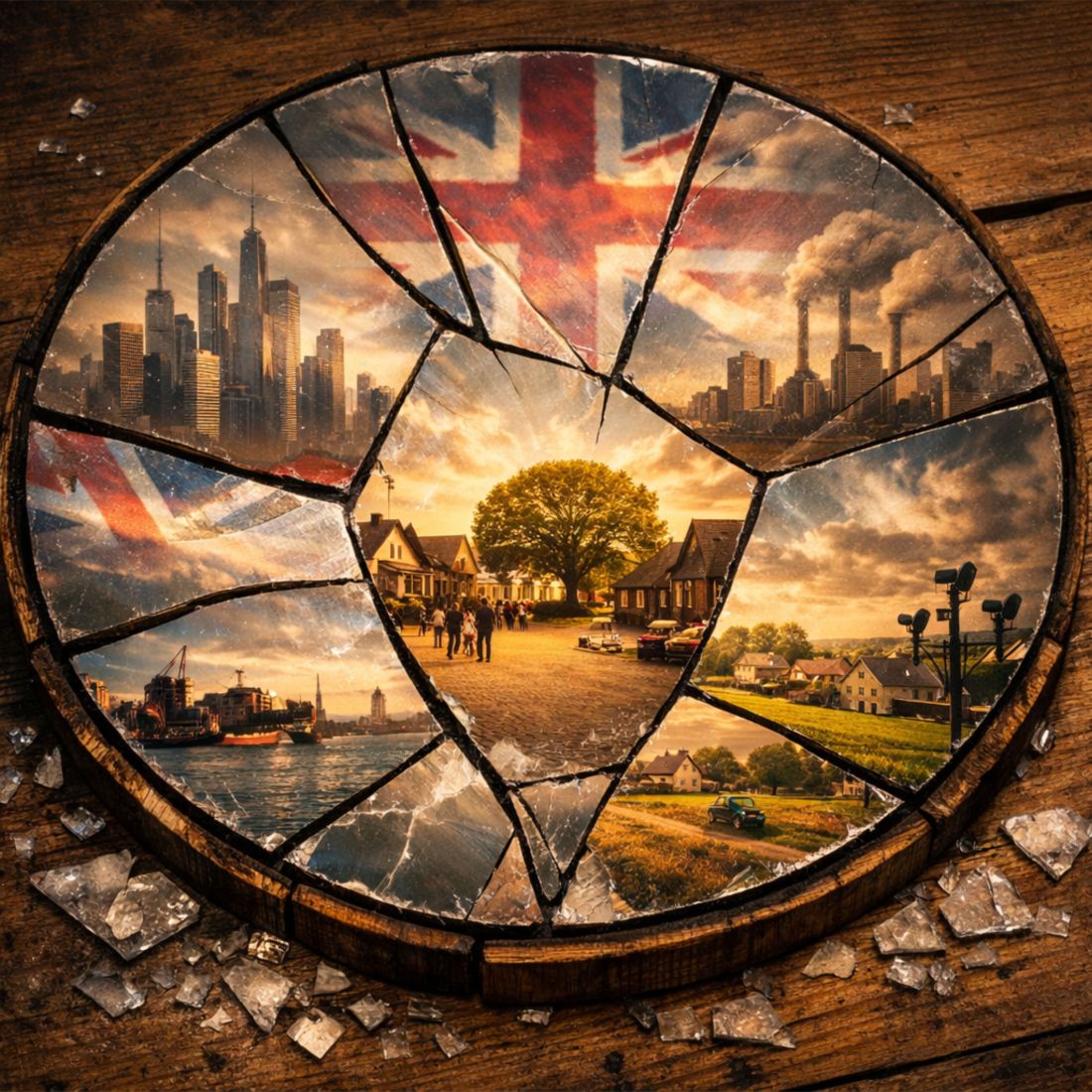
They are fragments of the same broken whole.

They are all trying to reclaim a conservatism that the modern political system has made effectively impossible to practise.

Until they recognise this, they will keep fighting each other and keep losing sight of the very thing they should exist to protect:

People.

Places.

Communities.

And the continuity that binds them together.

Until the right redefines its purpose for the system as it is, not the one it remembers, it will keep fighting itself instead of shaping the country.
Britain’s Hidden Problem | How a fragmented view of the economy became part of the crisis

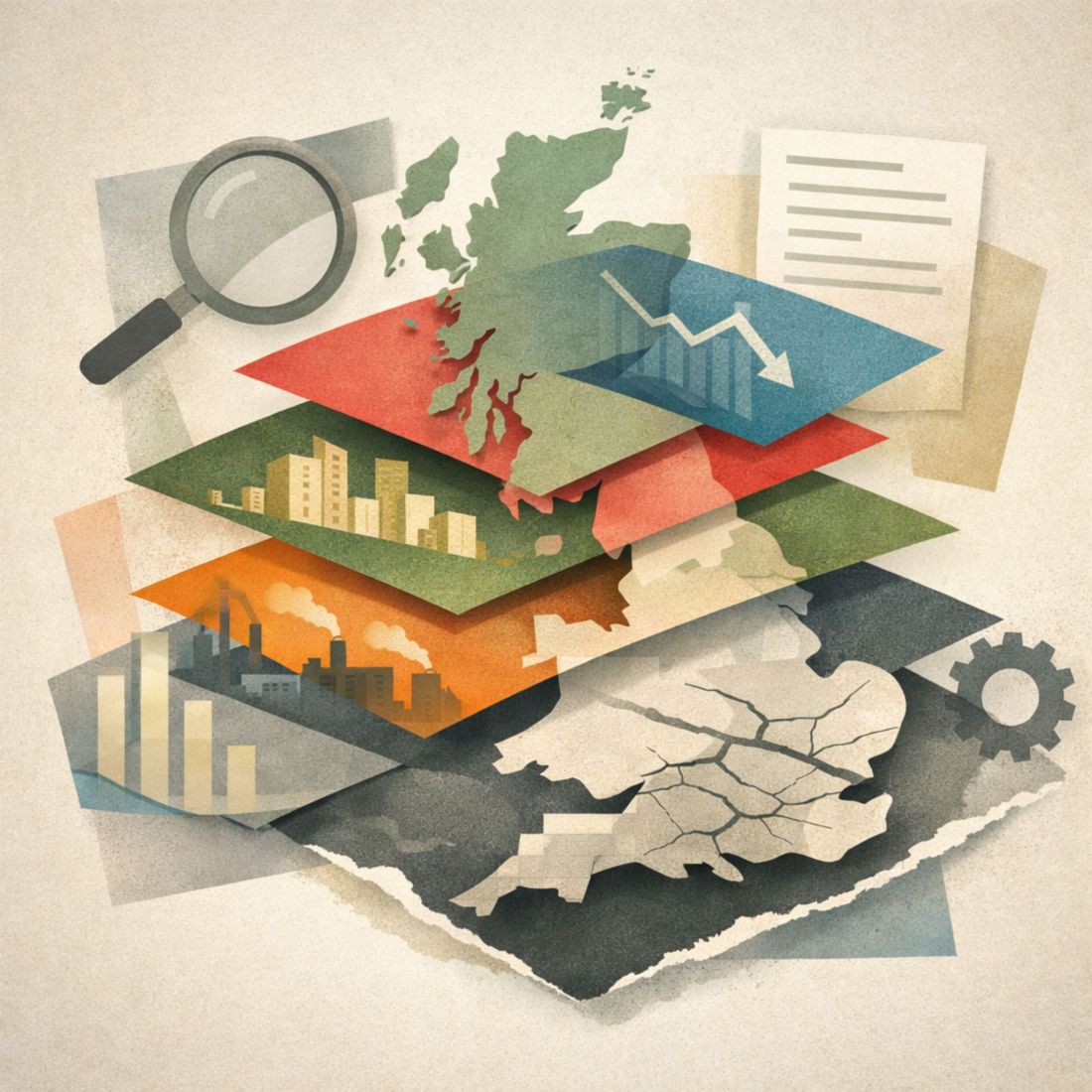
Britain is living through an economic crisis, but not one that can be captured by a single explanation. It is not simply a matter of weak growth, low productivity, strained public finances or sluggish investment. Nor is it just about regulation, state capacity or political leadership.

It is all of these at once – a dense web of pressures that interact and reinforce one another, making each problem harder to solve.

Yet the national conversation rarely reflects this. Instead, it breaks the crisis into fragments.

Each group sees the part that touches its world most directly and builds a story around it.

The stories differ not because people are careless, but because the system itself pushes everyone into narrow ways of seeing.

The result is a country trying to understand a complex, interconnected crisis through a series of partial truths.

A Country of Partial Truths

Listen to Britain talk about its economy and you hear a set of diagnoses that rarely meet. A macroeconomist describes a nation hemmed in by debt dynamics and the discipline of global markets. A business owner describes a country where it has become almost impossible to build, hire or expand. A civil servant describes institutions stretched to breaking point. A community worker describes the lived consequences of systems that no longer function.

Each perspective is grounded in something real.

None of them is sufficient on its own.

The British economy is not failing in one place. It is failing in many places at once, and the failures bleed into each other.

A weak state makes micro‑reforms harder. Failed micro‑reforms worsen macro pressures. Macro pressures shrink political space. Shrinking political space leads to short‑term decisions. Short‑term decisions weaken the state further.

The country keeps trying to fix one part of the machine without noticing that the rest of the machine is pulling in the opposite direction.

The Illusion of Separate Problems

One of the most persistent illusions in British politics is the idea that macro and micro are separate worlds. They are not. They are two expressions of the same underlying model – a model shaped by decades of financialisation, under‑investment and a political culture that rewards short‑term performance over long‑term resilience.

When the state cannot deliver, micro reforms fail.

When micro reforms fail, macro pressures grow.

When macro pressures grow, political space contracts.

When political space contracts, long‑term investment is postponed.

And when investment is postponed, the state becomes weaker still.

This is not a cycle that can be broken by focusing on one part of the system. It requires seeing the system as a whole – something Britain has become remarkably poor at doing.

A Political System Built for Narrow Vision

The fragmentation of understanding is not accidental. It is produced by the way Britain governs itself.

Government departments defend their turf.

Parties defend their narratives.

Experts defend their disciplines.

Media outlets defend their angles.

Communities defend their lived experience.

Everyone is rewarded for clarity within their own domain. Almost no one is rewarded for connecting the domains together.

The incentives of the system push people toward specialisation, not synthesis. Toward certainty, not curiosity. Toward defending a position, not understanding a problem.

The result is a political culture that keeps mistaking symptoms for causes, and causes for inevitabilities.

This is how a country walks into crises it does not understand – not because it lacks intelligence, but because it lacks integration.

The Cost of Not Seeing the Whole

When a country cannot see its problems whole, it cannot solve them.

Policies that look sensible in isolation collapse when they collide with realities elsewhere in the system. A housing plan fails because planning capacity was never considered. A labour policy fails because the structure of low‑wage business models was ignored. A fiscal plan fails because the state no longer has the capacity to deliver what is promised. A productivity strategy fails because it never reaches the people it is meant to help.

The country drifts not because it lacks ideas, but because it lacks coherence.

The First Step Is a Way of Seeing

Britain does not suffer from a shortage of proposals. It suffers from a shortage of synthesis.

The first step toward recovery is not a new policy. It is a new perspective – one that sees the system as it is, not as any one group prefers to imagine it. A perspective that can hold the macro and the micro together, the economic and the social, the national and the local, the structural and the lived.

This is not a small thing.

It is the rarest thing in public life.

Working Across Perspectives in a System That Depends on Narrowness

The British system is not built for people who see the whole. It is built for specialists, advocates and defenders of narrow domains.

Anyone who tries to work across perspectives quickly discovers how strong the gravitational pull of those domains can be. Professional identity tugs you back toward your own corner. Institutional incentives reward staying in your lane. Political pressures favour simplicity over accuracy. Even well‑intentioned colleagues can find it easier to treat complexity as a distraction rather than the substance of the problem.

To navigate this landscape, you need a kind of internal independence – the ability to recognise constraints without being defined by them, to understand incentives without being captured by them, and to keep hold of the wider picture even when the system around you is urging you to narrow it.

It is demanding work. It rarely comes with recognition. And it often requires standing in a place the system does not quite know how to value.

But without people who can do this, the country remains trapped in partial explanations and partial solutions.

Britain’s Path Out of Decline

The country cannot rebuild itself through single‑lens thinking. It needs people who can see the system whole – people who can work across perspectives without being captured by any of them, who can hold complexity without retreating into simplicity, who can operate inside constraints without being defined by them.

Until Britain develops this capacity, it will remain caught in a fragmented understanding of its own reality – and unable to chart a path out of decline.

Policy: The Missing Link in Britain’s Political Breakdown

For most of modern British politics, elections have offered a reassuring sense of choice. Parties compete, leaders rise and fall, and voters decide who should take the reins. It feels dynamic. It feels consequential. It feels as if the direction of the country hinges on who wins and who loses.

But beneath that familiar surface lies a more uncomfortable truth: the outcomes we live with are shaped far more by policy frameworks than by the personalities who temporarily occupy office. And because those frameworks barely change from one government to the next, the political choices we make often deliver results that look remarkably similar.

This is the part of politics we rarely talk about.

It is also the part that matters most.

Why Voters Don’t See the Real Problem

It’s not that voters are apathetic or foolish. It’s that the system is designed to make policy almost invisible.

  • Personalities dominate the media because they’re easier to package into stories.
  • Policy operates in slow motion, so cause and effect rarely line up neatly.
  • Institutions constrain governments, making radical shifts difficult even when promised.
  • Parties benefit from keeping policy obscure, because it shields them from accountability.

So voters naturally focus on what they can see: the people.

And they act on what feels intuitive: keeping certain politicians out, tactically voting, or chasing the next leader who “sounds different”.

But this instinct leads to a predictable trap.

The Misdiagnosis That Keeps the System Stuck

When voters believe the problem is who gets into power, they behave as if blocking one politician will automatically produce a better outcome. Yet because the underlying policy assumptions remain the same, the “law of unintended consequences” takes over:

  • A vote cast to stop one outcome simply empowers another version of the same system.
  • The new government inherits the same constraints and produces the same frustrations.
  • Voters feel betrayed, and the cycle repeats.

This is why British politics feels increasingly circular.

We keep changing the cast, but the script never changes.

Parties Respond With Presentation, Not Substance

The traditional parties understand this dynamic better than they admit.

Instead of rethinking policy, they compete on image.

This is why rising figures are often chosen for their communication skills rather than their policy depth. Kemi Badenoch’s apparently planned promotion of younger, social‑media‑savvy MPs like Katie Lam is a clear example: it signals renewal without requiring the party to confront the deeper question of whether its policy programme still fits the world it operates in.

Rebranding is easier than rebuilding.

But it doesn’t solve the problem.

Meanwhile, the World Has Moved On

The most destabilising force in British politics today isn’t ideology or partisanship. It’s the widening gap between:

  • a rapidly changing world, and
  • a policy framework built for a different era.

Energy markets are volatile.

Food supply chains are fragile.

Geopolitical tensions are rising.

Economic assumptions that held for decades no longer apply.

These pressures expose the limits of a system that has been patched, stretched, and repackaged – but not fundamentally updated. Even though real people are getting hurt.

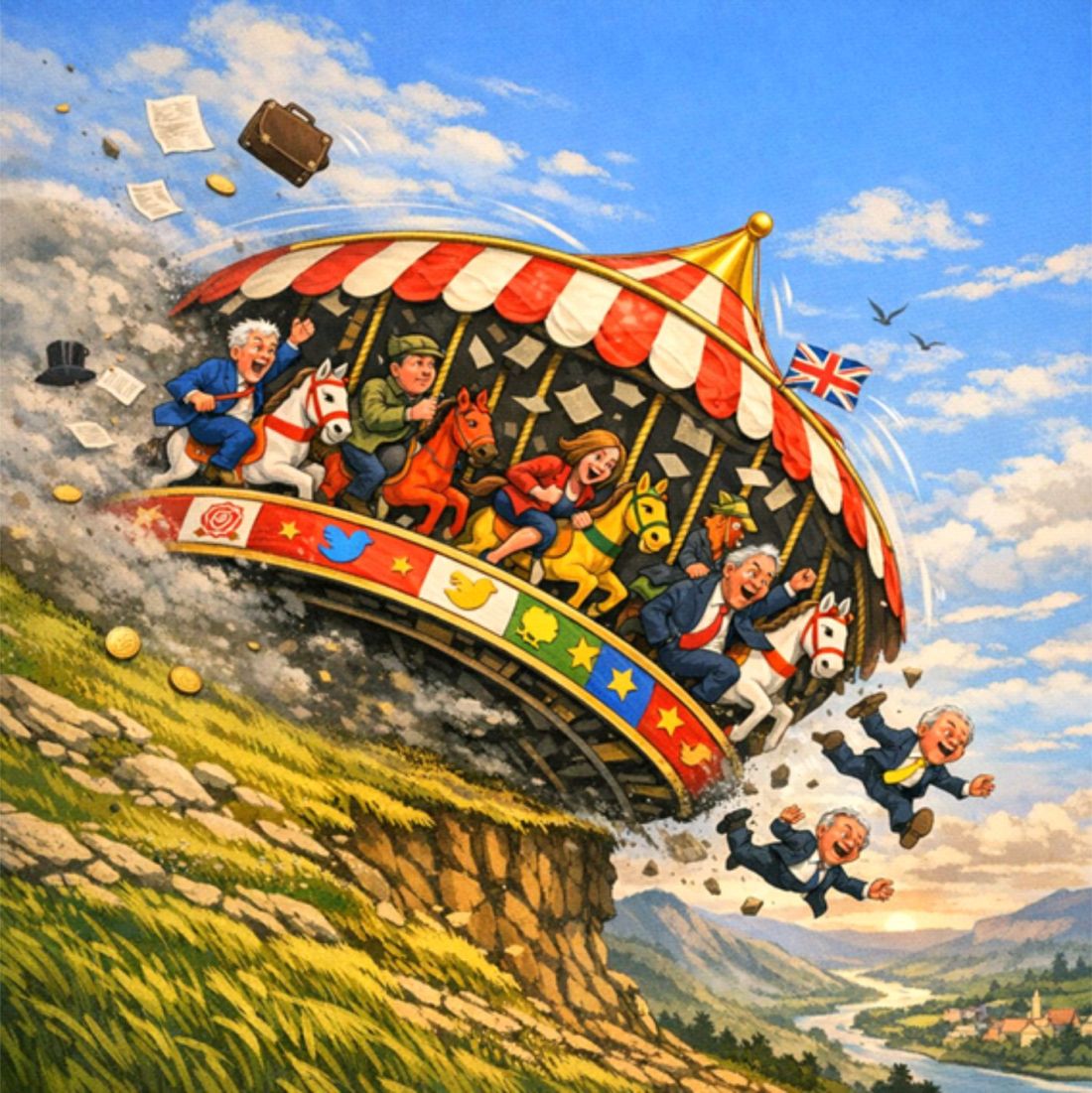
The Merry‑Go‑Round Has Already Broken Loose

For years, voters have treated elections like choosing a different horse on a familiar ride. The movement felt predictable, the risks manageable, the outcomes contained.

But the merry‑go‑round has already rusted off its hinge.

It is on its side, picking up speed, racing downhill.

And yet we continue to behave as if staying on the ride – or switching horses – will somehow change where it’s heading.

The danger is not that we choose the wrong rider.

The danger is that we fail to see the ride itself is no longer stable.

Why Newer Parties Are Rising

The Greens and Reform are gaining ground not because they have more charismatic personalities, but because they offer something the traditional parties have avoided: policy divergence.

They challenge the shared assumptions that have defined British politics for decades.

Whether voters agree with them or not, they represent a break from the consensus that has kept outcomes so uniform.

This is why the traditional three parties are in turmoil.

They are fighting a communications war in a world that now demands a policy rethink.

The Only Way to Change Course

Real change will not come from:

  • blocking certain politicians
  • swapping leaders
  • or chasing the next “fresh face”

It will come from recognising that the foundations of the system – the policy frameworks that shape every decision – need to be rebuilt.

The most radical act a voter can take today is not to switch parties, but to question the assumptions all parties share.

Because until those assumptions change, the outcomes won’t.

And the merry‑go‑round will keep accelerating toward the edge.

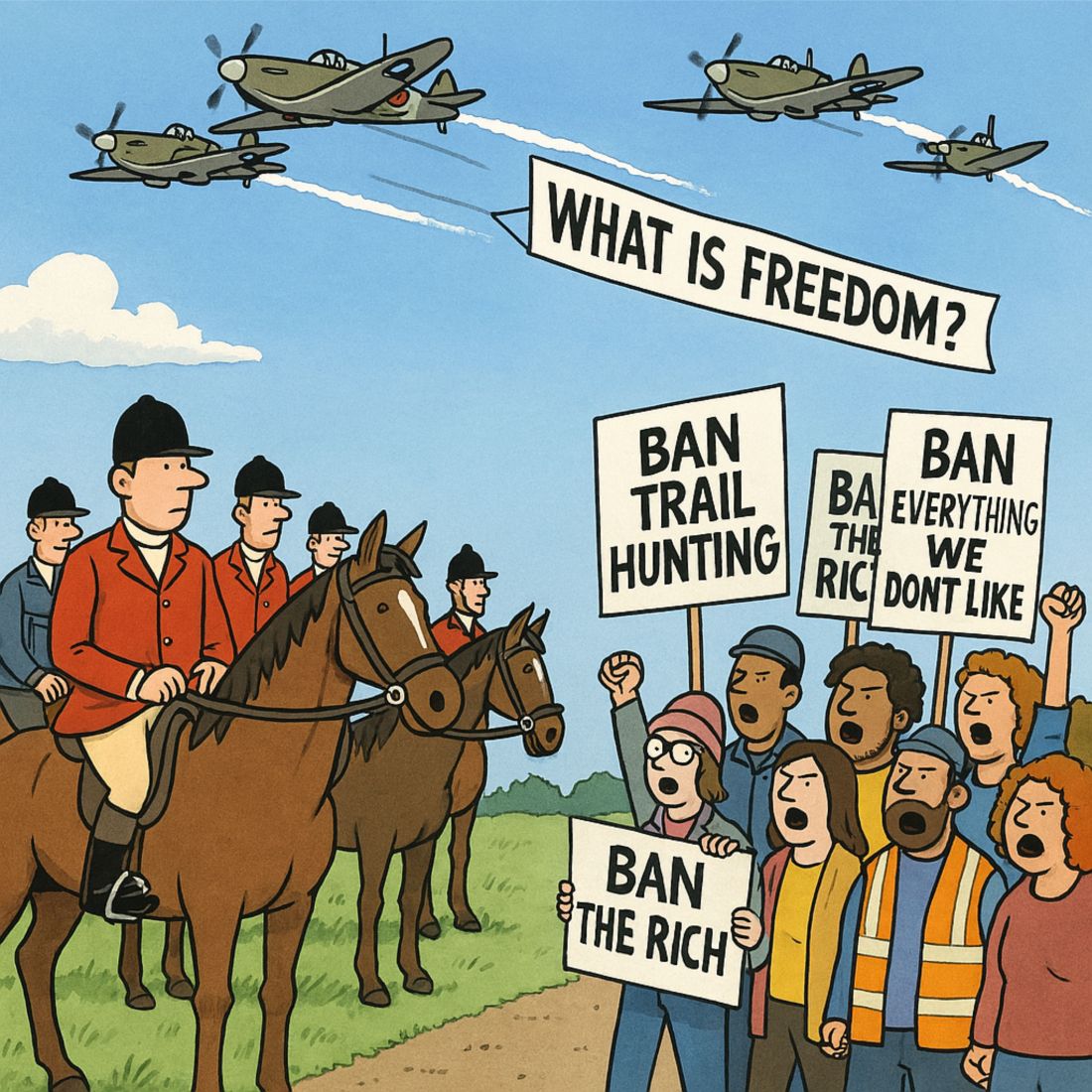
How the Trail Hunting Ban Exposes a Bigger Battle for Britain

Trying to unpick what looks like the sudden announcement that the government intends to ban trail hunting in the upcoming animal welfare strategy is far more complicated than it first appears.

The easy explanation is to fall back on the familiar left‑vs‑right framing – the tired them‑vs‑us narrative that has shaped the hunting debate for decades. But that framing has always obscured more than it has revealed.

Across the UK today, some will feel they have won and others will feel they have lost. Yet this moment isn’t new, nor is the opportunity to take a different path.

As I argued in my blog published on Christmas Day in 2017, the solutions that could have kept young people, rural voters, and the wider public onside have been hiding in plain sight for years.

Knowing people who hunt and people who don’t – and many who sit somewhere in between – I feel exactly as I did when I wrote that piece.

There was always a workable middle ground. The model we have today could have functioned well and kept most people broadly content, if only all sides had been willing to look beyond their own entrenched positions.

Instead of trying to rewrite the rules of the game or cling to the past as if personal belief were a universal right to impose on others, they could have chosen a bigger‑picture approach that protected both rural culture and public confidence.

But we live in a time when being “right” has become more important than being effective.

That mindset pushes people into emotional trenches, where the goal becomes defeating the other side rather than understanding what winning actually looks like in a changing world.

As the years have passed, since the ‘Hunting Ban’ came into force, the battle lines have hardened. Few have stopped to consider how easily self‑made traps can spring shut. And the hunting community, through its own shortcuts, diversions, and refusal to adapt, has handed the government the perfect excuse to act.

This is the same government that has already shown its willingness to undermine British rural life – the illogical Farm IHT rule being a prime example. Now, with trail hunting, they have been gifted a justification that many outside the community will accept without hesitation.

Many will still refuse to see what is happening. But when a government is openly delaying local elections, it is not unreasonable to expect they may attempt the same with the next general election if they can cling to power until 2029.

At the heart of this is a belief that everyone else is wrong and they alone are right.

If they succeed in pushing this change through before they lose power – assuming they haven’t already managed to entrench themselves further – the concern is that this will mark the true end of hunting as a living part of our culture and heritage.

Once an outright ban, or anything that functions as one, is in place, reversing it will be nowhere near the top of anyone’s agenda. Not with the scale of the political, economic, and social mess we have building up ahead.

Further Reading: