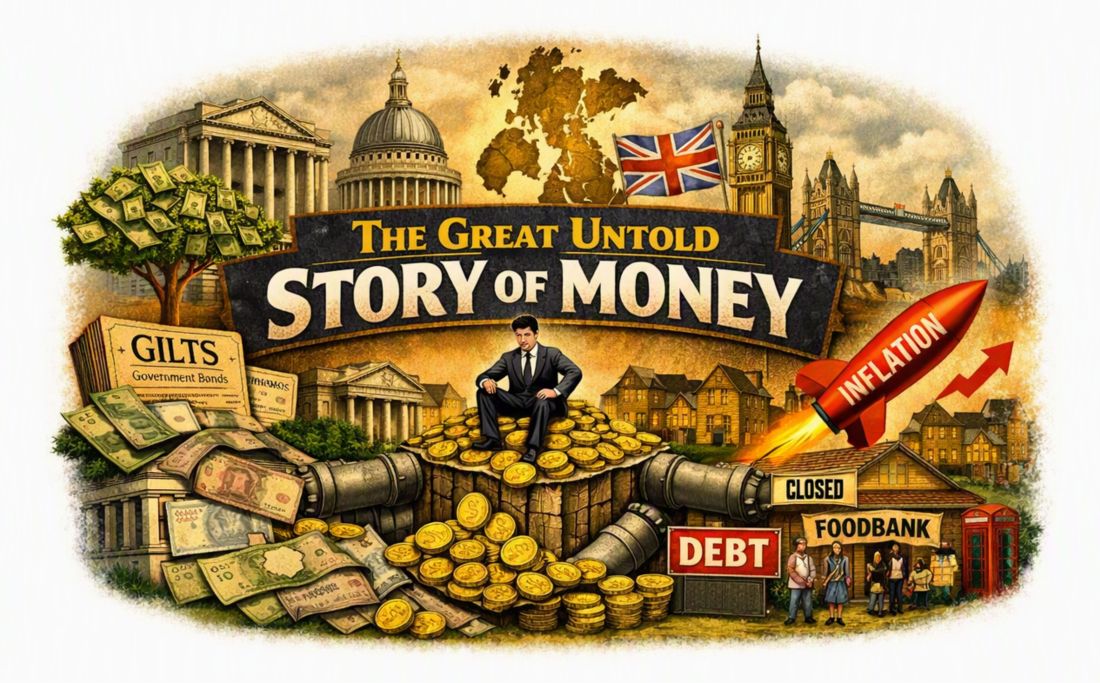
If You Feel Like You’re Working Harder Than Ever and Still Falling Behind, It’s Not You – It’s the System

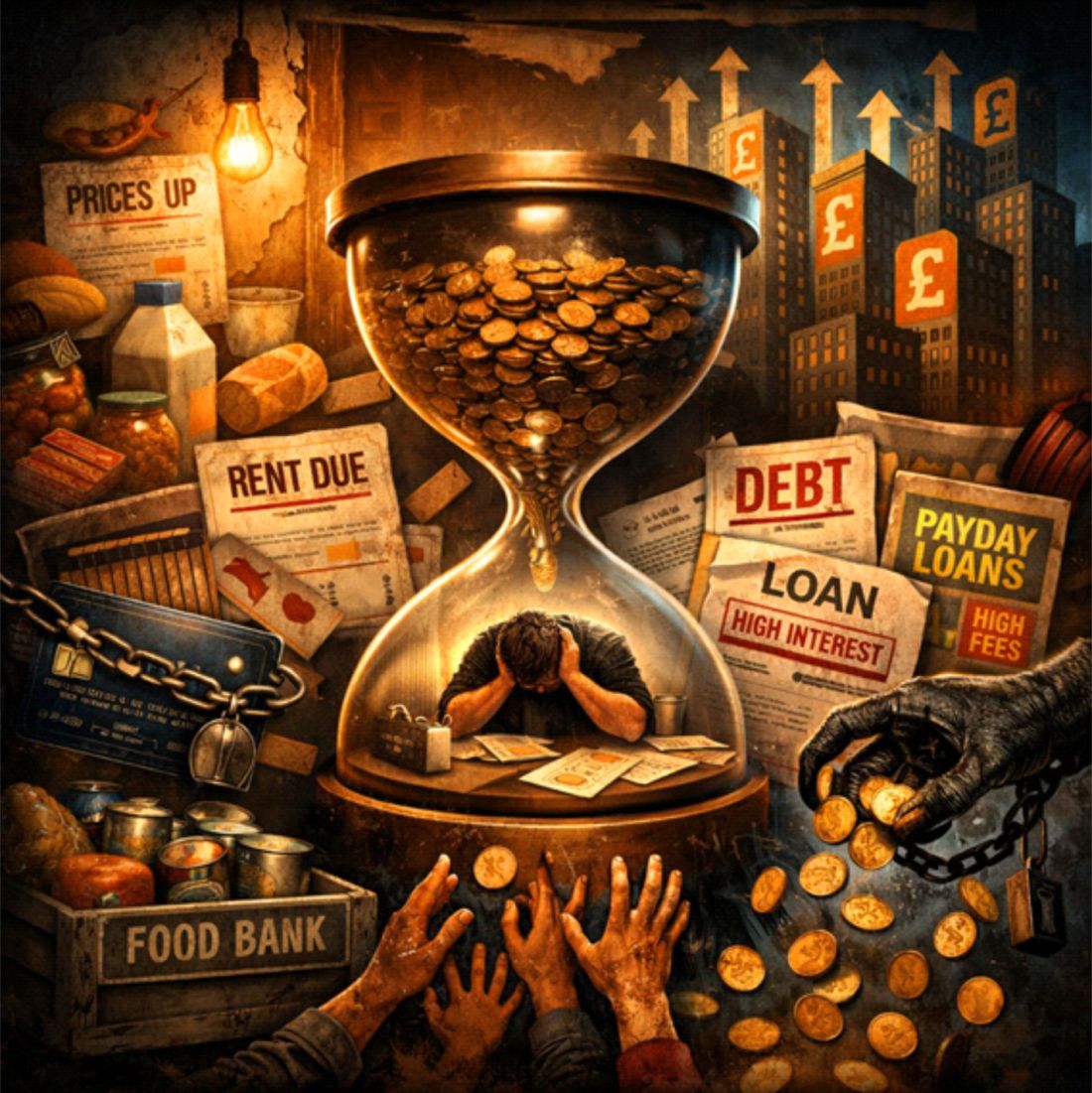
A lot of people quietly believe they’re failing. They think they’re bad with money, or not working hard enough, or somehow falling behind while everyone else is coping. But the truth is far simpler and far less personal: the system has changed around them, and it’s changed in ways that make it harder to stay afloat no matter how responsible or determined they are.

One fact makes this impossible to ignore:

A full‑time job on the national minimum wage no longer covers the basic cost of living for a single adult in the UK.

Not with careful budgeting.

Not with sacrifice.

Not with “smart choices”.

Without benefits, charity, debt, or going without essentials, it simply isn’t enough.

And when full‑time work no longer guarantees survival, something fundamental has broken.

The Minimum Wage That No Longer Meets the Minimum

The minimum wage was meant to ensure that anyone who worked full‑time could afford the basics. That promise has quietly collapsed. Rent, food, energy, transport, council tax – the essentials of life – have risen far faster than wages for years.

Even when inflation slows, prices don’t fall back. They stay where they landed.

People aren’t struggling because they’re irresponsible.

They’re struggling because the numbers no longer add up.

When the minimum wage doesn’t meet the minimum cost of survival, the economy is no longer functioning in a way that supports the people it relies on.

The Essentials That Keep Moving Out of Reach

Inflation as a statistic is one thing. Inflation as a lived experience is another. The weekly shop costs more than it did last year, and the year before that. The rent is higher. The energy bill is higher. The bus fare is higher.

People are being asked to absorb increases that compound year after year while their wages barely move. This isn’t a temporary squeeze. It’s a long‑term erosion of living standards that no amount of budgeting advice can fix.

And yet many people assume the problem is them. They think they’re falling behind.

They’re not. They’re living in a system that has quietly shifted the goalposts.

The Safety Net That No Longer Catches People

For decades, the state softened the blow. When wages lagged behind, support systems helped bridge the gap. But those systems have been worn down. Councils are going bankrupt. Services are stretched thin. Welfare support is harder to access and often too small to make a meaningful difference.

Into that space have stepped food banks, community groups, and personal debt – not as emergency measures, but as permanent parts of how people survive.

A society shouldn’t depend on charity to meet basic needs.

Yet here we are.

The Financial System That Profits From Struggle

There’s another layer to this that’s easy to miss because it has become so normal.

As people run out of money, the financial system doesn’t retreat. It adapts. It finds ways to monetise the gap between what people earn and what life costs.

Credit cards become a way to cover rent shortfalls.

Buy Now Pay Later becomes a way to buy groceries.

Overdraft fees become a regular expense.

Loans marketed as “flexible solutions” become a lifeline that comes with a cost.

None of this is accidental. It’s the logical outcome of a system that treats financial products as the answer to every shortfall.

Poverty becomes a market. Hardship becomes a revenue stream.

And the poorer people get, the more the system finds ways to extract from them – until they can’t participate at all.

How Everything Became Monetised – And Why People Think It’s Their Fault

This is where three forces come together: financialisation, monetisation, and enshittification.

Financialisation is the process of turning more and more of life into something that can be charged for.

Monetisation is the shift from paying once to paying constantly.

Enshittification is what happens when services get worse because they’re redesigned to extract more value from users.

You can see it everywhere.

Things that used to be owned are now rented or subscribed to.

Things that used to be simple now come with fees, penalties, and “options”.

Things that used to work well now work just well enough to keep people paying.

Energy companies bury people in penalties.

Supermarkets shrink products while raising prices.

Digital services start free, then add ads, then add subscriptions, then add penalties for not subscribing.

Renting used to be a stepping stone; now it’s a lifelong drain.

People feel this decline every day, but they rarely see it as something being done to them. They experience it as a personal failure. They think they’re bad with money. They think they’re not working hard enough. They think they’re falling behind.

But they’re not falling behind.

The system is accelerating away from them.

People are not doing anything wrong.

They are not failing.

They are not mismanaging their lives.

They are living inside systems that have been quietly re‑engineered to extract more while giving less – and then encouraged to blame themselves for the consequences.

The Slow Collapse Already in Motion

When you put all of this together – wages that don’t cover the basics, essentials that rise faster than incomes, a safety net that no longer catches people, and a financial system that profits from struggle – it becomes difficult to argue that we’re simply going through a rough patch.

What we’re seeing looks more like a slow, uneven collapse.

Not the dramatic kind that arrives with headlines and market crashes, but the kind that starts with the people who have the least buffer and works its way upward.

A society doesn’t fall apart when the stock market dips.

It falls apart when large numbers of people can no longer meet their basic needs and the systems around them treat that as normal.

We are closer to that point than most official narratives are willing to admit.

The Point Where Extraction Meets Exhaustion

Every economic model has a limit. There comes a moment when too many people fall out of the monetised economy for the system to function.

We are moving toward that moment – not because of ideology, but because of arithmetic.

You cannot keep extracting money from people who no longer have any.

The system is feeding on its own foundations.

And those foundations are wearing thin.

The Question We Can’t Avoid

If full‑time work can’t sustain a single life, how long can the system built on that work sustain itself?

That’s not a dramatic question. It’s a practical one. And answering it honestly means acknowledging that the collapse we worry about in the future may already be happening in the present – quietly, steadily, and in ways we’ve been encouraged to treat as normal.

People aren’t failing.

The system is failing them.

And the sooner we recognise that, the sooner we can start talking about what comes next.

Dynamic Food Pricing in a Time of Looming Shortages: Why the UK Must Pay Attention Now

There’s a shift taking place in the way food pricing is being discussed in the UK, and it’s happening at a moment when people are already under pressure.

Supplies are tightening, costs are rising, and households are having to make decisions they shouldn’t have to make about the basics.

Against that backdrop, the idea of dynamic food pricing has begun to surface – not as a distant concept, but as something the system is quietly preparing for.

Supermarkets are not using dynamic pricing yet. That matters.

But the steps being taken now – by both retailers and institutions – show a direction of travel that deserves attention.

Because when food becomes scarce, pricing becomes a mechanism of control.

And when pricing becomes dynamic, access becomes selective.

The Bank of England Has Already Opened the Door

The clearest sign that this isn’t just a technical upgrade came from the Bank of England.

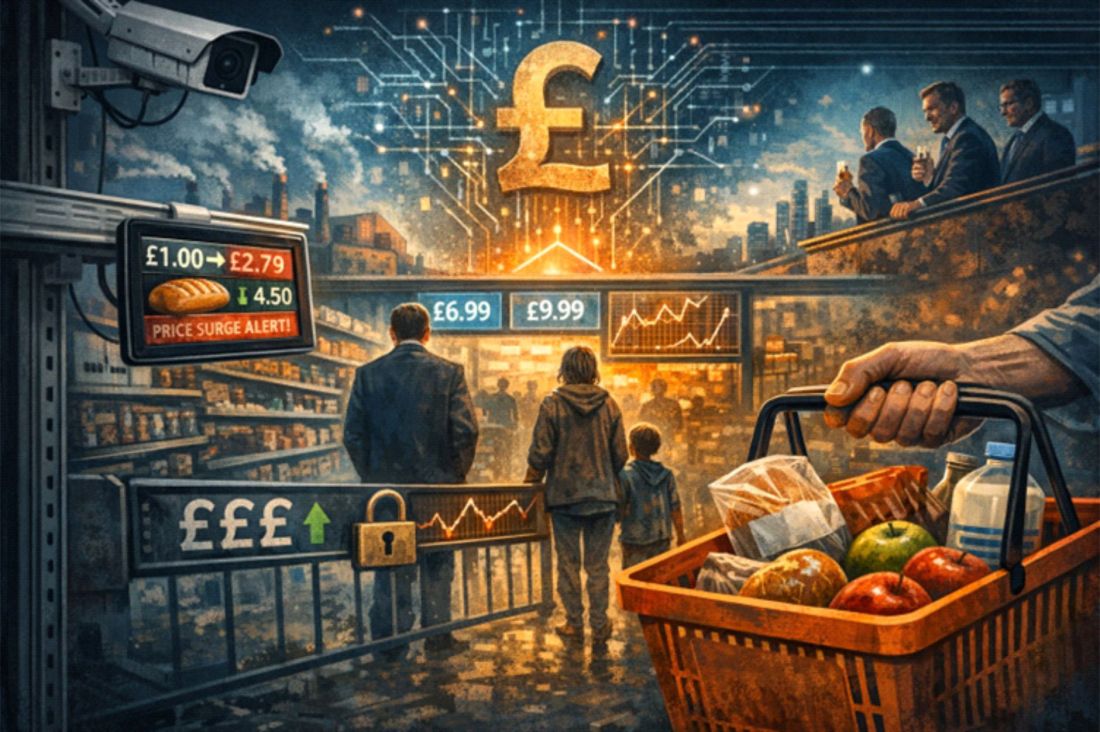
In recent comments, the Bank’s deputy governor explained that digitalisation has “radically reduced” the cost of changing prices, making rapid, algorithm‑driven pricing far more viable. The Bank also expects a significant share of UK businesses to adopt algorithmic pricing tools over the next few years.

This isn’t a supermarket experiment.

It’s being framed as the natural evolution of retail by the institution responsible for overseeing the economy.

When the central bank normalises a practice, it sets the tone for the entire system.

It tells businesses: this is acceptable.

It tells regulators: this is expected.

And it quietly signals to the public that the rules are changing.

Supermarkets Are Installing the Infrastructure

While supermarkets insist they are not using dynamic pricing, they are installing the technology that would make it possible.

Digital shelf labels – the small electronic screens replacing paper price tags – are being rolled out across the major chains. Morrisons is fitting them in every store. ASDA has installed them in hundreds of Express branches. Co‑op has already fitted more than 700 stores and plans to expand to over 2,300. Tesco, Sainsbury’s and Lidl are all trialling or testing the same systems.

Digital labels are not dynamic pricing. But they are the mechanism through which dynamic pricing can be implemented instantly, centrally, and without fanfare.

When asked directly whether they intend to use dynamic pricing in future, most supermarkets simply refuse to answer.

That silence is more revealing than any denial.

The Petrol‑Price Pattern: A Real‑World Example of What Dynamic Pricing Looks Like

If you want to understand how dynamic pricing behaves in practice, you don’t need to imagine futuristic scenarios. You only need to look at petrol.

When the price of crude oil rises, petrol prices at the pump rise almost immediately.

When crude oil falls, the price at the pump drops slowly – sometimes painfully slowly.

That difference between how fast prices rise and how slowly they fall is profit. And it’s a perfect example of how dynamic pricing works in the real world.

It responds instantly when it benefits the retailer.

It responds slowly when it doesn’t.

Now apply that logic to food – not in the extreme sense of prices changing while something is in your trolley, but in the far more realistic sense of prices changing at different times of the day, or rising during peak demand, or increasing when shortages make certain items more sought‑after.

This is the real concern.

Not science‑fiction scenarios, but the everyday reality of prices shifting in ways that quietly push the most vulnerable out of affordability.

Shortages Change the Meaning of Dynamic Pricing

Dynamic pricing during abundance is one thing.

Dynamic pricing during scarcity is something else entirely.

When food is limited, prices that move with demand don’t protect people – they prioritise those who can afford to absorb the rises.

The people who need the basics the most are the ones most likely to be priced out, not because there isn’t enough food to meet need, but because meeting the wants of those who can pay more is more profitable.

This is the heart of the issue.

Dynamic pricing doesn’t ration food.

It rations access.

And it does so based on wealth, not need.

The Context: How We Reached This Point

Dynamic pricing isn’t appearing in a vacuum. It’s emerging after years of subtle shifts in how food is priced and presented – shifts that have already eroded trust and stability.

Shrinkflation has quietly reduced the size of products while prices stay the same or rise. A 250g block of butter becomes 200g, and the packaging barely changes. People notice, but the explanation is always the same: inflation, supply chains, global events.

Loyalty‑card‑only pricing has created a two‑tier system where the “real” price is only available if you hand over your data. If a supermarket can afford to sell something at the loyalty price, that’s the price – with their profit margin. The higher price is simply a penalty for not participating in the data‑collection model – a form of everyday surveillance capitalism.

And then there are the offers that aren’t really offers, the discounts that only apply to certain sizes, the prices that seem to shift more often than they used to. All of this creates a sense of instability that people feel long before they can articulate it.

Recognising all of this isn’t about treating people like they can’t or don’t understand what’s happening.

It’s about acknowledging that they’ve been living through these changes for years – often without anyone naming them plainly.

Where Things Actually Stand

Regrettably, it would be easy to jump to many conclusions with the evidence that is already unfolding in plain sight. However, the picture to day is as follows:

  • Dynamic pricing is not currently being used on food in UK supermarkets.
  • The technology that would allow it is being rolled out.
  • The Bank of England has framed algorithmic pricing as part of the future.
  • Supermarkets have not ruled out using it.
  • Oversight and regulation are unclear.

And all of this is happening as we head into what is likely to become a period of shortages too.

This isn’t speculation.

It’s the landscape.

This Is About Awareness, Not Alarm

People don’t need to be told how to think about this.

They simply deserve to know what’s happening – and what could happen next.

Dynamic pricing isn’t here yet.

But the system is being shaped around it.

And in a time of shortages, that shift has consequences that go far beyond technology.

It affects access, fairness, and the basic principle that essential goods should not become a bidding war.

Further Reading:

The themes explored in this article – food access, control, systemic fragility, and community resilience – sit within a wider body of work examining how power, scarcity, and stability are managed during periods of transition.

The pieces below are ordered to take the reader from structural analysis, through systemic alternatives, to practical personal and community responses. Together, they provide political, philosophical, and lived‑reality context for why dynamic food pricing matters – and what can be done instead.

1. Who Controls Our Food Controls Our Future

Link: https://adamtugwell.blog/2024/11/14/who-controls-our-food-controls-our-future-full-text/

What it is:
A foundational essay examining food as a lever of social and political power rather than a neutral commodity.

What it covers:
This piece explores how control over food systems – production, distribution, pricing, and access – has historically been used to shape populations, enforce compliance, and concentrate power. It looks at corporate consolidation, supply‑chain fragility, and the quiet erosion of food sovereignty, framing food control as a central pillar of modern governance and social stability.

Why read it first:
It establishes the core argument that underpins concerns about dynamic pricing: that access to food is never just economic – it is fundamentally political.

2. Foods We Can Trust: A Blueprint for Food Security and Community Resilience in the UK

Link: https://adamtugwell.blog/2025/12/15/foods-we-can-trust-a-blueprint-for-food-security-and-community-resilience-in-the-uk-online-text/

What it is:
A systems‑level proposal for rebuilding food security outside fragile, opaque, and extractive corporate models.

What it covers:
This work outlines how trust has been eroded within the UK food system through long supply chains, farmer pressure, profit‑driven practices, and lack of transparency. It then sets out principles for a more resilient alternative – rooted in local production, shorter supply chains, fairness, and community participation.

Why it follows:
After identifying the problem of control, this piece begins to articulate what a healthier food system could look like.

3. A Future of Communities: Building the New World Without Oil, Manipulated Money, and Centralised Control

Link: https://adamtugwell.blog/2026/03/27/a-future-of-communities-building-the-new-world-without-oil-manipulated-money-and-centralised-control-full-text/

What it is:
A broader societal vision that situates food systems within energy, finance, governance, and community resilience.

What it covers:
This article examines how over‑centralisation, financial abstraction, and energy dependency create systemic fragility – and argues for decentralised, human‑scale alternatives. Food, alongside energy and local production, is treated as a cornerstone of resilient communities rather than a profit‑optimised commodity.

Why it matters here:
It places the issue of dynamic pricing within a much wider pattern of centralised control and automation, showing that food pricing is one symptom of a larger structural trajectory.

4. A Practical Guide to Surviving and Thriving Through Uncertain Times: Staying Calm, Prepared, and Connected

Link: https://adamtugwell.blog/2026/03/28/a-practical-guide-to-surviving-and-thriving-through-uncertain-times-staying-calm-prepared-and-connected/

What it is:
A grounded, accessible guide focused on personal and community resilience during periods of instability.

What it covers:
Rather than analysing systems, this piece addresses how individuals and communities can respond emotionally, socially, and practically to volatility. It explores preparedness without panic, the importance of social connection, and how to maintain agency when external systems become unpredictable.

Why it comes last:
After understanding the systems and the alternatives, this piece brings the discussion back to lived reality – what people can do now to remain stable, connected, and resilient.

Hidden Tents, Visible Flames: Cheltenham’s Quiet Crisis | What a burning tent in a Regency square tells us about Britain’s wider homelessness crisis

Featured

Cheltenham is a town that prides itself on beauty, culture, and a strong sense of civic identity. But over recent months, a series of quiet, unsettling events has revealed something deeper about the way we respond to vulnerability – and about the system that shapes those responses.

Tents outside Cavendish House were removed in the days before the Races. The building wasn’t shuttered at the time, but the doorways where people had been sheltering were boarded up almost immediately afterwards.

Then, an encampment in St Mary’s churchyard was moved on.

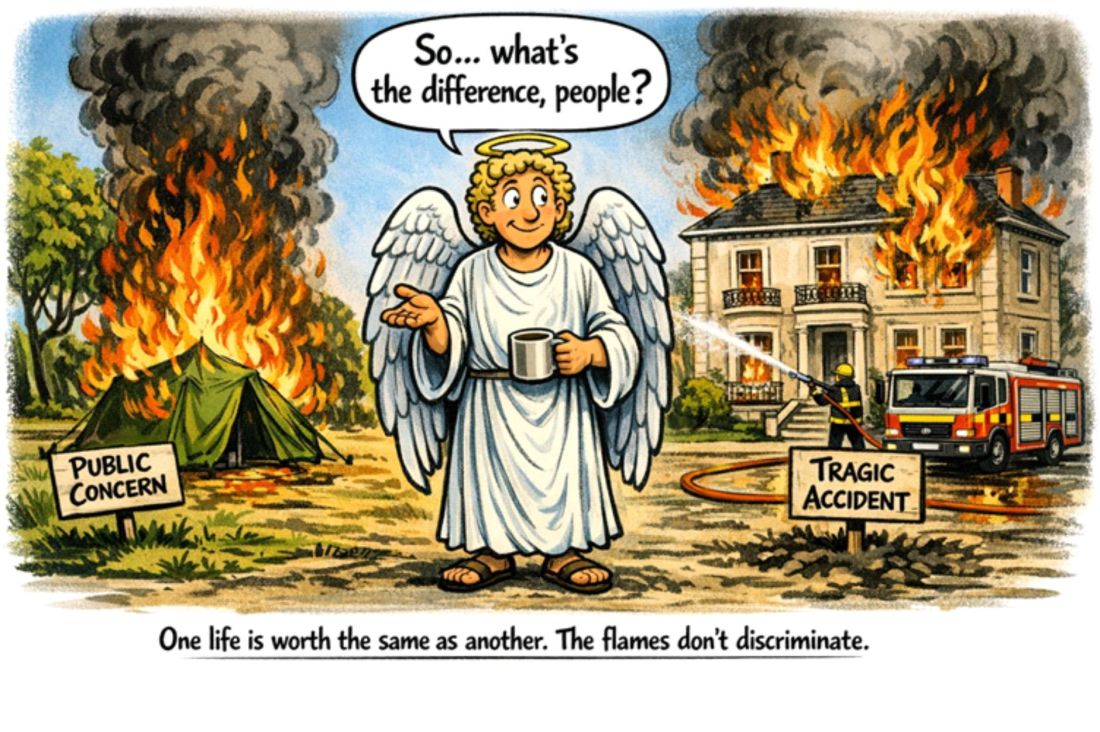
Now, this week, a tent in Clarence Square went up in flames – a fire now thought to have been started deliberately.

Different locations.

Different people.

Same outcome.

And behind each incident sits the same familiar line: support was offered.

But what does that really mean in practice?

A Walk Through Clarence Square

A few days before the fire, I walked past the Clarence Square encampment with my dogs. What I saw wasn’t disorder or disruption – it was quiet, deliberate survival. A couple of tents had been tucked carefully under the bushes and trees, almost hidden from view. The people staying there were clearly trying to minimise their presence – to avoid causing alarm, to keep things tidy, to exist quietly in a space that was never meant to be a home.

It challenged the assumptions many people hold about rough sleepers. Even in the most difficult circumstances, people try to maintain dignity, privacy, and respect for the space around them.

At the same time, it is entirely understandable that any resident would feel concerned or unsettled by a pop‑up encampment in a public square. These are shared spaces – places where children play, where people walk their dogs, where neighbours meet. When something unexpected appears, especially something associated with vulnerability or crisis, it can trigger worry or discomfort.

But the first step toward responding constructively is remembering that behind what may look like an “antisocial” situation is always a human story – a life shaped by circumstances that most of us have never had to face. And recognising that truth is how we give our own humanity another try.

Why People Become Homeless – And Why It’s Not Always What We Assume

Homelessness is often imagined as a single event – a bad decision, a sudden crisis, a moment of collapse. In reality, it is usually a long chain of pressures: rising rents, insecure work, mental health struggles, family breakdown, trauma, or simply not having anyone to fall back on. By the time someone is in a tent, they’ve already run out of options that most of us take for granted.

But there is another reality we rarely talk about, because it sits in a difficult, uncomfortable space.

Some people experience homelessness because they cannot mentally or emotionally conform to the rigid structures that society imposes. The expectations that most people navigate without thinking – appointments, assessments, paperwork, rules, deadlines, forms, compliance – are not just challenging for them. They are overwhelming.

For these individuals, the pressure to fit into systems that feel rigid, impersonal, or punitive becomes too much. And when every avenue of “acceptable” living feels impossible, stepping outside those structures can feel like the only way to breathe.

These are not people who want to harm themselves.

They are people who want to escape.

Escape pressure.

Escape judgement.

Escape systems and expectations they cannot meet.

Most of us don’t see this because cultural conditioning teaches us that the way society works is neutral – that it’s simply “how things are.” But for some, the very fabric of modern life is a constant source of stress, confusion, or fear. And when the system cannot bend to meet them, they fall through it.

Recognising this doesn’t excuse antisocial behaviour, and it doesn’t mean public spaces shouldn’t be safe. But it does mean we need to understand that not all homelessness is the result of poor choices or sudden crises. Sometimes it is the result of a lifetime of being unable to fit into a world that never made space for difference.

Cheltenham’s Services Are Doing What They Can – Within Their Limits

Cheltenham Borough Council, CCP, and other local organisations are not failing through lack of effort or compassion. They are staffed by people who care deeply and who work hard.

They are also operating within strict boundaries:

• funding that dictates what can be offered

• policies that define who qualifies

• safeguarding responsibilities that limit flexibility

• national frameworks that shape local decisions

• the duty of care they owe to staff as well as service users

Gloucestershire Live often reports the official responses:

support offered, referrals made, StreetLink notified, accommodation available if criteria are met.

All of that can be true.

And yet it is also true that the support available is not designed for the people most likely to need it.

This is not a Cheltenham problem.

It is a structural one.

I’ve Seen These Limits First‑Hand

When I ran and developed a Wheels to Work project across the County for our local Rural Community Council, helping people in rural areas access jobs and training, the same pattern appeared again and again:

• We could only do what funders would pay for

• We could only consider what policy allowed

• We could only help people who fit the criteria

• We could only support those who could navigate the system

And the people who needed the most help were often the ones who didn’t fit neatly into any of the boxes that we and many other organisations working with disadvantage had to consider.

That hasn’t changed.

If anything, the gaps have widened.

The System Is the Problem – Not the People Working Within It

Everyone involved – the council, CCP, outreach workers, volunteers – are doing what they can. The issue is that they are all operating inside a system that is fundamentally money‑centric rather than people‑centric.

A system that:

• measures success in budgets and outputs, not lives

• prioritises compliance over compassion

• treats housing as a commodity

• expects people in crisis to behave like people who are stable

• offers help that is conditional, time‑limited, or inaccessible

This isn’t about blaming organisations.

It’s about recognising that they are working within a structure that was never designed to meet the needs of people who fall outside the margins.

A Society That Needs to Re‑Centre People

The presence of tents in a public square is not a sign of individual failure.

It is a sign of systemic strain.

We have built a society that values:

• material wealth over human wellbeing

• external validation over internal resilience

• appearances over understanding

• order over empathy

And the people who fall through the cracks are treated as if they are the cause of the cracks.

But the truth is simpler and more uncomfortable:

Every human being is more important than any bottom line.

Until we build systems that reflect that truth, we will continue to see people pushed to the edges – not because they failed, but because the system did.

This is Not the End of the Story

The cost‑of‑living crisis, global instability, and shrinking public services are pushing more people to the edge. The individuals sleeping in tents today are simply the first to fall.

The line between “us” and “them” is thinner than most residents realise.

One job loss.

One rent increase.

One illness.

One relationship breakdown.

That’s all it takes.

What Cheltenham Needs Now

Not blame.

Not displacement.

Not another round of “support was offered” – followed by silence.

What we need is a shift in mindset:

• from money‑centric to people‑centric

• from managing homelessness to preventing it

• from conditional support to unconditional dignity

• from short‑term fixes to long‑term solutions

• from moving people on to moving people forward

Cheltenham has the resources, the intelligence, and the compassion to lead the way – but only if we stop treating homelessness as an inconvenience and start recognising it as a mirror.

A Final Thought

The people we are moving on are not the problem.

They are the signal.

And the first step toward change is simply remembering that behind every tent, every encampment, every uncomfortable moment in a public space, there is a human story – and a system that needs to be rewritten so that none of us ever has to live it.

If You Need Support – Or Want to Help

If you are experiencing homelessness, supporting someone who is, or want to help in practical ways, the organisations below can offer support, advice, or routes into action.

Cheltenham has several organisations working tirelessly to support people experiencing homelessness or crisis. These include:

• CCP (Caring for Communities and People) – providing supported accommodation, outreach, and practical help.

Tel: 03003658999

Website: Home › CCP

• Cheltenham Borough Council’s Housing & Homelessness Team – offering assessments, prevention support, and referrals.

Tel: 01242 387615

Website: Housing options and homelessness | Cheltenham Borough Council

Email: housing.options@cheltenham.gov.uk

• P3 Charity – supporting people with complex needs across Gloucestershire.

Tel: 01158 508190

Website: Homepage | P3 Charity

Email: info@p3charity.org

• Emmaus Gloucestershire – offering community‑based support and meaningful work opportunities.

Tel: 01452 413095

Website: Emmaus Gloucestershire – Homelessness Charity

• National homelessness charities such as Crisis, Shelter, and St Mungo’s, which offer advice, advocacy, and emergency support.

Life for the Many, or Money for the Few?

A common reaction to this question is, “how about more money for everyone?”

And that response alone should already be telling us something important about what we all need to recognise.

A Grim Outlook as 2026 Begins

As we roll into 2026, it’s difficult to picture anyone feeling genuinely happy or hopeful about the year ahead. Few would disagree that the road in front of us looks bleak.

That feeling alone would be reason enough for concern. But when we look ahead from the wide range of perspectives, backgrounds and political standpoints that even the quietest or least informed among us hold, very few believe there is an obvious solution that will make life feel good again in the months and years to come.

The only exception might be those who believe that gaining power for themselves will somehow deliver positive change for everyone – simply because they assume their own improved circumstances would be mirrored across society.

What We’re Told… and What We’re Not

Through the lens of the mainstream media (including many who insist they are anything but), the picture is stark.

Tax rises from every direction. Food prices climbing while we’re told inflation is falling. Thousands crossing the Channel seeking a better life that the state can no longer afford to provide. Digital ID policies creeping in through every possible back door. A government full of incompetents who barely bother to hide their ambitions for power. And now, even they openly appear to admit – just as the recently ousted Tories have done so – that civil servants don’t listen to them anyway.

Then there’s what isn’t being discussed openly, yet sits in plain sight the moment you look behind the sofa and chairs of this same living room.

The price of silver has surged. The current US administration’s approach to global policy resembles an economic war on everyone else. Iran may be on the verge of a revolution that many elsewhere may soon find themselves wishing for. And behind all of this lies the deeper reality: the harm caused by the West’s obsession with a money‑centric system that ignores the human cost, and the understandable desire of the rest of the world to have their own moment – once the West falls and they believe their time has come.

Hope in the Wrong Places

Yes, there is hope. But for most people, that hope is pinned on the idea that the same system and the same tools that brought us here will somehow save us – just as long as they are placed in different hands.

And this is where the dose of reality must come in.

Why Changing Politicians Won’t Change the System

There is a hard truth that many people are still trying to avoid: changing the politicians will not change the system.

Even the newest parties, even the ones that claim to be different, even the ones people are now pinning their hopes on – such as Reform – are still trying to work with the same broken tools.

They are still operating within a framework built around money, competition, corruption, centralisation and control. And no matter how sincere their intentions, no matter how fresh their faces, they cannot escape the reality that a system designed around money will always produce outcomes that serve money first.

Even if a party like Reform managed to sort out its recruitment problems, its leadership problems, its internal contradictions – it would still be trapped. Because the problem isn’t the personnel. It’s the operating system they are all trying to ‘win’ within.

And you cannot fix a failing operating system by installing new users.

You have to replace the system itself.

Money Can No Longer Solve the Problems Money Created

Because money – and more specifically the value of money – sits at the heart of everything we say, think and do, it feels natural to assume that money is also where the solutions lie.

Be honest with yourself, as so many now need to be: if you simply had more money -enough to pay for everything you want as well as everything you need – you believe that you’d feel happier about life, and it wouldn’t matter who was in charge, would it?

That’s how it feels to many of us. The solution appears simple, the outcomes easy to imagine. And that is precisely why we have become addicted to an unsustainable way of living that destroys everyone and everything to make a very small number of people very wealthy, while pushing aside everything that once held real value to humankind.

Money – and this money‑centric system of Moneyocracy – is responsible for almost every practical problem the world faces. Yet our so‑called leaders and elites, obsessed with it, continue trying to use it to create solutions when solutions that help all of us no longer exist within that framework.

The Illusion of Progress

As long as the system continues to function, we will still be able to earn, borrow or obtain more money. But because the deck is stacked and the flow of money is rigged, the numbers may rise while the value stays the same – or more likely, falls.

This paradox allows politicians to use doublespeak and gaslighting to convince us that things are, or will be better than ever.

In monetary terms – figures on a page – there will always be a way to manipulate statistics or analysis to argue that point with a straight face. But a system that can only succeed by impoverishing the many to benefit the few can only ever produce outcomes measured in money.

The real, non‑financial cost to humanity is beyond calculation, and it is spiralling out of control.

Everything about humanity and the human experience has been trashed so that money can rule, and those who benefit from the system can consolidate their control and keep making more.

A System That Has Reached Its End

The problem is that there is no “more” left for them to make. They already own everything that once had real value.

Now they are using that ownership to box everyone else into a corner through laws and regulations crafted for this very purpose – laws created by usefulidiot politicians like too many of those we have today, replacing the protections that once existed to prevent exactly this kind of tyranny being inflicted upon us, as they are now under the Moneyocracy.

This is not happiness.

Lack is not happiness.

Always feeling pressure to better ourselves is not happiness.

Mental health crises are not happiness.

Joblessness is not happiness.

Division is not happiness.

Financial servitude is not happiness.

Poverty is not happiness.

Yet we are expected to believe these things don’t matter – so long as we aren’t experiencing them personally.

What LEGS and BLS Offer That the Old System Never Can

This is where the Basic Living Standard and the Local Economy & Governance System stand apart.

They are not about swapping one set of politicians for another. They are not about trying to make a money‑centric system behave like a people‑centric one.

They are about building a foundation where people, community and environment come first – not as slogans, but as the structural basis of how life works.

LEGS and BLS don’t pretend that everyone is the same.

They make everyone the same in the only way that matters:

by ensuring that every person has the freedom, resources and security to meet their needs without fear, without servitude, and without dependence on the whims of markets or the ambitions of politicians.

This is personal sovereignty in the truest sense. Not the fantasy version sold by the money centric system. But the lived reality of having enough to live, enough to contribute, and enough to participate fully in the decisions that shape your community.

It is a contribution culture rather than a consumption culture.

A participatory democracy rather than a spectator democracy.

A system where value is measured in human terms, not monetary ones.

A Kind of Freedom Nobody Alive Today Has Truly Experienced

Because this system puts people first, not money, it offers something that almost nobody alive today has ever naturally experienced:

the feeling of being free simply because your needs are met, your community is strong, and your life is not defined by debt, scarcity or competition.

Most of us have only ever had a false version of that feeling – a temporary illusion created by credit, convenience or consumption.

But real freedom, the kind that comes from security, dignity and shared purpose, is something entirely different. And it is only possible when the foundations of society are built around people rather than profit.

We Still Have a Choice

The truth beneath all of this is that we do have a choice.

None of this would have been possible without generations of us blindly going along with it and playing our part.

We have already chosen money – and money as we know it is coming to its end.

If we do not choose life instead, life in any sense that has meaning will end with it.

***

Further Reading: Expanding the Conversation

The challenges outlined above – rising inequality, political stagnation, and the dominance of a money-centric system – are not isolated issues. They are deeply interconnected, shaping every aspect of our lives and the choices available to us.

To truly understand the roots of these problems and explore meaningful alternatives, it’s essential to look beyond headlines and political soundbites, and engage with broader perspectives and deeper analysis.

The following selection of articles and essays offers a structured journey through the wider context: from the origins and consequences of our current system, through the political and social dynamics that sustain it, to the human cost and the possibilities for genuine change.

Each piece is accompanied by a short summary to help you navigate the themes and insights they provide.

Whether you’re seeking to understand how we arrived at this crossroads or looking for practical ideas to help build a better future, these readings will help illuminate the path ahead.

1. Understanding the Core Problem: The Money-Centric System

2. The Consequences: Collapse, Exploitation, and Social Harm

3. Political Dynamics and the Illusion of Change

4. The Human and Social Cost

5. Alternatives and Solutions: Building a People-Centric Future