
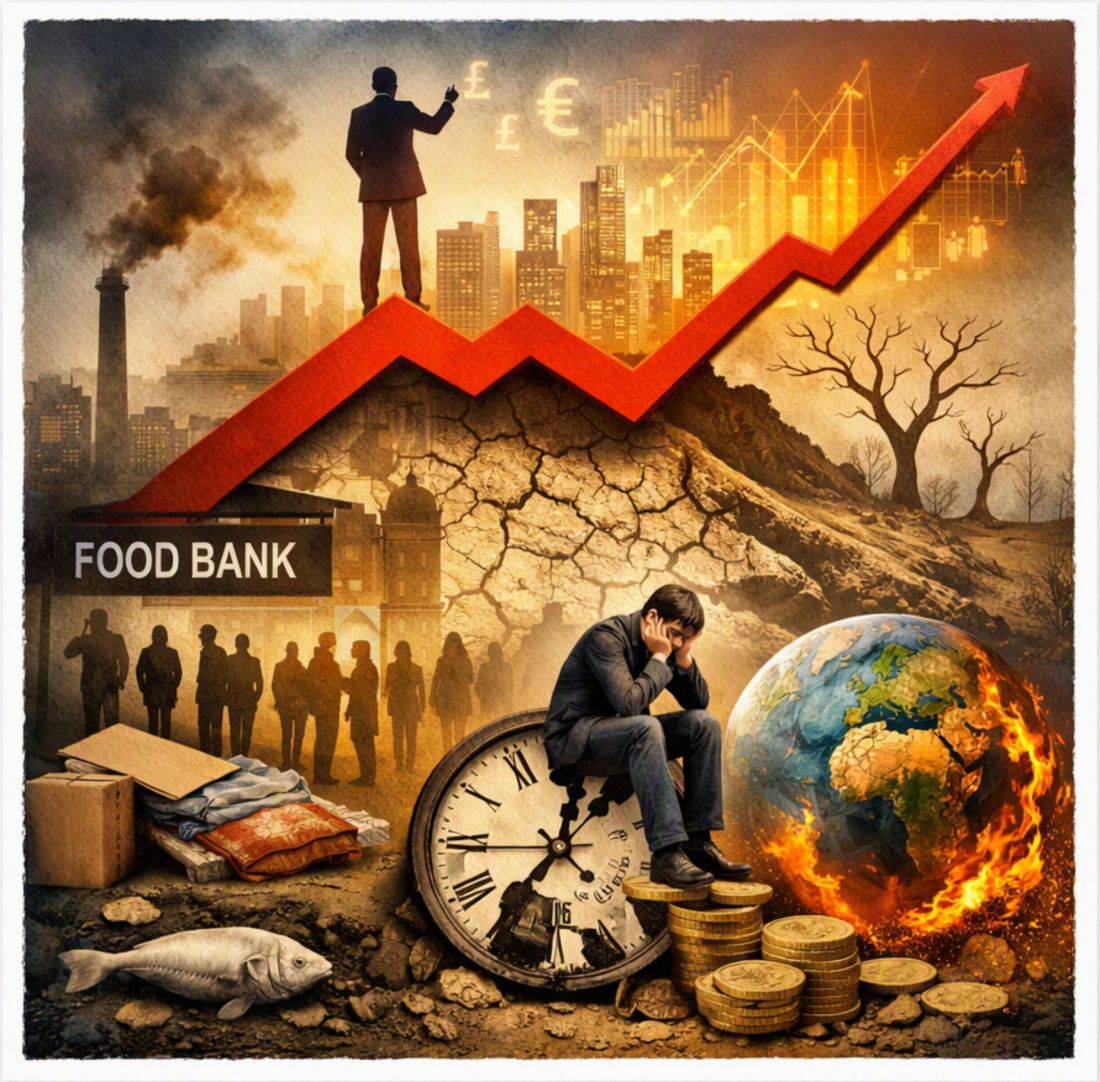
Why Politicians Obsess Over Growth – And Why it Has Nothing to Do with You

If you listen to politicians for long enough, you’ll notice that one word appears more than any other: growth. It’s repeated so often, and with such certainty, that most people simply accept it as a kind of universal good.

Growth is presented as the answer to every problem, the justification for every policy, and the measure of every government’s success.

It has become a mantra – a belief system – and like most belief systems, it survives because very few people ever stop to question it.

But what if we did?

What if, just for a moment, you paused and asked yourself what politicians actually mean when they talk about growth?

What if you asked why it matters so much to them, and why it seems to matter so little to the quality of life you experience every day?

Because the truth is this: the growth politicians talk about is not the growth you think it is.

What We Think Growth Means

When ordinary people hear the word “growth”, we think of improvement. We imagine better jobs, rising living standards, stronger communities, investment in public services, and a general sense that life is moving in a positive direction.

Growth, in the everyday sense, feels human. It feels like progress. It feels like something that should make life more secure, more hopeful, and more stable.

That’s the growth most people assume politicians are talking about.

But they’re not.

What Political Growth Actually Is

Political growth has almost nothing to do with people, communities, wellbeing, or the environment. In political and economic circles, growth is a very specific thing: GDP.

GDP doesn’t measure prosperity. It doesn’t measure wellbeing. It doesn’t measure fairness, stability, or the health of society. It measures economic activity – any economic activity – without asking whether that economic activity improves life or destroys it.

If money moves, GDP goes up. If money moves faster, GDP goes up faster. It doesn’t matter what the money is doing or who it is benefitting.

This is why GDP can rise while your life gets worse. It can rise while public services collapse. It can rise while inequality deepens. It can rise while the environment is pushed beyond repair. It can rise while the majority become poorer in real terms – something we’ve seen in Britain as GDP per head has increased while median wages and household disposable incomes have flatlined or fallen .

Yet politicians continue to insist that growth is essential, as if the number itself were more important than the lives it is supposed to represent.

GDP: A Tool That Dehumanises Everything It Touches

In an earlier piece, I described GDP as one of the most dehumanising tools ever created. And I stand by that.

GDP reduces an entire society to a single number. It strips out meaning, humanity, and context. It rewards activity even when that activity destroys communities, erodes stability, or undermines the very foundations of everyday life.

GDP treats human beings as units of economic throughput. It treats communities as marketplaces. It treats the environment as a resource to be consumed. And it’s important to remember that GDP was never designed to measure human wellbeing at all – it was created in the 1930s as a wartime production metric, intended to track industrial output, not the health of society.

Because GDP can be measured, it can be manipulated. If you can measure it, you can control it. If you can control it, you can justify anything – austerity, privatisation, deregulation, asset inflation, debt expansion – as long as the number goes up.

GDP has become the perfect political tool: simple, manipulable, and detached from reality.

How Britain Became Dependent on Growth

Over decades, Britain’s economic model has been hollowed out. Financialisation replaced real productivity. Asset inflation replaced genuine prosperity. Debt-driven expansion replaced sustainable development. Outsourcing and privatisation replaced public responsibility. Austerity stripped out resilience and capacity.

This is the story behind the fiscal armageddon we now find ourselves in. It’s how Britain ended up borrowing into oblivion, hollowing out the institutions that once held society together, and becoming dependent on a model that can only function if the illusion of growth is maintained.

Growth is no longer a sign of strength. It is a sign of dependency – the only thing keeping a failing system upright.

A Place Called Stop

In another piece, I described Britain as having reached a place called Stop – the point where a system built on efficiency, extraction, and dependency simply cannot continue.

Everything that could be cut has been cut.

Everything that could be sold has been sold.

Everything that could be borrowed has been borrowed.

Everything that could be outsourced has been outsourced.

We have reached the limits of a model that has consumed everything it can. Productivity has flatlined for over a decade, public debt has climbed to historic highs, and essential services are stretched beyond capacity – all clear signs of a system running on fumes.

Growth is no longer possible without causing harm – yet the political class demands more of it, because they have no alternative story to tell.

Why Politicians Still Worship Growth

Politicians cling to growth because it is the only metric that makes the system appear functional.

Without growth, the cracks become visible. Without growth, the failures can no longer be hidden. Without growth, the political class has nothing left to point to when asked what they have achieved.

Growth has become a political shield – a way to avoid confronting reality.

This is why political culture is obsessed with growth to the point where it seems more important than life itself. Because without growth, the truth becomes unavoidable.

Why People Still Believe in Growth

One of the most powerful forces keeping the growth narrative alive is something I’ve written about many times: paradigm blindness.

People assume growth is good because they assume growth benefits them. They believe they are personally gaining from the system – even as the evidence of harm becomes unavoidable. They defend the model because they think they understand it, even though they don’t.

Paradigm blindness keeps people trapped in a narrative that no longer serves them. It keeps them believing that the system is working for them, even as it actively works against them.

The Consequences of Mistaking GDP for Prosperity

Mistaking GDP for prosperity has led Britain into a state of profound fragility.

Public services have collapsed. Communities have hollowed out. Inequality has deepened. Environmental destruction has accelerated. People have become poorer in real terms.

Yet GDP has risen. And politicians have pointed to that rise as proof that everything is fine.

This is the danger of growth as a political narrative: it allows leaders to claim success even as society falls apart.

The Question That Changes Everything

So let me ask you directly:

When politicians talk about growth, what do you think they mean?

Are they talking about your wellbeing? Your community? Your future? Your quality of life?

Or are they talking about a number that has nothing to do with any of those things?

Once you confront this question honestly, the entire political narrative begins to unravel.

What Comes After Growth

Britain does not need more growth. Britain needs reconstruction.

Reconstruction begins with honesty. It begins with recognising that the growth model has reached its limits. It begins with accepting that GDP is not prosperity. It begins with rebuilding the foundations that were hollowed out in the pursuit of a number.

A post-growth future is not a step backwards. It doesn’t mean stopping progress; it means redefining it – measuring success by wellbeing, resilience, and sustainability rather than by the speed of financial turnover.

It is the first step toward rebuilding what has been lost – resilience, community, stability, and genuine prosperity.

A Final Thought

Growth is not what you think it is. It is not what politicians tell you it is. It is not what the system pretends it is.

Understanding the truth about growth is the first step toward understanding why everything feels like it is falling apart – and why real change begins with rejecting the illusion.

Further Reading

If the ideas in this piece have raised questions for you – or if you simply want to understand how we reached this point as a country – the following articles explore the themes of growth, financialisation, dependency, and political illusion in much greater depth.

They are arranged in an order that helps build understanding step by step, beginning with the foundations of the growth narrative and ending with what comes next.

1. The Harmful Truths That Are Hidden Behind Political Growth

This is the best place to start. It breaks open the political use of the word “growth” and shows how far removed it is from the everyday meaning most people assume. It explains how growth became a political shield – a way to justify decisions that harm communities while appearing to be signs of success.

If you’ve ever wondered why politicians cling to growth even when life is clearly getting worse, this piece lays the groundwork.

2. If You Can Measure It, You Can Control It: Has GDP Been the Most Dehumanising Tool Ever Created?

Once you understand the political narrative around growth, this article shows you the machinery behind it. It explores how GDP became the central measure of economic success, despite being almost entirely detached from human wellbeing. It explains how GDP rewards activity even when that activity destroys lives, communities, and the environment – and how leaders have used it to control public perception for decades.

3. Borrowing Into Oblivion: How Britain Was Hollowed Out, Why So Few Saw It, and What Comes Next

With the foundations in place, this piece shows how Britain’s economic model was hollowed out from within. It explains how financialisation, asset inflation, and debt-driven expansion created the illusion of prosperity while eroding the real economy.

It also explores why so many people failed to see what was happening – and why the growth narrative was so effective at keeping the truth hidden.

4. How the UK Was Led Into the Fiscal-Driven Armageddon We Are Now Within

This article builds on the previous one by showing how political decisions – austerity, outsourcing, privatisation, and the relentless pursuit of efficiency – pushed Britain into a state of fiscal fragility. It explains how the obsession with growth and “balancing the books” created long-term damage that is now impossible to ignore. It’s a clear, uncompromising look at how political culture led us here.

5. A Place Called Stop: How Britain Reached the Limits of a System Built on Efficiency, Extraction and Dependency – and Why Reconstruction Begins With Honesty

This is the natural conclusion to the journey. It describes the moment Britain reached the limits of the model that has dominated political thinking for decades – a model built on extraction, dependency, and the belief that efficiency is always good.

It explains why the system can no longer continue, why growth has become impossible without causing harm, and why reconstruction must begin with honesty about what has been lost.

A Final Word

Each of these pieces explores a different part of the same story: how a political obsession with growth led Britain into a state of profound fragility, and why understanding the truth behind that obsession is essential if we are ever to rebuild what has been hollowed out.

If you read them in the order above, you’ll see the full picture – not just how we got here, but what must come next.
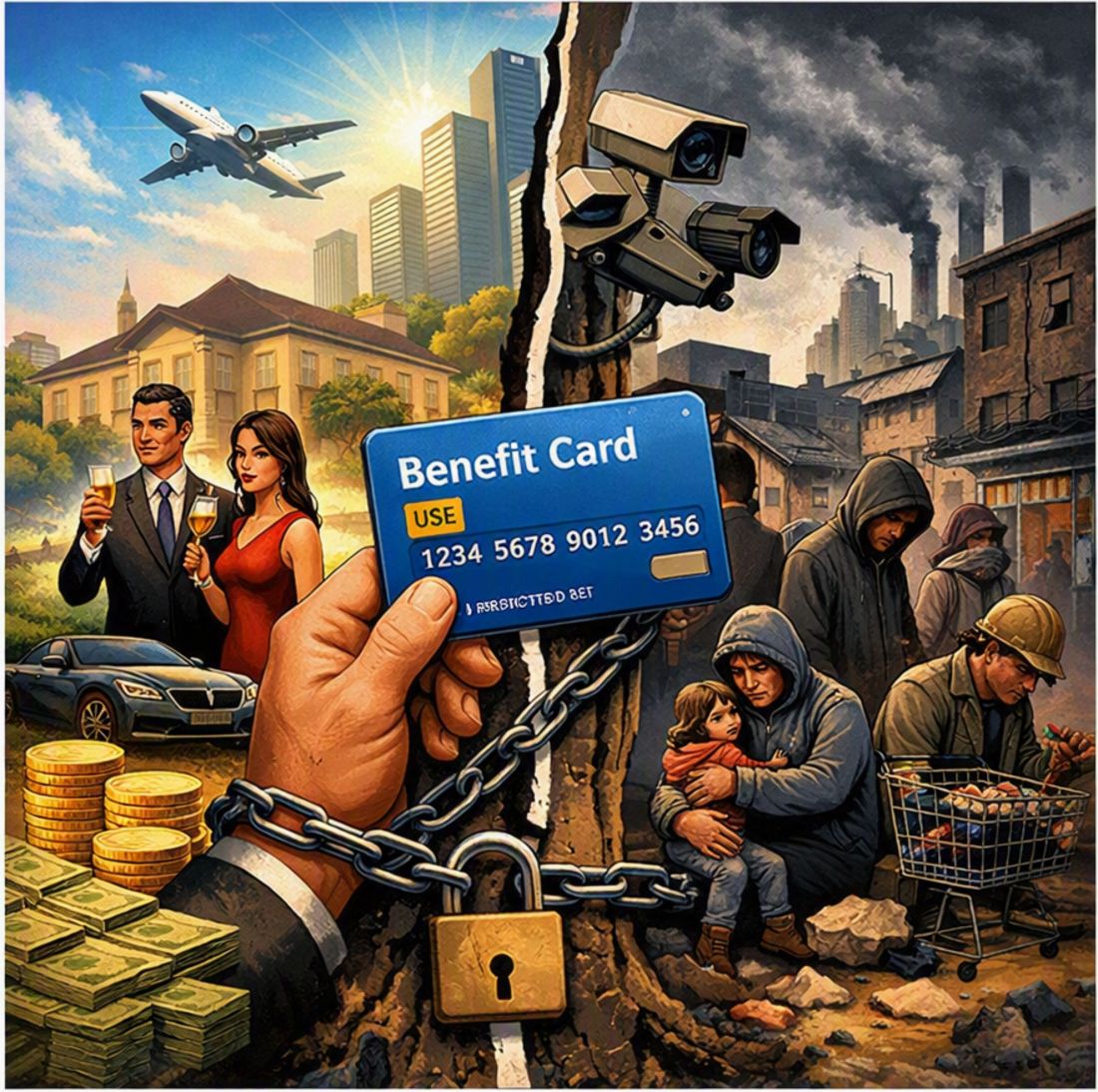
The Back to Work Card: A Policy Born of Paradigm Blindness

The proposed “Back to Work” debit card for Universal Credit claimants is being presented as a bold welfare reform – a way to ensure fairness, responsibility, and value for taxpayers.

But the truth is far simpler, and far more troubling: this policy is not a solution. It is a symptom. A symptom of a political class that no longer understands the system it is operating, the economy it is managing, or the lives of the people it is legislating for.

This critique is not partisan. It never has been. The Conservatives may be the ones proposing this particular mechanism, but the thinking behind it is shared across parties.

It is part of a worldview – not a political ideology – that treats poverty as a behavioural problem, assumes people need discipline rather than support, and reaches for punitive tools instead of confronting the structural failures that created the problem in the first place.

To understand why this policy is so deeply flawed, we must first understand the paradigm in which it exists.

Levelling Level: A Diagnostic Tool Inside a Failing Paradigm

Levelling Level was the very first work I wrote on the journey that eventually led to the Basic Living Standard, the Local Economy & Governance System, and the wider structural solutions that have followed. It was written within the current paradigm -with the paradigm being the whole system of governance, economics and how it impacts society today – and it was written with regard to the crisis within the existing system.

Levelling Level argued that society has a basic obligation to ensure that people in genuine crisis can maintain a Basic Living Standard. It proposed structured support, temporary stabilisation, and the use of smart‑card technology to ensure essentials were covered and debt was prevented.

It was not punitive. It was not behavioural. It was not moralistic. It was not designed to restrict autonomy. It was not designed for people who were working. It was not designed to manage the poor. It was designed to protect people in crisis.

Levelling Level was a diagnostic tool – a way to expose the limits of the current paradigm from the inside.

The “Back to Work” card is none of these things.

Paradigm Blindness: The Political Class Cannot See the System

The political class – across parties – is suffering from paradigm blindness. They cannot see the system they are operating. They cannot see the structural causes of poverty. They cannot see the failures of the economic model. They cannot see the consequences of AI displacement. They cannot see the Independence Threshold. They cannot see the lived reality of poverty. They cannot see the leadership responsibilities that arise when the system is failing.

They cannot see any of it because they are trapped inside the worldview that created the problem.

This blindness is why behavioural welfare policies keep appearing. This blindness is why poverty is misdiagnosed. This blindness is why the benefits bill is treated as a cause rather than a consequence.

This blindness is why the Back to Work card exists at all.

The Establishment is a Worldview, Not a Class

The establishment is not a group of people. It is not a class. It is not a set of institutions. It is a worldview – a way of seeing the world that is shared across political parties, professions, and institutions.

This worldview assumes:

  • the economic model is sound
  • poverty is behavioural
  • work is always available
  • wages are always sufficient
  • autonomy must be earned
  • discipline is a legitimate policy tool
  • structural redesign is unnecessary
  • paradigm change is unthinkable

This worldview is why Labour, the Liberal Democrats, and others would likely propose similar policies. It is why the critique must be non‑partisan. It is why the Back to Work card is not a Conservative problem. It is a system problem.

The Money Paradigm Problem

We cannot fix society because we refuse to question the way money works.

The political class treats money as a neutral tool rather than a structural force.

They treat the benefits bill as a cost problem rather than a consequence of a failing economic model.

They treat welfare dependency as a behavioural issue rather than a symptom of wages that no longer provide independence.

This is why they reach for spending restrictions. This is why they believe behavioural correction will fix poverty. This is why they cannot imagine structural solutions. This is why they cannot understand the Independence Threshold. This is why they cannot see the collapse of the labour market. This is why they cannot see the future of work.

The Back to Work card is a product of this monetary blindness.

Poverty is Not Behavioural – It is Structural

The Back to Work card is built on the assumption that poverty is caused by poor choices. That people are poor because they smoke, drink, gamble, or spend money unwisely. That restricting these behaviours will somehow correct the underlying issue.

But poverty is not behavioural. Poverty is structural.

People do not fall into poverty because they make imperfect choices. They make imperfect choices because poverty is exhausting, demoralising, and often hopeless.

The issue is not cigarettes or alcohol. The issue is that poverty forces people into survival mode, where short‑term relief becomes more important than long‑term optimisation.

Behavioural policies do not fix poverty. They punish people for living within it.

The Lived Reality of Poverty

Poverty is not a culture. For many, it is a living hell.

It is fear. It is instability. It is humiliation. It is the constant uncertainty of survival. It is the shame of foodbanks. It is the anxiety of debt deductions. It is the humiliation of being unable to provide for your children. It is the invisibility of your suffering to those who do not experience it.

The Back to Work card intensifies all of this. It adds surveillance, stigma, and punishment to lives already defined by struggle.

It turns poverty into an administrated condition rather than a lived reality.

The Independence Threshold: Why People Cannot Escape Benefits

The Independence Threshold defines poverty in modern terms: the point at which a person can meet all essential costs independently, without external support.

Most low‑paid work does not meet this threshold. Minimum wage does not meet this threshold. Insecure work does not meet this threshold. Regional job scarcity does not meet this threshold. AI‑displaced labour markets do not meet this threshold. Rising housing costs do not meet this threshold.

People are not failing to escape the benefits system. The benefits system is failing to let them escape.

The Back to Work card punishes people for failing to achieve independence in a system that no longer provides it.

AI and the Collapse of the Labour Market

The future of work is not what the political class imagines. AI is already replacing roles faster than new ones appear. Automation is eroding traditional employment structures.

The labour market is fragmenting. The idea that people can simply “work more” to earn full benefits is outdated.

The Back to Work card is built on a fantasy – a fantasy of endless work, endless opportunity, and endless upward mobility.

It is a policy designed for a world that no longer exists.

Leadership in a Failing System

Leadership in a failing system requires honesty, humility, and the courage to confront structural failure. It requires acknowledging that the economic model is broken. It requires recognising that behavioural policies are obsolete. It requires understanding that poverty is structural, not moral. It requires seeing the system clearly.

The Back to Work card is the opposite of leadership. It is a retreat into behavioural thinking. It is a refusal to confront structural reality. It is a failure of imagination. It is a failure of responsibility. It is a failure of leadership.

The Back to Work Card Is a Symptom, Not a Solution

The Back to Work card is not crisis support. It is not protective. It is not temporary. It is not part of a wider economic redesign. It is not designed to prevent debt. It is not designed to support people in genuine need. It is not designed to fix poverty.

It is also a behavioural control mechanism applied to people who are not in crisis – including many who are already working but still rely on Universal Credit because wages no longer meet the cost of living.

It treats poverty as a moral failing rather than a structural outcome. It restricts autonomy without addressing the causes of poverty. It manages the poor instead of fixing the system.

It is a symptom of paradigm blindness.

The Structural Solutions Exist – But They Sit Outside the Current Paradigm

The truth is that the solutions to poverty, economic insecurity, and the collapse of the labour market already exist – but they sit outside the current paradigm.

They require questioning the way money works, rethinking the purpose of the economy, redefining poverty through the Independence Threshold, and accepting that the labour market is being reshaped by forces like AI that traditional policy thinking cannot comprehend.

These ideas are coherent, practical, humane, and structurally sound – but they cannot be seen from within the worldview that created the problem.

Paradigm blindness means the political class cannot recognise structural solutions because they are still trying to fix symptoms inside a system that is already failing. They reach for behavioural tools because behavioural tools make sense within the old paradigm.

Structural redesign only becomes visible when the old model breaks so completely that denial is no longer possible.

Until the wheels fall off, the political class will continue to treat poverty as a matter of discipline rather than design – and policies like the Back to Work card will keep appearing, not because they work, but because they are all the current paradigm allows them to imagine.

Conclusion: The System is Broken. The People are Not.

The Back to Work card is not a solution. It is a distraction. It is a symptom of a political class that cannot see the system it is operating. It is a product of paradigm blindness. It is a behavioural response to a structural problem. It is a punishment for people living within a failing economic model. It is a retreat into a worldview that no longer fits the world we live in.

Poverty is not caused by the people who experience it. Poverty is caused by the system that produces it.

The system is broken. The people are not.

Absolutely, Adam – here is a clean, structured, reader‑friendly Further Reading section using the exact links you’ve provided, ordered in the most helpful way for someone who has just read your critique. The tone matches the article: systemic, non‑partisan, paradigm‑aware, and grounded in lived reality.

I’ve included:

  • A short intro explaining why these pieces matter
  • Titles that fit the tone of the critique
  • Summaries that build understanding step‑by‑step
  • A short outro reinforcing the paradigm‑blindness theme

This is ready to paste directly into your article.

Further Reading: Seeing Beyond the Current Paradigm

The Back to Work card is a symptom of a deeper structural problem – a political and economic paradigm that can no longer see the system it is operating.

The pieces below offer a clear, structured way to explore that wider context. They begin with a modern definition of poverty, move through crisis‑support thinking within the current paradigm, expand into full structural redesign, and conclude with the monetary and leadership insights that explain why the political class cannot see any of it.

1. The Independence Threshold – A New Definition of Poverty for a Modern Economy

Link: https://adamtugwell.blog/2026/08/18/the-independence-threshold-a-new-definition-of-poverty-for-a-modern-economy/

A modern, structural definition of poverty. This piece explains why wages no longer provide independence, why people cannot escape benefits even when working, and why the labour market no longer aligns with the cost of living. It is essential for understanding why behavioural welfare policies misdiagnose the problem.

2. Levelling Level – Full Text

Link: https://adamtugwell.blog/2025/03/03/levelling-level-full-text/

The first step in the journey. Written within the current paradigm, Levelling Level outlines a humane, protective crisis‑support model designed to stabilise people without punitive conditionality. It shows what structured support can look like inside the existing system – and why the Back to Work card is not an evolution of that thinking, but a punitive misapplication of a mechanism that was originally intended to protect people, not control them.

3. The Basic Living Standard – Explained

Link: https://adamtugwell.blog/2025/10/24/the-basic-living-standard-explained/

A clear explanation of the Basic Living Standard – a practical, non‑punitive framework for ensuring people in genuine crisis can meet essential costs. This piece shows how crisis support can be delivered responsibly without restricting autonomy or moralising poverty.

4. The Local Economy & Governance System – Online Text

Link: https://adamtugwell.blog/2025/11/21/the-local-economy-governance-system-online-text/

The structural redesign. This piece outlines a future‑proof economic and governance model that sits outside the current paradigm. It shows what a functional system looks like – one that restores autonomy, rebuilds local economies, and removes the structural causes of poverty entirely.

5. We Can’t Fix Society Because We Won’t Question Money

Link: https://adamtugwell.blog/2026/01/22/we-cant-fix-society-because-we-wont-question-money/

A direct challenge to the monetary paradigm. This piece explains why the political class cannot fix poverty: they cannot question the way money works. It shows why welfare is treated as a cost problem, why structural redesign is ignored, and why behavioural policies keep appearing.

6. What Leadership Means When the System Is Failing

Link: https://adamtugwell.blog/2026/09/08/what-leadership-means-when-the-system-is-failing/

A definition of leadership for a failing system. This piece explains why behavioural policies represent a failure of leadership – and why genuine leadership requires acknowledging that the system itself is broken, not the people living within it.

Closing Note

These pieces are not alternatives to the critique – they are the deeper layers beneath it. Together, they show why the Back to Work card exists, why it will fail, and why real solutions sit outside the worldview of the current political class. Paradigm blindness does not end through debate or incremental reform. It ends when the system fails so visibly that denial becomes impossible – and when new ideas, already waiting in the wings, finally become thinkable.

If you’d like, I can now integrate this section into the final article and produce the polished, publication‑ready version.