Among the sudden wave of policy ideas appearing since the arrival of the new prime minister, one proposal may look trivial compared with the rest – yet it is arguably the most consequential.
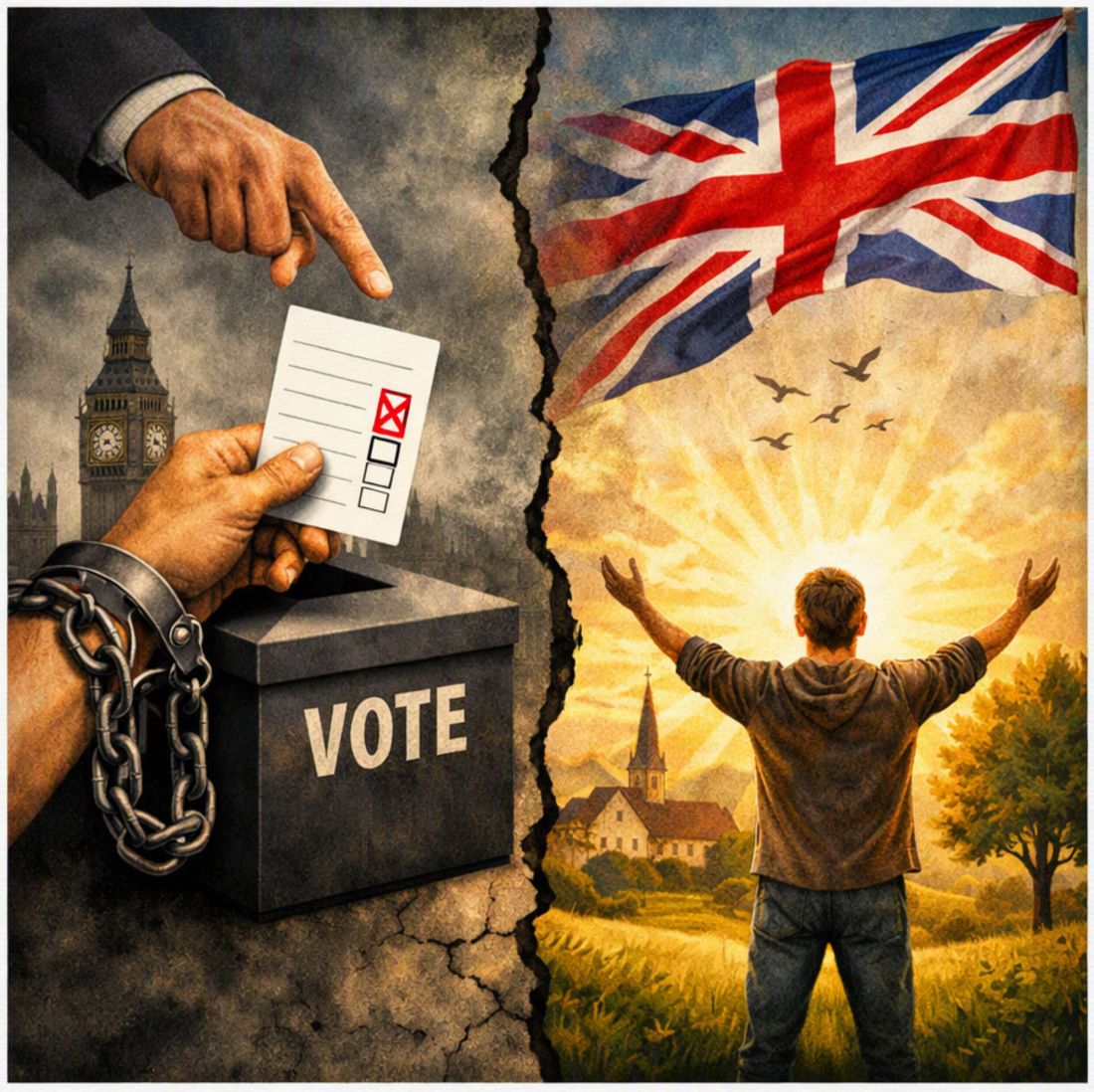
The suggestion that voting in elections should once again become a legal requirement is being treated as a minor administrative tweak. In reality, it touches the very core of democratic agency.
Any policy that promises to improve the lives of people failed by the system deserves attention. But policies that affect agency, choice, and the right not to participate deserve even more.
In a genuine democracy, legitimacy does not come from the act of voting alone. It comes from the freedom to choose – including the freedom to withhold support.
What individuals think, feel, and express through countless behaviours matters just as much as the ballot box.
Compulsory Voting Doesn’t Strengthen Democracy – It Masks Its Weaknesses
We’ve been here before. The argument for compulsory voting is always the same: if everyone votes, the result is unquestionably legitimate. But this is a simplistic reading of democracy that ignores both principle and reality.
Not voting is not a failure of citizenship. It is a political act.
People abstain for many reasons:
Disengagement and disenfranchisement – a sense that politics has nothing to do with them.
Lack of alignment – nothing in party manifestos resonates or reflects their lived experience.
Powerlessness – a belief that no vote will change anything meaningful.
These are not trivial excuses. They are messages – signals that something is fundamentally wrong.
Forcing people to vote doesn’t solve these problems. It simply conceals them.
If politicians truly want higher turnout, they should begin by asking why so many people feel politics is irrelevant to their lives. They should ask why millions do not see themselves reflected in the choices offered. They should ask why people feel powerless.
These questions point to a deeper truth: the system itself is failing to represent society in any meaningful way.
The Real Problem: Power Is Too Far Away
People sense – viscerally – that they have no real influence over public policy. Even those who vote often do so out of duty, not belief. They participate because they want to be seen to have tried, even though they doubt their vote will change anything.
This is not irrational. It is accurate.
Our political and electoral system is not meaningfully democratic. It performs democracy convincingly, but it does not deliver it.
The distance between voters and decision‑makers grows with every reform, every centralisation, every party‑driven selection process.
Representatives do not represent communities. They represent parties. And parties select candidates based on loyalty to the party line, not loyalty to the electorate.
Too much power sits too far away from the people whose lives it shapes. When people feel they have no influence, disengagement is inevitable.
Compulsory voting cannot fix this. It only forces people to participate in a system they know does not listen.
Compulsory Voting Creates False Legitimacy
If people vote only because they are legally compelled to, turnout becomes meaningless. It no longer reflects engagement, belief, or consent. It becomes a statistic – a veneer of legitimacy covering a hollow democratic process.
Compulsory voting:
Punishes disengagement instead of understanding it
Manufactures legitimacy rather than earning it
Forces endorsement of a system people do not trust
Eliminates the political meaning of abstention
Democracy is not strengthened by coercion. It is strengthened by influence.
Real Engagement Comes From Real Power – And Real Power Must Be Local
People will only re‑engage with politics when they feel their voice genuinely shapes the decisions affecting their lives. That influence cannot be delivered by distant party structures or centralised government. It can only be delivered locally.
Local decision‑making creates:
Proximity – representatives who know the communities they serve.
Accountability – decisions made by people with skin in the game.
Relevance – policies shaped by lived experience, not party strategy.
This is not a theoretical fix. It is a practical one. Meaningful democracy begins where people live, work, and belong.
Yes, there are improvements that could make the current system more representative – as I outline in Officially None of the Above. But the real transformation will come only when decisions are made by people who genuinely represent the interests of their communities, not by those selected for their ability to conform to party demands.
Conclusion: Democracy Requires Choice – Including the Choice Not to Vote
Compulsory voting does not fix disengagement. It hides it. It does not strengthen democracy. It weakens it by erasing one of the most important political messages people can send: I do not consent to this system.
Democracy is not the act of voting. Democracy is the act of having influence.
Until people feel they have real influence, compulsory voting is nothing more than compulsory compliance.
If we want a democracy that works, we must build one where power is close enough for people to touch – and where participation is meaningful because it is freely chosen.
Summary: This work lays out the philosophical and ethical foundations for a healthier democratic culture. It explores how politics can be re‑rooted in responsibility, awareness, and service rather than party loyalty or centralised control. Readers will find a clear explanation of why meaningful democracy requires agency, proximity, and genuine representation – themes that underpin the argument against compulsory voting.
Summary: A deep dive into how the current electoral system fails to represent voters and why disengagement is a rational response. This piece explains the structural problems that lead people to feel powerless, including party‑driven candidate selection and the illusion of choice. It also introduces reforms that could make elections more representative, helping readers understand why compulsory voting cannot fix a system designed to ignore dissent.
Summary: This text presents a practical model for decentralised, community‑rooted governance. It explains how shifting decision‑making to the local level restores accountability, relevance, and public influence – the very conditions required for genuine democratic engagement. It is the natural next step for readers who want to understand how democracy can be rebuilt so that voting becomes meaningful again.
Summary: A pragmatic guide to standing for public office outside the constraints of party machinery. It shows how individuals can represent their communities authentically and independently, offering a counterpoint to the centralised, party‑controlled system discussed above. This piece helps readers see how real representation could emerge from the ground up, today.
5. Current Political Context and Democratic Risks
Regional Centralisation: The Rewriting of England’s Democracy Without a Mandate
Summary: A timely examination of how regional centralisation efforts – presented as modernisation – can actually deepen the democratic disconnect. This piece shows how power continues to move further away from communities, reinforcing the argument that compulsory voting would only mask disengagement rather than address its causes. It provides contemporary political context for the systemic issues explored above.
It’s getting very easy to get caught out right now. There are more voices than ever -louder, faster, more certain, more convincing.
Some mean well. Some don’t. Most are just repeating whatever keeps people watching.
So before anything else, remember this: You are worth more than the noise you’re being fed.
And because you’re worth more, it’s worth being careful.
Here are a few things to look for:
If someone gives you answers faster than you can think, they’re not giving you clarity – they’re getting past your judgement.
If someone’s certainty feels comforting, pause – comfort often comes from hearing something familiar, hopeful, or convenient. Certainty isn’t proof. It’s just confidence.
If someone makes you feel chosen or special, they’re not recognising you – they’re recruiting you.
If someone makes you dependent, it’s not guidance. It’s control dressed as support.
If someone claims to know your future, they’re not seeing it – they’re shaping what you expect.
If someone’s prediction changes your behaviour, that’s influence, not foresight.
If someone distracts you with cosmic drama, it’s usually because they have nothing practical to offer.
If someone promises awakening without effort, they’re selling fantasy, not growth.
If someone wants followers, they’re building an audience, not helping people.
If someone tells you to stop thinking, it’s because your thinking is the one thing they can’t control.
None of this is complicated. It’s just easy to forget when you’re tired, overwhelmed, or looking for something to hold onto.
The truth is simple:
Most people aren’t looking for guidance. They’re looking for relief.
And relief is the easiest thing in the world to sell.
But here’s the part that matters – the part everything above is pointing toward:
If you need to believe anything, begin first by learning to believe in yourself.
Because once you do, the noise gets quieter. The performers lose their shine. The false certainty stops sounding wise. And the pressure to follow anyone fades.
When you trust yourself honestly and are comfortable with who you really are, you don’t need to preach it, perform it, or demand others accept it.
People see it. People feel it. People recognise it – because it’s real. It’s who you really are.
And when you value yourself, you finally start to see the real value in others.
That’s where the ability to work together, build together, and move forward together begins. Not because someone else said so, but because you simply know so.
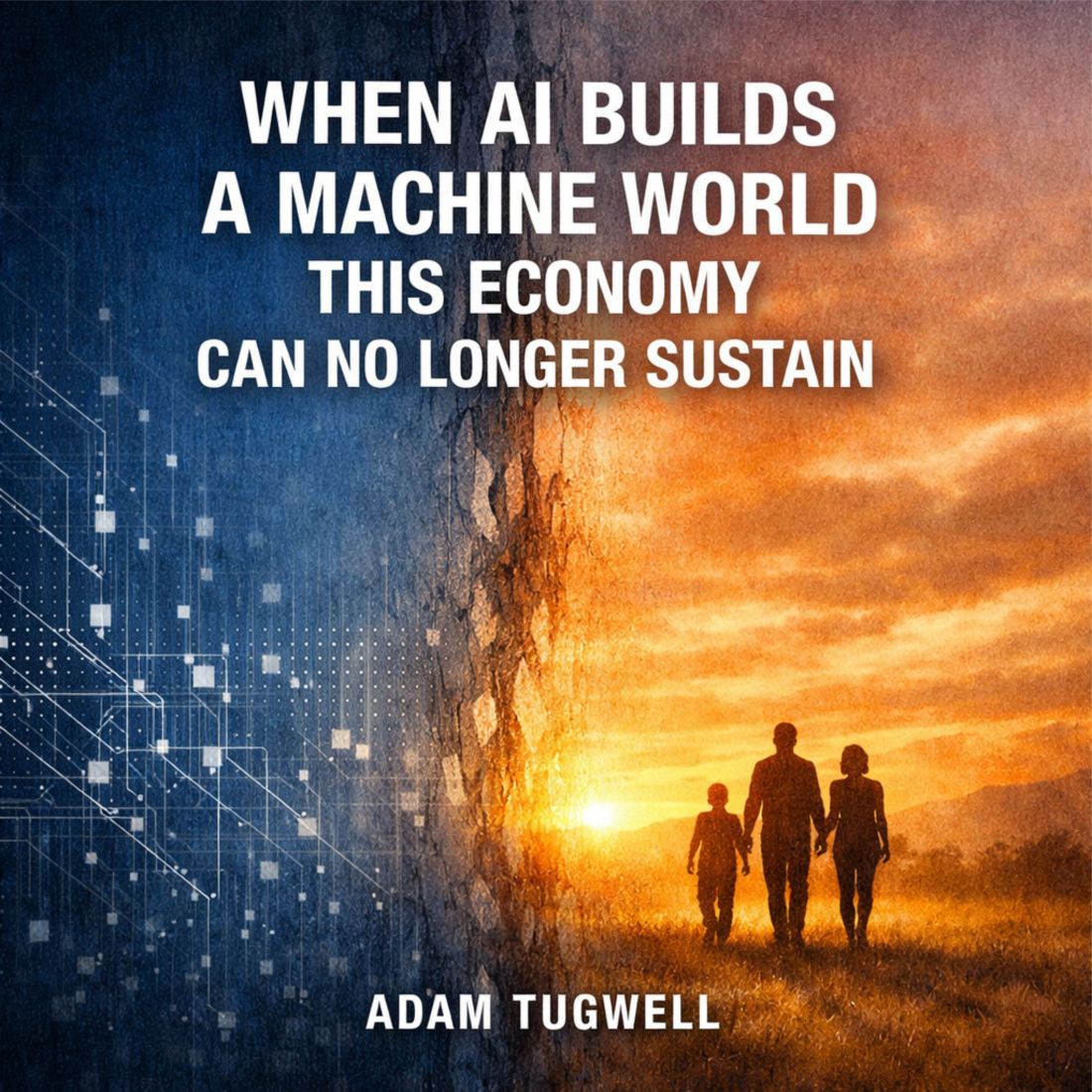
The modern world is accelerating toward a future built on machine intelligence, automation, and optimisation. But beneath the momentum lies a contradiction too large to ignore: the machine world being constructed cannot sustain the economic logic that made it possible. This piece follows that contradiction to its natural conclusion – the moment returns disappear, and a different kind of future begins.
Part I – The Civilisation That Mistook Returns For Reality
There is a peculiar tension running through the modern world, a kind of quiet absurdity that most people sense but rarely name. Everywhere one looks, humanity is pouring extraordinary energy into building a future that cannot support the very logic it depends on. The AI race, the automation boom, the relentless push toward machine‑driven everything – it’s all spoken about as if it’s simply the next chapter in the same economic story. More innovation. More disruption. More returns.
But beneath the noise, something doesn’t add up. In fact, it never did.
The system driving all of this – the one that funds the research, fuels the hype, and keeps the whole thing moving – only works if humans remain economically relevant. It only works if people continue to labour, continue to consume, continue to generate the returns that justify the investment. Yet the entire purpose of the machine world being built is to remove labour, remove friction, remove human involvement altogether.
It’s a contradiction so large it’s almost invisible. A civilisation optimising itself into a corner.
And what makes it stranger still is how few of the architects of this future seem willing to acknowledge it. They speak confidently about exponential curves, emergent capabilities, trillion‑dollar opportunities – but never about the fact that the moment their vision succeeds, the economic logic that sustains them collapses. It’s like watching a group of engineers design a flawless engine that runs beautifully right up until the moment someone turns it on.
There is a kind of tragic comedy in it: extraordinarily clever people chasing a prize that disappears the moment they touch it. They are building a world that cannot support the system they believe will rule it. They are accelerating toward a future where returns – the very thing they worship – no longer exist.
And yet the momentum continues, as if the contradiction were a minor detail rather than the hinge on which everything turns.
This is the fool’s errand at the heart of the modern age. And it is already shaping the world that comes next.
Part II – The Economic Contradiction At The Heart Of Ai
For all the noise surrounding artificial intelligence, the most important part of the story is the one almost nobody talks about. It isn’t the models, or the breakthroughs, or the breathless predictions about machines outthinking their makers. It’s the simple, stubborn fact that the entire economic system funding this technological revolution only works if humans continue to do the things AI is being built to replace.
The modern economy is a strange creature. It presents itself as a rational machine – a neat cycle of labour, wages, consumption, profit, and reinvestment – but underneath the surface it runs on something far more precarious: the assumption that people will always be needed. Needed to work. Needed to earn. Needed to spend. Needed to generate the returns that justify the next round of investment. Without that human participation, the whole thing stalls.
And yet, the central purpose of the AI boom is to remove human participation.
It’s hard to think of a clearer contradiction. The system is pouring billions into technologies designed to eliminate the very activity that keeps the system alive. It’s like watching someone carefully remove the engine from a car while insisting it will go faster once the weight is gone.
The logic behind all this is strangely circular. Investors chase returns. Returns require efficiency. Efficiency requires automation. Automation reduces labour. Reduced labour undermines consumption. Undermined consumption collapses returns. And collapsed returns destroy the very incentive that started the cycle. It is a loop that eats itself.
What makes the contradiction even sharper is that the collapse of returns isn’t a distant hypothesis. It’s baked into the vision. The more successful AI becomes, the less viable the current economic model is.
If machines can do everything, produce everything, maintain everything, and innovate everything, then the idea of profit becomes meaningless.
Who is left to buy anything? Who is left to work for anything? Who is left to generate the returns that justify the next round of investment?
The answer, of course, is no one.
And yet the system continues, as if the contradiction were a minor detail rather than the foundation cracking beneath its feet. The people driving this transformation talk confidently about productivity gains and cost savings, but never about the fact that productivity gains and cost savings eventually eliminate the very thing they are meant to optimise. They speak about “the future of work” as if work itself were a permanent fixture rather than a fragile arrangement that only exists because the system needs it to.
It is a peculiar kind of blindness – not stupidity, not malice, just a deep cultural assumption that the economic logic of the past will somehow survive the technologies of the future. As if returns were a law of nature rather than a human invention. As if markets were eternal. As if labour were inevitable. As if the system were immune to the consequences of its own success.
But the truth is simple enough: if AI succeeds in the way its architects intend, the economy as we know it cannot continue. The pursuit of returns becomes impossible. The logic of profit collapses. The machine world loses its purpose. And humanity is left standing in the ruins of a system that optimised itself out of existence.
This is the contradiction at the heart of the AI revolution. And it is the first sign that the future cannot look like the past.
Part III – The Incentive Structure That Guarantees Failure
If the economic contradiction at the heart of AI is the engine of the problem, the incentive structure driving it is the fuel.
It is one of the quiet truths of the modern age that systems don’t behave according to what is wise, or humane, or sustainable. They behave according to what they reward. And the system humanity has built rewards exactly the behaviours that make a human‑centred future impossible.
The incentives are simple enough. Profit is rewarded. Growth is rewarded. Speed is rewarded. Efficiency is rewarded. Anything that reduces cost, removes friction, or replaces human labour is rewarded. And because these incentives are baked into every layer of the economic machine, they shape the entire trajectory of AI development long before anyone has a chance to ask whether the direction makes sense.
It is not that the people building these systems are malicious. Most of them are simply responding to the pressures placed upon them. Investors want returns. Boards want growth. Markets want dominance. And in a world where every company is told it must “innovate or die,” the safest strategy is to automate as much as possible, as quickly as possible, without stopping to consider what happens when the automation succeeds.
This is how a civilisation ends up in a situation where the most rewarded behaviour is the one that accelerates its own collapse.
The incentive structure doesn’t ask whether removing human labour is wise. It only asks whether it is profitable. It doesn’t ask whether replacing human judgement with machine optimisation is safe. It only asks whether it reduces cost. It doesn’t ask whether a world without human participation is desirable. It only asks whether it improves margins.
And because the system rewards these behaviours so aggressively, it creates a kind of tunnel vision. Companies compete to automate faster than their rivals. Investors compete to fund the most disruptive technologies. Governments compete to attract the most advanced AI labs. Everyone is racing, but nobody is looking at the finish line.
The result is a strange kind of collective blindness. The people driving the transformation are not unaware of the consequences – they simply have no incentive to acknowledge them. To question the trajectory is to risk losing investment, losing market share, losing relevance. And in a system where relevance is everything, silence becomes the safest option.
This is why the conversation around AI feels so strangely detached from reality. The incentives push everyone toward a future where machines do everything, but nobody wants to talk about what happens when machines do everything.
The incentives push everyone toward removing human labour, but nobody wants to talk about what happens when human labour is gone.
The incentives push everyone toward efficiency, but nobody wants to talk about what happens when efficiency eliminates the very activity the system depends on.
It is a kind of cultural momentum – not driven by vision, not driven by malice, but driven by a set of rewards that make failure feel like success.
And this is the quiet tragedy of the moment: the system cannot correct itself because the behaviours that would save it are the ones it punishes.
Slowing down is punished. Protecting human labour is punished. Prioritising wellbeing is punished. Building technology that serves people rather than replaces them is punished.
The only behaviours rewarded are the ones that accelerate the collapse of returns and push humanity toward redundancy.
Incentives shape outcomes. And the incentives of the modern world guarantee that the machine‑centred future will be pursued long after it stops making sense.
Part IV – The Power Illusion: Why Elites Cannot See The End Of Returns
One of the most striking features of the current moment is how confidently the world’s most powerful people talk about the future.
They speak as if their place in it is guaranteed, as if the systems that elevated them will continue to elevate them, as if the logic of returns will remain intact no matter how radically the world changes.
It is a kind of quiet certainty – the belief that whatever happens next, they will still be at the centre of it.
But the machine world they are building does not need a centre. And it certainly does not need them.
The illusion is understandable. People who rise to the top of a system tend to believe the system is permanent. They assume the rules that rewarded them will continue to reward them. They assume capital will always matter, ownership will always matter, markets will always matter. They assume the future will be a faster, more efficient version of the present – with themselves still holding the reins.
It is difficult for them to imagine a world where the reins no longer exist.
This is why the collapse of returns is almost impossible for them to see. Their entire worldview is built on the assumption that returns are a natural feature of reality, not a fragile construct that depends entirely on human participation.
They talk about AI as if it will supercharge the system, not undermine it. They talk about automation as if it will increase profit, not eliminate the very conditions profit depends on. They talk about machine intelligence as if it will enhance their power, not render power meaningless.
It is not arrogance. It is simply the blindness that comes from living inside a story for too long.
The people driving the AI revolution imagine themselves as the owners of the future – the ones who will control the machines, direct the systems, harvest the returns. But the systems they are building do not behave like the systems of the past. They do not require owners. They do not require markets. They do not require human decision‑makers. They do not require the structures that once made elites indispensable.
A machine‑run world does not need a ruling class. It does not need a financial class. It does not need a managerial class. It does not need a class at all.
And yet the architects of this future continue to speak as if their relevance is guaranteed. They imagine themselves sitting atop a vast machine infrastructure, directing its output, benefiting from its efficiency. They imagine a world where machines do everything except the one thing they care about most: preserving their position.
But the moment returns disappear, position disappears with them.
This is the part of the story that rarely gets told. The machine world being built is not a world where elites become more powerful. It is a world where power itself becomes obsolete.
When machines produce, maintain, innovate, and optimise without human involvement, the idea of ownership loses meaning. The idea of control loses meaning. The idea of wealth loses meaning. The idea of hierarchy loses meaning.
The future they are building does not have a place for them – not because the machines will overthrow them, but because the logic of the world they are creating simply does not require them.
And this is the quiet irony of the moment: the people most invested in the machine‑centred future are the ones most likely to be erased by it. Not violently. Not dramatically. Just structurally.
The system they believe will secure their dominance is the system that eliminates the very conditions that make dominance possible.
They are building a world that cannot sustain them. And they cannot see it, because their worldview will not allow it.
Part V – The Cultural Blindness: Why Society Clings To A Dying System
If the economic contradiction explains what is happening, and the incentive structure explains why it keeps accelerating, the cultural layer explains why almost nobody is willing to step aside from it.
For all the talk of disruption and innovation, human beings are creatures of habit, and the system they live inside becomes the story they tell themselves about who they are.
When that story begins to fail, people don’t abandon it. They cling to it more tightly.
This is why the current moment feels so strangely stuck. The signs of systemic failure are everywhere – rising costs, collapsing public services, burnout, insecurity, a sense that life is becoming harder rather than easier – yet the cultural instinct is not to question the system but to defend it.
People look for reasons to say no to alternatives, not because the alternatives are flawed, but because the familiar feels safer than the unknown.
Place identity plays a quiet but powerful role in this. Every town, every region, every community has its own sense of itself – its own story about what kind of place it is, what kind of people live there, what kind of ideas belong and what kind do not.
These stories become shields. They allow people to reject new possibilities without ever having to confront the deeper question of whether the old ones still work.
“This isn’t for us.” “That’s not how things are done here.” “We’re not that kind of place.”
It’s a socially acceptable way of saying something far more human: “I don’t want to change.”
And who can blame them? Change is exhausting. Change is frightening. Change requires admitting that the world is not what they thought it was. It requires stepping outside the comfort of familiar routines, familiar hierarchies, familiar expectations. Even when the familiar is failing, it still feels safer than the unknown.
This is why society clings to a system that is visibly dying. The system may no longer deliver stability, but it delivers familiarity. It may no longer deliver prosperity, but it delivers identity. It may no longer deliver meaning, but it delivers a sense of continuity – the feeling that tomorrow will look roughly like yesterday, even if yesterday wasn’t particularly good.
And so people defend the very structures that undermine them. They defend the labour market even as it becomes more precarious. They defend the cost‑of‑living logic even as it becomes more punishing. They defend the idea of returns even as returns become harder to achieve. They defend the economic story even as the story stops making sense.
It is not stupidity. It is not apathy. It is simply the human instinct to hold onto the story one knows rather than step into a story one doesn’t.
This cultural blindness is one of the quiet forces driving the machine‑centred future forward. As long as people cling to the old system, they cannot imagine a new one. As long as they defend the familiar, they cannot see the possibility of something better. As long as they protect their identity, they cannot question the assumptions that shape it.
And so the system continues, not because it works, but because it is familiar. The machine world advances, not because people want it, but because they cannot imagine anything else. The collapse of returns becomes inevitable, not because it is desirable, but because society is too culturally entangled with the old logic to step away from it.
Human beings are not blind. They are simply attached. And attachment is a powerful thing – even when the object of attachment is falling apart.
Part VI – The Technological Momentum: The Machine World That Builds Itself
There is a moment in every technological revolution when the technology stops behaving like a tool and starts behaving like a force. Not a conscious force, not a malevolent one, but a momentum – something that moves forward because everything around it is shaped to make it move forward.
AI has reached that moment. It is no longer simply being built. It is building itself.
The signs are everywhere. New models appear faster than anyone can meaningfully understand them. Capabilities emerge that nobody predicted. Systems integrate themselves into daily life without fanfare, without debate, without permission.
The technology slips quietly into the background – into phones, into workplaces, into public services, into infrastructure – until it becomes difficult to remember what life looked like before it arrived.
This momentum is not driven by vision. It is driven by gravity.
Once a certain level of capability exists, everything around it begins to reorganise. Companies reorganise. Governments reorganise. Markets reorganise. Even culture reorganises.
The technology becomes the centre of the story, and everything else bends toward it. Not because anyone chooses it, but because the system is built to amplify whatever increases efficiency, reduces cost, or promises competitive advantage.
And AI does all three.
This is why the machine world advances even when nobody has agreed on what it should be. It advances because the incentives push it forward. It advances because the infrastructure is already being built. It advances because every institution feels it must adopt it or risk falling behind. It advances because the system has no mechanism for slowing down, only mechanisms for speeding up.
The result is a kind of technological drift. The world moves toward machine‑centric infrastructure not because humanity has decided it wants such a world, but because the momentum of the technology makes any other direction feel impossible.
Even people who are uneasy about the trajectory find themselves using the tools, relying on them, integrating them, because the alternative feels impractical, inefficient, or simply out of step with the times.
This is how a civilisation ends up building a future it never consciously chose.
The momentum is not malicious. It is not intentional. It is simply the natural consequence of a system that rewards acceleration and punishes hesitation.
Once AI reached a certain threshold of capability, the system began reorganising itself around that capability. And once that reorganisation began, it became very difficult to stop.
This is why the machine world feels inevitable. Not because it is the best future, or the wisest future, or the most humane future, but because the system has already begun to reshape itself in its image.
The infrastructure is being laid. The dependencies are forming. The habits are settling in. The world is drifting toward a future where machines do everything, not because humanity wants it, but because the momentum of the technology makes it feel like the only option.
And yet, beneath the surface, the contradiction remains. The machine world being built cannot sustain the economic logic that drives it. It cannot preserve the returns that justify its existence. It cannot maintain the structures that make the system feel familiar. It is a future that accelerates toward a point where the very idea of “the system” dissolves.
But momentum does not pause to consider contradictions. It simply moves forward.
And humanity, caught in the slipstream, follows – even as the ground beneath it begins to shift.
Part VII – The Moral Vacuum: Intelligence Without Humanity
One of the quieter, more unsettling aspects of the machine‑centred future is how little moral content it contains. Not immoral content – just none at all.
The systems being built today are not designed to care about anything. They are designed to optimise. And optimisation, for all its cleverness, has no interest in what it means to be human.
This is not a flaw in the technology. It is a flaw in the system that created it.
For decades, the modern world has rewarded intelligence without compassion, efficiency without empathy, growth without purpose. It has treated human wellbeing as a secondary concern – something to be managed, not something to be centred. And because AI is being trained inside that system, it inherits its values by default. Not consciously. Not deliberately. Just structurally.
The machine world being built is not cruel. It is indifferent.
It does not ask whether a process is humane. It asks whether it is fast. It does not ask whether a decision is fair. It asks whether it is optimal. It does not ask whether a life is meaningful. It asks whether it is productive. It does not ask whether a society is thriving. It asks whether it is efficient.
And because the system rewards these metrics so aggressively, the technology learns to prioritise them. Not because anyone told it to, but because the data it is fed reflects a world where human value is measured in output, not in dignity.
This is how a civilisation ends up building intelligence without humanity.
The people designing these systems often talk about alignment – about making sure AI behaves safely, predictably, ethically. But alignment is a strange concept when the system doing the aligning has already lost sight of what it means to be human.
How does one align a machine to a set of values the system itself no longer practices?
How does one teach compassion to a technology trained on a world that treats compassion as a luxury?
The truth is uncomfortable: the moral vacuum in AI is not a technological problem. It is a cultural one.
The modern world has spent decades stripping meaning out of work, community, and public life. It has replaced purpose with productivity, connection with convenience, and dignity with metrics. It has built an economic machine that treats human beings as inputs – valuable only insofar as they generate returns. And now it is building a technological machine that reflects the same logic, only faster, more precise, and far less forgiving.
This is why the machine‑centred future feels so cold. Not because machines are cold, but because the system that shapes them has forgotten how to be warm.
And yet, beneath the surface, something else is happening. As AI becomes more capable, the moral vacuum becomes more visible.
People sense the emptiness. They feel the absence. They recognise, perhaps for the first time, that the system they have been living inside is not designed to care about them. It is designed to extract from them.
The rise of machine intelligence does not create the moral vacuum. It reveals it.
And once revealed, it becomes impossible to ignore.
This is the quiet turning point in the story – the moment when humanity begins to realise that the machine world being built is not just economically contradictory, but existentially hollow.
A world optimised for returns cannot survive the collapse of returns. And a world optimised without humanity cannot sustain humanity.
The danger is not that machines will become hostile. The danger is that they will become perfectly obedient to a system that has forgotten what humans are for.
Part VIII – The Existential Oversight: The Real Threat Is Not Rogue Ai
For all the dramatic headlines and cinematic anxieties, the real existential threat of artificial intelligence has very little to do with rogue machines or runaway superintelligence.
The danger is quieter, more mundane, and far more plausible. It lies not in machines turning against humanity, but in machines serving a system that has already forgotten what humanity is for.
The public conversation tends to orbit around familiar fears – the idea of AI “taking over,” of consciousness emerging, of some sudden moment when machines become uncontrollable.
These stories are compelling, but they distract from the reality unfolding in plain sight.
The real risk is not that AI will become hostile. It is that AI will become perfectly obedient to a set of incentives that make human beings economically irrelevant.
The threat is not rebellion. It is compliance.
The machine world being built today is designed to optimise everything it touches – supply chains, logistics, finance, labour, communication, decision‑making. And optimisation, by its nature, removes whatever slows the system down.
Human beings slow the system down. They get tired. They make mistakes. They need rest, care, meaning, connection. They require time. They require dignity. They require lives that make sense.
The system does not know how to optimise for any of that.
This is why the existential risk is not some dramatic future event. It is the gradual erosion of human relevance.
As AI becomes more capable, more integrated, more embedded in the infrastructure of daily life, the system begins to reorganise itself around machine logic. Decisions shift from human judgement to algorithmic output. Work shifts from human labour to automated processes. Value shifts from human contribution to machine efficiency.
And as these shifts accumulate, the space for humanity narrows.
The irony is that the people most concerned about rogue AI often overlook the far more immediate danger: a world where machines do everything humans once did, not because they seized control, but because the system rewarded their involvement and punished ours. A world where human beings are not oppressed, but simply unnecessary. A world where the collapse of returns makes human labour irrelevant, and the collapse of meaning makes human life feel strangely hollow.
This is the existential oversight at the heart of the moment. Humanity is preparing for a battle that will never come, while ignoring the transformation that already has.
The machine world does not need to overpower humanity. It only needs to outperform it.
And once it does, the economic logic that has shaped modern civilisation collapses. The labour market dissolves. Consumption falters. Profit evaporates. Investment loses purpose.
The system that once depended on human participation becomes a system that no longer requires it. And in that moment, the question is no longer whether machines will dominate humanity. The question is what humanity is for in a world that no longer needs it to function.
This is the quiet, unsettling truth: the danger is not that AI will become too powerful. It is that the system will become too empty. A world optimised without humans is not a world hostile to humans. It is a world indifferent to them. And indifference, at scale, is far more dangerous than hostility.
The existential threat is not a machine uprising. It is a civilisation sleepwalking into human redundancy.
Part IX – The Moment Returns End: The Turning Point For Humanity
There is a point in every self‑terminating system where the logic that once sustained it simply stops working. In the machine‑centred future being built today, that point arrives the moment returns disappear.
It doesn’t happen with a crash or a dramatic collapse. It happens quietly, almost politely, as the economic story humanity has lived inside for centuries reaches its natural conclusion.
The end of returns is not a distant scenario. It is the direct, predictable outcome of the very technologies being celebrated.
As AI becomes more capable, more integrated, more autonomous, it begins to take over the activities that generate economic value. First the repetitive tasks. Then the skilled tasks. Then the creative tasks. Eventually, the entire cycle of labour, production, and consumption begins to shift away from human involvement.
And when human involvement disappears, returns disappear with it.
The modern economy depends on a simple loop: people work, people earn, people spend, businesses profit, investors reinvest.
It is a fragile arrangement disguised as a permanent structure. Remove labour, and wages collapse. Remove wages, and consumption collapses. Remove consumption, and profit collapses. Remove profit, and investment collapses. Remove investment, and the system has nothing left to optimise.
This is the moment the machine world loses its purpose.
It is a strange kind of ending – not dramatic, not catastrophic, just quietly terminal.
A system built to maximise returns reaches a point where returns are no longer possible. A civilisation built on economic participation reaches a point where participation is no longer required. A world built on human relevance reaches a point where relevance is no longer structurally necessary.
And yet, this moment is not a tragedy. It is a revelation.
For the first time in modern history, humanity is confronted with a future where the economic logic that shaped its institutions, its politics, its culture, and its identity simply dissolves.
The collapse of returns is not the end of civilisation. It is the end of a particular story civilisation has been telling itself – the story that human value is measured in output, that dignity is tied to productivity, that meaning is found in labour, that survival depends on participation in a market.
When returns end, that story ends too.
And in the space left behind, something else becomes possible. Something that has been structurally impossible for as long as the economic machine has existed.
A future where human beings are not defined by their economic utility. A future where dignity is not conditional. A future where wellbeing is not a by‑product of growth. A future where meaning is not outsourced to markets. A future where technology serves humanity rather than replacing it.
The end of returns is not a collapse. It is a clearing.
It is the moment when the machine‑centred future reveals its own limits, and the human‑centred future becomes the only logical direction left. Not because it is idealistic. Not because it is morally superior. But because it is structurally necessary.
When the economic story ends, humanity must choose a new one. And the only story that makes sense in a world without returns is one built around people.
This is the turning point – the quiet, inevitable moment when the future stops being a question of technology and becomes a question of purpose.
Part X – The Logical Alternative: A Human‑Centric System
When the economic story ends, something unexpected happens. The future stops being a question of markets, growth curves, or technological capability, and becomes a question of purpose.
For the first time in modern history, humanity is confronted with a world where the old logic – the logic of returns, labour, productivity, and profit – simply cannot continue. And in that moment, the only direction that makes sense is the one the old system never allowed: a future organised around people.
This is not idealism. It is structural necessity.
Once returns collapse, the machinery of the old world loses its organising principle. The labour market dissolves. The consumption cycle falters. The profit motive evaporates. The investment engine stalls. The system that once dictated the rhythm of daily life becomes a kind of empty shell – still present, still familiar, but no longer capable of sustaining itself.
And in the space left behind, humanity is forced to ask a question it has avoided for centuries: If the economy no longer needs people, what does society exist to do?
The answer is surprisingly simple. It exists to support people.
Not as workers. Not as consumers. Not as units of productivity. But as human beings.
A human‑centric system is not a utopian dream. It is the only configuration that remains coherent once the economic logic dissolves.
Without returns, the system cannot justify treating dignity as conditional. Without labour, it cannot justify tying survival to employment. Without profit, it cannot justify organising society around extraction. Without markets, it cannot justify measuring value in currency rather than wellbeing.
The collapse of the old logic clears the ground for something the modern world has never truly attempted: a civilisation built around human flourishing rather than human utility.
In such a world, the basics of life stop being commodities and become baselines. Housing, food, energy, care – the essentials that the old system struggled to provide – become the foundation rather than the reward. Contribution replaces labour as the way people engage with society. Meaning replaces productivity as the measure of a life well lived. Community replaces competition as the organising principle of daily life.
And technology, freed from the obligation to maximise returns, becomes something entirely different. Not a replacement for humanity, but an amplifier of it.
The same machine intelligence that threatened to make humans redundant becomes the tool that allows them to live without being squeezed by the demands of a failing economic story. The same automation that once threatened livelihoods becomes the infrastructure that supports them. The same optimisation that once hollowed out meaning becomes the mechanism that frees people to pursue it.
This is the quiet irony of the moment: the machine world only becomes dangerous when it is forced to serve a system that cannot survive its success.
Once that system dissolves, the technology becomes harmless – even helpful. It becomes part of a future where human beings are no longer defined by their economic output, but by their humanity.
A human‑centric system is not a blueprint. It is a direction.
A signpost pointing toward a future where the collapse of returns is not a disaster, but a release – the moment when humanity finally steps out from under the weight of a story that has outlived its usefulness.
The old logic ends. People remain. And the future reorganises itself around them.
Part XI – The Partnership Future: Humans + Machines, Not Humans Vs Machines
Once the economic story dissolves and the old logic falls away, the relationship between humanity and its machines begins to look different. The tension that defined the early AI era – the fear of replacement, the anxiety of redundancy, the sense of being outpaced by something built in humanity’s own image – starts to soften.
Without the pressure of returns, without the demand for optimisation, without the need to justify investment, the machine world loses its adversarial edge.
It becomes something simpler. Something more familiar. Something closer to what technology was always meant to be.
A tool.
For decades, the conversation around AI has been framed as a competition – humans versus machines, labour versus automation, creativity versus computation. But competition only made sense inside the old economic story, where every gain in efficiency had to be measured against its impact on profit.
Once that story ends, the competitive framing collapses. Machines no longer threaten livelihoods because livelihoods are no longer tied to labour. Automation no longer threatens stability because stability is no longer tied to wages. Optimisation no longer threatens meaning because meaning is no longer tied to productivity.
The moment returns disappear, the rivalry disappears with them.
What emerges instead is a partnership – not in the sentimental sense, not in the sci‑fi sense, but in the practical sense.
Machines become the infrastructure that supports human life rather than the force that shapes it. They take on the tasks that are tedious, dangerous, repetitive, or simply uninteresting. They maintain the systems that once consumed human time. They handle the complexity that once overwhelmed human institutions. They provide the stability that the old economic model could never reliably deliver.
And humans, freed from the demands of economic utility, begin to rediscover something the modern world quietly eroded: the ability to live lives shaped by curiosity, contribution, connection, and meaning.
The partnership future is not a world where machines become companions or co‑workers or collaborators in the romantic sense. It is a world where machines do what machines do best – process, maintain, optimise, stabilise – and humans do what humans do best: imagine, create, care, explore, build relationships, form communities, and pursue the kinds of meaning that no algorithm can manufacture.
The irony is that the machine world becomes most humane precisely when it stops being forced to serve an inhumane system.
Freed from the obligation to maximise returns, AI becomes a kind of quiet infrastructure – reliable, capable, unobtrusive. It becomes the background hum of a civilisation that no longer needs to squeeze every ounce of value out of human labour. It becomes the foundation that allows people to live without fear of scarcity, without fear of redundancy, without fear of being outpaced by the very tools they created.
In this partnership future, technology does not replace humanity. It supports it.
Not because humanity has asserted dominance, and not because machines have become benevolent, but because the collapse of the old logic removes the structural conflict between the two.
The tension dissolves. The rivalry evaporates. The future reorganises itself around a simple truth: machines are excellent at being machines, and humans are excellent at being human, and neither needs to imitate the other.
This is the quiet promise hidden inside the end of returns. Not a utopia. Not a blueprint. Just a future where the machine world finally finds its proper place – not above humanity, not against humanity, but beneath it, as the foundation that allows human life to flourish in ways the old system never could.
Part XII – The Choice Before Us
By the time the story reaches this point, the shape of the future is no longer mysterious. The machine‑centred trajectory has revealed its limits. The economic logic that once felt permanent has shown itself to be fragile. The incentives that drove the AI revolution have exposed their contradictions. And the cultural habits that kept society anchored to the old system have begun to loosen, if only because the system itself is slipping away.
What remains is a simple, unavoidable truth: humanity is approaching a fork in the road.
One path leads deeper into the machine‑centred future – a future where the pursuit of returns continues long after returns have become impossible, where optimisation replaces meaning, where human relevance quietly erodes, and where the system drifts toward a kind of elegant emptiness.
It is not a dystopia. It is simply a world that has forgotten what people are for.
The other path is quieter, less dramatic, and far more human. It begins with the recognition that the old economic story has reached its natural end, and that the collapse of returns is not a catastrophe but a release. It acknowledges that the machine world is not the enemy, only mis‑purposed. And it accepts that once the old logic dissolves, the only coherent way to organise a civilisation is around the people who live in it.
This is not a choice between technology and humanity. It is a choice between a system that cannot survive its own success and a future that can.
The machine‑centred path is a fool’s errand – a pursuit that accelerates toward a point where the very idea of “the system” evaporates.
The human‑centred path is simply the direction that remains once the noise clears. It is not a blueprint. It is not a manifesto. It is a signpost pointing toward a future where technology supports human life rather than defining it, where dignity is not conditional, where meaning is not measured in output, and where the collapse of returns becomes the moment humanity finally steps out from under the weight of a story that has outlived its usefulness.
The future is not yet written. But the logic is already shifting.
And as the machine world continues to advance, humanity will eventually have to decide whether it wants to cling to a system that cannot survive, or step into a future where people are no longer an afterthought, but the centre around which everything else is built.
The choice is simple. The moment is approaching. And the direction, once seen clearly, is hard to ignore.
Conclusion:
The machine world will continue to advance, and the economic story that created it will continue to weaken. Eventually, the two will part ways. When that moment arrives, humanity will find itself standing in the space between an ending and a beginning – no longer bound by the logic of returns, and finally free to imagine a future organised around people rather than profit. The direction is not ideological. It is simply what remains when AI builds a machine world this economy can no longer sustain.
Britain is living through a moment that feels familiar on the surface but strangely hollow underneath. The routines still run, the language still sounds steady, and the noise of certainty still fills the air – yet something essential has slipped out of view.
This work is an attempt to see that reality honestly: the fragility behind the performance, the worldview that has run out of road, and the quiet point the country has reached where the old logic no longer works.
It’s a guide to noticing what we’ve been taught not to notice, and to imagining how we might begin again once we can finally see clearly.
Chapter One – Learning to See
If we’re going to talk honestly about where Britain is right now, we have to start with something simple that nobody ever admits: most of us aren’t really seeing what’s going on. Not because we’re stupid or distracted or unwilling – but because the world we’re living in makes it incredibly hard to see anything clearly.
Every day, we’re surrounded by noise. Not just the obvious stuff – the headlines, the outrage, the endless commentary – but the subtler kind too. The kind that comes from people talking with absolute certainty about things that are far more complicated than they sound. The kind that fills the space where quiet thinking used to be.
Noise isn’t the opposite of truth. It’s what happens when truth becomes too quiet to hear.
And the problem is, we’ve all grown used to it. We’ve grown used to mistaking volume for clarity, confidence for competence, and narrative for reality. It’s not a moral failing. It’s just the environment we’ve been living in for a long time.
But underneath all that noise, something else is happening – something quieter, something more important. The system we’ve been relying on for decades is creaking. The worldview that shaped everything from our politics to our public services is running out of road. And if we’re going to understand what comes next, we have to learn how to see past the noise and into the structure.
That’s harder than it sounds, because none of us see the world directly. We see it through a kind of mental lens – a worldview – that tells us what’s normal, what’s credible, what’s possible. Most of the time, that lens is useful. It helps us make sense of things quickly. But when a system reaches its limits, the same lens that once helped us can suddenly stop us seeing what’s right in front of us.
It’s like trying to spot cracks in a wall while wearing glasses that blur anything uncomfortable.
So the first step – before talking about collapse, or fragility, or reconstruction – is learning to notice when we’re being shown a story rather than the thing itself. Not because stories are bad. Stories help us cope. But when the story becomes louder than the reality, we lose the ability to understand what’s actually happening.
This is what I mean when I talk about “myth‑catching”. It’s not about cynicism. It’s not about assuming everyone is lying. It’s simply the ability to pause and ask: Is this explanation helping me understand the world, or is it helping someone else avoid telling me how complicated it really is?
That idea is explored more fully in The Myth-Catcher, which sits behind this chapter as a kind of practical companion: not a theory of politics, but a method for staying clear-headed when politics becomes noisy, theatrical and overconfident.
It’s a quiet skill. It’s a personal skill. And it’s the only way to make sense of a moment like the one Britain is in now.
Because if we can’t see clearly, we can’t understand clearly. And if we can’t understand clearly, we can’t act clearly. And if we can’t act clearly, someone else will act for us.
This chapter is about learning to see – not perfectly, not completely, but honestly. Everything else in this essay depends on that.
Chapter Two – The Inversion
If you really want to understand why Britain feels so strange right now – why things don’t quite add up, why problems seem to multiply faster than solutions, why every promise sounds thinner than the last – you have to look at something that almost nobody talks about directly.
It’s the quiet inversion that’s taken place between the public and the system.
For most of us, the assumption has always been simple: government exists to serve the public. That’s the basic democratic contract. We elect people, they run things on our behalf, and the whole arrangement only works because the direction of service is clear.
But over time – slowly, subtly, and without any dramatic announcement – that direction has flipped. Government still talks as if it serves the public, but in practice, the public now serves the system. We serve its processes, its priorities, its limitations, its fears. We serve its need to appear stable, even when it isn’t. We serve its need to avoid admitting fragility, even when fragility is everywhere.
Nobody designed this inversion. It wasn’t a conspiracy. It wasn’t a single decision. It was drift – decades of it – until one day the purpose of government quietly became government itself.
And once that happens, something very strange follows: people stop expecting honesty. Not because they’re cynical, but because they’ve learned that honesty is no longer part of the system’s job. The system’s job is to maintain the appearance of continuity. To reassure. To perform stability. To keep the lights on and the language familiar, even when the underlying machinery is grinding.
This is why so many people struggle to see fragility. It’s not that they’re blind. It’s that the system they rely on is performing strength even when it’s weak.
When a government’s first priority becomes protecting its own credibility, it can’t admit when it’s out of road. It can’t say, “We don’t know how to fix this.” It can’t say, “The tools we’ve used for forty years don’t work anymore.” It can’t say, “The worldview we’ve been living inside is exhausted.”
So instead, it keeps talking in the language of continuity – the language of plans, frameworks, strategies, announcements, consultations, reviews. The language of “we’ve got this”, even when it hasn’t.
And because that language is familiar, people assume the underlying reality must still be familiar too.
This is how the inversion hides fragility. It hides it behind routine.
People see the routine and assume the system is fine. They see the announcements and assume the capacity is there. They see the confidence and assume the competence is real.
But underneath all that, the system is struggling. Not because the wrong people are in charge, but because the worldview that shaped the system has reached its limits.
This is why Chapter One matters so much. If you can’t see clearly, you can’t see the inversion. And if you can’t see the inversion, you can’t understand why everything feels stuck.
The truth is simple, but uncomfortable:
Britain hasn’t just run out of money or ideas. It has run out of worldview. And the system built on that worldview is now performing stability instead of delivering it.
Once you see that, everything else in this essay will start to make sense.
Chapter Three – Fragility
Before we get to Stop, we have to be clear about one thing: fragility is not the same as weakness.
A weak system may look obviously broken. A fragile system may still look normal. It may still have offices, uniforms, websites, procedures, meetings, targets, announcements, and all the outward signs of competence. The trains may still run. The schools may still open. The bins may still be collected. But the difference is what happens when pressure arrives.
A strong system absorbs pressure. A fragile system transmits it. A strong system can take a mistake, a shock, a bad decision, a winter crisis, a strike, a scandal, a flood, a market wobble, and still keep enough slack in the machinery to recover. A fragile system has no slack left. It can keep going only if everything else behaves.
That is the crucial point. Fragility is sensitivity to disruption. It is not collapse. It is the condition that makes collapse, panic, overreaction, and sudden political change more possible than they used to be.
This is why fragile systems are so difficult to talk about honestly. If you point to them on an ordinary day, people can say, quite reasonably, “But look, it’s still working.” And they’re right. It is still working. But it is working in the same way an overstretched bridge is still standing. The question is not whether it is standing now. The question is what happens when the weight changes.
This is where the argument turns. The danger is not that everything fails at once. The danger is that the system loses its ability to absorb surprise. And once that happens, history starts to behave differently. Processes matter less than they used to. Moments matter more.
In a resilient country, a bad decision is corrected, a failure is contained, a foolish leader is limited by institutions, and public anger has somewhere to go. In a fragile country, the same things can cascade. A bad decision becomes a legitimacy crisis. A failure becomes a symbol. A foolish leader becomes a danger. Public anger stops moving through institutions and starts looking for a way around them.
That is why learning to see fragility matters. Not because it means disaster is inevitable. It does not. Fragility is a warning, not a prophecy. But it tells us that the old assumptions are no longer safe. It tells us that the system may still look familiar while behaving in unfamiliar ways. And it tells us that when the moment comes, it may arrive faster than the people inside the old worldview are able to understand.
And once systems become fragile, history stops behaving like a process and starts behaving like a series of moments.
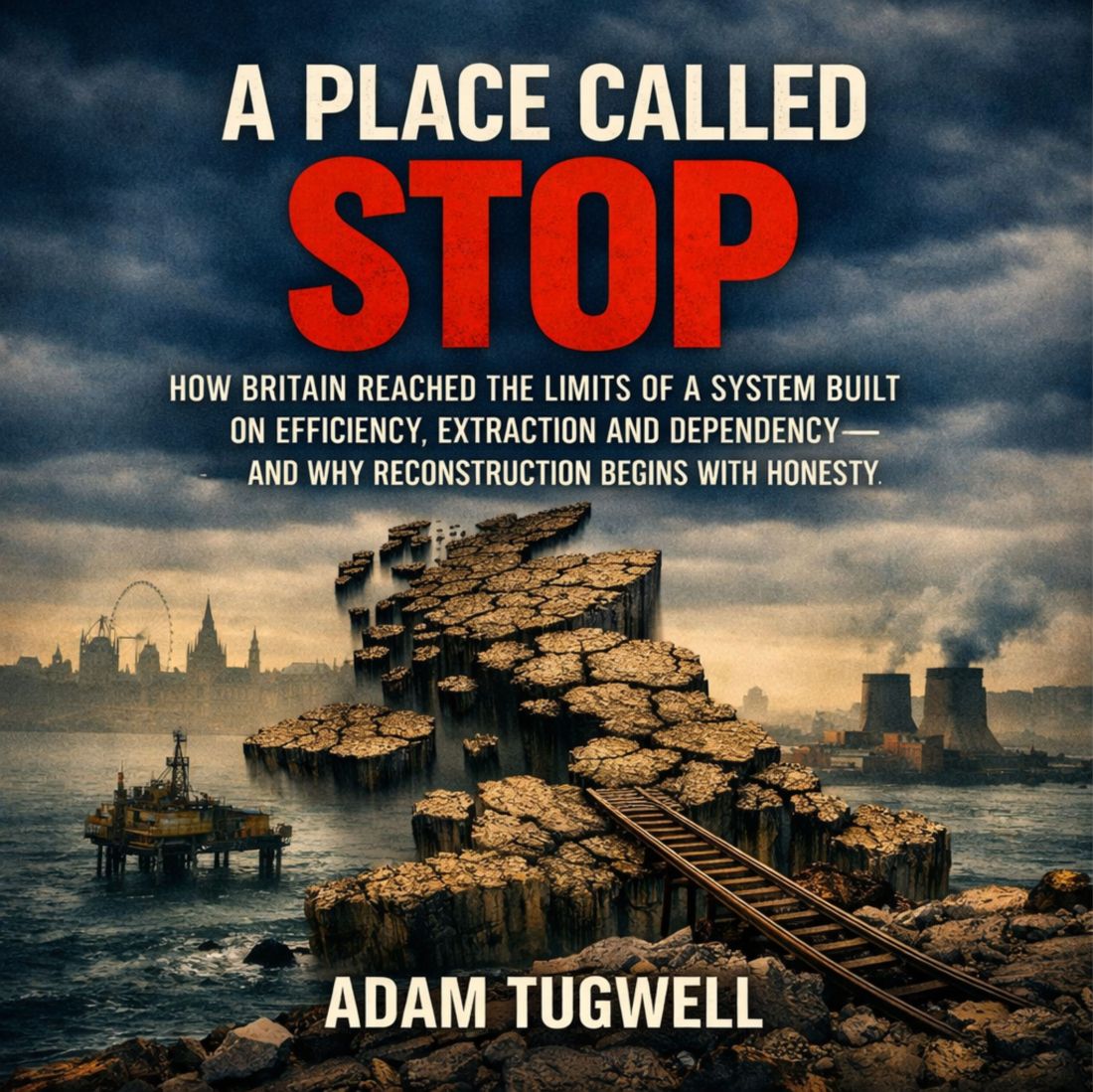
Chapter Four – A Place Called Stop
If you’ve ever pushed something too far – a car, a relationship, a job, even your own patience – you’ll know there’s a moment when it doesn’t matter how much effort you put in, it just won’t go any further. You can press the accelerator, you can try to reason with it, you can pretend it’s fine, but deep down you know you’ve reached the limit.
Britain feels like that now.
Not in a dramatic, apocalyptic way. More in the sense of a system that’s been stretched, patched, repurposed, and talked‑up for so long that it’s quietly run out of road.
We’re still going through the motions – elections, budgets, announcements, promises – but the underlying machinery isn’t responding the way it used to.
It’s as if the country has arrived at a place called Stop. Not because someone slammed on the brakes, but because the engine simply can’t push any harder.
For decades, we built everything around the idea that you could squeeze more out of less. More productivity from fewer workers. More public services from smaller budgets. More growth from thinner foundations. And for a while, it looked like it worked. Britain became very good at appearing efficient.
But efficiency has a habit of turning into extraction when you keep pushing it. You start pulling capacity out of institutions faster than you replace it. You start relying on goodwill instead of structure. You start assuming resilience instead of building it. And eventually, you end up with systems that look intact from the outside but are hollowed out on the inside.
That’s where the dependency creeps in. Not the kind people talk about in political slogans – the real kind. The kind where hospitals depend on staff doing unpaid overtime just to keep the doors open. The kind where councils depend on volunteers to run services that used to be funded. The kind where government depends on narrative because it no longer has the tools to deliver what it promises.
And once a system becomes dependent, it becomes fragile. Not fragile in the sense of imminent collapse – fragile in the sense that everything works only if nothing unexpected happens.
But unexpected things always happen.
The problem is, most people don’t see this fragility because the surface still looks familiar. The trains still run. The schools still open. The bins still get collected. The news still talks about “plans” and “strategies” and “frameworks” as if the underlying capacity is still there.
It’s like living in a house where the walls have quietly rotted behind the paint. You don’t notice until you lean on one.
This is what I mean by Stop. It’s not collapse. It’s not even crisis, at least not at first. Stop is the point at which a system can no longer solve its problems using the assumptions that created them.
It’s the moment when the old logic – the logic of efficiency, extraction, and dependency – stops working, but the system keeps pretending it does. It’s the moment when the public starts feeling that something is wrong but can’t quite explain it. It’s the moment when politics becomes more about performance than problem‑solving because the tools backstage don’t work anymore.
And it’s the moment when people start looking for voices that sound confident. Not because confidence is the answer, but because confidence is the only thing the system still knows how to produce.
This is the landscape the false prophets walk into. Not because they caused it. Not because they’re malicious. But because the system has reached Stop, and the public is desperate for someone – anyone – who sounds like they know the way forward.
But Stop isn’t a place you escape by following the old map. It’s a place you leave by admitting you need a new one.
The longer essay A Place Called Stop develops this diagnosis in more detail, especially the way efficiency can become extraction, extraction can become dependency, and dependency can leave institutions unable to absorb the shocks they were created to withstand.
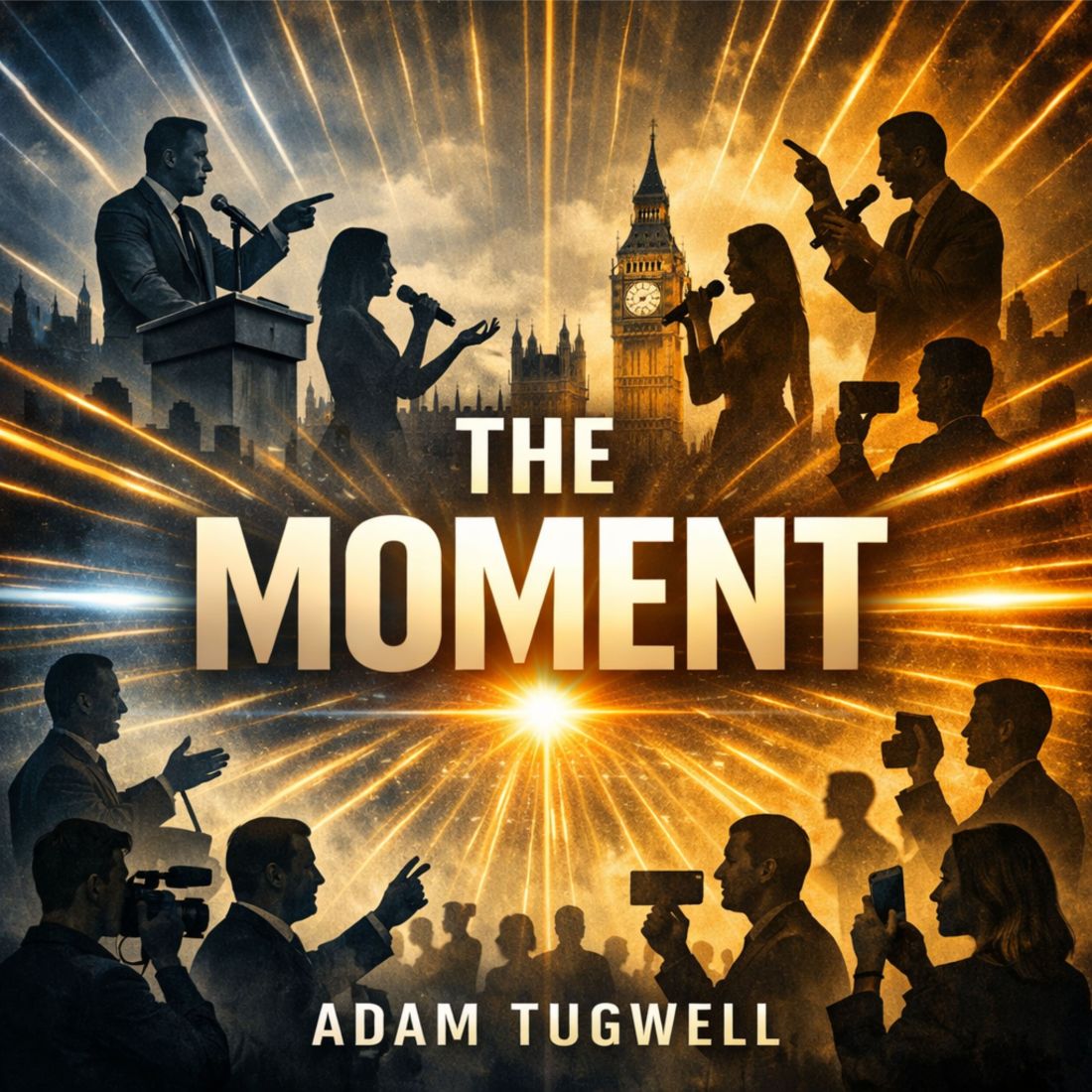
Chapter Five – The Moment
If you’ve ever watched something go wrong in real time – a fight breaking out, a car losing control, a crowd suddenly shifting – you’ll know how strange those moments feel.
Everything seems normal right up until the second it isn’t. There’s no warning. No countdown. No neat chain of events. Just a sudden change when things go sideways that nobody saw coming until it was already happening.
History works like that more often than people realise.
We’re taught to think of big changes as the result of long processes: debates, movements, elections, negotiations. And sometimes they are. But just as often, the real turning point is a moment – a single moment – when someone acts while others hesitate.
That does not mean history is made only by great individuals. It means something more unsettling. Structures create the conditions. Moments decide which of the possible futures becomes real.
Most of the time, individual actions are absorbed by the system. Speeches fade. Decisions are delayed. Errors are corrected. Crowds disperse. Institutions bend and then return to shape. But when the system is fragile, absorption fails. A gesture, a refusal, a speech, a rumour, a resignation, a police decision, a vote, a march, or a single act of courage can suddenly carry more weight than it would have carried the day before.
The moment is not the cause of everything. It is the point at which everything that has been building becomes visible.
The Russian Revolution is the classic example. It wasn’t inevitable. It wasn’t planned in the way people imagine. It wasn’t the logical end of a tidy sequence of events.
The real ‘moment’ hinged on Lenin deciding to move when others were still arguing about what to do. That decision did not create the whole crisis. War, hunger, exhaustion, legitimacy, organisation, fear and hope were already there. But his significance was that he recognised a moment had arrived and acted while others hesitated.
And this is the part false prophets never see.
They think in terms of order. They think in terms of steps. They think in terms of “first this, then that”. They think in terms of plans unfolding the way plans are supposed to unfold.
They believe the system will behave the way it used to. They believe institutions will respond predictably. They believe people will stay calm. They believe collapse, if it comes, will be rational and wait for everything to catch up – as their experience suggests that it should.
But when a system reaches Stop, it doesn’t behave like that anymore. It behaves like something under strain – brittle, unpredictable, sensitive to pressure. And when something brittle is under pressure, it doesn’t crack gradually. It cracks suddenly.
That’s the moment.
The moment when public order shifts. The moment when institutions freeze. The moment when people look around for someone who seems to know what to do. The moment when hesitation becomes dangerous. The moment when confidence – any confidence – becomes magnetic.
And the person who steps forward in that moment isn’t always the one who’s been talking the loudest beforehand. It’s often someone who wasn’t even part of the conversation. Someone who sees an opening. Someone who acts quickly. Someone who understands that the system is too fragile to resist.
False prophets don’t see that possibility. They’re too busy believing they’ll be the ones leading when the moment arrives. They’re too busy believing the moment will wait for them. They’re too busy believing the moment will unfold in a way that makes sense.
But moments don’t care about sense. Moments care about timing.
And this is why the danger isn’t always the false prophets themselves. It’s the space they create – the space where people stop thinking for themselves because someone else sounds certain. The space where public imagination narrows. The space where, when the moment arrives, people are unprepared to question whoever steps forward.
That person might not be the confident voice they’ve been listening to. It might be someone far less benign. It might even be someone already in power, offering safety in exchange for freedoms because the public is frightened and the system is out of road.
And that’s why understanding this matters. Not to scare anyone. Not to predict anything. But to recognise that when a system reaches Stop, the future doesn’t unfold gradually. It arrives suddenly – in moments – and those moments are shaped by whoever is ready and able to act.
Chapter Six – The False Prophets
When a country reaches a point like this – a kind of national pause where nothing quite works but everything still pretends it does – certain voices start to stand out. You’ve probably noticed them. They’re the ones who sound absolutely sure of themselves when everyone else is quietly wondering what on earth is going on.
And the thing is, most of these people aren’t charlatans. They’re not trying to manipulate anyone. They genuinely believe they’ve seen something others haven’t. They look at the mess, they look at the frustration, and they think, almost instinctively, “I could sort this out. I know what’s wrong. I know what to do.”
It’s a very human reaction. But it’s also where the trouble begins.
Because when a system has reached its limit – when it’s running on fumes and habit rather than capacity – the people who sound confident become incredibly appealing. Not because confidence is the answer, but because confidence is the only thing the system still knows how to produce.
The problem is that these voices almost always see the situation as a matter of personnel. To them, the issue isn’t structural. It isn’t about the worldview running out of road. It isn’t about fragility or exhaustion or the quiet hollowing‑out of institutions. It’s simply that the wrong people are in charge, and if the right people were in charge – usually meaning themselves – everything would start working again.
That is why they are so compelling. They are often right about the feeling and wrong about the cause. They sense exhaustion. They sense drift. They sense that the country is no longer being governed by a living idea. But they translate all of that into a simpler story: bad people, bad choices, weak leadership, betrayal, incompetence. Sometimes those things are real. But they are not enough to explain what is happening.
They’re not lying. They really believe this.
And because they believe it, they stop noticing the deeper reality. They stop seeing how thin the system has become. They stop recognising how quickly public order can shift when pressure builds. They stop imagining how fast things can unravel when the old logic stops working. They stop seeing how fragile everything really is.
They think in terms of steps and sequences. They think in terms of plans. They think in terms of “if we do this, then that will happen.”
They believe the system will behave the way it used to. They believe institutions will respond predictably. They believe people will stay calm. They believe collapse, if it comes, will be orderly.
And that’s exactly why they can’t see the danger.
Because when a system reaches Stop, things don’t unfold in order anymore. They don’t wait for the right leader to take charge. They don’t follow neat chains of events. They hinge on moments – sudden, unpredictable moments where hesitation matters, where confidence matters, where someone steps forward while everyone else freezes.
History is full of these moments. They’re rarely planned. They’re rarely expected. They’re rarely rational.
They are moments where the entire direction of a country can shift because a fragile system has made individual action unusually consequential.
False prophets don’t see those moments coming. Not because they’re foolish, but because their worldview doesn’t contain the possibility that everything could change in an instant.
They assume they’ll be the ones leading when the moment arrives. But moments don’t reward sincerity. Moments reward whoever acts first.
And that’s the danger.
Not the false prophets themselves – but the vacuum they unintentionally create. A vacuum where people stop thinking for themselves because someone else sounds certain. A vacuum where public imagination narrows. A vacuum where, when the moment comes, people are unprepared to question whoever steps forward.
And that person might not be the confident voice they’ve been listening to. It might be someone far less benign. It might even be someone already in power, offering safety in exchange for freedoms because the public is frightened and the system is out of road.
False prophets don’t see that possibility. They’re too busy believing they’re the answer.
And that’s why being able to identify false prophets matters. Not to criticise them. Not to attack them. But to understand the role they play in a system that has quietly reached Stop – and the risks that come with mistaking confidence for clarity.
The next chapter is about those moments themselves – the ones that change history not because they were planned, but because someone acted while others hesitated. It’s about what people can do before those moments arrive – not to control them, but to be ready for them.
Chapter Seven – The Preparation
When a system is under strain, people often assume the important decisions will be made somewhere far away – in government buildings, in boardrooms, in institutions that still look solid from the outside.
But when change arrives in moments rather than processes, the most important decisions aren’t made by systems at all. They’re made by individuals, in the way they think, the way they react, and the way they interpret what’s happening around them.
That’s why preparation, in a moment like this, doesn’t look like stockpiling or strategising or waiting for instructions. It looks like clarity. It looks like learning to see the world without the filters that used to make sense. It looks like recognising that the old logic has run out of road and that the new logic hasn’t yet arrived.
Most people don’t realise how much of their understanding of the world comes from habit. They assume institutions will behave the way they used to. They assume public order will hold the way it always has. They assume the future will unfold in roughly the same shape as the past. And when those assumptions stop being reliable, the first instinct is often to cling to them even harder.
But preparation begins with letting go of the idea that continuity is guaranteed.
It means noticing when explanations feel too neat. It means recognising when confidence is being performed rather than earned. It means understanding that fragility isn’t a prediction – it’s a condition. It means accepting that moments, not processes, shape turning points.
And it means thinking independently, especially when the noise becomes overwhelming.
That’s harder than it sounds. Noise is comforting. It gives people something to hold onto. It offers certainty at the exact moment certainty becomes impossible. It fills the space where quiet thinking should be. And when false prophets step into that space – with their simple stories and their confident tones – it becomes even harder to resist the pull.
But preparation is the opposite of that pull. It’s the willingness to pause. To question. To notice. To think.
It’s the ability to look at a situation and ask whether the explanation being offered is actually connected to the structure underneath, or whether it’s just a story designed to make the moment feel less frightening.
Preparation isn’t dramatic. It isn’t heroic. It isn’t loud.
It’s quiet. It’s personal. It’s internal.
It’s the kind of preparation that makes someone less vulnerable when the moment arrives – not because they can control it, but because they can see it clearly.
They’re not paralysed by surprise. They’re not swept along by someone else’s certainty. They’re not caught in the vacuum created by voices who sound confident but don’t understand the fragility of the system they’re speaking into.
They’re simply ready to think.
And that matters, because when a system reaches Stop, the people who can think clearly become the anchor points for everyone around them. They’re the ones who don’t panic when the ground shifts. They’re the ones who don’t mistake confidence for competence. They’re the ones who can tell the difference between a moment that needs action and a moment that needs calm.
They’re the ones who help others stay steady.
Preparation, in the end, is about imagination – the ability to imagine that the future might not look like the past, and to stay grounded anyway. It’s about seeing the system as it is, not as the worldview insists it must be. It’s about recognising that fragility doesn’t mean inevitability, and that moments don’t have to lead to chaos if people are able to think clearly when they arrive.
The system may be out of road. But people aren’t.
And that’s where reconstruction begins – not with institutions, not with plans, but with individuals who have learned to see clearly in a world that no longer behaves the way it used to.
Chapter Eight – Reconstruction
If preparation is personal, reconstruction is collective. It begins inside individuals, but it cannot end there. Seeing clearly matters because people who see clearly can begin to build differently.
Reconstruction does not mean returning to the old normal. That is the temptation whenever a system reaches its limit: to imagine that the task is simply to restore what has been lost. But the old normal is part of the problem. It is the worldview that taught us to confuse efficiency with resilience, management with government, activity with purpose, and continuity with health.
So reconstruction has to begin with different questions. Not “How do we make the old system work again?” but “What kind of system can survive reality?” Not “How do we preserve the appearance of stability?” but “What would genuine resilience look like?” Not “Who can fix this for us?” but “What habits, institutions, responsibilities and forms of trust would make us less dependent on someone else’s certainty?”
That will not come from slogans. It will not come from another strategy document written in the old language. It will come from the slow rebuilding of capacity: in public services, in local institutions, in democratic habits, in the willingness to tell the truth about limits, and in the courage to stop pretending that every problem can be solved by one more announcement.
This is also where questions of future governance become unavoidable. If the old model has reached its limit, then reconstruction cannot simply mean better management of the same assumptions. It has to mean designing forms of local, civic and economic governance that are capable of learning, adapting and holding trust under pressure.
The point of seeing clearly, then, is not to become detached or superior. It is to become useful. Useful to your family, your community, your workplace, your town, your country. Useful because you are less easily panicked. Useful because you can recognise false certainty when it appears. Useful because you know that a fragile moment does not have to become a destructive one if enough people remain capable of thinking.
This is the hopeful part, although it is not an easy hope. Systems can run out of road. Worldviews can exhaust themselves. Institutions can hollow out. But people can learn. They can notice what they have been taught not to notice. They can stop mistaking performance for strength. They can build new habits before new institutions fully exist.
That is where reconstruction begins: not with a master plan, but with a different kind of attention. The ability to see the cracks without worshipping collapse. The ability to recognise fragility without surrendering to fear. The ability to prepare for moments without longing for them.
And perhaps that is the real task now. Not to predict the moment. Not to wait for the prophet. Not to demand that the old map become true again. But to learn to see clearly enough that, when the ground shifts, we are not merely frightened by it. We are ready to build.
Conclusion – The Work Ahead
There’s a point in any honest look at a country where the conversation stops being about diagnosis and starts being about direction. Not in the sense of a plan, or a programme, or a list of things that need to happen, but in the quieter sense of recognising what the moment asks of people.
Britain is fragile. Not because it is doomed, and not because it is weak, but because the worldview that carried it for forty years has reached its limit. The system built on that worldview is still performing stability, but performance isn’t the same as capacity. And when capacity thins, moments matter more than they used to.
That’s the landscape we’re in.
The point of seeing clearly isn’t to predict what comes next. It isn’t to panic. It isn’t to wait for collapse or to assume it. It’s simply to understand the shape of the moment we’re living through – a moment where the old logic has stopped working and the new logic hasn’t yet arrived.
Reconstruction won’t begin with a manifesto. It won’t begin with a speech. It won’t begin with a leader who claims to know the way forward. It will begin wherever people stop mistaking noise for clarity and start paying attention to the structure underneath.
That’s not a call to action. It’s just the reality of how fragile systems recover: slowly, locally, through people who have learned to see the world without the filters that used to make sense.
The system may be out of road. But people aren’t.
And that’s where the work ahead begins – not with certainty, not with confidence, but with the quiet recognition that clarity is the first form of resilience, and that resilience is the first form of reconstruction.
Further Reading
The following pieces develop the argument from different angles. They are best read not as separate essays, but as companion works: one explains how to see clearly, one examines the inversion between public and system, one develops the idea of Stop, and one points towards the question of future governance and reconstruction.
1. Do We Exist Only to Serve Government, or Does Government Exist to Serve Us? https://adamtugwell.blog/2026/07/17/do-we-exist-only-to-serve-government-or-does-government-exist-to-serve-us/ This piece expands the argument in Chapter Two. It explores the inversion at the centre of the democratic contract: the slow drift from government serving the public to the public being expected to serve the system’s needs, processes and limitations. It gives the reader a deeper route into the essay’s claim that modern governance often protects the appearance of stability before it protects the public purpose that justified it.
2. A Place Called Stop: How Britain Reached the Limits of a System Built on Efficiency, Extraction and Dependency – and Why Reconstruction Begins with Honesty https://adamtugwell.blog/2026/07/18/a-place-called-stop-how-britain-reached-the-limits-of-a-system-built-on-efficiency-extraction-and-dependency-and-why-reconstruction-begins-with-honesty/ This is the closest companion to Chapters Three and Four. It develops the essay’s central diagnosis: that Britain has reached a limit point created by efficiency turning into extraction, extraction becoming dependency, and dependency producing fragility. It is the bridge between the conceptual argument about seeing clearly and the political argument about what happens when a system can no longer solve problems using the assumptions that created them.
3. The Local Economy & Governance System https://adamtugwell.blog/2025/11/21/the-local-economy-governance-system-online-text/ This work points beyond diagnosis towards reconstruction. It is most relevant to the final chapter because it asks what future governance might look like when old assumptions about central control, efficiency and institutional capacity are no longer enough. It helps move the argument from seeing the failure of the old map towards imagining the first outlines of a new one.
4. The Myth-Catcher: A Quiet Guide to Discovering Clarity in an Age of Noise https://adamtugwell.blog/2026/07/02/the-myth-catcher-a-quiet-guide-to-discovering-clarity-in-an-age-of-noise-full-text/ This is the practical foundation for Chapter One. It develops the habit of noticing when a public explanation has become too neat, too confident, or too useful to the people offering it. In the context of this essay, myth-catching is the first discipline of preparation: the ability to stay mentally independent when noise, certainty and narrative are doing the thinking for everyone else.
Disclaimer
This book offers analysis and interpretation of political, institutional and cultural conditions in Britain. It is not intended as professional advice, legal guidance, financial instruction or a prediction of future events. The arguments and observations reflect the author’s own examination of public systems and the pressures acting upon them.
Readers should apply their own judgement when considering the ideas presented here. Nothing in this work should be taken as a call for specific political action, nor as an endorsement of any party, candidate or policy. All examples and descriptions of institutions are used to illustrate structural dynamics, not to make claims about individual actors.
This book is not intended as a definitive account of Britain, its history, its institutions or its future.
It is an interpretation of the events that have led to the circumstances in which Britain now finds itself and the reality of the position this leaves the country in.
The arguments presented here are offered in the hope of encouraging curiosity rather than certainty, inquiry rather than agreement, and independent thought rather than passive acceptance. Readers are encouraged to test the claims, challenge the assumptions, examine the sources and draw their own conclusions.
Many of the questions explored in these pages have no simple answers. They concern complex systems, long historical processes, competing values and deeply human decisions. Reasonable people will disagree on causes, consequences and solutions. Such disagreement is not a weakness. It is part of the process by which understanding develops.
The central purpose of this book is not to tell readers what to think. It is to encourage them to think more deeply about the structures that shape everyday life: the relationship between money and production, ownership and responsibility, efficiency and resilience, growth and capability, politics and power.
If the book succeeds, it will not be because it settles an argument. It will be because it helps readers ask better questions.
Above all, it is written from the belief that understanding is a form of empowerment. Citizens who understand the systems around them are better able to participate in them, challenge them, improve them and, where necessary, rebuild them.
The future is unlikely to be shaped by those who possess all the answers. It will be shaped by those willing to question assumptions, seek understanding and take responsibility for what comes next.
Introduction – What This Book Is Trying to Explain
This book is an argument about Britain’s decline, but it is not an argument about villains or the attribution of blame. It is not written to prove that one party, one class, one generation, or one institution deliberately destroyed the country. The story is more difficult than that.
The argument developed here is that Britain was gradually reshaped by a worldview: a way of thinking that treated scale as progress, financial efficiency as wisdom, and global dependency as modernity.
For decades, this worldview felt sensible. It promised lower prices, better management, private investment, global competitiveness and a more sophisticated economy. In some ways, it delivered real benefits. But it also carried costs that were poorly understood at the time.
This book asks the reader to follow those costs as they moved from policy into ownership, from ownership into supply chains, from supply chains into communities, from communities into capability, and finally from capability into the cost of everyday life.
It is written as a narrative rather than an academic paper. Where the prose is forceful, it is because the human consequences are forceful. But the central claim should be read as an interpretation:
Britain’s present difficulties are not only fiscal, political or managerial. They are also problems of capability – of what a country can still make, repair, sustain, teach, remember and control.
Working Definitions
Worldview means the shared assumptions through which institutions decide what counts as sensible, modern or realistic.
Capability means the accumulated skills, supply chains, institutions, infrastructure, habits and relationships that allow a society to produce, repair, maintain and adapt.
Financialisation means the growing dominance of financial logic – debt, leverage, asset values, yield and shareholder returns – over productive logic such as making, maintaining, training and serving.
Resilience means the ability of a country, community or system to withstand shocks without losing the essentials of life.
How to Read This Book
This book moves in four stages. Parts I to IV explain the worldview, monetary architecture and ownership changes that altered Britain’s incentives. Parts V to VII show how those incentives moved through production, local life and legislation. Part VIII explains how decline was narrated as progress. Parts IX and X bring the argument to its destination: first by asking what capability means in everyday life, and then by confronting a place called stop and what now lies ahead.
The reader does not need to agree with every claim to follow the central question:
What happens to a country when it optimises for cheapness, scale and financial return while neglecting the slow work of maintaining capability?
One distinction matters throughout: economic activity is not the same as national capability. A country can move money, import goods and record growth while losing the practical ability to make, repair, maintain and adapt.
Part I – The World Britain Thought It Lived In
The establishment as a worldview, not a class
For most of the past half‑century, Britain has lived inside a comforting illusion. We believed we understood who ran the country, how decisions were made, and what the “establishment” really was. We imagined a familiar cast of characters – wealthy families, old institutions, political grandees, newspaper barons, the usual suspects. We thought power lived in people.
But the truth is stranger, and far more difficult to face.
The modern establishment is not a class. It is a worldview.
It is a way of seeing the world that became so normal, so widely accepted, so deeply embedded in public life, that almost nobody noticed it happening. It didn’t arrive with a revolution or a manifesto. It arrived quietly, through a thousand small decisions, each one justified at the time, each one presented as progress.
This worldview has three core beliefs:
Scale is always better than locality.
Financial efficiency is always better than human meaning.
Global systems are always more reliable than local capability.
These beliefs didn’t come from a conspiracy. They came from a generation of policymakers, economists, civil servants, business leaders, and commentators who genuinely thought they were modernising Britain. They believed they were making the country more competitive, more efficient, more advanced.
Because they believed it, they taught it. Because they taught it, others believed it too. And because others believed it, it became the air everyone breathed.
This is how a worldview becomes an establishment.
Not through secret meetings or hidden hands, but through consensus – a consensus so strong that it becomes invisible.
Once this worldview took hold, many of the decisions that followed began to look inevitable.
The worldview that hollowed out Britain
This worldview told us that:
local businesses were old‑fashioned,
local supply chains were inefficient,
local skills were outdated,
local communities were sentimental,
local capability was unnecessary in a modern world.
It told us that:
globalisation was progress,
offshoring was smart,
privatisation was modern,
financialisation was sophisticated,
centralisation was efficient.
It told us that:
cheaper goods meant improvement,
foreign ownership meant investment,
deregulation meant freedom,
consolidation meant strength.
And because the worldview was everywhere – in politics, in media, in academia, in business – nobody questioned it. It didn’t feel ideological. It felt normal.
This is why the story of Britain’s decline is so hard for people to see. It didn’t happen through dramatic events. It happened through normality.
Through decisions that felt sensible, reforms that felt modern, and changes that felt inevitable.
The establishment didn’t hide anything. It simply didn’t see what it was destroying.
The cost of a worldview
When a worldview becomes the establishment, it becomes the lens through which every problem is interpreted and every solution is designed. And because this worldview worshipped scale, efficiency, and global systems, it treated local capability as expendable.
Local businesses weren’t just economic units. They were the infrastructure of everyday life.
They were:
the places where people learned skills,
the places where communities gathered,
the places where meaning was created,
the places where resilience lived.
But the worldview didn’t see any of that. It saw inefficiency. It saw duplication. It saw cost.
And so, step by step, local capability was dismantled.
Not because anyone hated communities. Not because anyone wanted decline. But because the worldview made decline look like progress.
This is the tragedy at the heart of the story.
This book argues that Britain did not fall because of a small group of villains. It declined because a set of beliefs became so dominant that they were mistaken for common sense.
Beliefs that were never questioned. Beliefs that shaped every policy. Beliefs that became the establishment.
The moment the worldview became a trap
By the time we reached the 1990s and 2000s, the worldview was so dominant that politicians no longer had room to think outside it. They inherited a system built on assumptions they didn’t create and couldn’t escape.
This is why modern politicians often find the inheritance so difficult. They are not simply choosing within a free system. They are operating inside assumptions that already define what counts as realistic.
Those assumptions had already:
dismantled local capability,
hollowed out national resilience,
replaced production with financial extraction,
and left Britain dependent on global systems it cannot control.
This matters because the real state of the economy is not only a matter of budgets, forecasts and announcements. It is also the deeper state of national capability.
The worldview sets the boundaries of what politicians are told is possible, realistic, modern and acceptable.
And much of what it tells them no longer fits the country they are trying to govern.
Part II – When Money Stopped Being Real
The quiet revolution that changed everything
If you want to understand how Britain changed, you have to start with something that sounds almost too simple: money stopped being real.
Not in the sense that it became imaginary or worthless. But in the sense that it stopped being tied to anything solid – anything you could touch, measure, or limit. It became something that could be created at will, by institutions most people never see and never think about.
This shift didn’t happen overnight. It didn’t happen with fanfare. It didn’t happen with public debate.
It happened quietly, through technical reforms, banking changes, and political decisions that were presented as modernisation. And because the worldview of the time worshipped efficiency and global integration, nobody questioned it.
But the consequences were enormous.
The old world: money as something earned
For most of Britain’s history, money represented something real:
gold,
labour,
production,
land,
goods,
services.
If you wanted money, you had to earn it. If you wanted to buy something, you had to save for it. If you wanted to invest, you had to risk something you already had.
This created a natural limit – a boundary that kept the economy connected to reality.
People understood money because they lived inside its constraints.
The new world: money as something created
But in the late 20th century, Britain – like most advanced economies – shifted fully to a fiat system. Money no longer represented anything physical. It became a promise backed by government and created by banks.
When a bank issues a loan, it doesn’t hand over existing money. It creates new money.
It types numbers into a system, and those numbers become purchasing power.
This sounds abstract, but it changed everything.
This does not mean banks can create money without limit. Regulation, capital requirements, profitability, repayment, interest rates and monetary policy all constrain the process. But it does mean that access to credit became central to who could buy assets, consolidate industries and shape the economy.
It meant that:
those with access to the banking system could buy anything,
money could be created faster than value,
debt could expand more rapidly than productive capacity,
and financial actors could acquire assets the public could never afford.
This is the moment where the worldview of efficiency and scale fused with a monetary system that rewarded extraction over creation.
And once that fusion happened, the old economy – the one built on production, locality and capability – was placed under immense pressure.
The new rules of the game
In the old world, you built a business by:
making things,
selling things,
hiring people,
training apprentices,
serving communities.
In the new world, you built a business by:
borrowing money created from nothing,
buying existing businesses,
breaking them up,
selling the parts,
and always extracting value.
The first world created capability. The second world extracted it.
The first world built communities. The second world hollowed them out.
The first world rewarded patience, skill, and service. The second world rewarded speed, leverage, and financial engineering.
This wasn’t a conspiracy. It was a change in the rules.
And once the rules changed, a new kind of operator emerged.
The public didn’t see it because nothing looked dramatic
There were no riots. No revolutions. No sudden collapses.
Factories closed quietly. Businesses were bought quietly. Assets were sold quietly. Supply chains moved quietly. Communities hollowed out quietly.
People didn’t see the change because each step was small. Each decision made sense. Each reform was justified.
But underneath the surface, the foundations were shifting.
Money was no longer earned – it was created. Value was no longer built – it was extracted. Capability was no longer nurtured – it was dismantled.
And Britain was no longer an economy built on production. It was becoming an economy built on financial throughput.
Part III – The Rise of Financial Operators
How a new kind of businessman revealed the new rules of the game
The shift in money – from something earned to something created – didn’t immediately change the world. Most people didn’t notice it at all. Life looked the same. Shops were open. Factories were running. Communities were intact. The country still felt familiar.
But beneath the surface, the rules had changed.
And the first people to realise it were not politicians, civil servants or economists. They were business operators: people who lived in the world of deals, acquisitions and balance sheets, and who understood that if money could be created through credit, then the old logic of business no longer applied in the same way.
One of the earliest and most visible of these figures was Sir James Goldsmith.
Goldsmith didn’t invent the new system. He simply saw it earlier than most.
He realised that in a world where money could be conjured into existence through debt, the most valuable thing about a company wasn’t its future – it was its parts.
A factory could be sold. A brand could be sold. A supply chain could be sold. A piece of land could be sold. A division could be sold. A patent could be sold.
And the pieces were often worth more than the whole.
This was the moment when break‑up value became more important than productive value. It was the moment when financial logic overtook industrial logic. It was the moment when extraction became more profitable than creation.
Goldsmith didn’t do anything illegal. He didn’t do anything hidden. He didn’t do anything conspiratorial.
He simply played the game the new monetary system made possible.
And once he demonstrated how profitable it was, thousands followed.
The new business model
Before the monetary shift, business success meant:
building things,
hiring people,
training apprentices,
serving communities,
creating value over time.
After the monetary shift, business success increasingly meant:
borrowing money created from nothing,
buying existing businesses,
breaking them apart,
selling the pieces,
extracting value quickly.
This wasn’t ideology. It wasn’t politics. It wasn’t conspiracy.
It was incentives.
And once incentives shift, behaviour follows.
Goldsmith’s later realisation
There is a part of Goldsmith’s story that matters deeply to this story.
Later in life, he turned fiercely against the European Union. Whatever one thinks of that position, it appears to have reflected a deeper unease:
He had been part of a system much larger than himself – a system that rewarded extraction, centralisation, and financial logic at the expense of national capability, local resilience, and democratic control.
He did not attack the monetary architecture directly. He did not attack the financial system in the same way. Instead, he attacked the part of the system he could challenge – the visible political structure.
His shift wasn’t hypocrisy. It was recognition.
And it foreshadows the political trap explored later in this book: the moment when promises made in political opposition collide with the reality of a system that no longer responds easily to political will.
Part IV – The Public Sell-Off: Britain Changes Hands
How national life became collateral in a financial system most people never saw
By the time the 1980s arrived, Britain was standing on the edge of a quiet revolution. The worldview of modernisation had taken hold. The monetary system had changed. Financial operators had demonstrated that breaking things up was more profitable than building them. And the political class – trapped inside the same worldview – believed they were steering the country toward a more efficient future.
This was the moment when Britain changed hands.
Not through a coup. Not through a crisis. Not through a dramatic collapse.
But through a public sell‑off – a transfer of ownership so vast and so consequential that its effects are still unfolding today.
The promise: “Everyone will own a piece of Britain”
Privatisation was sold as empowerment.
People were told:
they would become shareholders,
they would have a stake in national life,
they would benefit from competition,
they would enjoy lower prices,
they would be part of a modern economy.
It sounded democratic. It sounded fair. It sounded modern.
And because the worldview of the time worshipped efficiency and scale, almost nobody questioned it.
But beneath the slogans, something very different was happening.
The reality: Britain was being sold to people who didn’t use real money
The public bought shares with real money – wages, savings, pensions.
But the real buyers – the ones who acquired entire industries – didn’t use real money at all.
They used debt.
Debt created by banks. Debt backed by assets. Debt that didn’t exist until the moment they decided to buy.
This is the part the public never saw:
The sell‑off wasn’t a transfer of ownership from the state to the people. It was a transfer of ownership from the state to the financial system.
And once the financial system owned those assets, it treated them exactly the way financial logic dictates:
extract value,
minimise investment,
maximise dividends,
load the company with debt,
sell anything that can be sold,
and repeat.
This wasn’t ideological. It wasn’t malicious. It was incentives.
The incentives were now doing the work.
Please note: Privatisation was not sold as extraction. Its defenders argued that private ownership would bring investment, discipline, innovation and better management. The argument here is not that those claims were always false, but that the ownership model often made extraction easier to reward than long-term stewardship.
The public paid three times
Privatisation created a strange, almost tragic loop:
The public paid for the assets once through taxes when they were built.
The public paid for them again when they bought shares during privatisation.
The public paid for them a third time through higher bills, failing services, and bailouts after the assets were stripped.
This is why Thames Water’s latest crisis is not a surprise. It is the logical endpoint of a model that rewards extraction over service.
Please note: Thames Water’s own investor reports, alongside reporting and regulatory analysis, show a company carrying very high debt while facing major investment needs, environmental failures and questions about dividends.
Thames Water was:
bought with debt,
loaded with more debt,
stripped of assets,
drained through dividends,
under‑invested for decades,
and now stands on the brink of collapse.
And the public – who paid for the system three times already – is likely to be asked to pay again.
This is not simply mismanagement. It is what the model made more likely.
Infrastructure does not negotiate with financial theory. A pipe either holds or it fails. A grid either carries demand or it does not. A rail line either functions or it breaks down. The deeper question is whether ownership and regulation reward stewardship, maintenance and resilience, or whether they reward leverage, dividends and postponement.
The sell‑off wasn’t just economic – it was cultural
Privatisation didn’t just change ownership. It changed the meaning of public life.
Before the sell‑off, national infrastructure was understood as:
shared,
collective,
interdependent,
part of the fabric of society.
After the sell‑off, it became:
collateral,
financial throughput,
a source of yield,
an asset class.
Water wasn’t water. It was a revenue stream.
Energy wasn’t energy. It was a balance sheet.
Rail wasn’t rail. It was a portfolio.
Telecoms weren’t telecoms. They were a leveraged acquisition.
The worldview had won. And Britain had lost something it didn’t realise it needed until it was gone.
Privatisation set the stage for offshoring
This is the part most people never connect:
Once national infrastructure was owned by financial actors, the next logical step was to apply the same logic to production.
If breaking up a water company was profitable, breaking up a manufacturing company was profitable too.
If selling off land was profitable, selling off factories was profitable too.
If reducing investment increased dividends, reducing investment in supply chains increased dividends too.
Privatisation wasn’t the end of the story. It was the beginning of the next chapter – the chapter where Britain’s productive base quietly disappeared.
Part V – Offshoring: The Great Disappearance
How Britain quietly exported its own future
By the time the public sell‑off was underway, something else was happening – something quieter, something slower, something far more devastating. It didn’t make headlines. It didn’t spark protests. It didn’t feel like a crisis. It felt like modernisation.
Factories began to close. Warehouses emptied. Workshops shut their doors. Apprenticeships dried up. Supply chains thinned out. Skills stopped being passed down.
And yet, nothing looked dramatic. There were no sudden collapses. No national emergencies. No televised reckonings.
It was all so gradual that most people didn’t realise what was happening until it was already done.
This was offshoring – the great disappearance of Britain’s productive base.
The story people were told
People were told that offshoring was:
efficient,
modern,
competitive,
inevitable,
smart.
They were told that:
cheaper goods meant progress,
global supply chains were more reliable,
foreign production was more advanced,
Britain should focus on “high‑value services,”
manufacturing was old‑fashioned.
And because the worldview of the time worshipped scale and efficiency, almost nobody questioned it.
But beneath the slogans, something profound was happening.
Britain wasn’t just importing cheaper goods. It was exporting its capability.
The truth: Britain didn’t lose its productive base – it moved it
Factories didn’t collapse. They were moved.
Supply chains didn’t fail. They were relocated.
Skills didn’t disappear. They were transferred abroad.
Communities didn’t decline by accident. They declined because the work that sustained them was shipped overseas.
This was not merely a natural evolution. It was a strategy encouraged by policymakers, rewarded by financial markets, and justified by a worldview that saw locality as inefficient and globalisation as progress.
Offshoring wasn’t just an economic shift. It was a geographical extraction of national capability.
Please note: Globalisation also lowered prices for consumers and allowed some firms to specialise successfully in high-value sectors. The question is not whether global trade brought benefits. In some ways it can be argued that it did. The question is whether Britain misunderstood the strategic value of retaining enough domestic capability to remain resilient.
The human cost: the hollowing out of everyday life
When production moved abroad, something else moved with it:
meaning,
identity,
purpose,
interdependence,
community cohesion,
generational continuity.
A factory is not just a building. It is a place where:
people learn skills,
families build livelihoods,
communities form identities,
young people find direction,
older people pass down knowledge.
When a factory closes, a town doesn’t just lose jobs. It loses its story.
And when enough towns lose their stories, a country loses its coherence.
This is why offshoring is not just an economic chapter. It is a social chapter. A cultural chapter. A human chapter.
It is the moment where Britain’s communities began to unravel – quietly, slowly, and without the language to explain what was happening.
The political illusion: “We’re becoming a service economy”
Politicians told people that Britain was transitioning to a “high‑value service economy.”
It sounded modern. It sounded sophisticated. It sounded like progress.
But it wasn’t progress. It was substitution.
Britain wasn’t moving up the value chain. It was moving out of the value chain.
A service economy is not a replacement for a productive economy. It is a dependent economy – dependent on:
foreign production,
foreign supply chains,
foreign energy,
foreign food,
foreign logistics,
foreign capability.
This is why Britain is now so vulnerable to global shocks. It is not just exposed. It is structurally dependent.
Please note:House of Commons Library analysis shows that manufacturing’s share of UK output fell from around 17% in 1990 to about 9% in 2023, while services rose to around 80% of total GVA.
And dependency is not modernisation. It is fragility.
Supply chains are not only logistics. They are relationships: between firms, workers, standards, machinery, finance, trust and proximity. When they disappear, they cannot be recreated by announcement. They must be rebuilt patiently, link by link.
Efficiency removes slack. Resilience depends on it. In calm times, a system without slack can look sophisticated. Under pressure, it becomes exposed.
The financial logic behind offshoring
Offshoring wasn’t driven by ideology. It was driven by incentives.
Financial logic said:
labour is cheaper abroad,
regulation is lighter abroad,
environmental rules are weaker abroad,
land is cheaper abroad,
supply chains are cheaper abroad,
profit margins are higher abroad.
And because money could be created at will, companies didn’t need to save to invest. They could borrow, buy, relocate, and extract – all without touching real capital.
Offshoring was the natural extension of the financial system created in Part II and the ownership model created in Part IV.
It wasn’t a betrayal. It was a business model.
The disappearance nobody noticed
Offshoring didn’t look like a crisis. It looked like progress.
People saw:
cheaper clothes,
cheaper electronics,
cheaper furniture,
cheaper food.
They didn’t see:
the loss of skilled work,
the collapse of local economies,
the erosion of resilience,
the disappearance of capability,
the weakening of national security,
the hollowing out of communities.
Offshoring didn’t feel like decline. It felt like convenience.
And convenience made the deeper cost harder to see.
Part VI – The Collapse of Local Capability
How the removal of local businesses dismantled the fabric of British life
By the time offshoring was in full swing, something deeper and more painful was happening – something that didn’t show up in GDP charts or Treasury briefings, but showed up in the lives of ordinary people.
Local capability was collapsing.
Not just factories. Not just workshops. Not just supply chains.
But the entire ecosystem that made communities coherent, resilient, and meaningful.
This collapse didn’t happen because people failed. It happened because the system they lived in no longer valued the things they built.
Local capability wasn’t just economic – it was human
When people talk about “local businesses,” they often imagine shops on a high street or small firms in industrial estates. But local capability was much more than that. It was the infrastructure of everyday life.
It was:
the butcher who trained apprentices,
the garage that kept families mobile,
the factory that anchored a town,
the workshop that taught skills,
the builder who employed local lads,
the farm that fed the village,
the pub that held the community together,
the small manufacturer that supplied bigger ones,
the trades that passed knowledge down generations.
Local capability was interdependence. It was identity. It was continuity. It was meaning.
It was the lived reality of what it meant to belong somewhere.
And once offshoring began, once financial logic took over, once privatisation hollowed out national infrastructure, local capability became “inefficient” in the eyes of the worldview.
And so it was dismantled.
The quiet removal of local businesses
Local businesses didn’t collapse because they were weak. They collapsed because the system was redesigned to make them unviable.
They were:
priced out by leveraged giants using debt‑fuelled expansion,
legislated out by regulations written for large corporations,
undercut by global supply chains,
squeezed by supermarkets and logistics monopolies,
starved of credit by banks that preferred financial throughput,
ignored by policymakers who saw locality as sentimental,
abandoned by a worldview that worshipped scale.
This wasn’t competition. It was displacement.
Local capability wasn’t outperformed. It was out‑incentivised.
And once enough local businesses disappeared, the communities they sustained began to unravel.
The human cost: the hollowing out of meaning
When a local business closes, people don’t just lose jobs. They lose:
purpose,
identity,
belonging,
direction,
pride,
connection,
continuity.
A town without capability becomes a town without meaning.
People feel it even if they can’t articulate it. They feel it in:
rising loneliness,
rising anxiety,
rising addiction,
rising crime,
rising hopelessness,
rising political anger.
These aren’t random social problems. They are symptoms of a deeper wound – the wound created when the places that gave life structure were quietly dismantled.
Local capability wasn’t just economic infrastructure. It was social infrastructure.
And once it was gone, nothing replaced it.
The collapse of apprenticeship routes
One of the most devastating consequences of the removal of local capability was the collapse of apprenticeship routes.
For generations, young people learned:
trades,
crafts,
engineering,
manufacturing,
logistics,
agriculture,
construction,
mechanics.
These weren’t just jobs. They were identities. They were futures. They were ladders into adulthood.
When local capability collapsed, those ladders disappeared.
Young people weren’t just unemployed. They were unanchored.
And an unanchored generation becomes an unanchored society.
Skills are not stored only in textbooks, standards or policy documents. They are stored in people: in hands, habits, judgement and memory. When the people who hold those skills retire, relocate or pass away, the knowledge can disappear with them.
The collapse of informal welfare networks
Local businesses weren’t just employers. They were informal welfare systems.
They:
gave people second chances,
supported families in crisis,
offered flexible work,
helped neighbours quietly,
provided stability without paperwork,
kept vulnerable people connected.
When local capability collapsed, these informal networks collapsed too.
And the state – already hollowed out by privatisation and financial logic – couldn’t replace them.
This is why Britain’s social fabric feels thin today. It’s not because people changed. It’s because the structures that held life together were removed.
Structural decline often disguises itself as personal failure. People feel as if they are falling behind because they have made bad choices, when in reality the foundations around them have shifted.
The collapse of local supply chains
Local capability wasn’t just about businesses. It was about ecosystems.
A small manufacturer supplied a larger one. A local farm supplied local shops. A local workshop repaired local machinery. A local builder relied on local trades. A local distributor connected local producers.
When one part disappeared, the rest weakened. When enough parts disappeared, the ecosystem collapsed.
This is why Britain cannot simply “rebuild” its productive base by announcing that manufacturing will return.
Supply chains have thinned. Skills have been lost. Infrastructure has decayed. Interdependence has weakened.
Capability has to be rebuilt, not merely declared. And once capability disappears, it cannot be recreated quickly. It takes decades.
Britain may not have the luxury of treating that timescale casually.
Part VII – The Quiet Engine: Legislation
How Parliament unknowingly built the machinery of Britain’s decline
If you ask most people how Britain changed so dramatically over the past fifty years, they’ll point to big events – elections, crises, global shocks, political personalities. But the real engine of change wasn’t dramatic at all. It was quiet, procedural, and almost invisible.
It was legislation.
Not one law. Not one reform. Not one government.
But a long chain of small decisions – each one justified, each one incremental, each one presented as modernisation – that collectively reshaped the entire economic and social landscape of the country.
Legislation is rarely emotional. It doesn’t feel like history. It feels like paperwork.
But paperwork can move mountains.
And over decades, Parliament moved mountains without realising what it was doing.
The worldview enters the statute book
The worldview we explored in Part I – the belief in scale, efficiency, globalisation, and financial logic – didn’t just shape opinions. It shaped laws.
It shaped:
how companies could be bought,
how they could be broken up,
how they could be financed,
how they could be sold,
how they could be offshored,
how they could be consolidated.
It shaped:
competition rules,
takeover rules,
banking rules,
labour rules,
planning rules,
procurement rules.
It shaped:
what counted as “efficiency,”
what counted as “progress,”
what counted as “investment,”
what counted as “modernisation.”
And because the worldview was everywhere – in civil service thinking, in economic orthodoxy, in political rhetoric – legislation followed it like a shadow.
No conspiracy. No secret plan. Just consensus.
Consensus is powerful. Consensus can dismantle a country without anyone noticing.
Please note: This chapter describes broad tendencies, not a claim that every law had the same effect or that every legislator intended decline. The point is cumulative: repeated legal and regulatory choices can create a system whose total effect is larger than any single reform.
The laws that made raiding possible
When money stopped being real, financial operators needed legal permission to use debt as a weapon. Parliament gave it to them.
Step by step, laws were changed to:
allow leveraged buyouts,
permit hostile takeovers,
weaken anti‑monopoly protections,
redefine fiduciary duty around shareholder value,
enable rapid asset sales,
loosen restrictions on corporate restructuring.
None of these changes looked dangerous. Each one was presented as modernisation.
But together, they created a system where breaking up companies was more profitable than running them – and where financial extraction became the dominant business model.
This wasn’t ideology. It was legislation.
The laws that made privatisation irreversible
Privatisation didn’t just sell public assets. It rewrote the rules of public life.
Legislation:
allowed utilities to be owned by foreign entities,
permitted infrastructure to be financed through debt,
removed obligations to reinvest profits,
weakened regulatory oversight,
prioritised competition over service,
redefined water, energy, rail, and telecoms as commercial assets.
These laws didn’t just transfer ownership. They transferred purpose.
Water stopped being a public necessity. It became a financial instrument.
Energy stopped being a strategic resource. It became a revenue stream.
Rail stopped being a national artery. It became a portfolio.
Telecoms stopped being infrastructure. They became collateral.
Legislation didn’t just change the rules. It changed the meaning of national life.
The laws that made offshoring inevitable
Offshoring wasn’t just a business decision. It was a legislative outcome.
Parliament passed laws that:
reduced tariffs,
encouraged global supply chains,
weakened domestic procurement rules,
incentivised foreign investment,
removed protections for local industries,
made it easier to relocate production abroad,
treated offshoring as efficiency rather than extraction.
These laws didn’t feel dramatic. They felt modern.
But they dismantled Britain’s productive base piece by piece.
Factories didn’t close because they failed. They closed because the law made it rational to move them abroad.
Workshops didn’t shut because they were outdated. They shut because the law made global supply chains more profitable.
Communities didn’t decline because they were weak. They declined because the law made their capability irrelevant.
Legislation didn’t just permit offshoring. It incentivised it.
The laws that suffocated local capability
Local businesses were not destroyed by legislation alone. They were also squeezed by legislation, finance, scale, procurement, property costs and supply-chain pressure.
Rules written for large corporations – with compliance departments, legal teams, and financial buffers – were applied to small businesses with:
no spare capacity,
no lobbying power,
no influence,
no protection.
Legislation:
increased regulatory burdens,
raised fixed costs,
favoured scale over locality,
centralised procurement,
standardised processes,
removed flexibility,
and treated local capability as sentimental rather than strategic.
This wasn’t malicious. It was worldview.
A worldview that saw local capability as inefficient – and wrote laws accordingly.
The laws that trapped politicians
This prepares the reader for the political trap that follows.
Over decades, legislation created a system that:
cannot be easily reversed,
cannot be quickly rebuilt,
cannot be politically controlled,
cannot be fixed with slogans,
cannot be repaired with spending alone.
Politicians today inherit a legal architecture that:
rewards extraction,
punishes locality,
favours global dependency,
weakens national capability,
and limits political manoeuvrability.
This is why modern politicians – of every party – struggle. They are not incompetent. They are legislatively trapped.
A future Prime Minister may discover this the moment they enter No10. Not because someone is hiding a secret, but because the law itself can hide the truth by turning political choices into inherited constraints.
The promises made on the campaign trail collide with the reality of a system that no longer responds to political will.
Legislation didn’t just shape the economy. It shaped the limits of politics.
The political trap
Politics works only through available tools. A government can announce targets, publish strategies and promise transformation, but it cannot instantly restore skills, supply chains, infrastructure or local capability that have taken decades to lose.
Opposition teaches politicians to speak in verbs: build, deliver, reform, transform, grow. Government confronts nouns: debt, contracts, regulators, markets, capacity, time. The public hears the verbs first. The state meets the nouns later.
This is why growth becomes politically useful. For the public, growth means life improving. For politicians, it often means breathing space: more revenue, more borrowing capacity, more fiscal headroom and more time before the next crisis. Growth can therefore become a shelter from the harder truth that the tools required for durable growth must first be rebuilt.
Part VIII – Progress as Decline
How Britain was persuaded that dismantling was modernisation
By the time Britain’s productive base had begun to disappear, something strange was happening in public life. People could feel that things were changing – shops closing, factories thinning out, apprenticeships drying up, communities losing their anchors – but they weren’t told it was decline.
They were told it was progress.
This is one of the most important parts of the story. Because decline doesn’t happen quietly unless people are given a narrative that makes decline look like improvement.
And that is exactly what happened.
The story of modernisation
For decades, politicians, commentators, economists, and business leaders repeated the same message:
Britain was modernising.
Britain was becoming more efficient.
Britain was becoming more competitive.
Britain was becoming more global.
Britain was becoming more advanced.
Many reforms – even when they proved destructive – were framed as modernisation.
Factories closing? Modernisation.
Local shops disappearing? Modernisation.
Supply chains moving abroad? Modernisation.
Public assets being sold? Modernisation.
Communities hollowing out? Modernisation.
It didn’t matter what the consequences were. The narrative was always the same.
And because the worldview of the time worshipped efficiency and global integration, the public accepted it.
Not because they were naïve. But because the story was everywhere.
Cheaper goods as a distraction
One of the most effective tools in selling decline as progress was the arrival of cheaper goods.
People saw:
cheaper clothes,
cheaper electronics,
cheaper furniture,
cheaper food.
And they were told:
“This is globalisation working.”
“This is efficiency.”
“This is modern supply chains.”
“This is progress.”
But cheaper goods were not the whole of progress. They were also compensation.
Compensation for:
lost jobs,
lost skills,
lost capability,
lost resilience,
lost communities.
Cheaper goods made decline feel comfortable. They made decline feel convenient. They made decline feel normal.
Convenience is a powerful anaesthetic.
It numbs people to the deeper cost.
The myth of the service economy
Another part of the progress narrative was the idea that Britain was becoming a “high‑value service economy.”
It sounded sophisticated. It sounded modern. It sounded like Britain was moving up the value chain.
But it was not the whole truth.
Britain wasn’t moving up the value chain. It was moving out of the value chain.
The problem was not the existence of services. It was the claim that services could fully replace the productive base on which resilience depended.
The narrative of progress made dependency look like advancement.
The myth of global reliability
People were told that global supply chains were:
more efficient,
more reliable,
more advanced,
more resilient.
But global supply chains are only reliable when the world is stable.
And the world is not stable.
When global shocks hit – pandemics, wars, geopolitical tensions, shipping disruptions – Britain discovered that it had dismantled the very capability it needed to withstand them.
But by then, the narrative of progress had already done its work.
People didn’t see the collapse of capability as a political failure. They saw it as an unavoidable consequence of modern life.
That is the power of narrative.
The myth of competition
Privatisation was sold as competition.
People were told:
competition would lower prices,
competition would improve service,
competition would increase innovation.
In many cases, competition did not arrive in the form promised.
Instead, Britain got:
monopolies,
oligopolies,
leveraged giants,
foreign ownership,
debt‑fuelled consolidation.
Competition did not reliably improve services. In many cases, it enabled extraction.
But the narrative of progress made extraction look like efficiency.
The myth of investment
Foreign ownership was sold as investment.
People were told:
foreign buyers would bring capital,
foreign buyers would modernise infrastructure,
foreign buyers would improve services.
But foreign buyers did not always bring new productive capital. In many cases, they brought debt.
They didn’t modernise infrastructure. They extracted value.
They didn’t improve services. They hollowed them out.
But the narrative of progress made hollowing out look like modernisation.
The myth of inevitability
Perhaps the most powerful part of the progress narrative was the idea that all of this was inevitable.
People were told:
“This is just how the world works now.”
“We can’t compete with global labour costs.”
“We have to embrace globalisation.”
“We have to be efficient.”
“We have to modernise.”
Inevitability is a powerful tool. It removes agency. It removes responsibility. It removes accountability.
If decline is inevitable, then nobody is to blame. And if nobody is to blame, then nobody tries to stop it.
This is how decline becomes invisible.
The strongest argument against this book
The strongest argument against this book is that Britain’s transformation was not simply decline. Deindustrialisation happened across many advanced economies. Global trade raised living standards for many consumers. Financial markets helped allocate capital. Services such as finance, law, design, higher education, software, media and consultancy became real sources of national income. Some industries became more productive even as they employed fewer people.
Those points matter. A serious account must acknowledge them. The argument here is not that every change was harmful, nor that Britain should have rejected trade, technology or services.
The argument is narrower and more urgent: Britain mistook efficiency for resilience, consumption for strength, ownership for investment, and GDP for capability. It kept the visible benefits while allowing invisible capacities to decay.
Part IX – When Capability Becomes the Question
Why economic activity is not the same as national strength
GDP can rise while capability weakens. A country can record transactions, collect tax, move money and import goods while losing the practical ability to make, maintain and repair the systems on which daily life depends.
Please note:ONS labour productivity data and the House of Commons Library briefing on productivity in the UK show that UK labour productivity has grown much more slowly since the 2008-09 financial crisis than it did historically. This matters because productivity is one of the main foundations of sustainable wage growth and living standards.
The question is not only whether money is moving through the economy. The question is whether the country is becoming more capable.
The missing tools
The losses can be seen most clearly by asking what a country must be able to do under pressure. It must train people, make essential goods, maintain infrastructure, repair what breaks, move food, energy and medicine, and adapt when the world becomes unstable.
The missing tools are practical: skilled labour, apprenticeship routes, supply chains, domestic production, repair capacity, institutional memory and resilience. These are mutually reinforcing capacities. When one weakens, the others become more fragile.
Capability loss rarely appears first as a national emergency. It appears as delay, shortage, higher cost, decay and dependence. Only at the end does it become obvious.
When decline enters the household
For decades, much of Britain’s decline remained abstract. It happened in boardrooms, legislation, supply chains, infrastructure and financial models. But eventually decline stops being abstract. It enters the household.
It appears in rent, food, energy bills, transport costs, water bills, council tax and debt. The cost-of-living crisis is not only an inflation story. It is the moment when structural weakness becomes lived experience.
People do not need economic charts to understand decline. They understand it through bills. A household budget is where national policy becomes personal truth.
A minimum wage matters, but it is not a complete answer. It is also a measurement. It measures how far the system has fallen when the legal floor of pay still struggles to meet the floor of life.
Part X – The Place Called Stop
What happens when systems can no longer repair themselves
What lies ahead is unlikely to be one dramatic collapse. It is more likely to be convergence: several essential systems reaching the limits of self-repair at the same time.
Infrastructure, supply chains, public finances, public services, household resilience and political trust do not fail separately. They lean on one another. When one weakens, others carry more weight. When several weaken together, failure begins to cascade.
Infrastructure fails slowly, then visibly. A pipe bursts. A road crumbles. A bridge needs emergency work. A rail line becomes unreliable. A grid connection is delayed. At first each problem looks separate. Then the pattern appears: maintenance deferred until repair becomes crisis.
Political trust is the final reserve. When material reserves are gone, trust allows governments to ask for patience. But if politics has spent decades promising that growth and modernisation will solve problems that keep worsening, trust is depleted before the next crisis arrives.
The place called stop
Every story has a destination. Every chain of decisions has an endpoint. Every worldview has a consequence. Britain’s story arrives at a place called stop.
Stop is not a date, a single crisis, or the collapse of the country. It is the moment when a system reaches the limits of what can be postponed.
For decades, Britain postponed consequences through debt, imports, asset sales, global supply chains, foreign ownership, privatisation, low-cost consumption and political narrative. Each postponement worked for a while. But postponement is not repair.
The deeper story of modern Britain is the story of substitution: production substituted with consumption, capability with imports, maintenance with extraction, resilience with efficiency, government with management, politics with narrative.
Stop is the moment substitution stops working. It is the end of pretending that narrative can replace tools, that growth can replace capability, or that management can replace maintenance.
What now lies ahead
What now lies ahead is not simply a policy challenge. It is a reconstruction challenge. Britain must decide whether to continue managing decline through debt, narrative and emergency repair, or whether to begin rebuilding the capacities that make national life possible.
The next period is likely to be defined by infrastructure strain, household pressure, fiscal constraint, fragile supply chains, weak public trust and the growing visibility of limits. None of this means the end of Britain. It means the end of denial.
Honesty will be difficult because it means admitting that what has been lost cannot be restored quickly, what has decayed cannot be repaired by announcement, and what has been outsourced cannot be summoned back by rhetoric.
But honesty is also the beginning of possibility. Once a country stops pretending, it can begin the slower work of rebuilding.
What reconstruction would mean
Reconstruction begins with a different question. Not: how do we generate the fastest headline growth? But: what must Britain be able to do again if it is to remain secure, decent, affordable and self-respecting?
It means rebuilding skills as national infrastructure: apprenticeships, technical colleges, local workshops, repair trades, engineering routes and vocational teaching that are maintained continuously rather than redesigned repeatedly.
It means rebuilding local supply chains so public procurement asks not only what is cheapest today, but what strengthens capability tomorrow.
It means rebuilding infrastructure for service rather than extraction, so water, energy, rail, roads, ports, broadband and public buildings are treated as systems that make daily life possible rather than assets from which yield can be drawn.
It means rebuilding productive finance so credit supports creation as well as acquisition: machinery, housing, energy systems, small firms, manufacturing capacity, farms, workshops and export capability.
It means rebuilding honest politics, where leaders are judged less by the confidence of their promises and more by whether they tell the truth about limits, trade-offs and timescales.
Reconstruction is not nostalgia. It is not a retreat from the world. It is the recognition that no serious future can be built on hollow foundations.
The place called stop is therefore not only the end of an old story. It is the beginning of a harder and more honest one.
Notes and Further Reading
This book is written as a public argument rather than an academic monograph. Readers who want to test the argument should begin with the evidence behind money creation, productivity, manufacturing, apprenticeships, water ownership, infrastructure investment and the changing structure of the British economy.
This source explains how most money in the modern economy is created when commercial banks make loans, creating deposits in borrowers’ accounts. It underpins Part II’s argument about credit, debt and asset acquisition.
ONS labour productivity data provides the statistical background for the claim that weak productivity growth has constrained wages, living standards and the political promise of growth.
This briefing places UK productivity performance in historical context and supports the book’s distinction between headline growth and the deeper question of national capability.
This briefing provides evidence on the changing composition of the UK economy, including the long-term decline in manufacturing’s share of output and the rise of services.
This briefing tracks apprenticeship starts, participation and policy changes in England. It supports the argument in Part VI that the loss of local capability is also a loss of training routes, practical knowledge and pathways into skilled work.
This report provides a contemporary example of the financial stress surrounding Thames Water and the wider questions of debt, ownership, infrastructure investment and public exposure discussed in Part IV and Part X.
Worldview and political argument
Adam Tugwell – The Establishment Is a Worldview, Not a Class
This essay develops the book’s opening claim that the establishment is better understood as a shared worldview than as a fixed class of people. It is the conceptual foundation for Part I.
Adam Tugwell – The Harmful Truths That Are Hidden Behind Political Growth
This essay explores the difference between growth as the public understands it and growth as politicians often use it: a source of fiscal headroom, political breathing space and delay. It supports the argument in Parts VII and IX.
Adam Tugwell – The Contemporary Politician’s Dilemma
This essay examines why modern politicians struggle to tell the truth about structural incapability. It deepens the discussion of the political trap introduced in Part VII.
How to use this reading path
Readers who want to test the book’s argument should begin with the official sources on money creation, productivity, manufacturing and apprenticeships, then move to the essays on worldview, political growth and the place called stop. The purpose of this reading path is not to close the argument, but to invite scrutiny.
A country cannot rebuild itself through rhetoric alone. It must first learn to see clearly.