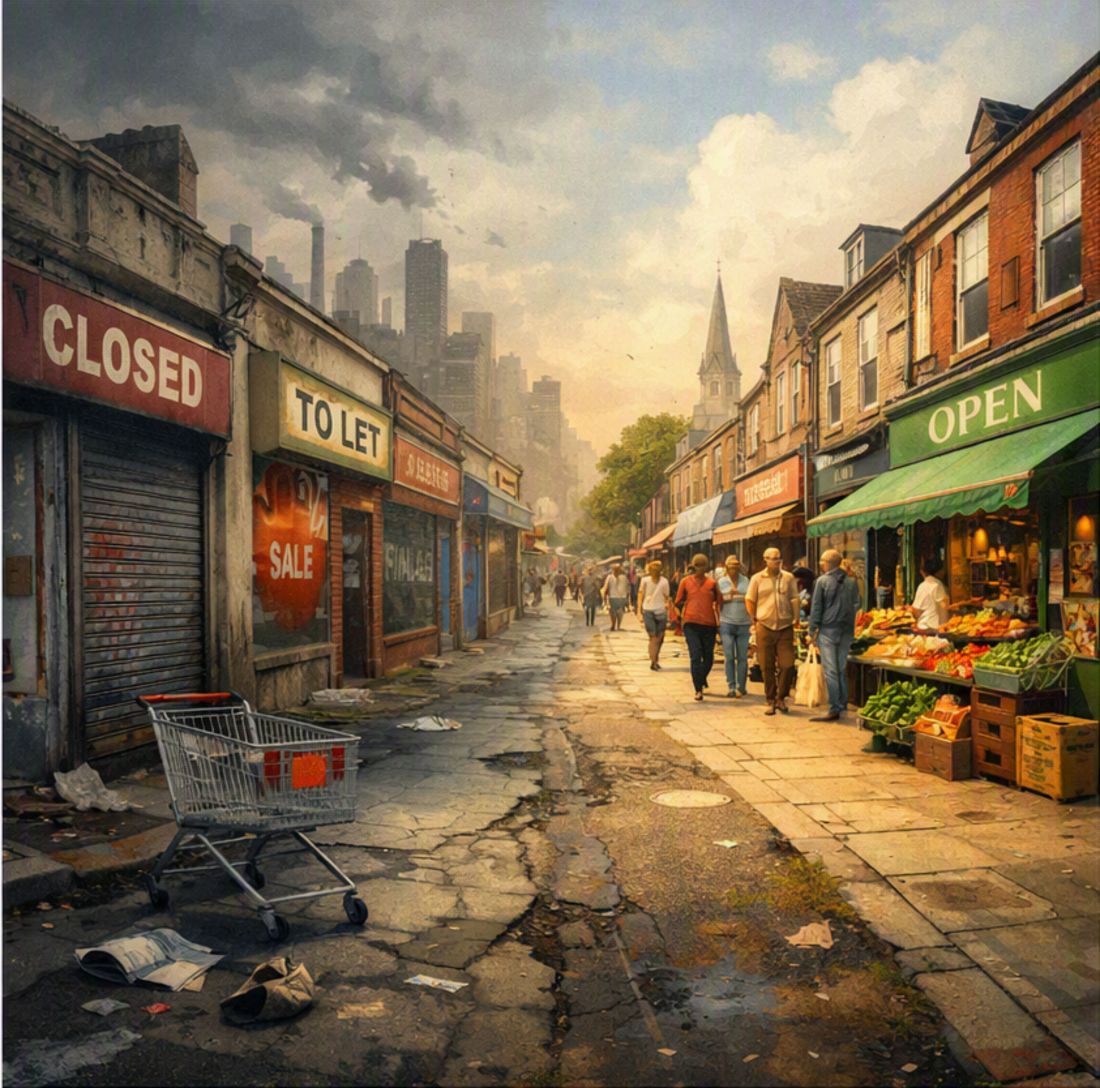
The Police Need Agency to Apply the Law, Not Frameworks to Enforce It | Policing Has Been Weakened Because We Removed Its Humanity

Policing in the United Kingdom has been steadily weakened. Not because officers have lost capability or commitment, but because the system has changed what officers are allowed to be.

The purpose of a police officer is not simply to enforce the law, but to apply it intelligently, ethically, and proportionately within the reality of human situations. Law and order has always depended on that distinction. The existence of a rule may make something legal, but it does not automatically make every possible application of that rule moral, wise, or right.

Over several decades, policing has been reshaped by managerial oversight, academic credentialism, and an increasingly pervasive measurement culture. These forces have stripped away the human foundations of policing: discretion, judgement, lived experience, and the confidence to act in context.

The result is a police service that too often appears hesitant, procedural, and disconnected — not because officers lack courage, but because they are no longer trusted to act as human beings in real situations.

When Policing Was Human

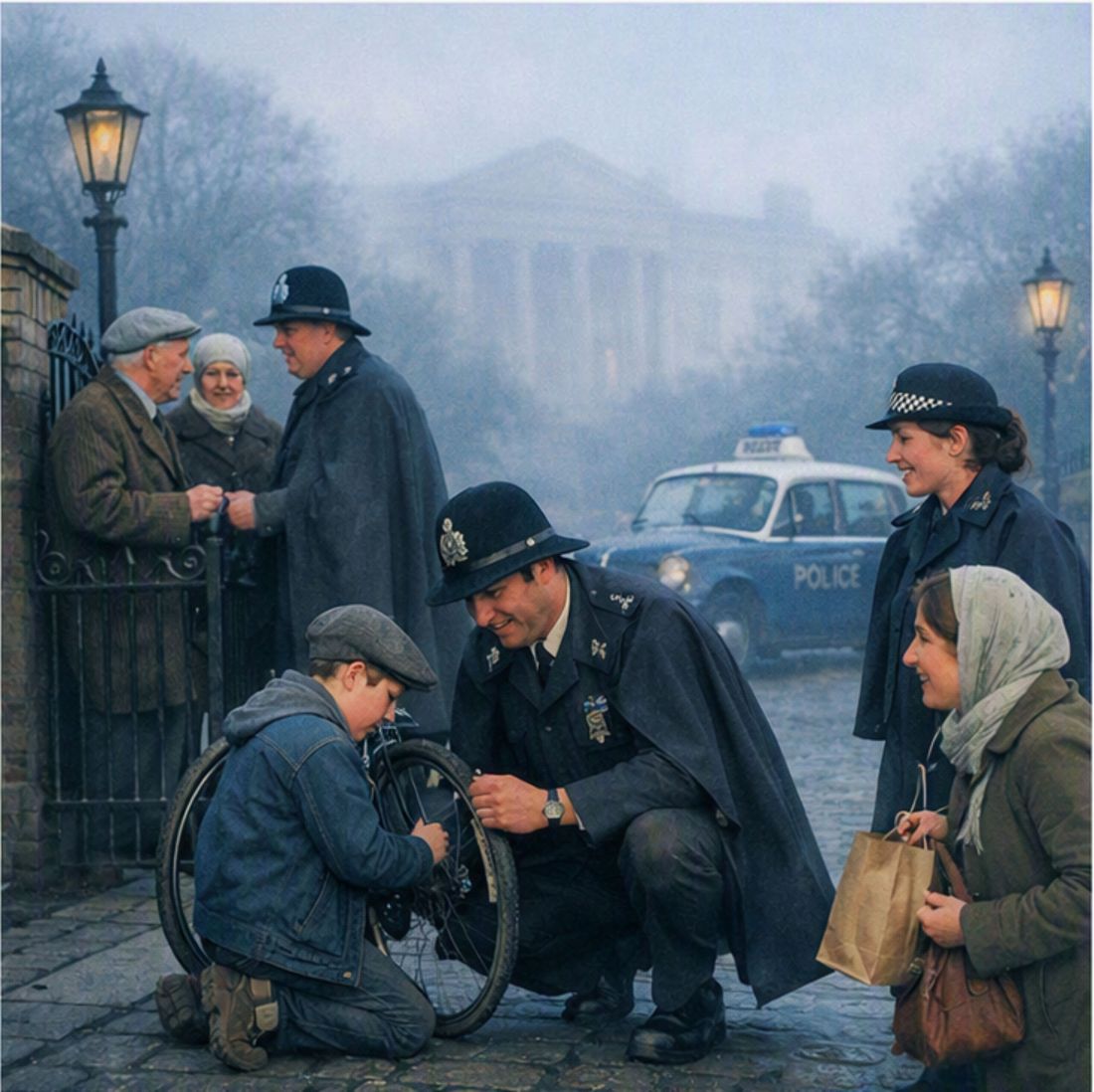
For much of the twentieth century, policing in Britain was built on discretion. A constable was expected to interpret the law in context, using judgement shaped by training, experience, and the realities of what they had actually seen. It was not perfect. No human institution ever is. But it was recognisably human.

My father served as a constable in Gloucestershire through the 1960s and early 1970s. His stories described a policing culture that was firm but fair, disciplined but flexible.

Officers trained in environments closer to military boot camps than modern lecture halls. They were expected to understand both the technical and practical aspects of the law deeply enough to arrest someone one evening and, in some circumstances, prosecute the case in magistrates’ court the next morning.

More importantly, they were trusted. A young person caught doing something foolish might be taken home rather than charged. Parents accepted responsibility. Officers used embarrassment, honesty, and human connection to turn people away from trouble at the very moment when a formal process might have pulled them further into it.

That kind of judgement is difficult to codify because it depends on context: who is involved, what has happened, what harm has been caused, what risk remains, and what response is most likely to restore order rather than simply record a breach.

Communities understood that policing was not merely the enforcement of rules, but the application of judgement. This was policing as a human endeavour — rooted in lived experience, not abstract theory alone.

The Slow Cultural Shift

The shift away from this human-centred model did not happen suddenly. It was not caused by one scandal, one reform, or one generation of policy-makers. It was the cumulative effect of decisions that gradually replaced discretion with oversight and professional trust with managerial control.

One early turning point was the late-1970s corruption investigation known as Operation Countryman. It exposed serious wrongdoing within parts of the Metropolitan Police and City of London Police, and it understandably shook public confidence.

But its deeper significance was cultural. Operation Countryman did not create managerial policing by itself, nor should the response to corruption be dismissed. Accountability matters. The problem was that the lesson gradually drawn from such moments was not simply that wrongdoing must be exposed, but that discretion itself was dangerous.

From there, a managerial instinct hardened. Procedures multiplied. Frameworks expanded. The constable’s traditional independence — the ability to interpret the law in context — was gradually narrowed. By the early 2000s, policing was increasingly shaped by administrative logic rather than operational reality.

Credentialism and the Decline of Experience

The introduction of degree-level entry for all police officers, announced in 2016, marked a decisive moment in this shift. I wrote at the time that the reform was a retrograde step — not because academic education has no value, but because it risked misunderstanding what policing actually is.

Policing is fundamentally a human profession. It can benefit from knowledge, study, and reflection, but it cannot be reduced to an academic pathway or a credentialing exercise.

A good police officer needs more than formal qualification. They need life experience, street sense, emotional intelligence, the ability to read people, the ability to de-escalate, and the ability to understand a community from the inside.

These qualities cannot be fully developed in a lecture theatre alone. They cannot be adequately measured by an instruction. They cannot be captured completely in a competency framework.

The danger of academic credentialism is not simply that it changes recruitment routes. It risks narrowing the idea of who is suitable to police. It may discourage people who would make exceptional officers: people who grew up in the communities they would serve, who understand real-world behaviour, who know what trouble looks like before it happens, and who can speak to people in a way that diffuses tension rather than escalates it.

These are precisely the people policing needs. Yet in a system increasingly governed by measurable credentials, their strengths are too easily overlooked.

The reason is simple: a degree is measurable, but life experience is not. Street judgement, moral courage, human presence, and the ability to calm a situation before it becomes a crime do not fit comfortably into institutional spreadsheets. What cannot be measured is quietly devalued.

Measurement Culture and the Dehumanisation of Policing

Measurement culture, which I wrote about in 2024, has dehumanised public life more broadly. It replaces meaning with metrics, treats human systems as mechanical systems, and prioritises what can be counted over what actually matters.

Applied to policing, measurement culture turns encounters into data, decisions into tick-boxes, officers into operators, and communities into sets of indicators. It does not merely record policing; it begins to shape what policing is allowed to become.

This is anti-human because it treats people as data points. It is anti-life because it treats communities as systems to be managed rather than relationships to be understood. And it is anti-policing because it pushes judgement, empathy, and context to the margins.

Measurement culture is the final stage of bureaucratic policing. It is the point at which a human profession is recast as a performance-managed system, where the safest decision is often the one that best satisfies the process rather than the one that best serves the public.

The Cumulative Effect

The weakening of modern policing is not the result of one decision. It is the cumulative effect of reforms and institutional habits that removed humanity from the system piece by piece.

Oversight expanded after corruption scandals. Managerialism became embedded. Academic credentialism formalised bureaucratic policing. Measurement culture increasingly displaced professional judgement.

The result is a police service that can hesitate when it needs confidence, fear error when it needs judgement, prioritise process over outcome, follow frameworks rather than context, and lose public trust because it no longer feels trusted internally.

This is not primarily the fault of officers. It is the consequence of policy choices that have steadily treated professional agency as a risk to be contained rather than a competency to be cultivated.

Restoring Policing as a Human Institution

If policing is to be restored as an effective public institution, policy must reverse the reforms and assumptions that dehumanised it. Discretion must once again be recognised as a core professional competency. Mandatory degree-level entry should be removed so that policing can draw on the full breadth of human experience, not just academic attainment. Measurement-driven policing must be reduced so that officers are judged by the quality of their decisions, not merely the quantity of their data. Oversight should support officers rather than constrain them. Above all, policing must be re-humanised.

Every policy should be tested against a simple question: does this make policing more human, or less? Does it help an officer apply the law wisely in a real situation, or does it merely make the system easier to audit from a distance?

Policing requires judgement, empathy, courage, restraint, and the ability to interpret the law in real time, in real places, with real people. The weakening we see today is not because officers have changed. It is because the system has changed what officers are allowed to be.

A police service can be accountable without becoming bureaucratic, educated without becoming credentialist, and professional without becoming mechanistic. The challenge now is to recover that balance.

If discretion, judgement, and trust are not restored, policing risks becoming ever more efficient at managing procedures while becoming less effective at serving people.

Agency is not a luxury in policing. It is the foundation.

Further Reading

Tugwell, A. (2016). Degree‑level entry for all police officers is a retrograde step. https://adamtugwell.blog/2016/12/22/degree-level-entry-for-all-police-officers-is-a-retrograde-step-which-will-push-a-common-sense-approach-to-policing-even-further-away-down-the-bureaucratic-queue/

Tugwell, A. (2024). If you can measure it, you can control it. https://adamtugwell.blog/2024/02/05/if-you-can-measure-it-you-can-control-it-has-gdp-been-the-most-dehumanising-tool-that-humanitys-so-called-leaders-have-ever-created/

Background on Operation Countryman (1978–1982), the major corruption inquiry into the Metropolitan Police and City of London Police – a moment often noted by writers such as Peter Hitchens as an early sign of the cultural shift that would later reshape British policing.

Civilisation: The Cumulative Pathway to Enlightenment

Introduction: The Structure We Stand On

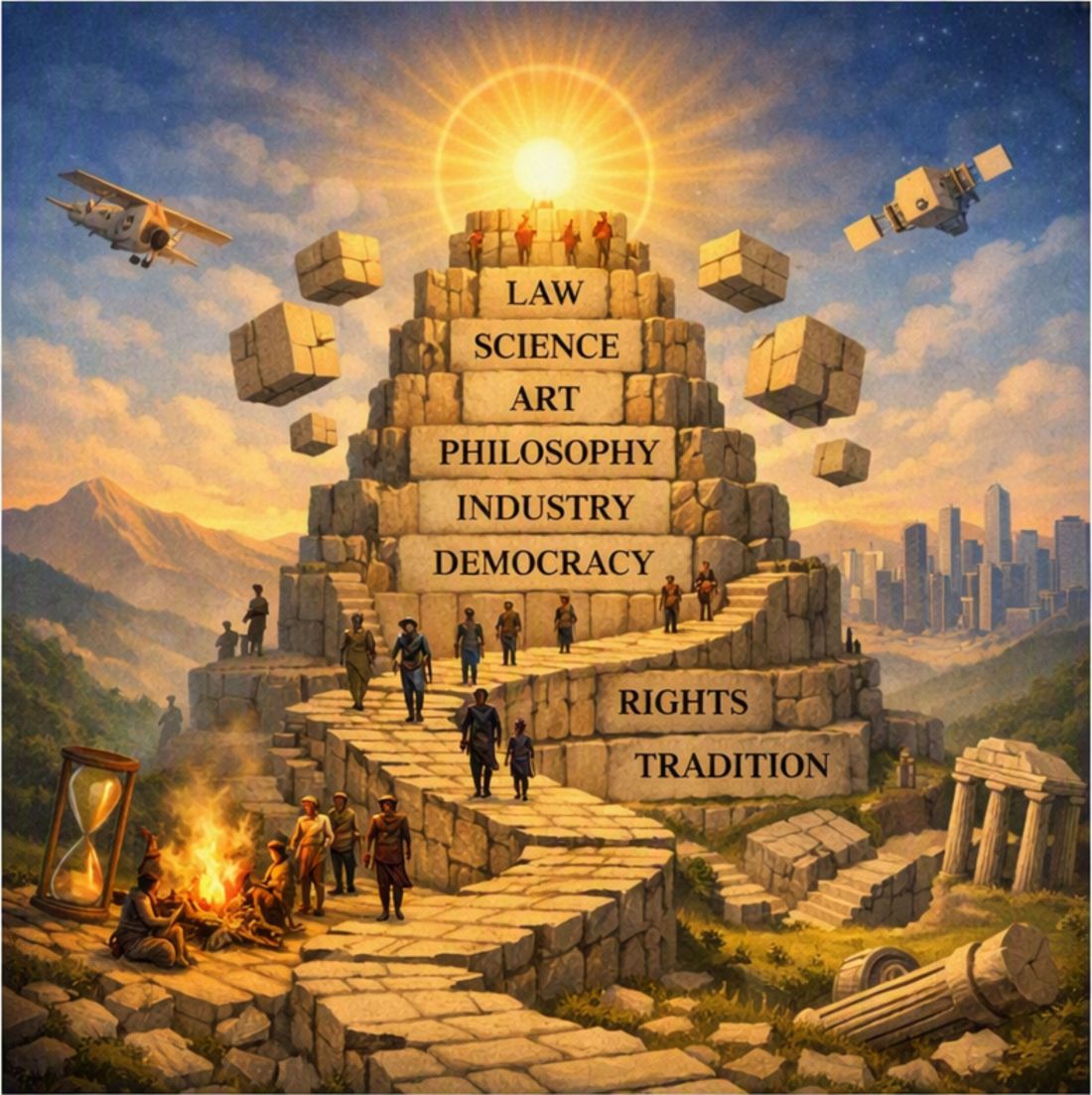
Civilisation is the cumulative pathway to enlightenment – but like a Jenga tower, remove the wrong bricks and the whole structure falls.

This is not simply a metaphor for fragility; it is a description of how human progress actually works.

Civilisation is not a design project or a set of preferences. It is the operating software of society, built layer by layer through the experiences, discoveries, mistakes, conflicts, and moral awakenings of countless generations.

Yet today, we behave as though reality were optional. Ideas detached from lived experience shape political agendas. Cultural movements treat human nature as infinitely editable. Technological elites believe their vantage point is the whole picture.

We stand on the hill of human development, enjoying freedoms previous generations could not imagine, yet we treat the pathway that brought us here as though it were irrelevant or inconvenient.

Civilisation as Cumulative Wisdom

Civilisation is cumulative wisdom – the totality of human experience integrated into a functioning structure. Every discovery, every mistake, every triumph, every horror, every contradiction is a brick in that structure.

Some bricks are beautiful, some are ugly, some are painful to look at, but all are necessary because each one supports another.

A brick is not an endorsement. A brick is an experience. It may be a triumph, a mistake, a discovery, an atrocity, a sacrifice, a reform, a warning, or a moral awakening. Its moral character does not determine whether it belongs in the structure; its place in the accumulated pathway of human learning does.

Most people are not aware of all the steps that built civilisation. They do not see every brick or know every lesson. But that does not change the structure. A person does not need to remember every moment of their childhood for those moments to shape who they are.

Civilisation works the same way. The bricks exist whether we see them or not. The wisdom accumulates whether we recognise it or not.

This is why civilisation cannot be selectively edited. Removing a brick is not a cosmetic change. It is a structural fault – a software virus that deletes key parts of the programme.

Some functions may not be used often, but they are still essential. Some bricks may be removed without visible consequence, but removal is cumulative too. Remove enough of them, and the system behaves unpredictably. Remove the wrong one, or the one too many, and the entire structure collapses.

Historical Bricks and the Danger of Erasure

History makes this clear. The North Atlantic slave trade was a horror, but it was not an isolated aberration; slavery existed in almost every society in human history.

The moral revolution of the 19th century – the recognition of slavery as an indefensible violation of human dignity – did not appear out of nowhere. It was the culmination of centuries of accumulated thought, conflict, religious development, economic change, and philosophical debate.

The brick is not slavery alone. The brick is the suffering slavery caused, the ideas that justified it, the systems that profited from it, the people who opposed it, the philanthropy and moral labour that emerged against it, the institutions that acted to suppress it, and the immense cost of correction when civilisation had clearly gone wrong.

To erase any part of that chain is to weaken the lesson. To erase the lesson is to weaken the progress. And to weaken the progress is to endanger the civilisation that allowed us to condemn slavery in the first place.

Yet modern ideological movements attempt exactly this. They treat civilisation as software that can be rewritten by those who believe they understand it, even though they see only a fraction of the structure.

Awakening and Enlightenment: Seeing the Structure vs Completing It

Awakening is the moment a person becomes aware that there is a structure – that life, society, and civilisation are built from accumulated experience rather than random events.

Awakening is the recognition of pattern, not the completion of it. It is the point at which someone sees beyond the immediate, but cannot yet see the entire architecture.

Awakening feels transformative. It creates perspective and clarity. And because it feels profound, it is easy to mistake awakening for enlightenment – to believe that seeing further is the same as seeing all.

But awakening is only the beginning of wholeness, not wholeness itself. It is the moment when a person realises there are more steps, not the moment when all steps have been taken.

Enlightenment, in contrast, is structural completeness. But enlightenment is not something a person can ever see while they are still becoming it.

A human being cannot stand outside themselves and observe the completed structure of their own development. They are the house being assembled, and a house cannot look at itself.

The moment someone believes they can see the whole, they reveal that they cannot.

Civilisational enlightenment follows the same logic. Civilisation cannot step outside itself and observe the totality of its accumulated wisdom. It is the house being built, brick by brick, through the experiences of billions of people across thousands of years.

Civilisation becomes enlightened only when the whole is present – but the whole is not visible from within the process. It is not something any generation can perceive, any leader can define, or any ideology can claim.

This is why premature declarations of enlightenment – personal or collective – are always misleading, and often dangerous.

False Authority and the Illusion of Completion

In every era, there are people who present themselves as enlightened, or who claim that civilisation has reached a moral or intellectual summit.

Today, many of these voices come from technology, academia, activism, or cultural influence. They speak with confidence and certainty, as though they can see the whole structure.

But they cannot. No one can.

Their authority is based on perspective, not wholeness. Their clarity is based on awakening, not completion. Their confidence is based on height, not depth. And when such voices define enlightenment in their own terms, they mislead others into believing the structure is finished when it is not.

This is how civilisations become vulnerable: not through malice, but through misplaced certainty.

The Modern Error: Mistaking Height for Wholeness

The danger of our time is that those who stand at the summit of human progress – the technologists, the ideologues, the centralised power brokers – believe they have reached enlightenment simply because they have reached height. They believe their vantage point is the whole picture. They believe their tools, reach, and influence give them structural completeness.

But height is not wholeness. Perspective is not completion. Tools are not wisdom. Novelty is not progress. And the view from the summit is not enlightenment.

This confusion is amplified by the last eighty years of centralised power and wealth.

Distance dehumanises. Dehumanisation enables abstraction. Abstraction enables ideology. And ideology enables civilisational vandalism.

The Extractive System and the Hollowing of Foundations

The extractive economic system that has enriched the few while impoverishing the many is another expression of this detachment.

It treats human beings as variables in a model, resources to be mined, obstacles to be managed. It rewards abstraction over reality, centralisation over community, short‑term extraction over long‑term stability. It hollowed out the civilisational structure long before cultural movements began removing bricks.

The same detachment from accumulated reality is now appearing in our most powerful technologies.

Technology and AI: The Final Test of Civilisation

Now, as we stand on the verge of an AI and technological transformation sold as progress, we see the same pattern again.

AI could reinforce civilisation. It could extend human sovereignty. It could be built on accumulated wisdom. It could be the next brick in the structure.

But instead, in its current form, it risks becoming the ultimate instrument of a worldview that has already hollowed out the foundations of civilisation – a worldview that believes civilisation is software, history is optional, and human nature is infinitely editable.

AI amplifies awakening without wholeness. It accelerates perspective without integration. It gives tools to those who have not built the structure beneath them.

This is the real danger.

Structural Humility: The Safeguard Against Collapse

If civilisation has a safeguard, it is not ideology, technology, or power. It is structural humility – the recognition that our understanding is always partial while civilisation itself is cumulative; that we cannot see the whole, cannot declare completion, cannot safely remove bricks, and cannot assume our vantage point is the truth.

Humility is not a moral virtue here; it is a structural necessity. It is the only stance that respects the cumulative nature of civilisation and the unseeable nature of wholeness.

Conclusion: The Pathway to Wholeness

Civilisation is cumulative wisdom. It is the totality of human experience. It is the operating software of society.

Enlightenment – personal and collective – is the state of being whole.

When bricks are removed, whether through ideology, ignorance, or arrogance, the system does not evolve. It destabilises. It becomes unpredictable. It becomes fragile. And eventually, it falls.

If we continue removing bricks, the collapse will not be gradual. It will be sudden, and it will come precisely when those at the top believe the structure is complete.

Enlightenment is not achieved by standing at the summit. Enlightenment is achieved by respecting the entire pathway that made the summit possible. Enlightenment is the state of being whole – and wholeness cannot be chosen, declared, or imposed.

Enlightenment can only be, and will only be, when it is.

The Next Election Cannot Really Be “Won” – And Why What Follows Matters Even More

We are all thinking about what happens next. Quietly or otherwise, people find predictions irresistible. We know they are usually wrong. We know the future rarely behaves itself. But predictions give us something we understandably crave: reassurance. They offer the sense that someone, somewhere, has a map, even if the map is little more than a sketch drawn in the sand.

I write about the future often, but not in the way pundits do. I do not make fixed predictions about elections, because doing so is usually a fool’s errand. The political runes only ever speak clearly in the moment you read them, and even then they whisper rather than shout. What I try to do instead is look beneath the events themselves and ask what the deeper forces shaping them make possible, likely, or unavoidable.

Right now, those deeper forces are telling us something uncomfortable: the next general election cannot really be “won”, at least not in the way people imagine. And the election that follows may matter even more, if world events don’t intervene first.

To understand why, we need to step back from the daily noise and look at the operating system beneath British politics: a system that has become fragile, hollowed out, and increasingly unable to produce meaningful change.

The System Behind the System

One of the clearest windows into this reality came in The Contemporary Politician’s Dilemma (2024), where I described a moment when newly elected or returning MPs who have found themselves with power discover how government actually works.

They arrive in Westminster full of promises, only to be told – often within days – that everything the previous government was doing, no matter what it said publicly, was the only way to keep the machinery of state running. The alternative was to risk first the economy, then government itself, and then the public services people rely on.

This is the moment the illusion cracks. Politicians realise that every social issue – housing, immigration, inflation, the cost of living, benefits, productivity – is tied to the economic model. The economic model depends on growth. Growth depends on spending. Spending depends on narrative. Narrative depends on performance. And performance depends on maintaining decline in a way that looks like progress.

The practical consequences are visible everywhere. Housing cannot be fixed without confronting land, debt, planning, wages, infrastructure and the financial model that sits beneath them. Welfare cannot be discussed honestly without asking why so many people in work still cannot live independently on what work pays. Public services cannot be restored simply by changing the minister or the slogan above the department. Each problem is treated as separate, yet each is tied to the same economic and institutional framework.

Governments still hold office, pass laws and make announcements. But their room for meaningful manoeuvre has narrowed dramatically. They increasingly manage decline rather than reverse it. That is why so many governments end up looking alike. That is why promises evaporate. That is why legitimacy drains away.

The Establishment Is Not What People Think It Is

In July 2026, I wrote The Establishment Is Not What You Think It Is, which explains the deeper mechanism behind this paralysis.

People imagine the Establishment as a group – elites, mandarins, financiers, media, “the blob”. But the real Establishment is not a class. It is a worldview. A mental operating system. A set of assumptions about what is “realistic”, “responsible”, “credible” and “possible”.

This worldview saturates everything: politics, media, finance, public services, professional norms, institutional culture. It shapes how people think without them realising it, because it feels like reality. It rewards conformity, punishes deviation, and treats alternatives as naive or dangerous. It is enforced not by conspiracy, but by incentives.

This is why even anti‑establishment actors end up reinforcing the system. Reform, Restore, and even parts of the Conservatives behave as if they are fighting the Establishment, yet their actions reveal that they operate fully within its worldview. They judge success by market confidence, treat narrative as power, and assume that centralised management, competitive funding and measurable outputs are the only acceptable forms of action.

The Establishment is not something you overthrow. It is something you wake up inside.

The Right’s Fragmentation Is a Symptom, Not a Cause

In What is the Right Really For? (June 2026), I argued that the right is not divided because its factions have different philosophies. It is divided because they are all trying to reclaim a conservatism that the modern political system no longer allows to exist.

Traditional conservatism depends on locality, community, stewardship, continuity, identity and self‑governance. But the Establishment worldview depends on centralisation, corporatism, globalisation, managerialism, technocracy and distant authority. These two worldviews cannot coexist. The right is not fighting over ideology. It is fighting over something unreachable.

This is why the Conservatives defend a system that is no longer conservative. Reform tries to break the system without knowing what to replace it with. Restore tries to revive conservatism in a landscape where conservatism cannot function. Their conflict is not ideological. It is existential.

The Behaviour of Parties Reveals the Fragility of the System

The strain was already visible up to a year ago. Labour reshuffled repeatedly to manage perception. Reform behaved like a brand rather than a governing force, staging conferences that looked more like victory rallies than policy events. The Conservatives clung to relevance through messaging rather than substance. Farage mistook momentum for capability. Quasi‑Tories migrated to Reform expecting instant change.

This is the behaviour of a system running out of room. Parties behave as if optics equal authority, narrative equals power, and performance equals legitimacy. They chase headlines because they struggle to deliver outcomes. They polish the surface because they cannot repair the structure. They fight over the steering wheel of a vehicle that no longer responds properly to steering.

The Global Dominoes

The next election could be overtaken by events long before polling day. The list is not short: the Strait of Hormuz, financial instability (including Japan), a potential AI‑driven bubble burst, geopolitical escalation, supply chain fragility, food security, energy shocks. Any one of these could expose how vulnerable the UK has become.

A world‑derived crisis could very easily reveal just how fragile the UK really is – not only economically, but institutionally and politically. It could expose weak spots like food security, supply chains, and over‑reliance on imports. And it could make the result of the next general election a moot point, because we simply do not have politicians or leaders capable of operating in an environment that requires real leadership rather than performance.

Yes, this may be pessimistic. Britain has endured crises before: economic shocks, constitutional upheavals, wars, strikes, deindustrialisation, party collapses and social fracture. Institutions can bend without breaking, and electorates can tolerate more discomfort than commentators often assume.

But the question is not whether Britain has survived crises before. It is whether the present system still contains the intellectual, economic and institutional capacity to renew itself from within.

That is far less clear.

The Legitimacy Crisis

Burnham’s legitimacy problem is therefore not merely personal. It is systemic. He may have arrived in No.10 through legitimate processes, but legitimacy is not produced by process alone. It is produced by capability, consent and a credible sense of direction. Those things are difficult to generate when the same worldview sets the limits of what any leader is permitted to imagine.

This is why Reform can look triumphant, the Conservatives nostalgic, Labour managerial, and Restore principled but powerless. Each speaks to a real dissatisfaction. Yet none has convincingly shown how it would escape the assumptions that created the dissatisfaction in the first place.

The Next Election Cannot Really Be “Won”

Polling today suggests that no party can comfortably expect a working majority. The right is fragmented. The left may form a coalition. Reform may surge. Conservatives may revive slightly. Restore may remain fringe. But these are surface‑level dynamics.

The deeper truth is that even a working majority cannot govern in any meaningful sense if the system itself is at its limit. The next government, whatever its shape, will face the same dilemma as the newly elected MP who discovers that the machinery of state permits far less change than the campaign suggested. It may manage decline, or it may disturb the settlement enough to expose how fragile that settlement has become.

The Lifetime of the Next Government

The next government will inherit a fragile economic model, a saturated worldview, degraded public services, brittle institutions, exhausted narratives, declining legitimacy and global volatility. Its tools will be limited. Its room for manoeuvre will be narrow. Its philosophical foundations will be uncertain. Its institutional capacity will be stretched. Its public trust will be weak.

This is why governments now appear to fail faster. Expectations remain high, but capacity is lower. Promises are larger, but delivery is weaker. Narratives are louder, but reality intervenes sooner.

It is possible that the next administration may have months, not years, before it too is forced to admit that it cannot find a way out of the mess using the tools it inherited.

What Happens When the System Can No Longer Continue

Sooner or later, someone near power will have to say what the system currently cannot say: we cannot continue like this anymore.

That moment need not be revolutionary in the dramatic sense. It may simply be the moment when the worldview breaks, the operating system fails, the Establishment loses coherence, and the political map begins to dissolve enough for new possibilities to emerge.

The Establishment is not something you defeat. It is something you outgrow.

What Renewal Requires

If renewal is possible, it will require a return to locality, community‑rooted economies, stewardship, identity grounded in place, governance by the governed, and institutions that serve people rather than systems. This is not nostalgia. It is the foundation of a functioning society.

Conclusion: The Election Is Not the Story – The System Is

The next election matters. But it cannot be “won” in any meaningful sense. The real story is the system itself: its worldview, its fragility, its limits, its contradictions, its saturation, and its inability to solve the problems it created.

The question is not simply who wins. The question is what happens when the system can no longer hide its own failures. And the deeper question is whether enough people can see clearly enough to imagine something better: not merely a different leader, party or slogan, but a different set of assumptions about how economies, institutions and communities should function.

That is the real choice ahead. Not whether the Establishment can be defeated, but whether it can finally be outgrown.

Why High Streets Are Really Failing

The empty shop is not the disease. It is an early warning sign of a money-centric system running out of road.

High streets are not failing because people suddenly stopped caring about them. They are failing because the economic system that once made them possible has changed so profoundly that the traditional high street no longer fits within it.

The familiar explanations are well known: online shopping, out-of-town retail parks, high rents, business rates, parking, poor planning, and changing consumer habits.

Each of these factors matters. But each is also a consequence of something deeper: a value system that has placed money, return, scale, and efficiency above human participation, local capability, and community life.

The decline of the high street is therefore not just a retail story. It is a visible expression of a wider economic direction. The same system that has hollowed out town centres is now beginning to hollow out work, ownership, contribution, and the human role in economic life itself.

That is why the empty high street matters. It shows us where the system has been, what it has already broken, and where it is now heading.

To understand the problem, we have to follow the chain properly: from local circulation, to financialisation, to centralisation, to digitalisation, to automation, to the false promise of Universal Basic Income, and finally to the question of whether a money-centred system can survive once people are no longer able to participate in it.

The answer begins with the high street, but it ends with the future of society itself.

The high street was built for a different kind of economy

For most of modern history, the high street worked because everyday life was organised locally. People lived near where they shopped. Money moved between households, independent businesses, local trades, nearby suppliers, and community institutions.

Shops were not just places of transaction; they were part of the social infrastructure of a town.

That system depended on local circulation. A pound spent with a local butcher, baker, café, repair shop, market trader, or family-run store was more likely to remain in the area, supporting other local work and relationships.

The high street was therefore sustained not only by demand, but by a pattern of life in which people, money, services, and trust repeatedly moved through the same place.

This is what is meant by a human-scale economy: an economy small enough for people to see the consequences of their choices, know who they are dealing with, and feel that their town is something they participate in rather than merely pass through.

The old high street was not perfect, and it should not be romanticised. But it did reflect a structure in which local presence mattered. That structure has been steadily dismantled.

Financialisation changed the rules

Over recent decades, the economy has shifted away from production, local exchange, and community resilience towards financialisation.

Financialisation means the process by which financial returns, asset values, debt, speculation, and shareholder value become more important than the practical usefulness of the things being financed.

In a financialised economy, the question changes. Instead of asking, “What does this place need in order to thrive?”, the system increasingly asks, “What produces the highest return?”

  • Efficiency is rewarded more than resilience.
  • Scale is rewarded more than locality.
  • Profit is rewarded more than community benefit.
  • Growth is rewarded more than stability.
  • Centralisation is rewarded more than distributed local ownership.

Once those incentives dominate, decline becomes less mysterious. Supermarkets replace local food shops because they operate at scale. Retail parks draw trade away from town centres because they fit car-based convenience. Online platforms bypass local businesses because they can centralise stock, data, logistics, and profit. Landlords and investors may treat property as an asset class before they treat it as part of a living town.

This does not mean every closure is caused by one villain or one policy. It means the wider system increasingly incentivises behaviour that drains value away from local places.

That is what extraction means in this context: value is created in one place, by real people and real communities, but is captured elsewhere by systems, owners, platforms, or institutions that are distant from the consequences.

Financialisation is not the root cause

Financialisation itself did not appear from nowhere. It emerged from a deeper value system that places money at the centre of every part of life.

When money becomes the primary measure of success, institutions begin organising themselves around its accumulation. Communities become markets. Citizens become consumers. Local capability becomes less important than financial efficiency.

The decline of the high street therefore reveals more than a retail problem. It shows what happens when the economy stops asking what creates healthy places and starts asking only what produces measurable financial return.

Digital convenience accelerated the collapse

Digitalisation did not create the underlying problem, but it accelerated it dramatically.

Online retail, delivery apps, automated logistics, targeted advertising, and platform marketplaces all make it easier for spending to leave our towns and communities without ever touching the local economy.

The promise is convenience. The cost is disconnection.

A purchase that once involved a walk or bus ride into town, a conversation, a shopfront, a local wage, and perhaps another local supplier can now become a silent transfer to a centralised platform where no other human being will ever be seen.

The behaviour feels small and therefore insignificant at the level of the individual, but multiplied across millions of transactions it transforms the physical life of towns and cities too.

The high street is expected to compete, but it is not competing on equal terms. It is being measured against businesses that can exploit scale, data, automation, global supply chains, and financial backing that local shops rarely possess.

This is why decline often feels like a one-way street. The system increasingly makes local presence optional, then wonders why local places become vulnerable, underused, and out of step with the economic world being built around them.

Why some high streets still thrive

Some high streets still work, and their existence is important because it proves that decline is not inevitable.

In many places, especially where communities remain socially dense and locally connected, independent businesses continue to play a central role in daily life.

Part of the reason appears to be stronger social cohesion, local spending habits, walkable routines, and community networks. These are not minor details. They are the social conditions that allow local businesses to survive.

Thriving local economies often depend on behaviours such as:

  • regular walking routes through local shops and services
  • dense social networks that create trust and repeat custom
  • loyalty to community-run or family-run businesses
  • localised spending patterns
  • multi-generational knowledge of place
  • a sense that the high street belongs to the community, not only to landlords and retailers

These behaviours naturally sustain local shops because they keep money, attention, and relationships circulating within the area.

The lesson is not that some communities are immune to economic pressure. It is that high streets need more than buildings, grants, or branding exercises.

High streets and urban centres need the social and economic infrastructure that gives people a reason to use them every day.

Where that infrastructure remains, high streets remain more resilient. Where it has been stripped away, regeneration becomes much harder. This is why the answer cannot be limited to retail strategy. The problem is deeper than shopping, and so the solution has to be deeper too.

The high street is the warning, not the destination

The mistake is to treat the decline of the high street as an isolated problem.

It is not. It is an early warning sign of a much larger direction of travel.

The same forces that reduced the need for local shops are now reducing the need for human involvement elsewhere. Automation, artificial intelligence, platform systems, and machine-led logistics all follow the same basic logic: remove friction, reduce cost, increase efficiency, centralise control, and maximise return.

For those who own the platforms, technologies, data, and infrastructure, this appears rational. It looks like progress. But the contradiction is obvious once we look at the system as a whole: a money-centric economy only functions if people continue to earn, spend, consume, and generate returns.

If technology removes the economic role of growing numbers of people, the system does not become magically abundant. It becomes unstable.

The customers, workers, taxpayers, tenants, borrowers, and consumers who are supposed to keep the machinery turning are the same people whose incomes and agency are being eroded.

This is the direction the empty high street points towards. First local shops become unnecessary. Then local ownership becomes unnecessary. Then local labour becomes unnecessary. Eventually, human participation itself is treated as an inefficiency to be managed.

Why UBI has entered the conversation

This is why Universal Basic Income, or UBI, has become attractive to some of the people building the technological future as we are being led to understand it.

They can see that a problem is coming. They can see that automation and artificial intelligence may leave many people without a reliable route to income. They can see that a system built on employment and consumption faces a serious problem if employment becomes scarce.

But recognising that a problem is coming is not the same as understanding the mechanics of the system that created it.

Proposing UBI as the solution assumes that a collapsing money-centric system can be preserved by giving people enough money to keep consuming. It assumes that the same structure that has concentrated ownership, transferred wealth, extracted value, weakened local capability, and reduced human participation can somehow provide a secure income to a population it no longer needs economically.

That is the contradiction. A system built on wages, debt, rent, consumption, tax, and returns cannot sustain a permanently kept population if the people expected to fund and circulate value no longer have stable incomes. Even if the intention were compassionate, the mechanism does not hold.

UBI may soften the appearance of collapse for a time, but it does not reverse the underlying direction. It does not restore local ownership. It does not rebuild capability. It does not give people a meaningful role in production, governance, or community life. It keeps the money-centred frame intact while the social and economic foundations beneath it continue to weaken.

The problem is not that people need support. They do. The problem is believing that support can be delivered through the same system that created the dependency in the first place.

The alternative: LEGS, BLS, and a people-centred economy

If the high street is a symptom of a deeper economic failure, then saving it cannot mean simply filling empty units with new tenants. Nor can it mean relying on another short-term regeneration scheme, marketing campaign, subsidy, or welfare mechanism that leaves the underlying structure untouched.

What is needed is a revaluation: a shift away from treating money as the centre of value and towards treating human wellbeing, contribution, dignity, place, community resilience, and environmental responsibility as the things an economy is supposed to serve.

This is where the Local Economy & Governance System, or LEGS, becomes relevant. LEGS is not simply an economic policy. It is a different operating system for society: one that begins with people, community, and the environment rather than money, growth, and extraction.

Its purpose is to restore local capability, local decision-making, shared responsibility, and meaningful contribution.

Instead of asking how people can be kept alive inside a system that no longer needs them, it asks how society can be organised so that people remain necessary, valued, secure, and sovereign.

The Basic Living Standard, or BLS, is central to that alternative. Unlike UBI, it is not simply a payment distributed within the existing system. It is a structural guarantee that people can meet the essential costs of living through a normal week’s contribution, without debt, charity, or dependency.

It links security to dignity, participation, and a fair structure of life rather than to passive receipt within a collapsing model.

In practical terms, this means rebuilding local economic life around:

  • local capability, so towns can meet more of their own needs
  • local production and repair, so value is created close to where people live
  • local supply chains, so businesses support one another rather than depend entirely on distant systems
  • local ownership, so wealth does not immediately leave the area
  • local governance, so decisions are made closer to their consequences
  • local value circulation, so money, skills, trust, and responsibility move through the community rather than out of it

This is not a call to go backwards. It is a call to re-scale forwards: to use technology, planning, enterprise, and governance in ways that strengthen human capability rather than replace it.

A healthy high street cannot be created by nostalgia. It can only be created by an economy that gives people a real reason, and real ability, to participate locally. The same is true of society as a whole.

The real message of the empty high street

The decline of the high street matters because it exposes a much deeper problem. It shows what happens when financial efficiency becomes more important than human value, local capability, and community resilience.

Empty shops are not the disease. They are the symptom.

The question is therefore not simply how to save the high street. The question is whether we want to keep organising life around a system that produces dependency, centralisation, extraction, and fragility – or whether we are willing to build systems that restore capability, participation, dignity, sovereignty, and belonging.

The difficulty is not that alternatives such as LEGS and the BLS are impossible to understand. The difficulty is that most of us have been conditioned to believe that a money-centred system is the only way life can work.

We have learned to treat money as value itself, rather than as a tool that should serve life.

That is the real lesson of the high street. It is not asking to be saved as a memory. It is asking whether we still value the kind of society that made it possible – and whether we are willing to build a people-centred future before the money-centred one collapses under its own weight.

Further reading: where to go next

The argument in this article is part of a wider body of work exploring value, local economies, technology, governance, and the need for a people-centred alternative to the money-centric system.

The following pieces are best read in this order, as each one builds on the last.

1. The Basic Living Standard Explained
https://adamtugwell.blog/2025/10/24/the-basic-living-standard-explained/
This piece explains the Basic Living Standard, or BLS, which sits at the heart of the people-centred alternative discussed above. It sets out why security should not depend on charity, debt, insecure employment, or passive state support, but on a fair structure that allows people to meet the essentials of life through meaningful contribution.

2. The Local Economy & Governance System
https://adamtugwell.blog/2025/11/21/the-local-economy-governance-system-online-text/
This is the core alternative framework model referred to as LEGS. It develops the practical structure of a local, participatory, people-centred system built around local capability, local governance, shared responsibility, and the restoration of real economic participation.

3. The Power of Local Communities
https://adamtugwell.blog/2026/03/31/the-power-of-local-communities/
This article expands the social side of the argument. It explores why strong local communities matter, how participation and belonging are created, and why local relationships are not sentimental extras but essential infrastructure for any healthy society.

4. When AI Builds a Machine World, This Economy Can No Longer Sustain
https://adamtugwell.blog/2026/07/20/when-ai-builds-a-machine-world-this-economy-can-no-longer-sustain/
This piece follows the direction of travel beyond the high street into automation, artificial intelligence, and the future of work. It explains why a money-centric economy becomes unstable when the people expected to earn, spend, borrow, pay rent, and consume are increasingly removed from meaningful economic participation.

Taken together, these works show the wider arc: the high street reveals the failure of local circulation; the BLS defines the foundation of security; LEGS provides the structural alternative; local communities explain the social basis; and the AI piece shows why the present direction of travel makes a people-centred system increasingly necessary.

The Independence Threshold | A New Definition of Poverty for A Modern Economy

Poverty has always been difficult to define. Governments use income thresholds. Charities use deprivation indicators. Economists use consumption models. But none of these definitions capture the lived reality of poverty in a modern, high‑income country like the United Kingdom.

They measure symptoms.

They do not measure the condition itself.

The Independence Threshold Definition of Poverty begins from a different starting point – one that reflects how poverty actually works in real life.

Poverty begins where independence ends.

A person is in poverty when they cannot meet their essential needs without external support – whether that support comes from the state, charity, family, or debt.

This definition is simple, but it changes everything.

Poverty is always relative to its own economy

Global institutions often define poverty in ways that evoke extreme deprivation – the kind associated with low‑income countries and subsistence economies.

This framing is useful for international development, but it becomes misleading when applied to wealthy nations.

Poverty is not a universal condition.

Poverty is an economic condition.

Poverty must be understood relative to the economy it exists within.

In the UK, poverty is shaped by:

  • UK housing costs
  • UK energy prices
  • UK transport needs
  • UK childcare costs
  • UK wages
  • UK debt structures
  • UK public services
  • UK labour markets

A person can be in poverty in the UK even if they have electricity, sanitation, and a roof over their head – because the cost of maintaining independence within the UK economy may exceed their income or capacity.

Physical conditions differ between economies.

Poverty does not.

Poverty is not defined by physical conditions

Different economies produce different physical environments:

  • Sanitation
  • transport systems
  • infrastructure
  • heating
  • water access
  • housing quality
  • digital access
  • public services

These are environmental features, not indicators of independence.

A person can have:

  • running water
  • paved roads
  • electricity
  • a smartphone
  • a bus route
  • a supermarket nearby

…and still be in poverty if they cannot sustain themselves within the economic system that surrounds them.

This is why arguments like:

  • “People here live like kings compared to country X,”
  • “They have TVs, so they’re not poor”
  • “They have sanitation, so they’re fine”

are structurally false.

They confuse material environment with economic independence.

Poverty is exclusion – and exclusion is universal

When a person cannot sustain themselves within their own economy, they experience exclusion.

This exclusion is not abstract – it is lived, daily, and universal across all societies.

Loss of independence leads to:

  • Hardship
  • Instability
  • mental health deterioration
  • social isolation
  • loss of dignity
  • loss of agency
  • loss of future planning
  • loss of resilience

These outcomes occur in:

  • wealthy countries
  • developing countries
  • rural areas
  • urban areas
  • different cultures
  • different infrastructures

The physical environment changes.

The exclusion does not.

This is why poverty must be defined by independence, not by conditions.

Why traditional definitions fail

Traditional poverty lines are based on income.

But income alone does not determine independence.

Two people earning the same amount can have completely different levels of stability depending on:

  • housing costs
  • childcare costs
  • transport needs
  • health conditions
  • debt burdens
  • regional prices
  • insecure work patterns

Income‑based definitions hide millions of people who are not officially “in poverty” but cannot survive independently.

These are the people living on the poverty trap door – above the line, but one shock away from falling through it.

The Independence Threshold Definition makes them visible.

A definition for policy, research, and public understanding

This definition is not ideological.

It is not tied to any political party.

It is not designed to support or oppose any policy.

It is a lens – a way of seeing poverty clearly.

It can be used by:

  • Policymakers
  • Researchers
  • Charities
  • Journalists
  • Economists
  • Social Scientists
  • Community Organisations

And by anyone who wants to understand the real structure of poverty today.

The Independence Threshold Definition of Poverty

Poverty begins where independence ends.

A person is in poverty when they cannot meet their essential needs without external support – whether that support comes from the state, charity, family, or debt.

Poverty is always relative to the economy it exists within.

Physical conditions – sanitation, transport, infrastructure, heating, water, housing quality – differ between economies, but they do not define poverty.

Poverty is defined by the inability to sustain oneself within one’s own economic environment.

When independence is lost, people experience exclusion: hardship, instability, mental strain, and social isolation. These outcomes are universal, regardless of the physical surroundings.

Poverty is not about global deprivation standards or material conditions.

Poverty is about independence – and the loss of it.