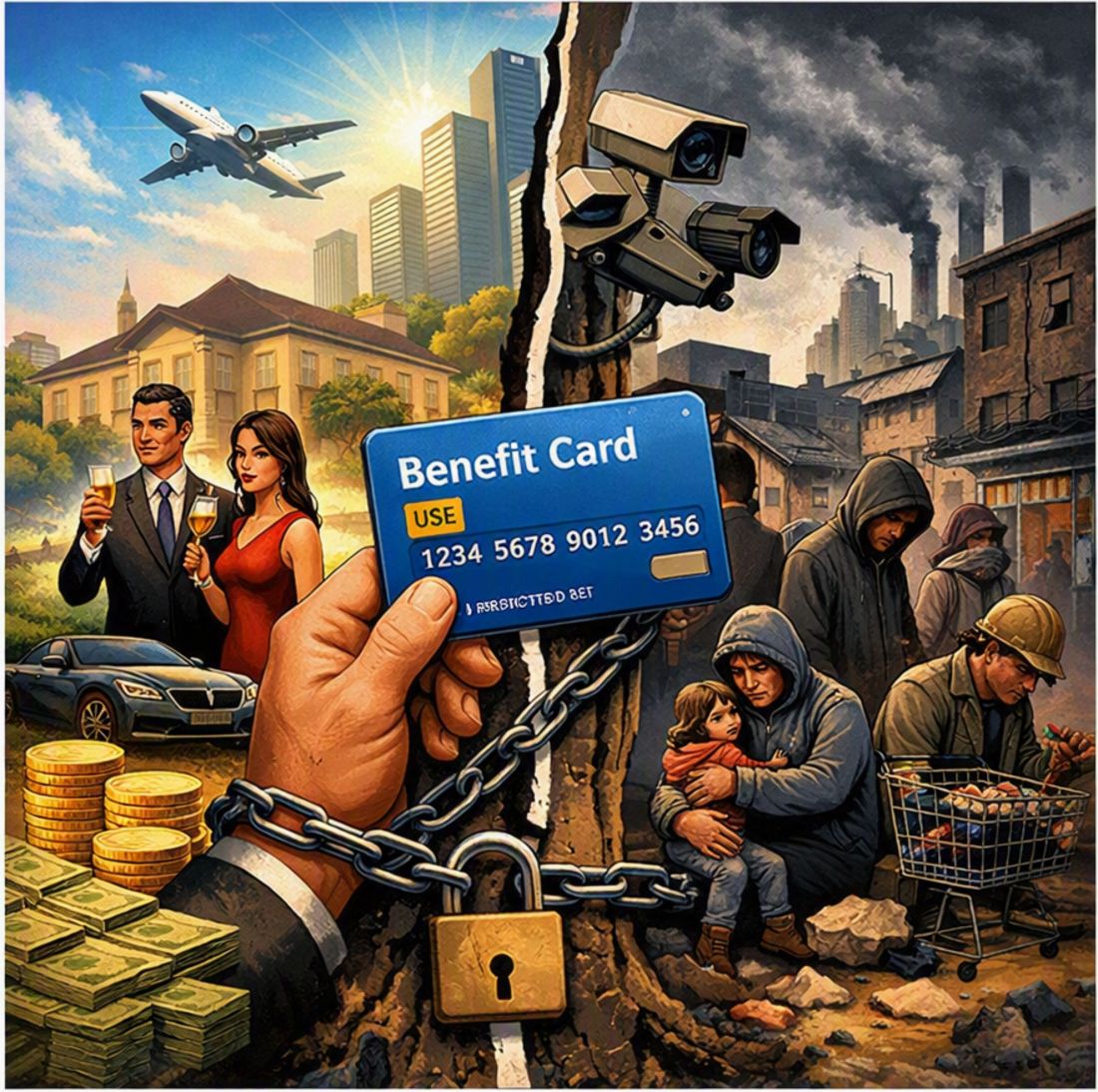
Price Fixing in a Broken System: What the Government’s Talks With Supermarkets Really Tell Us

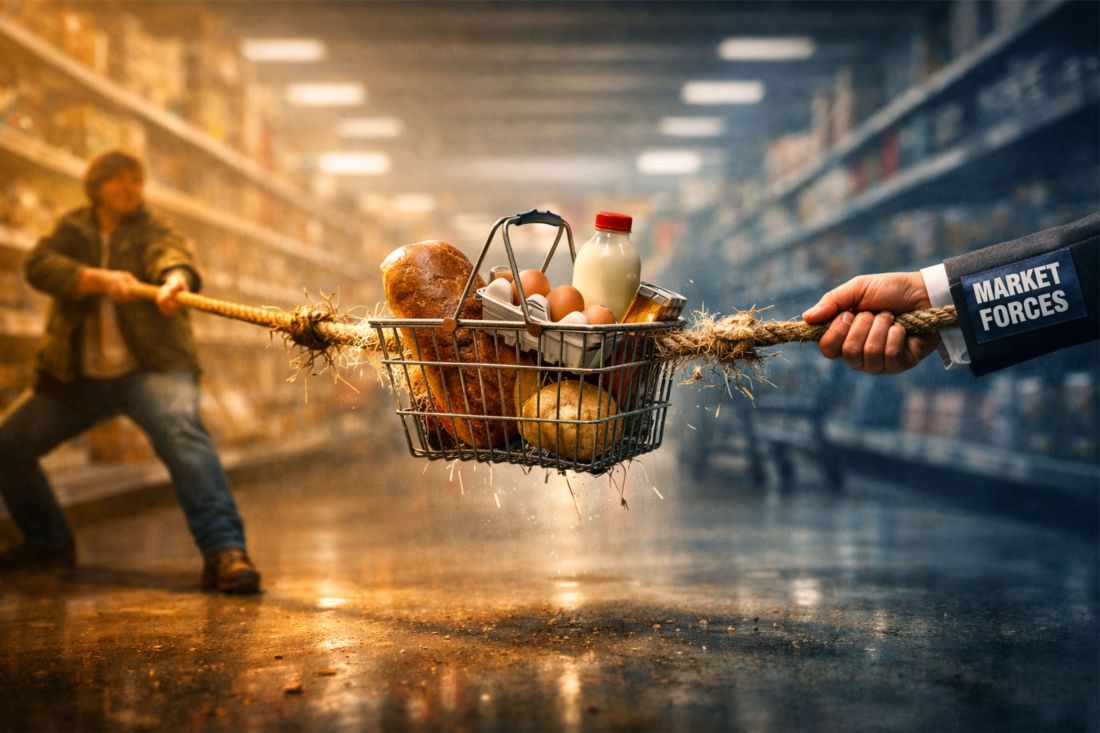
It says something about the moment we are living through that the government has begun quietly asking supermarkets to hold down the price of basic essentials. Not ordering, not legislating – simply asking.

The discussions, that have taken place between Treasury officials and the major retailers, were framed as a voluntary gesture: a request to restrain price rises on items like bread, milk, eggs and pasta in exchange for easing certain packaging and labelling rules.

It is not the kind of conversation British governments usually have. For decades, the political consensus has been that food prices are the business of the market, not the state.

Yet here we are, with ministers leaning on supermarkets in the hope of softening the cost‑of‑living crisis, even if only at the margins.

The fact that these talks happened at all is revealing. It shows a government under pressure, a public at breaking point, and an economic model that is no longer delivering what it once promised.

However, the idea itself is not new. France has been experimenting with similar measures since 2023, when it launched an “anti‑inflation quarter” – a voluntary agreement with retailers to keep a basket of everyday goods at the lowest possible price.

Later, the French government pushed large manufacturers to cut wholesale prices where their own costs had fallen, threatening to “name and shame” those who refused.

These interventions were time‑limited, targeted and heavily negotiated. They were not a blanket cap on essentials, nor a permanent redesign of the food system. And even in France, with its long tradition of state involvement in markets, the results have been mixed.

The UK’s version is far more modest. Retailers would choose which items to include. Participation would be voluntary. There would be no enforcement mechanism, no penalties, no mandated price points.

It is, in effect, a polite request dressed up as policy. But it is also a sign of something deeper: a system straining under its own weight, and a government reaching for tools that do not fit the machinery they are being applied to.

Because the truth is that price fixing – even the soft, voluntary kind – does not work inside the economic model Britain has built over the past fifty years.

It is not designed to.

The modern food system is a long chain of extraction. Farmers sell to processors, who sell to manufacturers, who sell to distributors, who sell to retailers, who sell to consumers.

At each stage, the expectation is the same: maximise efficiency, minimise cost, protect margin.

This is not a moral failing; it is simply how the system has been structured. But it means that when the government asks supermarkets to hold down prices, the pressure does not disappear. It moves backwards. Someone else absorbs it. And that someone is rarely in a position to do so.

In France, the state can lean harder on the chain because the chain itself is more consolidated and more accustomed to intervention.

In the UK, the system is looser, more fragmented, more globalised and far more resistant to pressure. A voluntary price restraint here is not a lever; it is a gesture. It may shave a few pence off a few items for a few weeks.

It will not change the underlying forces that have made essentials unaffordable for millions.

And those forces run far deeper than supermarket pricing.

The cost‑of‑living crisis did not begin with a war in Ukraine or a spike in global energy prices. Those events accelerated it, but they did not create it. The roots lie in an economic model that has, for decades, prioritised growth measured in GDP over the lived experience of the people who generate it. A model that has allowed wages to stagnate while housing costs soared. That has turned energy into a speculative commodity. That has stretched supply chains across continents in pursuit of efficiency, leaving them fragile in the face of shocks. That has treated essentials – food, heat, shelter – as opportunities for profit rather than foundations of a stable society.

In such a system, food poverty is not really about food. It is about the cost of being poor.

For millions of households, rent consumes the first share of income, energy the second, debt repayments the third. Food is whatever is left – and increasingly, there is nothing left at all.

Even if a voluntary price restraint saved a family a few pounds a week, that saving would simply be redirected to another essential cost. The underlying problem would remain untouched.

This is why the current moment feels so precarious. The government’s talks with supermarkets are not a sign of bold intervention; they are a sign of a system running out of road.

When policymakers begin asking retailers to voluntarily hold down prices, it is because the usual tools no longer work – or no longer work fast enough to prevent real hardship.

There are circumstances in which price controls become necessary. If supply chains in the Gulf were to collapse, or if energy markets were to spiral again, governments might have no choice but to intervene to prevent panic, hoarding or collapse of access to essentials. But even then, price controls only work when the entire system is aligned behind them. Without that alignment, they become temporary patches on a structure that is still pulling itself apart.

The alternative is to begin the slow, deliberate work of redesigning the system itself – building local resilience, shortening supply chains, ensuring that essentials are stable and accessible, and creating governance structures that reflect the needs of real communities rather than the demands of abstract markets.

This is the direction explored in The Basic Living Standard, Our Local Future and The Local Economy & Governance System: not as utopian visions, but as practical frameworks for a world where the old model no longer works.

The government’s talks with supermarkets are a symptom, not a solution. They reveal a political class that can see the crisis but is still trying to solve it within the logic of the system that caused it.

The cost‑of‑living crisis will not resolve itself. It will continue to deepen until decision‑makers confront the structural causes – or until events force their hand.

The question now is not whether change is coming. It is whether we choose to shape it, or wait for the system to reshape itself through crisis.

Why a People-Centric Future Must Begin Here: The Basic Living Standard

This essay is not a policy proposal, nor a prediction. It is an attempt to describe the direction our systems are moving in, to examine why that direction is increasingly unstable, and to outline the minimum foundation required if we are to avoid recreating the same failures under new labels. It is an exploration of what it would mean to build a future around people rather than money – before events force that reckoning upon us.

It is nearly four years since I published Levelling Level, written at a time when “levelling up” dominated public debate. The purpose of that book was not to analyse the policy itself, but to expose how political narratives are used to obscure reality. “Levelling up” was a perfect example: a phrase so elastic it meant something different to everyone, and therefore meant nothing at all.

The Conservatives used it to imply people would be lifted up through public action – a promise that was, at best, disingenuous. Labour and the left, meanwhile, often approached inequality through a lens that effectively levels down. Ironically, these opposing approaches tend toward the same destination: a system in which people have less control over their own lives while centralised authority grows stronger. That is why successive governments have found it so easy to adopt and repurpose the term. Its vagueness is not a flaw; it is a tool.

Levelling Level was my attempt to show how narratives like this mask what is happening beneath the surface. What I did not anticipate was that it would become the starting point for a much larger inquiry: understanding where our system is heading, why it is heading there, and what a future genuinely built around people – not money – might require.

My confidence in the need for change comes from lived experience: a childhood shaped by poverty; early work in farming; later training in management; years spent in corporate services, charities, not‑for‑profits, and my own businesses; alongside time volunteering and serving as a frontline politician. These experiences offered a broad view of how the current system functions – and why its trajectory is increasingly unsustainable.

When our systems are examined honestly, their flaws point toward profound structural change. Ideally, such change would come by choice. In reality, it is more likely to be triggered by events arising from a money‑centric system that has been out of balance with the needs of people, communities, and the environment from its inception.

A system built on extraction and exploitation can only persist for so long before it exhausts the mechanisms designed to sustain it. Eventually, the myths fail, the smokescreens thin, and the underlying mechanics become visible.

It is tempting to explain this moment through conspiracies or shadowy coordination. And while the behaviour of certain global institutions may provide circumstantial evidence that fuels such beliefs, I do not accept that our predicament is the result of a single, unified plot.

The explanation is both simpler and more human: greed, self‑interest, and the misuse of power by those with sufficient influence to shape outcomes – and insufficient moral restraint to stop themselves.

The money‑centric system now sits on a knife edge. Not because of any one leader or institution, but because it was never designed to endure indefinitely. It was always a question of which pressure point would give way first, and what chain reaction would follow.

This system – encompassing globalism, neoliberalism, fiat money, modern monetary theory, centralisation, and the gradual drift toward supranational governance – rests on a single organising principle: the concentration of power, freedom, wealth, and resources in the hands of the few at the expense of the many.

Greed and selfishness are not new. What is new is the extent to which ordinary people are losing the freedom to shape their own lives. The natural lessons that arise from genuine choice – including the freedom to fail – have been replaced by frameworks that quietly dictate outcomes. Often, this happens without people fully realising it.

When decisions made by distant others constrain our ability to live freely and to make the choices that determine our own direction – for better or worse – fundamental natural laws are broken.

To say the system is out of balance is an understatement. Human life was never meant to revolve around the accumulation of material wealth or the pursuit of externally imposed values. Yet this is precisely what the money‑centric world demands.

As the old system falters, another dynamic is emerging – one that must be addressed with equal clarity.

People and groups are already forming new “bubbles”, each convinced they have found the answer: political movements, spiritual communities, ideological tribes, eco‑centric visions, decentralisation evangelists, and countless others. Many of these arise from genuine care and real harm. They offer belonging, meaning, and direction at a time of uncertainty.

The problem is not intent. It is structure.

These bubbles present themselves as new beginnings, but they often become new routes back to the same value system.

Any framework that requires qualification – whether political, religious, spiritual, environmental, or ideological – inevitably recreates hierarchy. It divides people into those who belong and those who do not. It rewards conformity and punishes difference. It produces insiders and outsiders. Once this happens, the conditions are in place for power to concentrate again, for value to be externally measured again, and for the money‑centric mindset to re‑emerge under a different name.

This is why the Basic Living Standard matters so profoundly.

The Basic Living Standard is not compatible with a money‑centric system.

They cannot coexist without one undermining the other.

One is built on extraction, hierarchy, and conditional value.

The other is built on universality, integrity, and unconditional human worth.

In practical terms, the Basic Living Standard means that no person’s survival, dignity, or basic participation in society is conditional on productivity, compliance, belief, or alignment. It is the floor beneath which no one can fall – not as charity, not as reward, but as a structural guarantee embedded in how the system operates.

But the BLS is also incompatible with agenda‑driven futures that seek to define the world in their own image.

It requires no qualification.

It does not ask you to be spiritual, religious, political, green, or ideologically aligned.

It does not demand belief, membership, or adherence to a worldview.

The only qualification is that you are a human being.

That universality is not an abstract ideal. It is the integrity upon which any future system must rest if it is to avoid manipulation, coercion, and the slow drift back into the very structures we claim to be leaving behind.

A people‑centric world cannot be built on agendas, however well‑intentioned.

It cannot be built on tribes, identities, or movements that claim to speak for everyone.

It cannot be built on frameworks that elevate some while excluding others.

It must be built on a foundation that treats every person the same – not rhetorically, not aspirationally, but in the actual mechanics of how the system functions.

The Basic Living Standard is that foundation.

It is the pivot that prevents the future from being bent to the will of the few.

It is the safeguard against the return of the money‑centric mindset.

It is the universal benchmark that keeps the system grounded in people, not agendas.

We are approaching a point where the old system can no longer hide its failures. Change is becoming unavoidable. That is why we must think clearly now – before events dictate the terms for us.

If we can let go of inherited assumptions, follow the implications of a people‑centric system to their full conclusion, and imagine life beyond the money‑centric lens, we may begin to see what the Basic Living Standard truly offers.

Not agreement.

Not conformity.

But a future in which no one’s humanity is conditional.

A world built around people, not money.

As AI Ends Work: Waking Up to the Illusion of UBI – and the Need for a New System

How the End of Work Exposes the Crisis of a Broken System

The Collapse of the Money-centric System

Value is the foundation of human life. It shapes how we live, how we relate to one another, and what we believe matters. Wherever we place value – and whatever we collectively agree has value – becomes the organising principle of our behaviour, our systems, and ultimately our civilisation. The value set we adopt determines not only how we live today, but the consequences that unfold tomorrow.

For most of human history, and certainly in the world we share today, the dominant value set is built around money. Not human experience. Not community. Not contribution. Not wellbeing. Money.

Our governments, institutions, systems of governance, economies, and the very fabric of daily life all orbit this single construct. Everything has become transactional because the value of money – what it costs, what we earn, what we accumulate, what we attract, what we are given – has become the lens through which we make decisions about the present and the future. Our interpretation of how money works, or how it has worked in the past, has become the compass by which we navigate life.

But the problem with money is not new. It began the moment money stopped being a simple medium of exchange – a tool to facilitate trade – and instead became the store of value itself, the point and purpose of value, the thing we pursued for its own sake.

This shift was accepted because it appeared logical, even sensible. It seemed like common sense. Yet in reality, it was the easy option – the lazy option – and it became the pivot point that set humanity on a path that would eventually lead us away from ourselves.

What few people have ever recognised – and fewer still have been willing to challenge – is that once money became the centre of value, our focus shifted away from people and the human experience. Instead, we became fixated on money itself, and then on the power, position, control, and influence that money could buy.

Human life became stratified by how much or how little of it we possessed. Success became synonymous with wealth. Poverty became synonymous with failure. And the human experience was reduced to a spectrum between rich and poor.

Over time, this became normalised. Wealth and poverty have existed for so long, in so many forms and nuances, that most people accept the wealth divide as a natural feature of life. Many even believe it is acceptable – that some should thrive while others go without, that some should have more than they could ever need while others struggle to meet the basics of life.

The dynamic has only worsened. The transition from feudalism to industrialisation was celebrated as progress, but the underlying imbalance remained. The gap between those who have and those who have not continued to widen. Eventually, it reached a point where no rule, regulation, or law could meaningfully correct it. The imbalance had become embedded in the system itself.

And as always, more wants more. The existence of social classes, and the aspiration to climb them, was never enough.

A point came when the elites – those who already held power – realised that if they wanted to accumulate even more, they would have to change the rules of the game. And who was there to stop them? They already controlled everything.

People talk endlessly about new world orders, Fabianism, the WEF, and other groups. But regardless of the motivations or the plans behind these movements and those who run and influence any government, the reality is simple: any value system has a finite total value within it, even if it grows. That value moves depending on the actions – whatever the motivation and whether conscious or unconscious – of those who control the system.

Under a ring‑fenced money system, such as the gold standard, no new money can be created. The total value is fixed. Even if the scales of wealth are pushed to their limits, the wealthy cannot accumulate beyond the system’s natural ceiling. They can own a lot, but they cannot conjure the value out of thin air that would enable the few to own and control everything.

This system – flawed as it most certainly was – remained in place until 1971. And only when we understand what changed in that moment can we understand what has happened to us since.

The creation of the fiat money system, which allowed those in control to create money at will, enabled the greatest transfer of wealth in human history. It allowed the already wealthy to become unimaginably wealthier by creating money that could then be used to buy everything of real value – businesses, infrastructure, land, resources, and the essentials of community life.

Ownership and power were transferred to people who could never have acquired them under a value system grounded in reality. The new system was built on methods that were dishonest and fundamentally false.

Ordinary people didn’t question it. Why would they? Their value system – money – still looked the same. A pound was still a pound. A dollar was still a dollar. But the reality had changed completely.

This is why life today looks so different from life 60 or 70 years ago. There are anomalies everywhere. A single average wage once supported a family, bought a home, and provided security. Today, even the national minimum wage is not enough for one person to survive without benefits, charity, or debt.

Because money is the centre of value, people have been conditioned to believe that if they have what they want, everything is fine. So the consequences of the fiat system – what it has done to people, communities, and the environment – have not been treated as the priority they should have been.

The West has been told that the last 80 years have been peaceful, that there are no real problems ahead, and that nothing fundamental could ever change. Meanwhile, laws, working practices, and – most importantly – technology have changed at an accelerating pace. Everything has changed while we believed we were standing still.

We can see clearly what the Industrial Revolution did. We understand why the labour movement emerged. Industrialisation devalued human effort by replacing or reducing the need for human labour with machines wherever it could be done.

Yet we have failed to notice the evolution happening beneath our feet today. People believe the world still works as it did after the Second World War. Very few see the catastrophe unfolding around us: the next great technological shift – the rise and takeover of AI.

Just as people once accepted that machines would replace or reduce the need for manual labour, many now accept that AI will replace cognitive labour. And they assume this means nobody will have to work.

There is a dangerous collective assumption that technology has been created for the betterment of humanity. But the reality is that modern technology – especially AI – has been developed for profit and control, not for helping and supporting humanity.

If it had been created to improve life, we would already be living in a world where even the poorest had enough, where jobs were secure, and where technology enhanced life rather than replacing it.

Instead, we are living through a neoliberal, globalist model powered by fiat money – a model that extracts value from people and concentrates it in the hands of a few.

Even the architects of this system know it cannot work. That is why figures like Sam Altman now promote UBI – Universal Basic Income – as the supposed solution, for the fast-approaching time when for growing numbers, there will no longer be any kind of work.

The Fiat Era, AI, and the False Promise of UBI

UBI has been tested in small‑scale trials around the world. The idea is simple: everyone receives a set amount of income, regardless of what they do. It is appealing because it promises security in a world where jobs are disappearing. It reassures people that even if AI replaces their work, they will still be able to live the life they know today.

But this belief rests on a dangerous misunderstanding.

People assume UBI means they will continue to live as they do now – with the same homes, the same comforts, the same access to goods and services – simply without needing to work. They imagine a world where machines do everything, and humans simply enjoy the benefits.

This is fantasy.

UBI, in the context of the system we have today, is idealism built on a lie. It assumes that money can be endlessly created to pay off debts that already represent money that does not exist. It assumes that the system can continue functioning even as the economic role of billions of people disappears. It assumes that those who own everything will willingly fund the lives of those who own nothing.

The technological revolution – and the speed at which it has unfolded – was only possible because of the fiat money system. A system that survives only because enough people still believe in it. A system where most people already own nothing, and where the underlying structure is already broken.

The people who own everything – the corporations, the financial institutions, the elites who control the levers of power – cannot run a world where machines do all the work and billions of people contribute nothing.

The equation does not balance.

A system where everyone takes but no one contributes cannot function.

UBI is simply a tool to maintain the illusion that money still matters, that the system still works, and that people still need the very system that is failing them.

If we continue removing jobs at the current rate, a point will come – soon – when people outside the protected classes will have no means to survive. Not because they lack ability. Not because they lack willingness. But because the system will no longer have a place for them.

The question is not whether technology is good or bad. Technology can be used to advance humanity. But the reality we face is that AI has been developed to remove human involvement, not to improve human life. It has been built to maximise profit, minimise cost, and eliminate the “problem” of human labour.

And this is where the truth becomes unavoidable:

UBI will not save us.
It cannot save us.
It was never designed to.

UBI is the last tool of a dying system – a sticking plaster on a wound that requires surgery. It is the final illusion offered by a worldview that has already collapsed under its own contradictions.

The dam is cracking.
The pressure is rising.
And UBI cannot hold it back.

There is another way – a way of living that embraces technology without using it to replace or devalue people. A way built on local economies and local governance, with the Basic Living Standard at its heart. A way that restores human value, dignity, and sovereignty.

A time is approaching – sooner than most realise – when we will have to choose. We can continue sleepwalking down the path we are on, a path controlled by a few, where most will find neither benefit nor happiness. Or we can choose to walk a different way – a way where each of us contributes, participates, and lives with genuine freedom and sovereignty.

The alternative may flatten hierarchies, decentralise power, and remove the obscene concentrations of wealth that exist today. But it will also create lives worth living – lives grounded in peace, purpose, and the true human value that comes from within us, not from the money system that has defined us for far too long.

The Turning Point: Why UBI Cannot Save a Collapsing System

UBI is being sold as a compassionate solution, a stabiliser, a safety net for a world without work. But the truth is far more uncomfortable:

UBI is the final illusion of a system that has already collapsed in every meaningful way.

It is the last tool available to a worldview that cannot admit its own failure. It is the final attempt to preserve a structure that has been unravelling for decades – a structure built on false value, false scarcity, false growth, and false promises.

The destruction of jobs was not an accident.
It was not an unfortunate by‑product of progress.
It was a deliberate choice – a choice made by those who benefit from a world where human beings are no longer required.

The system has been moving toward this point for generations:

  • first by replacing physical labour with machines
  • then by replacing skilled labour with automation
  • now by replacing cognitive labour with AI

At each stage, the justification was the same: progress.

At each stage, the consequences were the same: displacement.

At each stage, the winners were the same: those who already held power.

And now, as the final stage unfolds, the system has run out of excuses – and out of time.

The truth is simple:

A society built on money cannot survive when people no longer earn it.

A society built on work cannot survive when people no longer have it.

A society built on consumption cannot survive when people cannot afford to consume.

UBI does not solve this.
It cannot solve this.
It was never designed to solve this.

UBI is a sedative – a way to keep people calm while the system collapses around them. It is a way to delay the moment when the public realises that the world they were promised no longer exists.

But the dam is cracking.
The pressure is rising.
And UBI cannot hold it back.

A world where billions of people have no economic role is not a world that can be stabilised with monthly payments.

It is a world that requires a complete rethinking of value, contribution, governance, and the purpose of human life.

And that is where the real alternative begins.

The Alternative: A System That Solves the Root Causes

If UBI is the last illusion of a dying system, then the question becomes unavoidable:

What replaces it?

Not a reform.
Not a patch.
Not a new policy within the old worldview.

What replaces it must be a new operating system for society – one that addresses the root causes of the crisis, not the symptoms. One that works with human nature, not against it. One that restores dignity, purpose, and sovereignty to every person.

That system exists.

It is called the Local Economy & Governance System (LEGS), and it is built on four pillars:

  • The Revaluation
  • The Basic Living Standard
  • The Contribution Culture
  • Personal Sovereignty

Together, they form a coherent, humane, practical alternative to the collapsing money-centric world.

1. The Revaluation: Changing What We Value

The crisis we face did not begin with fiat money.
It did not begin with globalisation.
It did not begin with AI.

It began with a value system that placed money above people.

The Revaluation is the shift from:

Money-centric value → human centric value

It is the moment we stop measuring life through:

  • price
  • profit
  • productivity
  • accumulation

and begin measuring it through:

  • wellbeing
  • contribution
  • community
  • dignity
  • sustainability
  • fairness

Without this shift, nothing else can work.

With it, everything else becomes possible.

2. The Basic Living Standard: Security as a Universal Right

The Basic Living Standard (BLS) is not UBI.
It is not a handout.
It is not dependency.

It is a guarantee that every person can meet their essential needs – food, shelter, energy, water, healthcare, and participation – from a normal week’s contribution.

It breaks the link between survival and employment.
It removes fear, insecurity, and dependency.
It ensures that no one can fall below the basics of life.

And unlike UBI, it is not funded by printing money or taxing a collapsing economy.
It is built into the structure of the local economy itself.

The BLS is the economic foundation of a people‑first society.

3. The Contribution Culture: Work as Meaning, Not Survival

The Contribution Culture replaces the toxic idea that:

“If you don’t work, you don’t deserve to live.”

with:

“Everyone who can contribute, contributes – because contribution is meaningful, valued, and secure.”

In a Contribution Culture:

  • work is not coerced
  • work is not a punishment
  • work is not a transaction
  • work is not a competition
  • work is not a fight for survival

Work becomes:

  • participation
  • purpose
  • community
  • shared responsibility
  • a source of dignity

This is the cultural foundation of the alternative – and the antidote to the crisis of work in an AI‑dominated world.

4. LEGS: The Local Economy & Governance System

LEGS is the structural foundation – the practical framework that makes the Revaluation, the BLS, and the Contribution Culture real.

It is built on:

  • local economies
  • local food systems
  • local governance
  • participatory democracy
  • shared responsibility
  • transparency
  • decentralisation

LEGS solves the problems that have existed since long before fiat:

  • centralised power
  • hierarchical control
  • distance between decision‑makers and consequences
  • systems that cannot see the ground
  • economies that treat people as units
  • governance that manages people instead of serving them

And it solves the problems that fiat accelerated:

  • extraction
  • inequality
  • speculation
  • debt dependency
  • the illusion of infinite value

And it solves the problems that AI will make catastrophic:

  • the removal of jobs
  • the collapse of income
  • the loss of agency
  • the erosion of sovereignty
  • the concentration of power in the hands of a few

LEGS is not a policy.

It is a new operating system for society.

5. Personal Sovereignty: The Human Foundation

Personal sovereignty is the right – and responsibility – of every individual to live as a free, ethical, self‑directed human being.

It is protected through:

  • security
  • transparency
  • locality
  • shared responsibility
  • meaningful contribution

The money-centric system destroys sovereignty by creating dependency through UBI.

LEGS restores sovereignty by creating participation.

Why LEGS Works Where UBI Cannot

UBI tries to preserve the old system.
LEGS replaces it.

UBI depends on money.
LEGS depends on contribution.

UBI centralises power.
LEGS decentralises it.

UBI treats people as passive recipients.
LEGS treats people as active participants.

UBI assumes scarcity.
LEGS builds natural abundance.

UBI keeps people dependent.
LEGS restores personal sovereignty.

UBI is temporary.
LEGS is sustainable.

UBI is the illusion of security.
LEGS is the reality of it.

The Choice Ahead

Humanity is approaching a moment where the old system will no longer function – not because of fiat, not because of politics, but because AI will remove the economic role of billions of people.

UBI cannot solve this.

It was never meant to.

The only real alternative is a system that:

  • restores human value
  • guarantees security
  • redefines work
  • decentralises power
  • rebuilds community
  • and places people first in every sense

That system exists.

It is coherent.
It is humane.
It is practical.
It is necessary.

It is the Local Economy & Governance System, built on the Basic Living Standard, the Contribution Culture, and the Revaluation.

This is not a dream.
It is not a theory.
It is not a utopia.

It is the only path that deals with the root causes – not just the symptoms – of the unravelling we are living through.

And the time to choose it is now.

Further Reading:

1. An Overview of a People-First Society

https://adamtugwell.blog/2026/01/03/an-overview-of-a-people-first-society/
Why it’s critical: This article lays out the philosophical foundation for a people-centric society, directly addressing the shift away from money-centric values. It’s essential for grasping the big-picture vision that underpins all other proposals in this document.

2. The Local Economy & Governance System (LEGS): Online Text

https://adamtugwell.blog/2025/11/21/the-local-economy-governance-system-online-text/
Why it’s critical: This is the definitive resource on LEGS, the proposed alternative to the money-centric system that may soon look to UBI. It explains the system’s structure, principles, and practical mechanisms for replacing the current economic model. If you want to understand the practical solution, start here.

3. The Basic Living Standard: Explained

https://adamtugwell.blog/2025/10/24/the-basic-living-standard-explained/
Why it’s critical: This article clarifies the concept of the Basic Living Standard (BLS), a cornerstone of the LEGS system. It distinguishes BLS from UBI and explains why it’s a more sustainable and empowering approach.

4. The Contribution Culture: Transforming Work, Business, and Governance for Our Local Future with LEGS

https://adamtugwell.blog/2025/12/30/the-contribution-culture-transforming-work-business-and-governance-for-our-local-future-with-legs/
Why it’s critical: This article explores how LEGS redefines work and contribution, moving away from survival-based employment to meaningful participation. It’s vital for understanding the cultural transformation needed for the new system to succeed.

5. The Local Economy Governance System (LEGS): Escaping the AI Takeover and Building a Human Future

https://adamtugwell.blog/2025/12/04/the-local-economy-governance-system-legs-escaping-the-ai-takeover-and-building-a-human-future/
Why it’s critical: This piece directly addresses the impact of AI on work and society, and how LEGS offers a human-centred response to technological disruption. It’s especially relevant for readers concerned about the future of employment.

Why These Are Critical

These articles collectively provide:

  • The philosophical rationale for change.
  • A detailed blueprint for the proposed alternative system.
  • Clear explanations of the foundational concepts (BLS and Contribution Culture).
  • Direct responses to the challenges posed by AI and the collapse of traditional work.

When you can see that rules and laws prevent basic survival, you will understand that centralised governance has gone too far

A question that more and more people have begun to ask is: who does government really work for?

For some, that question comes from living at the sharpest edge of society’s problems – for example, those who can no longer afford to feed themselves properly. But the truth is that across every part of society – our communities, small businesses, clubs, pubs, and the countless organisations that sit outside the government or public‑sector bubble – rules, regulations and requirements are appearing everywhere. And when you look at what these rules actually do, many no longer make any sense at all in terms of allowing people to continue doing what they have always done.

Look more closely and the picture darkens further. Through licences, taxation, penalty notices, workplace directives and endless compliance demands, the ability of anything small, people‑centred, cost‑effective or community‑driven to function is being slowly strangled.

The cumulative effect is suffocating. Many businesses have already gone to the wall because of red tape alone – and that’s before we even consider the wider impact of a money‑centric system and a government culture obsessed with growth, targets and perpetual money creation.

Very few have questioned any of this. Not because people haven’t sensed something was wrong, or felt that the direction of travel jarred with the common sense of real life. But because every change introduced over decades has been sold as “progress”.

Each new rule has been framed as something that improves life, modernises society, or makes everything better for us all – as if the past was universally terrible and the only possible path was the one we’re on.

Yet the freedom we believe we have today is already hollow. With every new move the machinery of government makes, that freedom becomes more restricted.

At some point, we must confront the uncomfortable truth: what is being presented as freedom is increasingly just conformity to a narrative – a form of oppression wearing a very misleading name.

And all of this is happening at a time when global tensions are escalating. With our traditional allies across the Atlantic now posturing over who “owns” Greenland, and European elites openly entertaining the idea of war with Russia and the East, the systems we rely on are heading toward collapse – potentially in a matter of months. That’s before we even consider the other crises and issues lining up behind them.

Without meaningful change – and without a wholesale rejection of the rule‑based system that is already choking every part of life – we face a future where people simply cannot help themselves when they most need to.

Whether it’s farms being unable to grow food, pubs being unable to operate as social spaces, or low‑paid workers being unable to earn enough to live, the dark clouds gathering ahead point to a moment where survival becomes impossible. Not because people lack the will or ability, but because someone in an office miles away decided to make normal life illegal.

Yes, governments talk about “emergency powers” – the idea that in a crisis, the state will temporarily turn a blind eye to rules that would otherwise be enforced. But that raises a very telling question: if these rules can be suspended when reality demands it, who were they ever really serving in the first place?

The time is fast approaching when people may have no choice but to ignore rules and regulations that were created solely because they suited someone else’s interests, rather than being developed to help people live. Frameworks that should never have existed in a genuinely free society, that are now the very things preventing society from functioning.

Of course, we will always need accepted and shared ways of doing things. But those ways should be created, maintained and managed by the people actually involved and the communities they will affect. Not by distant agendas and idealistic theories detached from basic human values.

Systems should reflect how life really works for everyone, not how it might look in the imagination of those who believe people must be forced to behave as they are told.

Dark as the future may appear, there is an opportunity emerging. People and Communities can take back our power and build a system centred on people, community and the environment – one that genuinely puts human beings first.

This alternative already exists in outline. It’s called the Local Economy & Governance System. Built on the foundation of The Basic Living Standard, and shaped by principles such as participatory democracy and the contribution culture.

It offers a complete shift away from the money‑centric disaster path we are currently on. It creates a world where accountability is shared, where frameworks support life rather than restrict it, and where everyone is involved in shaping the society they live in.

Further Reading: Building a People-First Society

To deepen your understanding of the ideas discussed in this work – especially the critique of centralised governance and the vision for a people-centred alternative – these readings from Adam’s Archive provide a logical pathway.

They move from foundational principles, through practical frameworks, to real-world applications and philosophical context. Each resource is accompanied by a brief description to help you navigate the journey.

1. The Basic Living Standard Explained

https://adamtugwell.blog/2025/10/24/the-basic-living-standard-explained/
Start here to understand the foundational principle underpinning the proposed alternative system. This article explains what the Basic Living Standard is, why it matters, and how it serves as the bedrock for a fairer, more resilient society.

2. The Local Economy & Governance System (Online Text)

https://adamtugwell.blog/2025/11/21/the-local-economy-governance-system-online-text/
This resource introduces the Local Economy & Governance System, outlining its structure and how it departs from traditional, money-centric models. It’s a practical overview of how communities can reclaim agency and build systems that genuinely serve people.

3. From Principle to Practice: Bringing the Local Economy & Governance System to Life (Full Text)

https://adamtugwell.blog/2025/12/27/from-principle-to-practice-bringing-the-local-economy-governance-system-to-life-full-text/
Building on the previous readings, this article explores how the Local Economy & Governance System can be implemented in real communities. It bridges the gap between theory and action, offering concrete steps and examples.

4. The Contribution Culture: Transforming Work, Business, and Governance for Our Local Future (With Legs)

https://adamtugwell.blog/2025/12/30/the-contribution-culture-transforming-work-business-and-governance-for-our-local-future-with-legs/
This piece delves into the “contribution culture”- a key principle of the new system. It explains how shifting focus from profit to meaningful participation can transform work, business, and governance at the local level.

5. A Deep Dive Guide to the Philosophy of a People-First Society

https://adamtugwell.blog/2026/01/03/a-deep-dive-guide-to-the-philosophy-of-a-people-first-society/
Conclude your exploration with this philosophical guide, which ties together the practical and ethical dimensions of a people-first society. It offers a reflective look at the values and vision driving the movement for systemic change.

The Road We Are On is Broken – And We Built It Ourselves

The solutions we need won’t come from anything we already do. Because it’s everything we already do that caused the problems.

The Familiar Path That Led Us Here

Right now, people believe they’re seeing the full picture. They believe they understand the crisis, the chaos, the uncertainty – because the surface‑level symptoms are impossible to ignore.

But the deeper reality is still being missed. Not because it’s hidden, but because most people aren’t yet in a place where they can recognise what they’re looking at.

Perspectives shape perception. And when perspectives are shaped by habit, fear, conditioning, or the comfort of familiar narratives, they filter out the very things that matter most.

That’s why so many warning signs are dismissed. Why so many contradictions go unchallenged. Why people can feel informed while still being completely unaware of what’s actually unfolding.

Understanding doesn’t come from information alone. It comes from readiness – from the moment when someone’s internal landscape shifts enough for them to finally see what was always there.

Until that readiness arrives, even the clearest truth will look like noise, exaggeration, or irrelevance.

And that’s the challenge we face: not just to speak truth, but to recognise that truth only lands when the conditions allow it to.

Seeing Through the Fog of Perspectives

In times like these, people assume they’re fully aware of what’s happening around them.

The noise is loud, the chaos is visible, and the headlines never stop. It creates the illusion of clarity – as if simply noticing the disruption means understanding its cause.

But awareness and understanding are not the same thing.

Much of what matters is still out of view. Not because it’s hidden, but because most people aren’t yet equipped to recognise the patterns behind the events.

They see the symptoms, not the structure.

They see the fallout, not the forces shaping it.

They see the drama, not the design.

That’s why so many explanations sound far‑fetched to those who aren’t ready for them. Why warnings are dismissed. Why truths are labelled extreme until the moment they become obvious.

And this is the danger: when people believe they already see everything, they stop looking for what they’ve missed.

Rattles in the Vehicle We Thought Was Safe

We are, metaphorically speaking, passengers in a vehicle we don’t realise is breaking or already broken.

We race along, ignoring the rattles, because it’s still moving.

We convince ourselves everything’s fine, right up until the moment it stops and we’re forced to accept that we’ve broken down.

The warning signs are everywhere. No matter your business, sector, or situation, the red flags are waving from every direction in plain sight. But because the wheels are still turning – or appear to be – we keep believing that a change of driver or a quick pit stop is all we need.

We imagine that after a brief pause, the journey will resume, more comfortable than before, with a better seat and a better view.

But the vehicle – whether you can picture it as a car, train, or bus – represents everything we do and everything we believe we’ve always done.

The road beneath it is the path we’ve been set upon, shaped by our behaviours, expectations, attitudes, approaches, and the values we’ve allowed to guide us.

The Quiet Ways We All Contributed

And here’s the uncomfortable truth: no matter what problem you’re facing, no matter what crisis is unfolding, if it involves decisions made by others, then yes – you can probably identify who’s responsible. But at some level, we all share responsibility. We all helped build the road.

Even if we didn’t make the active choices that led us here, into this mess, we made choices nonetheless.

When we avoided risk, chose the easy option, kept quiet to avoid rocking the boat, ignored the truth, or failed to do what was right – we took action. And often, that action was simply allowing those with hidden agendas to get their way.

Everything has a cost.

For decades, we’ve been conditioned by manipulation, sleight of hand, and narratives designed to convince us that non‑conformity leads to isolation.

But the real cost has been far greater.

Everything that once held value – our businesses, workplaces, sports, social spaces, food, water, money, communication, education, jobs, reputations – has been diminished.

Not by accident, but by design. So it could be reformed, centralised, and ultimately placed under someone else’s control – even while we still believe we own it.

This includes the institutions people still trust by default: government, the public sector, and the systems built around them. They were supposed to safeguard society, yet they’ve become part of the machinery that has allowed decline, mismanagement, and manipulation to take root. Not because everyone within them is corrupt, but because the structures themselves are no longer fit for purpose – and haven’t been for a long time.

Understanding Comes Only When We’re Ready

The problems we face — in farming, hospitality, industry, with people, community, the environment, government, the public sector – all stem from the same system. From all the “everythings” each and every one of us do.

No matter our background or bubble, it all adds up to the same thing: the trouble the world is now in.

And what we’ve done and been doing so far cannot or will not fix it.

It doesn’t matter if we wait for a change in government while continuing to elect candidates chosen by people we don’t know.

It doesn’t matter if we keep believing the establishment is structured to serve us, or that it has the integrity to do so.

It doesn’t matter if we trust the financial system, or believe that inflation and the cost of living are beyond anyone’s control.

If we don’t change the fundamental building blocks – of life, economics, and governance – then no matter who’s in charge, things will only get worse.

And we’ll keep being told they’re getting better.

Crisis as Catalyst

Today, life just happens to us.

Business, money, governance – they’re systems we’re expected to show up for, participate in, and conform to. That’s it.

But conformity is what brought us here. And we’re standing at the doorway of something that, once we step through it, may quickly reveal that there is no way back.

It’s only this way and we only got here because we surrendered our power – more often than not without ever realising that we had even given it up.

Building Something That Puts People First

If we want to change anything – even the smallest thing – in the world around us, we must participate. We must play our part. That’s what living a proper life demands.

And if we want things not just to improve, but to become truly better, then we must all get involved.

The collapse we’re experiencing offers something rare: the chance to see and experience life differently. A chance that wouldn’t have come if things had continued as they were. Which they no longer can.

As circumstances worsen and reality begins to speak for itself, we have a choice.

We can take back our power. We can work with the people we know – the people we share our lives with – to reclaim genuine control. To put people, community, and the environment first.

The Local Economy & Governance System (LEGS) – built upon The Basic Living Standard – offers a new structure for the future.

LEGS isn’t a shortcut, and it isn’t a promise that someone else will fix things for us.

LEGS is simply a framework that puts people, community, and the environment back at the centre of life – where they always should have been.

What comes next won’t be shaped by governments, institutions, or systems that have already failed us. It will be shaped by the choices we make now, the conversations we have with the people around us, and the willingness we each find to choose and step through the doorway in front of us, that leads to a Future that no one else can define.

The world we knew is ending. But what replaces it is still ours to decide.

Further Reading

1. Awakening & How We Perceive the Crisis

Understanding how people ‘wake up’ to what’s really happening

There’s No Fast‑Track to Awakening

Link: https://adamtugwell.blog/2026/01/05/theres-no-fast-track-to-awakening/
A reflection on why meaningful awareness can’t be forced or rushed. People don’t see deeper truths until they are personally ready, no matter how clear the evidence appears.

Beliefs We Accept as Our Own Are Destroying Everything — Including Who We Really Are

Link: https://adamtugwell.blog/2025/09/16/beliefs-we-accept-as-our-own-are-destroying-everything-including-who-we-really-are/
Explores how inherited assumptions shape society’s decline and block real understanding or change.

The Choice – A Waking Up Story (Full Text)

Link: https://adamtugwell.blog/2025/07/19/the-choice-a-waking-up-story-full-text/
A narrative‑style exploration of what it feels like to realise the system doesn’t work the way we once believed.

2. The Hidden System Behind Society’s Problems

What’s really driving the chaos people can see – but don’t fully understand

The War Behind the World We Know

Link: https://adamtugwell.blog/2026/01/05/the-war-behind-the-world-we-know/
Examines the unseen mechanisms and competing interests that shape global events and public perception.

Safe Shores – The Pathway That Led to the Local Economy Governance System and the Basic Living Standard

Link: https://adamtugwell.blog/2025/12/29/safe-shores-the-pathway-that-led-to-the-local-economy-governance-system-and-the-basic-living-standard/
Shows how decades of systemic decline created the conditions that make new governance ideas not just desirable, but necessary.

After the Collapse – Who Gets the Blame?

Link: https://adamtugwell.blog/2025/11/12/after-the-collapse-who-gets-the-blame/
Explains why the wrong people and causes tend to be blamed when systems fail, and why this delays real solutions.

Choosing Outcomes Over Comfort – A Path to a Better Future

Link: https://adamtugwell.blog/2025/11/13/choosing-outcomes-over-comfort-a-path-to-a-better-future/
Looks at how comfort, convenience, and avoidance prevent individuals and communities from acting differently – even when change is essential.

3. Economics, Collapse & the Global Order

Why the economic system is failing – and what’s really behind it

Facing the Economic Collapse – The Real Crisis Behind Money, Wages, and Freedom

Link: https://adamtugwell.blog/2025/11/14/facing-the-economic-collapse-the-real-crisis-behind-money-wages-and-freedom/
Explores how wages, inflation, money creation, and governance combine into a crisis much deeper than people realise.

Money Is the Greatest Crime of Our Time

Link: https://adamtugwell.blog/2025/11/12/money-is-the-greatest-crime-of-our-time/
Reveals how the monetary system has been manipulated to serve central interests at the expense of the public.

Desperate Times, Desperate Resets

Link: https://adamtugwell.blog/2025/03/24/desperate-times-desperate-resets/
Discusses major societal “resets” and why moments of crisis are exploited to reshape systems from the top down.

The BRICS Money Bomb – Will a New Gold‑Backed Currency Flip the Global Order?

Link: https://adamtugwell.blog/2023/08/14/the-brics-money-bomb-will-a-new-gold-backed-currency-and-monetary-system-really-flip-the-global-order-or-does-the-end-of-world-peace-lie-immediately-ahead-essay/
Analyses the potential shift in global power if BRICS nations introduce a hard‑asset‑backed currency.

Trump’s Reset – Catalyst for Change, Doorway to Cataclysm, or Both?

Link: https://adamtugwell.blog/2025/04/29/trumps-reset-catalyst-for-change-doorway-to-cataclysm-or-both/
Investigates the destabilising ripple effects of political “resets” and their global economic consequences.

4. Politics, Institutions & Public Misunderstandings

Why political systems fail – and why people keep expecting them to work

The Contemporary Politician’s Dilemma

Link: https://adamtugwell.blog/2024/12/05/the-contemporary-politicians-dilemma/
Shows why modern politicians cannot meaningfully fix systemic problems — even when they want to.

Government Is Broken – Collapse Now or Collapse Later?

Link: https://adamtugwell.blog/2025/11/05/government-is-broken-collapse-now-or-collapse-later/
Explains why existing government structures are no longer fit for purpose and cannot deliver sustainable solutions.

Any Fool Can Be a Politician

Link: https://adamtugwell.blog/2025/10/07/any-fool-can-be-a-politician/
A sharp look at how politics attracts the wrong incentives, creating leaders unsuited to solving real‑world challenges.

Why People Can’t “Just Get a Job”

Link: https://adamtugwell.blog/2025/11/04/why-people-cant-just-get-a-job/
Breaks down the structural economic and social barriers that make simplistic advice meaningless.

5. The Local Economy & Governance System (LEGS) and the Basic Living Standard (BLS)

Practical frameworks for rebuilding society from the ground up

The Basic Living Standard – Freedom to Think, Freedom to Do, Freedom to Be

Link: https://adamtugwell.blog/2025/12/15/the-basic-living-standard-freedom-to-think-freedom-to-do-freedom-to-be-with-personal-sovereignty-that-brings-peace-to-all/
Introduces BLS as a foundation for genuine human freedom, community wellbeing, and resilience.

The Basic Living Standard Explained

Link: https://adamtugwell.blog/2025/10/24/the-basic-living-standard-explained/
A straight‑forward breakdown of what the BLS is, why it matters, and how it functions.

The Local Economy Governance System (Online Text)

Link: https://adamtugwell.blog/2025/11/21/the-local-economy-governance-system-online-text/
A reference version of the LEGS framework for those seeking a structural model for local governance.

From Principle to Practice – Bringing LEGS to Life (Full Text)

Link: https://adamtugwell.blog/2025/12/27/from-principle-to-practice-bringing-the-local-economy-governance-system-to-life-full-text/
A detailed, practical guide on implementing LEGS within a community context.