
1. The crisis we keep misreading
Every year, the Trussell Trust releases its food bank statistics. And every year, the same ritual unfolds.
This time, a headline announces that more than 2.6 million emergency food parcels were distributed in the past 12 months.
Commentators share the figure. Some frame it provocatively. And the replies fill with denial, contempt, and moral judgement.
But the real problem isn’t the trolls.
It’s that even people who donate to food banks, volunteer in them, or support them politically can still misunderstand what these numbers actually represent.
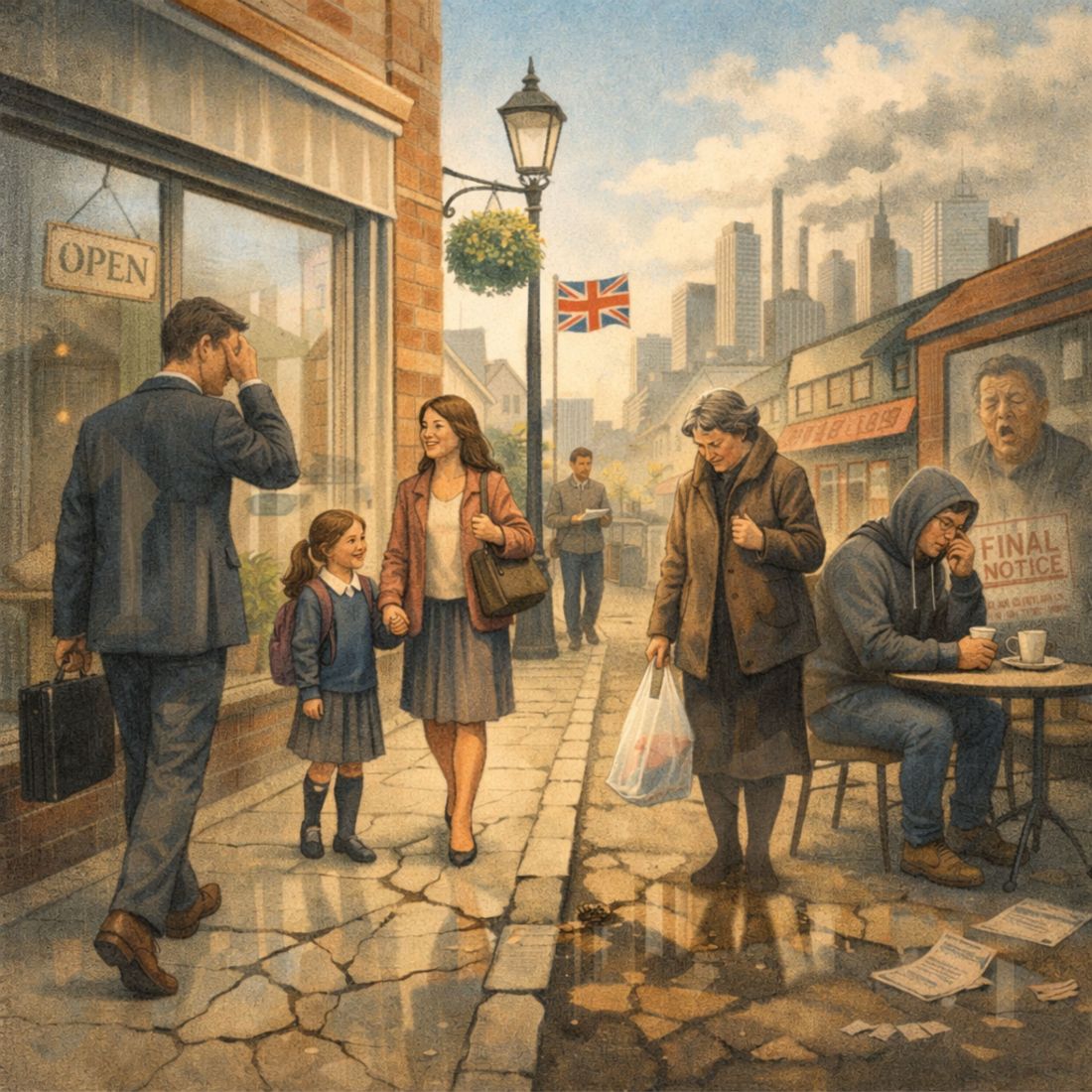
We think we know what poverty looks like.
We think we know who “the poor” are.
We think we know why people need help.
But we don’t.
And our misunderstanding is not accidental – it is cultural, psychological, and deeply tied to our discomfort with the economic system we all live inside: a system that depends on impoverishing people, then teaches them to feel guilty for being poor.
This essay is about that misunderstanding.
It’s about the stories we tell to avoid seeing the truth.
And it’s about what poverty quietly reveals about all of us.
Part I – What Food Banks Really Are
2. Food banks are not what people think they are
The public imagination treats food banks as if they are walk‑in supermarkets for freeloaders.
This is a myth – and a very damaging one.
To access a Trussell Trust food bank:
• a recipient must obtain a referral voucher
• they must obtain that voucher from a professional agency such as a GP, school, social worker, housing officer, or Citizens Advice
• to get that referral, they must demonstrate that they are in immediate crisis
• and are typically then required to engage with follow‑up support services
This is not casual use.
It is not convenience.
It is not a lifestyle choice.
It is a last‑resort emergency system.
What a food parcel actually contains
A standard emergency parcel provides:
• three days’ worth of nutritionally balanced food
• tinned and dried goods
• basic toiletries
• baby supplies where needed
• sometimes fuel vouchers*
And a typical food bank will today offer recipients signposting to debt, housing, or benefits support – with access to organisations like Citizens Advice Bureau increasingly ‘on-site’.
It is not luxury.
It is not abundant.
It is not designed to sustain anyone long‑term.
It is designed to stop someone from falling off the edge.
* Food poverty and fuel poverty rarely exist in isolation. The same financial pressure that empties cupboards also leaves homes unheated – forcing people to choose, daily, between food and warmth.
3. What the figures really say
When the Trussell Trust reports 2.6 million parcels, it does not mean:
• 2.6 million people are starving
• 2.6 million people are irresponsible
• 2.6 million people are “taking advantage”
It means:
2.6 million emergency interventions were needed to prevent people from going hungry in a wealthy country.
And that number only counts the people who:
• knew help existed
• were willing to ask
• could overcome the shame
• could navigate the referral system
• could physically reach a food bank
• and were not turned away because supplies ran out
The real number of people struggling is far higher.
Part II – The Invisible Reality
4. The millions who never ask for help
There are people in this country – thousands, maybe millions – who:
• skip meals
• water down food
• eat once a day
• pretend they’ve already eaten so their children don’t worry
• live on toast
• live on cereal
• live on nothing
And they will never go to a food bank.
Not because they don’t need help.
But because they believe:
• asking for help is shameful
• poverty is a personal failure
• “other people need it more”
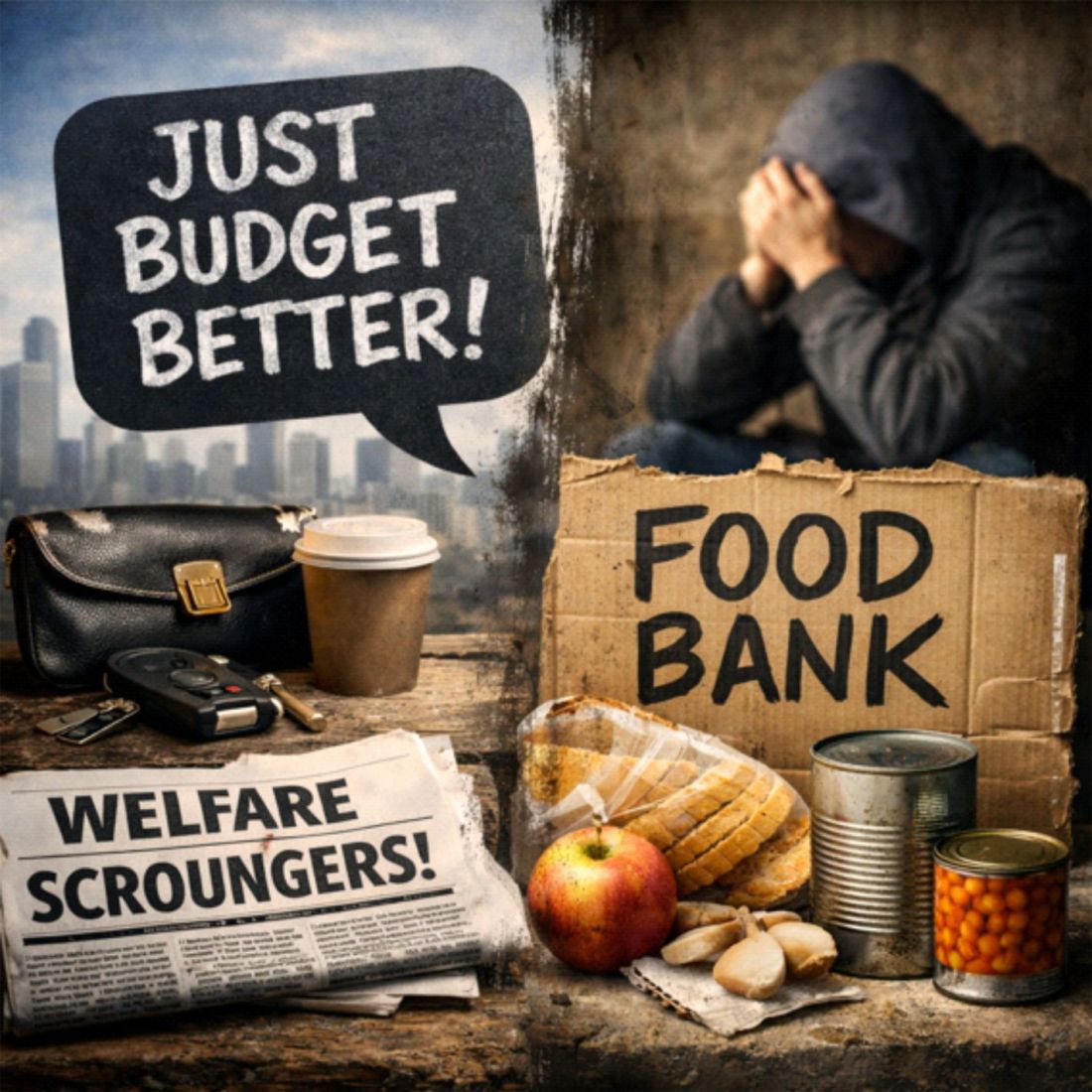
• they should “just budget better”
• they should “cope”
• they should “manage”
These beliefs do not come from nowhere.
They are the product of decades of political messaging, media framing, and cultural conditioning that equates poverty with moral weakness.
The result is a population suffering in silence – invisible to the statistics, invisible to policymakers, and invisible to the very volunteers who believe they are seeing the whole picture.
5. The uncomfortable truth about volunteers
Food banks are run by good people.
People who care.
People who give their time.
People who want to help.
But care is not the same as understanding.
Many volunteers have never experienced poverty themselves.
They have never had a debt collector at the door.
They have never had a benefits sanction.
They have never had to choose between heating and eating.
They have never had a car breakdown that wiped out their month.
They have never had a rent increase that tipped them into crisis.
For some, especially those whose own lives were made stable by wages, housing, pensions, or public services that worked better for them, the system does not look broken. It looks normal.
So when someone turns up for help, they do not always see a system producing poverty.
They see an individual in difficulty.
And once poverty is seen as an individual difficulty rather than a social outcome, the old explanations return:
• bad choices
• poor budgeting
• irresponsibility
That is where charity can become dangerous.
Charity treats the consequences of poverty. Understanding challenges the causes.
Without that understanding, some of the people helping the most visibly can end up helping the least politically, because the suffering is managed, softened, and made bearable – but the system that produces it is left untouched.
This is not a call to stop helping. It is a demand that help stops pretending the crisis begins and ends at the food bank door.
Part III – The System That Creates Poverty
6. The system that punishes default
Here is the part almost nobody talks about:
Most people are far closer to needing a food bank than they realise.
All it takes is:
• a missed paycheque
• a rent increase
• a benefits delay
• a car repair
• a boiler breakdown
• a relationship ending
• a sudden illness
• a debt repayment tipping the balance
The system is not designed to absorb shocks.
It punishes them, then calls the punishment consequence.
If you default on:
• a loan
• a subscription
• a utility bill
• a credit card
• a rent payment
…the system responds with:
• fees
• penalties
• interest
• threats
• collections
• court action
Miss a payment, and you do not simply fall behind. You are charged for falling behind. Penalised for having too little. Pursued because the margin was never there in the first place.
This is not a neutral system of personal responsibility.
This is structural fragility turned into a revenue stream.
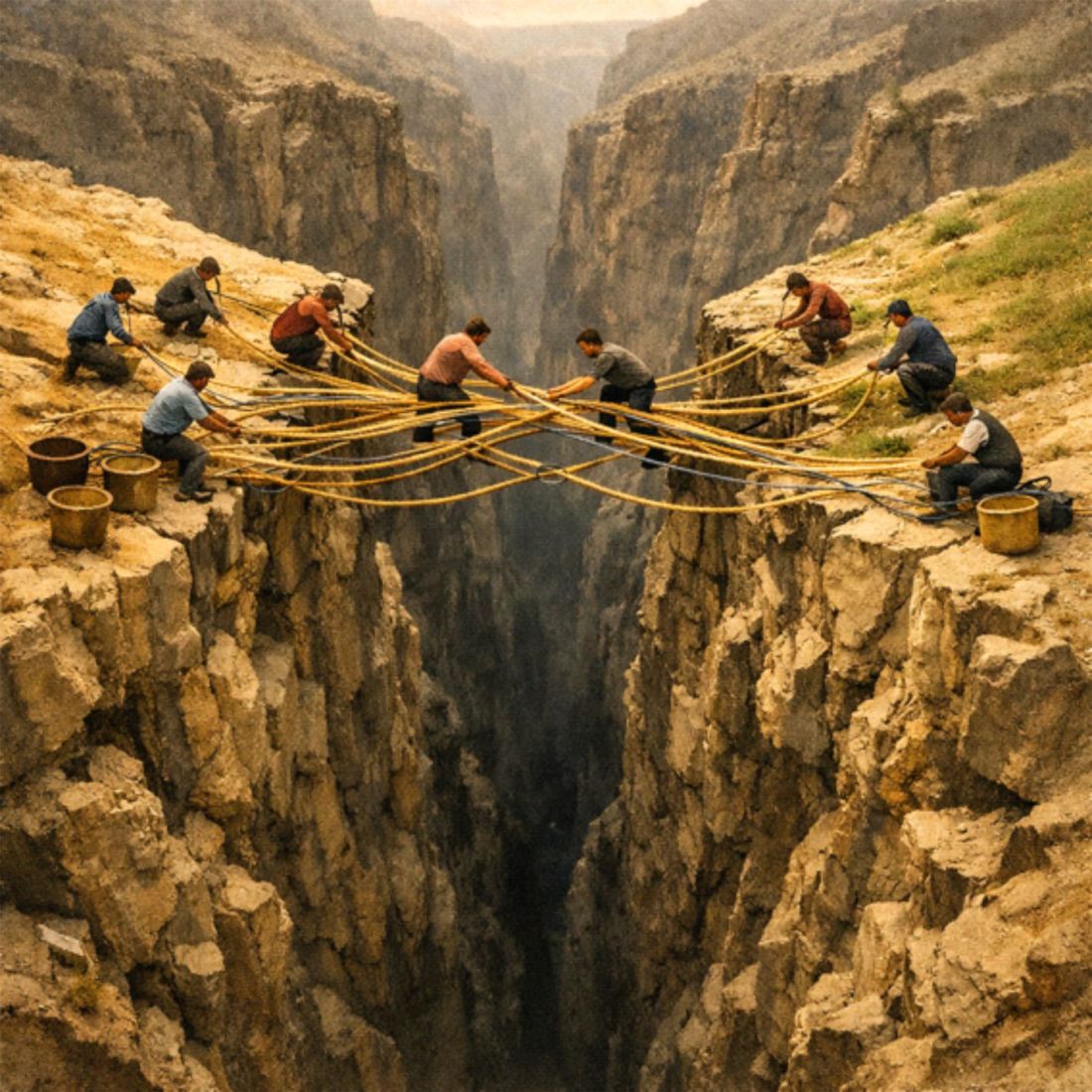
The modern household budget is a tightrope.
One gust of wind – one unexpected bill – and the fall is immediate.
7. The devaluation nobody talks about
People often say “inflation is the problem”.
But inflation is only half the story.
The other half is:
Incomes are failing to keep pace with the cost of staying alive.
People aren’t just running harder because prices are rising.
They’re running harder because wages, benefits, and savings buy less against:
• rent
• food
• energy
• transport
• childcare
• debt
• housing
• council tax
• essentials
This is why even people who mock food bank users are often only a few bad weeks away from needing one themselves.
The system is extractive by design because every pressure point becomes an opportunity to take more.
It pulls value upward.
It pushes risk downward.
And it leaves ordinary people running faster and faster just to stay in place.
Part IV – The Narratives That Protect Us From The Truth
8. The collapse of public understanding
This is why social media threads about poverty become so toxic.
A provocative framing.
A misunderstood statistic.
A platform that rewards outrage.
A public conditioned to blame individuals.
A population under financial pressure.
A culture that equates poverty with moral failure.
The result?
A thread full of people:
• denying the problem
• mocking the vulnerable
• insisting it’s all about budgeting
• projecting their own financial fear onto others
• performing toughness to avoid confronting fragility
This is not ignorance.
It is self‑protection.
If poverty is a personal failure, then those who are not poor can reassure themselves that they are safe.
If poverty is structural, then nobody is safe.
And that is a far more frightening truth.
9. What poverty reveals about us
Poverty makes us uncomfortable because:
• it exposes the fragility of our own financial lives
• it reveals how dependent we are on a system we don’t control
• it reminds us that our stability is conditional
• it challenges the myth that hard work guarantees security
• it forces us to confront the extractive nature of the economy
• it shows us that “success” is often luck dressed up as virtue
We prefer to believe:
• “I’m safe because I’m responsible”
• “I’m secure because I work hard”
• “I’m stable because I make good choices”
But poverty whispers a different truth:
You are not as far from the edge as you think.
And that is why we cling to narratives that blame the poor.
Because if poverty is a moral failing, then we can pretend we are morally safe.
Part V – What We Must Change
10. The truth we keep refusing to face
Food banks are not a sign of generosity.
They are a sign of failure.
They are charity doing emergency repairs on an evolving political and economic crisis.
They exist because:
• wages don’t match living costs
• benefits don’t cover essentials
• housing is unaffordable
• debt is punitive
• work is insecure
• crises are common
• safety nets are thin
• shame is weaponised
• narratives are distorted
• charity is mistaken for a solution
And the people who use food banks are not the problem.
The problem is a society that:
• denies structural causes
• blames individuals
• moralises hardship
• misunderstands the data
• and refuses to see how close everyone is to the edge
11. Changing the story
If we want to fix the problem, we have to fix the story.
We need to stop talking about:
• “starving people”
• “scroungers”
• “budgeting failures”
• “irresponsibility”
And start talking about:
• crisis
• fragility
• structural pressure
• systemic failure
• the invisible millions
• the truth behind the numbers
• the difference between treating consequences and challenging causes
Because charity treats the consequences of poverty. Understanding challenges the causes.
And until we understand the causes, we will keep protecting the system that makes charity necessary.