Your Beliefs Today create Everyone’s Experiences Tomorrow | New Book

How do you look at the world?

How is your view of the world different to other people?

What will tomorrow look like based on the view of the world you have today?

Would you change the way you view the world if you understood the difference between your view, other people’s views and what they could really mean?

These are all very important questions that most of us are typically too busy or distracted to even consider, let alone ask.

However, the consequences of us not doing so could be very profound, as the future will just happen to us unless we do so

Your Beliefs Today create Everyone’s Experiences Tomorrow invites you to consider a range of the different prevailing ways that people look at today’s world. How they came into being, and what – without change – they are likely to bring into our lives for our tomorrows.

Will you recognise yourself and what your beliefs today could bring to your future experiences?

Will you be happy with everything you believe?

Will you see your own perspective as very different?

Or will you choose to step forward into the future armed with the tools and power for change?

Are we losing the ability to think for ourselves?

We are living through and experiencing very challenging times. Not because of events and factors which are outside of human control. But because of the way that we currently think.

Much of the problem isn’t even conscious and reflects the reality that a significant proportion of us are not self-aware. Even though many of us would nonetheless insist that we are.

It is a certain truth that we have to know ourselves if we really want to know and understand how life works for others.

There is certainly a good argument to be made that for everyday people whose lives don’t appear to have any impact upon others, that understanding either themselves or others doesn’t matter.

However, this exclusion or any hint of it certainly shouldn’t apply to anyone whose actions can or do have an impact upon any other person’s lives.

Education has failed us. Because we have become culturally obsessed with the idea that academic qualifications are themselves the educational benchmark for life.

We have progressively left swathes of younger generations behind. As it has become fashionable to believe anyone without a degree lacks intelligence and the grounding in life necessary to achieve beyond ‘technical’ roles in the workplace.

Regrettably, a narrative is also being carefully constructed about the arrival and rollout of the latest generations of AI. And anyone looking closely at the direction of travel and what change of the kind that those who will financially benefit from the ownership and control of AI systems in the world that they have crafted intend, may soon find themselves with a very difficult question in mind. Namely, ‘Was the ‘dumbing down’ of the population that many of us already recognise, always part of some strategy or plan?’

It is perfectly reasonable to question any suggestion that there are those amongst us who wish to remove the ability for the masses to think for themselves and to prevent everyone from operating and managing their lives independently.

But don’t you find it odd that in an age where so little can be trusted within the flow of information that heads to us from the moment we wake up, that no establishment voice has championed the idea that teaching critical thinking as an essential part of our educational processes would be a very good thing?

There is a tragedy unfolding around us, either by specific design or just as a consequence of the way that The System we have is steadily destroying humanity itself: Few of us are awake to what is happening. Even though just as many believe that they are.

Of those who understand or question what is becoming obvious in so may ways, there are virtually none who will speak out or stand against the way that The System operates. Because they believe that the benefits that they are gaining by ‘going with it’ far outweigh the perceived disadvantages  of rejecting all the things that are hurting us and the people around us. Many of which, are carefully hidden by narratives that even the most aware cannot always see.

Skills for Life are far more important for each and every person than any academic specialism will ever be for only the few who can genuinely achieve academic sense in its truest form. And there will be many more who achieve that success and other successes too, if we ensure that every young person is equipped as best they can be to read, question and understand the world which comes into their view.

Qualified academically or not, we are all capable of greatness or of being complete and utter fools

Qualified academically or not, we are all capable of greatness or of being complete and utter fools

As humans, we love difference. We love it so much that we use it as a way to qualify other people by colour, gender, sexual orientation, financial and material wealth, social background, taste, appearance and in many other ways too.

Many of the benchmarks we carry within our own personal make‑up, as we attribute value to others, are unconscious or, to the world outside us, completely hidden.

The fact that we make these judgements behind closed doors means that no matter how hard do‑gooders attempt to legislate or control our behaviour, controlling other people’s thinking at a personal or private level is a battle that even the most politically correct amongst us will never win.

The obsession with qualifying others

We have become obsessed with legitimising our qualification of others when it suits us. Society provides markers intended to help, yet we use them to create differences that stand far outside their original purpose.

For a long time, academic qualification has increasingly been used as the preferred way to distinguish ability, attitude, application, intelligence and countless other traits. To the audience, these markers become a convenient way to judge whether someone is “qualified” or not.

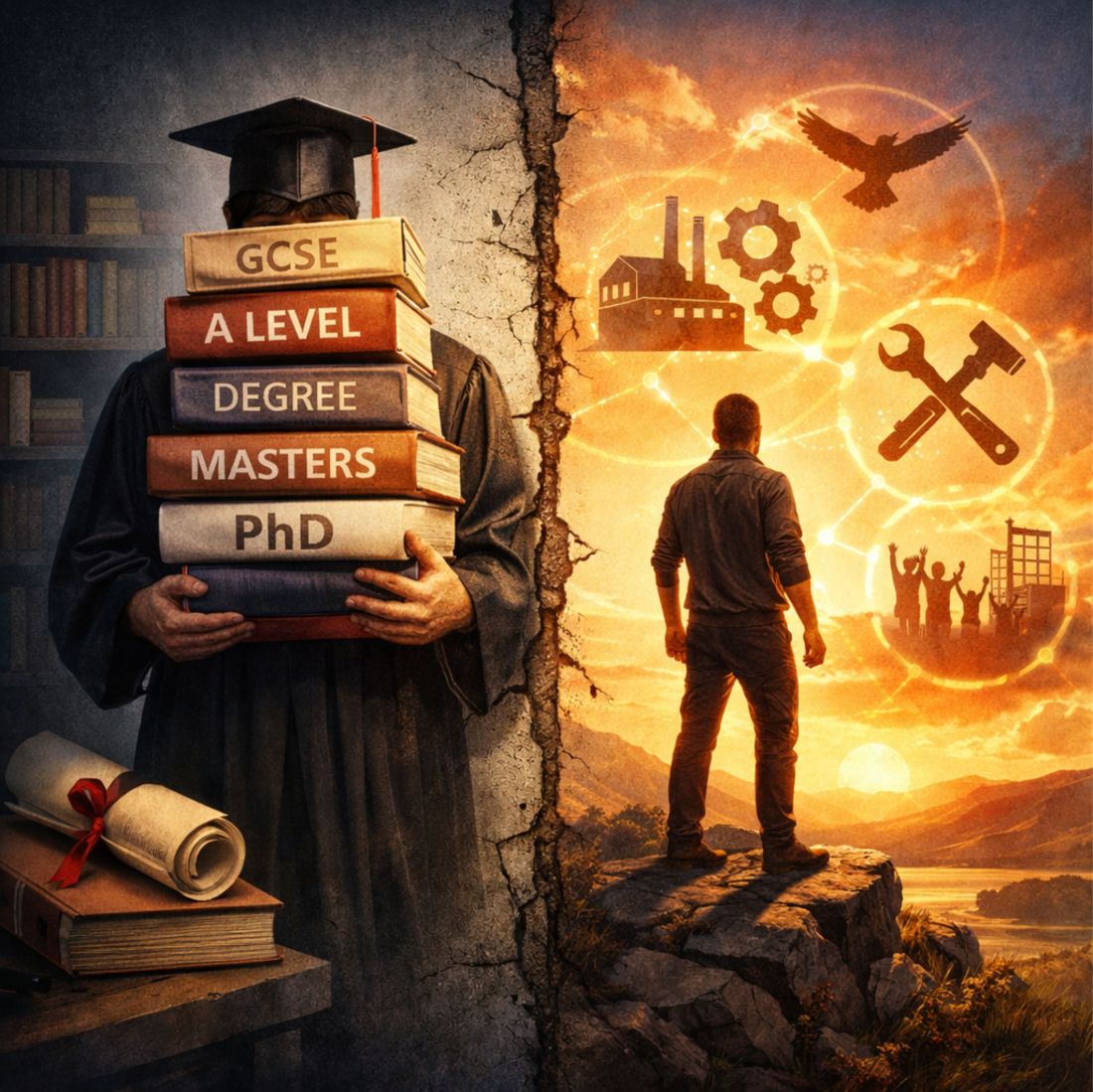
By bypassing the cold, hard reality that academic qualifications – whether GCSEs, A Levels, Degrees, Masters or PhDs – are simply benchmarks created in someone’s (usually an academic’s) thoughts, the elephants of our society have fallen head over heels into the trap of believing that academic standards portray the genuine quality or value of every individual. They do not.

Angela Rayner and the cruelty of perception

Yesterday, we witnessed these maleficent social anchors at their worst, when Shadow Education Secretary Angela Rayner was ridiculed for having what are considered to be four very poor GCSEs and, academically speaking, no more.

Whilst Labour and their principal spokesperson for Education demonstrate little credibility in terms of the policies they have been putting forward with an eye on the upcoming General Election at their Party Conference this week, there are few of us outside Westminster who could list on one hand the number of politicians from any Party who we could hand‑on‑heart consider credible in fulfilling their roles properly and representing the people well.

Perception is everything – particularly when it comes to the influences on our thinking and lives played out on social media and TV.

Just because an MP or politician looks good on camera, comes across as confident, sounds competent or can boast an academic CV that includes Eton, Oxford or wherever it may be, the reality may be – and in many cases is – that they are not “qualified” by being any such thing.

The lost value of real‑world experience

We have learned, and increasingly been conditioned against, the value of life experience and the practical understanding of people, business, community, and the views that time in the real world brings.

We have reached a stage where we look for things that make high‑profile people stand out for all the wrong reasons, mistakenly thinking those reasons are right.

There is rich irony in the fact that it was the Labour Government of 1997–2010 that pushed qualification bias to its extreme by suggesting that everyone should have a degree.

This malignant and ill‑conceived step has contributed to the biggest shift in perception about what qualifies a person. It has pushed us further away from regarding each individual as equal and the same.

The consequences of commercialised Higher Education

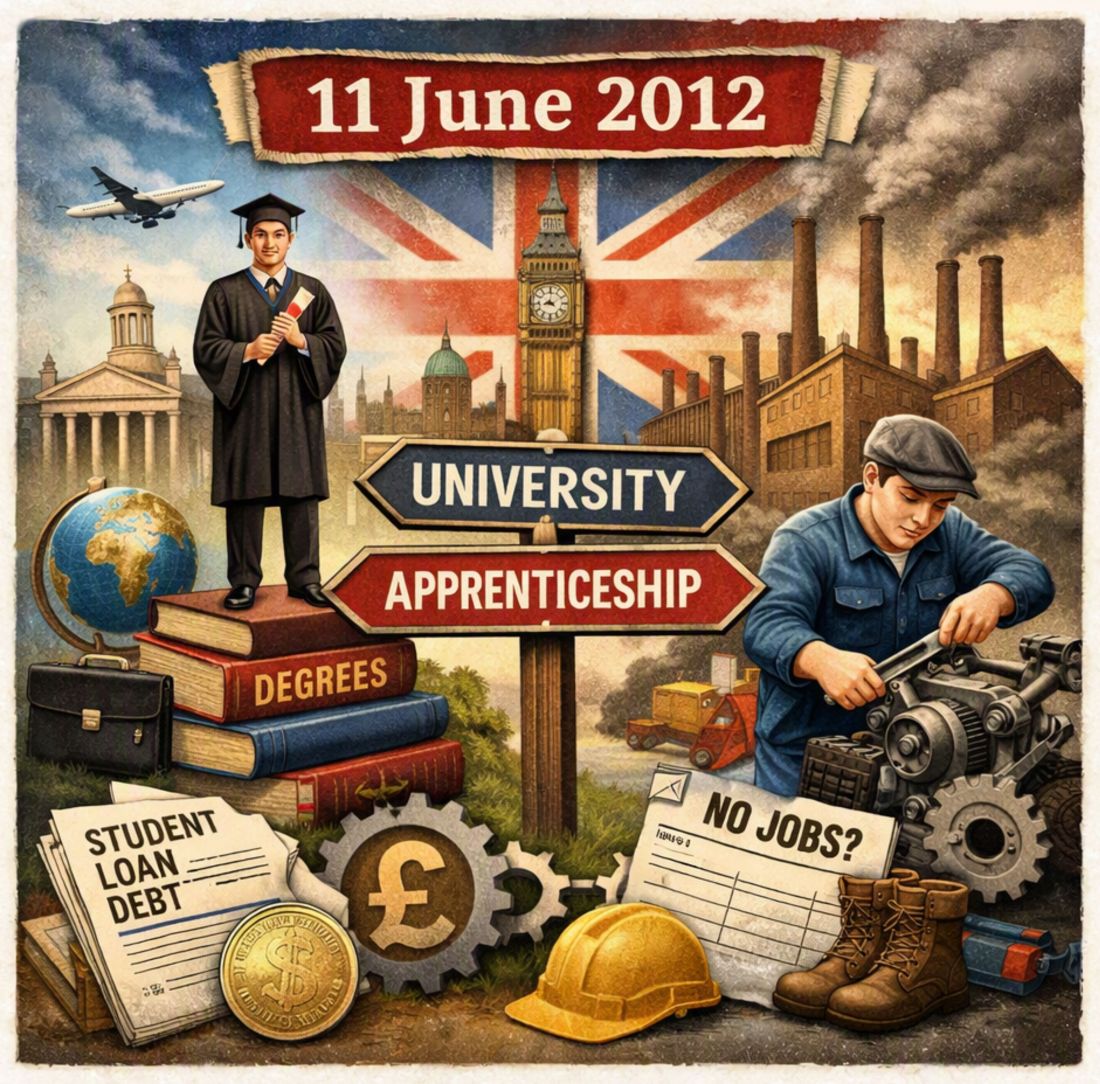
The meddling of Angela Rayner’s political predecessors bears much responsibility for the commercialisation of Higher Education. The rancid truth is that many young people have been condemned to financial servitude by a past Labour Government, encouraged to take degrees that nobody in industry values.

Others are being left behind simply because they are excluded by a system that frowns upon anyone not academically inclined, or because they know that a lifetime of debt is not something they can realistically afford.

Education, in its real sense, is only partially academic. No matter how any person is educated, they are equally capable of greatness or of behaving like fools. The suggestion that people are only capable of anything great if they have good academic qualifications is fundamentally flawed.

A better way forward

When we finally have a Government led by politicians who are responsible and not so easily led, the hard decisions over how we educate and support our young people will be addressed properly.

The focus will return to the basic reality that as teenagers, we are pretty much all either “heads” or “hands”. Once we value the fact that not everyone in their early teens is ready or able to spend another seven years in books, we can get back to providing real parallel educational – not academic – pathways.

Developed properly with business, and with the opportunities that Leaving the EU will give us, rewarding lives for people – whatever their background or birth – will, for many more of them, be fully assured.
Businesses are not inherently academic, so why are degrees becoming the prerequisite skill?

Latest news suggests that without more degree level education based skills, the UK will experience an exodus of jobs overseas to emerging economies. But when we already have students doing degrees just for the sake of doing them and a basic education system which sees school-leavers failing to possess even basic literacy and numeracy skills, should we really be thinking about pushing more through a university education as the immediate priority?

Like it or not, many young people are neither cut out nor ready for an academic pathway from or even during secondary education. Simply creating more courses to include a wider selection of students is hardly the answer and is fast leading to the existence of meaningless degrees, which won’t help business, and don’t help the students themselves who these days will have had to sell their soul to get it.

One of the greater injustices of recent political times is the idea propagated by New Labour during the 1997-2010 period of Government that everyone could be the same and do the same things. Such socialist ideology permeates itself by changing – or rather levelling systems throughout society to treat everyone the same under the ideal that to do so is providing ‘equal opportunities’.  However, as we are all different – and often in ways that cannot be seen with the naked eye – this method is not only obtuse in the extreme, it has contributed to the creation of a society where younger generations are becoming lazy and without ambition. When you add to this the burden of taxation which is placed upon higher wage earners for daring to do well and the resentment they experience if they do so, neither do you leave in place any real motivation to be any different or encourage the social mobility that the same idealist meddlers suggest to be a milestone of progress.

The good behind many ideas, policies and concepts is often lost when change is enacted simply for the sake of change and this is no less so within education as elsewhere. Whilst the technology age has altered the requirements for skills throughout the industries, the historic format of leaving school at 14 and becoming ‘apprenticed’ was a much better way to foster learning in those who were more ‘hands than head’ at the time, and could as such provide lessons in forming the basis of a very radical and effective way to change the way that we develop our National skills base for business and industry.

Why not:

  • Remove the burdens of red tape which govern the working environment for younger people.
  • Develop an effective subsidy allocation and training scheme to assist participant businesses to replace unused school places, ‘young to work’ schemes and unemployment benefits.
  • Give business a cost-effective motivation to support vocational or ‘on-the-job’ training for 14-21 year olds who in that time, may well have attained the equivalent of academic training in parallel skills and real-world experience, which may in fact have far more use to companies than ‘green’ graduates who refuse to stuff envelopes because they have a degree.

Business can only get the best from employees if they have been nurtured within a system which allows and encourages them to be their best – in whatever way that may be. Even the suggestion that you must have a degree level education to make an effective contribution is not only short sighted; it fails to recognise that a true acceptance of diversity goes way beyond embracing race, impairment, sexuality, location or social group and that each pathway to learning can be highly beneficial to society with real opportunities put in place to appreciate it.

This article was converted to PDF and its accompanying image was updated on 10 October 2026. The original text remains unchanged.