
Why people and especially young people look at the jobs on offer today and quietly think: “This doesn’t make sense.”
1. When Work Stops Working
If you talk honestly with people about work – not the official line, not the political noise, just the lived reality – you eventually reach the same conclusion: work doesn’t feel like it works anymore. Not in the way it used to. Not in the way it’s supposed to. And young people, more than anyone, can see that. They’re not confused, they’re not entitled, and they’re not disengaged because of screens or attitudes. They’re looking at the deal on the table and recognising that it simply doesn’t make sense.
Work is supposed to be the bridge between effort and life. It’s meant to give you the ability to stand on your own feet and the sense that what you’re doing matters.
But the modern system has quietly stripped both of those things away. And when you boil it down, work only really works when it gives you one of two things: independence or value. Ideally both. But at least one.
2. The First Condition: Financial Independence
Financial Independence is the foundation of adulthood. It’s the ability to rent a place without bankrupting yourself, to buy food without doing mental arithmetic in the aisle, to get around, to have a social life, to save a little, to make choices about your own life. It’s not luxury. It’s not excess. It’s the basic ability to live without relying on parents, welfare, or debt.
But minimum wage doesn’t get you there. It doesn’t even come close. It barely covers the basics, and even then you’re juggling, compromising, cutting corners. You’re working, but you’re not independent. You’re employed, but you’re not free. And young people can see this as clearly as anyone else who is struggling.
They can do the maths. They know that the jobs being pushed at them don’t lead to independence. So when they hesitate or disengage, it’s not because they don’t want to work. It’s because the work on offer doesn’t do the one thing work is supposed to do.
3. The Second Condition: Value
The second condition is just as important, and just as absent.
Work has to give you a sense of value – not corporate “values”, not a mission statement, not a poster in the staff room, but real human value.
The feeling that what you’re doing matters to someone, or something, or even just to yourself. That you’re contributing. That you’re learning. That you’re part of something that isn’t pointless.
Value does not mean enjoying every minute of a job. It means being able to see how your effort contributes to something beyond simply generating revenue.
But look at the jobs the modern economy produces. So many of them exist because the system is built around global supply chains, centralised decision‑making, and profit extraction.
Work becomes a cost to be minimised, not a human activity to be dignified.
You end up with roles that are repetitive, hollow, disconnected from anything real. Jobs that don’t build capability. Jobs that don’t meet human needs. Jobs that don’t connect you to your community. By contrast, the work people most often describe as meaningful lets them see who benefits from their effort: colleagues, customers, patients, neighbours or the wider community.
Older and past generations often had work that produced something tangible. Young people and older lower-paid workers today inherit work that produces output, but not meaning. And they feel that hollowness immediately.
The obvious question is how an economy that depends on work ended up producing so many jobs that deliver neither independence nor value. The answer lies in what the economy has been organised to prioritise.
4. The System That Produces Jobs That Fail Both Conditions
None of this is an accident. It reflects an economy increasingly organised around stimulating wants while making many basic needs harder to secure.
Streaming services, fast fashion, takeaways, processed food, endless digital consumption – these things aren’t needs, but the economy treats them like essentials.
Meanwhile, the actual essentials – housing, healthcare, nutritious food, transport, education – have become luxuries. Hard to access. Hard to afford. Hard to rely on.
The problem is not that services built around wants have no value, or that the people doing those jobs contribute less. It is that the system often rewards the creation and consumption of wants more reliably than the meeting of needs. The result is too many roles that provide neither a secure livelihood nor a visible connection between effort and social value. They fail both conditions.
The lower paid have already been hurt and pushed aside by this. And young people aren’t confused by this either. They’re simply the first generation to see the system clearly at the start.
5. Young People Didn’t Fail – The System Did
For years, society has misdiagnosed youth disengagement. It has blamed smartphones, social media, entitlement, lack of resilience, poor attitudes, apathy, welfare dependency.
But none of that explains what’s actually happening. Young people aren’t disengaged because they’re shallow or distracted. They’re disengaged because the system offers education built on sameness and measurement, social mobility built on narrative rather than capability, governance that is distant and hollow, welfare scapegoating that hides economic failure, and work that doesn’t deliver independence or value.
They’re not rejecting adulthood. They’re rejecting a version of adulthood that doesn’t work.
6. Why People Increasingly Reject Jobs That Fail Both Conditions
When work fails both conditions, rejecting it is not laziness. It’s discernment.
People are not refusing responsibility. They’re refusing exploitation.
They’re not rejecting work. They’re rejecting employment that offers neither independence nor value.
And when you look at the reality of what’s on offer, it’s hard to argue with them.
7. The Path Forward: Locality, Contribution, and Real Value
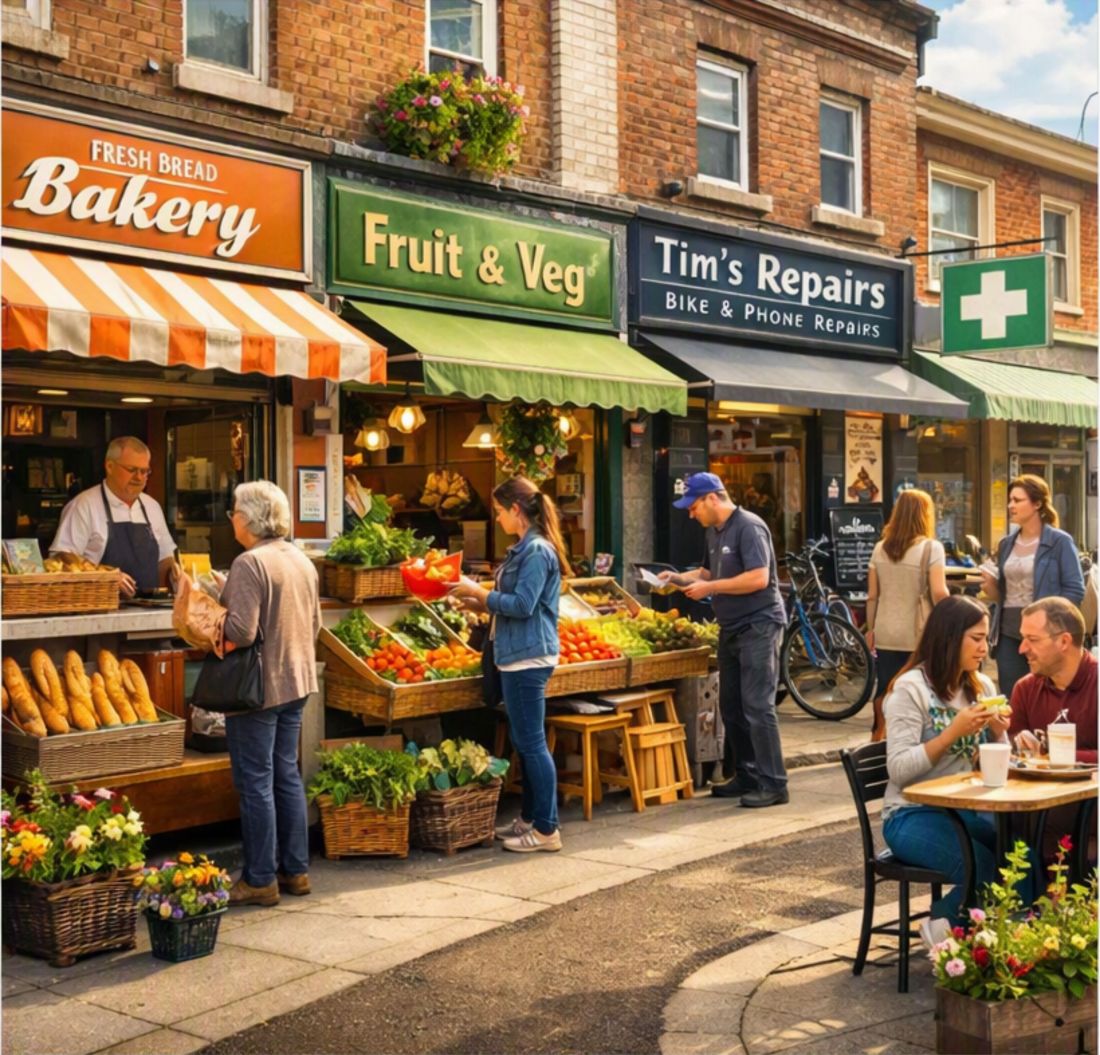
The way forward isn’t about tearing the whole thing down. It’s about recognising where work actually works – and it’s always the same place: locally.
When decisions are made close to the people they affect, work becomes meaningful again. When value is created and recognised within communities, work becomes human again. When contribution is rewarded instead of consumption, work becomes purposeful again. And when basic living standards are guaranteed – not as luxuries, but as the foundation of life – work becomes a bridge again, not a trap.
This isn’t a utopian idea. It’s simply the conditions under which work has always worked, for everyone.
8. Work Has to Work
Work only works when it gives independence, value or both.
Right now, too many jobs give neither.
Young people aren’t the problem and the low paid and vulnerable in older generations have been struggling too. Young people are just the first to recognise the problem, right ‘out of school’. And they’re right.
Work has to work. It has to mean something. It has to lead somewhere. It has to connect you to life, not drain you from it.
Until the system can offer that again, people of all ages will keep rejecting work that doesn’t work. And honestly, who can blame them.
Further Reading
Exploring the deeper roots of why work doesn’t work for so many – and what a better system could look like.
The ideas in The Two Conditions That Make Work Work don’t exist in isolation. They sit within a wider story about how young people are treated, how our political and economic systems have drifted away from real life, how education has been reshaped around measurement rather than capability, and how meaningful contribution for everyone has been pushed aside by consumption and profit‑centric thinking.
The following pieces expand on those themes. They’re arranged in a way that helps a reader move from understanding why young people feel the way they do, through how the system creates these conditions, and finally toward what a better future could look like for everyone.
I. Understanding Young People’s Experience of the System
The Young People Who Didn’t Fail – And the System That Keeps Pretending They Did
A clear, honest look at how young people are blamed for outcomes created by the system itself. This piece explains why disengagement is not a personal failure but a predictable response to structures that don’t work.
Why Young People and Smartphones Are Not the Problem
A dismantling of the idea that technology is responsible for youth disengagement. It shows how smartphones have become a convenient scapegoat for deeper systemic failures.
The Real Crisis Behind the Social Media Ban
This piece explores how political and media narratives about social media distract from the real issues affecting young people – including the erosion of independence, value, and meaningful pathways.
Why these matter: These articles help readers understand that young people aren’t rejecting work, society, or adulthood. They’re responding rationally to a system that has stopped offering the basic conditions required for any of those things to function.
II. Politics, Governance, and Why Young People Disengage
Young People, Politics, and the System That Is Failing All of Us
A deep dive into why young people feel alienated from politics – not because they don’t care, but because governance has become distant, hollow, and disconnected from real life.
Stop Blaming Welfare for Problems This Economic Model Created
This piece explains how welfare is used as a political distraction from the structural failures of the economic model itself – failures that directly shape the work crisis.
The Local Economy & Governance System
A foundational explanation of how local governance and local economies can restore meaning, accountability, and value – themes central to rebuilding work that works.
Why these matter: They show that the crisis in work is inseparable from the crisis in governance. When decision‑making becomes remote and abstract, work becomes remote and abstract too.
III. Education, Capability, and the Myth of Social Mobility
The Two‑Edged Sword of Social Mobility
A critique of how social mobility has been reframed around narrative and status rather than real capability – leaving many young people feeling inadequate despite having genuine strengths.
Vocational GCSEs and the Limits of a System Built on Measurement
An exploration of how education has become obsessed with metrics, qualifications, and standardisation – often at the expense of real learning and practical contribution.
Education Is Currently Failing the UK
A long‑standing argument that equality in education has been misunderstood as sameness, leading to a system that fails to recognise different strengths and pathways.
Equality in Education Has Been Destroyed by the Idea That All Can Make the Best of the Same Opportunities
A companion piece showing how the “one‑size‑fits‑all” model harms capability, confidence, and long‑term prospects.
The Travesty of Tuition Fees
A clear explanation of how the commercialisation of education created debt, distorted incentives, and pushed young people into pathways that don’t lead to independence or value.
Why these matter: They reveal how the work crisis begins long before a young person enters the labour market. The system shapes expectations, limits capability, and funnels people into roles that fail both conditions.
IV. Contribution, Local Value, and a Better Future
The Contribution Culture
A vision for a future where contribution – not consumption, not credentials, not profit extraction – becomes the foundation of work, business, and governance.
Future Economics Must Be Tied Only to People and Their Contribution
A broader economic argument showing how currency, value, and contribution must be re‑anchored to human needs rather than speculation or global extraction.
The Basic Living Standard Explained
A clear, accessible explanation of what a basic living standard is, why it matters, and how it underpins independence – the first condition that makes work work.
Why these matter: These pieces point toward a future where work can once again deliver independence and value – not through abstract policy, but through local contribution, real capability, and systems designed around human needs.
Closing Note
If The Two Conditions That Make Work Work resonates with you, these pieces will help you explore the deeper roots of the problem – and the practical, human‑centred ideas that can guide us toward something better.
They’re not academic papers or political manifestos. They’re reflections on how life actually feels for people navigating a system that has drifted away from what matters.
Taken together, they form a journey: from understanding the crisis, to recognising its causes, to imagining a future where work works again.