We Were Never Enemies: Finding Common Ground in a World That No Longer Makes Sense

PART 1 – Why the World Feels Impossible to Understand Today

There is a quiet moment many of us have felt in recent years: a moment when the world seems to tilt, and the familiar sense of how things work slips just out of reach. The news does not match daily life. Public explanations do not match private experience. Institutions speak, but people still feel unheard. Families argue about events they are all living through together.

This work begins from a simple idea:

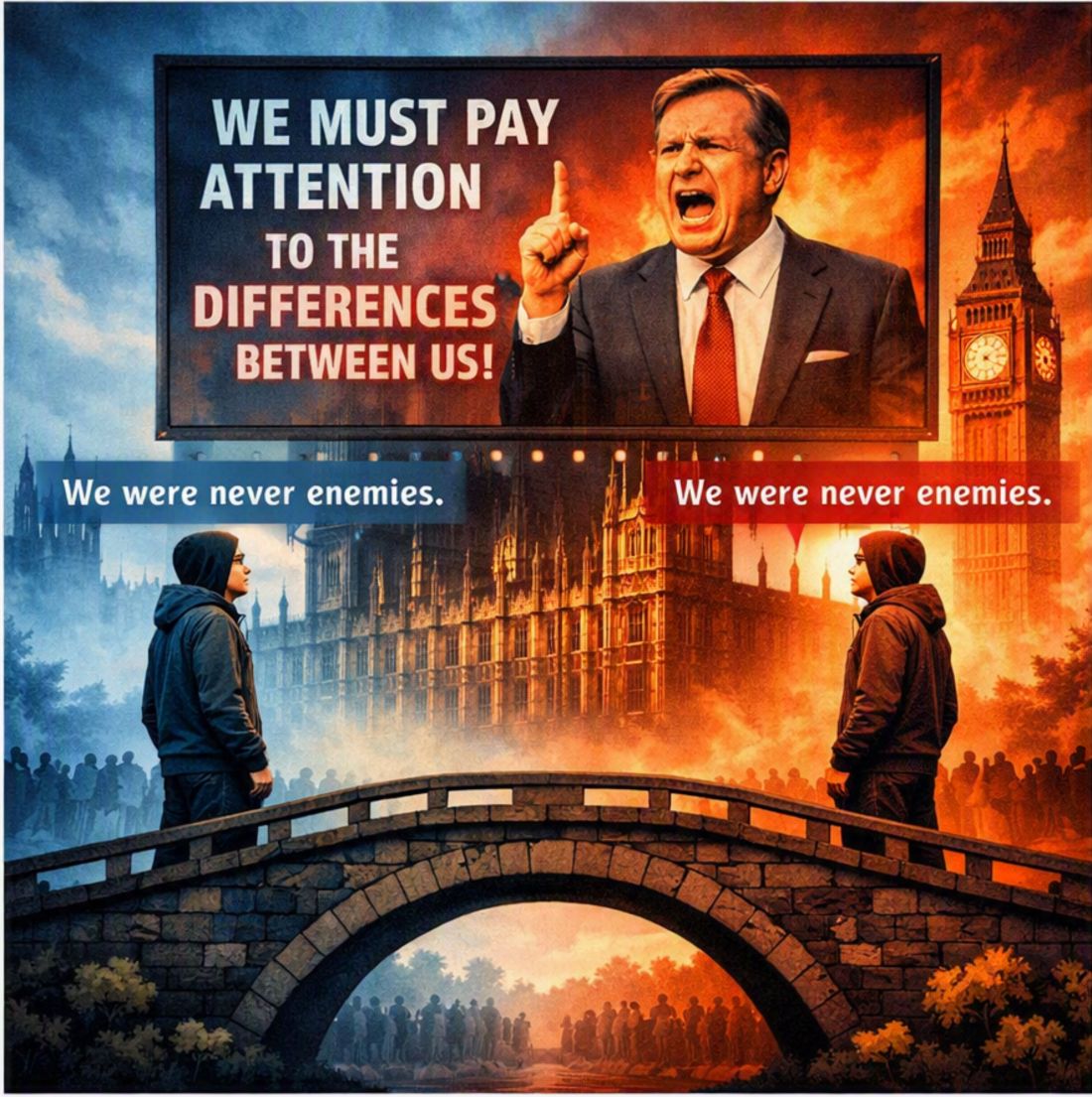
We are not divided because we are enemies. We are divided because we are trying to explain the same pressures using different stories.

The people we think of as opponents are often responding to the same underlying conditions we are – but through different narratives, different fears, different languages, and different inherited loyalties.

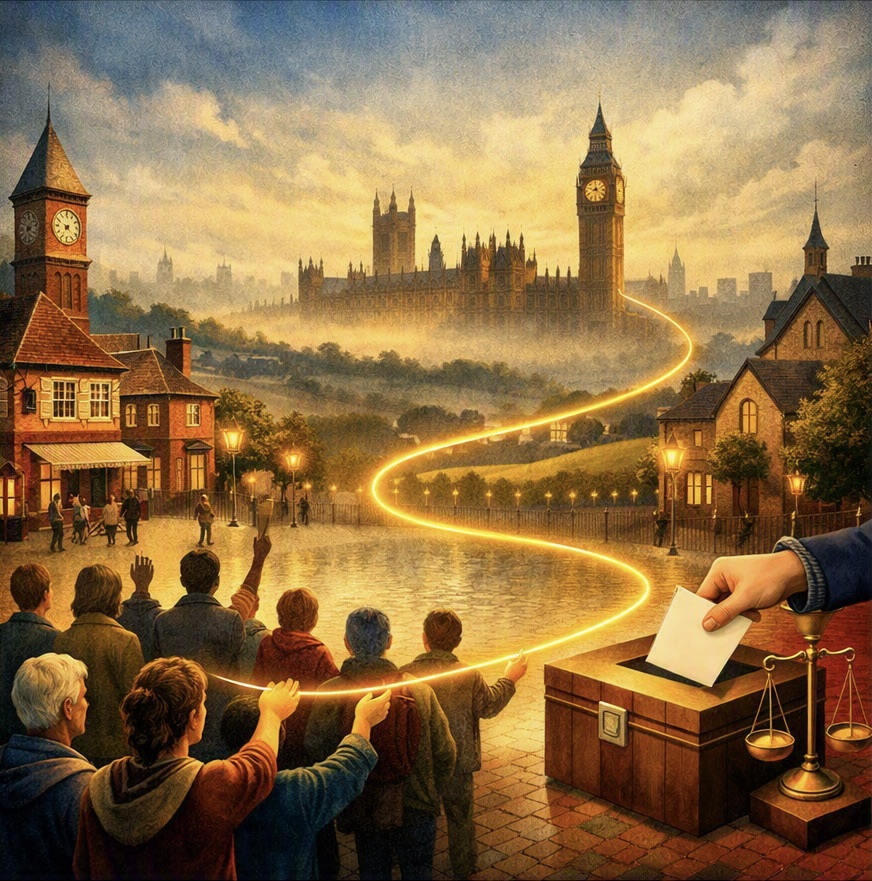
That is the bridge this book tries to build: a bridge between people who have been taught to see one another as threats, when in reality they may be carrying the same confusion, pressure, exhaustion, and longing for stability.

For a long time, society moved at a pace that matched human understanding. Institutions behaved predictably enough for people to form a picture of how things worked. Information arrived slowly enough to absorb. Communities shared enough common ground to make sense of each other. Politics followed a rhythm. Economics had a story people could follow.

That rhythm has gone. And the absence of it is what so many of us are feeling.

The world used to explain itself. Now it doesn’t.

There was a time when institutions spoke in a way that made sense. Even if the details were complicated, the overall direction felt understandable. Decisions followed patterns. Policies had reasons. Public services behaved in ways that matched their purpose.

Now the signals are mixed.

Announcements contradict each other. Policies appear and disappear. Systems fail without warning. Explanations feel thin or rushed. Accountability seems to drift.

It is not that people have suddenly lost the ability to understand. It is that the world has stopped offering a coherent story.

When institutions become opaque, confusion becomes a natural response – not a personal flaw.

Information used to be manageable. Now it arrives like weather.

Information once arrived in streams: a newspaper, a conversation, a broadcast. The pace matched human cognition. There was time to think, time to compare, time to understand.

Now information arrives like a storm front – constant, contradictory, and impossible to escape. A single scroll can deliver a crisis, a denial of the crisis, a counter‑narrative, a correction, and a new crisis before the mind has processed the first one.

Human beings aren’t built for this. We’re built for coherence, not contradiction.

When the world becomes noisy, the mind reaches for anything that feels stable enough to hold onto. That isn’t irrational. It’s protective.

Life feels harder because the economic system has become harder to see.

Consider someone who works full time, pays the bills carefully, avoids extravagance, and still feels each month tightening around them. They hear that the economy is growing, that opportunity exists, that inflation is under control, and that the system is broadly functioning. Yet their own life tells a different story. They are not imagining the pressure; they are lacking a public language that explains it honestly.

Many of us feel squeezed in ways that are difficult to articulate. Costs rise. Work intensifies. Stability feels fragile. But when we try to explain why, the language isn’t there.

The economic system has become abstract, hidden behind technical terms, complex mechanisms, and distant decisions.

People feel the pressure directly, but the causes are obscured. The system shapes everyday life deeply, yet it no longer speaks a language people can understand.

When pressures are felt but not named, they become harder to navigate. And harder still to resist.

Politics used to be slow. Now it feels improvised.

Political life once moved at a pace that allowed people to follow it. Even when frustrating, it had a rhythm. Policies took time. Debates unfolded. Decisions were explained.

Now politics feels reactive – a series of rapid shifts, sudden announcements, and unexplained reversals. It isn’t that leaders have become chaotic. It’s that the political system is operating under strain.

Systems under strain behave like people under strain: inconsistently, defensively, and unpredictably.

The instability is visible, but the reasons behind it are not. And that gap creates confusion.

Communities used to share stories. Now they inhabit different worlds.

There was a time when neighbours, colleagues, and families lived inside overlapping realities. Not identical ones, but close enough to understand each other’s experiences.

Now two people living on the same street can inhabit entirely different worlds. Different news. Different feeds. Different fears. Different interpretations. Different truths.

This fragmentation makes it harder to recognise commonality – even when people are experiencing the same pressures. It becomes easier to see difference and harder to see connection.

And when connection weakens, understanding weakens with it.

The world feels confusing because the tools we used to rely on no longer work.

This is the heart of the matter.

The confusion so many of us feel isn’t a sign of personal failure. It’s a sign that the world has outgrown the old explanations.

The interpretive tools that once helped us understand life – stable institutions, coherent narratives, manageable information, shared communities – have broken down.

And when the tools break, the confusion that follows is not a flaw. It’s a signal.

A signal that the world is changing faster than the language we use to describe it.

PART 2 – When the World Stops Making Sense, We Reach for Stories That Do

There’s a point many of us reach when the world becomes too contradictory to understand through the usual channels. It doesn’t happen all at once. It creeps in slowly – through moments of confusion, moments of disbelief, moments where the explanations we’re given simply don’t match what we’re seeing.

When that gap opens between experience and explanation, something very human happens:

We reach for stories that feel coherent enough to hold the confusion together.

This is where conspiracy thinking begins – not as a rejection of reality, but as an attempt to make reality understandable again.

And this is one of the most misunderstood parts of modern life.

Conspiracy thinking isn’t a sign of irrationality. It’s a sign of disorientation.

When people talk about conspiracy theories, they often do it with a tone of dismissal – as if the people who believe them are somehow less capable, less informed, or less grounded. But that’s not what’s happening.

Conspiracy thinking emerges when:

  • the world becomes too complex to interpret,
  • the official explanations stop making sense,
  • the information environment becomes overwhelming,
  • and the old frameworks for understanding life no longer work.

In that moment, the mind does what it has always done throughout human history:

It reaches for narrative.

Not because narrative is always accurate, but because narrative is stabilising.

A story – even a flawed one – can feel safer than chaos.

When the world becomes noisy, simple explanations feel like relief.

Most conspiracy narratives aren’t elaborate. They’re simple. They offer a clear cause, a clear villain, a clear intention. They turn complexity into something linear and emotionally manageable.

And when the world feels overwhelming, that simplicity can feel like clarity.

It’s not that people suddenly lose the ability to think critically. It’s that critical thinking becomes impossible when the world is too contradictory to process.

In those moments, a simple story can feel like a lifeline.

Many conspiracy theories are trying to describe real problems – just with the wrong tools.

This is the part that rarely gets acknowledged.

Imagine a retired neighbour who no longer trusts public institutions. On the surface, their language may sound extreme. They may talk about hidden agendas or secret plans. But beneath that language may be a recognisable experience: decisions feel as though they are made far away, by people they never meet, using explanations that do not match what they see in their own town.

The conclusion may be wrong, but the alienation is real.

A lot of conspiracy narratives begin with something true:

  • a sense of economic pressure,
  • a feeling of political incoherence,
  • a recognition of institutional failure,
  • a fear of social fragmentation,
  • a discomfort with surveillance‑like technology,
  • a suspicion that something is happening behind the scenes.

These feelings aren’t imaginary. They’re grounded in real structural changes.

But when people don’t have the language to describe those changes, they reach for whatever language is available – and sometimes that language comes from conspiracy narratives.

It’s not that the underlying concerns are wrong. It’s that the explanations are misapplied.

People are trying to articulate truths they can feel but cannot express.

Myth becomes a tool when reality becomes too complex.

Throughout history, when reality becomes difficult to interpret, people often turn to myths, symbols, and alternative narratives. These stories may not be literally accurate, but they can still resonate because they give shape to feelings that ordinary public language has failed to explain.

Taken literally, some of these claims may be fantastical. Taken metaphorically, they often describe experiences such as:

  • elite detachment,
  • systemic dehumanisation,
  • institutional capture,
  • governance without empathy,
  • power without accountability.

Myth becomes a way of expressing structural truths that people don’t yet have the vocabulary for.

It is not simply madness. Often, it is metaphor being mistaken for explanation.

And metaphor is one of humanity’s oldest tools for making sense of experiences that feel too large, too hidden, or too complex to describe directly.

Labelling people as “conspiracy theorists” pushes them further away.

When someone reaches for a narrative because the world has become too confusing, and society responds by mocking them, shaming them, or excluding them, something predictable happens:

They retreat deeper into the narrative.

Not because they’re stubborn. But because the narrative is the only place where their confusion feels acknowledged.

This is how divides harden.

People who are trying to make sense of the world become isolated from the very communities that could help them understand it more clearly.

And once someone is isolated, they become vulnerable to voices that offer certainty – even if that certainty is dangerous.

Conspiracy thinking is a symptom of a world that no longer explains itself.

People aren’t turning to conspiracy theories because they’re irrational. They’re turning to them because the world has become too contradictory to understand without a new language.

Conspiracy narratives fill the gap left by:

  • institutional opacity,
  • political incoherence,
  • economic extraction,
  • social fragmentation,
  • information overload,
  • and technological acceleration.

They are not the cause of confusion. They are the consequence of it.

And until we build a shared language that helps people understand the world without needing these narratives, conspiracy thinking will continue to grow – not because people are foolish, but because people are trying to stay sane in a world that no longer makes sense.

PART 3 – How Division Became the Default, Even Though Most of Us Want the Same Things

One of the strangest features of modern life is how divided everything feels. Not just politically, not just culturally, but socially, emotionally, and even morally.

People who would once have been neighbours, colleagues, or friends now find themselves on opposite sides of invisible lines – lines that didn’t exist a decade ago, and lines that most people never consciously chose.

It’s easy to assume this division is intentional, or engineered, or the result of some grand plan. But the truth is quieter and more unsettling:

Division has become the natural output of a system that no longer knows how to hold people together.

Not because people changed. Not because communities failed. But because the structures that once created common ground have eroded.

And when common ground disappears, division fills the space where connection used to be.

We used to share enough of life to understand each other. Now we share almost nothing.

There was a time when people lived inside overlapping realities. Even if they disagreed, they disagreed from a shared foundation – the same news, the same institutions, the same social norms, the same expectations of how life worked.

Now those foundations have fractured.

People live in different information worlds. Different cultural worlds. Different emotional worlds. Different moral worlds.

Two people can look at the same event and see entirely different meanings – not because they’re stubborn, but because their interpretive frameworks have drifted apart.

And when people can’t interpret the world in similar ways, they struggle to interpret each other.

Division isn’t just about disagreement – it’s about disconnection.

Most disagreements aren’t actually about the issue being discussed. They’re about the emotional worlds people are speaking from.

One person might be speaking from fear. Another from exhaustion. Another from frustration. Another from distrust. Another from a sense of injustice. Another from a sense of abandonment.

When these emotional worlds collide, the disagreement becomes personal – even when the underlying concerns are shared.

People aren’t fighting each other. They’re fighting the confusion they’re living in.

But because the confusion is invisible, the fight looks like conflict between individuals rather than conflict between people and the system they’re trying to navigate.

Alignment became a requirement – and a trap.

Somewhere along the way, society developed a new rule:

To be heard, you must be aligned.

Aligned with the right language. Aligned with the right narrative. Aligned with the right group. Aligned with the right interpretation.

But alignment is not neutral. It’s shaped by hierarchy, status, and social policing.

And because every group has its own alignment rules, people end up performing different versions of themselves depending on who they’re speaking to.

This creates a strange dynamic:

  • one group’s “alignment” is another group’s “misalignment”
  • one community’s “truth” is another community’s “threat”
  • one person’s “acceptable view” is another person’s “dangerous view”

Everyone is trying to be heard. Everyone is trying to be understood. But the rules for being heard contradict each other.

So people stop trying.

And silence becomes another form of division.

Visibility and judgement made misalignment harder to escape.

In the past, many moments of misalignment remained local. A poorly phrased sentence, a disagreement, a mistake, or a misunderstanding could be worked through by the people involved.

Now, in a world of constant visibility, those moments travel further and harden faster.

A moment can be captured, shared, judged, and archived before anyone has time to understand what actually happened.

And once a moment becomes content, it becomes a symbol – not of the person, but of the narrative people attach to it.

This makes people cautious. It makes people defensive. It makes people afraid of each other.

And fear is one of the strongest drivers of division.

The tragedy is that most people share the same pressures – but can’t see it.

This is the part that matters most.

People across all groups – political, cultural, social – are experiencing:

A parent worried about rent, a young person anxious about the future, a small business owner drowning in uncertainty, an activist angry at injustice, a pensioner distrustful of institutions, and a worker exhausted by constant change may all sound politically different.

Beneath the surface, though, each may be responding to instability, loss of control, distrust, and the feeling that ordinary life has become harder to interpret.

  • economic pressure
  • institutional confusion
  • information overload
  • social fragmentation
  • emotional exhaustion
  • moral uncertainty
  • technological acceleration

These pressures are universal. They cut across every divide.

But because people interpret these pressures through different narratives, they don’t recognise the commonality.

Someone might express their confusion through political anger. Someone else through conspiracy thinking. Someone else through withdrawal. Someone else through activism. Someone else through cynicism. Someone else through humour. Someone else through silence.

Different expressions. Same pressures.

Different narratives. Same experience.

Different tribes. Same humanity.

But the system doesn’t show us the commonality. It shows us the conflict.

And when conflict becomes visible and commonality becomes invisible, division becomes the default.

Division isn’t natural – it’s structural.

We are not divided because we are enemies. We are divided because we are trying to explain the same pressures using different stories.

This does not mean every story is equally accurate or equally safe.

Some explanations harm people. Some narratives scapegoat. Some movements exploit fear.

But if we want to reduce the harm, dismissal is not enough. We have to understand the pressure beneath the story, because that is where reconnection begins.

Division is not a choice. It’s a consequence.

A consequence of:

  • fragmented information
  • opaque institutions
  • contradictory narratives
  • constant visibility and social judgement
  • social self‑policing
  • economic extraction
  • political incoherence
  • cultural acceleration

People are not fighting each other. They’re fighting the conditions that make connection difficult.

And because those conditions are invisible, the fights look personal.

PART 4 – A Shared Language for Reality: Understanding the World Without Falling Into the Gaps Between Us

By the time we reach this point, something important has become clear:

The confusion people feel isn’t personal, the conspiracy narratives people reach for aren’t irrational, and the divides that separate us aren’t natural.

They’re all symptoms of a world that has changed faster than the language we use to describe it.

And when language falls behind reality, people fall behind each other.

So the next step – the step that matters most – is building a way of speaking about the world that helps us see what’s actually happening, and helps us see each other again.

Not a new ideology. Not a new doctrine. Not a new set of instructions.

Just a shared language.

A way of describing the world that makes sense of the confusion without blaming people for feeling it.

A way of talking about what’s happening that doesn’t require conspiracy thinking to fill the gaps.

A way of recognising commonality even when our experiences look different on the surface.

A way of understanding each other again.

By shared language, I do not mean shared opinions. I mean shared ways of describing reality that allow disagreement without turning the person on the other side into an enemy.

It is the difference between saying, “You are the problem,” and saying, “We are both trying to understand a problem larger than either of us.”

We need a language that explains the world without turning people into villains.

One of the reasons conspiracy thinking spreads so easily is that it offers simple explanations for complex problems. It gives people a villain, a plot, a motive. It turns confusion into a story.

But the world we’re living in isn’t being driven by villains. It’s being driven by systems.

Systems that are overloaded. Systems that are outdated. Systems that are stretched beyond their capacity. Systems that no longer behave in predictable ways.

When systems fail, they don’t fail neatly. They fail in ways that look intentional because they’re chaotic.

A shared language begins by recognising this:

Most of what feels deliberate is structural.

Most of what feels targeted is systemic.

Most of what feels personal is environmental.

This doesn’t make the experience any less real. It just makes the explanation more accurate.

We need a language that explains behaviour without assuming intention.

When institutions contradict themselves, it’s easy to assume deception. When politics becomes incoherent, it’s easy to assume manipulation. When public services fail, it’s easy to assume neglect. When information becomes chaotic, it’s easy to assume control.

But intention is only one way to explain behaviour. And in a failing system, it’s rarely the right one.

Systems under pressure behave like people under pressure:

  • inconsistently
  • reactively
  • defensively
  • unpredictably

A shared language helps us see this clearly:

This isn’t a plot. This is what systems do when they’re overwhelmed.

Once people understand this, the need for conspiracy narratives begins to fade – not because the concerns disappear, but because the explanations become clearer.

We need a language that explains fear without turning it into conflict.

Fear is one of the strongest forces shaping modern life. Fear of being filmed. Fear of being judged. Fear of being misunderstood. Fear of being excluded. Fear of being wrong. Fear of being alone.

Fear changes how people speak. Fear changes how people listen. Fear changes how people interpret each other.

A shared language acknowledges fear without weaponising it.

It lets us say:

We’re not enemies. We’re frightened in different ways. And we’re trying to make sense of the same pressures.

Once fear is named, it stops being a silent driver of division.

We need a language that explains exhaustion without turning it into anger.

People are tired. Not just physically, but emotionally, socially, and cognitively.

Exhaustion makes people:

  • short‑tempered
  • defensive
  • withdrawn
  • suspicious
  • reactive

But exhaustion isn’t a moral failing. It’s a sign that people are carrying more than they can articulate.

A shared language helps us recognise exhaustion in each other instead of mistaking it for hostility.

It lets us say:

We’re not fighting because we disagree. We’re fighting because we’re tired.

And that changes everything.

We need a language that explains difference without losing sight of commonality.

People express their confusion in different ways:

  • some through anger
  • some through humour
  • some through activism
  • some through withdrawal
  • some through conspiracy narratives
  • some through cynicism
  • some through silence

Different expressions. Same pressures.

A shared language helps us see the pressure instead of the expression.

It lets us recognise that:

We’re living through the same moment, even if we’re speaking about it differently.

This is how commonality becomes visible again.

We need a language that explains the system without excusing it.

A shared language isn’t about defending institutions or justifying failure. It’s about describing reality clearly enough that people can respond to it together.

It lets us say:

The system isn’t working. But the failure isn’t a conspiracy. It’s a sign that the operating model has reached its limits.

Once people understand this, they can begin to imagine solutions – not alone, not in isolated groups, but together.

Because the moment we stop blaming each other for the confusion, we can start addressing the causes of it.

A shared language doesn’t tell people what to think. It gives people the tools to think together.

We don’t need a new ideology. We don’t need a new tribe. We don’t need a new set of labels.

We need a way of speaking about the world that:

  • reduces fear
  • reduces confusion
  • reduces division
  • reduces misinterpretation
  • reduces isolation

And increases:

  • clarity
  • connection
  • commonality
  • understanding
  • cooperation

A shared language is the bridge between people who have been taught to see each other as opponents – even though they’re living through the same pressures and would be natural allies if they could see it.

PART 5 – Rebuilding Commonality: How We Find Each Other Again and Begin Creating Solutions Together

By now, something important has hopefully become visible:

The confusion people feel is shared, the pressures people carry are shared, and the divides that separate us are symptoms of a system that has drifted away from the people living inside it.

And once that becomes clear, something else becomes possible – something that has felt almost out of reach in recent years:

We can begin to see each other again. We can begin to hear each other again. We can begin to help each other again.

Not because the system suddenly improves. Not because the pressures disappear. But because the fog lifts just enough for people to recognise that they were never enemies – they were simply living through the same moment without a shared language to describe it.

This is where commonality begins to return.

And commonality is the foundation of everything that comes next.

Commonality doesn’t require agreement. It requires recognition.

People don’t need to agree on every detail of what’s happening. They don’t need to share the same interpretation. They don’t need to use the same words.

They only need to recognise that:

We are experiencing the same pressures, even if we’re expressing them differently.

Once that recognition appears, the emotional temperature drops. People stop seeing each other as threats. People stop assuming the worst. People stop interpreting difference as danger.

And in that calmer space, connection becomes possible again.

This recognition can begin in ordinary conversation. Instead of asking, “How could you believe that?” we might ask, “What experience made that explanation feel true to you?” Instead of asking, “Whose side are you on?” we might ask, “What pressure are you trying to make sense of?” These questions do not force agreement. They create enough room for honesty to return.

Five practical ways we can begin rebuilding the bridge

  1. Listen for the pressure beneath the opinion.
  2. Separate the person from the narrative they are using.
  3. Ask what fear, loss, or confusion the story is trying to explain.
  4. Name shared pressures before debating different conclusions.
  5. Build local trust where large systems have failed to provide it.

These steps are small, but small acts of recognition matter.

A society does not rebuild common ground through declarations alone. It rebuilds it in conversations, neighbourhoods, workplaces, families, meetings, and moments where someone chooses curiosity over contempt.

Connection begins when people stop performing and start speaking honestly.

Modern life has taught people to perform – to speak in ways that feel safe, acceptable, aligned, or defensible.

But performance is exhausting, and it blocks connection.

Honesty doesn’t mean oversharing. It doesn’t mean confession. It doesn’t mean vulnerability for its own sake.

Honesty simply means speaking from the real emotional world we’re living in:

  • “This is confusing.”
  • “This is frightening.”
  • “This is exhausting.”
  • “This doesn’t make sense to me.”
  • “I’m trying to understand.”

When people speak from honesty rather than performance, others recognise themselves in the words – even if their experiences differ.

Honesty creates resonance. Resonance creates connection. Connection creates commonality.

Commonality makes cooperation possible – even before solutions exist.

One of the biggest myths of modern life is that people need fully formed solutions before they can work together.

Cooperation doesn’t begin with solutions. It begins with orientation.

People don’t need to know what to do. They need to know they’re facing the same direction.

Once people face the same direction, solutions begin to emerge naturally:

  • someone shares an idea
  • someone else refines it
  • someone else adds context
  • someone else offers experience
  • someone else sees a risk
  • someone else sees a possibility

This is how communities have always solved problems – not through hierarchy, but through shared orientation.

And shared orientation begins with shared language.

Solutions don’t come from institutions. They come from people.

This is the part that matters most.

Institutions can support solutions. Institutions can implement solutions. Institutions can scale solutions.

But institutions rarely create solutions.

People do.

People see the problems first. People feel the pressures first. People understand the consequences first. People recognise the patterns first. People adapt, innovate, and respond long before institutions catch up.

The system may be struggling, but people are not powerless. People are capable. People are creative. People are resilient. People are resourceful.

And once people recognise each other again, that capability becomes collective.

Collective capability is what carries communities through difficult moments.

When pressure increases – economic, social, political, or institutional – people need each other more than ever.

Not in a sentimental way. In a practical way.

People need:

  • shared information
  • shared interpretation
  • shared support
  • shared problem‑solving
  • shared resilience
  • shared action

These things don’t require agreement. They require connection.

And connection becomes possible once the divides lose their power.

The divides lose their power when people understand the system that created them.

People aren’t divided because they’re fundamentally different.

They’re divided because the system they’re living in no longer provides the shared experiences, shared narratives, and shared meaning that once held society together.

Once people understand this, the divides stop feeling personal. They stop feeling moral. They stop feeling ideological. They stop feeling permanent.

They become recognisable as structural – and therefore removable.

Not by force. Not by argument. Not by persuasion.

But by clarity.

Clarity does not magically dissolve division, but it weakens the conditions that keep division alive. It helps people see pressure where they once saw hostility. It helps people recognise exhaustion where they once saw malice. It helps people notice the human being beneath the narrative.

And what remains is commonality.

Commonality is the soil in which solutions grow.

Once people see each other clearly again, everything becomes possible:

  • cooperation
  • creativity
  • mutual support
  • shared problem‑solving
  • community resilience
  • local innovation
  • collective capability

These are not abstract ideas. They are the practical tools that carry societies through moments of transition.

And we are living through a moment of transition.

Not a collapse. Not an apocalypse. A transition.

A shift from an old operating model that no longer works to a new way of living that people will build together.

Not because they’re instructed to. But because they’re capable of it.

This is where the story lands:

We were never enemies. We were people living through the same pressures, trying to explain them with the stories available to us.

Some reached for politics. Some reached for conspiracy. Some reached for activism. Some withdrew. Some reached for certainty. Some fell silent. But beneath those different responses was the same human need: to understand what was happening, to feel less alone inside it, and to find a way forward that did not require turning other people into enemies.

The bridge begins there. Not in agreement, not in victory, not in one side defeating another, but in recognition: the person across from us may be carrying the same weight in a different language.

Not perfectly. Not instantly. But genuinely.

Because the moment people see each other again, they can begin to help each other again.

And if we can recognise that, perhaps the next chapter of society will not be written by division, but by people who remember how to meet each other again.
When Hero-Making Fails, Social Mobility Pays the Price

The intense scrutiny surrounding Jason Arday is no longer simply a story about one academic. It is a warning about what happens when Britain turns individuals into symbols of social mobility. When those symbols collapse, the damage extends far beyond the person at the centre of the story. It reaches thousands of people whose opportunities become collateral damage in the collapse of the narrative.

This moment is not only about reputational damage to one individual. It is about the harm that follows when a society mistakes an exceptional life story for proof that the system itself is working.

This is not a defence of Arday, nor a judgement of him. Investigations will reach their own conclusions. But the reaction to his case reveals something more troubling than any single biography: the fragility of a system that turns people into symbols, rewards narrative over capability, and then tears those symbols down with equal force.

To understand the wider impact, we must examine the machinery that created the narrative in the first place: why heroes are made, who benefits from them, why they become vulnerable, and who pays the price when they fall.

The Media’s Cycle: Elevation, Performance, Collapse

The media has a familiar pattern: it elevates individuals whose stories of adversity and triumph are emotionally compelling, then scrutinises them with equal intensity when inconsistencies emerge.

This cycle is not unique to Arday. It is a structural feature of how public heroes are created, celebrated, consumed, and dismantled.

Hero-making is powerful because it offers institutions a visible way to demonstrate progress. A story of overcoming poverty, disability, or exclusion becomes proof that Britain is meritocratic, open, and fair.

But it can also be extractive. It turns a person into a narrative asset. Their life becomes a vessel for a story others want to tell.

When the story falters, the media does not merely report; it dismantles. The individual becomes a spectacle, and the public is invited to watch the fall.

The damage does not stop with the person at the centre of the story. It spreads to everyone whose life experience resembles theirs.

Trauma, Disadvantage, and the Pressure to Perform

Many people in Britain’s deepest social-immobility pool carry trauma that is profound and lifelong. Poverty, instability, violence, and neglect shape how they see themselves and how they believe the world sees them. They learn early that survival requires adaptation, resilience, and sometimes storytelling too.

In that context, it is not difficult to understand how someone might come to believe that hardship is currency: that adversity is the only thing that makes them visible or valued.

When institutions reward narrative over capability, they unintentionally teach people that performance is expected, embellishment is strategy, and storytelling is survival.

Arday’s background includes real adversity. Whatever the investigations ultimately conclude, it is clear that his life has been shaped by experiences many readers will never encounter. The tragedy is that those experiences – legitimate, complex, and deeply human – may now be overshadowed by the collapse of the story built around them.

It is not an excuse. But it is context.

The Wider Impact: A Blow to Social Mobility Itself

The danger now is that Arday’s story becomes a symbol – not of institutional failure, but of supposed flaws in disadvantaged people themselves.

The risk is that some observers will treat one case as evidence of a wider pattern. In symbolic public debates, individual failures are often used to question entire programmes, communities, or ideas. Trauma becomes recast as manipulation. Diversity is accused of undermining standards. Social mobility is dismissed as a façade.

That would be profoundly unfair. It would also be profoundly damaging, because there are real people – thousands of them – who have lived through trauma, who have extraordinary capability, and who deserve opportunity.

They will not be interviewed on television. They will not be profiled in newspapers. They will not be invited to speak at conferences. They will simply be harmed by the shadow cast by this moment.

The media will not see them. But the consequences will reach them.

This is the true cost of a collapsed hero narrative: it does not fall on the hero alone. It falls on everyone who shares the hero’s background, even when they have done nothing to invite that burden.

The Educational Distortion Behind the Crisis

This moment also exposes a deeper flaw in Britain’s educational model. The same system that creates social mobility heroes is also the system that misunderstands talent.

In a wealth-centric society, value is measured by financial productivity. Academic qualifications correlate with income, so they become the primary gateway to opportunity. Prestige concentrates into a narrow set of pathways. Those who succeed through them become symbols. Those who do not are often overlooked altogether.

The result is an educational system weighted almost entirely toward academic achievement, even though academic success is only one form of human capability.

The narrative that “everyone should get a degree” sounds egalitarian, but it rested upon a false assumption: that academic learning is the universal route to success.

It isn’t.

Many people are experiential learners: practical, hands-on, intuitive. They often possess exceptional capability, but the system does not recognise it because it cannot be easily measured in academic terms.

A genuine vocational pathway, beginning at 14 and continuing to 21, would allow thousands of young people to thrive in ways no degree can replicate.

The tragedy is that the same system also fails traumatised young people who could be academic.

Growing up in survival-mode environments means adolescence is not always a time for learning; it can be a time for coping.

These young people may have academic potential, but they cannot always access it because their teenage years are spent navigating chaos rather than studying.

This is the educational bottleneck that makes social mobility far more complicated than the public debate often allows.

The Moral Question Institutions Must Ask

The question that should guide every institution, journalist, and policymaker involved in social mobility is simple, and it should be asked before any story is promoted, any platform offered, or any individual elevated:

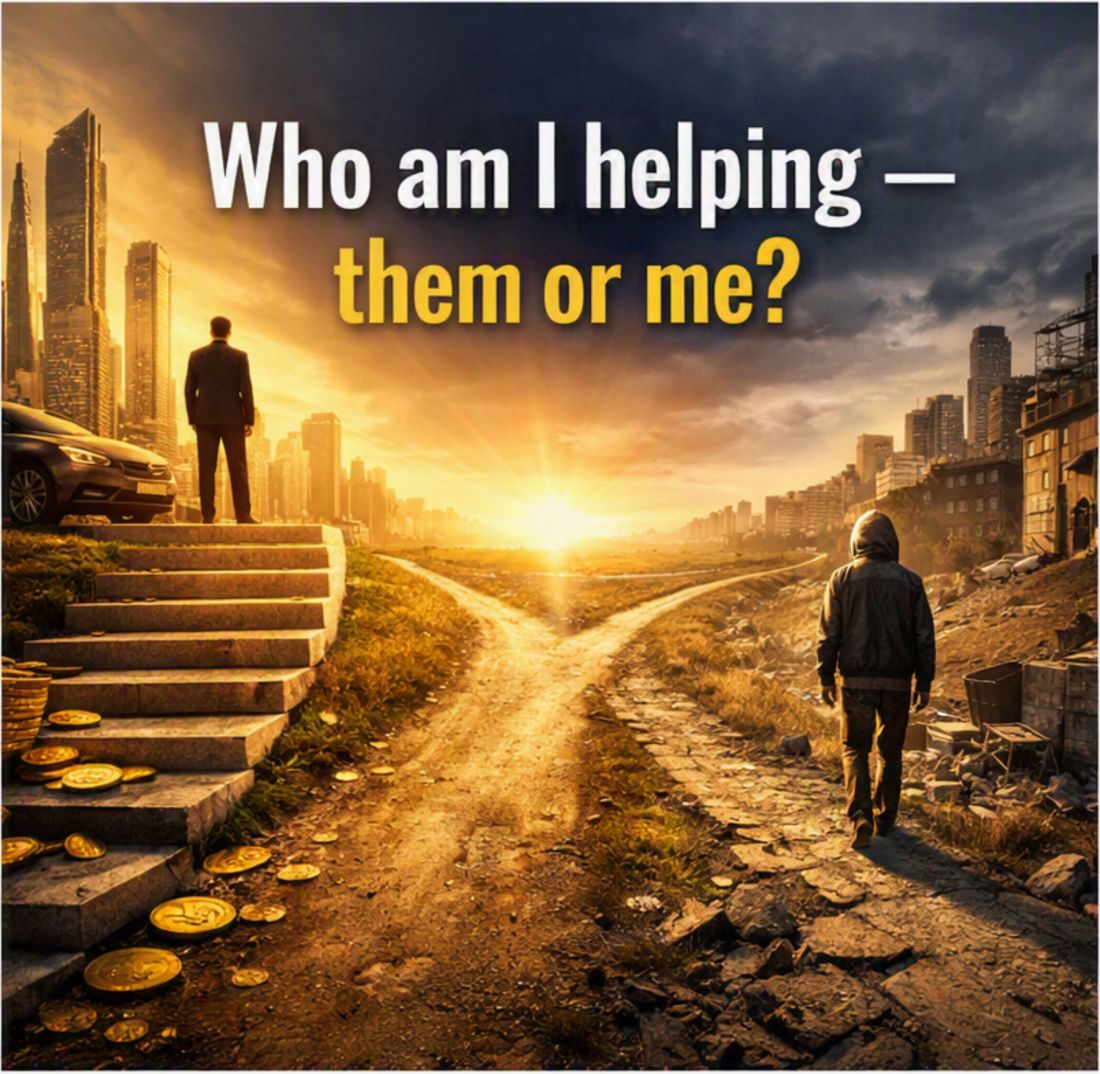
Who am I helping – them, or me?

If the answer is “me,” the project is not social mobility. It is self-promotion.

If the answer is “me,” the hero is being used, not supported.

If the answer is “me,” the collapse of the narrative becomes more likely – and the consequences will fall hardest on those least able to bear them.

True help empowers individuals to recognise their own value, develop their capability, and rise on their own merit.

False elevation – the hand-up – places individuals into positions they may not be prepared for, then abandons them when the pressure becomes unbearable.

The media rarely distinguishes between the two. Institutions often don’t either.

What Must Change

If social mobility is to survive this moment, institutions and media organisations must confront their own role in creating and extending the barriers that underpin it.

They must stop rewarding narrative over merit. They must stop treating trauma as currency. They must stop manufacturing heroes for their own benefit. They must stop confusing elevation with empowerment.

Social mobility was never meant to be about producing heroes. It was meant to be about widening opportunity. Heroes are exceptional by definition; opportunity should not be.

If institutions continue to reward stories more than capability, they will keep creating symbols and then destroying them. Each collapse will make the next person from a disadvantaged background harder to trust, harder to support, and harder to champion.

The question is not whether Britain needs more heroes. The question is whether it is finally prepared to build systems that make heroes unnecessary.

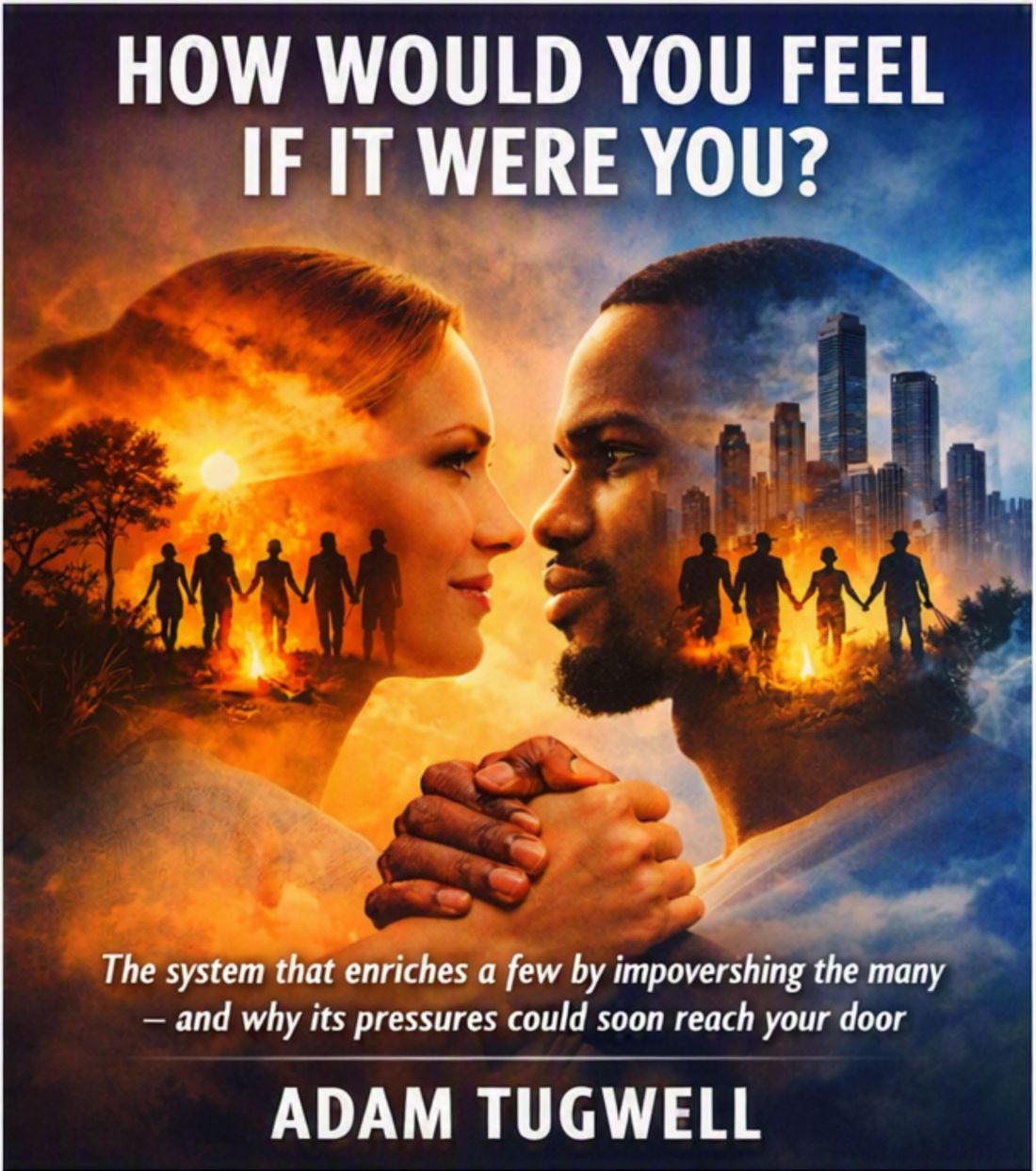
How Would You Feel If It Were You?

The system that enriches a few by impoverishing the many – and why its pressures could soon reach your door.

1. Introduction: What Would You Feel If It Were You?

We talk about poverty, benefits, work, and hardship as if they are abstract issues – political talking points, economic debates, or moral judgments about other people’s choices.

But poverty is not abstract. It is lived. It is felt. It is endured. And it is often invisible to those who have never experienced it.

The truth is simple, but uncomfortable: Most people who judge poverty have never had to imagine themselves inside it.

They see headlines, stereotypes, and social media narratives. They hear confident voices insisting that hardship is a lifestyle choice, that people simply need to “row their own boat,” that work always pays, and that anyone struggling must be doing something wrong.

But what if we paused? What if we stepped back from the noise? What if, instead of judging, we asked a different question – one that cuts through politics, ideology, and assumption?

What would you feel if it were you?

What would you feel if you worked full‑time and still couldn’t afford to live? What would you feel if your rent rose faster than your wages? What would you feel if your food shop cost more every week? What would you feel if your job disappeared overnight? What would you feel if your commitments swallowed your income? What would you feel if your mental health collapsed under the weight of constant financial fear? What would you feel if society judged you for struggling in a system designed to make you struggle?

This essay is not an argument. It is an invitation.

An invitation to imagine. To empathise. To see clearly. To think differently.

Because poverty is not a personal failure. It is a structural outcome. And the only way we begin to change it is by understanding what it feels like – not from the outside, but from within.

2. The Invisible Reality of Poverty

Poverty in Britain is not always visible. It doesn’t always look like the images people imagine – threadbare clothes, empty cupboards, cold homes, obvious struggle.

More often, it looks like ordinary people living ordinary lives, quietly falling further behind each month while the world insists everything is improving.

Part of the problem is that poverty has become statistical. It is described through percentages, inflation rates, GDP growth, wage averages, and economic forecasts.

These numbers create the illusion of objectivity, but they rarely reflect the lived experience of real households.

Official narratives say:

  • wages are rising
  • inflation is easing
  • the economy is recovering
  • employment is high
  • people should be coping

But lived experience says something very different.

People feel poorer. People are poorer. And the gap between the official story and real life grows wider every year.

The Impoverishment Index captures this gap clearly. It shows that:

  • prices rise faster than wages
  • essentials rise faster than headline inflation
  • savings lose value
  • disposable income shrinks
  • the cost of participation in society increases
  • the cost of simply existing increases

Yet because these pressures accumulate quietly – a few pounds more on food, a few pounds more on rent, a few pounds more on energy – many people don’t realise they are being squeezed until they are already in crisis.

And those who aren’t in crisis often don’t see it at all.

Poverty becomes invisible not because it isn’t happening, but because it happens in ways that are easy to overlook:

  • the colleague who skips lunch
  • the neighbour who keeps the heating off
  • the parent who avoids social events
  • the worker who hides their exhaustion
  • the family who moves frequently
  • the person who never complains

People hide their hardship because they feel ashamed. People hide their hardship because they fear judgement. People hide their hardship because they believe it is their fault.

And when hardship is hidden, it becomes easy for others to assume it doesn’t exist.

This invisibility is dangerous. It allows stereotypes to flourish. It allows judgement to harden. It allows people to believe poverty is rare, distant, or self‑inflicted.

But poverty is none of those things.

It is widespread. It is local. It is structural. It is lived by millions. And it is often happening right next to people who cannot see it.

The truth is simple: You cannot understand poverty by looking at statistics. You can only understand it by imagining what it feels like or experiencing it yourself.

3. When Work Isn’t Enough

For generations, the story Britain told itself was simple: If you work hard, you will be able to live.

It wasn’t a promise written into law, but it was woven into culture, politics, and identity.

Work was the path to independence, dignity, stability, and belonging. It was the dividing line between “doing well” and “falling behind.”

But today, millions of people work hard – harder than ever – and still cannot afford a basic, secure life.

This is not a fringe issue. It is not rare. It is not limited to a small group. It is not caused by laziness, irresponsibility, or poor choices.

It is structural.

The numbers tell a story that contradicts everything people were taught to believe:

  • A single adult now needs well over £30,000 net per year to live independently without debt or deprivation. (Based on current UK living‑cost modelling; varies by region.)
  • A family with one child often needs £55,000–£65,000 net per year just to meet essential costs. (Housing, childcare, transport, food, utilities — all rising faster than wages.)
  • Minimum‑wage workers fall hundreds of pounds short every month, even when working full‑time. (This is consistent across most UK regions once rent and transport are included.)
  • Because Universal Credit removes 55p of every extra £1 earned above the work allowance, many low‑income workers keep less than half of what they earn from overtime. (The exact “effective hourly gain” varies by household and cannot be expressed as a single fixed figure.)
  • Many households must work 50–66 hours per week simply to break even — and that’s before any unexpected costs. (This reflects typical budgets for low‑income families facing high rent and childcare.)

These aren’t extreme cases. These are ordinary workers in ordinary jobs – the people who keep society running:

  • refuse collectors
  • kitchen porters
  • baristas
  • shelf‑stackers
  • delivery drivers
  • care assistants
  • cleaners
  • teaching assistants
  • retail workers

People who serve, lift, carry, clean, support, and care. People who do the jobs everyone relies on but rarely notices.

And yet, after forty or fifty hours a week, many still cannot afford:

  • rent
  • food
  • heating
  • transport
  • childcare
  • basic essentials

They are exhausted, undervalued, and financially trapped.

They are told to “work harder,” even though they already work harder than most. They are told to “budget better,” even though they have nothing left to budget. They are told to “take responsibility,” even though they carry more responsibility than anyone should have to bear.

And when they finally reach breaking point – when they need help, when they visit a food bank, when they fall behind on bills – society judges them.

Not for their lack of effort, but for their lack of income.

Agency and Structure

None of this means personal responsibility does not matter. People make good decisions and bad decisions. Choices have consequences. Effort matters. Planning matters. Discipline matters. But personal choices do not occur in a vacuum. They take place within economic structures that can either expand opportunity or restrict it. Recognising structural pressures is not the same as denying agency. It is acknowledging the environment in which agency must operate.

What would you feel if you worked full‑time and still couldn’t afford to live?

Would you feel lazy? Or would you feel defeated by a system where work no longer guarantees survival?

This is the reality for millions.

Not because they have failed, but because the system has.

Work used to be enough. Today, it isn’t. And pretending otherwise only deepens the suffering of those already carrying the heaviest load.

4. The Two‑Tier Britain We Refuse to See

Britain has always had inequality. But today, the divide is no longer simply between “rich” and “poor,” or “working” and “unemployed.” It is deeper, more structural, and more hidden than most people realise.

We live in a two‑tier Britain – not defined by culture, geography, or identity, but by the system itself.

On one tier are those the system rewards. On the other are those the system punishes.

This divide is not about effort. It is not about intelligence. It is not about morality. It is not about character.

It is about structure.

The system rewards people who:

  • have stable, well‑paid jobs
  • own property
  • have savings
  • have access to credit
  • have predictable income
  • can absorb shocks
  • can plan ahead

The system punishes people who:

  • rent
  • earn low wages
  • have insecure work
  • have no savings
  • rely on credit to survive
  • face unpredictable income
  • cannot absorb shocks
  • live month‑to‑month

These two groups often live side by side, work in the same towns, shop in the same supermarkets, and send their children to the same schools – yet their experiences of Britain are completely different.

One group experiences stability. The other experiences continual crisis.

One group feels confident. The other feels afraid.

One group sees opportunity. The other sees barriers.

One group believes the system works. The other knows it doesn’t.

And because the divide is structural, not cultural, people often misinterpret it. They assume that those who struggle must be doing something wrong – because they themselves are doing everything “right” and things are working out.

But this is an illusion.

The system is designed to reward some and punish others. It is designed to extract from the bottom to sustain the top. It is designed to keep people in their tier.

This is why:

  • wages stagnate while rents rise
  • essentials inflate faster than income
  • work no longer guarantees security
  • benefits fill the gap between survival and collapse
  • people who “should be fine” are drowning
  • people who “look fine” are visiting food banks
  • people who “do everything right” still fall behind

And yet, because the divide is invisible to those on the rewarded tier, they often assume it doesn’t exist. They assume everyone has the same opportunities, the same choices, the same chances.

They assume the system is fair.

But fairness is not the lived experience of millions. Fairness is the illusion of those who benefit from the structure.

The truth is simple:

Britain is not divided by culture – it is divided by economics. Not by identity – but by extraction. Not by effort – but by design.

And until we acknowledge this two‑tier reality, we will continue to blame individuals for outcomes created by the system itself.

5. The Mental Health Toll of Falling Behind

Poverty is often described in financial terms – income, rent, bills, debt, inflation. But the deepest wounds it creates are not economic. They are psychological.

Falling behind in a money‑centric culture doesn’t just mean struggling to pay for essentials. It means struggling to maintain your sense of self.

It means living with a constant, grinding fear that you are failing at life.

And that fear is everywhere.

If every day began with financial anxiety

How would you feel if:

  • you woke up each morning wondering whether you could afford food
  • you checked your bank balance before every purchase
  • you feared every brown envelope through the letterbox
  • you lived with the knowledge that one unexpected bill could ruin you
  • you felt guilty every time you spent money on anything that wasn’t essential

This is not occasional stress. This is chronic, unrelenting pressure – the kind that rewires the brain.

People living in poverty experience:

  • heightened anxiety
  • depression
  • sleep disruption
  • cognitive overload
  • difficulty concentrating
  • reduced decision‑making capacity
  • emotional exhaustion

Not because they are weak, but because they are human.

Shame: The Silent Weight Nobody Talks About

Poverty carries a stigma that is rarely acknowledged openly. People feel ashamed of struggling. Ashamed of needing help. Ashamed of not coping. Ashamed of being seen as “less than.”

This shame is not natural. It is taught.

It is taught by:

  • political narratives that frame poverty as a choice
  • cultural messages that equate wealth with virtue
  • social media that showcases curated success
  • workplaces that reward overwork and punish vulnerability
  • public voices that mock or dismiss those who fall behind

Shame becomes internalised. People begin to believe they are the problem.

What would you feel if you believed your hardship was your fault?

Self‑Exclusion: When People Withdraw Because They Feel They Don’t Belong

One of the most damaging mental‑health consequences of poverty is self‑exclusion.

People withdraw from social life not because they want to, but because they feel they don’t deserve to participate.

How would you feel if:

  • you stopped seeing friends because you couldn’t afford to join in
  • you avoided social spaces because you felt embarrassed
  • you declined invitations because you couldn’t afford petrol or a drink
  • you felt ashamed of your clothes, your car, your home, your situation
  • you believed others were judging you even when they weren’t

This is not isolation by choice. It is isolation by shame.

And it deepens the mental‑health crisis.

The Collapse of Identity

In a society where financial status is treated as identity, falling behind feels like losing yourself.

People begin to think:

  • “I’m failing.”
  • “I’m not good enough.”
  • “I’m letting everyone down.”
  • “I’m not worth anything.”
  • “I don’t belong.”

These thoughts are not rare. They are widespread. They are predictable. They are the psychological architecture of poverty.

And they are devastating.

The Cruel Irony: Poverty Creates the Conditions That Make Escape Harder

The mental‑health toll of poverty doesn’t just hurt people emotionally – it makes it harder to escape poverty itself.

Chronic stress reduces:

  • motivation
  • confidence
  • concentration
  • resilience
  • decision‑making ability

People who are struggling financially often appear “unmotivated” or “disorganised” to outsiders. But what outsiders see is not laziness – it is cognitive overload.

It is the brain trying to survive under pressure it was never designed to endure.

What would you feel if your mind was constantly fighting to stay afloat?

The Final Truth: Poverty Isn’t Just About Money – It’s About Mental Survival

The mental‑health consequences of poverty are not side effects. They are central to the experience.

They shape:

  • how people see themselves
  • how people see others
  • how people move through the world
  • how people cope
  • how people hope
  • how people survive

And until we understand this – until we see poverty not just as an economic issue but as a psychological one – we will continue to misunderstand the people who live it.

6. Money as the Master Hierarchy

In Britain today, money is not just a practical necessity. It has become the primary measure of human value. It decides who is respected, who is listened to, who is welcomed, who is dismissed, who is admired, and who is ignored.

It is the quiet, unspoken hierarchy that shapes every social interaction.

People rarely admit this openly. But they live it every day.

The loaded question: “So, what do you do?”

It sounds harmless. It sounds friendly. It sounds like small talk.

But in a money‑centric culture, it is anything but.

It is a coded question about:

  • income
  • lifestyle
  • status
  • class
  • belonging
  • hierarchy

It is not really a question about your interests, your skills, your passions, or your contribution to society. It is a question about where you sit.

How would you feel if every introduction was actually an assessment?

Would you feel comfortable, or would you feel judged before you even spoke?

The psychological weight of being “low status”

When society uses money as the default measure of worth, people who earn less – or who struggle – internalise that hierarchy.

They begin to feel:

  • embarrassed
  • inferior
  • ashamed
  • insecure
  • judged
  • exposed

Not because they lack value, but because the culture tells them they do.

How would you feel if your job title determined how seriously people took you?

How would you feel if your income shaped how people treated you?

How would you feel if your financial situation dictated whether you belonged?

This is not vanity. This is not insecurity. This is the predictable mental‑health outcome of a society that equates wealth with virtue.

The hierarchy is everywhere – even when people don’t notice it

It appears in:

  • conversations
  • workplaces
  • friendships
  • dating
  • family dynamics
  • social media
  • neighbourhoods
  • schools
  • politics

People judge others by:

  • the car they drive
  • the house they live in
  • the clothes they wear
  • the holidays they take
  • the job they do
  • the salary they earn

And when someone falls behind – even slightly – they feel the hierarchy closing in around them.

They feel exposed. They feel vulnerable. They feel “less than.”

The cruel irony: the hierarchy harms everyone

Even those at the top of the hierarchy feel its pressure.

They fear:

  • losing their job
  • losing their home
  • losing their lifestyle
  • losing their status
  • losing their identity

They fear falling into the tier below.

And that fear often turns into judgement of those already there.

Not because they are cruel, but because they are scared.

The hierarchy creates insecurity at every level. It creates anxiety at every level. It creates pressure at every level.

It harms everyone – just in different ways.

The hierarchy shapes identity

In a money‑centric culture, financial status becomes identity.

People begin to think:

  • “I am my job.”
  • “I am my income.”
  • “I am my possessions.”
  • “I am my success.”
  • “I am my ability to keep up.”

And when they can’t keep up, they feel like they are losing themselves.

This is why poverty is not just economic. It is existential.

It affects:

  • how people see themselves
  • how people see others
  • how people move through the world
  • how people feel about their place in society

It shapes belonging. It shapes confidence. It shapes mental health. It shapes identity.

The final truth: money has become the measure of who is “in” and who is “out”

Financial status is used as the default judgement against others.

Rich or poor, money is used to qualify:

  • who matters
  • who belongs
  • who is respected
  • who is listened to
  • who is valued
  • who is dismissed

This hierarchy is not natural. It is cultural. It is constructed. It is learned. And it can be unlearned.

But only if we first recognise it.

Only if we ask the question at the heart of this essay:

What would you feel if your worth was measured in pounds?

7. Fear, Projection, and the Clarkson Effect

When people judge those who are struggling, it is easy to assume the judgement comes from confidence, superiority, or indifference. But in reality, much of it comes from something far more human – fear.

Not fear of the poor themselves. Fear of becoming poor.

In a money‑centric culture, financial security is fragile. Jobs disappear. Health fails. Costs rise. Contracts tighten. Debts accumulate. Savings evaporate. Rent increases. Unexpected bills strike without warning.

Most people know, deep down, that their stability depends on everything continuing to go right. And that knowledge creates a quiet, persistent anxiety beneath the surface of everyday life.

If your comfort could disappear overnight

How would you feel if:

  • your mortgage depended on staying healthy
  • your lifestyle depended on staying employed
  • your identity depended on your job
  • your status depended on your income
  • your sense of belonging depended on keeping up

You might cling to the belief that:

  • “I’m safe because I work hard.”
  • “I’m safe because I’m responsible.”
  • “I’m safe because I’m better than that.”

Because the alternative – that you could end up struggling through no fault of your own – is too frightening to contemplate.

This is where judgement comes from. Not confidence. Not superiority. Fear.

Projection: When people push their fear onto those already living it

When someone sees a person who is struggling, something uncomfortable happens:

They see a version of themselves they are terrified of becoming.

And that discomfort often turns into anger.

How would you feel if:

  • someone else’s hardship reminded you of your own vulnerability
  • someone else’s poverty made you question your own stability
  • someone else’s struggle made you realise your comfort is fragile

You might feel:

  • defensive
  • irritated
  • dismissive
  • resentful

Not because the other person has done anything wrong, but because their existence threatens your sense of security.

This is projection – the mind pushing away its own fear by placing it onto someone else.

The Influencer Effect: When public voices validate private fear

When a public figure says:

  • “People just need to row their own boat.”
  • “If you’re poor, it’s your fault.”
  • “Hard work always pays off.”

…it doesn’t just express an opinion.

It validates the internal narrative people use to protect themselves from fear.

It tells them:

  • “Your comfort is deserved.”
  • “Your stability is earned.”
  • “Your success is proof you’re different.”
  • “Your fear of falling is unnecessary – because falling only happens to people who fail.”

This is comforting. It is reassuring. It is psychologically soothing.

But it is also untrue.

And it deepens the stigma faced by those already struggling.

Anger as a defence mechanism

When fear is too uncomfortable to face directly, it often transforms into anger.

Anger at:

  • people on benefits
  • people who use food banks
  • people who fall behind
  • people who “don’t keep up”
  • people who “should be doing better”

This anger is not really about them. It is about the person feeling it.

It is about their fear of losing what they have. It is about their anxiety that their own life could collapse. It is about their need to believe they are safe.

And the easiest way to feel safe is to believe that those who struggle are fundamentally different.

That they are lazy. That they are irresponsible. That they are weak. That they are “not like me.”

Because if they are different, then their fate cannot become yours.

The final truth: judgement is often fear in disguise

People judge the poor not because they are confident, but because they are afraid.

They fear:

  • losing control
  • losing status
  • losing identity
  • losing belonging
  • losing security

And instead of confronting that fear, they project it onto those who have already fallen through the cracks.

What would you feel if someone else’s suffering reminded you of how fragile your own comfort really is?

8. Disposable Income Collapse and the Culture of Commitments

There is a quiet crisis unfolding across Britain – one that rarely makes headlines, yet affects millions of households.

It is the crisis of disappearing disposable income.

Not because people are reckless, irresponsible, or living beyond their means, but because modern life has been reshaped around contracts, subscriptions, debts, and forward commitments that swallow income before essentials are even considered.

This is the part of poverty most people never see.

The culture of commitments

Over the past two decades, “normal life” has shifted from paying for things outright to paying for things monthly.

Almost every aspect of modern living is now tied to a recurring payment:

  • phone contracts
  • broadband packages
  • car finance
  • rent agreements
  • insurance policies
  • streaming subscriptions
  • childcare fees
  • credit cards
  • buy‑now‑pay‑later
  • gym memberships
  • loan repayments

These commitments are not luxuries. They are the baseline expectations of participation in society.

But here is the trap:

These payments come out first. Essentials come last.

When someone’s income drops – even slightly – the commitments remain. The penalties remain. The contracts remain. The direct debits remain. The system does not adjust to their circumstances.

And suddenly, a person who “looks” financially stable is left with nothing for food, heating, transport, or basic survival.

The BMW at the food bank

This is why people sometimes see a BMW driver pull up at a food bank and assume they are playing games.

They are not.

They are living the tragedy of modern Britain:

  • The car is on finance.
  • The job that paid for it has gone.
  • The commitments remain.
  • The penalties for defaulting are severe.
  • The person is trying desperately to keep up with a society that punishes anyone who falls behind.

They are not pretending to be poor. They are pretending not to be failing.

Because in a money‑centric culture, failure is treated as a moral flaw.

What would you feel if people judged your car instead of your crisis?

The mental‑health cost of “keeping up”

The pressure to maintain commitments is not just financial – it is psychological.

People fear:

  • losing their home
  • losing their car
  • losing their job
  • losing their identity
  • losing their place in society

They cling to the commitments because those commitments represent:

  • stability
  • normality
  • dignity
  • belonging
  • self‑worth

Even when those commitments are the very thing destroying them.

This is status anxiety, and it is one of the most powerful mental‑health drivers in modern Britain.

The culture of debt: a system designed for overcommitment

Society encourages people to commit to more than they can afford:

  • “Spread the cost.”
  • “Upgrade.”
  • “Finance it.”
  • “Pay monthly.”
  • “Don’t fall behind.”

But it never warns them that:

  • their income might drop
  • their job might disappear
  • their rent might rise
  • their bills might spike
  • their commitments might become unaffordable

People commit to a lifestyle that is only sustainable if everything goes right.

And when something goes wrong, they collapse.

Not because they are irresponsible. Not because they are careless. But because the system is designed to extract until people break.

The judgement that comes from misunderstanding

When people see someone who “should be doing fine” but is drowning, they often assume:

  • mismanagement
  • irresponsibility
  • wastefulness
  • laziness
  • deceit

But they don’t see:

  • the commitments
  • the penalties
  • the contracts
  • the debts
  • the fear
  • the shame
  • the collapse of disposable income
  • the collapse of mental health

They don’t see the person who used to be secure, used to be confident, used to be proud – and is now falling apart because one change in circumstances made their entire life unaffordable.

They don’t see the tragedy of someone who is not trying to look rich, but trying not to look like they are failing.

The final truth: people aren’t drowning because they’re reckless – they’re drowning because the system demands more than they can give

Disposable income collapse is not a personal failure. It is a structural outcome.

It is the predictable result of:

  • rising costs
  • stagnant wages
  • extractive contracts
  • punitive penalties
  • cultural pressure
  • financialisation of everyday life

And until we understand this, we will continue to judge people for symptoms of a system they never chose.

What would you feel if you could pay your contracts but not your food?

9. The Extractive System We All Participate In

Up to this point, we have focused on what poverty feels like: the pressure, the shame, the judgement, the fear, the commitments, and the quiet collapse of disposable income.

But if these experiences are becoming so common, a difficult question follows:

Why do so many different pressures seem to point in the same direction?

Why do wages fail to keep pace with living costs? Why does rent absorb so much of people’s income? Why do debts grow faster than people can repay them? Why do penalties fall hardest on those least able to pay? Why does basic participation in society feel increasingly expensive?

At some point, we have to look beyond individual hardship and ask whether these are separate problems, or symptoms of something larger.

This is where the idea of an extractive system matters.

Not as a slogan. Not as an accusation. But as a way of describing a society where more and more of people’s money, time, attention, stability and emotional energy is taken simply to keep going.

The system extracts from everyone – but not equally

Many of the pressures people experience follow a familiar pattern. More of their income is spoken for before they can make meaningful choices about how to use it.

Rent rises. Debt repayments increase. Interest accumulates. Penalties are applied. Contracts renew. Essential services become more expensive. Food, energy, childcare, transport and housing all demand a larger share of income.

Each pressure may appear manageable on its own. Together, they steadily reduce financial freedom.

For those with savings, assets, secure work or family support, this extraction may be irritating, stressful or inconvenient. For those without a financial buffer, it can be catastrophic.

This is why two people can face the same bill and experience it completely differently. For one person, it is an annoyance. For another, it is the beginning of a crisis.

The discomfort of participation

The most uncomfortable part of this is that none of us stands completely outside it.

We all need homes. We all need work. We all need food, heating, transport, communication and access to money. We all have to participate in the same housing market, labour market, financial system and culture of status, debt and consumption.

Participation is not a moral failing. It is a condition of belonging to the society we live in.

That is what makes it so difficult to face. Even people who see the system clearly still have to live inside it. They may dislike the pressures it creates. They may oppose the unfairness. They may want something better. But they still have rent or a mortgage to pay, bills to meet, food to buy, work to keep, transport to fund, and commitments to manage.

This creates a quiet tension:

We may not want to contribute to a system that harms people, but most of us cannot survive without participating in it.

Some people respond to that tension with guilt. Some with anger. Some with helplessness. Some with denial. Some avoid thinking about it altogether.

But avoiding it does not make the tension disappear.

How ordinary life becomes connected to pressure elsewhere

This is not about blaming ordinary people for living ordinary lives. It is about recognising how connected modern life is.

Many of the goods and services we depend on are produced within structures that rely on low-paid labour, insecure work, high housing costs, debt, and constant consumption. The food we buy, the deliveries we receive, the services we use, the properties we rent, the platforms we subscribe to, and the companies we rely on are all part of wider systems of cost, profit and pressure.

Most of us do not design those systems. Most of us do not choose their rules. Most of us are simply trying to get through the month.

But that does not mean the consequences vanish. It means the consequences are hidden inside normality.

The human cost remains hidden until we choose to see it

For people on the wrong end of these pressures, the consequences are not theoretical. They are lived in homes, bodies and minds.

They show up as empty cupboards, cold rooms, missed payments, debt letters, anxiety, depression, isolation, illness and exhaustion.

They show up when someone works full-time and still falls behind. When someone pays their contracts but cannot afford food. When someone keeps a car because losing it means losing work. When someone hides their hardship because the shame feels unbearable.

These outcomes are not random. They are what happens when the cost of participation rises faster than people’s capacity to carry it.

And when the pressure becomes too great, people do not simply “tighten their belts.” They break.

Recognising the system is not the same as escaping it

Seeing this clearly does not mean any one person can step outside the system tomorrow. We cannot individually redesign the housing market. We cannot individually rebuild the labour market. We cannot individually remove debt, low pay, high rent or financial insecurity from other people’s lives.

But we can stop pretending these experiences are isolated failures.

We can stop pretending poverty is simply the result of weak character, poor discipline or bad choices. We can stop judging people for struggling inside pressures we would find unbearable if they landed on our own doorstep.

We can recognise that the people suffering most are not separate from the rest of us. They are not a different kind of person. They are people living with fewer buffers, fewer options and less room for error.

And perhaps that is the uncomfortable truth this chapter is really asking us to face:

We are not separate from the system. We are inside it. And because we are inside it, we have a responsibility to see it clearly.

That does not require guilt. It requires honesty.

It requires asking the question this essay keeps returning to:

What would I feel if this were me?

And it requires the courage to imagine a society where human worth is not determined by financial status, and where ordinary people are not expected to survive pressures no one should have to carry alone.

10. The Human Cost for Those at the Bottom

For people on the wrong end of the extractive system, the consequences are not abstract. They are not theoretical. They are not political talking points or economic indicators. They are lived, felt, endured – in bodies, in minds, in homes, in families.

The cost is material. The cost is emotional. The cost is physical. The cost is human.

And it is paid every single day.

Material consequences

People at the bottom of the system face continual, grinding deprivation:

  • cupboards that empty too quickly
  • heating that stays off even in winter
  • rent that consumes half their income
  • bills that rise faster than wages
  • debts that accumulate quietly
  • food shops that shrink each month
  • transport they can’t afford
  • childcare that costs more than they earn

These are not occasional hardships. They are daily realities.

And they create a life defined not by choice, but by constraint.

Emotional consequences

The emotional toll is heavier still.

People feel:

  • ashamed of struggling
  • guilty for not coping
  • embarrassed to ask for help
  • anxious about every bill
  • afraid of every envelope
  • overwhelmed by every decision
  • exhausted by constant vigilance
  • isolated from friends and family
  • judged by society
  • invisible to those who have never lived it

This emotional burden is not weakness. It is the predictable outcome of living in continual crisis.

It is the mind trying to survive under pressure it was never designed to endure.

Physical consequences

Poverty is not just a financial condition. It is a physical one.

It leads to:

  • chronic stress
  • sleep disruption
  • weakened immune systems
  • malnutrition
  • untreated health conditions
  • increased risk of illness
  • reduced life expectancy

People become ill not because they are irresponsible, but because their bodies are worn down by fear, stress, cold, hunger, and exhaustion.

Poverty literally shortens lives.

The collapse of hope

Perhaps the most devastating cost is the collapse of hope.

People begin to believe:

  • “Nothing will change.”
  • “I will never get out.”
  • “I am failing.”
  • “I don’t belong.”
  • “I’m letting everyone down.”
  • “I’m not worth anything.”

Hope is not a luxury. Hope is a survival tool.

And when hope collapses, people collapse with it.

The cruelty of misunderstanding

The tragedy is not only that people suffer – it is that their suffering is misunderstood.

People assume:

  • laziness
  • irresponsibility
  • poor choices
  • lack of effort
  • lack of discipline

But they do not see:

  • the structural barriers
  • the psychological toll
  • the cultural hierarchy
  • the fear of falling
  • the commitments that swallow income
  • the extractive system that traps people
  • the shame that silences them
  • the exhaustion that overwhelms them

They do not see the human being behind the hardship.

They do not see the person who is doing everything they can – and still sinking.

The final truth: poverty is not a personal failure – it is a systemic outcome

The human cost of poverty is not created by individuals. It is created by the system.

A system that extracts. A system that divides. A system that punishes. A system that shames. A system that blames. A system that demands more than people can give. A system that leaves millions behind.

And until we understand this – until we see poverty not as a moral issue but as a structural one – we will continue to misjudge those who suffer most.

What would you feel if this were you?

11. The Final Question: What Would You Feel If This Were You?

After everything you’ve read – the structural pressures, the psychological toll, the cultural hierarchy, the fear, the commitments, the extraction, the human cost – one truth becomes impossible to ignore:

Poverty is not something that happens to “other people.” It is something that could happen to you.

Not because you are careless. Not because you are irresponsible. Not because you are weak. But because the system is fragile, unforgiving, and built on assumptions that no longer hold.

So the question at the heart of this essay returns, more urgent than before:

What would you feel if this were you?

What would you feel if:

  • your income dropped and your commitments didn’t
  • your rent rose faster than your wages
  • your food shop cost more every week
  • your energy bill doubled
  • your car finance swallowed your pay
  • your mental health collapsed under pressure
  • your savings evaporated
  • your job disappeared overnight
  • your identity felt tied to your income
  • your sense of worth felt tied to your status
  • your hope began to fade

What would you feel if:

  • you were judged for struggling
  • you were blamed for circumstances you didn’t choose
  • you were told to “work harder” when you already worked harder than most
  • you were told to “budget better” when you had nothing left to budget
  • you were told to “take responsibility” when you carried more responsibility than anyone should
  • you were told your hardship was your fault

What would you feel if:

  • you visited a food bank in a car people assumed meant you were fine
  • you hid your struggle because you feared shame
  • you withdrew from friends because you couldn’t afford to join in
  • you felt inferior because society equated money with worth
  • you felt invisible because nobody saw the truth behind your life

What would you feel if:

  • you realised the system was designed to extract until you broke
  • you realised your stability was more fragile than you thought
  • you realised your comfort depended on everything going right
  • you realised you were not immune to falling
  • you realised you were not separate from the people you judged

What would you feel if you finally understood that poverty is not a personal failure – but a structural outcome?

Would you feel anger? Would you feel fear? Would you feel empathy? Would you feel responsibility? Would you feel the need for change?

Or would you simply feel human?

Because that is the point.

Poverty is not about “them.” It is about all of us. It is about what happens when a society forgets that human worth cannot be measured in money.

And once you see that – once you truly feel it – you cannot unsee it.

12. Conclusion: We Are All Capable of Better

We live in a society where poverty is misunderstood, judgement is normalised, fear is hidden, and financial status has quietly become the measure of human worth. We live in an extractive system that demands more than people can give, punishes those who fall behind, and pressures everyone – even those who are coping – to keep running just to stay still.

But we also live in a society full of people who care. People who want fairness. People who want dignity. People who want security. People who want to understand. People who want change.

The problem is not that people are cruel. The problem is that people are afraid. The problem is that people are misinformed. The problem is that people are disconnected from the lived reality of those who struggle.

And the solution begins with something simple:

Thinking differently.

Not with guilt. Not with shame. Not with self‑punishment. Not with denial. Not with defensiveness.

But with awareness.

With empathy.

With the willingness to imagine what life feels like for those on the wrong end of the system.

With the courage to question narratives that blame individuals for structural outcomes.

With the honesty to recognise that we all participate in a system that harms people – even when we don’t want to.

With the humility to accept that financial status is not a measure of human worth.

With the clarity to see that poverty is not a personal failure, but a predictable result of policies, structures, and cultural norms that no longer serve the society we want to be.

And with the hope that things can change.

Because they can.

Change begins with perception. Perception shapes conversation. Conversation shapes culture. Culture shapes policy. Policy shapes lives.

And it all begins with one question:

What would you feel if this were you?

If we can hold that question in our minds – not just today, but tomorrow, and the day after – then we can begin to build a society where dignity is not conditional, where worth is not measured in money, and where nobody is left behind because the system demanded more than they could give.

We are all capable of better. And thinking differently is the first step toward a very big change.

Further Reading

The following pieces are suggested as a guided route through the wider thinking behind this essay. They begin with the lived experience of poverty, move through work, welfare and the benefits system, and then widen into the broader structural and cultural questions that shape the argument.

Start here: lived experience and the hidden reality of poverty

Work, wages and the benefits crisis

Is Poverty Invisible to Those Who Don’t Experience It?
https://adamtugwell.blog/2025/02/24/is-poverty-invisible-to-those-who-dont-experience-it-full-text/
This is the best starting point for readers who want to understand the human and emotional reality behind poverty. It connects research, lived experience and foodbank insight, making visible what is often hidden from those who have never had to live inside financial hardship.

The Finger in the Dam: How Britain’s Benefits System Is Holding Up a Broken Economy
https://adamtugwell.blog/2026/06/04/the-finger-in-the-dam-how-britains-benefits-system-is-holding-up-a-broken-economy/
This develops the argument further by presenting welfare as structural infrastructure: the pressure valve holding together an economy where wages, rents, living costs and debt no longer allow millions of people to live securely from work alone.

The wider system: inequality, culture and belief

Being on Benefits Isn’t a Culture; for Many It’s a Living Hell
https://adamtugwell.blog/2025/03/24/being-on-benefits-isnt-a-culture-for-many-its-a-living-hell/
This piece challenges the idea that benefits are a lifestyle choice. It shows how the benefits system, low pay, foodbank use, debt and public judgement combine to create fear, shame and practical difficulty for people who are already under pressure.

When the System Runs Out of Road
https://adamtugwell.blog/2026/06/15/when-the-system-runs-out-of-road-britains-benefits-crisis-the-defence-dilemma-and-the-limits-of-an-economy-built-on-low-wages-and-public-subsidy/
This piece widens the benefits discussion into a broader systems argument. It explores why governments face narrowing room for manoeuvre when an economy is built around low wages, public subsidy, household debt and rising costs.

The Hidden Gap Driving Britain’s Benefits Crisis
https://adamtugwell.blog/2026/04/15/the-hidden-gap-driving-britains-benefits-crisis/
This article explains the gap between what work pays and what life costs. It is especially useful for readers who want the core economic argument behind the claim that benefits are increasingly being used to subsidise low wages rather than simply support unemployment.

A World of Broken Dreams That Were Never Ours
https://adamtugwell.blog/2026/06/18/a-world-of-broken-dreams-that-were-never-ours/
This essay extends the argument beyond poverty itself, looking at how people blame themselves for failing to reach goals and expectations they did not truly choose. It is a useful bridge between personal shame and wider cultural conditioning.

The Real Two-Tier Britain: The Split We Still Refuse to See
https://adamtugwell.blog/2026/05/22/the-real-two-tier-britain-the-split-we-still-refuse-to-see/
This piece gives readers a fuller version of the structural divide explored in this essay. It argues that Britain’s most important split is not primarily cultural or political, but economic, security-based and increasingly invisible to those not yet on the wrong side of it.

The Establishment Is Not What You Think It Is
https://adamtugwell.blog/2026/07/15/the-establishment-is-not-what-you-think-it-is-why-the-modern-establishment-is-a-worldview-not-a-class-and-why-that-makes-it-so-hard-to-escape/
This article reframes “the Establishment” as a worldview rather than a fixed class or hidden group. It may help readers understand the cultural operating system that normalises hierarchy, extraction and the belief that existing economic arrangements are inevitable.

For readers who want the deeper economic framework

The Impoverishment Index
https://adamtugwell.blog/2026/05/29/the-impoverishment-index-a-report-on-the-widening-gap-between-official-economic-narratives-and-real-world-lived-experience/
Best read after the pieces above. This is the most detailed and analytical work in the collection, bringing together many of the themes explored throughout the previous essays. It sets out the wider economic framework behind the argument, focusing on the growing gap between official economic narratives and the lived reality of declining living standards, financial insecurity and erosion of opportunity experienced by ordinary households.

Progress Without Anchors: Why Idealism Must Stay Grounded in Reality

A case for progress that protects purpose, safeguards the conditions of human flourishing, and recognises that society cannot be remade by idealism alone.

Every society depends on frameworks it rarely notices until they begin to weaken. Families, communities, institutions, customs, duties, shared expectations and moral restraints are not decorative features of social life. They are the guardrails that help people meet basic human needs: safety, belonging, health, stability, happiness, meaning and the confidence that tomorrow will not be wholly unlike today.

Progress is necessary because these frameworks are never perfect. They can exclude, constrain, stagnate or fail to adapt. But the fact that something is imperfect does not mean it is disposable. Many inherited structures exist because they solve recurring human problems. They help people cooperate, raise children, care for the vulnerable, transmit trust, resolve conflict and live with limits.

The central danger in modern progressivism is not that it seeks improvement. The danger is that it can mistake moral aspiration for practical wisdom. It can assume that if an ideal is sufficiently compassionate, inclusive or emancipatory, then society should be reorganised around it immediately, regardless of whether the conditions exist for that ideal to work in the real world.

This essay is therefore not an argument against progress. It is an argument against progress without anchors: change that removes safeguards before replacements are ready, dismisses disagreement as backwardness, and treats human beings as material to be reshaped rather than creatures rooted in reality, habit, culture, obligation and need.

1. The False Promise of Progress Without Limits

Much progressive politics begins with a noble instinct: the belief that suffering should be reduced, unfairness challenged and life improved.

At its best, this instinct has corrected real wrongs. It has expanded dignity, challenged cruelty and forced societies to confront harms they preferred to ignore.

But noble instinct is not enough. A political or institutional project becomes dangerous when it assumes that the moral desirability of an outcome proves the practicality of the route towards it.

Wanting a more equal, inclusive or liberated society does not mean that every structure standing in the way is merely oppressive. Some of those structures may also be holding society together.

This is where progress can become false hope. It promises a better world while weakening the conditions that make any better world possible. It speaks of liberation while eroding responsibility. It speaks of inclusion while neglecting cohesion. It speaks of rights while forgetting duties. It speaks of change while showing too little interest in continuity.

The issue is not whether the ideal is attractive. Many ideals are attractive. The issue is whether the ideal bears a workable relationship to human nature, social trust, institutional capacity and the lived realities of ordinary people.

Few people fall in behind an idea simply because it has been declared morally superior.

They do so because they can see how it serves them, their families, their communities or the society they inhabit.

This does not mean every popular instinct is right, nor that every unpopular reform is wrong. It does mean that progress must persuade reality before it attempts to command it.

When change moves faster than trust, capacity or consent, it does not create progress.

It creates instability.

2. Why Social Guardrails Matter

Guardrails do not exist to prevent all movement. They exist to stop movement becoming destruction. The same is true in social life. Law, custom, family, community, faith, local identity, civic duty and shared restraint all limit individual will, but they also make freedom liveable.

A child does not flourish merely because every inherited constraint has been removed. A neighbourhood does not become strong because all local norms are treated as suspect. An institution does not earn trust because it has adopted the newest language of reform.

Human beings need stability as well as opportunity, boundaries as well as choice, and belonging as well as recognition.

The frameworks that protect life are often slow, imperfect and frustrating. They rarely satisfy the utopian imagination because they deal in compromise rather than purity. Yet they are usually the means through which basic goods are actually delivered: safety, health, happiness, social trust, mutual care and a sense of purpose.

This is why reform carries a burden of proof. Those who seek to dismantle an inherited structure must show not only that it has flaws, but that what replaces it can perform its essential functions at least as well. Otherwise change may remove visible injustice while producing invisible fragility.

The most serious political errors often begin when leaders confuse a guardrail with a prison wall. A guardrail can constrain, but it can also protect. Remove it without understanding its purpose, and the people most exposed are rarely the powerful. They are the people with the fewest reserves when systems fail.

3. Human Beings Cannot Simply Be Redesigned

One of the most dangerous assumptions in modern institutional life is that people can be forced to think differently if the environment around them is redesigned with sufficient confidence.

‘i.e. Change the language, incentives, policies, symbols and structures, and eventually the human being will follow.’

Yes, there is some truth in this. Environments do influence behaviour. Laws do shape expectations. Institutions can normalise habits.

But influence is not control. People do not surrender conscience, instinct, memory, loyalty or belief simply because a new moral architecture has been imposed above them.

Many will continue to disagree. Some will comply outwardly while withdrawing inwardly. Others will wait until the old safeguards have been removed and then use the new openness to introduce their own competing certainties.

A society that dismantles restraints in the hope that everyone will become more enlightened may instead discover that restraint was protecting it from many directions at once.

4. Progress Requires Preconditions

There are reforms that may be desirable in principle but destructive in practice if introduced before the surrounding culture, institutions or habits are ready to sustain them.

This is not an argument for permanent delay. It is an argument for seriousness.

Progress is not simply the removal of barriers. It is the creation of conditions in which people can flourish after those barriers have been removed.

That requires trust, competence, responsibility, shared standards and enough common ground for disagreement not to become social fracture.

This is why progress is often slow. Slow change can be frustrating, especially to those suffering under genuine injustice.

But slowness is not always cowardice. Sometimes it reflects the time required for institutions to adapt, for communities to absorb consequences, for trust to be built and for replacement structures to become capable of carrying real human weight.

The tragedy of impatient idealism is that it can damage precisely the people it intends to help.

When systems are not ready, the costs of disorder are not evenly distributed. The secure can adapt; the vulnerable are left exposed.

5. Purpose Is Not Manufactured by Ideology

A society does not live by administration alone. People need more than services, rights and managed outcomes. They need purpose. They need a sense that their lives are connected to something beyond immediate appetite or individual preference: family, duty, vocation, place, faith, citizenship, service, memory, inheritance, love.

The risk in a rootless progressivism is that it dissolves the very sources from which purpose is drawn. If every inherited obligation is treated as arbitrary, every boundary as oppression, every tradition as suspect and every identity as self-created, then the individual may be left freer in theory but more disoriented in practice.

This is not liberation in any meaningful human sense. It is exposure.

A person released from all attachments may not become autonomous, rational and fulfilled. They may become lonely, anxious, manipulable and dependent on large systems to supply the meaning once provided by smaller human bonds.

Progress that destroys purpose cannot finally be called progress. It may expand choice while weakening the reasons for choosing well. It may remove constraints while leaving people without orientation. It may promise happiness while undermining the relationships and responsibilities through which happiness is usually sustained.

The mature question is not how to free people from every framework, but how to maintain a healthy relationship between human beings and the world around them.

That relationship requires freedom, but also responsibility; compassion, but also truth; reform, but also continuity; openness, but also protection from chaos.

6. Utopia Is Not the Human Condition

Utopia is a beautiful idea, but it is not what the human experience is about. Human life is marked by limitation, conflict, dependency, disagreement, loss, loyalty, love and imperfection.

Politics cannot abolish those realities. Leadership cannot design them away. Institutions cannot transform finite human beings into frictionless moral actors.

The pursuit of perfection becomes dangerous when it turns disagreement into evidence of moral failure. If a leader or movement begins from the assumption that its own interpretation of the good is immediately and unquestionably correct, then persuasion soon gives way to imposition. The cost is justified by the destination. Resistance is treated not as a warning, but as a problem to be overcome.

This is the old danger of utopian politics. It claims to love humanity while becoming impatient with actual human beings. It speaks of compassion while ignoring trade-offs. It promises harmony while weakening the habits that make coexistence possible. It seeks to redesign the world according to an ideal image, then treats the stubbornness of reality as an enemy.

7. The Leadership Test: Better for Whom, and at What Cost?

Responsible leadership begins with a harder set of questions than ideological politics usually permits.

What problem is this reform trying to solve? What good does the existing system still provide? Who depends on that good? What will replace it? What are the likely unintended consequences? Who pays if the theory fails?

The question “better for whom?” should be central to every serious reform. A change may be better for administrators but worse for families; better for institutional reputation but worse for trust; better for ideological coherence but worse for social peace; better for one group in the short term but damaging to the shared framework on which many groups depend.

This is not an argument for paralysis. It is an argument for humility. The leader’s task is not to impose a preferred interpretation of the good at any cost. It is to steward change in a way that remains accountable to reality, protects the vulnerable, preserves what still works and improves what no longer does.

8. Progressivism as False Hope

Progressivism becomes false hope when it promises outcomes that depend on human behaviour, cultural adaptation, social trust and institutional competence that cannot simply be produced through law, language, policy or moral pressure.

It is false hope when it assumes that removing old boundaries will automatically create healthier people, stronger communities or more compassionate institutions. It is false hope when it treats disagreement as ignorance, inheritance as oppression and practical limits as failures of courage.

Most of all, it is false hope when it weakens the frameworks that protect life in the name of an ideal that has not yet proved capable of replacing them.

A society cannot live inside aspiration alone. It needs habits, duties, trust, restraint, competence and institutions that can bear pressure.

The answer is not to abandon progress. It is to make progress answerable to the world as it is. The task is not to preserve every inheritance or to resist every reform. It is to ask whether a proposed change strengthens or weakens the basic conditions of human flourishing.

9. What Grounded Progress Requires

Grounded progress begins by accepting that reality is not an inconvenience to be overcome. It is the medium in which all improvement must take place.

Human nature, institutional capacity, culture, trust, family life, economic limits and local circumstances are not secondary details. They are the conditions that decide whether an ideal becomes humane reform or destructive fantasy.

Such progress protects what still works, repairs what is failing and changes only with a clear account of what will carry the weight once established structures are altered.

It understands that people need purpose as well as protection, belonging as well as recognition, and responsibility as well as rights.

It also recognises that disagreement is not always a defect to be corrected. In a free society, disagreement is part of the terrain. The aim of leadership is not to eliminate difference, but to preserve enough shared ground for difference to remain peaceful, productive and bounded by mutual obligation.

Progress worthy of the name does not ask, “What would the ideal world look like if human beings were infinitely adaptable?” It asks, “Given what human beings are, what can be improved without destroying the foundations that allow them to flourish?”

Conclusion: The Discipline of Reality

The central error of every utopian project is the belief that society can be remade according to an ideal vision without cost.

Human beings are neither infinitely rational nor infinitely malleable. We are shaped by culture, memory, family, place, obligation and limitation as much as by choice. Any politics that forgets this will eventually collide with reality.

Progressivism becomes dangerous when it treats that collision as proof that reality must be forced harder.

The wiser response is different. It is to recognise that good intentions are not enough, that safeguards often exist for reasons, and that purpose cannot be manufactured by dismantling the relationships and responsibilities through which people learn who they are.

The challenge facing modern leaders is not to resist change, nor to celebrate it reflexively. It is to exercise judgement.

Real progress is neither preservation nor disruption alone. It is the disciplined work of improving what exists while protecting the foundations that allow people and communities to flourish.

The question is not whether change is happening. The question is whether the changes we pursue leave society stronger, safer, healthier, more purposeful and more capable of living truthfully with the world as it is.