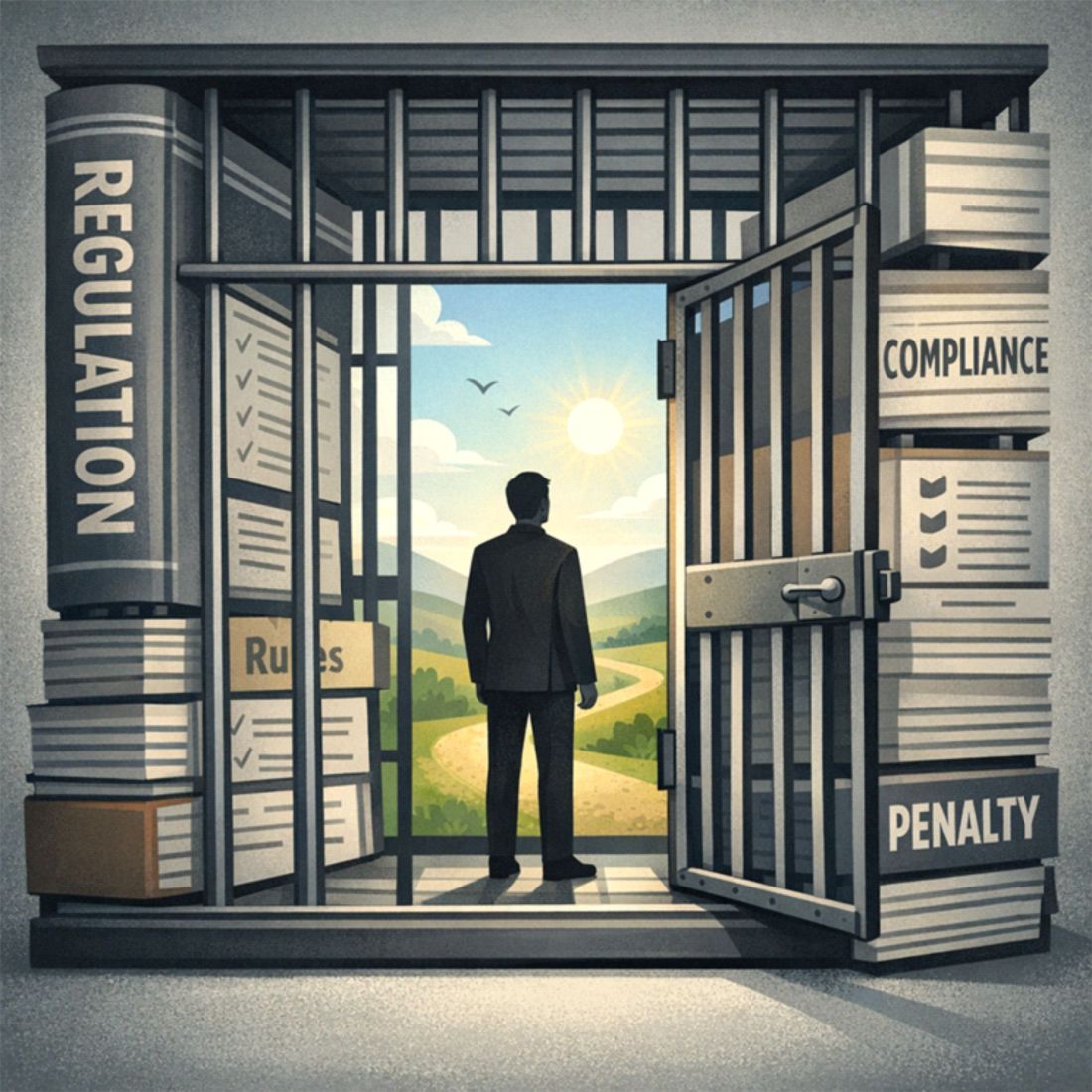
The hardest thing for any of us to get our heads around, as we look at the problems we face, is that the solutions are not going to come from the people or the places we expect.
The problems the UK faces today are all connected. Government, politics, the public sector, money, the cost of living, not having enough, not having work, not feeling valued – it doesn’t matter which part you look at. Everything circles back to the same root cause. And that means the way forward has to be something genuinely different.
Something that leaves all of that behind.
It’s not easy to imagine a new way of living and interacting with the world outside ourselves. But once we begin to remember who we really are – and what actually matters – it becomes much clearer.
What comes next isn’t about abandoning technology or pretending we can go back to some nostalgic version of the past. It’s about putting people, community, and the environment we live in first, instead of money or whatever we can access on a screen.
Some people will automatically assume this means rejecting modern life or living in some kind of bubble. It doesn’t. What comes next is about creating a level playing field where everyone has access to the basic essentials they need for life – without anyone else controlling them.
When people have enough, they are free to think, to breathe, to find peace, and to live the best life they can, without the actions or behaviours of others holding them back.
This isn’t utopian. It isn’t socialist. It isn’t communist. And it isn’t capitalist either.
All of those systems – just like commercialisation – rely on centralisation and hierarchy. They all depend on power being held at the top. The alternative doesn’t hide processes or motives because it can’t. It turns everything on its head and makes what is local – your community, your environment, your relationships – the most important part of life. And it puts you, and the people you care about, right at the centre.
There’s a lot to think about, and I’m not going to try to explain the whole Local Economy and Governance System (LEGS) here. What I will say is that it all begins with a benchmark for life called the Basic Living Standard. This means everyone has enough of what they actually need. And through a Contribution Culture, everyone brings value to life by contributing in the ways that work best for them – without taking more than they need from other people, the community, or the environment.
We approach life as a partnership. We take out, but we also put back. We respect the cycles of life for what they are and what they do.
One of the greatest benefits of embracing what comes next is realising how much of our lives today rely on value and reference points outside of ourselves. That’s why so many of us feel powerless, unheard, and unable to control what we can do – or even what we can think or say.
LEGS – and the system for life and governance it describes – works on a very different principle: each of us should be able, and actively encouraged, to rely on our own thinking, our own consideration, and our own agency before we engage with anything else.
It may sound counterintuitive, but when we can think independently, rely on ourselves, and act with confidence, we have a much healthier and more respectful relationship with the world outside us too. And that leads to a kind of happiness that nobody else can control.
“Locality is the natural scale of human life. Everything else is a managed simulation.”
A Note from Adam
This essay sits within a wider body of work that includes The Local Economy & Governance System, The Basic Living Standard, The Revaluation, The Contribution Culture, Foods We Can Trust – A Blueprint’ and Centralisation Only Rewards Those at the Centre.
All of these pieces are attempts to describe something that should be obvious, but has become strangely difficult to see: that the world we live in today is not built on real life, but on layers of abstraction that have replaced it.
The tragedy – and the reason this work is necessary – is that when people are raised inside an abstract world, the real world begins to look abstract.
Locality looks naïve.
Community looks unrealistic.
Contribution looks idealistic.
Real food looks nostalgic.
Real governance looks impossible.
Real value looks imaginary.
Real life looks like a fantasy.
This inversion is not accidental. It is the predictable outcome of a system that has normalised distance, centralisation, and money as the organising principles of life.
When the abstract becomes normal, the real becomes suspicious.
People reject the very things that would make them healthy, grounded, connected, and free – not because they are wrong, but because they have been conditioned to believe that the real is impractical, inefficient, or outdated.
This rejection is not a rational act. It is a form of self‑harm.
It is the moment when a person turns away from the only scale of life that can sustain them – the local, the human, the grounded – and chooses instead the familiar discomfort of the abstract world.
This essay is written to break that spell.
It is written to help people see the abstract world clearly, perhaps for the first time. It is written to show how the real world has been hidden in plain sight. It is written to reveal why the real feels abstract, and why the abstract feels real. It is written to open the doorway back to a life that makes sense.
If the ideas inside this essay feel unfamiliar, strange, or even unsettling, that is not a sign that they are wrong. It is a sign of how deeply the abstract world has shaped our perception.
The work that follows – including LEGS, the Basic Living Standard, and the wider architecture of a local, human or people-first economy – is not an attempt to invent a new world.
It is an attempt to return to the only world that has ever truly worked.
A world where life is lived at the scale of human beings. A world where value is real. A world where community is lived. A world where food is understood. A world where governance is accountable. A world where health is natural. A world where meaning is visible. A world where people are whole.
This essay is the beginning of that return.
Stepping Out of the Abstract: Why This Essay Exists
We live in a world where almost everything that matters has been lifted out of daily life and placed somewhere distant, managed by people we never meet, shaped by systems we never see, and justified by narratives we never question.
This distance has become so normal that most people no longer recognise it as distance at all.
They mistake abstraction for reality because they have never known anything else.
This is the quiet tragedy of the money‑centric, centralised world:
When you are raised inside the abstract, the real begins to look abstract.
Locality – the natural scale of human life – begins to feel naïve. Community begins to feel unrealistic. Contribution begins to feel idealistic. Real food begins to feel nostalgic. Real governance begins to feel impossible. Real value begins to feel imaginary.
And because the abstract world is all we have been shown, many people reject the real world when they first encounter it – not because it is wrong, but because it feels unfamiliar.
This rejection is not a failure of intelligence.
It is a consequence of conditioning.
It is also a form of self‑harm.
Because the real world – the local, the human, the grounded – is the only place where health, meaning, agency, and freedom can genuinely exist.
This essay is written for the moment when people begin to sense that something is wrong, even if they cannot yet name it.
It is written for the moment when the abstract world stops feeling natural. It is written for the moment when the doorway to the real world becomes visible – even if only faintly.
It draws on the wider body of work – including Centralisation Only Rewards Those at the Centre – to show how the abstract world hides in plain sight, how it shapes our behaviour without our consent, and how it convinces us to reject the very things that would make our lives whole again.
This essay is not an argument.
It is an invitation.
An invitation to see clearly. An invitation to understand deeply. An invitation to step back into the real.
SECTION 1 – Life Inside the Abstract
Most people can feel that something is wrong with the world today, even if they can’t quite name it. There is a sense of disconnection running through everything – work, community, politics, food, even our relationship with ourselves.
Life feels harder than it should be. Nothing seems to add up. And yet, when we look around, the structures that shape our lives appear normal, familiar, even inevitable.
The truth is far more uncomfortable.
We are not living real lives anymore.
We are living in an abstract world – a world built on systems, narratives, and mechanisms that sit outside our direct experience, yet govern almost every part of it.
We have been conditioned to treat these abstractions as reality, even when they bear no resemblance to the lives we actually live.
We mistake the abstract for the real because we have forgotten what real life feels like.
Real life is local.
Real life is human.
Real life is experienced directly – through people, places, relationships, and the natural world.
But the world we inhabit today is mediated through layers of distance, bureaucracy, digital interfaces, centralised systems, and economic structures that most of us never see.
We live inside a world of processes we do not control, rules we did not write, and decisions made by people we will never meet.
We have been taught to believe that this is normal.
It isn’t.
It is simply the result of a system that has replaced lived experience with abstraction – and then convinced us that the abstraction is real.
This is why so many people feel exhausted, anxious, or powerless. It is why work feels meaningless. It is why communities feel hollow. It is why food feels fragile. It is why politics feels distant. It is why life feels precarious.
We are trying to live real lives inside an abstract world.
And the abstract world is collapsing.
To understand why – and to understand the alternative – we must first see the architecture of the abstract world clearly. Because once you see it, you cannot unsee it. And once you understand how abstraction has replaced reality, you begin to understand why the only real solution is to return life to the scale where humans actually exist.
That scale is the local.
And the system that makes that return possible is the Local Economy & Governance System (LEGS).
But before we can reach that point, we must first understand how the abstract world was built – and why it has taken us so far away from the lives we were meant to live.
SECTION 2 – How Abstraction Shapes Daily Life
One of the most important things we have to recognise – and perhaps the hardest – is just how much of the world we take for granted without ever questioning how it really works.
We assume that because something is familiar, it must also be real. We assume that because something is normal, it must also be natural. And we assume that because something has always been presented to us in a certain way, that way must be the truth.
But much of what we now treat as “real life” is nothing of the sort.
We are living in an abstract world – a world built on ideas, systems, and processes that sit far outside our direct experience, yet shape almost everything we do. And because these abstractions have been with us for so long, we rarely notice them. They hide in plain sight, precisely because we have stopped looking for anything else.
But the question itself reveals something much deeper.
Because we already have compulsory subjects in schools.
And yet almost none of them connect children to real life.
They are taught in the abstract.
They are delivered through textbooks, screens, worksheets, and exam specifications – not through lived experience. Children learn about the world through representations of the world, not through the world itself. They learn about life without ever touching life.
So when we say “make food education compulsory,” we are really saying “add food to the list of things we teach abstractly.”
We don’t even notice the contradiction.
We don’t notice that the very structure of schooling has become abstract – detached from the realities of life, detached from the skills that sustain us, detached from the communities we live in. We don’t notice that the way we teach children about the world is itself part of the problem.
We don’t notice because abstraction has become normal.
We have been conditioned to believe that learning happens in classrooms, not in fields, kitchens, workshops, or communities.
We have been conditioned to believe that knowledge comes from institutions, not from experience.
We have been conditioned to believe that the abstract version of life is the real one – and that the real one is somehow outdated, inefficient, or unnecessary.
This is how deeply the abstract world has embedded itself.
We no longer see the distance between the representation and the reality. We no longer see the gap between what we are taught and what we need. We no longer see that the systems we rely on are not built around life at all.
Food education is just one example – but it is the example that exposes the whole pattern.
Because food is not abstract.
Food is life. Food is local. Food is real.
And yet most people now understand food only through the abstract lens of supermarkets, supply chains, packaging, and price labels.
They understand food as something they buy, not something they grow, prepare, preserve, or share.
They understand food as a product, not a relationship.
So when we talk about teaching food in schools, we are really talking about teaching the abstract version of food – the version that fits neatly into a curriculum, not the version that sustains life.
This is the heart of the problem.
We are trying to fix the consequences of abstraction by adding more abstraction.
We are trying to reconnect people to real life through systems that are themselves disconnected from real life.
We are trying to solve a problem we have not yet recognised.
Because the problem is not that children don’t understand food.
The problem is that children – and adults – no longer live in a world where real life is visible.
We live in the abstract. We think in the abstract. We learn in the abstract. We work in the abstract. We eat in the abstract. We govern in the abstract.
And because abstraction has become normal, we no longer see what it has taken from us.
But once you begin to see it – once you notice how much of life has been lifted out of reality and placed into distant systems – you begin to understand why so much feels wrong, disconnected, or hollow.
You begin to understand why the sums no longer add up.
You begin to understand why people feel lost.
You begin to understand why communities feel empty.
You begin to understand why the world feels fragile.
And you begin to understand why the only real solution is to return life to the scale where it actually exists.
The local.
The human.
The real.
SECTION 3 – Food: The Evidence for Local Reality
If there is one place where the difference between real life and the abstract world becomes impossible to ignore, it is food. Food exposes the truth that sits beneath everything else:
Local is real. Local is healthy. Local is human.
Abstract is false. Abstract is unhealthy. Abstract is dehumanising.
Food shows us this more clearly than anything else because food cannot be understood in the abstract. You cannot learn food from a worksheet. You cannot respect food from a PowerPoint. You cannot understand food from a supermarket shelf.
Food is something you learn by living with it.
For most of human history, food was part of daily life. Children didn’t need lessons about food – they absorbed it simply by being present.
They saw seeds planted, animals cared for, bread made, meals prepared, leftovers preserved, and seasons change.
They learned respect for food because they saw the work, the patience, the skill, and the care that food requires.
Food was not a subject. Food was a relationship. Food was real.
And because food was real, it made life real.
It grounded people physically, mentally, emotionally, and socially. It connected them to nature, to community, and to themselves.
This is what locality does.
Locality makes life real.
Locality makes life healthy.
But today, food has been lifted out of daily life and placed into the abstract.
Most people no longer grow food. Most people no longer prepare food from scratch. Most people no longer understand where food comes from or what it takes to produce it.
Instead, food arrives through a system that is distant, centralised, and invisible. We experience food through packaging, branding, supply chains, and price labels. We “know” food only as something we buy – not something we understand.
And because food has become abstract, our relationship with life has become abstract.
We no longer see the soil. We no longer see the seasons. We no longer see the labour. We no longer see the community. We no longer see the meaning.
We see only the abstraction – and we mistake it for reality.
This is why the suggestion that food production should be compulsory in schools misses the point so completely. It assumes that the problem is lack of information. It assumes that the solution is more teaching. It assumes that adding food to the curriculum will reconnect children to real life.
But compulsory subjects are already taught in the abstract.
They are delivered through screens, worksheets, and exam specifications – not through lived experience. They are disconnected from the world they claim to describe. They teach children about life without ever letting them touch life.
So when we say “teach food in schools,” we are really saying “teach the abstract version of food.”
We don’t even notice the contradiction because abstraction has become normal.
But food refuses to be abstract.
Food exposes the lie.
Food reveals the truth.
Because food can only be understood locally.
Food can only be respected locally.
Food can only be lived locally.
And when food is local, life becomes local.
When food is real, life becomes real.
When food is part of daily life, people become grounded, connected, and healthy – physically and mentally.
This is the deeper truth hiding in plain sight:
Anything that is real must be lived locally.
Anything that is abstract becomes unhealthy – for people, for communities, and for the world.
Food shows us this with absolute clarity.
When food is local, people are independent.
When food is local, communities are resilient.
When food is local, life makes sense.
But when food becomes abstract, people become dependent.
Communities become hollow. Skills disappear. Respect disappears. Meaning disappears. Health – physical and mental – declines.
Food is the proof that abstraction is not just a philosophical idea.
It is a lived experience with real consequences.
And it is also the proof that the way back to a healthy, grounded, human life is through locality.
Because food cannot be centralised without becoming abstract. And life cannot be centralised without becoming abstract.
Food shows us the truth we have forgotten:
Local is real. Local is healthy.
Abstract is false. Abstract is unhealthy.
And once you see this in food, you begin to see it everywhere.
SECTION 4 – When Abstraction Disrupts Meaning
Once you begin to see how food reveals the difference between the real and the abstract, something else becomes clear: the reason so much of life feels confusing, unstable, or unhealthy today is because we are trying to live real lives inside systems that are not real.
When life is local, it is grounded.
When life is local, it is human.
When life is local, it makes sense.
But when life becomes abstract, it becomes distorted. It becomes stressful. It becomes unhealthy – physically, mentally, emotionally, socially.
And because abstraction has become normal, we rarely connect the dots.
We feel the symptoms, but we don’t see the cause.
We feel overwhelmed, but we don’t see the distance that created it. We feel powerless, but we don’t see the systems that removed our agency. We feel disconnected, but we don’t see how far we’ve been pulled from real life. We feel anxious, but we don’t see that the world we live in is built on instability. We feel lost, but we don’t see that the map we were given was abstract all along.
Food shows us this clearly.
When food was part of daily life, people understood the world around them. They understood seasons, weather, soil, animals, and the rhythms of nature. They understood effort, patience, and consequence. They understood community, because food required community.
This understanding created stability – not just physical stability, but mental and emotional stability too.
Locality grounds people.
Locality gives life shape.
Locality gives life meaning.
But when food becomes abstract, that grounding disappears.
People no longer understand the rhythms of life. They no longer see the connection between effort and outcome. They no longer experience the satisfaction of contribution. They no longer feel part of anything bigger than themselves. They no longer feel capable of providing for themselves.
This creates a deep, quiet anxiety – the kind that sits beneath everything else.
Because when the most essential part of life becomes abstract, everything else becomes abstract too.
Work becomes abstract – disconnected from purpose. Community becomes abstract – disconnected from place. Governance becomes abstract – disconnected from people. Value becomes abstract – disconnected from meaning. Identity becomes abstract – disconnected from reality.
And when everything becomes abstract, life stops making sense.
People feel like they are constantly running but never arriving. They feel like they are constantly working but never secure. They feel like they are constantly consuming but never satisfied. They feel like they are constantly connected but never seen. They feel like they are constantly informed but never understanding.
This is not a personal failing. It is the predictable outcome of living in a world that has replaced reality with abstraction.
A world where:
food is a product, not a relationship
work is a transaction, not a contribution
community is a slogan, not a lived experience
governance is a bureaucracy, not a responsibility
value is a price tag, not a truth
identity is a profile, not a person
A world where the things that should be local – food, work, community, governance, meaning – have been centralised, standardised, and abstracted.
A world where the things that should be lived have been turned into things that are managed.
A world where the things that should be experienced have been turned into things that are consumed.
A world where the things that should be human have been turned into things that are economic.
And because this world is abstract, it is unhealthy.
It is unhealthy for bodies. It is unhealthy for minds. It is unhealthy for communities. It is unhealthy for the environment. It is unhealthy for democracy. It is unhealthy for life.
Locality is not a lifestyle choice.
Locality is the natural scale of human existence.
When life is local, it becomes real again. When life is local, it becomes healthy again. When life is local, it becomes meaningful again.
Food shows us this. Food proves this. Food is the doorway into this understanding.
And once you see how food reveals the truth about locality and abstraction, you begin to see the deeper structure behind it – the mechanism that created the abstract world and keeps it in place.
That mechanism is centralisation.
And centralisation only ever rewards those at the centre.
SECTION 5 – How Centralisation Sustains Abstraction
Once you see how abstraction pulls life away from the local, the next questions become unavoidable:
Why has so much of life been lifted out of the local in the first place?
Who benefits from life becoming abstract?
And why does the system keep moving further away from the real?
The answer is centralisation.
Centralisation is not an accident. It is not a side‑effect. It is not an unfortunate by‑product of “modern life.”
Centralisation is the mechanism that makes the abstract world possible.
It is the structure that takes power, ownership, and decision‑making away from the local – away from the people who live with the consequences – and moves it upward, into the hands of those who benefit from distance.
And once you understand centralisation, you understand why the world feels the way it does.
Centralisation grows because abstraction feeds it
The money‑centric system we live in today is built on a simple equation:
Money → Wealth → Power → Control → Centralisation
Everyone understands the first step.
Even people with very little money know that money gives them more control over their own lives.
But as you move up the hierarchy, the dynamic changes.
Money no longer gives control over your own life – it gives control over other people’s lives.
And once that dynamic exists, centralisation becomes inevitable.
Because the more centralised a system becomes, the easier it is for those at the centre to extract value from everyone else.
Centralisation rewards the centre.
Abstraction hides the extraction.
Locality is the only thing that resists it.
This is why the system keeps pulling life away from the local.
Locality is real. Locality is human. Locality is healthy. Locality is accountable.
And centralisation cannot survive in a world where people live real, local lives.
Centralisation always removes the local – and replaces it with the abstract
You can see this pattern everywhere once you know what to look for.
Food used to be local. Now it is controlled by global supply chains, supermarket monopolies, and distant corporations.
Work used to be local. Now it is shaped by national policy, global markets, and corporate structures that have no relationship to the communities they affect.
Governance used to be local. Now decisions are made by people who will never meet those they govern.
Education used to be rooted in community life. Now it is delivered through standardised curricula designed far away from the children they are meant to serve.
Health used to be grounded in local knowledge, local relationships, and local responsibility. Now it is managed through centralised systems that treat people as data points.
In every case, the pattern is the same:
Centralisation removes life from the local and replaces it with the abstract.
And because abstraction is unhealthy – physically, mentally, socially, environmentally – centralisation always harms the people furthest from the centre.
Centralisation creates distance – and distance removes empathy
When decisions are made locally, they are made by people who see the consequences.
When decisions are made centrally, they are made by people who never do.
This is why centralised systems feel cold, bureaucratic, and indifferent.
It is not because the people inside them are bad.
It is because the structure itself removes the human connection that makes good decisions possible.
A policymaker in Westminster does not see the farmer whose livelihood is destroyed by a regulation. A supermarket executive does not see the community that loses its last local shop. A global corporation does not see the soil degraded by its supply chain. A distant official does not see the child who never learns where food comes from.
Centralisation makes harm invisible – and therefore easy.
Centralisation is the opposite of locality – and the opposite of health
Locality is real. Locality is grounding. Locality is healthy.
Centralisation is abstract. Centralisation is distancing. Centralisation is unhealthy.
Locality connects people to life. Centralisation disconnects people from life.
Food shows us this more clearly than anything else.
When food is local, people are healthy – physically and mentally.
When food is abstract, people become dependent, disconnected, and unwell.
This is not a coincidence. It is the structure of the system.
Centralisation only rewards those at the centre
This is the truth that sits beneath everything:
Centralisation always rewards the centre and always harms the local.
It cannot do anything else.
Because centralisation is built on extraction – the extraction of wealth, power, autonomy, and meaning from the many to benefit the few.
And the only way to maintain that extraction is to keep life abstract.
Because abstraction hides the mechanism. Abstraction hides the harm. Abstraction hides the loss of agency. Abstraction hides the loss of independence. Abstraction hides the loss of community. Abstraction hides the loss of health.
Once you see this, you understand why nothing will change until we stop living in the abstract and return life to the local.
And that is where the doorway opens.
Because if centralisation is the engine of the abstract world, then locality is the engine of the real one.
And LEGS is the structure that makes that return possible.
SECTION 6 – Locality: Where Life Becomes Real
Once you understand how abstraction pulls life away from the real, and how centralisation keeps everything abstract, the next truth becomes impossible to ignore:
Real life only exists at the local scale.
Everything else is a managed simulation.
This isn’t ideology. It isn’t nostalgia. It isn’t a romantic longing for the past.
It is simply how human beings work.
Locality is the natural scale of human life because it is the only scale where life can be experienced directly – through our senses, our relationships, our responsibilities, and our contributions.
Locality is where we see the consequences of our actions.
Locality is where we understand the world around us.
Locality is where we feel connected to something bigger than ourselves.
Locality is where we experience meaning.
Locality is where we experience health – physical, mental, emotional, social.
Locality is real. Locality is grounding. Locality is human. Locality is healthy.
And food shows us this more clearly than anything else.
Food proves that locality is the natural scale of life
When food is local, it is part of daily life.
You see it. You touch it. You smell it. You prepare it. You share it. You understand it.
Food becomes a relationship – not a product.
And because food is real, life becomes real.
People who live close to their food systems are more grounded, more resilient, more connected, and more mentally healthy.
They understand the rhythms of nature. They understand the value of effort. They understand the meaning of contribution. They understand the importance of community.
Local food systems create local understanding. Local understanding creates local agency. Local agency creates local resilience. Local resilience creates local freedom.
This is why every healthy society in history has been rooted in locality.
Not because people were primitive. Not because they lacked technology. But because locality is the only scale where life can be lived fully.
Abstraction destroys the grounding that locality provides
When food becomes abstract, life becomes abstract.
People no longer understand the world around them. They no longer feel connected to anything real. They no longer feel capable of providing for themselves. They no longer feel part of a community. They no longer feel grounded in place. They no longer feel secure.
This is why anxiety rises. This is why depression rises. This is why loneliness rises. This is why communities fracture. This is why people feel lost.
It is not because people have changed. It is because the scale of life has changed.
We are trying to live human lives inside systems that are not human.
Locality restores what abstraction removes
When life returns to the local, everything changes.
People begin to feel connected again. They begin to feel capable again. They begin to feel responsible again. They begin to feel valued again. They begin to feel grounded again. They begin to feel healthy again.
Locality restores:
meaning
agency
contribution
community
resilience
identity
belonging
stability
health
Locality is not small. Locality is not limiting. Locality is not backward.
Locality is the scale at which human beings thrive.
And this is the doorway into the next part of the argument:
If locality is the natural scale of life, then we need a system that is built around locality – not around centralisation, abstraction, or money.
We need a system that:
restores real life
restores real value
restores real contribution
restores real community
restores real governance
restores real independence
restores real health
This is where LEGS enters the picture.
LEGS is not an idea. LEGS is not a theory. LEGS is not an ideology.
LEGS is the practical structure that makes locality work – economically, socially, and politically.
And the first step in that structure is the Basic Living Standard.
SECTION 7 – The Basic Living Standard: Security for Real Life
If locality is the natural scale of human life, then the next questions are simple:
What stops people from living locally today?
What prevents people from reconnecting with real life?
What keeps them trapped in the abstract world?
The answer is fear.
Not dramatic fear. Not panic. Not terror.
A quieter fear – the fear of falling.
The fear of not being able to pay the rent. The fear of not being able to heat the home. The fear of not being able to feed the family. The fear of losing work. The fear of losing stability. The fear of losing everything.
This fear is the glue that holds the abstract world together.
It is the mechanism that keeps people compliant, exhausted, distracted, and dependent. It is the reason people stay in jobs that drain them. It is the reason people accept systems that harm them. It is the reason people tolerate centralisation, even when it destroys their communities. It is the reason people cannot step back into real life, even when they can see the doorway.
Fear is the invisible chain that binds people to the abstract world.
And that is why the Basic Living Standard exists.
The Basic Living Standard removes the fear that keeps people trapped in the abstract
The Basic Living Standard (BLS) is not a benefit. It is not welfare. It is not charity. It is not a safety net.
It is the foundation of a healthy society – the point at which survival is no longer tied to employment, and life is no longer held hostage by money.
The BLS guarantees that every person who works a full week at the lowest legal wage can meet all of their essential needs:
food
housing
heat
water
clothing
healthcare
transport
communication
basic participation in community life
This is not generosity. This is not ideology. This is not utopian.
This is the minimum requirement for a real life.
Because without security, people cannot live locally. Without security, people cannot contribute freely. Without security, people cannot think clearly. Without security, people cannot be healthy – physically or mentally. Without security, people cannot resist centralisation. Without security, people cannot step out of the abstract world.
The BLS removes the fear that centralisation depends on.
It breaks the coercive link between survival and employment. It breaks the psychological link between money and worth. It breaks the structural link between centralisation and control.
It gives people the ground beneath their feet.
The BLS makes locality possible again
Locality is not just a preference. It is a way of living that requires stability.
You cannot grow food if you are terrified of losing your home. You cannot contribute to your community if you are working three jobs to survive. You cannot learn real skills if you are constantly firefighting your finances. You cannot participate in local governance if you are exhausted by insecurity. You cannot build a real life if you are trapped in the abstract one.
The BLS creates the conditions in which locality can flourish.
It gives people the freedom to:
choose meaningful work
contribute to their community
learn real skills
participate in local governance
grow food
support neighbours
build resilience
live with dignity
The BLS is not the end of the journey. It is the beginning.
It is the point at which people can finally lift their heads from the grind of survival and see the world around them – the real world, not the abstract one.
The BLS restores the meaning of contribution
In the abstract world, work is a transaction.
In the real world, work is a contribution.
The BLS makes this shift possible.
When survival is guaranteed, people no longer work out of fear. They work out of purpose. They work out of interest. They work out of ability. They work out of connection. They work out of contribution.
This is the foundation of a healthy local economy.
Not competition. Not scarcity. Not extraction. Not centralisation.
Contribution.
And contribution only becomes possible when people are no longer trapped in the abstract world by fear.
The BLS is the first structural step back into real life
Locality is the natural scale of human life. But locality cannot function without security.
The BLS provides that security.
It is the point at which:
fear dissolves
agency returns
contribution becomes possible
community becomes real
locality becomes viable
centralisation loses its grip
abstraction loses its power
The BLS is the foundation of LEGS because it is the foundation of real life.
It is the moment where the abstract world begins to fall away, and the real world begins to reappear.
And once the foundation is in place, the next step becomes clear:
Food is the clearest example of how life has been lifted out of the real and placed into the abstract. But it is only the doorway. Once you step through it, you begin to see the same pattern everywhere.
Because the truth is this:
We are not just eating in the abstract.
We are living in the abstract.
Food simply makes the invisible visible.
When you realise that your relationship with food has become abstract, you begin to notice that your relationship with almost everything else has too.
Work has become abstract
Work used to be something people did for each other – a contribution to the life of the community. You could see the value of your work. You could see who it helped. You could see the difference it made.
Today, work is defined by:
job titles
performance metrics
compliance systems
productivity dashboards
wages
contracts
HR policies
Work has become a transaction, not a contribution.
You don’t see who benefits. You don’t see the outcome. You don’t see the meaning. You only see the abstraction.
And because work is abstract, it is unhealthy – mentally, emotionally, socially.
Value has become abstract
Value used to be rooted in usefulness, skill, care, and contribution.
Today, value is defined by price – a number that often has no relationship to the real worth of anything.
A handmade loaf of bread is “worth” less than a factory loaf.
A neighbour who cares for an elderly parent is “worth” nothing in economic terms.
A farmer who grows real food is “worth” less than a corporation that processes it.
Price has replaced meaning. Money has replaced value. Abstraction has replaced reality.
Governance has become abstract
Governance used to be local, human, and accountable.
Decisions were made by people who lived among those affected by them.
Today, governance is:
distant
bureaucratic
centralised
opaque
unaccountable
Policies are written by people who will never meet the communities they shape.
Rules are imposed by people who will never experience their consequences.
Governance has become abstract – and therefore unhealthy.
Community has become abstract
Community used to be lived.
It used to be physical. It used to be relational. It used to be local.
Today, “community” is:
a slogan
a marketing term
a digital group
a brand identity
a political talking point
People live near each other, but not with each other.
They share space, but not life.
They share information, but not responsibility.
Community has become abstract – and therefore fragile.
Identity has become abstract
Identity used to be shaped by:
relationships
contribution
place
experience
responsibility
community
Today, identity is shaped by:
job titles
income brackets
digital profiles
algorithms
branding
labels
Identity has become abstract – and therefore unstable.
Food is not the whole story – it is the proof
Food is the example that exposes the pattern.
Because food cannot be abstract without consequences.
Food cannot be centralised without harm.
Food cannot be disconnected from daily life without disconnecting people from life itself.
And once you see this in food, you begin to see it everywhere.
You begin to see that the abstract world is not natural. You begin to see that the abstract world is not inevitable. You begin to see that the abstract world is not healthy. You begin to see that the abstract world is not sustainable. You begin to see that the abstract world is not human.
And you begin to see why life feels the way it does.
Food is the doorway. But the destination is understanding the entire structure of the abstract world – and why we must leave it behind.
And that brings us to the next step:
If abstraction is the problem, and locality is the solution, then we need a system built entirely around locality.
That system is LEGS.
SECTION 9 – LEGS: Rebuilding Real Life
By now, the pattern is clear:
The abstract world is unhealthy.
Centralisation keeps life abstract.
Locality is the natural scale of human life.
The Basic Living Standard removes the fear that keeps people trapped in the abstract.
But recognising the problem is only half the journey.
The next step is understanding the structure that replaces it.
Because locality is not just a feeling. It is not just a preference. It is not just a philosophy.
Locality requires a system – a practical, grounded, human system – that allows people to live real lives again.
That system is the Local Economy & Governance System (LEGS).
LEGS is not an ideology.
LEGS is not a political programme.
LEGS is not a utopian dream.
LEGS is a design – a structure built around the natural scale of human life.
It is the opposite of the abstract world. It is the opposite of centralisation. It is the opposite of the money‑centric system.
LEGS is what life looks like when it returns to the local.
LEGS begins with a simple truth: people are the value of the economy
In the abstract world, value is defined by money.
In the real world, value is defined by people.
LEGS restores this truth.
It recognises that:
people create value
people sustain communities
people maintain the environment
people are the economy
Money is not the centre.
People are.
This single shift changes everything.
Because when people are the value, the economy must be built around people – not the other way around.
LEGS restores the natural relationship between people, work, and community
In the abstract world, work is a transaction.
In the real world, work is a contribution.
LEGS makes this shift possible by:
removing fear through the Basic Living Standard
grounding work in the needs of the community
recognising contribution in all its forms
ensuring that work is visible, meaningful, and connected to real life
Work becomes something you do with your community, not something you do for a distant system.
This is how work becomes healthy again – mentally, physically, socially.
LEGS restores locality to the centre of economic life
The abstract world depends on distance.
LEGS depends on proximity.
It brings:
production
exchange
governance
responsibility
contribution
decision‑making
back to the scale where life is actually lived.
This is not small. This is not limiting. This is not backward.
This is the scale at which human beings thrive.
LEGS makes food local again – because food is the anchor of real life
Food is not the whole story, but it is the centre of the story.
Because food is the one part of life that cannot be abstract without consequences.
LEGS restores:
local food production
local food processing
local food exchange
local food skills
local food resilience
Food becomes part of daily life again – not a distant system controlled by people you will never meet.
And when food becomes local, life becomes local.
LEGS restores governance to the people who live with the consequences
In the abstract world, governance is distant and unaccountable.
In the real world, governance is local and human.
LEGS replaces:
hierarchy with participation
bureaucracy with responsibility
distance with proximity
abstraction with lived experience
Decisions are made by the people who live with the outcomes – not by distant institutions.
This is what real democracy looks like.
This is what real accountability looks like.
This is what real community looks like.
LEGS is not a theory – it is a practical system built on natural principles
LEGS works because it is built on the same principles that have sustained human life for thousands of years:
locality
contribution
reciprocity
transparency
shared responsibility
community
stewardship
human scale
These are not political ideas.
These are human truths.
LEGS simply gives them structure.
LEGS is the system that replaces the abstract world
The abstract world is collapsing – socially, economically, environmentally, psychologically.
LEGS is not a reaction to that collapse.
LEGS is the alternative that makes sense once you understand why the collapse is happening.
Because LEGS is:
local where the abstract world is centralised
real where the abstract world is false
human where the abstract world is mechanical
healthy where the abstract world is harmful
grounded where the abstract world is unstable
meaningful where the abstract world is empty
LEGS is not the future because it is new.
LEGS is the future because it is natural.
It is the structure that allows people to live real lives again – lives that are grounded, connected, meaningful, and healthy.
And once you see the abstract world clearly, LEGS stops looking radical.
It starts looking obvious.
SECTION 10 – The Revaluation: Seeing the Real World Anew
There is a moment – sometimes sudden, sometimes gradual – when the abstract world stops feeling normal.
A moment when the distance, the confusion, the instability, the disconnection, the exhaustion, the sense that life is happening somewhere else finally becomes visible.
A moment when you realise that the world you have been living in is not the real world at all – it is a constructed world, an abstract world, a world built on distance, centralisation, and money.
That moment is the beginning of The Revaluation.
The Revaluation is not a policy.
It is not a programme.
It is not a political movement.
The Revaluation is a shift in perception – a change in how you see value, meaning, contribution, community, and life itself.
It is the moment when you stop accepting the abstract world as inevitable, and begin to see it for what it is: a system built on distance, dependency, and fear.
And it is the moment when you begin to see locality – real life – again.
The Revaluation begins when you see the abstract world clearly
For most people, the abstract world is invisible because it is normal.
We grow up inside it. We are educated inside it. We work inside it. We consume inside it. We are governed inside it.
We mistake the abstract for the real because we have never known anything else.
But once you see the pattern – once you see how food has become abstract, how work has become abstract, how value has become abstract, how governance has become abstract – you cannot unsee it.
You begin to notice the distance everywhere.
You begin to notice the disconnection everywhere.
You begin to notice the centralisation everywhere.
You begin to notice the harm everywhere.
This is the first stage of The Revaluation: seeing clearly.
The Revaluation deepens when you understand what locality really means
Locality is not small. Locality is not nostalgic. Locality is not backward.
Locality is the natural scale of human life.
It is the scale at which:
meaning is created
relationships are formed
contribution is visible
responsibility is shared
governance is human
food is real
work is purposeful
value is grounded
identity is stable
health is supported
Locality is not a political idea.
Locality is a human truth.
And once you see locality clearly, you begin to understand what has been taken from you – and what can be restored.
This is the second stage of The Revaluation: understanding deeply.
The Revaluation becomes real when you recognise your own place in it
The abstract world teaches people to feel powerless.
It teaches people to believe that change is something done by others.
It teaches people to believe that systems are fixed, permanent, immovable.
But once you see the abstract world clearly, and once you understand locality deeply, something else happens:
You begin to feel your own agency again.
You begin to feel your own value again.
You begin to feel your own contribution again.
You begin to feel your own connection again.
You begin to feel your own responsibility again.
You begin to feel your own humanity again.
This is the third stage of The Revaluation: reclaiming yourself.
The Revaluation is the bridge between the abstract world and the real one
The Revaluation is not the end of the journey. It is the beginning.
It is the moment when:
the abstract world becomes visible
the real world becomes imaginable
locality becomes desirable
centralisation becomes unacceptable
fear becomes unnecessary
contribution becomes meaningful
community becomes possible
LEGS becomes obvious
The Revaluation is the shift in consciousness that makes the return to real life possible.
It is the moment when the reader – without being told – begins to feel:
“I want to live in the real world again.”
And that is the doorway into the final section.
Because once you see the abstract world clearly, and once you understand locality deeply, and once you recognise your own agency, the next questions become simple:
What does a real life actually look like?
And how do we build it?
That is where we go next.
SECTION 11 – What Local Life Truly Means
By now, the shape of the truth is visible.
You can see the abstract world for what it is: a system built on distance, centralisation, and money – a system that disconnects people from the real, from each other, and from themselves.
You can see how food exposes the pattern – not because food is the whole story, but because food refuses to be abstract without consequences.
You can see how centralisation maintains the abstract world by removing life from the local and placing it in the hands of people who never experience the outcomes of their decisions.
You can see how locality is the natural scale of human life – the scale at which meaning, health, contribution, and community become possible again.
You can see how the Basic Living Standard removes the fear that keeps people trapped in the abstract world.
You can see how LEGS provides the structure that allows real life to function again – economically, socially, and politically.
And you can see how The Revaluation is not a policy or a programme, but a shift in consciousness – the moment when the real world becomes visible again.
So what does a real, local, human life actually look like?
It looks like this:
A life where food is part of daily experience, not a distant system
You know where your food comes from. You know who grew it. You know how it was made. You know what it means.
Food becomes grounding again – physically, mentally, emotionally, socially.
Food becomes a relationship, not a product.
Food becomes the anchor of real life.
A life where work is contribution, not coercion
You work because you want to contribute, not because you fear falling.
You see the impact of what you do. You see who benefits. You see the meaning.
Work becomes human again.
Work becomes visible again.
Work becomes part of community life again.
A life where value is real, not abstract
Value is no longer defined by price.
Value is defined by usefulness, contribution, care, skill, and meaning.
A neighbour who helps an elder is valued. A farmer who grows real food is valued. A craftsperson who repairs what others throw away is valued. A parent who raises children is valued.
Value becomes grounded again.
A life where governance is local, human, and accountable
Decisions are made by people who live with the consequences.
Governance is not distant. Governance is not abstract. Governance is not bureaucratic.
It is participatory. It is transparent. It is relational. It is human.
This is what real democracy looks like.
A life where community is lived, not imagined
Community is not a slogan.
It is not a digital group. It is not a marketing term.
Community is the people you see, speak to, help, support, and rely on.
It is the people who share responsibility with you. It is the people who share the place with you. It is the people who share life with you.
Community becomes real again.
A life where identity is grounded, not constructed
Identity is no longer defined by job titles, income brackets, or digital profiles.
Identity is shaped by:
contribution
relationships
place
responsibility
experience
community
Identity becomes stable again.
A life where health is supported by the structure of daily living
Locality reduces stress.
Contribution reduces anxiety.
Community reduces loneliness.
Real food improves physical health.
Real relationships improve mental health.
Real responsibility improves emotional health.
Health becomes a natural outcome of real life – not a service purchased in the abstract world.
A life where the environment is cared for because people live close to it
When life is local, the environment is not an idea.
It is the place you live. It is the soil you depend on. It is the water you drink. It is the air you breathe.
Money does not dominate. Money does not accumulate. Money does not control.
Money becomes what it always should have been: a tool for exchange, nothing more.
A life where fear no longer dictates behaviour
The Basic Living Standard removes the fear of falling.
And when fear disappears, something else appears:
agency
dignity
contribution
creativity
responsibility
connection
meaning
Fear is the foundation of the abstract world.
Security is the foundation of the real one.
A life where the abstract world finally loses its power
Once you see the abstract world clearly, it stops feeling inevitable.
Once you understand locality deeply, it stops feeling small.
Once you recognise your own agency, you stop feeling powerless.
Once you see LEGS, you stop feeling trapped.
And once you experience even a glimpse of real life – grounded, local, human – the abstract world begins to feel as strange as it truly is.
This is a doorway
This essay is not the whole journey. It is a doorway.
It is the moment where the abstract world becomes visible, and the real world becomes imaginable.
It is the moment where you begin to see that the life you have been living is not the only life available.
It is the moment where you begin to understand that locality is not a step backward – it is the only step forward that makes sense.
It is the moment where LEGS stops looking radical and starts looking obvious.
It is the moment where The Revaluation begins.
And once you step through this doorway, the rest of the work – the deeper structures, the practical mechanisms, the full system – are waiting for you.
Not as theory. Not as ideology. Not as abstraction.
But as the architecture of a real, local, human life.
Closing Reflection
When the Real World Stops Looking Abstract
If you have reached this point, something important has already happened.
You have seen the abstract world clearly enough to recognise its shape.
You have seen how distance, centralisation, and money have replaced the real with the artificial.
You have seen how food reveals the pattern.
You have seen how locality restores what abstraction removes.
You have seen how the Basic Living Standard and LEGS make real life possible again.
But more importantly, you have felt something shift.
The real world – the local, the human, the grounded – no longer looks abstract.
It no longer looks naïve. It no longer looks unrealistic.
It looks obvious.
This is the beginning of The Revaluation – the moment when the real becomes visible again, and the abstract begins to lose its power.
It is the moment when you realise that rejecting the real was never a rational choice – it was a conditioned response.
It is the moment when you recognise that the systems we inherited were never designed for human wellbeing.
It is the moment when you understand that stepping back into the real is not a risk – it is a return.
A return to meaning. A return to agency. A return to contribution. A return to community. A return to health. A return to life.
This essay is not the end of the journey.
It is the threshold.
Beyond this point lies the deeper work – the full architecture of The Local Economy & Governance System, the Basic Living Standard, the Local Market Exchange, the redefinition of work, the restoration of value, the rebuilding of governance, and the practical steps that make a real, local, human life possible again.
If the abstract world once felt like the only world available, and the real world once felt like an abstraction, that illusion has now begun to dissolve.
You are standing at the doorway.
The rest of the journey is yours to choose.
Further Reading: Stepping Beyond Abstraction
The essay “Out of the Abstract” invites readers to step through a doorway – leaving behind a world shaped by distance, centralisation, and abstraction, and returning to a life grounded in locality, contribution, and real value.
The following readings are curated to guide you further along this path, each expanding on the foundational concepts and practical steps introduced in the essay.
Whether you seek philosophical context, practical frameworks, or blueprints for change, these resources offer a coherent continuation of the journey.
1. Foundations of a People-First Society
The Philosophy of a People-First Society https://adamtugwell.blog/2026/01/02/the-philosophy-of-a-people-first-society/ Summary: This piece lays the philosophical groundwork for a society that prioritises human wellbeing over abstract systems. It explores the values, principles, and mindset shifts necessary to move from centralised, money-centric structures to local, people-first communities. The essay provides context for why locality is not just preferable, but essential for meaningful, healthy lives.
2. The Architecture of Locality: LEGS and Its Ecosystem
The Local Economy & Governance System (LEGS) – Online Text https://adamtugwell.blog/2025/11/21/the-local-economy-governance-system-online-text/ Summary: This comprehensive resource details the LEGS framework, the practical system designed to restore locality as the natural scale of human life. It explains how LEGS re-centres value, work, and governance around people and communities, providing the structure for economic and social resilience.
Visit the LEGS Ecosystem https://adamtugwell.blog/2025/12/31/visit-the-legs-ecosystem/ Summary: This link offers a guided exploration of the LEGS ecosystem, showcasing real-world applications, solutions, and the impact of locality-driven systems. It’s an invitation to see how theory can become practice, and how communities can thrive when grounded in local principles.
The Contribution Culture: Transforming Work, Business, and Governance for Our Local Future with LEGS https://adamtugwell.blog/2025/12/30/the-contribution-culture-transforming-work-business-and-governance-for-our-local-future-with-legs/ Summary: This essay explores the shift from transactional work to meaningful contribution, showing how LEGS enables a culture where work is valued for its impact on community and wellbeing. It discusses the transformation of business and governance when contribution, not extraction, becomes the central principle.
4. Food, Security, and Community Resilience
Foods We Can Trust – A Blueprint for Food Security and Community Resilience in the UK https://adamtugwell.blog/2025/12/15/foods-we-can-trust-a-blueprint-for-food-security-and-community-resilience-in-the-uk-online-text/ Summary: Building on the essay’s theme that food is the anchor of real life, this blueprint offers practical strategies for restoring local food systems, ensuring food security, and strengthening community resilience. It demonstrates how food education, production, and sharing can reconnect people to the real world.
5. The Basic Living Standard: Security as Foundation
The Basic Living Standard Explained https://adamtugwell.blog/2025/10/24/the-basic-living-standard-explained/ Summary: This resource clarifies the concept of the Basic Living Standard (BLS), the foundation that removes fear and enables people to live locally. It explains how BLS guarantees essential needs, liberates individuals from the coercion of abstract systems, and creates the conditions for genuine contribution and community.
6. Centralisation and Its Consequences
Centralisation Only Rewards Those at the Centre https://adamtugwell.blog/2026/01/31/centralisation-only-rewards-those-at-the-centre/ Summary: This essay exposes the mechanisms and consequences of centralisation, showing how it perpetuates abstraction, distance, and inequality. It complements the main text’s argument by detailing why centralisation undermines locality and how reclaiming the local is essential for health, agency, and democracy.
Conclusion
Together, these readings form a coherent pathway for anyone seeking to move “out of the abstract” and into a reality that is local, human, and whole.
They offer philosophical depth, practical frameworks, and actionable blueprints – each one a step further into the architecture of a life that makes sense.
Frequently Asked Questions & Common Objections
1. Isn’t locality just nostalgia or romanticism?
Answer: Locality is not about longing for the past or rejecting progress. It’s the natural scale at which human beings thrive – where relationships, meaning, and health are experienced directly.
The argument for locality is grounded in practical realities: when life is lived locally, people are more resilient, communities are stronger, and systems are more accountable. Locality is not backward; it’s the foundation for a future that makes sense.
2. Is centralisation always bad?
Answer: Centralisation isn’t inherently evil, but when it becomes the dominant organising principle, it creates distance, removes empathy, and undermines accountability.
The problem arises when centralisation replaces local agency and turns lived experience into abstraction.
The goal is not to eliminate all central systems, but to restore balance – ensuring that decisions and value creation happen at the scale where people actually live.
3. Isn’t locality inefficient compared to global systems?
Answer: Efficiency is often measured in terms of speed, scale, or profit, but these metrics can hide the true costs: loss of meaning, health, and resilience.
Local systems may appear less “efficient” in narrow economic terms, but they excel at creating stability, agency, and wellbeing.
Locality is not small or limiting – it’s the scale at which human beings can flourish, adapt, and sustain themselves.
4. How can locality work in urban or highly connected environments?
Answer: Locality is not limited to rural areas. Urban communities can – and do – build local food systems, governance structures, and networks of mutual support.
The principles of locality apply wherever people live: grounding life in relationships, contribution, and shared responsibility.
Technology can be harnessed to strengthen local connections, not just to centralise control.
5. What about global challenges like climate change or pandemics?
Answer: Global challenges require cooperation across scales, but local resilience is essential for effective response.
Local systems are better able to adapt, mobilise, and care for their members.
The argument is not for isolation, but for restoring the capacity of communities to act meaningfully – while still collaborating globally where needed.
6. Isn’t the Basic Living Standard (BLS) just another form of welfare?
Answer: The BLS is not welfare, charity, or a safety net.
It’s a structural guarantee that every person who works a full week at the lowest legal wage can meet their essential needs.
The BLS removes the fear that keeps people trapped in the abstract world, enabling genuine contribution, agency, and community. It’s the foundation for a healthy society, not a handout.
7. How does LEGS differ from other economic or governance models?
Answer: LEGS – The Local Economy & Governance System – is not an ideology or utopian dream. It’s a practical structure built around the natural scale of human life.
LEGS centres value, work, and governance on people and communities, rather than money or distant institutions.
It restores visibility, accountability, and meaning to everyday life.
8. Isn’t this vision unrealistic in today’s world?
Answer: What’s truly unrealistic is expecting people to thrive in systems that disconnect them from meaning, agency, and community.
The abstract world is collapsing – socially, economically, and environmentally.
The vision of locality, BLS, and LEGS is not radical; it’s obvious once you see the costs of abstraction.
The journey begins with a shift in consciousness, and practical steps are possible for individuals, communities, and policymakers.
9. How do I start making my life more local and real?
Answer: Begin by noticing where abstraction has replaced reality in your daily life – food, work, relationships, governance.
Seek out opportunities to reconnect: grow or source local food, participate in community initiatives, support local businesses, and engage in local decision-making.
The journey is incremental, but every step toward locality restores meaning, agency, and health.
Glossary of Key Terms
Abstraction The process by which real, lived experiences are replaced by distant systems, representations, or mechanisms.
In the context of this book, abstraction refers to the way modern life is organised around concepts, structures, and processes that are removed from direct human experience.
Locality The natural scale of human life, where relationships, value, and meaning are experienced directly.
Locality emphasises living, working, and governing at the community or human scale, as opposed to distant or centralised systems.
Centralisation The concentration of power, decision-making, and resources in distant institutions or authorities, often at the expense of local agency and accountability.
Centralisation is identified as the engine that perpetuates abstraction and undermines local resilience.
Basic Living Standard (BLS) A structural guarantee that every person who works a full week at the lowest legal wage can meet all essential needs – food, housing, heat, water, clothing, healthcare, transport, communication, and basic participation in community life.
The BLS is designed to remove the fear that keeps people trapped in abstract systems.
Local Economy & Governance System (LEGS) A practical framework for organising economic and social life at the local scale.
LEGS centres value, work, and governance on people and communities, restoring visibility, accountability, and meaning to everyday life.
Contribution Work or effort that benefits the community or others, as opposed to transactional labour driven by fear or necessity.
Contribution is valued for its impact on wellbeing and community, not just its economic output.
Revaluation A shift in consciousness where individuals begin to see the abstract world clearly, understand the importance of locality, and reclaim agency, meaning, and connection.
The Revaluation marks the beginning of the journey back to real, local, human life.
Food Security The condition in which communities have reliable access to sufficient, safe, and nutritious food produced and distributed locally.
Food security is presented as a cornerstone of local resilience and wellbeing.
Community A group of people who share responsibility, relationships, and lived experience at the local scale.
Community is distinguished from abstract or digital groups by its grounding in place and mutual support.
Agency The capacity of individuals or communities to act meaningfully, make decisions, and shape their own lives.
Agency is diminished by abstraction and centralisation, but restored through locality and the Basic Living Standard.
Resilience The ability of individuals or communities to adapt, recover, and thrive in the face of challenges.
Local systems are described as more resilient than centralised ones because they are grounded in relationships and direct experience.
When you ask people who they vote for, or who they’re planning to vote for at the next election, the answer almost always comes back as the name of a political party. Labour. Conservative. Reform. Liberal Democrat. SNP. Green. It’s become such a normal part of our political culture that we rarely stop to question it. Voting equals choosing a party. That’s just how things are done.
But if you pause for even a moment, a more important question starts to surface – one that most of us never really ask ourselves.
The Disconnect Between Politicians and People
Who are we actually voting for?
Not the party. Not the brand. Not the colour on the leaflet. But the people. The individuals. The ones who will sit in rooms we never enter, making decisions that shape our lives in ways we often don’t see until long after the fact.
And the truth is, we don’t know these people.
We didn’t choose them. We didn’t interview them. We didn’t test their judgement, their awareness, their integrity, or their understanding of real life.
We simply accepted the list of names the parties put in front of us and hoped for the best.
We’ve been conditioned to believe that this is democracy. That this is how representation works. That this is the best we can do.
But deep down, most people already sense that something isn’t right. They feel the distance. They feel the disconnect. They feel the frustration of decisions being made that make no sense to ordinary people, yet are pushed through as if they were inevitable.
You only have to look at the decisions made in recent years – decisions that have cost billions, decisions that have reshaped communities, decisions that have affected national security, public services, and everyday life – to see how far removed they are from the experiences of the people who live with the consequences.
And people feel it. They feel it every time a politician talks confidently about a problem they’ve never personally faced. They feel it every time a policy is announced that sounds good on paper but falls apart the moment it meets reality. They feel it every time they’re told that things are improving when their own lives tell a very different story.
This isn’t cynicism. It’s awareness.
It’s the early recognition that the political system we have today is not working the way we assume it does.
Election season only makes this clearer. The leaflets arrive. The promises flow. Candidates knock on doors with the same lines we’ve heard for decades. They promise to fix things they can’t fix, change things they can’t change, and deliver things they have no power to deliver. And we play along, because what else can we do?
We pick the least bad option. We vote tactically. We hold our noses. We hope.
But hope isn’t a strategy. And it certainly isn’t a system.
The deeper truth – the one we’ve avoided for far too long – is that the political system we have today is built on assumptions that no longer hold. It assumes that parties represent people. It assumes that politicians understand real life. It assumes that centralised power can make good decisions for millions of people it never meets. It assumes that distance doesn’t matter.
Assumptions That No Longer Hold
But distance matters more than anything.
Because the further away power moves from the people it affects, the more distorted, harmful, and unaccountable it becomes. And that’s exactly what we’re living through now.
Politicians today are making decisions without understanding the lives of the people those decisions affect. Not because they’re bad people, but because they’re disconnected. They’re insulated. They’re operating in a world that has very little in common with the world most people live in.
And when you combine that with a party system that rewards obedience over integrity, loyalty over awareness, and ambition over service, you end up with a political class that is simply not equipped to make good decisions.
This is why public services are failing. This is why communities feel abandoned. This is why trust has collapsed. This is why everything feels harder than it needs to be.
It’s not because the problems are impossible. It’s because the people making the decisions don’t understand the problems in the first place.
And they don’t understand because the system doesn’t require them to.
The system checks the paperwork, not the person. It checks eligibility, not suitability. It checks the form, not the character. It checks the rules, not the awareness.
And because the parties control the selection process, the real questions – the ones that matter – are never asked in public.
They’re asked behind closed doors, by people whose priorities are not aligned with the public interest.
This is how we end up with politicians who are loyal to the party, not the people. Who follow the whip, not their conscience. Who defend the indefensible because their career depends on it. Who vote for policies that harm their own constituents because the party leadership demands it.
It’s not an accident. It’s not a glitch. It’s how the system is designed.
And if the people at the top were making good decisions, perhaps we could tolerate it.
But they’re not. And the consequences are everywhere.
This is where the conversation naturally shifts – not into a list of solutions, but into a recognition that the system itself cannot deliver what people need. Not because people are bad, but because the structure is wrong.
And when the structure is wrong, no amount of money, noise, or political theatre can fix it.
So the question becomes:
If the system cannot be fixed from within, what do we do?
Understanding the Foundations of the Problem
Once you see that the system itself can’t deliver what people need, everything changes. It stops being about which party is better, or which leader is less damaging, or which manifesto sounds more believable. Those questions start to feel small – almost irrelevant – because they’re all framed inside a structure that no longer works.
And when you realise that, you start to see the same pattern everywhere. You see it in the way public services are run. You see it in the way decisions are made. You see it in the way politicians talk about problems as if talking were the same as solving. You see it in the way money gets thrown at crises without ever addressing the reasons those crises exist in the first place. You see it in the way communities are left to cope with the fallout of decisions made by people who have never lived the consequences.
It becomes obvious that the system isn’t broken in one place – it’s broken in its foundations.
And once you see that, you can’t unsee it.
You start to notice how far removed politicians are from the realities of everyday life. You notice how often they speak with confidence about things they don’t understand. You notice how decisions are made without any sense of how they will play out in real communities, with real people, living real lives. You notice how the people who are supposed to represent us seem to spend more time representing their party, their donors, or their own ambitions than the people who actually put them there.
And you notice something else too – something that sits quietly in the background until you finally pay attention to it.
You notice that the people who do understand real life, the people who do have awareness, the people who do have integrity, the people who do care about their communities, are almost never the ones who end up in positions of power.
Not because they’re not capable. Not because they’re not willing. But because the system isn’t built to select for those qualities.
It selects for obedience. It selects for ambition. It selects for people who won’t challenge the party line. It selects for people who will vote the way they’re told. It selects for people who fit the mould.
And the people who don’t fit the mould – the ones who think for themselves, who speak honestly, who put the public first – are quietly filtered out long before they ever get near real influence.
Once you understand that, the idea of “voting for the least bad option” starts to feel like a trap. Because it is. It’s a way of keeping the system going without ever addressing the reasons it keeps failing.
And that’s the moment – the moment when people realise the system can’t fix itself – when the real discussion begins.
Because if the system can’t deliver what we need, then we have to look somewhere else. Not upwards, to Westminster or party headquarters, but outwards – to each other, to our communities, to the places where real life actually happens.
This is where the idea of participatory democracy stops sounding like a theory and starts sounding like common sense. It’s where the idea of choosing representatives based on awareness, integrity, and lived experience stops sounding idealistic and starts sounding necessary. It’s where the idea of a contribution‑based culture – where people are valued for what they bring to their community, not just what they earn or what job title they hold – starts to feel like the only thing that could actually work.
Because when you strip away the noise, the slogans, the party branding, the media spin, and the political theatre, what people really want is simple. They want to be heard. They want decisions to make sense. They want fairness. They want honesty. They want competence. They want leaders who understand real life. They want a system that works for everyone, not just for those who hold power.
And the truth is, we can have that.
But we won’t get it from the system we have now.
We’ll get it by building something different – something grounded in community, shaped by contribution, and led by people who understand the lives of the people they represent.
People-Centric Governance: A New Approach
Once you start looking outward – toward your community, toward the people you actually live alongside – something shifts. The whole idea of politics begins to feel different. It stops being this distant, abstract thing that happens in Westminster or on the news, and it becomes something much closer, much more human.
You begin to realise that the real expertise about how life works isn’t held by politicians or party strategists or think tanks. It’s held by the people who live with the consequences of decisions every single day.
And that’s the part the current system never acknowledges. It treats people as if they’re too uninformed, too emotional, too inconsistent to be trusted with real influence.
Yet the irony is that the people who are supposedly “qualified” to make decisions are often the ones who understand the least about the realities those decisions create.
You see this everywhere once you start paying attention. You see it in the way national policies land in local communities like a dropped weight – heavy, clumsy, and completely out of sync with what people actually need. You see it in the way councils are forced to implement decisions they had no say in, even when they know those decisions will cause harm. You see it in the way people talk about politics with a kind of weary resignation, as if they’ve accepted that the system will never work for them, no matter who they vote for.
And that resignation is dangerous. Not because people are giving up, but because they’re giving up on something they were never truly included in to begin with.
This is where the idea of stepping up – of taking part in your community – stops being a nice sentiment and starts becoming a practical necessity. Not in the sense of “everyone must become an activist,” but in the sense that communities work best when people are involved in them. When people talk to each other. When they share responsibility. When they notice what’s happening around them and feel able to do something about it.
You don’t need a political party to do that. You don’t need permission. You don’t need a manifesto. You just need to care about the place you live and the people you share it with.
And the moment you start thinking in those terms, the idea of a different kind of political system – one built around communities rather than parties, around contribution rather than competition, around awareness rather than ambition – stops feeling radical and starts feeling obvious.
Because the truth is, most of the problems we face today aren’t complicated.
They’re made complicated by the distance between the people who make decisions and the people who live with them.
Remove that distance, and everything becomes clearer. You can see what needs to be done. You can see what isn’t working. You can see what would make life better. And you can see who in your community has the awareness, the integrity, and the lived experience to help make those decisions well.
That’s what participatory democracy really is. Not endless meetings or constant voting, but a way of organising public life that recognises the value of lived experience. A way of choosing representatives who understand the people they represent because they are part of the same community. A way of making decisions that reflect real life, not party strategy.
The Value of Lived Experience
And once you start imagining that – once you let yourself picture what it would feel like to have representatives chosen by the community, accountable to the community, and grounded in the community – the old system starts to look even stranger. You start to wonder why we ever accepted a system where people we don’t know, chosen by organisations we don’t control, make decisions about our lives with almost no input from us.
It’s only when you step back that you realise how upside‑down it all is.
And that’s the moment when the alternative stops being an idea and starts becoming a direction – a path that leads away from distance, away from party control, away from unconscious decision‑making, and toward something more human, more grounded, and more capable of actually working.
Reimagining Politics: Contribution Over Competition
As soon as you start imagining politics as something rooted in the place you live – rather than something happening far away, controlled by people you’ll never meet – the whole idea of governance begins to feel different. It becomes less about ideology and more about practicality. Less about parties and more about people. Less about winning and more about contributing.
And contribution is really at the heart of all this. Not in the narrow sense of “what job you do” or “how much tax you pay,” but in the broader, more human sense of what you bring to the life of your community. The way you show up. The way you help. The way you care about the people around you. The way you take responsibility for the things that matter.
When you look at communities that work well – the ones that feel alive, connected, supportive – you notice that they’re not built on politics. They’re built on contribution. People know each other. They talk. They help. They notice what’s happening. They step in when something needs doing. They don’t wait for permission. They don’t wait for a party to tell them what to think. They just get on with it because they care.
What Makes Communities Thrive
And that’s the part the current political system has never understood. It treats people as voters, not contributors. It treats communities as administrative units, not living ecosystems. It treats representation as a transaction, not a relationship. It treats governance as something done to people, not with them.
But when you start from contribution – when you start from the idea that people are the value, not the problem – everything changes. You begin to see how much wisdom, awareness, and capability already exists in every community. You begin to see how many people understand what needs to be done because they live with the consequences every day. You begin to see how much better decisions could be if they were made by people who actually understand the lives they affect.
This is where the idea of a different system – one built around locality, participation, and contribution – stops being theoretical and starts becoming real.
You can picture it. You can feel it. You can imagine what it would be like to have representatives chosen by the community, accountable to the community, and grounded in the community. People who know the streets, the schools, the services, the challenges, the strengths. People who understand the detail because they live in it.
And once you imagine that, the old system starts to look even more absurd.
The idea that someone chosen by a party, living miles away, following instructions from people even further away, could possibly understand what your community needs – it starts to feel almost comical. Like a relic from a time when people didn’t know any better.
But we do know better now. We can see the consequences. We can feel the distance. We can recognise the harm. And we can imagine something better.
That’s the moment when LEGS – the Local Economy & Governance System – begins to make sense.
Not as a grand plan or a political project, but as the natural next step in the story.
A way of organising public life that reflects how people actually live. A way of making decisions that reflect real experience. A way of choosing representatives who are awake, aware, and capable of putting the best interests of everyone first.
LEGS isn’t complicated. It’s not ideological. It’s not a manifesto. It’s simply a way of bringing governance back to where life happens – in communities, among people who know each other, who understand each other, who share the same streets, the same services, the same challenges, the same hopes.
And once you see that, you realise something important:
We don’t need to overthrow the old system. We just need to outgrow it.
People are already losing faith in party politics. Communities are already stepping up. Local initiatives are already filling the gaps. People are already imagining something different.
The shift has already begun – quietly, naturally, almost inevitably.
And that’s where the story goes next:
Into the recognition that the future of governance isn’t something we wait for. It’s something we build, together, through contribution, awareness, and community.
Participatory Democracy is natural within any real community
The more you sit with this idea – that the future of governance grows from communities rather than parties – the more obvious it becomes.
It’s not a leap. It’s not a revolution. It’s not even particularly radical. It’s simply a return to something we’ve drifted away from: the understanding that people know their own lives better than anyone else, and that decisions work best when they’re made close to the people they affect.
And once you see that, you start to realise how much of our frustration with politics comes from the fact that we’ve been trying to solve local, human problems with distant, impersonal structures.
We’ve been expecting people who don’t know us, don’t live where we live, and don’t experience what we experience to make decisions that fit our lives. And then we’re surprised when those decisions don’t fit.
It’s like asking someone who’s never been in your house to rearrange your furniture. They might have opinions. They might have theories. They might even have confidence. But they don’t know where the light falls in the morning, or where you like to sit, or which chair has the wobbly leg, or where the dog sleeps, or how you move through the space.
They don’t know the detail. They don’t know the lived reality. And so whatever they do will always feel slightly off.
That’s what national politics feels like now – a constant rearranging of furniture by people who don’t live in the house.
And the thing is, people feel this. They might not use the language of systems or governance or political theory, but they know when something doesn’t make sense.
They know when decisions are made without understanding. They know when the people in charge don’t get it. They know when the system is too far away to see what’s really happening.
This is why so many people have lost faith in politics. Not because they don’t care, but because they’ve been excluded from it for so long that it no longer feels like it belongs to them. And when something doesn’t belong to you, you stop expecting it to work for you.
But the moment you bring politics back into the community – the moment you make it something people can see, touch, influence, and take part in – everything changes. It stops being abstract. It stops being distant. It stops being something you watch from the outside. It becomes something you’re part of. Something you help shape. Something that reflects your life, your values, your experience.
And that’s where LEGS really comes alive – not as a model or a framework, but as a way of living. A way of organising ourselves that feels natural because it is natural.
People making decisions together. People contributing to the place they live. People choosing representatives they actually know. People taking responsibility for the things that matter. People building a system that grows from the ground up, not imposed from the top down.
It’s not complicated. It’s not ideological. It’s not theoretical. It’s human.
And once you start thinking in those terms, the idea of continuing with the current system starts to feel almost absurd.
Why would we keep relying on a structure that has shown, again and again, that it cannot deliver what people need? Why would we keep electing people we don’t know, chosen by parties we don’t control, to make decisions about lives they don’t understand? Why would we keep pretending that this is the best we can do?
It isn’t. It never was. We just forgot that we had other options.
And that’s the real turning point – the moment when people realise that the alternative isn’t some distant dream or complicated plan. It’s simply a different way of organising ourselves. A way that starts with people, not parties. With contribution, not competition. With awareness, not ambition. With community, not distance.
Everyone being accountable is accountability for everyone
The more you picture this shift – away from distant party politics and toward something rooted in real life – the more you realise how much sense it makes.
It’s not a leap into the unknown. It’s not a rejection of everything we’ve built. It’s simply a recognition that the way we’ve been doing things no longer fits the world we live in.
And once that becomes clear, you start to see how much of our frustration with politics comes from the fact that we’ve been trying to solve human problems with a system that has forgotten how to be human.
A system that treats people as data points, communities as administrative zones, and decisions as transactions. A system that has become so tangled in its own processes, hierarchies, and loyalties that it can no longer see the people it was supposed to serve.
You can feel this in the way public services operate now – stretched, strained, and often held together only by the goodwill of the people working in them.
You can feel it in the way communities talk about politics, not with anger anymore, but with a kind of tired acceptance, as if they’ve quietly concluded that the system will never work for them.
You can feel it in the way people describe their lives: everything harder than it needs to be, everything more complicated than it should be, everything feeling just slightly out of reach.
And when you look at it through that lens, the idea of continuing with the same system – the same parties, the same structures, the same distance – starts to feel almost surreal.
Why would we keep doing this to ourselves? Why would we keep relying on a model that has shown, time and again, that it cannot deliver what people need? Why would we keep electing people we don’t know, chosen by organisations we don’t control, to make decisions about lives they don’t understand?
It’s only when you step back that you realise how strange it all is.
And that’s the moment when the alternative stops feeling like a theory and starts feeling like a return to something we’ve always known: that people understand their own lives better than anyone else, and that communities work best when the people in them are involved, connected, and able to contribute.
Contribution is the thread that runs through all of this. Not in the narrow sense of “what job you do,” but in the broader sense of what you bring to the life of your community. The way you show up. The way you help. The way you take responsibility for the things that matter. The way you care about the place you live.
When you look at communities that thrive, you see contribution everywhere. You see people who know each other, who talk to each other, who notice what’s happening around them. You see people who step in when something needs doing, not because they’re told to, but because they care. You see people who understand that community isn’t something you consume – it’s something you create.
And that’s the part the current political system has never understood. It treats people as voters, not contributors. It treats communities as problems to be managed, not places full of capability. It treats governance as something done to people, not with them.
But when you start from contribution – when you start from the idea that people are the value – everything changes. You begin to see how much wisdom already exists in every community. You begin to see how many people understand what needs to be done because they live with the consequences every day. You begin to see how much better decisions could be if they were made by people who actually understand the lives they affect.
This is where LEGS – the Local Economy & Governance System – stops being a concept and starts becoming a picture. You can imagine it. You can feel it. You can see how it would work. Not as a replacement for everything overnight, but as a way of organising ourselves that grows naturally from the problems we face today.
It’s not complicated. It’s not ideological. It’s not abstract. It’s human.
It’s people making decisions together. It’s communities choosing their own representatives. It’s contribution shaping the life of the place. It’s awareness guiding decisions. It’s governance happening where life happens – locally, visibly, responsibly.
And once you imagine that, the old system starts to look like something from another era – a structure built for a world that no longer exists, held together by habit rather than purpose.
The People Centric Future of Politics and Governance
Once you begin to see the old system as something we’ve simply outgrown, the future stops feeling like a distant hope and starts feeling like something we can actually reach.
Not by waiting for the next election. Not by hoping the next party will be different. Not by trusting that the same structures will somehow produce different outcomes. But by recognising that the power to change things has always been closer than we think.
Because the truth is, communities already know how to look after themselves. They always have.
Long before party politics existed, people organised their lives through relationships, contribution, shared responsibility, and awareness of each other’s needs.
They didn’t need manifestos or whips or party lines. They needed each other. And they still do.
You can see this whenever something goes wrong locally. A flood. A fire. A crisis. A family in trouble. People don’t wait for Westminster to intervene. They don’t wait for a party to issue a statement.
They step in. They organise. They help. They contribute. They do what needs to be done because they care about the place they live and the people they share it with.
That instinct – that natural, human response – is the foundation of the alternative. It’s the part of us that the current political system has ignored, suppressed, or simply forgotten.
But it’s still there, in every community, waiting to be recognised for what it is: the real engine of governance.
And once you see that, you realise that the future of politics isn’t about replacing one party with another. It’s about replacing distance with connection. Replacing hierarchy with participation. Replacing competition with contribution. Replacing unconscious decision‑making with awareness.
This is where LEGS – the Local Economy & Governance System – fits so naturally. Not as a grand plan imposed from above, but as a way of organising ourselves that grows from the ground up. A way of making decisions that reflects real life. A way of choosing representatives who understand the people they represent because they live among them. A way of building a system that works because it’s built by the people who use it.
And the thing is, once you imagine this – once you picture a community choosing its own representatives, discussing its own priorities, shaping its own future – it stops feeling like an alternative and starts feeling like the most obvious thing in the world. You wonder why we ever accepted anything else.
Why did we ever believe that people we don’t know, chosen by organisations we don’t control, could represent us better than we represent ourselves? Why did we ever think that distance was a strength? Why did we ever assume that awareness, integrity, and lived experience were less important than party loyalty?
It’s only when you step back that you realise how upside‑down the old system is.
And that’s the moment when the future becomes clear. Not as a dream, not as a theory, but as a direction – a path that leads away from the frustration, the distance, the noise, and the dysfunction, and toward something more grounded, more human, and more capable of actually working.
A system built on people. A system built on community. A system built on contribution. A system built on awareness. A system built on the understanding that representation only works when it grows from the place it represents.
Transformation begins with Acceptance
Once you recognise that the future of governance grows from communities rather than parties, something else becomes clear too: the shift doesn’t begin with a grand announcement or a national movement. It begins quietly, in the smallest places, with the simplest actions. It begins when people start to see themselves not as spectators of politics, but as participants in the life of their community.
And that’s the part that often surprises people. They imagine that changing the system means conflict, upheaval, or some dramatic break with the past.
But real change rarely looks like that.
Real change looks like people doing what they’ve always done when systems stop working – they start building something better alongside it.
Building Change from the Ground Up
You can already see this happening. Look at any community that’s thriving despite the pressures around it, and you’ll find people who’ve stopped waiting for permission. People who’ve stopped expecting distant institutions to fix things. People who’ve taken responsibility for the place they live because they know nobody else will do it for them. People who’ve realised that the most powerful thing they can do is contribute.
And contribution doesn’t need a title. It doesn’t need a party. It doesn’t need a manifesto. It just needs awareness – the awareness that you are part of something bigger than yourself, and that your actions shape the life of the place you live.
This is why the idea of a contribution‑based culture fits so naturally into the story. It’s not a theory. It’s not a policy. It’s simply a recognition of how communities actually work when they’re healthy.
People contribute because they care. They contribute because they belong. They contribute because they understand that community isn’t something you receive – it’s something you help create.
And once you see contribution in that light, you begin to understand why the current political system feels so hollow. It has no place for contribution. It has no mechanism for it. It has no understanding of it. It treats people as voters, not participants. It treats communities as problems, not partners. It treats governance as something done by a small group of people, rather than something shaped by everyone.
But the moment you bring contribution back into the centre – the moment you recognise that people are the value – the whole picture changes. Governance stops being a distant process and becomes something rooted in everyday life. Representation stops being a transaction and becomes a relationship. Decision‑making stops being abstract and becomes grounded in lived experience.
This is where LEGS – the Local Economy & Governance System – becomes more than an idea. It becomes a way of organising ourselves that feels natural because it is natural. It’s built on the understanding that people know their own lives. That communities know their own needs. That awareness grows from proximity. That responsibility grows from involvement. That good decisions grow from understanding.
And once you imagine a system built on those principles, the old one starts to look like something we’ve simply outgrown. Not something we need to fight, or overthrow, or destroy – just something that no longer fits the world we live in.
Because the truth is, systems don’t collapse when people oppose them. They collapse when people stop believing in them. They collapse when people stop participating in them. They collapse when people quietly build something better alongside them.
And that’s exactly what’s happening now.
People are losing faith in party politics. Communities are stepping up. Local initiatives are filling the gaps. People are imagining something different. People are contributing in ways the old system can’t see or measure.
The shift has already begun – not loudly, not dramatically, but steadily, in the places where real life happens.
No reason to wait until its obvious
The more you sit with this idea – that the future grows from contribution, awareness, and community – the more you realise that the shift doesn’t require permission from anyone.
It doesn’t need a vote in Parliament. It doesn’t need a party to endorse it. It doesn’t need a national campaign.
It simply needs people to recognise what they already know: that the system we have isn’t working, and that the alternative is already taking shape in the places where people live their lives.
And once you see that, the whole conversation about politics changes. It stops being about who’s right or wrong, who’s winning or losing, who’s up or down in the polls.
Those things start to feel small – almost irrelevant – compared to the bigger truth that’s been hiding in plain sight: that the real power has always been with the people who show up, who contribute, who take responsibility, who care.
That’s the part the current system has never understood. It thinks power comes from authority, from hierarchy, from distance.
But real power – the kind that actually changes things – comes from connection. It comes from people who know each other, who trust each other, who understand the place they live because they’re part of it.
And once you recognise that, the idea of continuing with the old system starts to feel like trying to repair a machine that was never designed for the job it’s being asked to do.
You can keep patching it. You can keep replacing parts. You can keep hoping it will somehow start working the way you want it to. But deep down, you know it won’t. It can’t. It’s built on the wrong assumptions.
So the question becomes: what do we build instead?
And the answer, when you strip away the noise, is surprisingly simple.
We build something that reflects real life. We build something that grows from the ground up. We build something that values contribution. We build something that understands awareness. We build something that keeps decision‑making close to the people it affects. We build something that treats communities as the foundation, not an afterthought.
We build a system that works because it’s built by the people who use it.
That’s what LEGS really is. Not a theory. Not a manifesto. Not a political project.
It’s a way of organising ourselves that feels natural because it is natural.
It’s a way of making decisions that feels human because it is human.
It’s a way of choosing representatives that feels trustworthy because it’s built on relationships, not party loyalty.
And once you imagine that – once you picture a community choosing its own representatives, discussing its own priorities, shaping its own future – the old system starts to look like something we’ve simply outgrown. Not something we need to fight, or overthrow, or destroy. Just something that no longer fits.
Because the truth is, systems don’t end when people oppose them. They end when people stop believing in them. They end when people stop participating in them. They end when people quietly build something better alongside them.
And that’s exactly what’s happening now.
People are tired of being ignored. They’re tired of being talked at. They’re tired of being treated as voters rather than contributors. They’re tired of decisions that make no sense. They’re tired of a system that feels distant, disconnected, and unaccountable.
But they’re not powerless. They’re not apathetic. They’re not incapable. They’re simply waiting for something that feels real – something that feels like it belongs to them.
Because the truth is simple:
Politics fails when it is built on distance. Representation succeeds when it is built on community.
And the moment we choose community over distance, everything changes.
Conclusion
In the end, this isn’t really a story about politics at all. It’s a story about people – about how far we’ve drifted from each other, and how much better things work when we find our way back.
It’s about remembering that representation was never meant to be distant, and that leadership was never meant to be something done by strangers.
It’s about recognising that the system we’ve inherited no longer fits the world we live in, and that the alternative isn’t something dramatic or disruptive, but something deeply familiar.
Because the truth is, we already know how to build a society that works. We do it every day in the places where life actually happens – in our homes, our streets, our neighbourhoods, our communities. We do it when we show up for each other. We do it when we contribute. We do it when we take responsibility. We do it when we care.
And if we can do it there, we can do it everywhere.
The future won’t be shaped by parties or manifestos or distant institutions. It will be shaped by people who decide that they’ve had enough of watching from the sidelines. People who realise that the power to change things has been in their hands all along. People who understand that community isn’t something you wait for — it’s something you build.
We don’t need to fight the old system. We just need to stop feeding it. We just need to outgrow it. We just need to choose something better.
And the moment we do – the moment we choose connection over distance, contribution over competition, awareness over ambition – everything begins to shift. Quietly at first, then unmistakably.
Politics fails when it forgets the people it’s meant to serve.
Communities thrive when they remember who they are.
And that’s where the future lies. Not in Westminster. Not in party headquarters. Not in the next election.
But here – with us – in the places we live, in the choices we make, and in the way we show up for each other.
That’s where representation begins again. That’s where governance becomes human again. That’s where everything changes.
Further Reading:
1. Understanding the Problem: Why Politics Fails
Power and Distance: Why UK Politics Fails the Public and How Local Governance Can Restore Trust https://adamtugwell.blog/2025/12/06/power-and-distance-why-uk-politics-fails-the-public-and-how-local-governance-can-restore-trust/ Summary: This article explores the core argument that the increasing distance between decision-makers and the public is at the heart of political failure in the UK. It details how centralisation and party control have eroded trust and effectiveness, and makes the case for restoring governance at the local level as a way to rebuild public confidence and deliver better outcomes.
2. The Alternative: Local Economy & Governance System (LEGS)
The Local Economy & Governance System (LEGS) – Online Text https://adamtugwell.blog/2025/11/21/the-local-economy-governance-system-online-text/ Summary: This foundational piece introduces LEGS, a model for organising public life around local communities rather than distant parties or institutions. It explains the principles, structure, and practicalities of LEGS, showing how it can empower communities to make decisions that reflect their real needs and lived experiences.
3. The Culture Shift: Contribution and Participation
The Contribution Culture: Transforming Work, Business, and Governance for Our Local Future with LEGS https://adamtugwell.blog/2025/12/30/the-contribution-culture-transforming-work-business-and-governance-for-our-local-future-with-legs/ Summary: This article explores the idea of the “contribution culture,” where value is measured by what individuals bring to their community rather than by status or party loyalty. It connects this cultural shift to the success of LEGS and shows how contribution-based thinking can transform not just governance, but work and business as well.
4. Practical Guidance: Getting Involved and Making Change
How to Get Elected – Full Text https://adamtugwell.blog/2025/02/26/how-to-get-elected-full-text/ Summary: A practical guide for those interested in stepping up and representing their communities. It demystifies the process of standing for election outside traditional party structures, offering advice, encouragement, and real-world tips for would-be local leaders.
Officially None of the Above – Full Text https://adamtugwell.blog/2025/03/26/officially-none-of-the-above-full-text/ Summary: This piece discusses the realities of “None of the Above” and its potential significance for democratic renewal. It examines why many people feel unrepresented by existing options and how new forms of participation and candidacy can give voice to the disillusioned.
5. Deeper Philosophy: Rethinking Politics and Society
The Way of Awakened Politics for Good Government – Full Text https://adamtugwell.blog/2025/01/17/the-way-of-awakened-politics-for-good-government-full-text/ Summary: A philosophical exploration of what it means to practice “awakened politics”- politics rooted in awareness, integrity, and service. This article provides a vision for ethical leadership and governance that prioritises the well-being of all.
A Deep Dive Guide to the Philosophy of a People-First Society https://adamtugwell.blog/2026/01/03/a-deep-dive-guide-to-the-philosophy-of-a-people-first-society/ Summary: This guide delves into the foundational ideas behind a people-first approach to society and governance. It offers readers a comprehensive look at the values, principles, and mindset shifts needed to move beyond party politics and toward genuine community empowerment.
Recommended Reading Order
Power and Distance: Why UK Politics Fails the Public and How Local Governance Can Restore Trust
The Local Economy & Governance System (LEGS) – Online Text
From Principle to Practice: Bringing the Local Economy & Governance System to Life
The Contribution Culture: Transforming Work, Business, and Governance for Our Local Future with LEGS
How to Get Elected – Full Text
Officially None of the Above – Full Text
The Way of Awakened Politics for Good Government – Full Text
A Deep Dive Guide to the Philosophy of a People-First Society
This order takes readers from understanding the problem, through the proposed solution and practical steps, to the deeper philosophical context that underpins the movement for local, people-centric governance.
How the End of Work Exposes the Crisis of a Broken System
The Collapse of the Money-centric System
Value is the foundation of human life. It shapes how we live, how we relate to one another, and what we believe matters. Wherever we place value – and whatever we collectively agree has value – becomes the organising principle of our behaviour, our systems, and ultimately our civilisation. The value set we adopt determines not only how we live today, but the consequences that unfold tomorrow.
For most of human history, and certainly in the world we share today, the dominant value set is built around money. Not human experience. Not community. Not contribution. Not wellbeing. Money.
Our governments, institutions, systems of governance, economies, and the very fabric of daily life all orbit this single construct. Everything has become transactional because the value of money – what it costs, what we earn, what we accumulate, what we attract, what we are given – has become the lens through which we make decisions about the present and the future. Our interpretation of how money works, or how it has worked in the past, has become the compass by which we navigate life.
But the problem with money is not new. It began the moment money stopped being a simple medium of exchange – a tool to facilitate trade – and instead became the store of value itself, the point and purpose of value, the thing we pursued for its own sake.
This shift was accepted because it appeared logical, even sensible. It seemed like common sense. Yet in reality, it was the easy option – the lazy option – and it became the pivot point that set humanity on a path that would eventually lead us away from ourselves.
What few people have ever recognised – and fewer still have been willing to challenge – is that once money became the centre of value, our focus shifted away from people and the human experience. Instead, we became fixated on money itself, and then on the power, position, control, and influence that money could buy.
Human life became stratified by how much or how little of it we possessed. Success became synonymous with wealth. Poverty became synonymous with failure. And the human experience was reduced to a spectrum between rich and poor.
Over time, this became normalised. Wealth and poverty have existed for so long, in so many forms and nuances, that most people accept the wealth divide as a natural feature of life. Many even believe it is acceptable – that some should thrive while others go without, that some should have more than they could ever need while others struggle to meet the basics of life.
The dynamic has only worsened. The transition from feudalism to industrialisation was celebrated as progress, but the underlying imbalance remained. The gap between those who have and those who have not continued to widen. Eventually, it reached a point where no rule, regulation, or law could meaningfully correct it. The imbalance had become embedded in the system itself.
And as always, more wants more. The existence of social classes, and the aspiration to climb them, was never enough.
A point came when the elites – those who already held power – realised that if they wanted to accumulate even more, they would have to change the rules of the game. And who was there to stop them? They already controlled everything.
People talk endlessly about new world orders, Fabianism, the WEF, and other groups. But regardless of the motivations or the plans behind these movements and those who run and influence any government, the reality is simple: any value system has a finite total value within it, even if it grows. That value moves depending on the actions – whatever the motivation and whether conscious or unconscious – of those who control the system.
Under a ring‑fenced money system, such as the gold standard, no new money can be created. The total value is fixed. Even if the scales of wealth are pushed to their limits, the wealthy cannot accumulate beyond the system’s natural ceiling. They can own a lot, but they cannot conjure the value out of thin air that would enable the few to own and control everything.
This system – flawed as it most certainly was – remained in place until 1971. And only when we understand what changed in that moment can we understand what has happened to us since.
The creation of the fiat money system, which allowed those in control to create money at will, enabled the greatest transfer of wealth in human history. It allowed the already wealthy to become unimaginably wealthier by creating money that could then be used to buy everything of real value – businesses, infrastructure, land, resources, and the essentials of community life.
Ownership and power were transferred to people who could never have acquired them under a value system grounded in reality. The new system was built on methods that were dishonest and fundamentally false.
Ordinary people didn’t question it. Why would they? Their value system – money – still looked the same. A pound was still a pound. A dollar was still a dollar. But the reality had changed completely.
This is why life today looks so different from life 60 or 70 years ago. There are anomalies everywhere. A single average wage once supported a family, bought a home, and provided security. Today, even the national minimum wage is not enough for one person to survive without benefits, charity, or debt.
Because money is the centre of value, people have been conditioned to believe that if they have what they want, everything is fine. So the consequences of the fiat system – what it has done to people, communities, and the environment – have not been treated as the priority they should have been.
The West has been told that the last 80 years have been peaceful, that there are no real problems ahead, and that nothing fundamental could ever change. Meanwhile, laws, working practices, and – most importantly – technology have changed at an accelerating pace. Everything has changed while we believed we were standing still.
We can see clearly what the Industrial Revolution did. We understand why the labour movement emerged. Industrialisation devalued human effort by replacing or reducing the need for human labour with machines wherever it could be done.
Yet we have failed to notice the evolution happening beneath our feet today. People believe the world still works as it did after the Second World War. Very few see the catastrophe unfolding around us: the next great technological shift – the rise and takeover of AI.
Just as people once accepted that machines would replace or reduce the need for manual labour, many now accept that AI will replace cognitive labour. And they assume this means nobody will have to work.
There is a dangerous collective assumption that technology has been created for the betterment of humanity. But the reality is that modern technology – especially AI – has been developed for profit and control, not for helping and supporting humanity.
If it had been created to improve life, we would already be living in a world where even the poorest had enough, where jobs were secure, and where technology enhanced life rather than replacing it.
Instead, we are living through a neoliberal, globalist model powered by fiat money – a model that extracts value from people and concentrates it in the hands of a few.
Even the architects of this system know it cannot work. That is why figures like Sam Altman now promote UBI – Universal Basic Income – as the supposed solution, for the fast-approaching time when for growing numbers, there will no longer be any kind of work.
The Fiat Era, AI, and the False Promise of UBI
UBI has been tested in small‑scale trials around the world. The idea is simple: everyone receives a set amount of income, regardless of what they do. It is appealing because it promises security in a world where jobs are disappearing. It reassures people that even if AI replaces their work, they will still be able to live the life they know today.
But this belief rests on a dangerous misunderstanding.
People assume UBI means they will continue to live as they do now – with the same homes, the same comforts, the same access to goods and services – simply without needing to work. They imagine a world where machines do everything, and humans simply enjoy the benefits.
This is fantasy.
UBI, in the context of the system we have today, is idealism built on a lie. It assumes that money can be endlessly created to pay off debts that already represent money that does not exist. It assumes that the system can continue functioning even as the economic role of billions of people disappears. It assumes that those who own everything will willingly fund the lives of those who own nothing.
The technological revolution – and the speed at which it has unfolded – was only possible because of the fiat money system. A system that survives only because enough people still believe in it. A system where most people already own nothing, and where the underlying structure is already broken.
The people who own everything – the corporations, the financial institutions, the elites who control the levers of power – cannot run a world where machines do all the work and billions of people contribute nothing.
The equation does not balance.
A system where everyone takes but no one contributes cannot function.
UBI is simply a tool to maintain the illusion that money still matters, that the system still works, and that people still need the very system that is failing them.
If we continue removing jobs at the current rate, a point will come – soon – when people outside the protected classes will have no means to survive. Not because they lack ability. Not because they lack willingness. But because the system will no longer have a place for them.
The question is not whether technology is good or bad. Technology can be used to advance humanity. But the reality we face is that AI has been developed to remove human involvement, not to improve human life. It has been built to maximise profit, minimise cost, and eliminate the “problem” of human labour.
And this is where the truth becomes unavoidable:
UBI will not save us. It cannot save us. It was never designed to.
UBI is the last tool of a dying system – a sticking plaster on a wound that requires surgery. It is the final illusion offered by a worldview that has already collapsed under its own contradictions.
The dam is cracking. The pressure is rising. And UBI cannot hold it back.
There is another way – a way of living that embraces technology without using it to replace or devalue people. A way built on local economies and local governance, with the Basic Living Standard at its heart. A way that restores human value, dignity, and sovereignty.
A time is approaching – sooner than most realise – when we will have to choose. We can continue sleepwalking down the path we are on, a path controlled by a few, where most will find neither benefit nor happiness. Or we can choose to walk a different way – a way where each of us contributes, participates, and lives with genuine freedom and sovereignty.
The alternative may flatten hierarchies, decentralise power, and remove the obscene concentrations of wealth that exist today. But it will also create lives worth living – lives grounded in peace, purpose, and the true human value that comes from within us, not from the money system that has defined us for far too long.
The Turning Point: Why UBI Cannot Save a Collapsing System
UBI is being sold as a compassionate solution, a stabiliser, a safety net for a world without work. But the truth is far more uncomfortable:
UBI is the final illusion of a system that has already collapsed in every meaningful way.
It is the last tool available to a worldview that cannot admit its own failure. It is the final attempt to preserve a structure that has been unravelling for decades – a structure built on false value, false scarcity, false growth, and false promises.
The destruction of jobs was not an accident. It was not an unfortunate by‑product of progress. It was a deliberate choice – a choice made by those who benefit from a world where human beings are no longer required.
The system has been moving toward this point for generations:
first by replacing physical labour with machines
then by replacing skilled labour with automation
now by replacing cognitive labour with AI
At each stage, the justification was the same: progress.
At each stage, the consequences were the same: displacement.
At each stage, the winners were the same: those who already held power.
And now, as the final stage unfolds, the system has run out of excuses – and out of time.
The truth is simple:
A society built on money cannot survive when people no longer earn it.
A society built on work cannot survive when people no longer have it.
A society built on consumption cannot survive when people cannot afford to consume.
UBI does not solve this. It cannot solve this. It was never designed to solve this.
UBI is a sedative – a way to keep people calm while the system collapses around them. It is a way to delay the moment when the public realises that the world they were promised no longer exists.
But the dam is cracking. The pressure is rising. And UBI cannot hold it back.
A world where billions of people have no economic role is not a world that can be stabilised with monthly payments.
It is a world that requires a complete rethinking of value, contribution, governance, and the purpose of human life.
And that is where the real alternative begins.
The Alternative: A System That Solves the Root Causes
If UBI is the last illusion of a dying system, then the question becomes unavoidable:
What replaces it?
Not a reform. Not a patch. Not a new policy within the old worldview.
What replaces it must be a new operating system for society – one that addresses the root causes of the crisis, not the symptoms. One that works with human nature, not against it. One that restores dignity, purpose, and sovereignty to every person.
That system exists.
It is called the Local Economy & Governance System (LEGS), and it is built on four pillars:
The Revaluation
The Basic Living Standard
The Contribution Culture
Personal Sovereignty
Together, they form a coherent, humane, practical alternative to the collapsing money-centric world.
1. The Revaluation: Changing What We Value
The crisis we face did not begin with fiat money. It did not begin with globalisation. It did not begin with AI.
It began with a value system that placed money above people.
The Revaluation is the shift from:
Money-centric value → human centric value
It is the moment we stop measuring life through:
price
profit
productivity
accumulation
and begin measuring it through:
wellbeing
contribution
community
dignity
sustainability
fairness
Without this shift, nothing else can work.
With it, everything else becomes possible.
2. The Basic Living Standard: Security as a Universal Right
The Basic Living Standard (BLS) is not UBI. It is not a handout. It is not dependency.
It is a guarantee that every person can meet their essential needs – food, shelter, energy, water, healthcare, and participation – from a normal week’s contribution.
It breaks the link between survival and employment. It removes fear, insecurity, and dependency. It ensures that no one can fall below the basics of life.
And unlike UBI, it is not funded by printing money or taxing a collapsing economy. It is built into the structure of the local economy itself.
The BLS is the economic foundation of a people‑first society.
3. The Contribution Culture: Work as Meaning, Not Survival
The Contribution Culture replaces the toxic idea that:
“If you don’t work, you don’t deserve to live.”
with:
“Everyone who can contribute, contributes – because contribution is meaningful, valued, and secure.”
In a Contribution Culture:
work is not coerced
work is not a punishment
work is not a transaction
work is not a competition
work is not a fight for survival
Work becomes:
participation
purpose
community
shared responsibility
a source of dignity
This is the cultural foundation of the alternative – and the antidote to the crisis of work in an AI‑dominated world.
4. LEGS: The Local Economy & Governance System
LEGS is the structural foundation – the practical framework that makes the Revaluation, the BLS, and the Contribution Culture real.
It is built on:
local economies
local food systems
local governance
participatory democracy
shared responsibility
transparency
decentralisation
LEGS solves the problems that have existed since long before fiat:
centralised power
hierarchical control
distance between decision‑makers and consequences
systems that cannot see the ground
economies that treat people as units
governance that manages people instead of serving them
And it solves the problems that fiat accelerated:
extraction
inequality
speculation
debt dependency
the illusion of infinite value
And it solves the problems that AI will make catastrophic:
the removal of jobs
the collapse of income
the loss of agency
the erosion of sovereignty
the concentration of power in the hands of a few
LEGS is not a policy.
It is a new operating system for society.
5. Personal Sovereignty: The Human Foundation
Personal sovereignty is the right – and responsibility – of every individual to live as a free, ethical, self‑directed human being.
It is protected through:
security
transparency
locality
shared responsibility
meaningful contribution
The money-centric system destroys sovereignty by creating dependency through UBI.
LEGS restores sovereignty by creating participation.
Why LEGS Works Where UBI Cannot
UBI tries to preserve the old system. LEGS replaces it.
UBI depends on money. LEGS depends on contribution.
UBI centralises power. LEGS decentralises it.
UBI treats people as passive recipients. LEGS treats people as active participants.
UBI assumes scarcity. LEGS builds natural abundance.
UBI keeps people dependent. LEGS restores personal sovereignty.
UBI is temporary. LEGS is sustainable.
UBI is the illusion of security. LEGS is the reality of it.
The Choice Ahead
Humanity is approaching a moment where the old system will no longer function – not because of fiat, not because of politics, but because AI will remove the economic role of billions of people.
UBI cannot solve this.
It was never meant to.
The only real alternative is a system that:
restores human value
guarantees security
redefines work
decentralises power
rebuilds community
and places people first in every sense
That system exists.
It is coherent. It is humane. It is practical. It is necessary.
It is the Local Economy & Governance System, built on the Basic Living Standard, the Contribution Culture, and the Revaluation.
This is not a dream. It is not a theory. It is not a utopia.
It is the only path that deals with the root causes – not just the symptoms – of the unravelling we are living through.
And the time to choose it is now.
Further Reading:
1. An Overview of a People-First Society
https://adamtugwell.blog/2026/01/03/an-overview-of-a-people-first-society/ Why it’s critical: This article lays out the philosophical foundation for a people-centric society, directly addressing the shift away from money-centric values. It’s essential for grasping the big-picture vision that underpins all other proposals in this document.
2. The Local Economy & Governance System (LEGS): Online Text
https://adamtugwell.blog/2025/11/21/the-local-economy-governance-system-online-text/ Why it’s critical: This is the definitive resource on LEGS, the proposed alternative to the money-centric system that may soon look to UBI. It explains the system’s structure, principles, and practical mechanisms for replacing the current economic model. If you want to understand the practical solution, start here.
3. The Basic Living Standard: Explained
https://adamtugwell.blog/2025/10/24/the-basic-living-standard-explained/ Why it’s critical: This article clarifies the concept of the Basic Living Standard (BLS), a cornerstone of the LEGS system. It distinguishes BLS from UBI and explains why it’s a more sustainable and empowering approach.
4. The Contribution Culture: Transforming Work, Business, and Governance for Our Local Future with LEGS
A question that more and more people have begun to ask is: who does government really work for?
For some, that question comes from living at the sharpest edge of society’s problems – for example, those who can no longer afford to feed themselves properly. But the truth is that across every part of society – our communities, small businesses, clubs, pubs, and the countless organisations that sit outside the government or public‑sector bubble – rules, regulations and requirements are appearing everywhere. And when you look at what these rules actually do, many no longer make any sense at all in terms of allowing people to continue doing what they have always done.
Look more closely and the picture darkens further. Through licences, taxation, penalty notices, workplace directives and endless compliance demands, the ability of anything small, people‑centred, cost‑effective or community‑driven to function is being slowly strangled.
The cumulative effect is suffocating. Many businesses have already gone to the wall because of red tape alone – and that’s before we even consider the wider impact of a money‑centric system and a government culture obsessed with growth, targets and perpetual money creation.
Very few have questioned any of this. Not because people haven’t sensed something was wrong, or felt that the direction of travel jarred with the common sense of real life. But because every change introduced over decades has been sold as “progress”.
Each new rule has been framed as something that improves life, modernises society, or makes everything better for us all – as if the past was universally terrible and the only possible path was the one we’re on.
Yet the freedom we believe we have today is already hollow. With every new move the machinery of government makes, that freedom becomes more restricted.
At some point, we must confront the uncomfortable truth: what is being presented as freedom is increasingly just conformity to a narrative – a form of oppression wearing a very misleading name.
And all of this is happening at a time when global tensions are escalating. With our traditional allies across the Atlantic now posturing over who “owns” Greenland, and European elites openly entertaining the idea of war with Russia and the East, the systems we rely on are heading toward collapse – potentially in a matter of months. That’s before we even consider the other crises and issues lining up behind them.
Without meaningful change – and without a wholesale rejection of the rule‑based system that is already choking every part of life – we face a future where people simply cannot help themselves when they most need to.
Whether it’s farms being unable to grow food, pubs being unable to operate as social spaces, or low‑paid workers being unable to earn enough to live, the dark clouds gathering ahead point to a moment where survival becomes impossible. Not because people lack the will or ability, but because someone in an office miles away decided to make normal life illegal.
Yes, governments talk about “emergency powers” – the idea that in a crisis, the state will temporarily turn a blind eye to rules that would otherwise be enforced. But that raises a very telling question: if these rules can be suspended when reality demands it, who were they ever really serving in the first place?
The time is fast approaching when people may have no choice but to ignore rules and regulations that were created solely because they suited someone else’s interests, rather than being developed to help people live. Frameworks that should never have existed in a genuinely free society, that are now the very things preventing society from functioning.
Of course, we will always need accepted and shared ways of doing things. But those ways should be created, maintained and managed by the people actually involved and the communities they will affect. Not by distant agendas and idealistic theories detached from basic human values.
Systems should reflect how life really works for everyone, not how it might look in the imagination of those who believe people must be forced to behave as they are told.
Dark as the future may appear, there is an opportunity emerging. People and Communities can take back our power and build a system centred on people, community and the environment – one that genuinely puts human beings first.
This alternative already exists in outline. It’s called the Local Economy & Governance System. Built on the foundation of The Basic Living Standard, and shaped by principles such as participatory democracy and the contribution culture.
It offers a complete shift away from the money‑centric disaster path we are currently on. It creates a world where accountability is shared, where frameworks support life rather than restrict it, and where everyone is involved in shaping the society they live in.
Further Reading: Building a People-First Society
To deepen your understanding of the ideas discussed in this work – especially the critique of centralised governance and the vision for a people-centred alternative – these readings from Adam’s Archive provide a logical pathway.
They move from foundational principles, through practical frameworks, to real-world applications and philosophical context. Each resource is accompanied by a brief description to help you navigate the journey.
1. The Basic Living Standard Explained
https://adamtugwell.blog/2025/10/24/the-basic-living-standard-explained/ Start here to understand the foundational principle underpinning the proposed alternative system. This article explains what the Basic Living Standard is, why it matters, and how it serves as the bedrock for a fairer, more resilient society.
2. The Local Economy & Governance System (Online Text)
https://adamtugwell.blog/2025/11/21/the-local-economy-governance-system-online-text/ This resource introduces the Local Economy & Governance System, outlining its structure and how it departs from traditional, money-centric models. It’s a practical overview of how communities can reclaim agency and build systems that genuinely serve people.
3. From Principle to Practice: Bringing the Local Economy & Governance System to Life (Full Text)