“Modern sovereignty claims often mistake control for freedom.”
Introduction – The Return of Sovereignty Politics
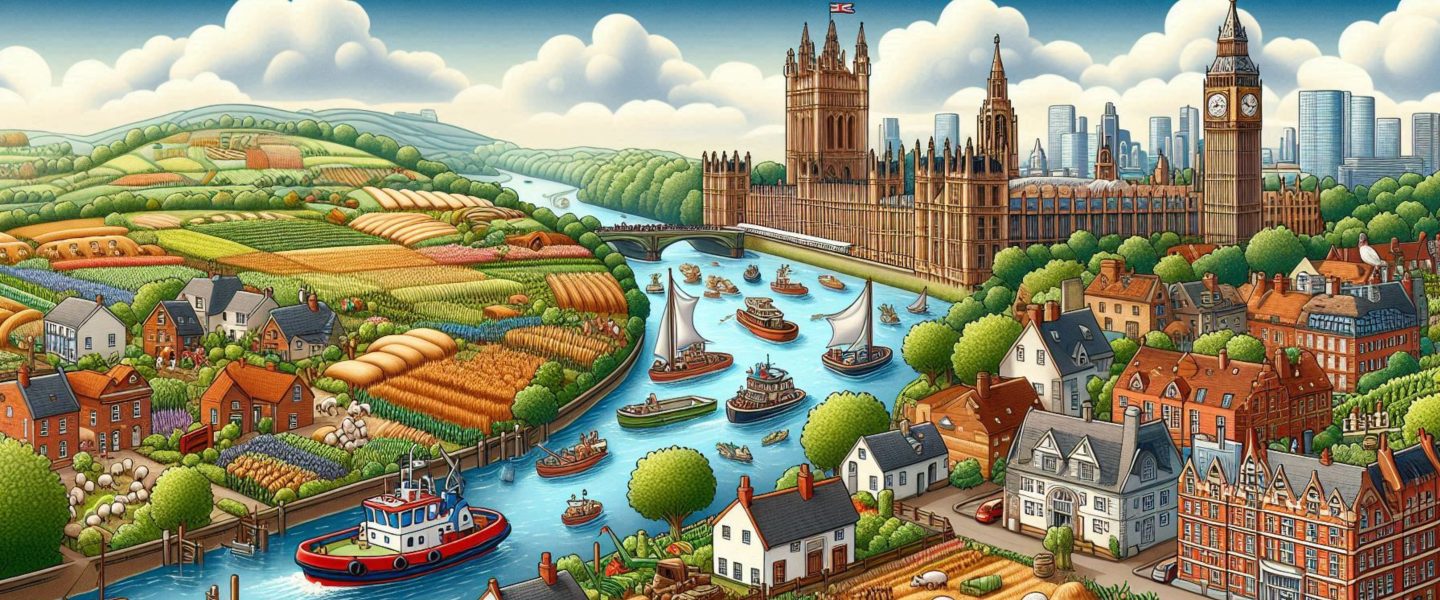
Across the world, territorial disputes once considered settled are returning to the political stage. The Falkland Islands, the Chagos Archipelago, Scotland, Wales, and Northern Ireland – places with distinct histories, identities, and communities – are again being pulled into debates about who should “own” them, who should “govern” them, and what their future should be.
The common thread is not merely a return of old sovereignty questions. It is the capture and inversion of the words through which these questions are discussed. Sovereignty, independence, democracy and self‑determination are now often used as if they mean human freedom, when in practice they often describe nothing more than the transfer or concentration of power at state level.
These disputes are no longer framed as questions of people deciding their own future. They are framed as questions of which state, institution or supranational structure should exercise authority over them.
The language of sovereignty has replaced the language of self‑determination. And sovereignty, in the modern world, is not a neutral legal concept. It is a national‑level claim to control territory, resources, strategic value, and narrative power.
The result is a dangerous distortion:
Territory has become the subject. People have become the justification.
This is not an argument that Britain, Argentina, Mauritius, Scotland, Wales, Ireland, or any other state‑level actor is automatically right or wrong. It is an argument that the question itself is usually framed from the wrong starting point. The issue is not which state has the strongest claim, but whether any claim that begins with the state can genuinely be called self‑determination.
Instead, sovereignty is treated as an unquestionable good – a prize to be won, a wrong to be righted, a symbol of national pride.
This essay therefore begins from a deliberately modest but important claim:
Modern sovereignty claims can mistake control for freedom. They can make the state the subject and the people the justification. That is the illusion this essay seeks to examine.
To understand how this distortion emerged, we must first examine the language itself – how sovereignty is presented, how self‑determination is misused, and how both have become tools for agendas that have nothing to do with human freedom.
This essay therefore works from a distinction that must remain clear throughout: state sovereignty is the authority claimed by political structures over territory; personal sovereignty is the freedom of a human being to think, act, participate and live without fear, dependency or distant coercion. The central argument is not that larger structures can never provide security or support. They can. The argument is that those structures only remain legitimate when authority flows upward from people and communities, rather than downward from states and elites.
The argument developed here also sits within a wider body of work. The Basic Living Standard, the Independence Threshold and the Local Economy and Governance System are not side concepts added at the end. They are the foundations beneath this essay. They explain why self‑determination cannot be reduced to flags, borders, constitutions or compensation claims, and why any serious account of freedom must begin with the conditions that allow people to live independently and govern locally.
The proposal developed here should not be read as a finished constitutional programme or as the only possible answer. LEGS is offered as a guide, framework and set of guardrails for thinking differently about self-determination: one that begins with people, community and environment rather than money, territory or institutional control. It is necessarily incomplete. If the broader argument is right, its future development will require criticism, testing, adaptation and the practical imagination of many others.
Sovereignty and self‑determination are often spoken about as if they are interchangeable. They are not.
The confusion matters because the word sovereignty has been captured by the state. What should begin with the person is now treated as a property of territory, government and national authority.
It answers the question:
Which distant capital gets to control this territory?
State sovereignty is about:
- national borders
- national pride
- national narratives
- national resource control
- national strategic advantage
It is not about:
- the people who live there
- their freedoms
- their governance
- their economic independence
- their ability to determine their own future
State sovereignty is a hierarchical concept. It places people beneath national authority and then calls that arrangement freedom.
Personal sovereignty answers the question:
How do the people living here want to be governed?
It is about:
- human agency
- community autonomy
- lived experience
- local accountability
- freedom of mind and person
Personal sovereignty is a human concept. It places authority beneath people and treats governance as legitimate only when it protects freedom of mind and person.
Once sovereignty is understood as a property of the person rather than the state, the modern distortion becomes visible. Over time, political language has moved the word sovereignty away from human agency and attached it to territory, borders, flags, governments and international recognition. The sovereign individual has disappeared from view and been replaced by the sovereign state.
That shift changes the question being asked. Instead of asking how people can become more free, politics asks which state should exercise authority. Instead of asking how communities can govern themselves, it asks which national structure should control them. Instead of asking what would create freedom of mind and person, it asks which existing power should be recognised as legitimate.
This is the sovereignty illusion. The language of liberation remains in place, but the subject has changed. The words still sound as if they are about people, but the decisions are made around territory, ownership, legal status, historic claim and strategic advantage.
The consequence is practical, not merely linguistic. Once state sovereignty replaces personal sovereignty, territorial transfers can be presented as freedom even when they subordinate people to a different distant authority. Constitutional rearrangements can be presented as self‑determination even when local communities remain no more empowered than before. Historical claims can be presented as justice even when the people most affected are treated as symbols rather than decision‑makers.
The same distortion appears beyond sovereignty. Modern systems increasingly detach value from lived human experience and attach it instead to abstractions: money, territory, institutional status, legal ownership, historical grievance, national identity and narrative advantage.
When this happens, relationships become transactions, communities become administrative units, people become statistics, history becomes leverage, and freedom becomes a slogan used by systems that continue to centralise power. This is not necessarily the result of a coordinated agenda. It is the predictable outcome of structures that reward distance, abstraction, financialisation and control.
Britain’s cultural uncertainty should therefore be read in the same way. It is not evidence that identity is being consciously dismantled by a hidden hand. It is a symptom of a wider value shift in which local belonging, civic confidence and shared purpose are weakened by systems that treat people and places as interchangeable parts of an economic machine.
This is why the Falklands and Chagos matter so much to the argument. They are not simply examples added because they are politically current. They are the clearest places where the captured meaning of sovereignty can be seen in operation. In both cases, the public debate is dominated by states discussing ownership, historical entitlement and legal control, while the human question is pushed to the edge.
The cases are different in their history, their moral facts and their legal background. The Falklands concern an existing island community that has repeatedly expressed its wish to remain under its present constitutional relationship. Chagos concerns a displaced people whose right to return, rebuild and participate has been treated as secondary to state‑level negotiation. Yet in the broader argument, both reveal the same failure: sovereignty is discussed before the people are placed at the centre.
Instead, states and elites use:
- proximity (“It’s near us, therefore it’s ours”),
- history (“We once had a claim, therefore we still do”),
- grievance (“We were wronged, therefore we deserve compensation”),
- identity (“We are a nation, therefore we must be sovereign”),
as if these things alone create democratic legitimacy.
These factors may matter historically, legally or emotionally, but none of them is sufficient on its own to create democratic legitimacy.
Sovereignty is presented as if it delivers self‑determination. But sovereignty does not empower people. It empowers states.
This is the heart of the problem:
Sovereignty transfers do not create freedom. They simply change which distant authority people are subordinate to.
This is why the Falklands and Chagos disputes are so revealing. They are not included to prove that Britain is right or that other states are wrong. They are included because they test whether any state‑level sovereignty claim can remain legitimate when the people most affected are not treated as the primary subject.
And yet, even in Scotland, Wales, and Northern Ireland – where the language of self‑determination is used – the underlying mechanics are the same. These debates are not about empowering communities. They are about rearranging national control.
Before moving to Scotland, Wales and Northern Ireland, the Falklands and Chagos must therefore be examined first. They establish the pattern in its most visible form: when politics begins with sovereignty, even very different histories are drawn into the same distorted frame.
The territorial disputes that follow should not be read as identical cases. They are not.
The Falklands and Chagos differ sharply in history, population, legal context and moral character. But they belong together in this argument because they reveal how modern politics handles sovereignty once the person has been displaced from the centre.
In each case, the surface question appears to be different. In the Falklands, the claim is framed through history, proximity and national inheritance. In Chagos, the claim is framed through decolonisation, legal remedy and territorial integrity.
But beneath those different surface arguments lies the same deeper question: are the people themselves the subject of the decision, or are they being used to justify decisions made between states?
The purpose of these case studies is not to decide which state has the stronger legal or historical claim. It is to examine what happens when sovereignty is treated as the primary question and the people most affected become secondary.
A balanced account must also acknowledge that state sovereignty is not always empty or oppressive. Larger political structures can provide security, continuity, external representation, rights protection and economic resilience. The argument here is not that scale is inherently illegitimate. It is that scale becomes illegitimate when it substitutes itself for the agency of the people most affected.
Sovereignty becomes a misnomer when it is presented as justice while remaining disconnected from human freedom. The real question is not simply which capital exercises authority, but whether authority is close enough, accountable enough and limited enough to protect the people who live with its consequences.
The people living there are not the subject. They are the justification.
This is why the Falklands and Chagos appear first. They show the argument at its sharpest. The Falklands expose what happens when a clear expression of local preference is overridden rhetorically by an external sovereignty claim.
Chagos exposes what happens when a displaced people’s human claim is absorbed into a state‑to‑state sovereignty settlement.
One case concerns a resident population resisting transfer; the other concerns an uprooted population seeking return and agency. Both expose the same failure: the state is made central before the person is made sovereign.
The Falkland Islands are the clearest example of sovereignty being asserted against an existing community’s expressed will.
Argentina’s claim is often presented as a matter of historical correction or geographical logic: the islands are close to Argentina, therefore they “should” belong to Argentina. But this begins with the state, not with the people who live there.
Proximity is not democracy. And history is not self‑determination.
For the purposes of this essay, the decisive point is not simply that Argentina’s claim can be disputed historically. It is that the claim asks the wrong question. It asks whether Argentina or Britain should possess sovereignty, when the human question is whether the islanders themselves are able to determine their future, their institutions and their relationships.
Argentina’s claim is not based on:
- the wishes of the islanders,
- their lived experience,
- their governance,
- their freedoms,
- or their future.
It is based on:
- national pride,
- a contested historical narrative,
- and the strategic value of the territory.
The islanders have repeatedly and overwhelmingly expressed their desire to remain a self‑governing UK territory. The point is not that British sovereignty is inherently superior. It is that any external claim which begins by overriding the expressed preference of the islanders begins in the wrong place.
Source note: In the 2013 Falkland Islands referendum, 99.8% of valid votes supported retaining the islands’ status as a British Overseas Territory on a turnout of about 92%.
Sovereignty is treated as if it were a moral right. But sovereignty is simply control.
The Falklands dispute reveals the core distortion:
Sovereignty claims are presented as justice, even when they directly contradict the democratic will of the people living there.
This is not self‑determination. It is state‑centred sovereignty politics.
Chagos is different from the Falklands, and the distinction matters.
The moral gravity of Chagos begins with displacement: a people were removed from their home and prevented from returning.
That is not the same factual pattern as the Falklands. But the Chagos dispute still belongs at the centre of this essay because the remedy has too often been framed as a transfer of sovereignty between states rather than the restoration of human agency to Chagossians themselves.
Source note: The International Court of Justice’s 2019 advisory opinion held that the decolonisation of Mauritius had not been lawfully completed and that the UK should end its administration of the Chagos Archipelago as rapidly as possible. The UK-Mauritius treaty presented to Parliament in May 2025 would transfer sovereignty to Mauritius while maintaining a long-term arrangement for Diego Garcia.
But again, sovereignty is not self‑determination.
If the starting point is personal sovereignty, then the first question cannot be whether Mauritius should own the islands. The first question must be how Chagossians can return, rebuild, govern, participate and live with real autonomy.
Any settlement that changes the flag above the territory while leaving Chagossians dependent on decisions made elsewhere repeats the same distortion in a new form.
Mauritius’s claim is not based on:
- the wishes of the Chagossians,
- their right to return,
- their right to govern themselves,
- or their right to rebuild their community.
The Chagossians were displaced by decisions made by Britain and the United States. That reality gives Britain a responsibility that cannot be avoided. But a state‑to‑state transfer does not by itself answer the human question, because the central issue is whether Chagossians themselves regain agency, return, participation and local power.
If the outcome merely relocates authority from one distant capital to another, the human wrong remains unresolved in structural terms.
This is the same distortion as the Falklands:
Sovereignty is treated as justice, even when it does nothing to restore human freedom.
Mauritius’s claim is a legal argument about territorial integrity. It is not a democratic argument about Chagossian empowerment.
The people most affected – the Chagossians – are again the justification, not the subject.
Unlike the Falklands and Chagos, Scotland and Wales do use the language of self‑determination. But the underlying mechanics are still national, not local.
The independence movements in Scotland and Wales are framed as democratic uprisings – nations reclaiming their right to govern themselves.
But the question is never:
How do communities within Scotland and Wales want to be governed?
It is always:
Should Edinburgh or Cardiff replace London as the distant authority?
This is sovereignty, not self‑determination.
Independence movements often assume that national sovereignty will automatically empower communities. But sovereignty does not decentralise power. It relocates it.
A distant authority in Edinburgh is still a distant authority. A distant authority in Cardiff is still a distant authority. And where independence is paired with renewed participation in wider European institutions, significant areas of authority may ultimately sit further away still.
The question therefore cannot be reduced to which capital exercises power. It must be whether power remains close enough, accountable enough and limited enough to be meaningfully shaped by the people affected by it.
This reveals the deeper truth:
National independence does not guarantee local empowerment. It simply shifts control from one centre to another.
Northern Ireland is often framed as the most complex of these disputes – a place where identity, history, trauma, and politics collide. But even here, the debate is not about self‑determination. It is about sovereignty.
The question is always:
- Should Northern Ireland remain part of the UK?
- Or should it join the Republic of Ireland?
But the question is never:
How do communities within Northern Ireland want to be governed?
A sovereignty transfer – from London to Dublin – does not resolve division. It does not empower communities. It does not decentralise authority. It does not create freedom.
It simply replaces one distant capital with another.
This is the same pattern:
Sovereignty is treated as a solution, even when it does nothing to address the lived realities of the people affected.
Northern Ireland’s future cannot be determined by constitutional rearrangement. It can only be determined by local empowerment – something sovereignty cannot deliver.
An additional contradiction is now increasingly visible within modern independence movements. Scottish nationalists, Welsh nationalists, and many advocates of Irish reunification often present independence not as a final destination, but as a route back into the European Union or into closer alignment with European institutions.
The argument is usually framed in terms of economic stability, political cooperation, rights protection and access to larger markets. These are not trivial concerns. But they reveal a deeper problem in the way sovereignty itself is understood.
If independence is justified because decision-making should be closer to the people affected, then immediately relocating significant areas of authority into larger supranational structures raises an obvious question. Is the objective self-determination, or is it access to a governance framework perceived as more stable?
The point is not that European cooperation is inherently undesirable. Cooperation between communities, regions and nations is often necessary. The point is that cooperation and sovereignty are not the same thing.
A movement that seeks independence from London only to re-enter a model based on shared external governance is not obviously pursuing greater local empowerment. It may simply be exchanging one layer of distant authority for another, while leaving the deeper question of human agency untouched.
This reveals the same pattern found throughout this essay. State sovereignty, national independence and supranational integration are all discussed as though they automatically increase freedom. Yet freedom of mind and person depends not on the location of authority, but on whether authority remains accountable, limited and rooted in the people most affected by its decisions.
The question therefore remains unchanged: who is being empowered – people, communities and localities, or political structures operating at a larger scale?
Whether sovereignty is claimed directly through territory, disguised as national self-determination, or softened through supranational realignment, the underlying distortion is identical:
States are pursuing control. Not empowerment. Not freedom. Not self‑determination.
Territory is the subject. People are the justification.
This is the heart of this essay – and the reason we must now turn to the next layer of distortion: compensation politics, where history itself is monetised for national gain and people are again displaced by structures larger than themselves.
Territorial disputes are not the only place where sovereignty has replaced self‑determination. A parallel phenomenon has emerged – one that treats history itself as a financial asset.
Across the world, states and political actors increasingly frame historical injustice through vast financial claims that can exceed the practical capacity of the modern economic system.
These claims are often framed as justice. At their best, they can give language to real harm and inherited disadvantage. At their weakest, they risk turning history into leverage while leaving affected people and communities no more empowered than before.
The concern in this essay is therefore not with every form of redress. Concrete repair for identifiable harm may be necessary and legitimate. The concern is with compensation politics: the conversion of historical grievance into state-level financial or narrative advantage without a clear path to human-centred repair.
In recent years, India has become the most prominent example of compensation politics. Public discourse – amplified by media, activists, and political figures – has circulated staggering estimates of what Britain supposedly “owes” India for colonial‑era extraction.
The most widely cited figure comes from Oxfam and Indian economist Utsa Patnaik:
approximately $45 trillion – Utsa Patnaik’s estimate of wealth drained from India between 1765 and 1938, expressed in current-value terms.
Indian media have gone further, suggesting that when adjusted for inflation and modern economic value, the total extraction could amount to:
approximately $64.8 trillion – a later Oxfam-linked estimate for extraction from India between 1765 and 1900, also expressed in present-day terms.
These numbers are not formal reparations demands. They are contested economic estimates used politically to frame Britain as owing or having extracted vast sums.
They also reveal how difficult it is to translate retrospective economic estimates into present-day remedies without collapsing the distinction between moral recognition, historical analysis and practical compensation.
These figures exceed the capacity of the global economy
To put them in context:
- The UK’s annual GDP is about £3 trillion.
- The UK’s total net worth was estimated at about £12.2 trillion in 2023.
- The world’s annual GDP is roughly $118 trillion, or around £90-95 trillion depending on exchange rates.
- Broad money measures for the largest monetary areas are above $100 trillion, but global money-supply comparisons vary by definition and exchange-rate method.
When figures of this scale are translated into compensation language, the central issue becomes less the exact arithmetic than the practical question of remedy:
The point is not exact equivalence. It is scale: these retrospective figures are far larger than the fiscal capacity of any single modern state.
This does not mean that historical extraction should be ignored, or that inherited disadvantage is imaginary. It means that retrospective totals on this scale cannot simply be converted into a practical invoice without asking who would pay, who would receive, how the money would be used, and whether the people most affected would gain real agency.
Source note: UK GDP figures are published by the Office for National Statistics and summarised by the House of Commons Library. UK net-worth estimates are published in the ONS national balance sheet. World GDP figures are available from the World Bank. Broad money estimates vary by source and definition.
Without that answer, the claim risks remaining a political narrative rather than a human-centred remedy.
It is also being made in a strained monetary environment
These claims are being made at a time when many fiat-currency economies are facing:
- eroding purchasing power through inflation,
- rising public and private debt burdens,
- pressure on central banks to balance inflation control against growth,
- and growing political distrust in monetary and fiscal institutions.
Demanding or implying system-breaking sums from a debt-dependent and already strained monetary system may express moral anger, but it does not by itself create a human-centred remedy.
Compensation narratives also ignore a crucial reality:
The people advancing these arguments today were not personally subject to eighteenth- or nineteenth-century colonial rule. Modern India also inherited institutions, infrastructure and legal frameworks shaped during and after British rule, even while colonialism caused deep harm and constrained Indian development.
India’s modern statehood, stability, and economic development are built on:
- legal frameworks,
- administrative systems,
- railways,
- ports,
- trade networks,
- civil service structures,
- education systems,
- parliamentary governance,
- common law,
- and English‑language access to global markets.
These structures matter. But they do not cancel historical harm, and they should not be used to romanticise empire.
The more careful point is this:
Compensation politics treats history as a financial asset, not a human experience.
When compensation politics becomes detached from people, it can strengthen national narratives without restoring dignity, agency or local power.
Some reparations movements across the world risk following the same pattern when they move from concrete repair for identifiable harms into open-ended national claims:
- claims can be advanced by people or institutions not directly harmed by the original act,
- the people who suffered may no longer be alive or may not control the remedy,
- modern states may receive benefits that do not necessarily reach affected communities,
- claims may be made in an economic system already under deep fiscal pressure,
- and headline figures may become politically powerful while remaining practically difficult to implement.
At their weakest, such claims risk becoming narrative-driven extraction rather than human-centred repair.
And it reveals the same distortion as territorial sovereignty claims:
States and elites may use history to pursue present-day advantage. That risk must be distinguished from genuine efforts to repair specific harms and restore agency to affected people.
Territorial claims say:
“This land should belong to us because of history.”
Compensation claims say:
“This money should belong to us because of history.”
Both are:
- national‑level ambitions,
- narrative‑driven,
- economically opportunistic,
- and structurally incentivised by money-centric systems under pressure.
Both treat people as symbols. Both treat history as leverage. Both treat sovereignty as justice.
And both ignore the central truth:
Self‑determination is not about land or money. It is about people – their freedom, their autonomy, their ability to govern themselves.
This is why the next part of the essay must examine the system itself – not to claim that these outcomes are secretly coordinated, but to show how the same underlying value structure repeatedly produces them.
Modern territorial disputes and compensation narratives do not arise in a vacuum. They emerge from a deeper structural reality: a global economic system built on fiat currency, centralised authority, debt‑driven growth and a money‑centric understanding of value.
This system is not simply under pressure. It can also produce paradigm blindness among those who lead it, because the people responsible for maintaining it may struggle to imagine governance, value or social order working in any other way.
As the system strains, states and elites may seek leverage, resources and narratives that help sustain authority.
This helps explain why sovereignty politics has intensified, why compensation politics has become more visible, why history is increasingly monetised, and why territorial claims can re-emerge even after long periods of relative quiet.
The system itself incentivises these behaviours.
This is what paradigm blindness means in practice. A system becomes so familiar that its assumptions disappear from view. Money becomes the reference point for every value. Economic growth becomes the measure of success. Centralisation becomes the default answer to uncertainty.
Leaders and institutions then respond to failure by doing more of the thing that produced the failure, because the alternative sits outside the language and logic of the prevailing system.
Fiat currency systems are built on a simple premise:
Value exists because the state says it does.
This creates a structural dependency:
- people depend on the state for economic stability,
- states depend on central banks for liquidity,
- central banks depend on debt expansion for growth,
- and the entire system depends on confidence – not intrinsic value.
This architecture produces several predictable behaviours:
1. Centralisation becomes necessary
States must centralise power to maintain control over:
- currency,
- taxation,
- debt,
- regulation,
- and economic narrative.
2. Extraction becomes inevitable
To sustain growth, states must extract:
- resources,
- labour,
- value,
- and compliance.
3. Narrative becomes a tool
Because fiat value is psychological, states must maintain:
- national myths,
- historical narratives,
- moral claims,
- and identity politics.
This is why sovereignty claims are framed as justice. This is why compensation claims are framed as morality. This is why history is being turned into a financial asset.
The system requires narrative to sustain authority.
The global fiat system is under deep structural pressure. Whether one describes that pressure as transition, exhaustion or crisis, the signs are visible:
- inflation eroding purchasing power,
- high public and private debt burdens,
- central banks balancing inflation control against growth and financial stability,
- political polarisation rising,
- public trust collapsing,
- supply chains fragmenting,
- and states increasingly unable to deliver basic services.
This pressure is not only ideological. It is also structural and mathematical.
A system built on ever‑expanding debt cannot sustain itself indefinitely. When growth slows, the system begins to cannibalise itself.
And when the system weakens, states turn outward – seeking:
- territory,
- compensation,
- historical leverage,
- and narrative power.
This is why sovereignty politics has returned. This is why compensation politics has intensified. This is why territorial disputes are being revived.
They are not necessarily coordinated moral movements or deliberate cultural projects. They are often survival strategies produced by a system that no longer knows how to create value, legitimacy or cohesion without centralising power.
When a fiat system weakens, states lose:
- economic stability,
- political legitimacy,
- social cohesion,
- and narrative control.
To compensate, they seek:
1. New sources of value
Territory offers:
- resources,
- strategic advantage,
- geopolitical leverage,
- and national pride.
2. New sources of legitimacy
Sovereignty claims allow states to present themselves as:
- defenders of history,
- protectors of identity,
- champions of justice.
3. New distractions
Territorial disputes divert attention from:
- domestic instability,
- economic decline,
- political failure.
This is why sovereignty politics intensifies in many different places. The pattern does not require every actor to share the same motive or to follow a single plan. Similar outcomes emerge because states operating within the same money‑centric and centralising paradigm are pushed toward the same tools: territory, narrative, grievance, identity and leverage.
It is not about people. It is about state survival.
Compensation politics follow the same logic.
When states face:
- economic stagnation,
- rising debt,
- declining productivity,
- and social unrest,
they seek new sources of value – even if those sources are historical.
1. History becomes a financial asset
States and elites treat past events as:
- leverage,
- bargaining chips,
- moral currency.
2. Grievance becomes monetisable
Narratives of historical injustice become:
- tools for extraction,
- political rallying points,
- mechanisms for national cohesion.
3. The numbers become absurd
Because the system is strained, the claims can become:
- larger,
- more dramatic,
- more detached from economic reality.
This is why India’s compensation narratives reach estimates such as $45 trillion or $64.8 trillion. These numbers may be serious attempts to quantify historical extraction, but in political discourse they also function as signals.
They express scale, grievance and national memory as much as any practical programme of human-centred repair.
Whether states pursue:
- sovereignty (territory),
- compensation (money),
- or narrative (identity),
the pattern is identical:
People are not the subject. They are the justification.
Territory is the prize. History is the leverage. Narrative is the tool. Sovereignty is the mechanism.
And self‑determination – the genuine, human‑centred kind – is nowhere to be found.
This is why the next part of the essay must shift from system-level analysis to human-level reality. Genuine self-determination cannot rest on structures that incentivise centralisation, extraction and narrative-driven sovereignty.
To understand what real empowerment requires, we must examine the human foundations of freedom – the Basic Living Standard and the Independence Threshold.
Modern politics talks endlessly about sovereignty, independence, and national destiny. But none of these concepts address the lived reality of the people who are supposedly being “liberated” or “empowered”.
Sovereignty transfers do not feed families. Constitutional rearrangements do not create stability. Historical compensation does not generate autonomy.
Real self‑determination – the human kind – requires something far more fundamental.
It requires freedom of mind and person. And freedom of mind and person requires security, independence, and local agency.
This is where the Basic Living Standard (BLS) and the Independence Threshold (IT) become essential. They are not economic theories. They are the minimum conditions under which a human being can genuinely determine their own life.
The Basic Living Standard is the minimum level of security a person needs to live without fear. It is not a welfare model, not a handout, not a political promise. It is the baseline of human dignity.
A person cannot be self‑determining if they are:
- worried about food,
- insecure in housing,
- unable to heat their home,
- dependent on distant systems for survival,
- or living in constant economic precarity.
These conditions destroy freedom of mind. They destroy agency. They destroy autonomy.
The Basic Living Standard ensures that every person has:
- secure housing,
- secure access to food,
- secure utilities,
- secure local services,
- and a secure minimum income.
This is not luxury. This is not ideology. This is the minimum requirement for a person to think clearly, act freely, and participate meaningfully in their community.
Without the Basic Living Standard, self‑determination is impossible. It becomes a slogan – not a lived reality.
Traditional definitions of poverty focus on income, consumption, or GDP. But these metrics do not capture the real barrier to self‑determination.
The Independence Threshold does.
The Independence Threshold defines poverty as:
The point below which a person cannot make independent decisions without fear, coercion, or dependency.
A person below the Independence Threshold:
- cannot challenge authority,
- cannot leave bad situations,
- cannot resist exploitation,
- cannot participate in governance,
- cannot act freely,
- cannot be self‑determining.
This is the missing piece in almost all political theory.
Sovereignty does not raise people above the Independence Threshold. Compensation does not raise people above the Independence Threshold. Constitutional rearrangements do not raise people above the Independence Threshold.
Only local empowerment, economic security, and freedom of mind and person can do that.
Sovereignty claims – whether over the Falklands, Chagos, Scotland, Wales, or Northern Ireland – do not address the Basic Living Standard or the Independence Threshold.
They do not ask:
- Are people secure?
- Are people independent?
- Are people free?
- Are people able to govern themselves?
- Are people able to challenge authority?
- Are people able to participate in local decision‑making?
They ask only:
Which state should control this territory?
This is why sovereignty politics is fundamentally misaligned with human empowerment.
A sovereignty transfer does not:
- feed families,
- secure housing,
- create independence,
- decentralise power,
- or protect freedom of mind.
It simply changes which distant authority people are subordinate to.
This is why your argument is so powerful:
Self‑determination is not a constitutional arrangement. It is a human condition.
And that condition requires BLS and IT.
Compensation politics also fail the test of genuine self‑determination.
Even if a state received very large reparations, the people would not automatically rise above the Independence Threshold. The money could be absorbed into:
- state budgets,
- political projects,
- national narratives,
- and centralised systems.
It would not create:
- local autonomy,
- personal independence,
- community empowerment,
- or freedom of mind and person.
Compensation politics treat history as a financial asset. But self‑determination is not a financial concept. It is a human one.
The Basic Living Standard and the Independence Threshold reveal a simple truth:
Self-determination is unlikely to be secured by states alone. It requires communities to hold real agency over the conditions that shape their lives.
People must be able to:
- govern themselves locally,
- challenge authority directly,
- hold decision‑makers accountable,
- participate in shaping their environment,
- and live without fear of economic coercion.
This is why sovereignty politics fail. This is why compensation politics fail. This is why centralised systems fail.
They do not empower people. They empower states.
And this is why the next part of this essay introduces LEGS – not as a final or exclusive answer, but as a framework for protecting freedom of mind and person by placing power where it most directly affects people: with communities, at the most local realistic level.
Up to this point, the essay has exposed a pattern: modern politics treats sovereignty as justice, compensation as morality, and history as leverage. But none of these things empower people. None of them create freedom of mind or person. None of them raise individuals above the Independence Threshold. None of them deliver genuine self‑determination.
To understand what real empowerment looks like, we must shift from state‑level ambition to human‑level reality.
This is where LEGS enters the picture.
LEGS – The Local Economy and Governance System – is not a political ideology, not a constitutional blueprint, and not a utopian model. It is a framework that describes the minimum structural conditions under which human beings can genuinely determine their own lives.
Put simply, LEGS reverses the direction of authority. The current model tends to operate as State → Community → Individual, even when the state is softened by regional or supranational language. LEGS begins instead with Individual → Community → Cooperation between localities → Wider support structures. Larger structures do not disappear. They are limited to the roles that communities cannot realistically perform alone, such as shared defence, strategic coordination, infrastructure, external relations and safeguards for basic rights. Their purpose is support, not domination.
It is built on one principle:
Power must sit at the most local realistic level, with representatives who have skin in the game, and accountability through proximity.
Everything else is guardrails.
This distinction matters because it prevents a common misunderstanding. LEGS is not the abolition of national, regional or international organisation. It is the subordination of those organisations to personal sovereignty and local self‑determination. Cooperation is not the problem. Dependency and unaccountable authority are the problem. Where scale is necessary, localities cooperate. Where common standards are necessary, they are agreed from below. Where protection is necessary, it exists to preserve freedom rather than to absorb power.
Centralised governance – whether in London, Edinburgh, Cardiff, Buenos Aires, Port Louis, or any other capital – often struggles to deliver genuine self-determination because distance weakens accountability and turns lived experience into administrative abstraction.
Centralisation creates:
- distance between decision‑makers and the people affected,
- dependency on systems people cannot influence,
- hierarchy that places individuals beneath distant authority,
- extraction of value from communities to sustain national structures,
- and narrative‑driven politics that treat people as symbols.
This is why sovereignty politics, compensation politics and constitutional rearrangements often fall short.
They do not decentralise power. They relocate it.
A distant authority in Edinburgh is still a distant authority. A distant authority in Cardiff is still a distant authority. A distant authority in Buenos Aires is still a distant authority. A distant authority in Port Louis is still a distant authority.
The structure remains the same. Only the capital city changes.
LEGS is offered as one way to break this pattern.
LEGS is built on three pillars:
1. Locality
Decisions must be made as close as possible to the people affected. Not symbolically. Not rhetorically. Structurally.
Locality ensures:
- accountability,
- transparency,
- participation,
- and relevance.
When decision‑makers live among the people they govern, hierarchy collapses. Power becomes relational, not abstract.
2. Empowerment
Communities must have the authority to:
- manage their own resources,
- shape their own environment,
- resolve their own disputes,
- and determine their own future.
Empowerment is not independence. It is agency.
It is the ability to act without fear, coercion, or dependency.
3. Governance
Governance must be:
- simple,
- accessible,
- accountable,
- and non‑extractive.
LEGS does not prescribe a specific structure. It provides guardrails:
- representatives must be local,
- representatives must be accountable,
- higher‑level structures must exist only to support functions that cannot realistically be performed locally,
- representatives must be removable by the community,
- and cooperation must never become a disguise for dependency or distant control.
This is governance built from the bottom up – not the top down.
Self‑determination is not a constitutional arrangement. It is a human condition.
LEGS seeks to support that condition by prioritising:
1. Freedom of mind
People can think clearly when they are secure, independent, and locally empowered.
2. Freedom of person
People can act freely when they are not subordinate to distant authority.
3. Accountability through proximity
People can challenge power when power is physically close.
4. Skin in the game
Representatives behave differently when they live among the people they serve.
5. Community cohesion
Local governance strengthens relationships, trust, and shared purpose.
6. Economic independence
Local control over resources raises people above the Independence Threshold.
7. Human dignity
People feel valued when they shape their own environment.
This is self‑determination in its true form – not the distorted version used by states.
LEGS reveals the absurdity of sovereignty politics.
Falklands
The question is not whether the islands belong to Britain or Argentina. The question is how the islanders want to govern themselves.
LEGS reframes the issue around local agency rather than external possession.
Chagos
The question is not whether Mauritius should own the islands. The question is how Chagossians can rebuild their community with autonomy.
LEGS offers a way to make return, participation and local authority the central test of any settlement.
Scotland & Wales
The question is not whether Edinburgh or Cardiff should replace London. The question is how communities within Scotland and Wales want to be governed.
LEGS shifts the focus from national transfer to practical local empowerment.
Northern Ireland
The question is not whether NI should be British or Irish. The question is how local communities can live without fear, coercion, or dependency.
LEGS suggests that constitutional status is not enough unless communities gain security, accountability and agency in daily life.
Sovereignty alone cannot resolve these disputes because it does not address the underlying question of human agency. LEGS provides one framework through which local empowerment and self-determination might be pursued.
Because LEGS is not about territory. It is about people.
Compensation politics treat history as a financial asset. LEGS treats people as human beings.
Even if a state received trillions in reparations, it would not deliver:
- local autonomy,
- personal independence,
- community empowerment,
- or freedom of mind and person.
LEGS is designed to shift the test of justice away from national receipt of money and toward the local restoration of agency.
Its purpose is to decentralise power, agency and dignity rather than to assume that money alone can repair human harm.
It creates the conditions under which people can determine their own lives – regardless of national narratives or historical grievances.
The United Kingdom’s historical footprint is vast. It spans continents, cultures, and centuries. It includes innovation, infrastructure, administration, exploitation, conflict, and transformation. It is neither wholly positive nor wholly negative. It is complex – and complexity is precisely what modern political narratives struggle to handle.
Today, Britain is often cast in one of two simplistic roles:
- the villain responsible for every modern injustice,
- or the architect of global stability and progress.
Both narratives are distortions. Both are politically useful. Neither is true.
To understand Britain’s legacy – and Britain’s responsibility – we must step outside all national narratives, including Britain’s own, and examine the human reality.
The modern world is shaped by British structures:
- parliamentary governance,
- common law,
- civil service systems,
- administrative frameworks,
- railways and ports,
- trade networks,
- education systems,
- English‑language access to global markets,
- and international norms of diplomacy and statehood.
These structures are not trivial. They are foundational.
They have enabled:
- economic development,
- political stability,
- legal predictability,
- and global integration.
This does not erase historical harm. But it does reveal a truth often missing from compensation narratives:
Many modern states operate through structures influenced by British rule – including some now advancing compensation or sovereignty claims.
India’s modern economy and state institutions were shaped in part by British administrative foundations. Mauritius’s legal and governmental systems were also shaped by British frameworks. Scotland, Wales and Northern Ireland operate within political institutions that have developed through long and contested British constitutional histories.
This does not settle the moral question. It clarifies that legacy is structural and complex, not reducible to simple guilt or simple pride.
Britain cannot change the past. No state can.
But Britain can – and must – take responsibility for the present and the future.
That responsibility is not:
- to hand territories to other states,
- to pay system‑breaking compensation,
- to accept distorted historical narratives,
- or to participate in sovereignty politics.
Britain’s responsibility is:
to empower people – not states – and to support governance models that protect freedom of mind and person.
This means:
- supporting local autonomy,
- supporting community‑level governance,
- supporting human‑centred development,
- supporting the Basic Living Standard,
- supporting the Independence Threshold,
- and supporting LEGS.
Britain’s responsibility is not to rearrange sovereignty. It is to decentralise power.
Sovereignty politics assume that transferring territory from one state to another will deliver justice. But sovereignty transfers often harm the very people they claim to protect.
Falklands
A transfer to Argentina would override the islanders’ wishes and place them under a distant authority they do not trust.
Chagos
A transfer to Mauritius would not, by itself, restore Chagossian autonomy; that would depend on whether Chagossians themselves gain return, participation, security and meaningful local power.
Scotland & Wales
Independence would not automatically decentralise power. It could improve democratic accountability in some respects, but without deliberate local empowerment it would still risk relocating authority to Edinburgh or Cardiff rather than distributing it to communities.
Northern Ireland
A transfer to Dublin would not automatically resolve division. Any constitutional change would still need to address local trust, consent, accountability and lived realities.
Sovereignty transfers do not empower people. They empower states.
This is why Britain must resist sovereignty politics as a framework, not because Britain should defend every inherited arrangement, but because the moral test is whether people are empowered rather than whether states are satisfied.
As the global fiat system comes under increasing strain, states may continue to turn to:
- sovereignty claims,
- compensation demands,
- historical narratives,
- and territorial disputes.
Britain’s role is not to participate in these distortions. Britain’s role is to model a different path.
A path built on:
- local empowerment,
- human dignity,
- decentralised governance,
- and freedom of mind and person.
Britain cannot fix the world. But it can choose whether to reinforce sovereignty politics or model a more human-centred approach to self-determination.
Britain’s legacy is complex. Britain’s responsibility is real. But Britain’s duty is not to hide behind history, defend state power for its own sake, or surrender judgement to the loudest sovereignty narrative. It is to apply the same human‑centred principle consistently: empower people, strengthen local agency, and build structures that protect freedom of mind and person.
This is a moral path available to Britain, and to any state willing to rethink power. It is not the only possible institutional path, but it is the one this essay argues best aligns responsibility with human agency.
Everything in this essay has led to one truth – a truth that modern politics avoids, states cannot admit, and systems cannot accommodate. It is simple, but it is not easy. It is obvious, but it is not accepted. It is universal, but it is not practiced.
Self‑determination is not a constitutional arrangement. It is not a sovereignty transfer. It is not a historical correction. It is not a national narrative. It is not a financial settlement.
Self‑determination is a human condition.
And that condition rests on one foundation:
Freedom of mind and person.
This is the principle that exposes every distortion in modern politics.
A person cannot be self‑determining if their mind is constrained by:
- fear,
- dependency,
- insecurity,
- coercion,
- hierarchy,
- or economic precarity.
Freedom of mind requires:
- stability,
- clarity,
- dignity,
- and the ability to think without fear of consequences.
This is why the Basic Living Standard matters. This is why the Independence Threshold matters. This is why local empowerment matters.
Without freedom of mind, sovereignty is meaningless. Without freedom of mind, independence is symbolic. Without freedom of mind, compensation is irrelevant.
Freedom of mind is the internal space where self‑determination begins.
A person cannot be self‑determining if their life is controlled by:
- distant authority,
- unaccountable power,
- extractive systems,
- or hierarchical governance.
Freedom of person requires:
- local agency,
- proximity of power,
- accountability,
- and the ability to challenge authority directly.
This is why LEGS matters. This is why centralisation fails. This is why sovereignty politics are distortions.
Freedom of person is the external space where self‑determination becomes real.
Modern politics tries to create halfway versions of freedom:
- devolved assemblies,
- symbolic autonomy,
- constitutional tweaks,
- sovereignty transfers,
- national identity narratives,
- compensation settlements.
These arrangements can improve governance, and in some circumstances they may provide real protections. But they become inadequate when they are used as substitutes for agency rather than steps toward it. Halfway freedom may be better than open domination, but it should not be mistaken for full self-determination.
A person cannot be “partially” self‑determining. A community cannot be “mostly” autonomous. A territory cannot be “somewhat” empowered.
Freedom is not achieved by symbolism alone. It is practical, structural and human. People may live with degrees of autonomy, but the direction of travel matters: power should move toward those who live with its consequences, not away from them.
Hierarchy Can Become Coercion
States present hierarchy as:
- order,
- stability,
- tradition,
- governance,
- or national unity.
But hierarchy is none of these things.
Hierarchy becomes coercive when power is distant, unaccountable and structurally protected from the people affected by its decisions.
It places people beneath distant authority. It removes agency. It creates dependency. It incentivises extraction. It rewards narrative over reality.
This is why sovereignty politics fail. This is why compensation politics fail. This is why centralised governance fails.
Hierarchy cannot deliver self‑determination. It can only simulate it.
Narrative Can Become Agenda
Modern politics is built on narrative:
- national identity,
- historical grievance,
- territorial destiny,
- moral entitlement,
- constitutional symbolism.
Narrative is powerful because it feels meaningful. But narrative is never neutral.
Narrative becomes agenda when it is used to replace lived reality rather than illuminate it.
It is used to justify:
- sovereignty claims,
- compensation demands,
- territorial disputes,
- constitutional rearrangements,
- and centralised control.
Narrative turns people into symbols. Narrative turns history into leverage. Narrative turns sovereignty into morality.
Narrative cannot deliver self‑determination. It can only obscure its absence.
This is the final principle:
Self‑determination belongs to people – not states. Not nations. Not governments. Not historical narratives. Not sovereignty claims. Not compensation politics.
Self‑determination is human. It is local. It is relational. It is grounded in freedom of mind and person.
And freedom of mind and person requires:
- the Basic Living Standard,
- the Independence Threshold,
- and LEGS.
LEGS is therefore presented here as a framework for protecting human dignity, decentralising power, resisting coercive hierarchy and rejecting narrative-driven sovereignty. It is not perfect, finished or exclusive. Its value lies in the direction it sets: toward people, community and environment as the organising priorities of political and economic life.
Freedom is the foundation. Everything else is distortion.
Territorial disputes. Compensation politics. Sovereignty claims. Historical narratives. National ambitions. Fiat‑system collapse. Centralised governance. Hierarchy. Extraction. Dependency.
Across this essay, these forces have revealed a single pattern: modern politics treats people as symbols, history as leverage, and sovereignty as justice. It treats territory as the subject and communities as the justification. It treats national ambition as moral truth and human autonomy as an afterthought.
But sovereignty is not self‑determination. Compensation is not empowerment. Narrative is not freedom. Hierarchy is not dignity.
The world has confused the language of liberation with the mechanics of control.
This confusion is not best understood as a single coordinated plan. It is structural. It is incentivised by a global system that rewards centralisation, extraction, grievance monetisation and narrative‑driven politics. Different actors may pursue different aims, but the underlying paradigm pushes them toward similar outcomes.
And yet, beneath this distortion lies a simple truth:
Self‑determination belongs to people – not states.
It is not a constitutional arrangement. It is not a sovereignty transfer. It is not a historical correction. It is not a national narrative. It is not a financial settlement.
Self‑determination is a human condition.
It requires:
- the Basic Living Standard,
- the Independence Threshold,
- and governance built on locality, empowerment, and accountability.
It may require LEGS, or something like it: not as ideology, not as a finished theory, and not as the only possible solution, but as a framework and set of guardrails for building systems in which human beings can genuinely determine their own lives.
Because self‑determination is not about who owns land. It is about who owns their life.
It is not about which capital city holds authority. It is about whether authority is close enough to be challenged.
It is not about national pride. It is about human dignity.
It is not about history. It is about the present and the future.
It is not about sovereignty. It is about freedom of mind and person.
Freedom of mind and person cannot be satisfied by symbolism alone. It must be practical, local and lived. The closer people are to the decisions that shape their lives, the more real self-determination becomes.
It must be lived. It must be local. It must be human.
This is the foundation on which any honest account of self-determination must begin. Everything else must be judged by whether it protects or obstructs that human condition.
The world does not need new sovereignty claims. It does not need new compensation narratives. It does not need new constitutional rearrangements. It does not need new national myths.
It needs a return to the only principle that has ever mattered:
People, communities and environments should come before money, abstraction and distant control.
This is the truth that sovereignty politics cannot accommodate. It is the truth that compensation politics cannot monetise. It is the truth that centralised systems cannot deliver. It is the truth that collapsing fiat structures cannot sustain.
But it is a truth communities can begin to live. It is a truth LEGS is designed to help protect. It is a truth human dignity demands.
Self‑determination must be reclaimed – not by states, not by systems, not by narratives, but by people.
And when it is, sovereignty will lose some of its power to disguise control as freedom, compensation will lose some of its power to substitute money for justice, hierarchy will lose its claim to inevitability, and freedom of mind and person will become the standard by which political life is judged.
This essay relies on public sources for factual framing, including the Falkland Islands 2013 referendum result, the International Court of Justice advisory opinion on Chagos, the UK-Mauritius treaty documents presented to Parliament in 2025, Office for National Statistics data on UK GDP and national balance sheet estimates, World Bank data on world GDP, and published estimates associated with Utsa Patnaik and Oxfam on colonial-era extraction from India. These sources are used for context; the argument remains the author’s interpretation.
1. The Independence Threshold: A New Definition of Poverty for a Modern Economy – This piece explains the poverty concept used throughout this essay. It argues that poverty begins where independence ends: when a person cannot meet essential needs without external support from the state, charity, family or debt. Read this first because it defines the human condition that sovereignty politics usually ignores.
2. The Basic Living Standard Explained – This short foundation text sets out the minimum material baseline required for dignity, autonomy and security. It explains why full-time work at the lowest legal wage should cover essential costs without debt, welfare or charity, and why self‑determination cannot exist where basic life needs remain insecure.
3. The Local Economy & Governance System | Online Text – This is the wider framework behind LEGS. It develops the argument that people, community and environment should form the basis of economy and governance, and that power must be rebuilt from the local level upward rather than imposed downward through distant hierarchy.
Disclaimer
This book is a work of nonfiction and reflects the author’s analysis, interpretation, and opinions based on publicly available information, historical records, and contemporary political discourse. It is intended for educational and informational purposes only. Nothing in this book should be construed as legal, financial, economic, or professional advice.
While every effort has been made to ensure accuracy, the author makes no guarantees regarding completeness or current applicability of the information presented. Readers should conduct their own research and consult qualified professionals where appropriate.
All discussions of states, governments, institutions, historical events, and political actors are analytical in nature. No assertions are intended to defame, misrepresent, or assign wrongdoing to any individual or entity. Any errors or omissions are unintentional.