
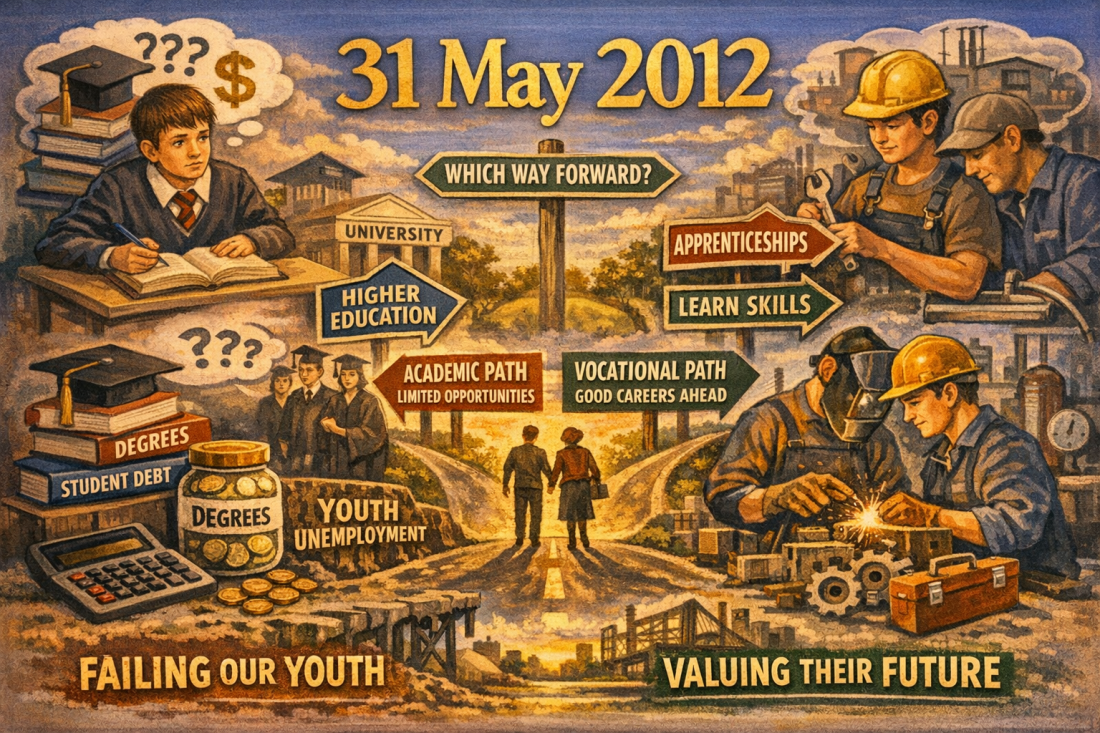

I seem to have the phrase ‘cause and effect’ branded in my thought processes right now as I look at all of the problems with Government and no less so when recently reading yet more bad news about struggling school pupils failing to catch up. But is anybody really surprised?
One of the greatest problems with modern government and law-making is that once an issue has been addressed, the people who have been put in place to deal with that issue then have nothing to do – unless of course they create something else to justify their existence. Have a good look at every area of life where some kind of policy has been created or exists and you might just begin to see what I mean.
The problem with this process is that whilst you can easily see that some things do benefit from being revised from their original form to meet a need which was not originally considered or indeed, to bring that a policy or law up-to-date to meet or to be applicable to contemporary need, the rise of the bureaucrat and ‘professional’ politician has led to unnecessary meddling and the creation of having laws for laws sake. This is particularly evident in matters such as education.
The value of education has been appreciated for a long time but the system we have probably began the headlong descent that we are now experiencing when the concept of real apprenticeships was lost and the school leaving age was raised to 16 in 1972. Speak to what some might call ‘old school’ educators and they will tell you that children were either ‘heads or hands’; the inference being that they were academic or practically inclined. Would you hear a teacher say the same in a similar conversation today? No.
The 1997-2010 New Labour project oversaw much of the destructive push towards blanket qualification levels which now seem to be the accepted way to enhance an evolving society. Put simply, the approach of such meddlers is to work on the basis that the easiest way to improve education is to make the education fit the population, rather than encourage the population to meet the demands of the time. Now is that real equality or just a twisted view of it which is taking our once highly educated and envied Nation backwards?
Everyone is different for many reasons, not least because of their genetics, demographics and social conditioning. It is therefore sheer folly to believe that by applying the one-size-fits-all mentality that you will create a perfect and fully functioning society by making everyone equal ‘by default’. We currently see high levels of youth unemployment and dissatisfaction with the system (Something apparently highlighted by the August 2011 Riots), but again no real attempts to address the causes of these problems being made by the very people who could genuinely make a difference.
There are many young people who don’t want to be in ‘school’ and others who just don’t get the benefit from a dumbed-down degree system where 3 years of undergraduate study provides what could be a lifelong debt and a qualification that industry views as useless, all against the backdrop of a Government that cannot afford to provide such diversions in the first place. The balance has been lost and somebody needs to get this all back where it should be so that each and every individual can follow a route to a career which gives them the best opportunities to realise all that they can achieve based on what they are capable of doing; not what some idealist in London thinks it right that they should do.
Rather than scratching heads about the escalating problems created by the decline in standards in education, why not get back to a basic appreciation of the fact that everyone has something unique to offer and that in itself requires real diversity of opportunities and not one which is offered by an encyclopaedic exam syllabus. Put 14 year-olds who have no academic inclination – or don’t recognise one at that age – into real 7-year vocational apprenticeships in industry and SME’s where time and application give them the career footing that they would otherwise never achieve?
Why not begin to rebuild the ‘time-served’ bank of talent and experience that no amount of schoolroom activity can provide our dwindling industries and hungry-for-help businesses with, in a cost effective way which reduces the burden on the State and will probably address all manner of other issues hurting society at the same time such as youth crime?
I can almost hear the ‘it won’t work because…’ right now. What – because of employment laws or other legislation? – That’s exactly the point and the very reason we are getting into more and more of a mess isn’t it?

 Adam Tugwell